2-Week China Itinerary: Beijing, Xi'an, Chengdu, Guilin & Shanghai

Contents
- Your 2-Week China Route at a Glance
- Days 1-4: Beijing - Imperial Landmarks and the Great Wall
- Day 1: Land, check in, and take it easy
- Day 2: Forbidden City, Jingshan Park and the hutongs
- Day 3: Mutianyu Great Wall
- Day 4: Temple of Heaven, then the train to Xi'an
- Days 5-6: Xi'an - Terracotta Army and the City Wall
- Day 5: Terracotta Army and the Ming city wall
- Day 6: Muslim Quarter, Great Mosque, and on to Chengdu
- Days 7-8: Chengdu - Pandas, Teahouses and Sichuan Food
- Day 7: Giant Panda Base and an afternoon in a teahouse
- Day 8: Leshan Giant Buddha day trip
- Days 9-11: Guilin and Yangshuo - Li River and Karst Countryside
- Day 9: Fly to Guilin and settle in
- Day 10: Li River cruise to Yangshuo
- Day 11: Yulong River, then fly to Shanghai
- Days 12-14: Shanghai - The Bund and a Slow Finish
- Day 12: The Bund, Yu Garden and Nanjing Road
- Day 13: French Concession and Shanghai Tower
- Day 14: Departure
- Trains, Flights, Hotels and Costs: Planning Your Two Weeks
- Intercity transport at a glance
- Where to stay in each city
- What two weeks in China costs
- Entry rules, money and apps
- Booking timeline
- Frequently asked questions
Show more
Two weeks is the shortest stretch of time that lets you see China's imperial north, the pandas and kitchens of Sichuan, the karst country around Guilin and Shanghai's skyline without spending half the trip on trains. This 14-day route gives Beijing three nights, Xi'an two, Chengdu three, Guilin and Yangshuo two, and Shanghai three. High-speed rail covers the two shorter hops; flights cover the two long ones.
The route runs south in a single line: Beijing to Xi'an to Chengdu to Guilin to Shanghai. Nothing doubles back, and every transfer gets easier as you go.
| Nights | Stop | What you get | How you arrive |
| 3 | Beijing | Forbidden City, Mutianyu Great Wall, Temple of Heaven, hutongs | Fly into PEK or PKX |
| 2 | Xi'an | Terracotta Army, Ming city wall, Muslim Quarter | High-speed train, 4h 10m-5h 30m |
| 3 | Chengdu | Giant Panda Base, teahouses, Leshan Giant Buddha | High-speed train, 3h 05m-4h 20m |
| 1 | Guilin | Two Rivers and Four Lakes, Guilin rice noodles | Flight, 1h 35m-1h 50m |
| 1 | Yangshuo | Li River cruise, Yulong River countryside | Li River cruise from Guilin |
| 3 | Shanghai | The Bund, Yu Garden, French Concession | Flight, 2h 20m-2h 45m |
Why this split works. Beijing and Xi'an carry the history, Chengdu changes the pace, Guilin and Yangshuo break up the cities with two days outdoors, and Shanghai ends the trip with comfort rather than another temple. Three nights in Beijing is the minimum that lets you see the Forbidden City and the Great Wall on separate days.
Book an open-jaw ticket. Fly into Beijing and home from Shanghai. Returning to Beijing would cost you most of a day and a domestic flight; the open-jaw fare is usually close to a round trip.
Who it suits. First-time visitors who want the headline sights plus one landscape, and travelers who prefer trains to tour buses. It is not the route for serious hikers: Zhangjiajie and the Tibetan plateau need their own trip. If you only have one week, our 7-day China itinerary covers the classic Beijing-Xi'an-Shanghai triangle.

Base yourself in Dongcheng, within walking distance of Wangfujing or Nanluoguxiang. Nearly everything on the Beijing list sits inside the Second Ring Road except the Great Wall.
Beijing Capital (PEK) and Daxing (PKX) both connect to the subway. The Capital Airport Express runs to Dongzhimen for CNY 25, and from there a short metro ride reaches most central hotels.
Keep the first evening local: a walk through Wangfujing or the Qianmen area, then Peking duck. Siji Minfu is the value pick and the queue is real; Dadong costs more and takes reservations. Order half a duck per two people and add a vegetable dish.
The Forbidden City opens at 08:30 and closes every Monday except public holidays. Tickets cost CNY 60 from April to October and CNY 40 from November to March, released at 20:00 exactly seven days ahead on the official Palace Museum site or WeChat mini program. There are no same-day tickets, and every visitor needs a passport-linked reservation. Check availability and book Forbidden City tickets before you fly.
Enter through the Meridian Gate only and allow three to four hours. The central axis from the Hall of Supreme Harmony to the Imperial Garden is the essential walk; the Treasure Gallery and Clock Gallery cost CNY 10 each and are worth one of them if you have time. Exit north into Jingshan Park (CNY 2) and climb the short hill for the classic view back over the golden roofs.
Spend the late afternoon in the hutongs around Houhai or Nanluoguxiang. This is flat, aimless walking rather than sightseeing, which is the point after a long museum morning.

Mutianyu is about 70 km from central Beijing, roughly 1.5 hours by car, and far quieter than Badaling. Leave at 07:30 and you will be on the wall before the tour groups arrive.
Tickets are CNY 45, the internal shuttle bus is CNY 15 and unavoidable, and the cable car is CNY 140 round trip. The cable car reaches Tower 14; walk west to Tower 20 and back, which takes about 2.5 hours at an easy pace. The chairlift and toboggan on the other side also cost CNY 140 round trip, but the two systems are not interchangeable and they arrive at different towers. Book Mutianyu Great Wall tickets in advance.
Arrive by 08:30 to stay ahead of the tour groups. Bring water and wear shoes with grip; the restored steps are uneven and there is almost no shade on the wall.
Start at the Temple of Heaven at 08:00, when the park belongs to locals doing tai chi and dancing. The combined ticket is CNY 35 and covers the Hall of Prayer for Good Harvests. Two hours is enough.
Take a mid-afternoon G-train from Beijing West to Xi'an North. The fastest services take 4h 10m; allow five hours for the slower departures. Second class starts around CNY 515, and tickets open 15 days before departure. From Xi'an North, Metro Line 2 runs straight to the Bell Tower.
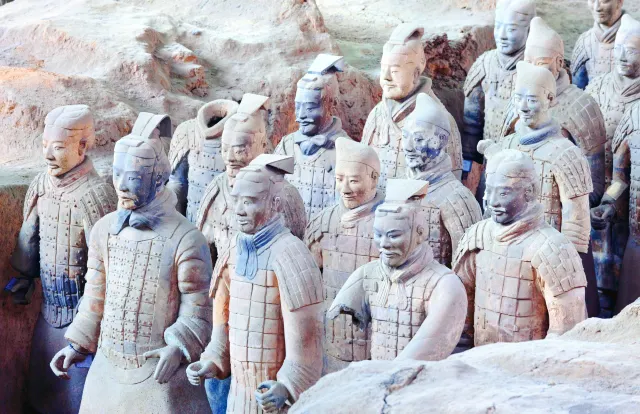
Stay inside the city walls near the Bell Tower. The Muslim Quarter, the wall and the metro are all within a 15-minute walk.
The Terracotta Army is 40 km east of the city. The 306 tourist bus leaves from the east square of Xi'an Railway Station and takes about an hour; a DiDi is faster and costs roughly CNY 100-120. Entry is CNY 120 year-round, and the site caps visitors at 65,000 a day, so reserve Terracotta Army tickets online before you travel.
See Pit 1 first for the scale, then Pit 3 and Pit 2, where you can watch conservation work in progress. Three hours on site is realistic. Back in the city, walk or cycle the city wall from Yongning Gate in the late afternoon; entry is CNY 54 and bike rental is extra. The full 14 km loop takes about two hours by bike.
Spend the morning eating through the Muslim Quarter: roujiamo, persimmon cakes, lamb skewers and biangbiang noodles. The Great Mosque (CNY 25) is a quiet courtyard complex that looks Chinese until you notice the Arabic calligraphy.
Take an afternoon train from Xi'an North to Chengdu East. The fastest trains take 3h 05m, most sit around four hours, and second class starts at CNY 263. Chengdu East connects to Metro Line 2 for Chunxi Road and the city center.

Three nights in Chengdu is deliberate: this is the stop where you stop rushing. Stay around Chunxi Road or Taikoo Li, where the metro, food and evening life are all on the doorstep.
The Chengdu Research Base of Giant Panda Breeding opens at 07:30 and tickets are CNY 55, bookable up to 14 days ahead. Reserve Panda Base tickets as soon as your dates are fixed. Go on the first shuttle of the day (CNY 30 inside the park) because the pandas are most active before 10:30 and sleep through the afternoon heat. Allow three hours and leave by noon.
Spend the afternoon at Heming Teahouse in People's Park, where a pot of jasmine tea costs CNY 20-40 and nobody expects you to leave quickly. In the evening, walk through Jinli or Kuanzhai Alley and eat hotpot; a mid-range hotpot dinner for two runs CNY 200-300.
Take a morning high-speed train from Chengdu East to Leshan (about one hour, second class around CNY 54), then a local bus or taxi to the scenic area. Entry is CNY 80; the boat ticket, around CNY 70, gives you the full view of the 71-meter Buddha without the long cliff stairway queue. The boat trip takes about 30 minutes and is the better choice in rain or peak season.
Return to Chengdu by late afternoon. If the weather is poor or you want a slower day, swap Leshan for Dujiangyan and the Qingcheng Mountain area, both reachable by train in about 30 minutes.

This is the part of the trip that looks like the postcards. Book the Li River cruise before you fly; morning departures sell out first.
Fly from Chengdu Tianfu (TFU) to Guilin Liangjiang (KWL); direct flights take 1h 35m-1h 50m and there are usually one or two a day. The airport shuttle to the city center costs CNY 20 and takes about 50 minutes.
Spend the afternoon around the Two Rivers and Four Lakes area and the Sun and Moon Pagodas. Dinner should be Guilin rice noodles, a bowl of dry noodles with braised beef, pickles and peanuts for CNY 10-20.
The official cruise leaves Mopanshan Pier at 09:00 and takes four to five hours to Yangshuo. Standard class costs around CNY 210; the premium upper deck with buffet lunch is about CNY 530. Compare Li River cruise options before you go. Sit on the right side going downstream for the best light on the karst peaks.
You arrive in Yangshuo around 14:00. Check in near West Street or along the Yulong River, then walk the old town in the evening. Impression Liu Sanjie, the open-air night show on the Li River, is worth the ticket if the weather is clear.
Rent a bike or take a bamboo raft on the Yulong River in the morning. The raft stretch between Yangdi and Xingping costs CNY 150-300 per raft and takes two to three hours; cycling the country lanes is the cheaper, quieter option.
Leave Yangshuo by 15:00 for the 1.5-hour transfer to Guilin airport. Evening flights to Shanghai take 2h 20m-2h 45m and land at Pudong or Hongqiao; both connect to the metro.
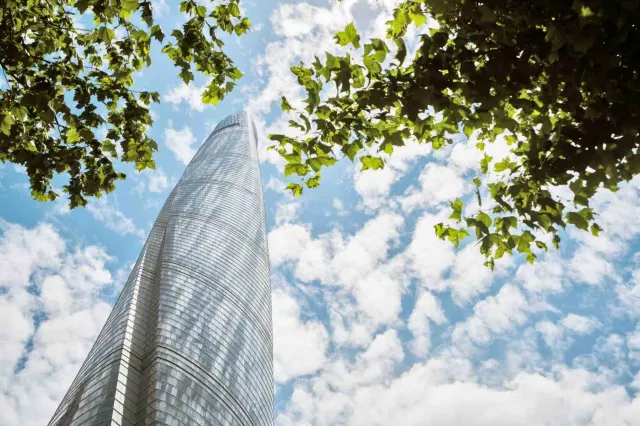
Stay in Huangpu or Jing'an, within walking distance of the Bund or one metro stop away. After two weeks of moving, having the skyline outside the window is the right ending.
Walk the Bund at 07:30, before the crowds and while the light is still soft. Cross to Pudong on the CNY 2 ferry rather than the tourist tunnel if you want the view without the show.
After lunch, visit Yu Garden (CNY 40) and the old town around it, then walk Nanjing Road toward People's Square. In the evening, take a Huangpu River cruise (CNY 120-180) or simply return to the Bund for the skyline at blue hour.
Spend the morning in the French Concession, walking Wukang Road and Anfu Road under the plane trees, with a coffee stop. In the afternoon, go up Shanghai Tower; the 118th-floor observation deck costs CNY 180 and the elevator takes under a minute. Book Shanghai Tower tickets for a timed slot.
If you would rather see a water town, take a 30-minute high-speed train to Suzhou (around CNY 40) and spend the day in the gardens and canals, returning to Shanghai for dinner.
From Pudong, the Maglev reaches Longyang Road in eight minutes for CNY 50; from Hongqiao, Metro Line 2 or 10 connects directly to both airports. Allow three hours before an international flight.
| Route | Mode | Journey time | Typical fare | Book |
| Beijing West to Xi'an North | G-train | 4h 10m-5h 30m | from CNY 515 second class | 15 days ahead |
| Xi'an North to Chengdu East | G-train | 3h 05m-4h 20m | from CNY 263 second class | 15 days ahead |
| Chengdu TFU to Guilin KWL | Flight | 1h 35m-1h 50m | from about USD 70 | 3-6 weeks ahead |
| Guilin KWL to Shanghai | Flight | 2h 20m-2h 45m | from about USD 80 | 3-6 weeks ahead |
Book rail tickets on Trip.com or the official 12306 app; both need your passport number. Our China high-speed train map shows how the two rail legs connect. Flights between Chengdu, Guilin and Shanghai are frequent enough that a two-hour buffer is usually unnecessary, but the Guilin-Shanghai evening departure is the one to protect if you have a fixed flight home.
| City | Best area | Why | Nightly range |
| Beijing | Wangfujing / Dongcheng | Walk to the Forbidden City, metro to the stations, restaurants at night | USD 80-160 |
| Xi'an | Bell Tower, inside the walls | Muslim Quarter and wall gate on foot; Metro Line 2 to Xi'an North | USD 50-110 |
| Chengdu | Chunxi Road / Taikoo Li | Food, metro and evening walks; easy transfer to Chengdu East | USD 60-130 |
| Guilin | City center, Two Rivers area | One night only; close to the pier shuttle and the night lakes | USD 40-90 |
| Yangshuo | West Street or Yulong River | Walk to dinner; countryside hotels are quieter but need a taxi | USD 50-120 |
| Shanghai | Huangpu / People's Square | Bund on foot, metro to both airports | USD 90-180 |
Excluding international flights, a comfortable mid-range trip costs roughly USD 1,800-2,800 per person for two weeks. The biggest variables are hotel category and whether you fly or take the train between Chengdu and Guilin.
| Category | 14-day estimate | Notes |
| Hotels (13 nights) | USD 800-1,500 | Mid-range double rooms; Beijing and Shanghai cost the most |
| Food | USD 350-550 | Local restaurants and one splurge meal per city |
| Intercity transport | USD 250-350 | Two trains plus two flights |
| Attractions | USD 120-180 | Forbidden City, Great Wall cable car, Terracotta Army, Panda Base, Li River cruise, Shanghai Tower |
| Local transport | USD 50-80 | Metro, DiDi, airport transfers |
Travelers from 50 countries, including the UK, Canada, Australia, New Zealand, Japan, South Korea, most of the EU and Brazil, can enter China visa-free for up to 30 days for tourism. The policy currently runs through 31 December 2026 for most of the list, and the 30 days are counted from the day after arrival. US passport holders are not on the list and need a tourist visa before flying.
Link a Visa or Mastercard to Alipay or WeChat Pay before you land; both work at most shops, metros and restaurants. Carry CNY 500-1,000 in cash for small vendors and rural buses. Useful apps: Trip.com for hotels and trains, 12306 for rail, Amap or Apple Maps for navigation, DiDi for taxis, and a translation app for menus.
When to go. April to May and September to October are the best months: mild in Beijing, comfortable in Chengdu and dry in Guilin. Avoid the first week of October (National Day) and the Spring Festival period, when domestic travel peaks and hotel prices jump. July and August are hot and humid across the route, with heavy rain in Guilin.
Is two weeks enough for China?
Yes, for four or five stops. This route covers Beijing, Xi'an, Chengdu, Guilin and Shanghai at a pace that leaves most evenings free. Trying to add Zhangjiajie or Tibet would mean cutting a city.
How much does a 2-week China itinerary cost?
Plan on USD 1,800-2,800 per person excluding international flights, or USD 3,000-4,500 including a return fare from Europe or North America.
Do I need a visa for China?
If you hold a passport from one of the 50 visa-free countries, no, for stays up to 30 days. US citizens and other nationalities outside the list need a tourist visa.
Can I do this route entirely by train?
The Beijing-Xi'an and Xi'an-Chengdu legs are ideal by rail. Chengdu-Guilin and Guilin-Shanghai take 10-12 hours by train, so flying is the better use of two weeks.
What is the best time to visit China on this route?
April-May and September-October. Spring and autumn avoid both the summer heat in Guilin and the winter cold on the Great Wall.
Is this itinerary too rushed?
It is moderate. Beijing and Chengdu get three nights each, and two of the 14 days are short transfers. If you want a slower trip, drop Guilin and add a night each to Xi'an and Shanghai.
Popular recommendations

7 Reasons to Put Cancun Mexico Into Your Vacation Bucket List.
 _TS***4m

Latest Trip.com Promo Codes, Flight Discounts & Hotel Savings (Weekly Update)
 Trip.com Official

6 Things to know before Exploring the Montmorency Falls, Quebec
_TS***4m
2026 Guide to Shanghai Pudong Airport: Transit Visa & PVG Airport Shuttle
_TS***4m