Your Go-To Guide to Angkor Wat

Contents
- What to see and expect at Angkor Wat:
- Layout:
- How to tour the huge Angkor Wat?
- By auto-rickshaws or Tuk-Tuk:
- By car/van or on a group-tour:
- By air:
- Dress code:
- Tips to beat the crowd:
Show more
Angkor Wat is a temple complex in Cambodia and is the largest religious monument in the world. The Angkor wat Park is a superb collection of ancient structures, temples religiously important to the Cambodian people and tourists who flock here from all over the globe.
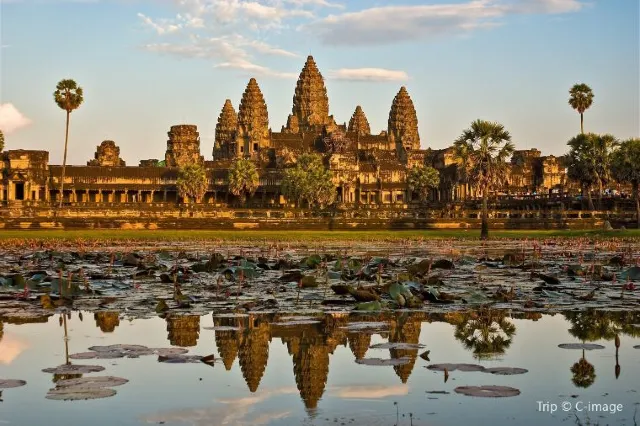
Spread over a massive 400-square kilometer site the three temples of angkor wat, Ta Prohm and Bayon are the must-see ones. Tourists make the most of their multi-day pass exploring the lesser-known but just as beautiful temples like the Phnom Bakheng, Preah Khan, Angkor Thom, Banteay Kdei and Srah Srang exploring on foot or using bicycles to find these off-beat nuggets not known to many.
The design and construction of the temple took place in the first half of the 12th century, during the reign of Suryavarman II. It is the Hindu representation of the abode of gods at Mount Meru. Hindu mythology claims the temple is dedicated to Vishnu.
Further, the design of being viewed in the anti-clockwise direction is also a funerary rite leading to the prediction that the angkor wat was probably built as a mausoleum and temple. However, the remains of the king do not lie here as he died at war. The details and design are incredible and testify to the building skills, popular beliefs, and tales of the period. The exteriors of the central complex have 800m of stories told in intricate carvings and bas-relief work.
The blocks of sandstone for angkor wat from the Phnom Kulen holy-mountain were floated and rafted down the Siem Reap River for nearly 50km. Another beautiful expression of the genius of the Khmer people lies in the celestial nymphs or apsara-wall carvings numbering 3000 or more. Each is unique and portrays 37 unique hairstyles and beguiling poses. The blackening is not only due to the bats and their droppings but due to botched chemical cleaning of the blocks undertaken sometime four decades ago. Conservation and restoration efforts are on with assistance from the Apsara-German Conservation Project.
The angkor wat replicates the miniature of the universe spatially with the central tower or Mt. Meru. It is the heavenly abode surrounded by the lower continents as courtyards and the moat or the ocean element surrounding the entire complex. It is also symbolic of the cycle of life where you return to the central complex after touring the temple in the anti-clockwise direction representing the various yugas or periods of life. Vishnu’s 7-headed nag or serpent is also the bridge to reach the final abode.
The moat is 190m wide and rectangular-shaped with dimensions of 1.5km x 1.3 km and a western causeway made of sandstone used to cross it.
The outer rectangular walls are 800m x 1025m with a gate each on 3 sides and a 235m wide porched and highly decorated main entrance. The 3.25m 8-armed Vishnu statue carved from a single sandstone block can be found in the tower to the right. If you see hair lying around here, then it is a thanks-offering from the couples who get married or are about to marry!
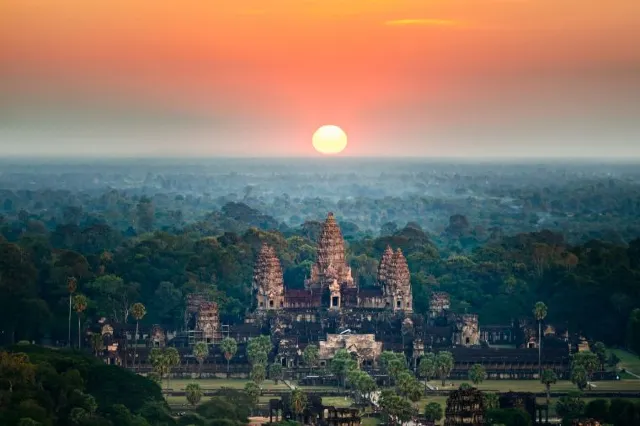
The avenue with dimensions 9.5m x 475m long with the serpentine balustrades walking you to the central abode of gods. Along the way, you have the two pools and two libraries. The northern lotus pool is where people throng to watch the sun ascend the temple spires and is considered auspicious by all.
The main central complex comprises three floors built from laterite ensconced by carved square interlinking galleries. The Preah Poan Gallery with a thousand Buddhas, has the few remaining figurines that were not destroyed by the war or stolen.
The towers of the third and second floors are lotus-bud shaped and rise to the height of 55m above the ground or central tower and 31m above the third floor. The lotus-bud in Vishnu’s hand is the favourite pose depicting tranquillity.
The Bakan Sanctuary upper level can be accessed through the steep stairs depicting the hardships to reach the abode of gods. The Bakan Sanctuary at the Angkor Wat upper level has no queues and accessible to a limited number each day.
Yes, on foot is your expectation! But consider that you get enough of walking while discovering the angkor wat temples. You will be glad we told you that getting from one temple to the other will be the biggest hurdles you discover onsite. Since foreigners are not permitted to ride in the complex area, the choice of scooters or motorbikes is out. Here are your choices then.
Hire a tuk-tuk for the day. Bargain hard, and you spend about 15-30 USD and save yourself time and energy. Most guest houses and hotels can help arrange one to pick you and drop you back from the angkor wat, or you can pick one from the street.
This option can cost much like the guided tours to angkor wat use AC vans, a full-time guide and generally are for groups. You will pay more for the private tours of course. But if time is of the essence, then choose the tour carefully and opt for tours with small groups of about 8 persons including the sunrise and temple visits.
Alternatively, taxis and private vehicles are available on a rental basis for the day. Larger groups use the minibuses and may work out to be the most economical and environment-friendly option. There are various tour operators to pick from depending on which temple and how quickly you want to see the sights.
Try the helicopter view of angkor wat or use a hot-air balloon to spice up the trip. You can get a view of the entire park but are not allowed to fly directly above the Angkor Wat. If that’s too expensive, check out for biking trips at Grasshopper Adventures.
The circuits of the Angkor Wat complex:
There are two circuits of angkor wat that tourists follow depending on their time to spend and what they wish to see. The smaller circuit takes in the angkor wat, the Bayon and the Ta Prohm. The longer 26km circuit takes a slight detour after the smaller circuit to take in the several other temples of Phnom Bakheng, Preah Khan, Angkor Thom, Banteay Kdei and Srah Srang which essentially takes from sunrise to sunset both beautiful times to be around these temples.
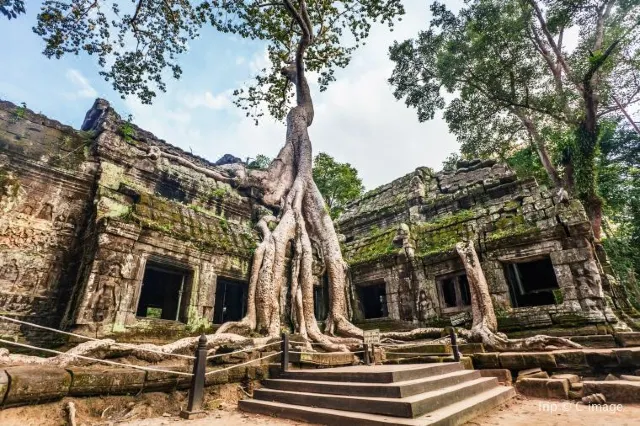
Ta Prohm: The “Tomb Raider temple” or the “temple where the trees grow out of the rock” needs you to trek through the jungle first. Your discovery will let you see this temple amid its discovery state though restored. It is truly amazing and makes for great pictures with the overgrown roots guarding the main entrance and the temple as a whole
Banteay Kdei: The Banteay Kdei is an unrestored temple which was then a Buddhist temple and monastery. Here also its mazes of discovery and the overgrowth of the jungle add to the beauty and reflectivity of the shrine.
Srah Srang: The impressive Srah Srang 12th century reservoir has a terrace of stones and side trails to explore and is a much-needed break from the travails of temple visiting. Admire the nag-sculptures and others left onsite at this popular sunrise spot.
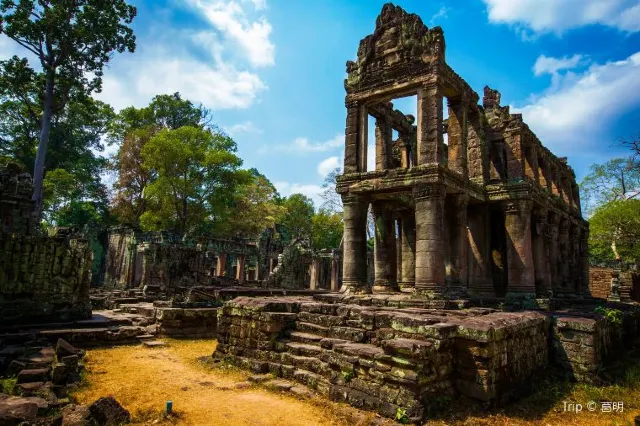
Preah Khan: The temple with a layout that is flat and its entrance to the east is different from the other temples of Angkor and not well restored. The moss, overgrowth of sprouting trees, ancient temple corridors, vermillion red-painted ruins with sculptures and carvings to admire should leave you excited.
Angkor Thom: The moat of Angkor is a ride for the privileged. The Khmer Empire had its capital city at or Angkor Thom, and the ruins on the other side beckon invitingly to be discovered. The four bridges leading to Angkor Thom are a visual experience of intricate carving and sculpture of the gods and demons of yore.
At Angkor Thom do not miss
- Bayon: The main King Jayavarman VII temple in the city center with the giant “face towers.”
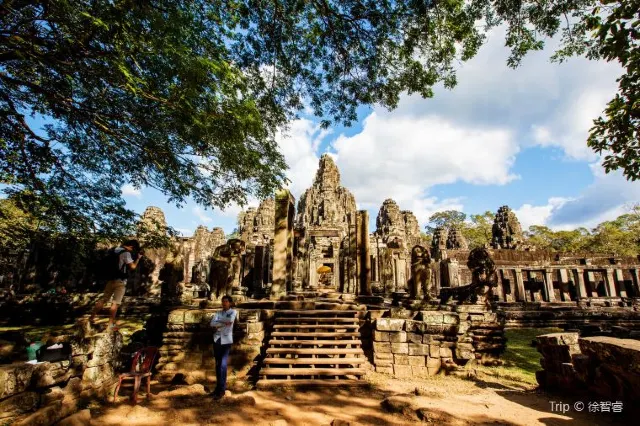
- Baphuon: A three terraced Shiva temple with a long-elevated bridge to it.
- Terrace of the Elephants: This ornate 350 m platform has carvings, guarding elephant statues and sculptures to discover. It was used to watch the army parades and ceremonies in the times of the Khmer Empire.
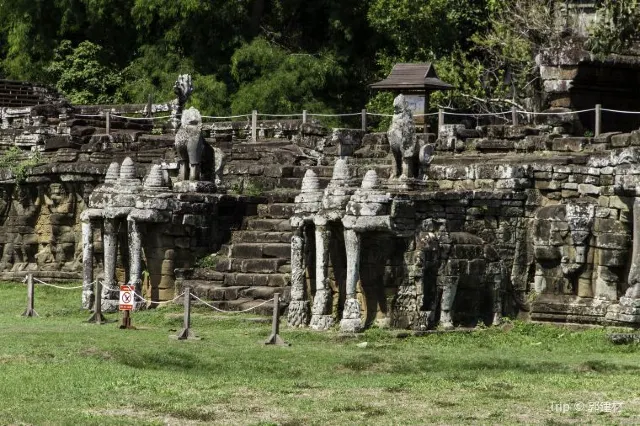
- Leper King’s Terrace: This is a temple dedicated to Yama the God of Death and has many beautiful sculptures and carvings to admire.
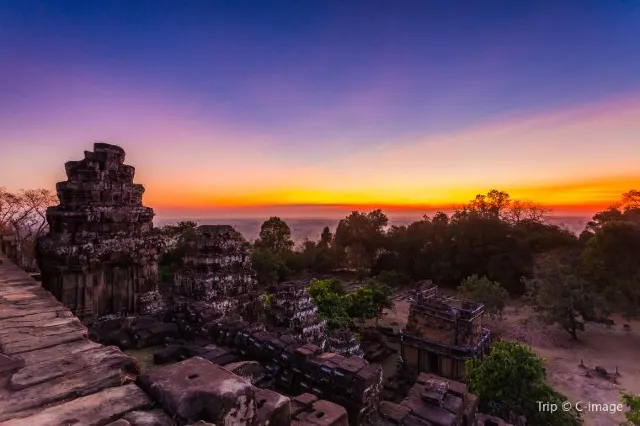
- Phnom Bakheng Temple: This is a fitting finale to the day to watch the sunset after you visit the Shiva temple here.
There is a strict dress code at the angkor wat as it is a temple. The Bakan sanctuary requires full arms and long below the knee dresses as the guidelines for temple etiquette. Do not climb, touch, or sit on any of the ancient structures, be respectful to the monks, don’t holler and watch their video and audio presentation on etiquette carefully and in reverence.
Have you seen mobs and crowds as early as 5 am? That’s regular here at the angkor wat lotus pond with people wanting to watch the sunrise over the temple of Angkor Wat. The auto-rickshaws or tuk-tuks ply 24x7 so don’t worry about reaching there. For the ones with the one-day pass, this is a must-see sight too. Try to head out to Bayon Temple close-by, finish your visit to the Ta Prohm and then visit Angkor Wat, so you don’t have to contend with the crowds.
If you want to take in the sunset at Phnom Bakheng on the angkor wat tour, buy your ticket late in the evening at around 4:30 pm, so you get the next day to visit the temples. Yes, Angkor Wat will be very crowded at sunset, but you can get to Pre Rup where the crowds are not so much. You can get some quality pictures without being jostled around.
When to visit:
Angkor Wat has an almost tropical climate with two main seasons, the monsoons and the hot summer season. Between the two extremes lies the months of November to March when you are a weather-cuspian. That’s when hordes of tourists are visiting angkor wat too, and prices may suddenly jump upwards.
However, take solace in the fact that the weather is generally mild and conducive for exploring the Angkor Wat. If you can tolerate the heat and humidity you can visit in summer between April to June. However, it is good to stay out of the heat in the afternoons when it gets uncomfortable and to drain to take in so much exercise. The plus point of visiting in the off-season is that you can beat the crowds and get discounted hotel rates. The rainy season is heavy, and roads turn slushy. So beware!
Buying the best ticket:
Angkor Wat opens at 5 am while the Bakan Sanctuary on the upper level opens at 7.30 am. The angkor wat closes operations at 5:30 pm. Choose wisely between the single day, three and seven-day passes which cost you going by the revised rates 37, 62 and 72 USD as the case may be. The 3-day pass to Angkor wat is valid over the next ten days while the 7-day pass can be used over the month.
While you can do a quick-sightseeing tour of angkor wat in a day and are not quite up to being the meticulous 7-dayer history and temple enthusiast. You can use the 3-day pass to your advantage and also discover your own experiences in off-beat temples. It is a huge place to explore so even if you aren't a history-freak it is well-worth visiting these lesser-known places like Koh Ker, Banteay Srei, Beng Mealea, Kbal Spean and Phnom Krom. Having settled the issue of costs you can book your tickets online or at the booths outside. But, if you want to be wise do so early and try to stay ahead of the crowds. This is the first step in planning your trip!
Want to enjoy the night?
The Siem Reap area where Angkor Wat is located also has a variety of vibrant and catchy nightlife options. Fine dining, dance clubs, restaurants, bars, pubs and more can be enjoyed sun-up to sun-up at select places. Bar on Pub Street is popular for its Angkor beer costing 1.5USD and 10USD for a pitcher.
Alliance Café is French and also has rooms from 80 USD on. They are located at Makara Street on High School Road at Siem Reap and are open 9 am to 10 pm. Armands Bistro boasts of the Cambodian Royal Family being their guests. Try their tenderloin Rossini for 21 USD. They work 5 pm to late at nights every day and are located at Preah Sangreach Tep Vong Street.
Miss Wong is excellent for cocktails, traditional Shanghai drinks and lots of peaceful lanterns to channelize the energy. Their rates range from 2 USD for local beer, 5USD for the imported beer, 4 USD for wines, and 28 USD for champagne. They are located at The Lane in Siem Reap and work from 6 pm to 1 am. X Rooftop Bar, Picasso Bar, Barcode for its bar games, Asana Old Wooden House, Silk Garden, Banana Leaf, Peace, and Love and Mezze are the others you can visit when there.
Popular recommendations

Top 19 Hippest Mid-Size US Cities
TripBlog
Top European Bucket List Foods and the Best Places to Try Them
TripBlog
LEGOLAND® Malaysia Resort from 21 to 23 Sept 2018
 Trip.com
Latest Trip.com Promo Codes, Black Friday Deals, Flight Discounts & Hotel Savings (Weekly Update)
 Trip.com Official
Trending Travelogues
Popular Trip Moments
Popular Attractions
Popular Ranked Lists
Popular Destinations
Recommended Attractions at Popular Destinations


About






of the year 2025



Site Operator: Trip.com Travel Singapore Pte. Ltd.