Beijing Dining 2026: What to Eat and Where to Eat

Contents
- What to Eat in Beijing: The Dishes That Define the City
- Peking Duck: The One Meal Worth Booking
- Copper-Pot Lamb Hot Pot: Beijing's Winter Religion
- Zhajiangmian: The Bowl Beijing Eats Every Week
- Jiaozi: Dumplings, Boiled or Pan-Fried
- Beijing Breakfast: Jianbing, Youtiao and Douzhi
- Street Snacks: What to Eat Between Meals
- Imperial, Halal and Vegetarian Tables
- Fine Dining and the Michelin Selection
- Where to Eat in Beijing, Neighbourhood by Neighbourhood
- Dongcheng: Wangfujing, Qianmen and the Hutongs
- Xicheng: Houhai, Huguosi and Niujie
- Chaoyang: Sanlitun, CBD and Modern Beijing
- Haidian: University District Value
- Beijing Street Food: Five Streets and Markets Worth Visiting
- Ghost Street (Guijie)
- Wangfujing Snack Street
- Nanluoguxiang
- Qianmen Street
- Huguosi Street and Jiumen Xiaochi
- Beijing Dining by Meal: Breakfast, Lunch, Dinner and Late Night
- What Beijing Dining Costs
- How to Order, Pay and Eat in Beijing
- Ordering Without Chinese
- Paying
- Tipping, Tea and Sharing
- Dietary Needs and Allergies
- Peak Hours and Queues
- A One-Day Beijing Dining Itinerary
- Where to Stay for a Food-Focused Trip
- More Beijing Guides
Show more
Beijing dining is a split personality. One table is imperial: lacquered roast duck carved in front of you, court dishes that once fed emperors, tasting menus that cost more than a flight. The other is stubbornly northern and cheap: a bowl of noodles for CNY 20, dumplings by the plate, a copper pot of lamb in winter, breakfast folded into paper on your way to the subway. Both are worth your time, and the best eating days in Beijing move between them. This guide covers what to eat, dish by dish; where to eat it, neighbourhood by neighbourhood and street by street; what each meal costs; how to order and pay without speaking Chinese; and a one-day route that fits breakfast, duck, snacks and a late-night table into a single loop.
You cannot eat everything in one trip, so start with the dishes locals actually argue about. Each one below has a clear best setting, a price band, and a shortlist of places that do it properly.

Siji Minfu Roast Duck
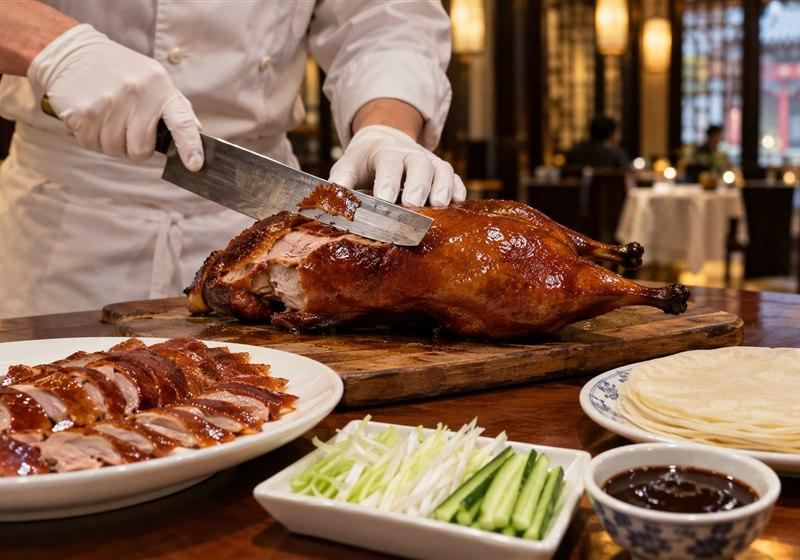
Duck is the meal Beijing built its reputation on. The bird is air-dried for up to 48 hours, roasted over fruitwood until the skin turns to lacquered mahogany, then carved at the table into skin, meat and a final plate of bones that comes back as soup. You wrap slices in thin flour pancakes with scallion, cucumber and sweet bean sauce. Eat the skin first, while it is still crackling; the meat second; the soup last. A whole duck feeds three or four people, and half orders are normal.
Four addresses cover the range. Quanjude has been roasting duck since 1864 and its Qianmen flagship still uses the open flame, though the dining room is mostly visitors. Bianyifang is older, dating to 1416, and uses a closed oven that gives a subtler, juicier result. Da Dong is the polished, lean-roasting version, closer to fine dining, in Chaoyang. Siji Minfu is the locals' pick: the branch near the Donghua Gate of the Forbidden City looks straight at the palace walls, so arrive 30 minutes before opening or accept an hour's wait. Li Qun, buried in a hutong near Qianmen, is the no-frills, eat-in-someone's-house option. Budget CNY 120-180 per person at the simple end and CNY 300-500 at Da Dong.
Dong Lai Shun Hotpot (Wangfujing)
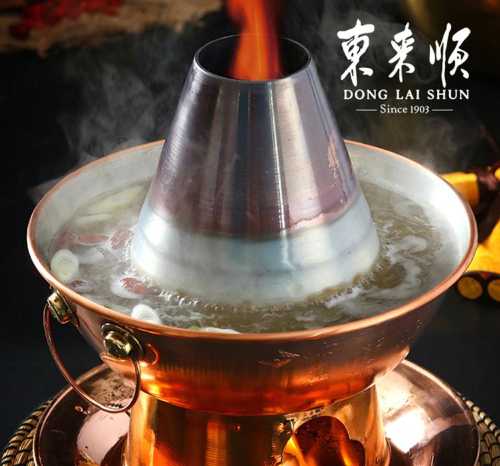
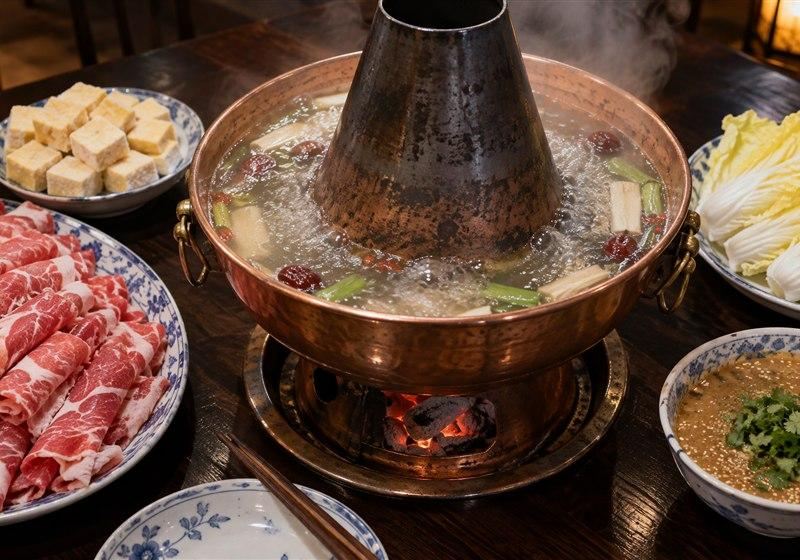
Beijing hot pot is not Sichuan hot pot. The pot is copper, the broth is clear bone stock, and a chimney of burning charcoal sits in the middle. You cook paper-thin slices of lamb in the broth for a few seconds, then drag them through sesame paste mixed with fermented tofu, chilli oil and coriander. The meat should be sweet and faintly gamy; the dip does the heavy lifting. Order a plate of hand-cut lamb, some frozen tofu, Chinese cabbage and sesame flatbread, and finish with the broth, which by then tastes of everything.
Dong Lai Shun opened in 1903 and remains the benchmark, with a convenient Wangfujing branch; its lamb is sliced thin enough to see light through. Nan Men Shuan Rou, near the Temple of Heaven, does premium lamb over charcoal in a plain dining room. For a first-timer with no Chinese, Hai Di Lao is the pragmatic choice: individual pots, English touchscreens, staff who will explain the dips. Expect CNY 80-150 per person at the specialists and CNY 120-200 at Hai Di Lao.
Zhajiangmian is noodles with a sauce of fermented soybean paste and diced pork, fried slowly until glossy, then topped with shredded cucumber, radish, blanched bean sprouts and soybeans. It costs CNY 15-38, arrives in about four minutes, and is the meal locals fall back on between errands. Mix the sauce through first, then add the vegetables a handful at a time, and ask for the free bowl of noodle broth. Our Beijing zhajiangmian guide lists seven shops and what each one does differently; if you only try one, make it the hutong branch of Fangzhuanchang No. 69 behind Shichahai.
Dumplings are the safest order in any Beijing restaurant and the best value meal in the city. Fillings run from pork and chive to lamb and carrot, shrimp and egg, and whatever vegetable is in season. Boiled (shuijiao) is the default, steamed (zhengjiao) is lighter, and pan-fried (guotie) gives you the crisp bottom that most visitors remember. Order by the plate of 12-15, dip in black vinegar with chilli oil, and add a cold dish so the table is not all dough. Baoyuan Jiaozi Wu, near the Workers' Stadium, makes wrappers coloured with vegetable dye and is the easiest introduction; Xian'er Lao Man Jiaozi Guan offers more than a hundred varieties if you want to go deep. Budget CNY 30-60 per person.
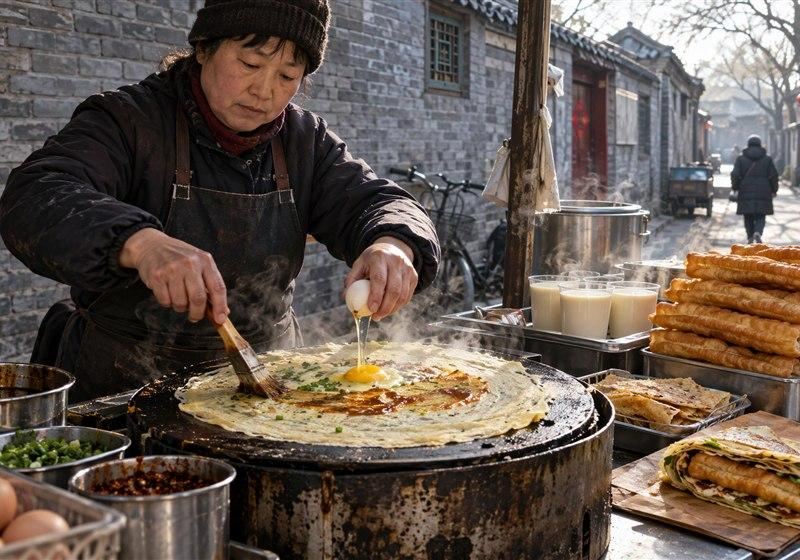
Locals eat breakfast between 6 and 9 am, standing up or walking. The best-known item is jianbing: a mung-bean and wheat crepe spread on a hotplate, cracked with an egg, brushed with bean paste and chilli, folded around a fried cracker. It costs CNY 8-15 and is sold outside almost every subway station; follow the longest line of commuters. Pair it, or replace it, with youtiao (fried dough sticks) dipped in hot soy milk for CNY 5-8, baozi at CNY 2-6 each, or jidan guanbing, an egg-stuffed flatbread, at CNY 6-10.
Then there is douzhi, fermented mung-bean drink, sour and pungent, served with fried dough rings and pickles. It is a rite of passage rather than a recommendation, and most visitors take one sip and hand it to a friend. Eat breakfast in a residential neighbourhood rather than a tourist street; the prices are lower and the turnover is faster.
Beijing snacking is a walking activity. Tanghulu, hawthorn berries under a crackling sugar glaze, costs CNY 10-20 a skewer and is best in autumn and winter, when the fruit is sharp. Lamb skewers dusted with cumin and chilli run CNY 5-10 each and appear wherever there is charcoal smoke after dark. Roujiamo, a crisp flatbread stuffed with braised pork, is CNY 10-15. Malatang, where you fill a basket and they boil it in numbing broth, is a full meal for CNY 20-40. Old Beijing sweets are their own category: lvdagun (rolled glutinous rice with red bean), aiwowo (sticky rice balls), wandouhuang (pea-flour cake) and Beijing yoghurt in a ceramic pot.
Beijing's court cooking survives at the Beijing Hotel, where Tan Jia cuisine is served as a set menu of dozens of small dishes; it is the closest thing to eating the Qing imperial kitchen. The city's Muslim food is centred on Niujie, where Hui restaurants serve the whole-sheep banquet, hand-pulled noodles and grilled lamb, and you can eat extremely well for CNY 40-80. Vegetarians are better served in Beijing than in most Chinese cities: King's Joy, near the Lama Temple, holds two Michelin stars and a Green Star for its refined plant-based tasting menu in a courtyard, and temple restaurants around the major sights serve simple, cheap vegetarian food.
If you want one splurge, the latest Michelin Guide Beijing recognises 33 starred restaurants, led by two three-star kitchens, Chao Shang Chao and Xin Rong Ji, where tasting menus run CNY 1,500-3,000 per person. The smarter play is the Bib Gourmand list: 21 restaurants where a full meal costs under CNY 100. Book two to four weeks ahead for the three-star rooms, and one week for anything with a star.
Beijing is too spread out to eat by restaurant name alone. Pick the district you are already in and the meal follows. The subway makes hopping between them easy; almost every address below is within a ten-minute walk of a station.
Dongcheng holds the densest concentration of food in the city. Wangfujing has the snack street, Quanjude's tourist-facing branch and Dong Lai Shun's hot pot; Qianmen has heritage restaurants and the original duck houses; Nanluoguxiang and the lanes around Shichahai are for snacking and hutong meals. Ghost Street sits at the eastern edge and is the late-night answer. If you have one day and one district, choose this one.
Xicheng is the old-Beijing eating district. Huguosi Street has been serving halal snacks since the 1950s, Houhai has lakeside restaurants that stay open past midnight, and Niujie is where the city's Muslim community eats. It is also where several of the traditional zhajiangmian shops are, including the Huguo Temple canteen that puts noodles next to douzhi and aiwowo on the same tray.
Chaoyang is where Beijing eats when it wants to impress. Da Dong's flagship, most of the starred restaurants, upscale hot pot and the international kitchens of Sanlitun are here, along with craft breweries such as Great Leap and specialty coffee within walking distance. Prices are higher, English menus are standard, and reservations actually matter.
Haidian feeds the university campuses and does it cheaply. Regional restaurants from every province in China cluster around the schools, portions are large, and a good meal costs CNY 30-50. It is also the practical lunch stop before or after the Summer Palace, which sits in the same district.
| District | Best for | Signature eating | Getting there |
| Dongcheng | First-timers, duck, snacks, late night | Siji Minfu, Quanjude, Wangfujing Snack Street, Ghost Street | Metro Line 1 Wangfujing; Line 2 Qianmen; Line 5 Beixinqiao |
| Xicheng | Old Beijing snacks and halal food | Huguosi snacks, Niujie lamb, Houhai restaurants | Metro Line 4 Ping'anli; Line 7 Guang'anmennei |
| Chaoyang | Fine dining, modern Chinese, bars | Da Dong, King's Joy, Sanlitun breweries | Metro Line 10 Sanlitun; Line 1 Guomao |
| Haidian | Budget regional food, university area | Provincial restaurants, noodle and dumpling shops | Metro Line 4 Renmin University; Line 16 Suzhou Street |
Five streets carry most of the city's snack reputation. They are not equal, and two are firmly aimed at visitors, but each is worth an hour if you are nearby.
A kilometre of red lanterns and more than 150 restaurants in Dongcheng, open until 2-4 am. The specialty is mala crayfish, piled shell-high on tables in summer, along with Wanzhou grilled fish, spicy bullfrog and lamb skewers. Hu Da is the institution for crayfish and the queue proves it. Come after 8 pm, take Metro Line 5 to Beixinqiao, and budget CNY 50-100 per person.
More than a hundred stalls steps from Wangfujing station on Line 1, with snacks from CNY 5-10. Locals call it a tourist trap and they are not wrong, but it is genuinely entertaining, and the fried scorpions and starfish are a photo rather than a meal. Go once, eat the tanghulu, move on.
An 800-metre hutong of snack counters and small shops between Line 6 and Line 8. The jianbing is good, the tanghulu comes with chocolate and yoghurt coatings, and the Beijing yoghurt in ceramic pots is the thing to order. It is crowded at weekends and pleasant on a weekday afternoon.
The pedestrian street south of Tiananmen Square, lined with heritage restaurants and vendors selling roasted chestnuts, baozi and tanghulu. Quanjude's original branch is here. It is the most convenient food street if you are already visiting Tiananmen or the Forbidden City.
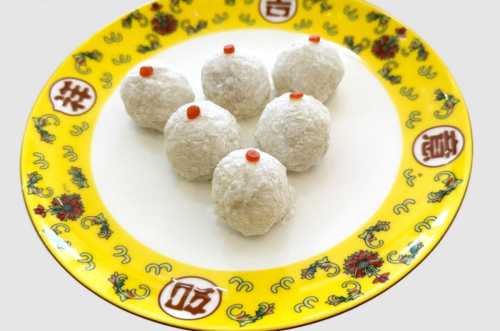
Huguo Temple Snacks (Huguo Temple Flagship Store)
Huguosi is the old halal snack street in Xicheng, and Jiumen Xiaochi gathers traditional vendors under one roof when you do not want to walk between them. This is where you try douzhi, jiaoquan, aiwowo, lvdagun and pea-flour cake in one sitting for under CNY 50. It is less polished than Wangfujing and far more real.
Restaurant hours in Beijing are earlier than in most Western cities. Kitchens close between lunch and dinner, breakfast is over by 9:30, and the only reliable late-night food is hot pot, crayfish and skewers.
| Meal | Typical time | What locals eat | Where to go |
| Breakfast | 6:00-9:00 | Jianbing, youtiao and soy milk, baozi, douzhi | Street stalls near subway exits, Huguosi Street |
| Lunch | 11:30-13:30 | Zhajiangmian, dumplings, rice with two dishes | Hutong noodle shops, office-district canteens |
| Afternoon snack | 14:00-17:00 | Tanghulu, yoghurt, pea-flour cake, tea | Nanluoguxiang, Qianmen, teahouses |
| Dinner | 18:00-20:30 | Peking duck, hot pot, shared banquet dishes | Siji Minfu, Dong Lai Shun, Da Dong |
| Late night | 21:00-02:00 | Crayfish, lamb skewers, spicy fish, beer | Ghost Street, Sanlitun, Houhai |
Two practical consequences. First, do not plan a 3 pm duck lunch: the duck ovens rest between services and many houses stop seating at 2 pm. Second, if you land in the evening and want something within an hour, head for hot pot or Ghost Street rather than a famous name that closed its kitchen at 9.
Beijing is cheaper than Shanghai and far cheaper than Tokyo or London for the same quality. The table below is per person, without drinks.
| Meal or dish | Typical price | Notes |
| Street breakfast | CNY 10-20 | Jianbing plus soy milk, eaten standing |
| Zhajiangmian | CNY 15-38 | Full set of toppings included |
| Dumplings | CNY 30-60 | Two plates plus a cold dish |
| Peking duck | CNY 120-300 | Whole duck shared by three or four |
| Copper-pot hot pot | CNY 80-200 | Lamb, vegetables and sesame dip |
| Michelin Bib Gourmand | Under CNY 100 | Full meal, no drinks |
| Fine dining tasting menu | CNY 500-3,000 | King's Joy to the three-star rooms |
On a budget of CNY 50-100 a day you can eat jianbing, noodles, snacks and a simple dinner. CNY 150-300 buys a duck or hot pot dinner on top of that. Above CNY 500 a day you are in Michelin and cocktail territory.
Almost everything that goes wrong on a first Beijing dining trip is administrative rather than culinary: the menu is on a QR code, the payment app is not set up, and the waiter does not speak English. Fix those three things before you land and the rest is easy.
Most restaurants now use a QR code taped to the table: scan it in WeChat or Alipay, order and pay on your phone. Without a Chinese number this can stall, so ask for a paper menu. Tourist-area restaurants usually have picture menus and pointing works perfectly. Useful phrase: "You yingwen caidan ma?" (Do you have an English menu?). Download a translation app with the Chinese offline pack before you fly and use the camera on dish names.
Alipay and WeChat Pay both accept foreign cards now, and setting one up before arrival saves an hour of confusion. Mid-range and upscale restaurants take international credit cards. Small vendors and hutong shops still prefer cash or a phone, so keep CNY 200-300 in small notes.
Do not tip. It causes confusion and sometimes offence, and no service charge is added. Tea is usually free and refilled without asking; leaving the lid ajar is the traditional signal that you want more. Ordering is family style: two dishes plus a staple for two people, three or four dishes for four. Rice and noodles are ordered per person, not shared.
Carry your restrictions written in Chinese on your phone. "Wo chi su" means I eat vegetarian; "wo bu chi zhurou" means no pork; "wo dui huasheng guomin" covers a peanut allergy. Halal food is easy around Niujie and marked with Arabic script and green signage. Gluten-free is the hard one: soy sauce contains wheat and many sauces are thickened with flour, so plain rice dishes and hot pot, where you control what goes in, are the safest orders.
Lunch peaks from 11:30 to 13:00 and dinner from 18:00 to 20:00. Famous duck houses and hot pot chains do not take same-day bookings at peak times, so arrive 30 minutes before opening or eat at 14:00 or 21:00. A queue of twenty people at a noodle shop usually means fifteen minutes, because tables turn in ten.
This route keeps travel time under 40 minutes between meals and puts the two meals worth planning around at the right hours.
7:30 - Breakfast near your hotel. Find the stall with the longest commuter line, order a jianbing and hot soy milk, and eat while you walk to the subway. Total cost CNY 15.
9:00 - The Forbidden City. Book tickets on the official channel days ahead and enter from the south. Three hours at an easy pace; the full route is in our Forbidden City guide.
12:30 - Peking duck at Siji Minfu. Leave by the north gate and walk to the Donghua Gate branch. Arrive before 12:30 or expect to wait; a half duck, pancakes and a vegetable dish is enough for two.
15:00 - Snacks in Nanluoguxiang. Twenty minutes by subway or a 25-minute walk north. Order the yoghurt in a ceramic pot and a tanghulu, then wander the hutongs towards Shichahai.
17:00 - Sunset at Jingshan Park. The hill north of the palace gives the postcard view for CNY 2; details in our Jingshan Park guide. Come down the east gate and you are ten minutes from the hutong noodle shops if you want a light bowl instead of a second big meal.
20:00 - Ghost Street. Metro Line 5 to Beixinqiao for crayfish, skewers and beer under the lanterns. This is the meal that runs until 2 am, so there is no need to rush.
Stay inside the Second Ring Road if eating is the point of the trip. Dongcheng puts you within walking distance of Wangfujing, the Forbidden City and the hutong restaurant belt; Xicheng puts Houhai and Huguosi on your doorstep and is quieter at night.
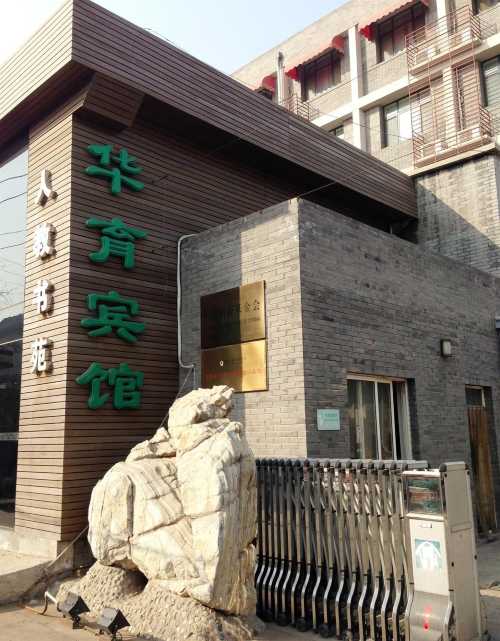
King Parkview Hotel
King Parkview Hotel sits in the lanes west of the Forbidden City, which puts Jingshan, Beihai and the hutong noodle shops within walking distance and Wangfujing two metro stops east.

The PuXuan Hotel and Spa

The PuXuan, on the Wangfujing side, is the polished option: a shorter walk to the duck houses and Dong'anmen night eating, and easy access to Line 1 for everything else.
Both areas are 15-25 minutes by metro from Beijing's main stations, which matters if you are arriving or leaving by train. Compare rooms and rates for Beijing hotels before you book, and check the metro line on the map rather than the straight-line distance.
Popular recommendations

Latest Trip.com Promo Codes, Flight Discounts & Hotel Savings (Weekly Update)
 Trip.com Official

6 Things to know before Exploring the Montmorency Falls, Quebec
 _TS***4m

2026 Guide to Shanghai Pudong Airport: Transit Visa & PVG Airport Shuttle
_TS***4m
The World's Top-10 Best Nude Beaches
_TS***4m