Chongqing Food 2026: 8 Dishes & Best Restaurants to Try

Contents
- Chongqing Food at a Glance
- Chongqing Dishes You Have to Try
- Chongqing Hot Pot: The Reason You Came
- Chongqing Xiaomian: The City's Breakfast
- Suanlafen: Sour, Hot and Eaten Standing
- Hongyou Chaoshou: Wontons in Chili Oil
- Douhua Fan: Tofu, Rice and a Bowl of Chili Dip
- Maoxuewang: The Ciqikou Classic
- Geleshan Laziji: Chicken Buried in Chilies
- Wanzhou Kaoyu: Grilled Fish, the City's Other Obsession
- How to Eat Hot Pot Like a Local
- Best Chongqing Restaurants
- PEI JIE CHONGQING HOT POT (Jiefangbei)
- Zhou Shixiong Hot Pot (Jiefangbei Flagship)
- Qin Ma Hot pot (Longxi)
- Yang Ji Long Fu (Chongqing Main Branch)
- Shancheng Laotangkou (Hongyadong)
- GAOPANGMEI XIAOMIAN (Lianglukou)
- Zhao DaMei SuanLa Fen (Lijiatuo)
- Jiu Jiu Tofu Pudding House (Jiefangbei)
- Wanzhoukaoquan Fish (Shapingba)
- Best Food Streets and Neighborhoods
- Jiefangbei and Hongyadong
- Ciqikou Ancient Town
- Guanyinqiao (Jiangbei)
- Nanbin Road and Nanshan
- Where to Stay Near the Food
- Ascott Raffles City Chongqing
- Niccolo Chongqing
- JW Marriott Hotel Chongqing
- Getting to Chongqing
- Chongqing Attractions Near the Food
- Hongya Cave (Hongyadong)
- Ciqikou Ancient Town
- Yangtze River Cableway
- Liziba Station
- Three Gorges Museum
- More Chongqing and China Food Guides
Show more
Chongqing food is not eaten politely. This mountain city where the Yangtze and Jialing rivers meet built an entire food culture around heat: beef-tallow hot pot bubbling at midnight, chili-oil noodles swallowed standing up at 7 a.m., and street snacks that cost less than a metro ticket. What follows are the dishes you should not leave without eating, the restaurants locals queue for, and the neighborhoods where all of it happens.
Chongqing is one of China's four direct-administered municipalities, a vertical city of 32 million people stacked across hillsides, and it eats differently from the rest of the country. The local flavor is mala - numbing from Sichuan peppercorn, then heat from dried and fresh chilies. Food here is cheap, fast and loud: a bowl of noodles is breakfast, hot pot is a four-hour social event, and dessert is usually a bowl of iced rice jelly.
Practically speaking, three things make eating here easy. Portions are small and prices low, so you can try five dishes in a day. Every neighborhood has its own food street, and the best ones are next to metro stations. And almost every restaurant stays open late - hot pot spots routinely serve past midnight.
| Dish | What it is | Heat | Typical price |
|---|---|---|---|
| Chongqing hot pot | Beef-tallow broth with chilies and peppercorn, dipped in sesame oil | Hot | CNY 90-150 per person |
| Xiaomian | Alkaline noodles with chili oil, pickles, peanuts and minced pork | Medium to hot | CNY 10-18 a bowl |
| Suanlafen | Sour and hot sweet-potato noodles, eaten from a paper cup | Medium | CNY 8-15 |
| Hongyou chaoshou | Pork wontons swimming in chili oil and vinegar | Medium | CNY 12-20 |
| Douhua fan | Silken tofu with rice and a chili dipping sauce | Mild to medium | CNY 15-25 |
| Maoxuewang | Duck blood, tripe and luncheon meat stewed in spicy broth | Hot | CNY 45-68 a plate |
| Geleshan laziji | Deep-fried chicken buried in dried chilies | Hot | CNY 58-88 |
| Wanzhou kaoyu | Whole fish grilled, then simmered in chili broth with vegetables | Medium to hot | CNY 88-138 |
Eight dishes cover the range of the city: four that define it, and four that explain why locals never get bored. You do not need to eat all of them in one day - but the first two are non-negotiable.
Hot pot here is not the clear broth you may know. The base is beef tallow melted with dried chilies, Sichuan peppercorn, ginger and fermented bean paste, which gives it a heavy, clinging heat that coats the throat. Ordering is a loop: raw plates arrive, you drop them into the boiling center, and pull them out with chopsticks before they overcook. A nine-grid pot separates the broth into zones with different temperatures, so you can park slow-cooking items in the cooler corners and swirl quick ones in the middle. Expect CNY 90-150 per person with drinks, and expect to smell like chili the next morning.
Xiaomian means "small noodles", and it is what half the city eats before 9 a.m. The bowl is built in the bottom first - chili oil, sesame paste, soy sauce, pickled mustard greens, chopped peanuts and minced pork - then hot alkaline noodles and a ladle of cooking water go on top. You stir it yourself, which is why every bowl tastes slightly different. Ask for er liang (roughly 100 grams) if you want a small portion; a fried egg on top costs about CNY 2.
Suanlafen are thick sweet-potato noodles served in a sour, chili-heavy broth with peanuts, pickles and cilantro. Texture is the point: the noodles are springy and slightly chewy, and they hold the sourness of black vinegar against the heat of the chili oil. It is a snack, not a meal, and it is normally eaten standing at a counter or walking down the street. Look for shops with a queue of office workers around 11 a.m.
Chaoshou are thin-skinned pork wontons, and the Chongqing version arrives in a pool of red chili oil rather than soup. The wrapper stays slippery, the filling stays juicy, and the sauce is sharpened with vinegar and garlic. Order a small bowl as a starter before hot pot, or as a light lunch with a side of cold cucumber.
Douhua fan is the quiet, everyday meal of the city: a bowl of barely set tofu, a bowl of rice, and a small dish of chili dip with chopped scallion and pickled vegetables. You spoon tofu onto the rice, dip it, and eat. It costs little, it is served from early morning until mid-afternoon, and it is the best way to understand that not everything in Chongqing is aggressively spicy - the chili is on the side, and you control the dose.
Maoxuewang is a dark, glossy stew of duck blood curd, tripe, luncheon meat, bean sprouts and glass noodles in chili broth. It is said to have started in the riverside town of Ciqikou, where butchers sold cheap offcuts to boat crews. The dish is heavy and deeply savory, and one plate is enough for two people alongside rice. If you only order one "banquet" dish in the city, order this.
Laziji comes from Geleshan, a hill district west of the center, and it is exactly what it looks like: a plate of fried chicken pieces lost inside a mountain of dried red chilies and Sichuan peppercorn. You dig for the chicken, and the reward is a crisp, salty crust over juicy meat. It is best shared by three or four people, with cold beer and a plain vegetable dish to reset your palate.
Wanzhou kaoyu is a whole fish grilled over charcoal, then laid in a wide pan of chili broth with bean curd sheets, lotus root, potato and celery, and brought to the table on a burner. It is the Chongqing equivalent of a shared dinner: two people, one fish, a pile of add-in vegetables and a couple of hours. Wanzhou, a district on the Yangtze, is the origin, but the dish is now everywhere in the city.
Hot pot is the one meal where technique changes the result. Three rules cover most of it: dip everything in oil, cook quick items for seconds not minutes, and ask for the spice level you can actually finish.
The dip is a small bowl of sesame oil, raw garlic and cilantro. It is not there to add flavor - it cools each bite and rinses off excess chili. Never dip into the pot's broth and then straight into your mouth; the oil bowl exists for a reason. If a plate comes with a timer card, follow it.
| Ingredient | How long in the pot |
|---|---|
| Beef tripe | 7-8 seconds - lift and dip seven times, then eat |
| Duck intestine | 8-10 seconds, until it curls |
| Yellow throat (aorta) | 30 seconds, until crisp |
| Luncheon meat and sausage | 1-2 minutes |
| Fish slices and tofu skin | 2-3 minutes |
| Potato, lotus root and greens | 3-5 minutes |
Order by spice level: weila is mild, zhongla medium, tela hot - but Chongqing mild is still warmer than most visitors expect, so start mild with a separate bowl of chili on the side. Drink soy milk or cold beer rather than water; dairy and sugar cut the burn better. And pace yourself: the bill is settled at the end by counting empty plates, so keep them on the table.
If you would rather not work out broth strength and portion size yourself, hotel concierges and Trip.com can book a hot pot table or a riverside hot pot package for you in advance.
These nine places are spread across the center so you can eat well wherever you end up. Prices are per person for a normal meal; hot pot bills rise quickly if you order beer. Book ahead for dinner on weekends - the famous hot pot rooms take reservations, and walk-in queues can run past an hour.
| Restaurant | Area | Cuisine | Avg spend | Must-order |
|---|---|---|---|---|
| PEI JIE CHONGQING HOT POT | Jiefangbei | Hot pot | CNY 120-160 | Fresh beef tripe |
| Zhou Shixiong Hot Pot | Jiefangbei | Hot pot | CNY 110-150 | Sliced pork kidney |
| Qin Ma Hot pot | Longxi | Hot pot | CNY 90-130 | Half-and-half broth |
| Yang Ji Long Fu | Jiefangbei | Jianghu dishes | CNY 80-120 | Maoxuewang |
| Shancheng Laotangkou | Hongyadong | Old Chongqing | CNY 90-140 | Geleshan laziji |
| GAOPANGMEI XIAOMIAN | Lianglukou | Noodles | CNY 12-20 | Beef noodle soup |
| Zhao DaMei SuanLa Fen | Lijiatuo | Snacks | CNY 8-15 | Suanlafen |
| Jiu Jiu Tofu Pudding House | Jiefangbei | Tofu and rice | CNY 15-25 | Douhua and steamed pork |
| Wanzhoukaoquan Fish | Shapingba | Grilled fish | CNY 80-120 | Whole grilled fish |
The most talked-about hot pot room in the city, on the second floor of a plaza on Minzu Road, a few minutes from Hongya Cave. Expect a queue, a beef-tallow broth on the stronger side, and fresh tripe that arrives glistening. Open 10:30 a.m. to 2 a.m., which makes it the default choice after a late night walk along the river. Average spend CNY 120-160.
Zhou Shixiong built its reputation on one cut: large, thin slices of pork kidney that cook in seconds and stay tender. The room is brighter and more modern than the old-school hot pot halls, the service is used to foreign guests, and the spice level can be dialed down on request. Open 10 a.m. to 12:30 a.m.; average spend CNY 110-150.
A local chain that has been running since the 1990s, with a branch on Huayuanyuan West Road. It is the comfortable option: parking, high chairs, card payment, an English-friendly ordering sheet, and a split pot so half the table can eat mild. Reviews land around 4.7 out of 5, which for a chain hot pot house in this city is high praise. Open 10 a.m. to 11 p.m.; average spend CNY 90-130.
Not hot pot - this is jianghu cooking, the rustic, big-flavored style that grew out of riverside teahouses. The Linjiang Road dining room is styled like a Republican-era courtyard, the menu runs from maoxuewang to steamed pork with rice flour, and it is one of the highest-rated tables in the city, with more than a thousand reviews. Open 11 a.m. to 10 p.m.; average spend CNY 80-120.
A short walk from Hongya Cave, this branch of a Chongqing old-recipes restaurant is the easiest place to try several classic dishes in one sitting: maoxuewang, Geleshan laziji, pickled cabbage fish and ants climbing a tree. English menu, courtyard seating, reservations accepted. Open 11 a.m. to 10 p.m.; average spend CNY 90-140.
The noodle shop to start a day with, near the former residence of Song Qingling on Zhongshan 3rd Road. The beef noodle soup and the minced-pork zhajiang noodles are the two to order, and the fried egg on top is worth the extra couple of yuan. Seats are stools on the pavement; turnover is fast. Open 7 a.m. to 7:30 p.m.; average spend CNY 12-20.
A neighborhood snack shop that has been doing one thing for years: sour and hot sweet-potato noodles, with peanuts and pickles, in a portion small enough to eat between meals. It is a five-minute stop, not a restaurant, and it is rated five out of five by the visitors who find it. Open 7 a.m. to 8 p.m.; average spend CNY 8-15.
Breakfast or lunch, cheap and quick: soft tofu, rice, and a chili dip you assemble yourself, plus steamed pork belly with preserved vegetables and cold eggplant. It closes mid-afternoon, so do not plan it for dinner. Open 6:30 a.m. to 3 p.m.; average spend CNY 15-25.
Grilled fish is the second great communal meal of the city, and this Shapingba shop does the classic version: a whole fish grilled crisp, then simmered in chili broth with bean curd sheets and lotus root. Order extra vegetables - they soak up the broth and are the best part. Open 10 a.m. to 9 p.m.; average spend CNY 80-120.
Chongqing's food is organized by district, and each one has a different rhythm. The four below are the ones worth planning an evening around; all are reachable by metro and all are walkable within themselves.
| Area | Best for | Best time | Metro |
|---|---|---|---|
| Jiefangbei | Hot pot, old-recipe restaurants, snacks | Dinner to midnight | Line 2, Linjiangmen |
| Ciqikou | Street snacks, maoxuewang, teahouses | Late morning to 5 p.m. | Line 1, Ciqikou |
| Guanyinqiao | Mall food halls and cheap eats | Lunch and evening | Line 3, Guanyinqiao |
| Nanbin Road | Riverside hot pot with skyline views | After 7 p.m. | Line 6, Shangxinjie |
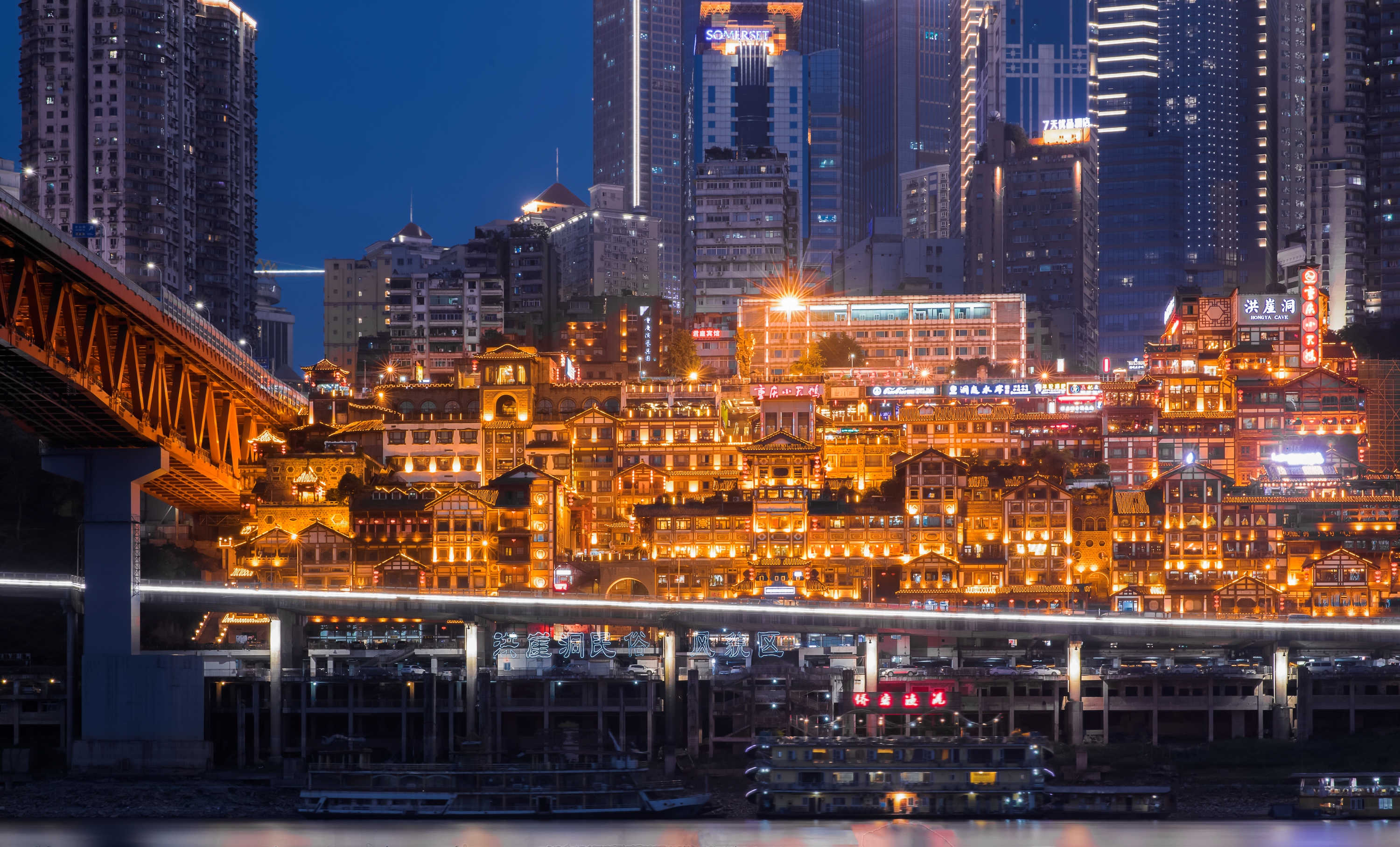
The center of the city and the densest concentration of restaurants: the Bayi Road snack street runs beside the pedestrian mall, Hongya Cave stacks eleven floors of food shops and terraces above the river, and the side streets behind Minzu Road hold the hot pot rooms locals actually book. Come hungry around 6 p.m., walk the snack street first, then sit down for hot pot.
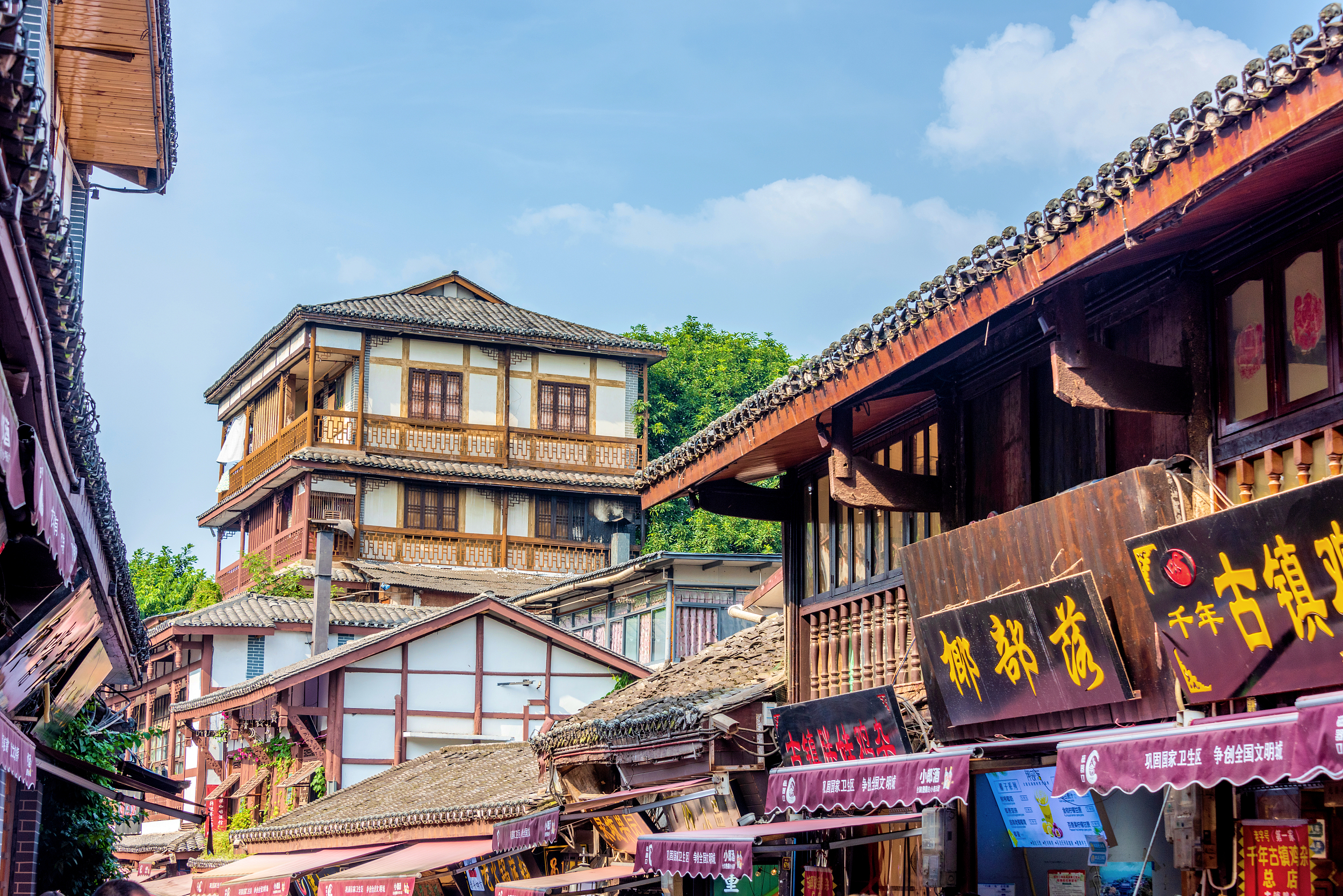
A preserved riverside town on the west bank, 20 minutes from the center by metro, where the food is older and slower: stone-milled tofu, hand-pulled ginger candy, rice cakes, teahouses with bamboo chairs, and maoxuewang in the place that claims to have invented it. It is busy on weekends; go before 11 a.m. and you will have the alleys mostly to yourself.
The commercial district on the north bank, and the best place to eat cheaply around a shopping trip: a food street of stalls and small restaurants, plus mall food halls with regional chains. It is less scenic than the old town but more convenient, with metro Line 3 running straight through.
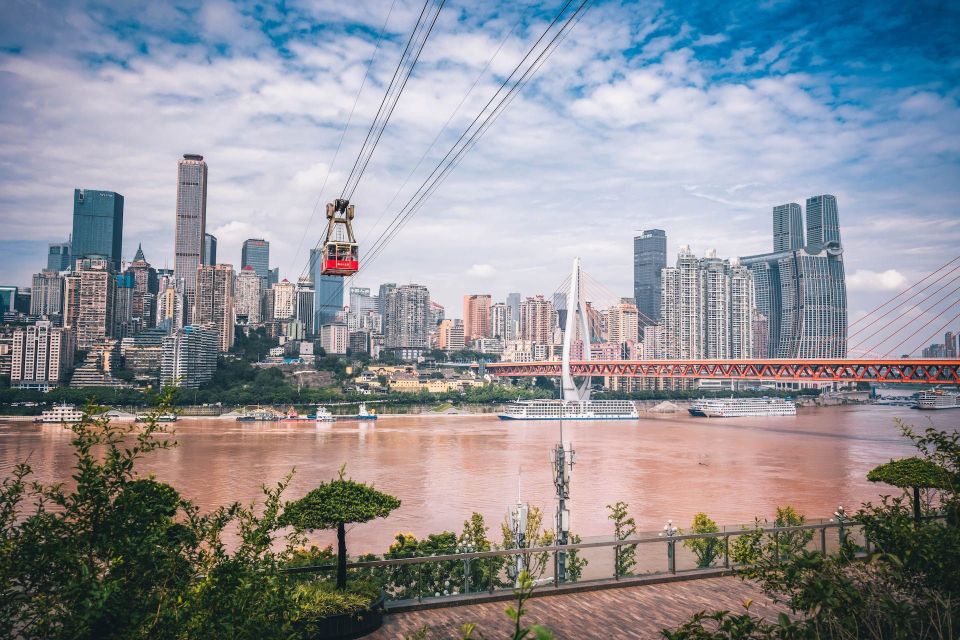
South bank, riverside, and the choice for a hot pot dinner with a view: tables on terraces looking back at the skyline, with the cableway and the bridge lights above the water. Further up the hill, Nanshan has garden restaurants and the spring-water chicken restaurants that locals drive to on weekends. Come after 7 p.m. and book ahead.
The practical choice is to stay in Yuzhong, the peninsula between the two rivers, within walking distance of Jiefangbei, Hongya Cave and the Bayi Road food street. These three hotels all sit in that zone.
Serviced apartments inside the Raffles City complex, directly above the Chaotianmen metro and a 15-minute walk from Hongya Cave. Good for longer stays and for anyone who wants a kitchen after a week of chili. Skyline and river views from the upper floors.
A high-rise luxury hotel near Jiefangbei with floor-to-ceiling windows over the river confluence and one of the calmer breakfast rooms in the city center. The location makes it easy to eat late and walk home.
An established international hotel in the Jiefangbei area, with large rooms, an indoor pool and a location that puts the food streets within a short taxi ride. A reliable option if you want a quiet base between hot pot nights.
Chongqing Jiangbei International Airport (CKG) is about 25 km north of the center, with metro Line 10 and Line 3 connecting it to the city; the high-speed rail network links Chongqing West and Chongqing North stations to Chengdu in roughly an hour and to Xi'an, Guiyang and Kunming in a few hours. Within the city, the metro covers most food districts, and taxis are cheap.
Arriving details, terminal maps and airport transport are covered in our Chongqing Jiangbei Airport guide, and onward travel is covered in the Chongqing to Zhangjiajie train guide.
Every good food street in the city is next to something worth seeing. These five are all within a metro stop or two of the restaurants above, and all are free or cheap.
Eleven floors of stilt houses built into the cliff above the Jialing River, connected by stairs, lifts and bridges. By day it is a shopping and snack complex; after dark the whole facade lights up gold and becomes the most photographed view in the city. Go at 7-8 p.m., eat on the upper terraces, then walk down to the river level for the view back up.
A Ming-and-Qing-era river port with stone lanes, teahouses and snack stalls, about 20 minutes from Jiefangbei on metro Line 1. The food is the point: tofu, rice cakes, ginger candy, chili pastes and maoxuewang. It is crowded on weekends, so an early start is worth it.
A 1,160-meter aerial crossing between the two banks, running since 1987 and now mostly a sightseeing ride rather than commuter transport. The five-minute trip gives you the best cheap view of the river, the bridges and the stacked skyline. Ride it at dusk, then eat on Nanbin Road.
A monorail station on Line 2 that passes straight through a residential building - the city's most famous piece of vertical engineering. There is a viewing platform at street level; it takes ten minutes and pairs well with a walk through the surrounding neighborhood, where small noodle shops outnumber tourists.
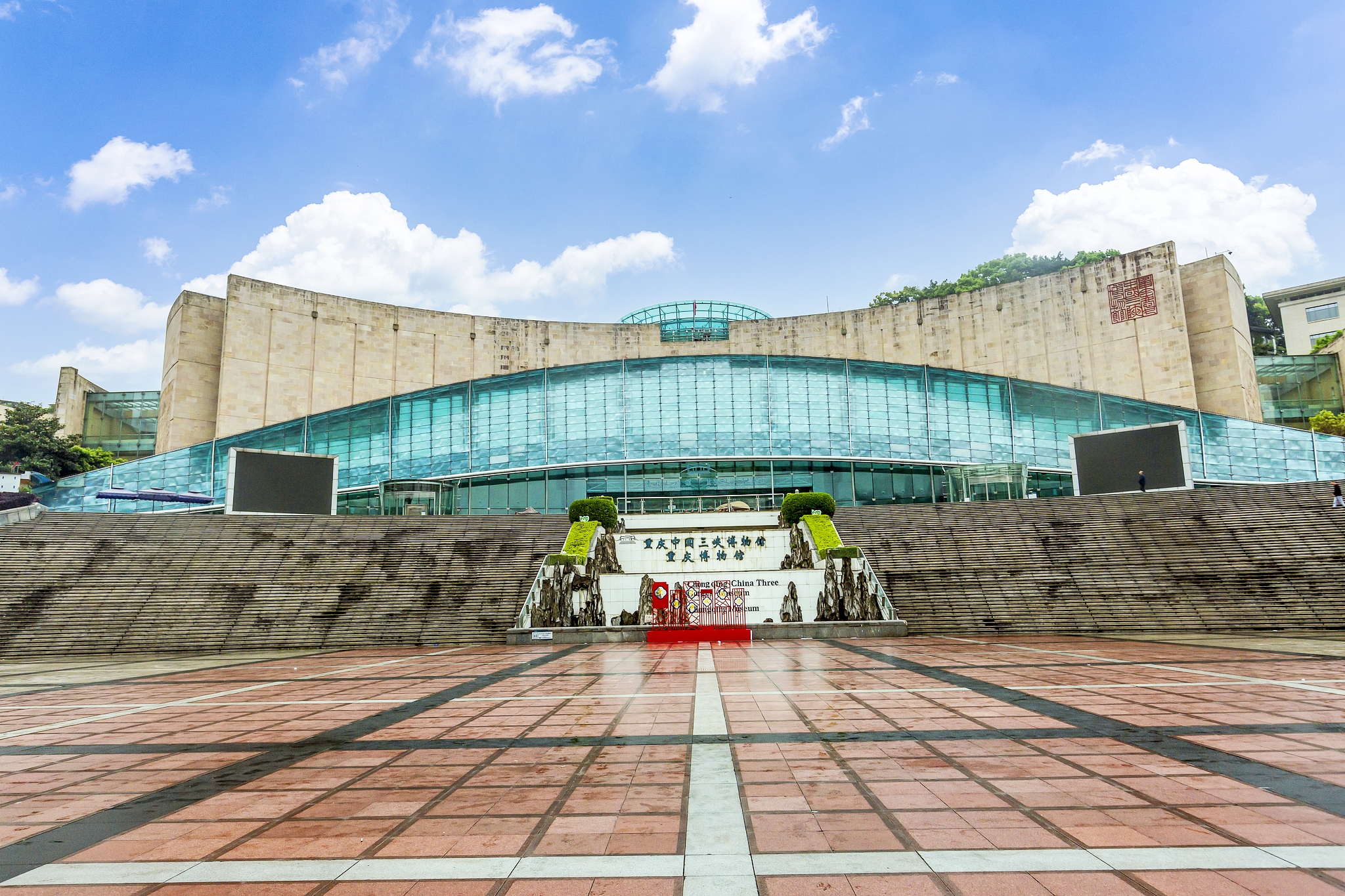
The city's main museum, opposite the Great Hall of the People, covering the Three Gorges dam project, the relocation of riverside towns, and Chongqing's wartime history. Entry is free with advance reservation, it is closed on Mondays, and the air conditioning makes it a sensible midday break in summer.
If you are building a longer trip around the city, these guides cover the logistics and the neighboring food cities.
Popular recommendations

7 Reasons to Put Cancun Mexico Into Your Vacation Bucket List.
 _TS***4m

Latest Trip.com Promo Codes, Flight Discounts & Hotel Savings (Weekly Update)
 Trip.com Official

6 Things to know before Exploring the Montmorency Falls, Quebec
_TS***4m
2026 Guide to Shanghai Pudong Airport: Transit Visa & PVG Airport Shuttle
_TS***4m