Chongqing Zoo 2026: Panda House, Tickets, Hours & Metro

Contents
- Chongqing Zoo Tickets and Prices
- How to Buy Chongqing Zoo Tickets
- Free and Discounted Entry Checks
- Chongqing Zoo Opening Hours
- What Closes First
- Best Time to Visit Chongqing Zoo
- Best Season
- Best Time of Day
- How Long to Allow
- Chongqing Zoo Panda House: How Many Pandas Live Here
- Meet the Star Pandas
- Panda House Opening Hours and Best Viewing Times
- Panda House Viewing Tips
- Red Pandas Next Door
- Chongqing Zoo Metro and How to Get There
- By Metro Line 2
- By Bus, Taxi and DiDi
- Which Gate to Use
- From the Airport and Railway Stations
- Chongqing Zoo Map and Walking Routes
- Layout at a Glance
- Two-Hour Panda Route
- Half-Day Route
- What Else to See at Chongqing Zoo
- Chongqing Zoo Tips and Practical Information
- Where to Eat Near Chongqing Zoo
- Where to Stay Near Chongqing Zoo
- What to Do After Chongqing Zoo
- More Chongqing and Panda Guides
Show more
Chongqing Zoo is the only city zoo in China that keeps more than 20 giant pandas, and it sits about 8 km southwest of the centre in Jiulongpo, one Metro Line 2 ride from Chongqing. Opened to the public in 1955 and spread over 43 hectares of wooded hillside, it holds more than 4,000 animals from over 230 species, but almost everyone comes for the pandas. This guide covers tickets, opening hours, the panda house, the best viewing times and a route that fits a half day.
Admission is deliberately cheap. Adults pay ¥25 from January to November and ¥20 in December, and the concession rate is half price. Children under 1.2 m, seniors aged 65 and over, serving military personnel and visitors with disabilities enter free with valid ID, which is why the zoo is one of the best-value panda experiences in the country.
| Ticket type | Price | Who it covers |
| Adult | ¥25 (Jan–Nov) ¥20 (December) |
Visitors aged 18 to 59 |
| Student | ¥12.5 | Full-time students with a student card |
| Child | ¥12.5 | Children taller than 1.2 m |
| Senior (60–64) | ¥12.5 | Passport or ID required |
| Child under 1.2 m | Free | Must enter with an adult |
| Senior (65+) | Free | Passport or ID required |
| Serving military, visitors with disabilities | Free | Valid service or disability certificate |
| Monthly pass | ¥50 | Local residents, photo required |
| Annual pass | ¥100 | Local residents, photo required |
Three channels work for foreign visitors: the official WeChat account of Chongqing Zoo (Chinese interface, but the QR code entry is straightforward), Trip.com, or the ticket windows beside East Gate 2. Buying online saves the queue at the gate and lets you scan a QR code directly, which matters on weekends. Whatever channel you use, carry your passport: the ticket check compares the name on the booking with the document.
 This place is so worth a visit . We bought the tickets online and was able to enter easily. We saw panda, red panda & many animals. This zoo is amazing !! We are glad to visit during this trip
Concessions are checked at the gate rather than at the window, so a passport, student card or senior card needs to be in hand. Each paying adult can bring one free child under 1.2 m; larger groups should buy child tickets in advance. The ticket covers every animal house in the park, with the exception of a few paid extras such as the VR animal night walk.
The zoo opens every day of the year and only closes for extreme weather. Gates open at 08:00 in the warmer months and half an hour later in winter, and the ticket counters stop selling well before the animals are put away for the night.
| Season | Opening hours | Last entry |
| March to October | 08:00–18:00 | 17:00 |
| November to February | 08:30–17:30 | 16:30 |
| Ticket counters | 08:00–17:00 | — |
Some listings show a single 08:00–18:00 schedule with the last entry at 16:30 all year, so treat the table as a planning guide and check the gate time on the day, especially in the weeks around a public holiday. Arriving after 16:00 leaves too little time for the panda house and is not worth the ticket.
The reptile house, the penguin pool and the small indoor galleries start closing about 30 minutes before the gates, and keepers begin moving animals indoors well before that. The panda house stays open until the park closes, but the pandas themselves decide when the day is over.
Chongqing is one of China's hottest cities in summer, and the zoo sits on a slope with little shade in the middle of the day. Spring and autumn are the comfortable months, winter is quiet and cheap, and July and August are best handled as an early-morning visit.
March to May and September to November give mild temperatures, active animals and manageable crowds. December to February is the cheapest window at ¥20 and the quietest, though some tropical species stay indoors. Summer visits work only if you are at the gate at opening time and leave before noon.
Weekday mornings are the sweet spot. Gates open at 08:00, the pandas are fed shortly afterwards and the paths are still empty. Public holidays are a different story: the zoo received 330,000 visitors during the 2026 National Day holiday, and the panda viewing platforms become a slow-moving queue. If your dates are fixed to a holiday, arrive at opening and go straight to the pandas before anything else.
A panda-focused visit takes two to three hours. A full loop through the goldfish pavilion, tiger hill, primates, herbivores and the reptile house needs three to five hours, and families with small children usually split it with a lunch stop in Yangjiaping.
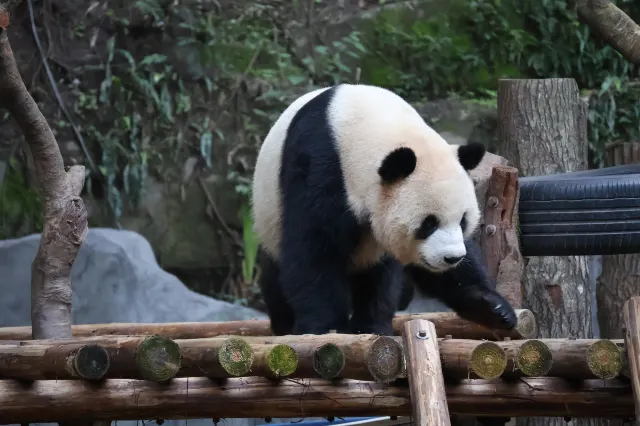
Chongqing Zoo keeps 23 giant pandas on site out of 25 in its care, the largest collection of any city zoo in China. The zoo began keeping pandas in the 1960s and breeding them in the 1980s, and long-term exchanges with the China Conservation and Research Centre for the Giant Panda at Wolong built the breeding group that visitors see today. That is why a ¥25 ticket in Chongqing gets you closer to more pandas than a dedicated panda base ticket elsewhere.
The pandas here are individuals with names, fans and family trees, and local visitors often come for one specific animal. These are the names you are most likely to hear in the crowd.
| Panda | Born | Why visitors look for them |
| Yu Ke and Yu Ai | 2022 | Twin brother and sister born to Er Shun, and the pair most phones are pointed at |
| Chong Chong and Shuang Shuang | 2019 | Twin brothers, the first twins born at the zoo in 60 years |
| Xixi and Qingqing | 2019 | Twin sisters who complete the group fans call the Four Happy Meatballs |
| Mang Zai | Adult | The zoo's most productive mother; her 2026 cub met the public on 3 November 2026 |
| Mang Cancan | 2023 | Mang Zai's fifth cub, loud, curious and easy to spot |
| Liang Yue | Adult | A long-time favourite with local panda followers |
| Wang Shu | 2025 | Born in July 2025, named in 2026 and still a youngster |
The panda house has no separate timetable: it opens and closes with the zoo. What matters is the pandas' routine. They are most active between 08:30 and 10:30, when fresh bamboo, apples, carrots and sugarcane are laid out, and again from about 14:00 to 15:30. Between 11:00 and 14:00 most of them sleep, often out of sight, and in summer the whole group retreats to air-conditioned indoor rooms once the heat builds.
The building has two levels. The ground floor holds the indoor rooms, and the upper level opens onto the outdoor terraces that locals call panda mountain, which give the widest view over several enclosures at once. Go upstairs first: the light is better in the morning and you can see four or five animals without moving. A cub corridor added in 2025 lets visitors watch half-year-old cubs through glass, but places are limited and need a reservation on busy days. In summer the zoo also runs evening sessions from about 18:30 to 21:00 with a light show and animal behaviour talks.
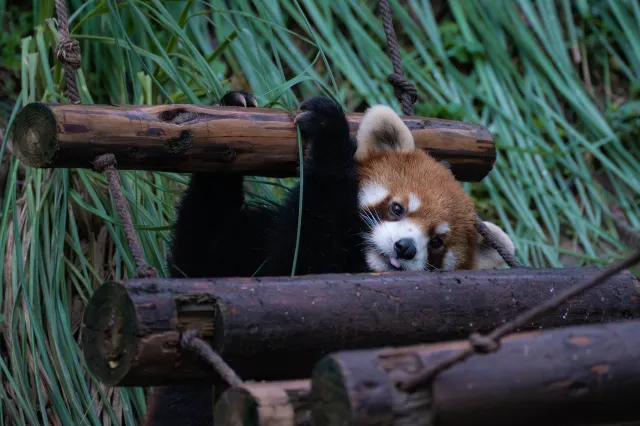
The red panda enclosure sits beside the giant panda house and is connected by overhead wooden walkways, so the animals often pass above head height. They are quicker and more visible than the giant pandas in the middle of the day, which makes them a good stop when the main house is quiet.
The zoo address is No. 1 Xijiao Yicun, Yangjiaping, Jiulongpo District. The metro is the default choice: it drops you a few minutes from the gate, and road traffic around Yangjiaping turns unreliable on holidays.
Ride Line 2 to Zoo Station (Dongwuyuan) and leave by Exit 1. From there it is a 200 to 300 m walk, about four minutes, to East Gate 2. From Jiaochangkou, the station beside Jiefangbei, the ride takes roughly 30 minutes with no changes, which makes the zoo an easy half-day add-on to a city-centre stay.
Around 19 bus routes stop at or near the zoo, including 148, 204, 223, 224, 229, 275, 310, 341, 413, 416, 420, 426, 441, 452, 454, 471, 478, 493 and 822. Taxis and DiDi are cheap by international standards: a ride from Jiefangbei takes 35 to 50 minutes in traffic, and Chongqing West Railway Station is 25 to 45 minutes away by taxi or transit. Show the driver the Chinese name, Chongqing Dongwuyuan.
East Gate 2 is the closest entrance to the panda house and the one to aim for if pandas are the plan. East Gate 1 is a short walk further along the same road and often has a shorter queue when the main gate backs up. Parking fills early at weekends, so drivers should leave the car near Yangjiaping or the MixC mall in Xiejiawan and take Line 2 for the last two stops.
From Jiangbei International Airport, take Line 10 to Chongqing North Railway Station, change to Line 3 and change again at Niujiaotuo for Line 2 towards Zoo Station; allow 70 to 80 minutes with luggage. A taxi takes 45 to 60 minutes outside peak hours. From Chongqing West, the zoo is the closest of the major rail stations at 25 to 45 minutes by road.
The park is built on a hillside, with an upper and a lower terrace linked by paths and stairs rather than lifts. Map boards stand at every gate, and the animal zones are arranged so that a sensible route avoids walking the same slope twice.
From East Gate 2, the giant panda house and the red panda enclosure are straight ahead. Beyond them the path climbs to tiger hill and the carnivore area, then continues to the primate and bird sections. The goldfish pavilion, herbivore paddocks and reptile house sit on the lower loop, which is where the stroller-friendly paths are.
East Gate 2, panda house lower and upper levels, red pandas, tiger hill, penguin pool, then out through East Gate 1 and a 700 m walk to Yangjiaping for lunch. This is the route for a stopover, a hot day or a family with tired children.
Add the goldfish pavilion, the primate and bird sections, the herbivore paddocks and the reptile house to the route above, and allow three to five hours with a rest in the shaded seating areas. Read the map before setting off and pick two or three priorities beyond the pandas so you are not doubling back up the slope.
The pandas are the headline, but the collection is broad enough to fill a morning even if the panda house is crowded.
The goldfish pavilion is the surprise for many visitors: a classical Chinese garden with arch bridges, stone paths and lotus ponds holding hundreds of varieties of goldfish, and one of the most photographed corners of the park. Tiger hill keeps South China tigers, a critically endangered subspecies, alongside white tigers, lions and leopards. The primate section is home to golden snub-nosed monkeys, and the herbivore paddocks hold Asian elephants, white rhinos, giraffes, zebras and hippos. The reptile house adds crocodiles, pythons and the Chinese giant salamander, while a small penguin pool and a children's area with dinosaur models keep younger visitors moving.
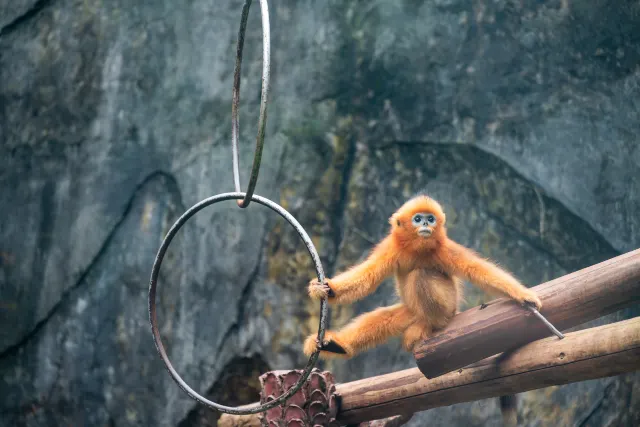
Inside the park, snack stalls and a couple of cafes cover the basics, but the better meal is a 10-minute walk away in Yangjiaping, one of Chongqing's busiest commercial districts. Hot pot, Chongqing noodles, rice noodles and chain coffee shops are all within a few blocks of the metro station, and the MixC mall at Xiejiawan is two stops away if you want air conditioning and a full restaurant floor.
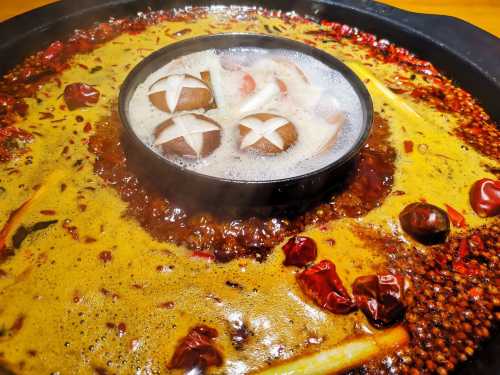
WangWu TuZao Lao Hotpot (YangJiaPing)
Most visitors day-trip from Jiefangbei or the Raffles City area, but staying in Jiulongpo cuts the morning commute and puts you at the gate before the tour groups. The three hotels below are all within a short walk of Yangjiaping metro station, two stops from the zoo.
Holiday Inn Express Chongqing Yangjiaping by IHG is the safe mid-range choice, with breakfast included and a location a few minutes from the pedestrian street. JI Hotel Chongqing Yangjiaping Pedestrian Street is the value pick for couples and solo travellers, with compact, clean rooms and easy metro access. Hampton by Hilton Chongqing Yangjiaping sits at the upper end of the local range, with larger rooms and better views over the district.
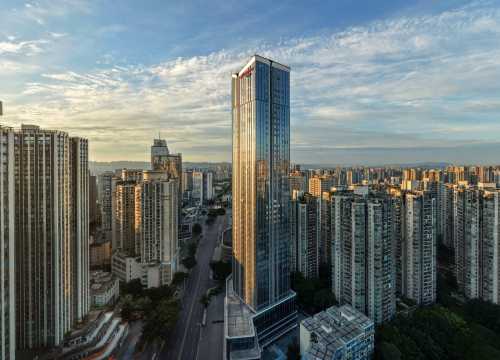
Hampton by Hilton Chongqing Yangjiaping Pedestrian Street
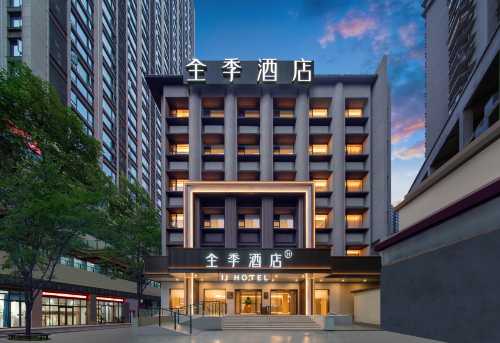
JI Hotel (Chongqing Yangjiaping Pedestrian Street)
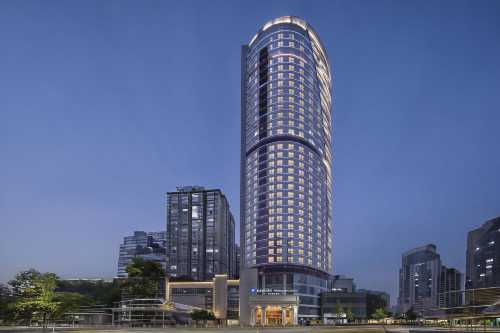
Holiday Inn Express Chongqing Yangjiaping by IHG
The zoo is on Line 2, which is also the line for two of the city's most photographed sights. Liziba station, where the monorail runs through a residential block, is five stops and about 12 minutes away, and the viewing platform below the building is free. Yangjiaping itself is worth an hour for hot pot and street food, and the Three Gorges Museum is a 20 to 35 minute ride towards the centre, with free entry and a real-name reservation. If you have a full day left, the karst country around Wulong is the classic day trip from the city.
Popular recommendations

Latest Trip.com Promo Codes, Flight Discounts & Hotel Savings (Weekly Update)
 Trip.com Official

6 Things to know before Exploring the Montmorency Falls, Quebec
 _TS***4m

2026 Guide to Shanghai Pudong Airport: Transit Visa & PVG Airport Shuttle
_TS***4m
The World's Top-10 Best Nude Beaches
_TS***4m