[Dali Free Travel] How to travel to Dali in 4 days and 3 nights, a comprehensive guide to itinerary planning!

Contents
- Trip Planner
- Overview of Dali City Itinerary Planning
- Dali City Day 1
- Dali Ancient Town
- Three Pagodas Reflection Park
- Chongsheng Temple Three Pagodas Cultural Tourism Area
- Dali City Day 2
- Cangshan
- Rose Manor
- Dali City Day 3
- Xizhou
- Puzhen Tie-Dye Museum
- Nanzhao Island
- Dali City Day 4
- Jizu Mountain
- Dali Ocean World
- caicun
Show more
[Planning a new trip but don't know where to start? Let Trip.com's AI Itinerary Assistant generate custom itineraries with one click!]
✅ Copy a travel blog link to generate the same itinerary with one click
✅ Featured popular itineraries for the most authentic experience
✅ Import your favorite destinations and automatically arrange the best itinerary
✅ Check opening hours and recommended visit durations at attractions to ensure that every stop meets your expectations
This guide carefully plans a perfect 4-day and 3-night trip to Dali City for you. Covering local attractions, authentic food and popular shopping areas, you can easily travel around Dali City and enjoy a worry-free holiday. Whether it is an in-depth exploration of history and culture or a fashionable check-in in a modern metropolis, this guide can meet your needs. Come and start your wonderful journey in Dali City!


Play with new lake and mountain crafts in four days, touch baby penguins in the aquarium, collect flowers to create sauce at Cangshan Mountain, and take pictures of the reflections of the three towers in the historic city.
Take in the wind on Nanzhao Island, see the sunset over Erhai Lake in Cai Village, and visit the traditional Bai houses in Xizhou to learn tie-dying. The local way of life is characterized by a leisurely pace.
| date | journey |
| Day 1 | Dali Ancient Town->Three Pagodas Reflection Park->Chongsheng Temple Three Pagodas Cultural Tourism Area |
| Day 2 | Cangshan->Flower with you for life Rose Manor |
| Day 3 | Xizhou->Puzhen Tie-Dye Museum->Nanzhao Customs Island |
| Day 4 | Jizu Mountain->Dali Ocean World->Cai Village |
At the base of the picturesque Cangshan Mountain sits the old city of Dali. Both the Dali and the ancient Nanzhao kingdoms had their capitals there. Living here is a good idea. The sun is bright, the temperature is ideal, and life moves slowly in the area. Seeing old buildings and modest stores in the old city is a delightful experience. According to the lunar calendar, Dali celebrates a number of events between March and April. "March Street" is the most well-known and exciting event.
Address: No. 42, Yita Road, Dali City, Dali Bai Autonomous Prefecture, Yunnan Province
Opening hours: 24 hours a day, all year round
evaluate:
| Take the Waimao car at the Boai Gate, not the South Gate. The sightseeing bus will take half of the journey, with explanations, to Jiang Gong Temple. After listening to the explanation, you will not return to Boai Gate with the bus. The tie-dyeing experience was great. Although the Bai grandma didn’t speak Mandarin well, she was very patient and the products she made looked very nice. |
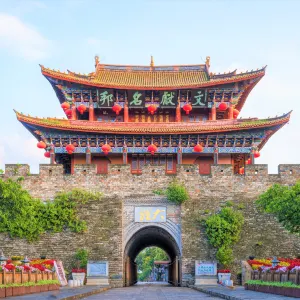
 Dali Ancient City is definitely worth a visit. Entering from the South Gate, the ancient cobblestone streets exude a charming, old-world atmosphere. Backed by Cangshan Mountain, with distant views of rolling hills, it evokes the feeling of the ancient Nanzhao Kingdom. The ancient city's streets and alleys are crisscrossed, with Renmin Road and Yangren Street being particularly lively. You can find Bai ethnic snacks like roasted milk fan and crispy rice cakes on the street. Climbing Wuhua Tower offers a panoramic view of the entire ancient city's rooftops.
The main street is lined with shops, making it quite commercialized. Souvenir shops abound, so be sure to compare prices before buying. It's recommended to avoid the crowds and explore the side alleys to experience the local atmosphere. Stroll around during the day, watch the sunset over the ancient city, and enjoy the enchanting ambiance when the city lights up at night.
Overall, it's a great experience. I recommend allowing 2-3 hours to explore at a leisurely pace. A must-visit in Dali, perfect for a relaxing stroll and soaking in the city's laid-back lifestyle.
Dali Ancient City is definitely worth a visit. Entering from the South Gate, the ancient cobblestone streets exude a charming, old-world atmosphere. Backed by Cangshan Mountain, with distant views of rolling hills, it evokes the feeling of the ancient Nanzhao Kingdom. The ancient city's streets and alleys are crisscrossed, with Renmin Road and Yangren Street being particularly lively. You can find Bai ethnic snacks like roasted milk fan and crispy rice cakes on the street. Climbing Wuhua Tower offers a panoramic view of the entire ancient city's rooftops.
The main street is lined with shops, making it quite commercialized. Souvenir shops abound, so be sure to compare prices before buying. It's recommended to avoid the crowds and explore the side alleys to experience the local atmosphere. Stroll around during the day, watch the sunset over the ancient city, and enjoy the enchanting ambiance when the city lights up at night.
Overall, it's a great experience. I recommend allowing 2-3 hours to explore at a leisurely pace. A must-visit in Dali, perfect for a relaxing stroll and soaking in the city's laid-back lifestyle.On the south side of Chongsheng Temple's Three Pagodas Scenic Area sits the Three Pagodas Reflection Park. The park has a pond where you may capture lovely pictures of the three pagodas' reflections. The Three Pagodas Reflection Park attracts a lot of people who come to snap photos of the iconic reflections. Photographs of the Three Pagodas' reflections can be taken in two locations. The other is in the Reflection Pool within the Three Pagodas Scenic Area, however the perspectives are mediocre and there are frequently a lot of people there. The classic three-tower shots are essentially filmed in the Three Pagodas Reflection Park, which is comparatively large and has good composition angles.
Address: South side of Three Pagodas Park, Jinyuan Lane, Dali City, Dali Bai Autonomous Prefecture, Yunnan Province
Business hours: Open from 07:30-18:00 tomorrow
evaluate:
| On the way to the Three Pagodas of Chongsheng Temple, there is a Three Pagodas Reflection Park. The reflections of the three pagodas taken there are really beautiful. Don’t forget this attraction. There is about a 1.5-kilometer walking distance between the Three Pagodas Reflection Park and the Chongsheng Temple Three Pagodas Park. The two parks are not connected. You have to exit the Reflection Park and walk to the Three Pagodas Park, but the tickets are together, so you only need to buy one ticket. |
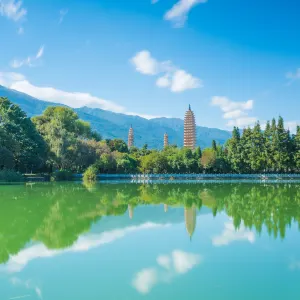

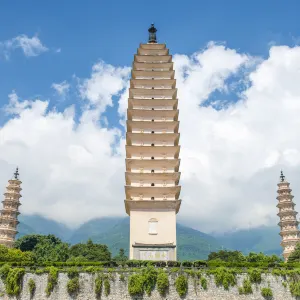
During the Dali Kingdom era, Chongsheng Temple, which is 1.5 kilometers north of Dali Ancient City, was a royal temple. Its stunning landscape is bounded to the east by Erhai Lake and to the west by Cangshan Mountain's Yingle Peak. The Chongsheng Temple was the original location of the three pagodas. While the three pagodas are relics with a thousand-year history and are a key attraction when visiting this location, the temple that we see now has been reconstructed. The three towers on the steps along the beautiful area's center axis are visible as soon as you approach through the entrance gate. Qianxun Tower is the large tower in the center of the front. It is particularly majestic when combined with the two tiny towers in the north and south to form a tripod. The three towers resemble Xi'an's Small Wild Goose Pagoda in shape. The "Three Towers Reflection Pool" in the Three Towers Reflection Park, which sits diagonally behind the towers, is the ideal location for taking pictures of the three towers. Photographs of the three towers and their reflections in the pool are available here. Here, a lot of tourists take pictures. Walk along the central axis and around the three towers. Along the route, you can observe the enormous 16-ton Nanzhao Jianji bell in the bell tower, the Rain Bronze Guanyin in the Rain Bronze Guanyin Hall, and the Nanzhao and Dali Kingdom cultural relics discovered during the upkeep of the three towers in the Cultural Relics Exhibition Hall. You will eventually reach the Chongsheng Temple. Temple of Chongsheng In 2005, the present-day Chongsheng Temple underwent reconstruction. It is expansive, and the magnificence of the royal temples of the Nanzhao and Dali eras is palpable. The temple is home to over 10,000 different types of dragons, making it the most dragon-rich temple in the nation. In addition, there is a nationally largest cowhide drum in the temple, with a diameter of 3.1 meters, made from a whole piece of cowhide, which is worth seeing.
Address: Southwest corner of the intersection of Santa Road and Wenbi Road, Dali City, Dali Bai Autonomous Prefecture, Yunnan Province
Business hours: Open from 07:30 to 18:30 tomorrow (no admission at 17:30)
evaluate:
| It is very convenient to buy tickets online. It took us 2 hours to walk back and forth. The weather was good. The three pagodas were beautiful against the backdrop of blue sky and white clouds. The scenery of lakes and mountains was majestic and solemn. The environment was beautiful and the staff were enthusiastic. |

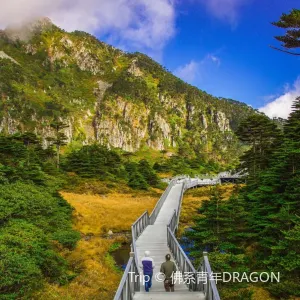
Cangshan Mountain, sometimes called Dian Cangshan Mountain, is a stunning mountain in Dali that is situated on the west side of Erhai Lake. All year long, snow covers the top of the main peak, and the breathtaking view is one of Dali's well-known "wind, flowers, snow, and moon" landscapes. Clouds and mist frequently envelop Cangshan Mountain. You have two options for climbing the mountain: walking or riding the cable car. You can see the stunning Erhai Lake and the landscape of Dali Ancient City from the summit of Cangshan Mountain.
Address: Xiyinxian Road, Dali Ancient Town, Dali City, Dali Bai Autonomous Prefecture
Business hours: Open from 08:30-15:00 tomorrow
evaluate:
| It's very good and convenient. You can place an order in advance and pick up the ticket online. You can visit Ximatan, which is 3900+ meters above sea level. The scenery on the top of the mountain is beautiful, which is in sharp contrast with the foot of the mountain. Please note that you may need to bring oxygen when climbing. |

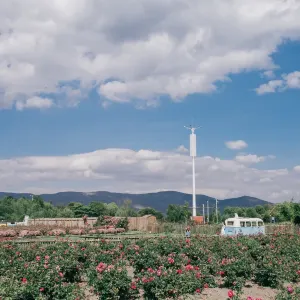
Beside Erhai Lake is the Rose Manor for a Lifetime. The primary activity of this property is the organic production of roses. The manor owner's own manor dream was fully followed in its construction. A observation area, an experience area, an entertainment area, and an eating area are among the various functional zones that make up the complete park. To benefit your health and mind and feel the joy of handicrafts, you can personally take part in creating rose-themed gifts such rose flower cakes, rose jam, flower and grass paper, rose lipstick, etc.
Address: S221 (Dali Line), Dali City, Dali Bai Autonomous Prefecture, Yunnan Province
Business hours: Open from 9:00 to 19:00 tomorrow
evaluate:
| The Rose Manor, which covers an area of 300 acres and has 900 million roses in bloom, is the romantic Dali New Zealand. Check in at the Hobbit House, stroll through the sea of verbena flowers, and make vows in front of the Crystal Church. Alpaca cappuccino and latte are waiting for you, you can DIY rose products and taste pure floral tea. Challenge the corn maze and have fun. Come to the manor, start a healing journey and leave unforgettable memories! 🎈 |

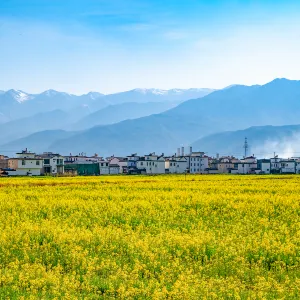
With Cangshan Mountain to the west and Erhai Lake to the east, Xizhou boasts stunning landscape and is situated 18 kilometers north of the historic city of Dali. Numerous homes belonging to the Bai ethnic group have been preserved in the town and have a particularly traditional appeal. Along with many other traditional delicacies, it is also the birthplace of the well-known Xizhou Baba. The historic town is filled of strong Bai customs, such as the Bai dwellings, the little baba-selling stores, and the elderly clothed in Bai costumes. Spend a night at an inn with a view of Erhai Lake and enjoy a restful vacation.
Address: 18 kilometers north of Dali Ancient Town, Dali Bai Autonomous Prefecture
Opening hours: 24 hours a day, all year round
evaluate:
| - Architectural features: The ancient Bai buildings in Xizhou Ancient Town are well preserved, with the Yan Family Courtyard as the most representative. The buildings have flying eaves, carved beams and painted buildings. The wood carvings, stone carvings and brick carvings on the buildings are exquisitely crafted and beautifully designed. They carry a profound historical and cultural heritage. Walking among them is like traveling through time and space. - Pastoral scenery: The ancient town is surrounded by large rice fields. In spring and autumn, the golden rice ears or tender green rice seedlings, the white-walled and gray-tiled buildings complement each other, and the leisurely cattle form a picturesque pastoral scenery, which is a great place to take photos and check in. - Characteristic landmarks: Landmark landscapes such as the Corner Building and the Yellow Wall of Xilinyuan are unique and attract many tourists to take photos, with a very high rate of photo taking. In the corner building, you can feel the simple charm of Bai architecture, while the yellow walls of Xilinyuan show a unique pastoral style against the backdrop of wind-blown wheat waves. In terms of food - there are rich special snacks: Xizhou Baba is a must-try food, available in sweet and salty flavors, with a crispy outer skin and soft and glutinous fillings; roasted milk fan has a strong milky aroma, sweet and salty; cold chicken rice noodles have a smooth texture, the chicken is tender, and the accompanying marinade or seasoning has a strong flavor; thin bean powder is matched with various seasonings, which has a unique flavor; and there are also Xizhou old popsicles, which have various flavors and are a great way to relieve the heat when traveling. - Diverse dining options: In addition to snacks, there are also many restaurants in and around the ancient town, where you can taste Bai ethnic minority specialties such as Erhai fish, bacon, etc. You can also find food streets that bring together delicacies from all over the world. |

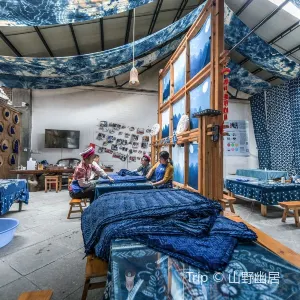
The cultural museum Dali Zhoucheng Puzhen Tie-Dye Museum is devoted to showcasing and passing down tie-dyeing techniques. The Dali region has fully safeguarded and promoted tie-dye art as a significant intangible cultural resource. The museum is a great site to discover Bai culture and traditional Yunnan handicrafts in addition to providing a glimpse into the history and artistry of tie-dyeing. The "hometown of tie-dyeing" is Zhoucheng Village, where the art form has been practiced for hundreds of years. Through immersive exhibits and hands-on activities, the Puzhen Tie-Dye Museum teaches visitors about the history, evolution, and manufacturing process of tie-dye. The museum's structure itself features white walls and green tiles, a straightforward and organic design that blends nicely with the surrounding agricultural landscape. Visitors can observe a demonstration of the tie-dye production process as they enter the museum. Every stage, from choosing materials and creating patterns to hand-tying, dying, and drying, showcases the artisans' knowledge and abilities. Under the supervision of skilled artisans, visitors can create tie-dye pieces by hand in the museum's unique interactive experience area. Visitors can take away one-of-a-kind handmade keepsakes in addition to developing a greater grasp of tie-dyeing techniques through this hands-on experience. Additionally, the museum frequently hosts cultural exchange events and tie-dye training classes, which draw a large number of scholars and handicraft lovers. These events improved the local community's cultural confidence and cohesiveness in addition to encouraging the passing down of tie-dyeing techniques.
Address: Cultural and Sports Plaza, Zhoucheng Village, Xizhou Town
Business hours: Open from 9:00 to 18:00 tomorrow
evaluate:
| # Enter the Pure Truth: Explore the Blue and White World of Dali Zhoucheng Tie-Dye Museum In Dali, south of the colorful clouds, there is a picturesque village - Zhoucheng. Here, surrounded by green mountains and gurgling green water, Bai ethnic group houses are scattered among them in an orderly manner, exuding a quaint and charming atmosphere. Among the many charming elements of Zhoucheng, tie-dye is undoubtedly the most dazzling pearl. With deep curiosity and yearning for this ancient craft, I stepped into the Puzhen Tie-Dye Museum and embarked on a dreamlike blue and white experience journey. As you approach the Puzhen Tie-Dye Museum, a typical Bai building comes into view. The flying eaves, brackets, carved beams and painted buildings, and the exquisite traditional Bai patterns painted on the walls all demonstrate the Bai people's superb architectural skills and unique aesthetic taste. On both sides of the gate, red lanterns with ethnic characteristics are hung, swaying gently in the breeze, as if warmly welcoming every visitor. The moment I stepped into the museum, I felt as if I had traveled through time and space and entered a history gallery of tie-dyeing. The museum displays a rich variety of exhibits, ranging from ancient tie-dyed clothing and fabric fragments to modern and contemporary exquisite tie-dyed works. Each exhibit quietly tells the story of the development and changes of tie-dyeing techniques over the years. Walking slowly along the exhibition hall, I saw many ancient tie-dyed fabrics. Although they have gone through the baptism of time, their colors are still as bright as before. Those delicate textures and unique patterns all make people marvel at the wisdom and creativity of the ancients. I stopped for a long time in front of a tie-dyed garment from the Tang Dynasty. The pattern lines on this piece of clothing are smooth and the color transitions are natural, showing the superb level of tie-dyeing skills at that time. Imagine people thousands of years ago wearing such beautiful clothes and walking through the streets. What a poetic picture that would have been. In addition to static exhibits, the museum also vividly presents the tie-dye production process through multimedia displays. On the big screen, skilled craftsmen held needles and threads, carefully sewing on white cotton cloth with skillful and elegant movements. Afterwards, the sewn cloth is placed in the dye vat. After multiple soaking and drying, the originally monotonous white cloth gradually changes into a wonderful blue and white pattern. Watching the demonstration on the screen, I was full of anticipation for the upcoming personal experience. Walking out of the exhibition hall is the experience area. There are neatly arranged tables and chairs here, and the tools and materials needed for tie-dyeing have already been prepared on the tables: white cotton cloth, colorful silk threads, dye vats filled with indigo dye, and various auxiliary tools. The staff enthusiastically introduced us to the basic steps and techniques of tie-dyeing, and then began to guide us in hands-on practice. I picked up a piece of cotton cloth and carefully sewed it up with needle and thread according to the staff's instructions. At first, my movements were clumsy and my needlework was crooked, but as I kept trying, I gradually found the feeling. The sewing process requires great patience and carefulness. The position of each stitch and the tightness of each thread are related to the final presentation of the pattern. As I focused on the cloth in my hands, everything around me seemed to become quiet, leaving only the subtle sound of the needle and thread passing through the cloth and my own gentle breathing. Finally completed the suturing step, I |

Northeast of Erhai Lake, across from Shuanglang Village, is a small island called Nanzhao Fengqing Island. This place has stunning landscape. The island is home to a 17.56-meter-tall monument of Guanyin made of white marble, as well as other exquisite inns in various styles. The island also has an artificial beach that offers a nice view of Erhai Lake. A lot of people come here to take pictures for weddings.
Address: Shuanglang Town, Dali City, Dali Bai Autonomous Prefecture
Business hours: Open from 08:00 to 17:30 tomorrow (no admission at 17:00)
evaluate:
| It's pretty good. The island is not very walkable and you can walk around it in an hour. But the Nanzhao Palace has free tours, some of the crafts are still very delicate, and the girl is very beautiful |


Many pilgrims travel to Jiuzu Mountain, a well-known Buddhist sacred location, to worship. The mountain is home to numerous priceless historical landmarks and medieval temples, and you may also take in the breathtaking mountain views. The primary historical landmarks that can be visited one at a time along the picturesque path are Zhusheng Temple, Huayan Temple, Huideng Nunnery, Jinding Temple, and Lengyan Pagoda. It is advised to spend one night on Jiuzu Mountain if you have the leisure and wish to take in the mountain's rich Buddhist environment.
Address: Jizushan Town, Binchuan County, Dali Bai Autonomous Prefecture
Business hours: Open from 08:00 to 18:00 tomorrow
evaluate:
| It was my first time to visit Jizu Mountain and I listened to the introduction given by the B&B owner. There are many temples on the mountain, but we only visited the main ones recommended by the B&B owner. It was not tiring to take the cable car up for only a short distance. I prayed for marriage and pulled the red thread, hoping to meet my true love this year. I mainly prayed for blessings and peace for my family, but it is said that Jizu Mountain will only be effective if you go there for three consecutive years. I will continue to go next year and the year after! |


The heart of Dali Haidong Mountain New City is home to Dali Ocean World. River ecology, a fictitious rainforest, ocean exploration, a coastal voyage, a sea beast island, a dolphin pool, a whale shark pool, an underwater classroom, a polar adventure, and more are all included. The Dolphin Theater features amazing dolphin performances as well as amazing human-dancing scenarios. Along with amazing water and underwater performances, Russia also offers high diving and synchronized swimming, which significantly improves and enriches Ocean World's entire involvement.
Address: Intersection of Sanhe and Duxiu Roads, Haidong Shandi New Town, Dali City, Dali Bai Autonomous Prefecture, Yunnan Province (opposite to Beijing Bay)
Business hours: Open from 09:30 to 17:30 tomorrow (no admission at 17:00)
evaluate:
| It can't be compared with the Ocean World in coastal cities, but having such a place inland is still a good place for children to learn about real marine life. There are three floors, and you can basically visit all the venues in an hour. The performances include mermaid (diving) performances, sea lion and dolphin performances. The time can be seen in the picture. The performance content is good, but the duration is a bit short. |
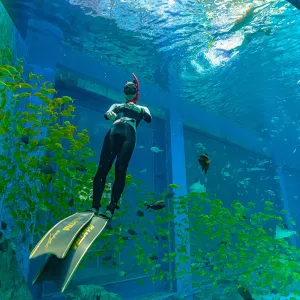
Cai Village is situated on the west bank of Erhai Lake, northeast of Dali Ancient Town. The village is serene and lovely. This area is well-liked by photographers because of its stunning and new scenery. A distinct ethnic style is also evident in the village's several well-preserved historic Bai buildings. For the sole purpose of visiting this wetland area, many visitors to Dali will deliberately search for Cai Village. The locals continue to practice the Bai ethnic group's traditional practices at each festival, making the sacrifices, dragon dances, and other events more genuine.
Address: Dali City, Dali Bai Autonomous Prefecture
Opening hours: 24 hours a day, all year round
evaluate:
| Cai Village was not a tourist attraction in my plan. I arrived here by chance by taking the C2 bus. The seaside air is very quiet in the early morning. Willows swaying in the wind, young swallows chirping, wheat seedlings green, snow-capped mountains in the distance, quietly enjoying the sunshine... |

Popular recommendations

Everything you need to know before going to Los Angeles zoo
 TripBlog
Latest Trip.com Promo Codes, Flight Discounts & Hotel Savings (Weekly Update)
 Trip.com Official
6 Things to know before Exploring the Montmorency Falls, Quebec
TripBlog
2026 Guide to Shanghai Pudong Airport: Transit Visa & PVG Airport Shuttle
TripBlog