[Datong Free Travel] How to travel in Datong for 3 days and 2 nights, a comprehensive guide to itinerary planning!

Contents
- Trip Planner
- Datong Itinerary Planning Overview
- Datong Day 1
- Huayan Temple
- Datong Chunyang Palace
- Drum Tower
- Daiwangfu
- Fahua Temple
- Datong Ancient City Wall
- Datong Day 2
- Yungang Grottoes
- Jinhua Palace National Mine Park
- Datong Day 3
- Hengshan
Show more
[Planning a new trip but don't know where to start? Let Trip.com's AI Itinerary Assistant generate custom itineraries with one click!]
✅ Copy a travel blog link to generate the same itinerary with one click
✅ Featured popular itineraries for the most authentic experience
✅ Import your favorite destinations and automatically arrange the best itinerary
✅ Check opening hours and recommended visit durations at attractions to ensure that every stop meets your expectations
This guide carefully plans a perfect 3-day and 2-night trip to Datong for you. Covering local attractions, authentic food and popular shopping areas, you can easily travel around Datong and enjoy a worry-free holiday. Whether it is an in-depth exploration of history and culture or a fashionable check-in in a modern metropolis, this guide can meet your needs. Come and start your wonderful journey in Datong!
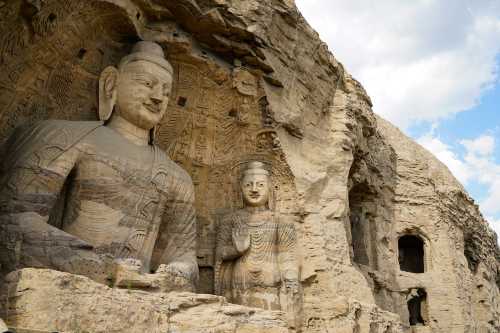

Visit the Liao and Jin Buddhist Temples, the Ming Dynasty Royal Palace, and the Lotus White Pagoda, ride along the ancient city wall to watch the sunset, and see the essence of ancient buildings in two days.
The thousand-year-old Buddha sculptures at Yungang, exploring the secrets of coal mining underground, climbing to the top of Hengshan Mountain, and experiencing the two wonders above and below the ground in three days.
| Date | Journey |
| Day 1 | Huayan Temple->Datong Chunyang Palace->Drum Tower->Dai Wangfu->Fahua Temple->Datong Ancient City Wall |
| Day 2 | Yungang Grottoes->Jinhua Palace National Mining Park |
| Day 3 | Hengshan |
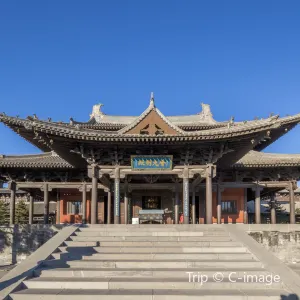
Huayan Temple is located in the city center of Datong. This temple was built in the eighth year of Qingning in the Liao Dynasty (1062 AD). In the main hall of Huayan Temple, one can see the foundation of the Liao Dynasty, the buildings of the Jin Dynasty, as well as the statues of the Ming Dynasty and the murals of the Qing Dynasty in the hall. The Bhagavad Gyaltsen Hall in the temple is a Liao Dynasty building. The Liao Dynasty statues in the hall are very precious. Behind the Bhagavad Gyaltsen Hall is a double-layered pavilion-style scripture cabinet. The upper layer is used to store Buddha statues and niches, while the lower layer stores scriptures.
Address: No. 459 Xiasipo Street, Datong Ancient City, Pingcheng District, Datong City, Shanxi Province
Business hours: Open from 08:30 to 17:30 tomorrow (no admission at 17:30)
evaluate:
| Datong Huayan Temple is located in Datong City, Shanxi Province. It was built in the Liao Dynasty (1038) and is one of the largest and best-preserved Liao and Jin temple complexes in China. The temple faces east and sits west, reflecting the Khitan people's "facing the sun" custom during the Liao Dynasty. The core buildings, the Main Hall and the Bhagavad Gyaltsen Hall, are both original structures from the Liao and Jin Dynasties. Among them, the exquisite celestial palace in the Bhagavata Hall was praised by Liang Sicheng as "the only one in the country". Among the 29 Liao Dynasty colored sculptures in the hall, the "Bodhisattva with Folding Palms and Bare Teeth" is the most famous and is known as the "Oriental Venus". Huayan Temple combines Han culture with Liao and Jin ethnic characteristics. In 1961, it was listed as the first batch of national key cultural relics protection units. |
 It's often said that Shanxi is the place to see the most cultural relics, and this trip truly allowed me to experience the unique historical depth of this land.
At Yanmen Pass, I felt the grandeur of the frontier; at the Hanging Temple, I marveled at the ingenuity of ancient builders; at the Yingxian Wooden Pagoda, I witnessed the legendary mortise and tenon joints; and in the ancient city of Pingyao, I pondered the rise and fall of Shanxi merchants over the past century. Everywhere I looked, there were countless historical sites, each step a journey through a thousand years.
Special thanks to our travel planner, Lei Wanying, for her meticulous itinerary planning! The route was well-planned, minimizing backtracking and balancing sightseeing with rest time. Hotels, tickets, and transportation were all arranged perfectly. The entire trip was relaxed and unhurried, ideal for both architecture enthusiasts and families. A worry-free and fulfilling trip to Shanxi—highly recommended!
It's often said that Shanxi is the place to see the most cultural relics, and this trip truly allowed me to experience the unique historical depth of this land.
At Yanmen Pass, I felt the grandeur of the frontier; at the Hanging Temple, I marveled at the ingenuity of ancient builders; at the Yingxian Wooden Pagoda, I witnessed the legendary mortise and tenon joints; and in the ancient city of Pingyao, I pondered the rise and fall of Shanxi merchants over the past century. Everywhere I looked, there were countless historical sites, each step a journey through a thousand years.
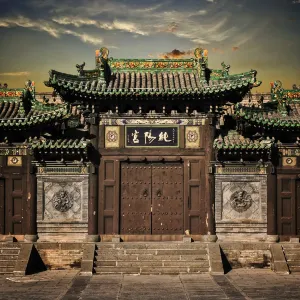
Special thanks to our travel planner, Lei Wanying, for her meticulous itinerary planning! The route was well-planned, minimizing backtracking and balancing sightseeing with rest time. Hotels, tickets, and transportation were all arranged perfectly. The entire trip was relaxed and unhurried, ideal for both architecture enthusiasts and families. A worry-free and fulfilling trip to Shanxi—highly recommended!Datong Chunyang Palace is located on Datong Gulou West Street. It was named after the Chunyang Lu Zu it enshrined. It was founded in the late Jin Dynasty and early Yuan Dynasty, and was rebuilt in the fourth year of Hongwu in the Ming Dynasty. It is an existing Taoist Quanzhen Sect temple in our city and also a key cultural relic protection unit at the municipal level. Chunyang Palace faces south and was built entirely by the rituals of Quanzhen Taoism. The west wing of the main courtyard is a garden-style building. The entire Taoist temple has both the solemnity of religion and the beauty and exquisiteness of a garden. The entire building has a novel design and an ingenious and compact layout. It is a three-courtyard complex that combines the solemnity of a temple with the exquisiteness of a garden.
Address: No. 8 Gulou West Street, Pingcheng District, Datong City (inside Datong Ancient City)
Business hours: Open from 08:00 to 18:00 tomorrow
evaluate:
| Datong Chunyang Palace is the northern palace of the three major Chunyang Palaces in Shanxi Province and is a Taoist temple of the Quanzhen Sect. The buildings of Chunyang Palace are well-arranged, with a clear distinction between the main and the secondary, elegant and grand. It is a three-courtyard complex that integrates a temple and a garden. Free tickets, no reservations required, not many visitors, suitable for a stroll and experiencing Taoist culture. |

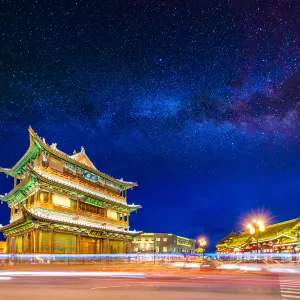
Datong Drum Tower was first built in the Ming Dynasty and was rebuilt many times in the Qing Dynasty. It is still well preserved today and is a large drum tower from the Ming and Qing dynasties in my country. During the Ming and Qing Dynasties, the Drum Tower was used to report the time and alert people. It can be said that this building is the crystallisation of the wisdom and sweat of the ancients. If you want to find traces of Datong's vicissitudes of history, this is a good choice.
Address: Datong Ancient City, Yuhe West Road, Pingcheng District, Datong City, Shanxi Province
Business hours: Open from 08:30-17:00 tomorrow
evaluate:
| Datong Drum Tower is one of the few authentic ancient buildings in Datong. It has three floors and you can climb up to the second and third floors. From the top floor, you can have a panoramic view of Datong. Tickets are free, and you can scan the QR code on site to enter. The stairs in the building are very steep, and it is not recommended for the weak to climb the stairs. |

【Introduction to Daiwangfu】
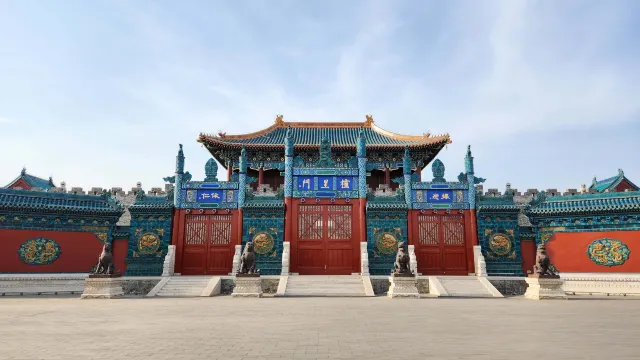
Zhu Gui, Prince of Dai, was the thirteenth son of Zhu Yuanzhang, the founding emperor of the Ming Dynasty. His mother was Concubine Guo Huifei. His principal wife was Concubine Xu, the daughter of Xu Da, Prince of Zhongshan. One of the nine great kings (feudal kings) who fought against the barbarians.
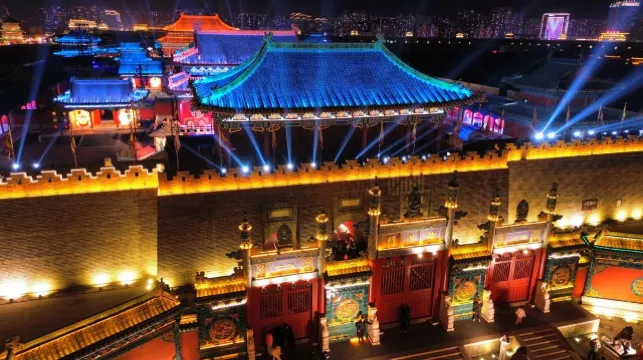
The King of the Frontier refers to the vassal kings appointed by the Ming Dynasty to guard the frontiers and expand the territory. From east to west, they are the King of Han, King of Shen, King of Liao, King of Ning, King of Qi, King of Yan, King of Gu, King of Dai, King of Jin, King of An, King of Qin, King of Qing, and King of Su. In the early Ming Dynasty, when the political situation was just beginning to take shape, these princes were tasked with guarding the borders, protecting the country and repelling the barbarians. It can be said that the first generation of "Nine Great Frontier Kings" was a luxurious facelift for the Ming Dynasty. Among them was "Prince of Yan" Zhu Di, who ascended the throne through the "Battle of Jingnan".
Datong, where King Dai was stationed, was the core of the "Nine Frontier Cities" and the gateway to protect the capital.
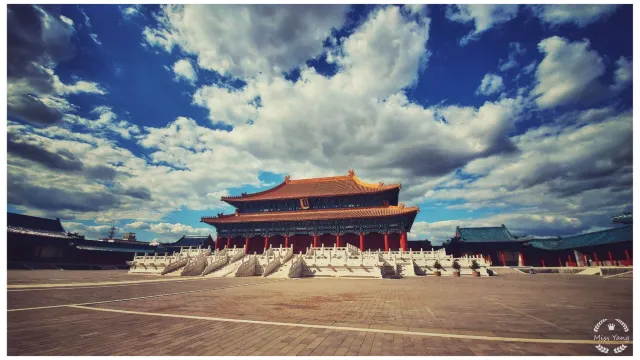
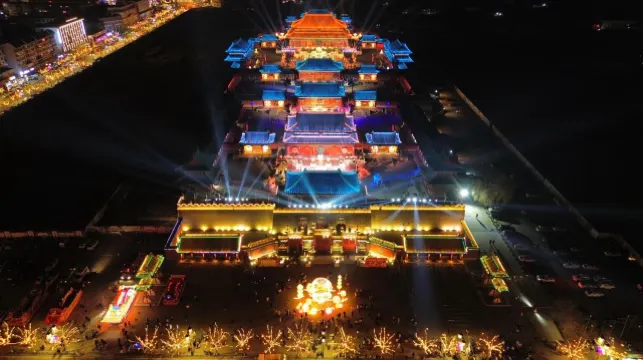
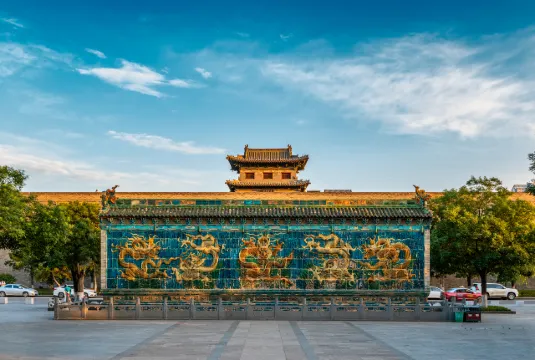
Dai Wang Mansion was the residence of Zhu Gui, the Dai Wang of the Ming Dynasty. It is located in the northeast corner of the ancient city of Datong, facing north and south, and is rectangular in shape. It was once a large-scale royal palace complex of high rank in Datong City during the Ming Dynasty. It was also the carrier of the country's patriarchal hierarchy and feudal etiquette at that time. Eleven kings of Dai successively managed government affairs here, and it carries extremely rich historical and cultural information.
The Dai Palace was built in 1392 AD (the 25th year of the Hongwu reign). It was built by Dai Prince Zhu Gui on the basis of the Xijing Imperial Academy of the Liao and Jin Dynasties. It was completed in 1396 (the 29th year of the Hongwu reign), which took 4 years to complete. The main buildings on the central axis are Chengyun Hall, Cunxin Hall and Changchun Palace.
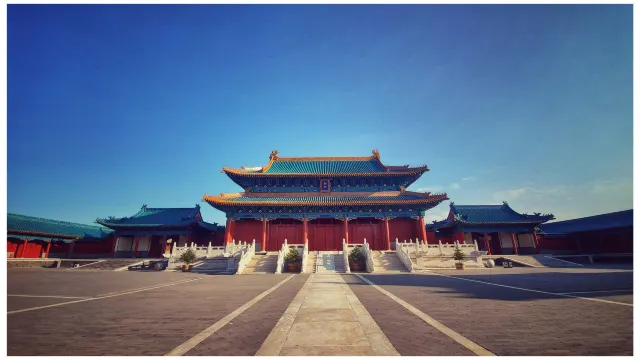
The entire palace complex is grand in scale, majestic, splendid, with deep halls, staggered houses and winding corridors. The Dai Palace was modelled after the Nanjing Ming Palace, but was built on a smaller scale. It was built strictly by the principles of building a royal capital in "The Book of Zhou: Kaogongji", which states that "the court is in front, the market is behind, the ancestors are on the left, and the community is on the right." The entire palace is designed as a whole through the use of architectural variations and ups and downs. Functionally, it conforms to the hierarchy of feudal society. As a structure that achieves the artistic effect of left-right balance and shape changes, there are many archways in the palace. Among them, there is "Qin Cheng Shang Ming Shi Shou Dai Bang Archway" on the east side of the gate and "Tian Huang Zong Di Qin Fan Archway" on the west side of the gate. The archways are tall and majestic, showing the majesty of the palace. The entire building complex is connected by corridors and courtyards, with staggered buildings, a front hall and a rear bedroom, and side rooms. The halls are deep and the corridors are winding. It is a prince's residence with a grand scale and a complete layout. As a prince's residence, the Dai Wang Mansion is unprecedented in scale. It is not only the largest princely palace complex in the Ming Dynasty, but also a witness to the entire Ming Dynasty's frontier legend.
【Performance Introduction】
The performances at the Dai Wangfu are still mainly based on the "Great Harmony in the World" series, retaining the "Municipal Customs and Folk Customs" series that was widely acclaimed during the Spring Festival, and creating a new "Ming Dynasty Style" series, which includes a main show "Great Harmony in the World", 16 supporting shows, and 24 small theater shows.
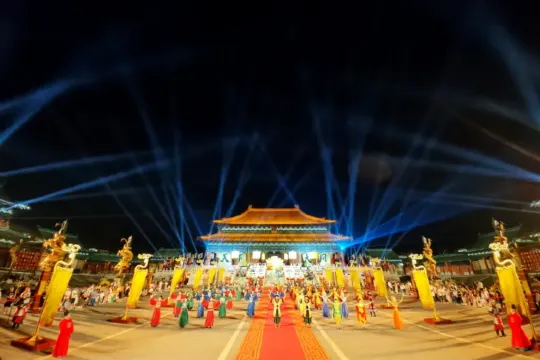
"Great Harmony in the World" You can immerse yourself in the Dai Wang Mansion to experience the integration of Hu and Han people on the border of the Ming Dynasty, the exotic customs and the tense confrontation between military strongholds. Jinyi arrests, Wuzhen Nine Frontiers, imperial concubine selection and palace fighting... the one-hour main show and five supporting shows make you not only a spectator but also a part of the show.
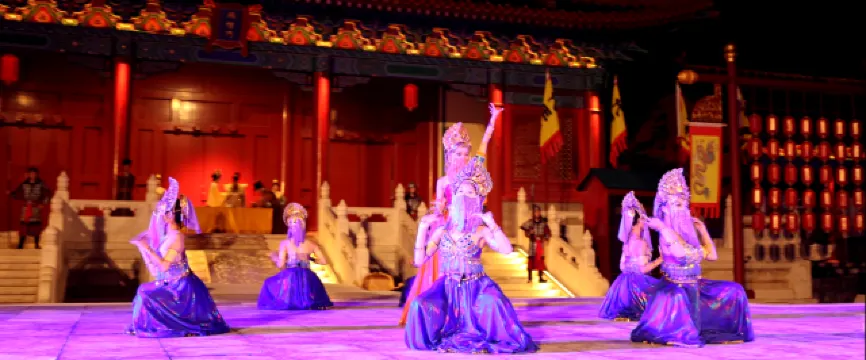
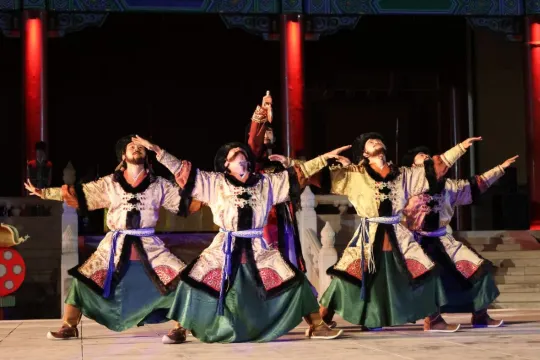
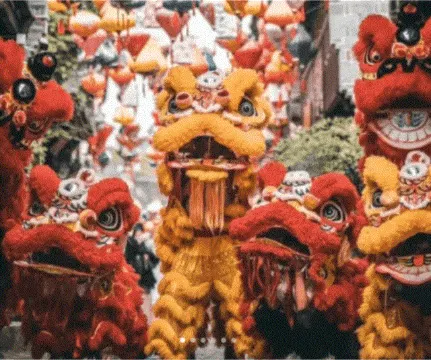
"The Glory of the Ming Dynasty" is a brand-new performing arts series this year. With 10 wonderful programs, you can see the flying apsaras on the murals, royal banquets, the royal son-in-law, the royal love, as well as drumming, lion fighting, on-site scientific expeditions by Liu Bowen and Li Shanchang, the founding heroes of the Ming Dynasty, and the family and country feelings of the nine important towns. There is also a colourful light show that lights up the night sky of the Dai Palace.
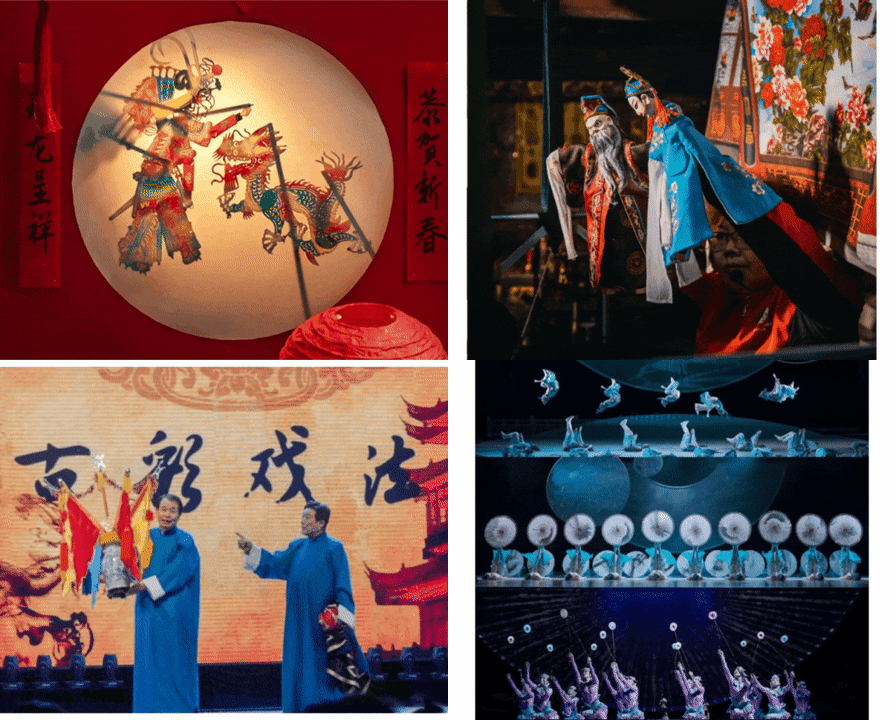
“Municipal Folk Customs” presents 24 wonderful plays in a very down-to-earth form. "Hands dance together to tell the stories of the ages, a curtain of lantern shadows hides the Spring and Autumn Period," a shadow play tells a century of history; "The three-foot stage is a play in the hands, and ten fingers are intertwined with sorrow and joy," a puppet show goes through all kinds of life; shuttling between reality and fantasy, switching between art and magic, an ancient magic trick encompasses everything in the world; rooted in the folk, but also the universal language of the world, an acrobatic performance of the art of body language.
Address: No. 18, Heyang Street, Pingcheng District, Datong City, Shanxi Province (inside Datong Ancient City)
Opening hours: 09:00-22:00 (ticket sales stop at 21:00; admission stops at 21:00)
evaluate:
| Immersive experience of palace life, very satisfying, especially like the iron flower, intangible cultural heritage inheritance program, martial arts performance, etc. Many programs are very exciting, the actors work very hard, and interact with the audience interestingly! The scene is grand, and the costumes are unique. |
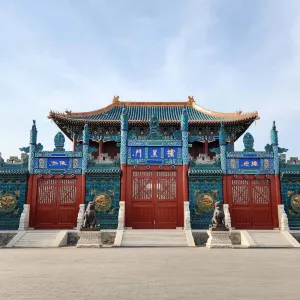

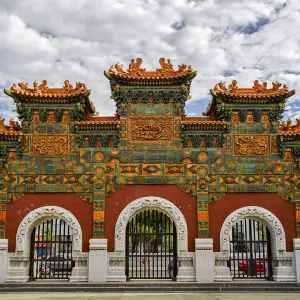
Fahua Temple is located on the north side of Heyang Street in Datong City, and the temple faces north and south. The Fahua Pagoda was built in the late Yuan Dynasty and early Ming Dynasty. It is the only existing Lama pagoda in Datong City. It was named after the Lotus Sutra stored in the pagoda. The entire temple building is staggered in height and symmetrical on both sides. The statues are lively and plump, and the images are vivid. The murals are rich in colors, feature numerous characters, and feature a prominent combination of multi-ethnic fusion and exotic colors.
Address: Heyang Street, Datong City
Business hours: Summer time 08:00-18:00 (no admission at 17:30), Standard time 08:30-17:30 (no admission at 17:00), May 1-May 5 08:00-20:00
evaluate:
| The Fahua Temple in Datong is named after the Buddhist classic Lotus Sutra. It is located on the north side of Heyang Street in Pingcheng District, Datong City. It was built in the early Ming Dynasty and then abandoned. Only a brick tower remains in the temple. The tower is the only ancient relic in the Fahua Temple and the only existing covered bowl-style glazed Lama tower in Datong City. The current Fahua Temple was rebuilt and restored in 2008. It faces north and south and has a total of four courtyards in the front and back. There are glazed archways, Heavenly King Hall, and Bell and Drum Tower in the front courtyard. There are Three Sages Hall, Galan Hall, and Patriarch Hall in the second courtyard. There are Vairocana Hall, Duoban and auxiliary halls and corridors in the third courtyard. The back courtyard is the majestic White Pagoda and Sutra Library. Except for the White Pagoda, all other buildings were newly built during the restoration. The entire temple has staggered buildings, symmetrical left and right, lively and rich statues, rich murals, and numerous characters. The characteristics of multi-ethnic integration and exotic colors are very obvious... Address|North side of Heyang Street, Pingcheng District, Datong City (near the east gate of the ancient city) Time|8:00-18:00 in summer, 8:00-17:30 in winter Tickets|Free |

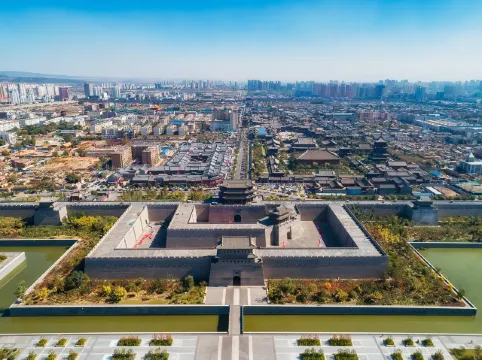
The ancient city wall of Datong was built in the fifth year of Hongwu in the Ming Dynasty. The wall is tall and majestic, solid and steep, with strict defences and complete facilities. It is a famous city with distinctive features in the history of ancient Chinese military architecture. A major feature of Datong City Wall is that its outer contour is like a gear, with protruding city piers and a trapezoidal structure, which is a special shape for the defence of Datong City Wall. The existing ancient city wall was built in the fifth year of Ming Hongwu (1372) when General Xu Da was stationed in Datong. It was built based on the old cities of Han, Wei, Tang, Liao and Yuan dynasties. It has a circumference of 7.24 kilometers and the ancient city covers an area of 3.28 square kilometers. The city walls are all based on regularly shaped stone strips, slabs and blocks, rammed with "three-in-one soil" and covered with blue bricks. The city wall is 14 meters high, 12 meters wide at the top and 18 meters wide at the bottom. It is 6.6 meters wider than the Nanjing city wall. There are 62 door knockers, corner towers and watchtowers on the city wall. There are four city gate towers, among which the South Gate Tower is a three-story building with a width of 61 meters and a depth of 23.35 meters. Four corner towers are standing majestically at the four corners of the city wall, especially the northwest corner tower, which is octagonal and called Ganlou. Among the 54 watchtowers, Hongzi Tower is the most important watchtower, which is rare in other ancient city walls. At the same time, 96 huts were also built. About 40 meters away from the wall, there is a moat, which is 10 meters wide and 5 meters deep. There is an inner city outside the four gates, with a construction area of about 17,600 square meters. A moon city was built outside the city wall, enclosing the city wall and with a city gate. In this way, one must pass through three gates to enter and exit Datong City. There are also "arrow towers" or two-story "plaque towers" built on each gate. There are four gates in the city: Heyang in the east, Yongtai in the south, Qingyuan in the west and Wuding in the north. Watchtowers, corner towers, city towers and arrow towers are placed at intervals on the wall. The moat, suspension bridge, urn city, moon city, pass city and ear city are all heavily guarded.
The city walls are tall and majestic, solid and steep, with tight defences and complete facilities. It is a famous city with unique characteristics in the history of ancient Chinese military architecture. Because it occupies a very important position in the northern border defence and has played an important role in many battles, it has always enjoyed the reputation of "a towering important town" and "the key to the north".
A special feature of the Datong city wall is that its outer contour resembles a gear. There are 52 protruding city piers in total, with a trapezoidal structure, a base length of about 23 meters, a top length of about 20 meters, and a top area of 400 square meters.
Corner piers: Slightly taller than the watchtowers, there is a military control platform (or military watchtower) outside each of the four corner piers, which is about 16.6 meters wide and 15 meters long. The distance between the corner piers is about 66 meters, and the upper steps connect it to the city wall. It is a special shape for the defence of the Datong city wall.
Address: Heyangmen Inner Street, Datong Ancient City, Pingcheng District, Datong City, Shanxi Province
Opening hours: 17:00-22:00 (no admission at 21:45)
evaluate:
| The Datong Ancient City Wall is a wall built around several gates of the Datong Ancient City. You can walk up the wall for free at the West Gate, but if you go up to the South Gate, you need to buy a ticket. He has a light show on it. |

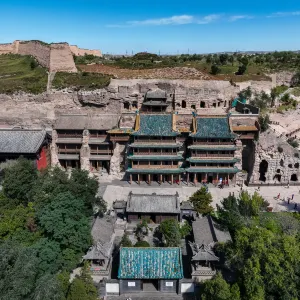
The Yungang Grottoes Scenic Area is divided into a landscape area and a group of grottoes. It is one of the three largest grottoes in China. The carvings combine Chinese and Western art styles, allowing you to experience the charm of the Northern Wei Dynasty's artistic masterpieces. The Yungang Grottoes not only have traditional Chinese artistic style, but also integrate the artistic characteristics of ancient India, the Western Regions and various ethnic groups in the Central Plains. It is a famous historical site in Datong City.
Address: No. 1, Yungang Town, Yungang District, Datong City, Shanxi Province
Business hours: Open from 08:30 to 16:30 tomorrow
evaluate:
| Just after the Spring Festival holiday, there were not many people in the scenic area, and it was very comfortable to visit. Every grotto can be fully seen. The beauty of Yungang can only be experienced by visiting the site. It is very majestic and beautiful, and it is worth experiencing repeatedly. |

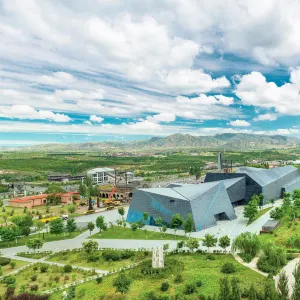
Jinhua Palace National Mining Park is located in Datong City, with a superior geographical location, a quiet and beautiful environment and convenient transportation. The park integrates industrial heritage protection, ecological restoration and green mine construction. It is a mining, cultural and creative park that leaves a complete modern industrial memory for the world. The main attractions in the park include the Coal Museum and underground adventure tours. Among them, the Coal Museum is a large-scale mining museum that integrates science, knowledge and appreciation. The underground exploration tour can give you a real understanding of the historical knowledge of coal formation in the Jurassic period, 140 million years ago.
Address: 990 meters southwest of Jinhua Palace Middle School, Jinfu Road, Yungang District, Datong City, Shanxi Province
Business hours: 09:00-17:00 in off-season (ticket sales stop at 16:00), 09:00-17:00 in peak season (ticket sales stop at 16:30)
evaluate:
| Experience first-hand the life of a miner going down into the mines. During the May Day holiday, there were a lot of people, so it felt like I was just taking a quick look. For some events, I was too far away from the tour guide, so there was no signal and I couldn't hear the explanation. If there were fewer people, the experience might be better. All in all, it's a fresh tour. |

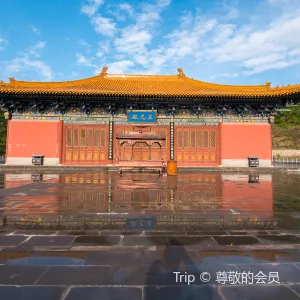
Hengshan Mountain is the northernmost of the famous "Five Mountains". Hengshan Scenic Area includes Tianfengling Scenic Area, Cuipingfeng Scenic Area, Qianfoling Scenic Area, etc. Generally speaking, "visiting Hengshan" refers to visiting the Tianfengling Scenic Area. Hengshan Mountain not only has beautiful scenery, but is also an important birthplace of Taoism. There are many Taoist temples on the mountain. According to legend, Zhang Guolao, one of the "Eight Immortals", achieved enlightenment through practice in Hengshan Mountain.
Address: At the foot of Hengshan Mountain, southeast of Hunyuan County, Datong City
Business hours: Open from 08:00 to 17:30 tomorrow
evaluate:
| Mount Hengshan, the Northern Peak, is located in Hunyuan County, Datong City, Shanxi Province. You can take a tourist bus directly from Datong Ancient City and Yangmen Square. The weather is very good. You can take the scenic shuttle bus at the Hengshan Visitor Center and change buses once to finally reach the mountain entrance. It takes 70 minutes to hike to the top. It feels great! ! |

Popular recommendations

2026 Guide to Shanghai Pudong Airport: Transit Visa & PVG Airport Shuttle
 TripBlog
How-to Tips on Visiting the Tiananmen Square
TripBlog
Latest Trip.com Promo Codes, Flight Discounts & Hotel Savings (Weekly Update)
 Trip.com Official
6 Things to know before Exploring the Montmorency Falls, Quebec
TripBlog