Business Class vs First Class: Perks, Prices and Best Value

Contents
- Business Class vs First Class: What is business class?
- Business Class vs First Class: What is first class?
- Business Class vs First Class: What is the real difference?
- What is the real difference: Seats and privacy
- What is the real difference: Food, drinks and service
- What is the real difference: Lounges and airport experience
- Business Class vs First Class: Price
- Business Class vs First Class: How to buy cheaper business class
- Business Class vs First Class: Best time to book flights for premium cabins
- Business Class vs First Class: Which should you book?
Show more
Choosing between business class and first class? Compare price, comfort, service, lounges and smart booking tips to find the premium cabin that suits you best.
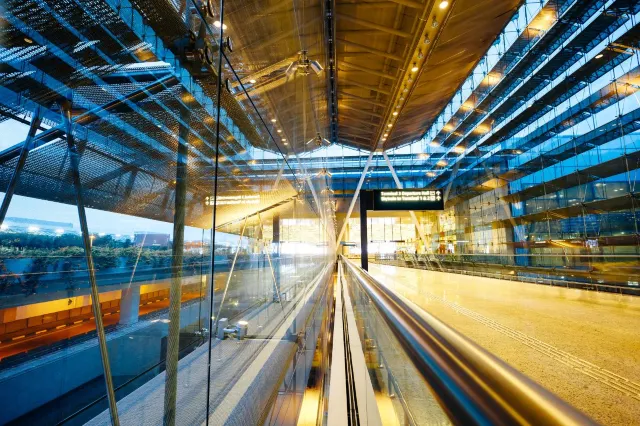
(CR/Trip.com)
If you are comparing business class vs first class, the main difference is fairly simple: business class is designed to make long-haul travel comfortable and efficient, while a first class flight is built to feel more exclusive, private and luxurious. Both offer a major step up from economy, but they do not serve exactly the same purpose. For most travellers, business class is the more practical premium choice. First class, by contrast, is usually the top-end option for people who want the best available experience and are willing to pay for it.
That is why so many travellers ask not only what separates the two cabins, but also whether first class is actually worth the extra money. In many cases, modern business class is already extremely good, with lie-flat seats, lounge access, better food, priority services and a much smoother airport experience. On the other hand, some first class airlines still offer a very noticeable upgrade, especially on flagship products such as Emirates First Class. The key is knowing what you are really paying for — and when it makes sense to book one over the other.
Business class is the premium cabin above economy and premium economy, and on many airlines it is the highest cabin available. It was originally aimed at corporate travellers, but today it appeals to a much wider audience, including leisure travellers, couples and anyone willing to pay more for comfort. On long-haul routes, business class is now often the cabin that delivers the best balance between price and experience.
A typical business-class ticket includes priority check-in, faster boarding, extra baggage allowance and access to airport lounges. Once on board, passengers usually get a much larger seat, more personal space, upgraded meals and better service. On long-haul flights, the most important feature is often the lie-flat bed, because that is what turns a tiring overnight journey into something much more manageable. This is why products such as United Business Class, especially on long-haul services, are so popular: they focus heavily on comfort, sleep and convenience.
A first class flight sits above business class and is meant to be the most luxurious cabin an airline offers. However, true first class is no longer standard across the industry. Many airlines have removed it entirely and instead invested more in business class. That means first class is now rarer, more exclusive and often limited to selected airlines, aircraft and routes.
When an airline does offer a strong first-class product, the difference is usually about much more than just a wider seat. First class often includes a private suite, greater personal space, more attentive service, higher-end dining and a more exclusive lounge experience on the ground. On some airlines, the experience is designed to feel almost hotel-like rather than simply premium transport. Emirates First Class is one of the best-known examples, because it has become associated with private suites, standout service and a very glamorous image.
(CR/Trip.com)
The most useful way to understand business class vs first class is this: business class gives you the core premium benefits that most people actually need, while first class adds more privacy, more exclusivity and more refinement. The jump from economy to business class is usually huge. The jump from business to first class can also be impressive, but it is often more about luxury than necessity.
In business class, the goal is to help you travel well. In first class, the goal is to make the journey itself feel special. Business class is about comfort, rest and efficiency. First class is about comfort too, but also about prestige, calm, individual attention and a more elevated atmosphere. That is why first class often appeals most to travellers who care about the experience for its own sake, not just about arriving rested.
One of the biggest differences between the two cabins is the seat. Modern business class on long-haul routes often includes a fully flat bed, direct aisle access and a fairly private layout. For many travellers, that is already enough. If you can sleep properly, stretch out and have enough privacy to relax, business class already feels like a major upgrade.
First class usually takes this further by offering even more space and seclusion. Instead of simply having a large seat, you may have a private suite with closing doors, more storage, a larger bed area and fewer people in the cabin overall. This makes the experience quieter and more personal. On the best first class airlines, the cabin can feel far removed from the rest of the aircraft, which is part of the appeal.
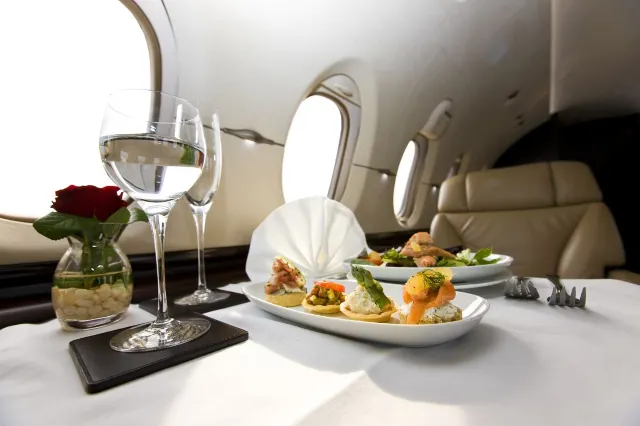
Food and service improve in both cabins, but first class generally goes further. In business class, meals are usually much better than in economy, with more choice, better presentation and a more polished service style. Drinks are also upgraded, and on long-haul flights the overall dining experience is often good enough to feel like part of the premium value.
First class tends to be more personalised. The service is often less rushed, the cabin crew look after fewer passengers, and the meal service feels more individual. Menus may be more premium, drinks lists may be stronger, and some airlines make dining more flexible rather than serving everyone at once. This does not always make first class essential, but it does make the experience feel more exclusive and attentive.
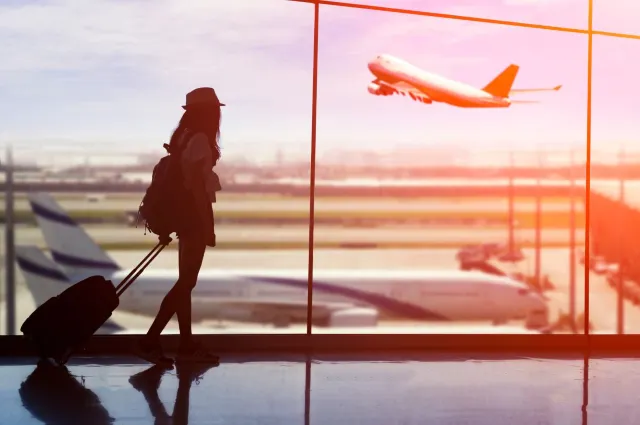
For many people, one of the most valuable benefits of premium travel is not the seat itself but the airport experience. Business-class passengers usually get priority check-in, priority boarding and lounge access, which already removes a lot of the stress of flying. Instead of waiting in crowded areas, you can sit somewhere quieter, eat, have a drink, charge your devices and start the journey in a calmer way.
First class often includes access to a more exclusive lounge or a better version of the same airport privileges. That might mean better dining, quieter spaces, faster security or more personalised service before boarding. This is one of the reasons people are drawn to products such as Emirates First Class: the luxury begins before the flight itself. If you value the full premium journey from airport arrival to landing, this part matters quite a lot.
(CR/Trip.com)
Price is where the decision becomes most practical. Business class is expensive, but on many routes it can still be booked at a reasonable premium if you choose your timing carefully. First class is usually much more expensive, and the price gap is often far larger than the practical difference in comfort. That is why many travellers see business class as good value for a premium cabin, while first class is viewed more as a luxury splurge.
This does not mean first class is never worth it. Sometimes the fare difference is smaller than expected, especially during sales, upgrades or points redemptions. In those cases, first class can make sense. But if you are paying full cash price, business class is usually the more rational option. It gives you most of the major benefits without pushing the fare into a level that feels excessive for many travellers.
If your goal is to travel well without overspending, it is usually smarter to learn how to buy cheaper business class than to chase rare first-class bargains. Business class is where most travellers will find the best mix of comfort and value, and it is also where airlines are more likely to offer competitive fares or occasional promotions.
The first rule is to be flexible. If you can shift your departure date by a day or two, fly midweek, or use a different airport, you may find a noticeably lower fare. Premium-cabin prices can vary a lot depending on the route and travel day, so a little flexibility can make a real difference. The more fixed your plans are, the more likely you are to end up paying a high premium.
The second rule is to compare carefully rather than booking the first decent fare you see. Look at one-way fares as well as return fares, compare nearby airports, and check whether different airlines price the same route very differently. Sometimes the best premium deal is not on the airline you expected. A traveller who checks several options usually does much better than one who searches once and books immediately.
The third rule is to pay attention to upgrades. In some cases, it may be cheaper to buy premium economy or a lower business-class fare and then upgrade with miles, points or a cash offer. This can be especially useful if you want to enjoy a premium cabin without paying the highest published price. Some of the best premium experiences come from smart upgrades rather than full-fare bookings.
When people ask about the best time to book flights, they often hope for a single trick or secret booking day. In reality, premium-cabin pricing is much more complicated than that. There is no guaranteed formula that always produces a cheap fare. What matters more is starting early enough to watch price trends and booking when the fare looks competitive for that route.
For business and first class, it is usually wise to monitor flights earlier than you would for economy. Premium seats are fewer in number, and once the cheaper fare buckets disappear, prices can rise sharply. This is especially true during school holidays, festive seasons and other busy travel periods. If you leave it too late, the premium you pay can become much larger than expected.
At the same time, booking too early is not always best either. The most sensible approach is to start tracking fares early, compare different dates and stay alert to good pricing rather than waiting for a mythical perfect moment. In premium travel, success usually comes from timing plus flexibility, not from a universal rule.
For most travellers, business class is the smarter choice. It gives you the biggest jump in comfort, usually includes lounge access and priority services, and is much easier to justify financially. If your priority is travelling well rather than travelling extravagantly, business class is likely to be the right answer.
First class is best for travellers who specifically want the most exclusive experience, or who find a strong deal, upgrade or redemption that makes the price gap manageable. In other words, the answer to business class vs first class is not that one is always better than the other. It is that business class is usually the best-value premium option, while first class is the indulgent choice when the experience itself is part of the reward.
(CR/Trip.com)
Popular recommendations

Top 19 Hippest Mid-Size US Cities
 TripBlog
Can't Go to Europe? Check out These Places Instead
TripBlog
Latest Trip.com Promo Codes, Flight Discounts & Hotel Savings (Weekly Update)
 Trip.com Official
6 Things to know before Exploring the Montmorency Falls, Quebec
TripBlogTrending Travelogues
Popular Attractions
Popular Ranked Lists
Popular Destinations
Recommended attractions at popular destinations


About






of the year 2025



Site Operator: Trip.com Travel Singapore Pte. Ltd.