Things to Do in Guangzhou: Local Experiences Worth Planning Around

Contents
- Pick Your Guangzhou Experiences at a Glance
- Check Out the View of Canton Tower from Flower City Square
- Ride the Bubble Tram at Sunset
- Take a Pearl River Night Cruise
- Spend a Morning in Old Guangzhou
- Step into the Chen Clan Ancestral Hall
- Stroll the Colonial Streets of Shamian Island
- Look Up at Sacred Heart Cathedral
- Find a Quiet Hour at the Temple of the Six Banyan Trees
- Follow the Locals into Yongqing Fang and Shangxiajiu
- Wander the Lantern-Lit Alleys of Yongqing Fang
- Eat Your Way Along Shangxiajiu
- Browse Beijing Road and Qingping Market
- Spend a Day with Pandas at Chimelong
- Hike Baiyun Mountain for the Best City View
- Eat Like a Local: Morning Tea, Roast Meats and Street Snacks
- Drink Morning Tea Like a Local
- Try Roast Goose at a Neighbourhood BBQ Shop
- Stay Where the Food Is
- Make It Happen: Routes, Transport and Timing
- A One-Day Experience Route
- Two Days and Beyond
- Getting In
- Getting Around
- When to Go
- Plan the Rest of Your Guangzhou Trip
Show more
Guangzhou is not a city you tick off. It is a city you eat through, wander through and look back at from across the river: morning tea in a hall that has served the same dumplings for decades, colonial arcades under banyan trees, and a 600 m tower that changes colour over the Pearl River after dark.
That is what this list is about: the experiences that make a trip to Guangzhou feel like Guangzhou, rather than a checklist of monuments. Each one is something you actually do, with the timing, metro stop and rough cost you need to fit it into a day.

The experiences below cluster in three areas: Zhujiang New Town for the skyline, Liwan and Yuexiu for old Guangzhou, and Panyu for Chimelong. Most travelers fit two or three into a single day, so choose your shortlist before you leave the hotel.
| Experience | Why it is worth it | Time needed | Metro |
| Canton Tower | 600 m landmark with a 460 m bubble tram and a 488 m open deck | 2-3 hours | Canton Tower (Line 3 / APM) |
| Chen Clan Ancestral Hall | 1894 Lingnan mansion, now the Guangdong Folk Art Museum | 1-1.5 hours | Chen Clan Academy (Line 1) |
| Shamian Island | Former concession with tree-lined colonial streets | 2 hours | Huangsha (Line 1 / 6) |
| Sacred Heart Cathedral | All-granite Gothic church completed in 1888 | 45 minutes | Yide Lu (Line 6) |
| Yongqing Fang | Restored Xiguan alleys, Cantonese opera and indie cafes | 2 hours | Changshou Lu (Line 1) |
| Chimelong Safari Park | Giant pandas, koalas and a drive-through safari train | Full day | Hanxi Changlong (Line 3 / 7) |
| Baiyun Mountain | Cable car, forest trails and city views | Half day | Baiyun Park (Line 2) |
| Beijing Road and Shangxiajiu | Arcaded shopping streets and Cantonese snacks | 2-3 hours | Gongyuanqian (Line 1 / 2) |
How to choose: first-timers should not miss the Canton Tower view, Shamian Island, the Chen Clan Ancestral Hall and a proper dim sum breakfast. Families do better with a full Chimelong day plus the quieter riverside sights. If food is the reason you came, build the day around morning tea, Shangxiajiu snacks and a roast goose dinner, and treat the sights as filler between meals.

The best view of Canton Tower is not from inside it. Walk the length of Flower City Square in Zhujiang New Town at dusk, when the tower's LED skin starts cycling and the whole skyline lines up behind the fountain. It costs nothing, and the fountain shows run at 20:00 on Tuesdays, Wednesdays and Fridays and at 15:00 and 20:00 on weekends.
If you want the view from the top, the 600 m tower has observation halls at 428 m and 433 m, a 460 m bubble tram with 16 glass cabins, and an open-air deck at 488 m, the highest point visitors can reach. Adult tickets for the standard observation experience start at around US$20-25 when booked online, with the bubble tram and the Sky Drop thrill ride costing extra. Book a fixed date and time in advance instead of queueing at the base, where the walk-up line can swallow an hour.
Canton Tower is a poor buy on a hazy day: the 488 m deck looks out onto grey soup. Check the visibility from street level first, and if it is murky, stay across the river at Flower City Square or the Haixinsha stage area, which frame the tower and the river at no cost.
Opening hours are 09:30-22:30. The best slot is around 15:30-16:00: you clear security while it is still daylight, watch the sunset from the deck, and stay for the skyline lights without paying twice. If you only want night views, 19:00-20:00 is noticeably calmer than sunset.
Getting there is easy: APM line to Huacheng Square for the across-the-river view, or Metro Line 3 or the APM to Canton Tower station, which sits directly under the tower. From Zhujiang New Town it is one stop on the APM.
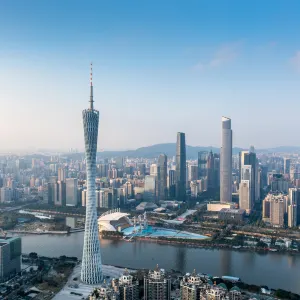
 I get chance to see guangzhou and the river and take nice pictures and selifs. It is good to try once.
The 460 m bubble tram makes a slow loop around the tower in 16 glass cabins, and it is the one tower add-on worth paying for: you get the river, the bridges and the Zhujiang New Town skyline from an angle no observation deck gives you. Book the bubble tram as part of your timed entry so you are not buying a second ticket at the base.
The classic add-on is a 70-90 minute Pearl River night cruise from Dashatou Wharf or Tianzi Wharf. Evening departures between 19:00 and 21:00 are the ones to aim for, since the boat passes the illuminated tower, the bridges and the Zhujiang New Town skyline. Tickets run from roughly CNY 80 to CNY 200 depending on the deck and whether dinner is included; book a departure that fits after your tower visit rather than squeezing both into one hour.
Old Guangzhou fits into a walkable half-day. The Chen Clan Ancestral Hall, Shamian Island and the Sacred Heart Cathedral sit within two metro stops of each other, and all three are more interesting in the morning light, before the tour groups arrive.
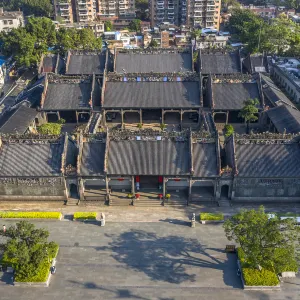
Built in 1894 by 72 branches of the Chen clan, this 19-building complex is the best single place to see Lingnan architecture: wood, stone and brick carving, pottery ridges, stucco reliefs and ironwork, all wrapped around nine halls and six courtyards. It now houses the Guangdong Folk Art Museum, so the ticket buys you both the building and the collection.
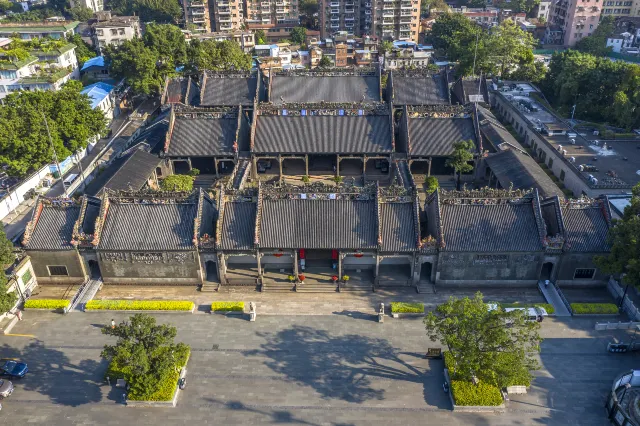
Entry is around CNY 10, opening hours are 09:00-17:30 with last entry at 17:00, and it is closed on Mondays. Metro Line 1 stops at Chen Clan Academy station right outside. Allow 1-1.5 hours, more if you read the English labels.

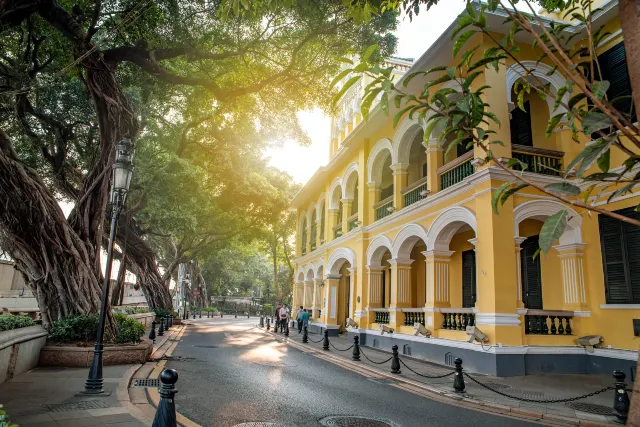
Shamian was the British and French concession, and its avenues of banyan trees, verandas and 19th-century banks, churches and consulates survived intact. There is nothing to tick off here: the pleasure is walking the grid, stopping for coffee or tea, and watching wedding photo shoots take over the riverside. Entry is free, and two hours is enough.
Take Metro Line 1 or 6 to Huangsha station and walk across the footbridge. Pair it with Qingping Market, the traditional medicine and dried seafood market just north of the island, for a contrast that is very much the real city.


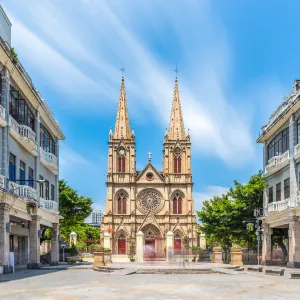
The Sacred Heart Cathedral, known locally as Shishi or the Stone House, is an all-granite Gothic church completed in 1888 and one of the largest in Southeast Asia. The twin spires and stained glass are worth the detour, and entry is free.
It is an active parish, so tourists are admitted outside mass times, typically in the morning and again in the afternoon; the doors close to visitors during services, and shoulders and knees should be covered. Allow 30-45 minutes. Metro Line 6 stops at Yide Lu, a five-minute walk away.

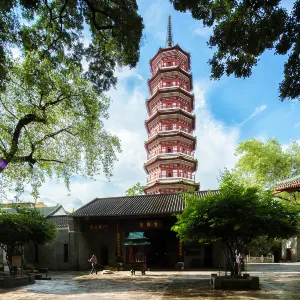
If you have time for one more temple, the 1,500-year-old Temple of the Six Banyan Trees is a working Buddhist site with a 57 m octagonal Flower Pagoda. It is calm, cheap and close to Beijing Road, and an hour is plenty. Metro Line 1 to Ximenkou.

West of the old city, Liwan district is where Guangzhou's arcaded shopping streets and Xiguan mansions survive. This is the part of the city to wander without a plan, preferably from late afternoon, when the lanterns come on and the food stalls start smoking.
Yongqing Fang is a restored block of 1930s Xiguan alleys around Enning Road, rebuilt with red brick, grey brick and the original lane pattern. It is free to enter and holds the Cantonese Opera Art Museum, small design shops, coffee bars and a handful of courtyard restaurants. The museum is free and closed on Mondays.
Come at 16:00-17:00 and stay for dinner; the lanes are at their best once the lights are on. Metro Line 1 to Changshou Lu, then a 10-minute walk.


Shangxiajiu is 1.2 km of qilou arcades, Cantonese snack shops and old department stores, and it is the easiest place in the city to graze: rice noodle rolls, beef offal, double-skin milk, shrimp dumplings and sweets, most of it under CNY 30 a portion. It is busy at night and on weekends, which is part of the appeal.
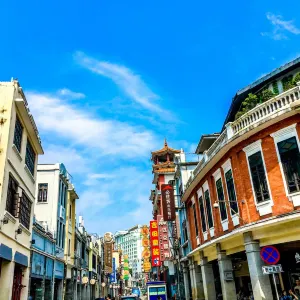

Beijing Road is the other big pedestrian street, built over a Song dynasty road axis that is preserved under glass in the middle of the pavement. Qingping Market, near Shamian, is the place to see dried herbs, mushrooms and seafood stacked in sacks. Both are free and easy to fold into a walking day.
Chimelong is a resort district in Panyu, about 40 minutes south of the center by metro, and it deserves its own day. The core is Chimelong Safari Park, one of the largest wildlife parks in the world, with giant pandas, koalas, white tigers and a drive-through safari train that passes free-roaming herbivores.
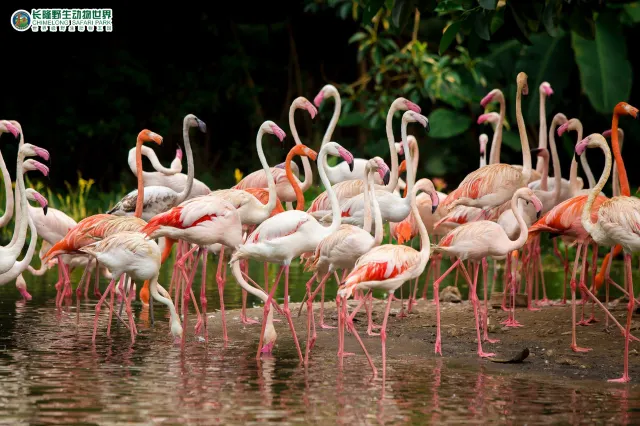
Adult tickets are around CNY 350 on peak dates and cheaper on weekdays and in low season, with combined tickets for the safari park, the circus and the water park costing less than buying each separately. Book online for a fixed date; the gate price is higher and the queue is longer.


Plan the day around the safari train: ride it first thing in the morning while the animals are active, then walk the panda, koala and primate sections, and finish with the evening circus, which usually starts around 19:30 and runs about 90 minutes. Chimelong Paradise adds roller coasters and the water park opens through the summer months.
To get there, take Metro Line 3 or 7 to Hanxi Changlong and use the free resort shuttle. Go on a weekday if you can; weekends and school holidays double the wait at the headline exhibits. Bring your own water and snacks, since food inside the park is expensive and mediocre.
If you have an extra day and are travelling with kids, the sister park is worth the trip: our Chimelong Ocean Kingdom guide covers the aquarium and rides on Hengqin Island in Zhuhai, roughly two hours from Guangzhou South by train plus a taxi.
Guangzhou is greener than its skyline suggests, and the easiest escape is Baiyun Mountain, 15 minutes by taxi from the city center. The cable car climbs to the ridge above Moxing Peak (382 m), where you get the whole city and the Pearl River in one frame; the walking trails up take about two hours at a steady pace.
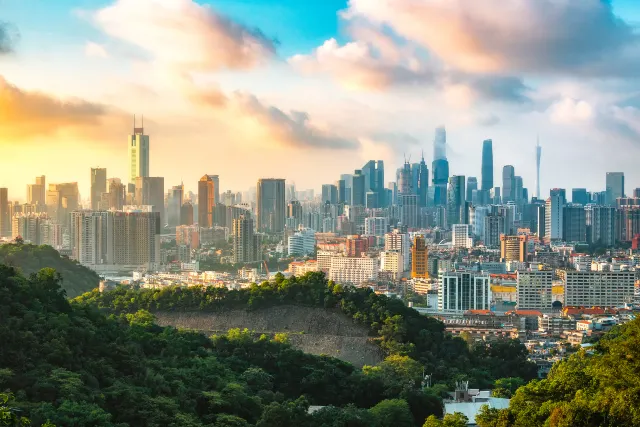
Entrance to the scenic area is around CNY 5, the cable car costs extra, and the gates open early, so go before 10:00 to beat both the heat and the crowds. Metro Line 2 to Baiyun Park, then a short taxi or bus to the South Gate.

If you want an easier green stop closer to the sights, Yuexiu Park is free and on Metro Line 2, with the Five Rams statue, the Ming city wall and Zhenhai Tower; an hour covers it.
Guangzhou is the home of Cantonese cooking, and the food is not a side note to the sightseeing: it is the main event. The city eats on a schedule, with morning tea, a long lunch, afternoon snacks and a late dinner, and you should too.
Yum cha means drinking tea with dumplings, and a proper Guangzhou breakfast runs through har gow, siu mai, char siu bao, rice noodle rolls, egg tarts and chicken feet, ordered from a tick sheet and washed down with pu'er or jasmine tea. Expect CNY 60-120 per person for a full spread.
The reliable names are Guangzhou Restaurant on Wenchang Road, Dian Dou De, Tao Tao Ju and Panxi Restaurant, the last set in a garden by Liwan Lake. Arrive before 11:00 or after 13:30, take a queue number at the door, and do not be put off by the wait: tables turn quickly.
Cantonese barbecue is the other essential. Look for shops with roast goose, char siu and soy chicken hanging in the window; a rice plate with two meats costs CNY 30-50 and is the best cheap meal in the city. For snacks, work through Shangxiajiu and Baohua Road: beef offal skewers, wonton noodles, rice noodle soup, double-skin milk and mango pomelo sago.
Base yourself in Liwan around Shangxiajiu or in Yuexiu around Beijing Road if eating is the priority. Both are on Line 1, walkable in the evenings and 20-30 minutes from Canton Tower by metro.
Start at 09:00 with the Chen Clan Ancestral Hall, walk Shamian Island from 10:30, and have dim sum at 12:30. Spend the early afternoon in Yongqing Fang, then take Line 1 and Line 3 to Canton Tower for a 16:00 slot, stay for the lights, and finish with a Pearl River cruise if you still have energy.
Day two is either Chimelong or Baiyun Mountain plus Yuexiu Park and Beijing Road. If you would rather have someone else handle the logistics, Trip.com's Guangzhou attractions and tours list bundles tickets, day tours and combination passes in one place.
Most visitors fly into Guangzhou Baiyun International Airport (CAN). Metro Line 3 connects the airport to Tiyu Xilu in the city center in about 45-50 minutes for a few yuan, and runs until late evening; taxis take 45-60 minutes depending on traffic.
US passport holders can often skip the visa entirely. China's 240-hour visa-free transit covers 57 nationalities, including the United States, and Guangzhou Baiyun is a designated port. You need a confirmed onward ticket to a third country or region (Hong Kong counts, returning to the US does not), and you must stay inside the approved area for Guangdong. The full rules, including the port list and the route test, are in this 240-hour visa-free transit guide.
By rail, Guangzhou South station is about 30 minutes from Shenzhen and under an hour from Hong Kong West Kowloon, which makes a multi-city trip practical.
The metro is the answer to almost every transport question. It has more than a dozen lines, English signage and announcements, fares from CNY 2, and air conditioning that matters in summer. Pay with a transport QR code in Alipay or WeChat, or buy a single-journey ticket from the machines, which accept English.
Avoid the metro at 08:00-09:30 and 17:30-19:00 if you are carrying luggage. For short hops after dark, DiDi is cheap and works in English through the international version of the app.
October to December is the best window: dry, bright and 20-28°C. March and April are mild but humid, June to September is hot with typhoon risk, and the Lunar New Year week brings crowds and higher hotel rates. The Canton Fair in April and October also pushes up prices around Pazhou, so check the dates before you book.
This article covers the city itself. For the wider trip, start with Trip.com's Guangzhou travel guide for hotels, flights and the full attraction list, and check the 240-hour visa-free transit rules before you book if you are flying in from the US.
Popular recommendations

The 10 Most Exciting Cities in Virginia
 _TS***4m

Latest Trip.com Promo Codes, Flight Discounts & Hotel Savings (Weekly Update)
 Trip.com Official

6 Things to know before Exploring the Montmorency Falls, Quebec
_TS***4m
2026 Guide to Shanghai Pudong Airport: Transit Visa & PVG Airport Shuttle
_TS***4m