A Visit to Shinsekai: Explore the "New World" of Osaka

Contents
- A Short History of Shinsekai
- Things To Do in Shinsekai:
- 1. The Kansai Restaurants and Their Ambiance:
- 2. Tsutenkaku Tower:
- 3. Billiken Dolls:
- 4. The Famed View:
- 5. The Landmark Attractions:
- Local Specialties:
- 1. Kushikatsu:
- 2. Mixed Juices:
- 3. Takoyaki:
- Tips for Your Shinsekai Experience:
- Make Your Takoyaki:
- Say ‘No’ to Fast Food:
- Experience the Pink Toei Cinema at Shinsekai:
- Stay Cheap at The Shinsekai:
- Getting to Shinsekai:
- 1. If Using the Subway:
- 2. If Using the Railway:
- Nearby Attractions:
- TsÅtenkaku and Billiken, Symbols of Shinsekai
Show more
Why is Shinsekai-visiting interesting? Shinsekai is an old neighbourhood located next to south Osaka City's downtown "Minami" area. The downtown Osaka area called Shinsekai, meaning “new world” in Japanese is an experience quite different from modern Osaka. It is like taking a seat in the time machine's future capsule filled with the traditional nostalgic longing for the future of an entertainment area and the 64m Tsutenkaku Tower. We will take into this wild new world firstly exploring the history of Shinsekai Osaka, how to get there, what to expect and what to do in this part of Southern Osaka which officially opened in 1912. Yes, the Japanese indeed envisaged this entertainment city way back in time and it is still running to packed houses. Let us tell why!
Let’s go back to 1912 when the new world to the Japanese meant Shinsekai-visiting to a huge grand entertainment like no other in the world in Osaka’s southern region of Naniwa. They drew inspiration from the Eiffel tower and New York city when modeling this area. The Tsutenkaku Tower was to be the beacon light. It does look a lot like the Eiffel Tower of Paris and is a steel structure. It turned out to be a smashing hit. The Tsutenkaku building of Shinsekai Osaka was the second tallest building in Asia at that time. And, even at that time, the Luna Amusement Park was linked to this landmark utilizing a tramway that offered its patrons the best aerial unhindered views of Osaka City. Its skyline of fantastic looking buildings for that time! In those days it was a beacon for the future of Japan and linking of 1915-opened Tenoji Zoo only added to the allure. But very soon the Japanese got tired of the Shinsekai Osaka amusement park and zoo. They felt the Shinsekai no longer represented the cutting-edge western technology which fell short of the Meiji Japan’s ambitions for the future. And this was in 1923!
In 1943 a fire destroyed the original Tsutenkaku tower. Cut to the post-war period the economy and people wanted an entertainment spot to relax in. Bowing to popular demands the Tsutenkaku Tower was rebuilt in 1956 to a new height of 103m. The newer Shinsekai businesses were built up. It led to many cinemas, restaurants, pachinko-parlors, and joined in to make it a thriving hotspot again. All was well till into the 80s when suddenly the business was normal but the time appeared to stand still in the area. That’s why we said it was like a time-capsule! While none of the older buildings stood up to the demands of time, it is the Tsutenkaku Tower and the spirit or ambiance of the place that continues the tryst with the past and the entertainment factor.
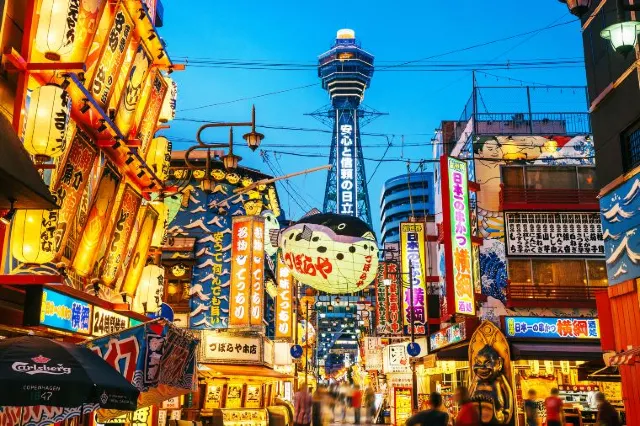
Firstly, it is all about the spirit of the place which seems to have stopped in time. The streets with a large number of Japanese restaurants advertise authentic food. It proudly states that their soup broth has remained the same for 80 odd years. Even the advertising outside appears to have been paused in the 60s era.
Are you aware that in Shinsekai, most noodle restaurants never empty the stock of soup? They add water to the original leftover soup and continue to brew a new broth. No wonder the brew when you are Shinsekai-visiting is authentic and old! As you go your way past the Dobutsuen-Mae subway station, you enter the arcade area of Shinsekai. Here you get transported back in time with the many run-down old food outlets lining the streets, the mahjong parlors, takoyaki vendors, and support turtles vending aquarium hotels for you to choose your support.
That aside, you must try the traditional local fare of Shinsekai Osaka at the street of Kansai restaurants. Typical dishes are the Kansai pancakes called okonomiyaki. It is traditional octopus-based wheat flour balls called takoyaki, and the wooden-stick served kebab-like Kushi-katsu vegetables or meat which is deep-fried. Don’t be fooled by the long line of customers at the food outlets. At Shinsekai, all the restaurants serve authentic Japanese food. What sets them apart is not the Michelin stars but the featuring of the restaurant in a TV show. Now, that is no indicator of quality but points to popularity!
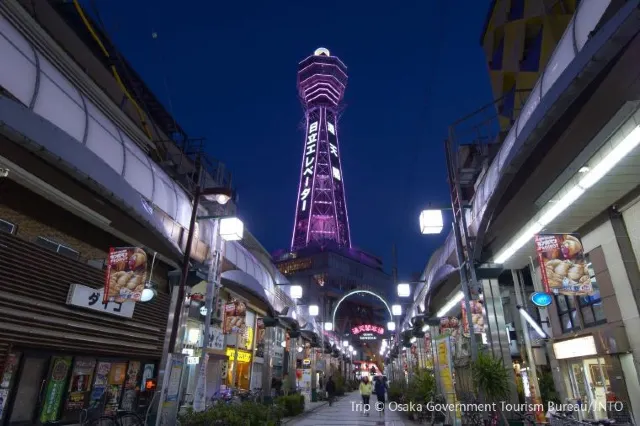
Well, what would Shinsekai Osaka be without its iconic Tsutenkaku tower? Rebuilt in 1956 at the original site which was destroyed by a major fire. The 103m giant in steel was inspired and looked like Japan’s Eiffel Tower. At nights it is lit up and visible in the Shinsekai skyline. The LED lights colors change once a month, depending on the color of the month. It operates from dusk to 11 pm. Yes, admission is ticketed at 700-yen to climb, enjoy the skyline aerial view or take those once-in-a-lifetime photographs. You are welcome to view from 9 am to 11 pm on weekdays with the ticketing stopped at 8:30 pm each day.
The charming doll of Billiken was and is a part of Tsutenkaku observation deck. Considered the deity-charm of Shinsekai the Japanese belief in seeking the blessings of the Billiken by touching its feet in obeisance.
The Instagram-able view of the Tsutenkaku Tower of the Shinsekai Osaka area is part of the legend that lives on in a time-freeze. Photographs, flashing neon lights, crowds vying to get the best view and yes, selfie sticks to not get prodded by are part of the aura and charm of the place. The stark reality of WWII’s devastation and its recovery times also hits you when you visit the Tobita-Shinchi aka Sanno trichome red light area or the Nishinari-Ku village of the downright poor. From up above, you can also see the Shitennoji Temple, the modern Harukas Mall close by in the present-day Abeno Station’s tower.
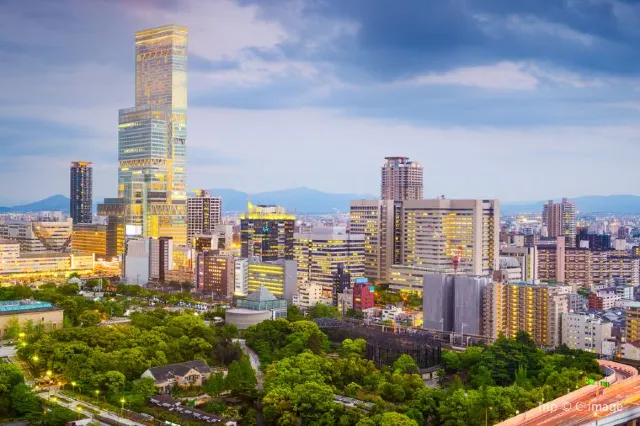
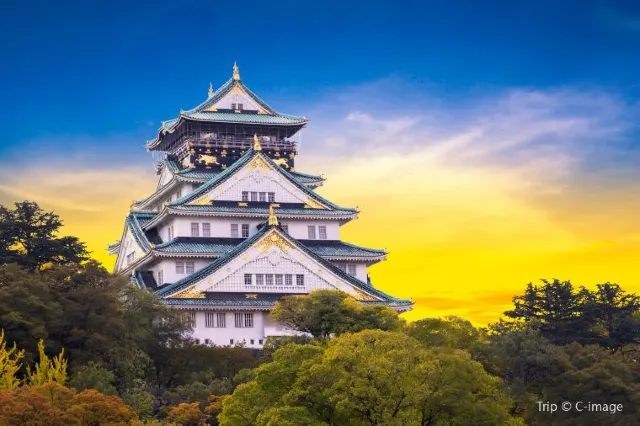
The Osaka Castle Main Tower, the Umeda or HEP-FIVE Ferris wheel at the Umeda Sky Building KÅ«chÅ«Teien or Floating Garden Observatory, where the last entry halts by 6:00 pm. The Tennoji Zoo are close by and must-visit places of Shinsekai Osaka. Recommendable also is a Tonbori River Cruise, a tour on the round-trip buses the Aqua-Liner, and the TenpÅzan Ferris wheel. Osaka Castle Tower is popular as a symbol of Osaka. Museum of history inside the castle introduces a variety of cultural assets, movies and models of Hideyoshi Toyotomi and Osaka Castle Tower in an easy-to-understand way.
Here’s an adage learned during Shinsekai-visiting in Japanese which states that the Kyotoite would probably spend his money on clothes while the Osakan will positively spend it on his food. When in Shinsekai Osaka in Japan, eat as the Japanese do! Let’s feed the belly with typical local dishes that are representative of the Shinsekai area. Let’s discover some soul food with nostalgia.
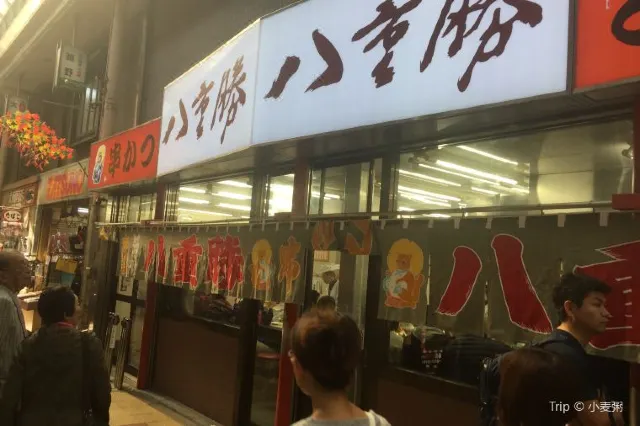
Kushikatsu is the kebab-like skewered meat, vegetables or seafood snacks deep-fried on sticks and the most popular Shinsekai food. There are loads of restaurants or what the more modern terminology calls pubs that sell these at 1 or 2 USD or a 100 yen/skewer generally ordered in threesomes. The locals even seem to move around with these, and they go extremely well with a beer. The best and most popular place for this dish is the Yaekatsu which normally has a queue before it. But the delicacy is well worth the 30 odd minutes in the queue.
Well, eating in Shinsekai Osaka is also a precise art full of easily understandable rules. The first one is to never double-dip the skewer into the sauce placed on the counter for obvious hygiene reasons. Get as much as you can in the first roll-on or use the cabbage to swathe the skewer in round two of the delectable sauce. You must also indulge in the doteyaki, which is a beef-based dish stewed in miso or the sweet-tasting sake called mirin. These will cost you 300 yen again ordered in threes! The fugu dish contains the poisonous blowfish and is also popular here.
Yaekatsu’s address is #3, 4-#13 of Osaka Prefecture at Ebisu Higashi in Naniwa. They are open daily from 10.30 am to nights at 9.30 pm but closed every 3rd- Wednesdays and Thursdays. You can call them on 06*6643*6332.
MyÅdai Tsurukame near the TsÅtenkaku tower is a pub to visit for its arty carvings of the 2m Tsuru or crane and the kame or tortoise. If you want to indulge in typical food of the ShÅ, era or food from the era of 1926 to 1989, then this place is a must-visit for its multi-language menu card — the ever-flowing spirits for the old-enough and young-at-heart.
The originator of this trend of drinking Shinsekai Osaka mixed fruit juices or mikkusu jÅ«su is the 1948 Sennariya Coffee. Try their banana and other fruits juice with ice on a hot day, and you will know why this trend has become the national buzz. Sennariya also brews a mean coffee from its beans. Try the cold “Dutch coffee,” or the hot-variety made by the filter process. The outlet shut down in 2016 and reopened under a former associate in 2017 due to popular demand.
Sennariya Coffee is located at #3, 4-#13 of Osaka Prefecture at Ebisu Higashi in Naniwa. They are open year-round and follow a 9 to 9 pattern normally. Saturdays, public holidays and the day before such holidays have extended hours by popular demand till 11 in the night. Call for information on 06*6645*1303 and remember the last drink is served a half-hour ahead of close time and the last food order should be an hour before closure.
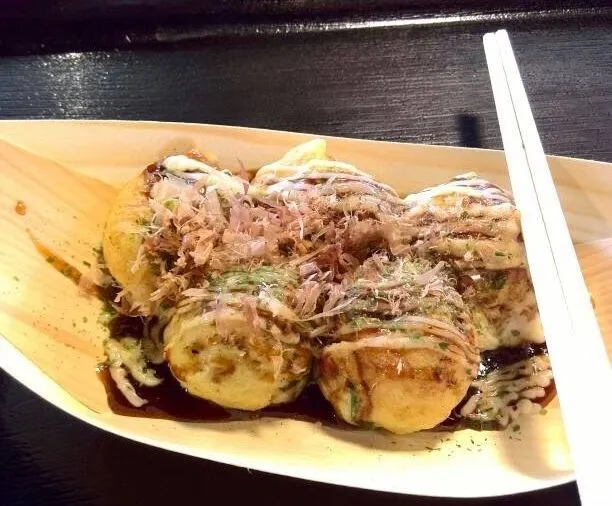
The very popular dish found all over Shinsekai Osaka and very special at Shinsekai is the takoyaki. The original takoyaki is small octopus-tentacle pieces boiled in batter balls. You can choose from a large variety of balls with the inside stuffing made from any sea fare you wish like squid, shrimps, cod roe or even the original octopus tentacles.
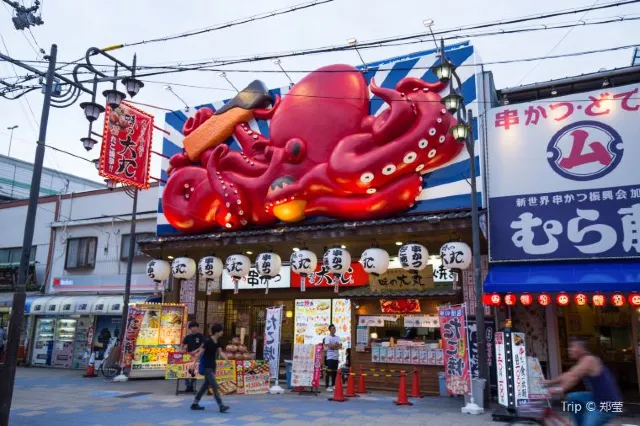
Kankan with the huge Octopus frontage is located at #3-5 at #16 Ebisu Higashi, Naniwa is an extremely good place to try takoyaki. The ambiance is relaxed with their red lanterns being calming and memorable while the crowds queue up for their share of the fluffy and crunchy famed balls. A platter of 8-balls costs a mere 350 yen and the bins placed outside make this an excellent choice for food on the move or to grab a quick bite while you explore Shinsekai. Kankan is open from 10 am-7.30 pm on all days except Mondays and Tuesdays which are holidays. You can call and check on 06*6636*2915.
Want to make your experience of Shinsekai-visiting more special? Here’s what we recommend for you.
Old wine in a new bottle, you may say. But this local experience is fun and needs a group of 3-5 persons to make the most of it. You are provided with a gas run platter or pan full of depressions. You need to make your choice of filling and the required batter which you pour into the oiled depressions to make your takoyaki. Super experience? The staff is always around to avoid accidents. So, try it out.
At Shinsekai you must do a typical old-styled food tour and say no to the modern fast-foods. Is it not surprising that though Osaka had the 1970 famous exposition the Mosburger, McDonald's, family-run Jonathan's or Denny's never made their base here? Food options here at the Shinsekai are typically Kansai-styled and limited to options of traditional Japanese foods. There are no convenience stores here at Shinsekai Osaka, and your older pub-versions are the coffee houses also called kissaten.
Want to experience the older version of non-stop cinema? Shinsekai is the only place where you get to see it except for a brief break from 5 to 9 in the mornings. There’s no pop-corn to grab here. The three screening rooms work endlessly and there even is a counter where you can buy those VHS tape spools and DVDs!
Pink movies and theatres screening them are a rarity in Japan. The gay movies and pink cinemas are still available for viewing at Shinsekai who lives in a time-wrap. The Shinsekai Toei tickets are bought at the ticket vending machines. The red buttons are for the pink gay movies, the yellow for the samurai-themed ones and the blue for the regular pink movies shown in the corresponding 3 halls.
The unnamed wide street right from Shin Imamiya Station to the Dobutsuen-Mae subway station at the Shinsekai southern end now has the easily rentable hotels. Backpackers and international travelers on a budget love these hotels for their English-speaking staff. A typical single room would cost 2,500 yen/night while the double would be available at 3,800 yen. Yes, they are safe, clean, and have basic hostel-like facilities. Check out the Aji no Daimaru Restaurant which is located at #3-1 #15 Ebisu Higashi at Naniwa-Ku and is available to call on 050*5281*2243.lic holidays. A typical meal with drinks here should cost 2,000 yen. They are normally open from 11 am to 10 pm with a 10 to 10 schedule on the weekends. Their website address is www.hotpepper.jp for the prices or menu in Japanese only.
Well, to enjoy a place like Shinsekai or the Tsutenkaku Tower one must get to doing Shinsekai-visiting early, especially during the weekends. The Tsutenkaku Tower is well connected using the subways and trains. The Shinsekai area lies east of the main Tennoji Station in the South Osaka’s Tennoji district.
One can use Exit #3 of the Hankai or Sakaisuji Line to get to Ebisucho Station, which is a 4 min walk from there to Shinsekai. You can also use Exit #1 for on the Midosuji line for Shinsekai-visiting which is a 7-minute walk from the Dobutsuen Mae station. When you use the Nankai or JR Kanjo Lines, you need to alight at the Shin Imamiya station and walk about 9 minutes to get to Shinsekai.
If traveling by train to Shinsekai Osaka, you should alight at the Shin Imamiya Station whether you use the Nankai Main Line or the JR Osaka Loop Line.
There is much to see and experience at the Shinsekai. Let us briefly review the attractions available. It makes complete sense to get an Osaka pass suitable to travel during your vacations. The main advantages would be that many of the places offer discounted entries and you can use the coupons to buy souvenirs and gifts when shopping. Check out the complete Amazing pass package for 4,700 yen or the lower-priced 1-day, 2-day passes too. Do you need a guided tour? It can help most times to have a guide who speaks the lingo and bargains well.
The two almost deified symbols of Shinsekai-visiting are the Billiken and the TsÅtenkaku tower which it sits atop located in the very heart of the area and its people. Tsutenkaku is famed for its view from the observatory and deck on the 5th floor standing at 87.5m above-ground levels. The golden statue of Shinsekai deity the Billiken sits atop the Tower and is popular for photographs. And yes, the view is phenomenal and includes the sighting of the tall buildings of Osaka like the 300m Abeno Harukas second to only the Tokyo Tower and Tokyo Skytree.
Do you know what the colors of the neon-illuminated tubes of Tsūtenkaku mean? If the skies would be clear the next day, you will see the white color. Overcast skies show orange, rain would display blue, and the two rows also indicate the two halves of the day. Now see the weather report atop the Tsutenkaku Tower before you go sightseeing.
Billiken is Tsutenkaku’s and Shinsekai Osaka’s mascot and is fabled to have appeared in 1908 to the artist from America Florence Pretz. Nearly every diner and shop will have an exhibit of the Billiken for you to invoke his special blessings from. Do visit the Billiken Shrine for the mystical omikuji strips of paper from which you can tell your fortune. The plus point is that at both these symbolic spots, you will be able to find local guide maps in Korean, English, Thai, and Chinese!
Jan Jan Yokocho Arcade lined with the retro-outlets is a 180m passage through Shinsekai district. The narrow alley has the shops, cafes, and restaurants conducive to undertake a walking tour. Gorge on traditional Kushikatsu menus as you discover the arcade of yore. The Google map is available at http://bit.ly/2YyvXCa.
Spa World is Shinsekai hot-spring theme-park where the famed onsen complex offers baths and globally famous spa facilities. Tickets would cost 1,200 yen for an entire day of access to its gym, pool, and bath on weekdays and 1,500 yen on weekends and holidays. Indulge in the facilities which include water slides, a swimming area, a sauna, a massage salon, a sports gym, a playground, a hotel with shops and restaurants. They are located at the address in http://bit.ly/2M8dB9E. Working hours are 10 am to 8.45 am the next day. Check out their web address at http://www.spaworld.co.jp/english/index.html.
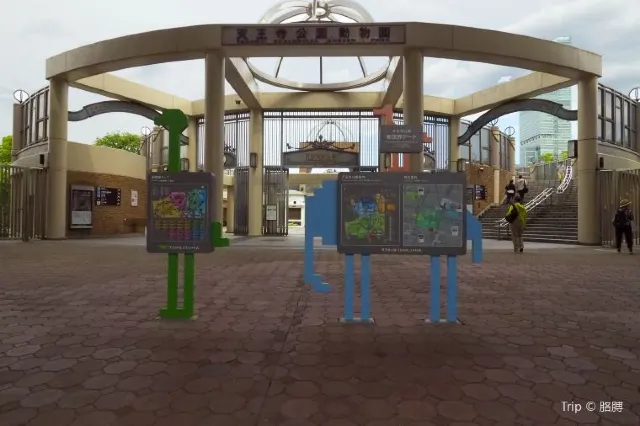
Tennoji Zoo has been around since 1915. It is second only to Tokyo’s Ueno Zoo. Spread over 11 hectares, you get to see the 4 zones with over 200 varieties of birds and animals like the polar bear, elephant, lion, and giraffe in their habitat. Open from 9.30 am to 5 pm their last entry is at 4 pm.
It costs 500 yen/ticket and has a weekly holiday on Mondays. Check out https://www.city.osaka.lg.jp/contents/wdu170/tennojizoo/en/ for details and location which is right next to the Shinsekai’s Tsutenkaku Tower.
Enjoy the Shinsekai-visiting trip through the Tsutenkaku area of Osaka? We hope we have set the right expectations of why see Shinsekai Osaka, what to see, and how to get to Shinsekai. Enjoy reading the details of the local foods, restaurants, hotels, pubs et all near the Tsutenkaku Tower. So, pack your bags and start your trip to the Shinsekai area of Osaka.
Popular recommendations

The 10 Most Exciting Cities in Virginia
TripBlog
Meet a Billionaire: Cities To Visit To Encounter the Ultra-Wealthy
TripBlog
Latest Trip.com Promo Codes, Black Friday Deals, Flight Discounts & Hotel Savings (Weekly Update)
 Trip.com Official
6 Things to know before Exploring the Montmorency Falls, Quebec
TripBlogQ&A
What's the most popular attractions in Osaka?
Things to do near Osaka for family & child?
How to get to Osaka from Nagoya?
How to get to Mt. Koya from Osaka?
How to get to Hakone from Osaka?
What do I need to know before visiting Osaka?
Trending Travelogues
Popular Trip Moments
Popular Attractions
Popular Ranked Lists
Popular Destinations
Recommended Attractions at Popular Destinations


About






of the year 2025



Site Operator: Trip.com Travel Singapore Pte. Ltd.