Hunan Beyond Zhangjiajie: Fenghuang, Mount Heng and Changsha

Contents
- Best Time to Visit Hunan
- Top Attractions in Hunan
- City sights: Changsha in one day
- Big scenery: Zhangjiajie, Fenghuang, Mount Heng and Yueyang
- With kids: caves, boats and glass bridges
- Hunan Itineraries: 2, 3 and 5 Days
- 2 days 1 night: Changsha and Fenghuang
- 3 days 2 nights: the Zhangjiajie core
- 5 days 4 nights: the full loop
- Getting to and Around Hunan
- Flights and high-speed trains
- City transport and the park shuttles
- Car rental and driving
- What to Eat in Hunan
- The dishes to order
- Where to eat, city by city
- Where to Stay in Hunan
- Zhangjiajie and Wulingyuan
- Fenghuang
- Changsha
- What a Hunan Trip Costs
- More Hunan Travel Ideas
Show more
Hunan is the province that gave China its most photographed peaks and then quietly kept the rest to itself. Zhangjiajie draws the crowds, but the same high-speed line also reaches the stilt houses of Fenghuang, the sacred summit of Mount Heng, the museums of Changsha and the river tower at Yueyang. This guide covers all of it: seasons, tickets, trains, food, hotels and three ready-made routes.
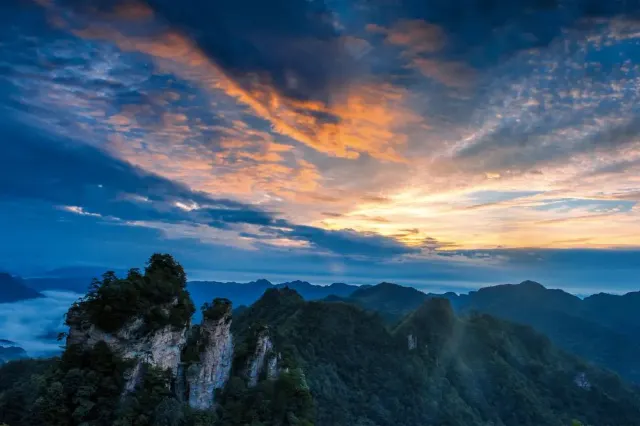
Hunan sits south of the Yangtze, so the province has four distinct seasons and a long, humid summer. The mountain districts in the northwest (Zhangjiajie, Wulingyuan, Fenghuang) run 5 to 8 degrees cooler than Changsha, and that gap decides most itineraries. If your trip is built around the sandstone pillars, spring and autumn are the two windows that repay the planning effort.
Timing differs by district, so the table below matches each area with its best months and what to avoid.
| Where in Hunan | Best months | Why those months | Avoid |
| Zhangjiajie and Wulingyuan | Apr–May, late Sep–Nov | Mist in the valleys early, clear ridges after rain, 15–26°C | Jul–Aug storms, icy steps in Jan |
| Fenghuang | Mar–May, Sep–Nov | River mist until 08:00, lights after 19:00, mild evenings | Golden Week, weekend nights |
| Changsha and Shaoshan | Mar–Apr, Oct–Nov | Museum and street-food weather, no need for timed slots | Jul–Aug, when the city holds 35°C |
| Mount Heng and Yueyang | Sep–Nov; Dec–Feb for snow on Heng | Clear summit views, 48-hour Heng ticket covers sunrise | August heat and holiday crowds |
In practice, April to May and late September to November are the two windows worth planning around: the pillars need mist at dawn and clear ridges after rain. July and August bring afternoon storms, and snow in January closes some Yangjiajie paths.
Two rules follow. Never give Zhangjiajie a single day in spring, because the mountain needs a clear morning. Put Changsha at either end of the trip, where weather does not decide the programme.
Hunan's sights fall into two groups that do not mix well in one day: the karst and sandstone country to the northwest, and the city-and-river country in the east around Changsha and Yueyang. The distance between the two is about 320 km, covered in roughly 2.5 hours by high-speed train.
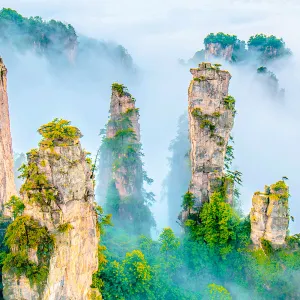
 A great experience and highly recommended. The shuttle service makes it easy to get around and the scenery is amazing. Lots of food outlets and toilets available. A must visit natural beauty spot.
Each ticketed sight below is listed with its 2026 gate price, the town you sleep in to reach it, and the time it needs on the ground. Lifts, cableways and park shuttles are charged separately inside each park.
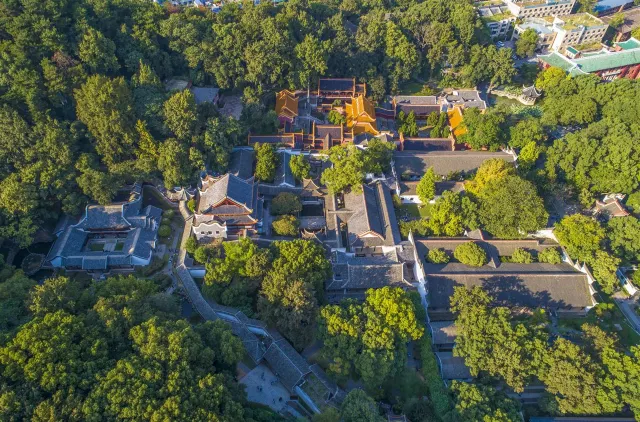
Changsha is the provincial capital and the easiest place in Hunan to spend a day without a car. Yuelu Mountain is free and opens 06:00–22:00, but entry needs a real-name reservation made up to three days ahead. The academy on its slope, Yuelu Academy, opens 07:50–17:00 from November to April and is the oldest surviving academy in China, founded in 976.
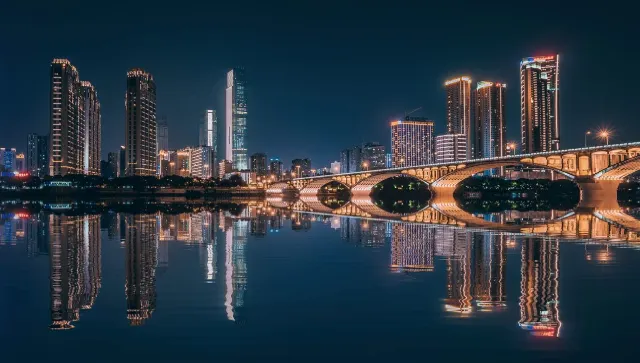
Orange Isle, the long sandbar in the Xiang River, is also free with a reservation and stays open 07:00–22:00. The Hunan Museum, home to the Mawangdui Han tomb collection, is free but closed on Mondays, runs 09:00–17:00 and releases its next five days of tickets at 20:00 each evening. For a skyline view, the Changsha Eye observation deck on Yuelu Mountain looks straight down the Xiang River towards the IFS towers.
Zhangjiajie National Forest Park is the Wulingyuan core, and one ticket covers it for four consecutive days. The gate price is the same for everyone; what changes your bill is how many lifts you take inside. Add the eco-bus network, because without it the five zones sit a long way apart.
• Bailong Elevator — one way up, the fastest climb to Yuanjiajie
• Tianzi Mountain cableway — one way down, the descent most people choose
• Yangjiajie cableway — one way, useful on the quiet western side
• Ten-Mile Gallery mini train — one way, or walk the 5.6 km valley road
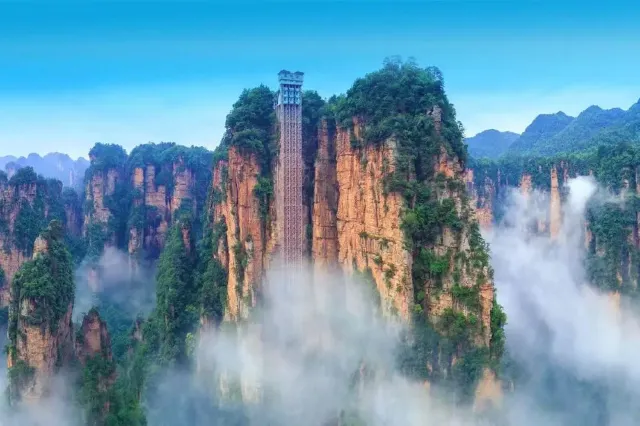
The park itself is split into five zones that most first-timers confuse. Yuanjiajie holds the Avatar viewpoint and the First Bridge Under Heaven; Tianzi Mountain is the ridge you photograph from above; Yangjiajie is the quiet side with the steepest steps; Golden Whip Stream is the flat valley floor; Huangshi Village is the panorama most tour groups skip. The gate ticket covers all five and the shuttle network, which is why one ticket buys you two very different days.
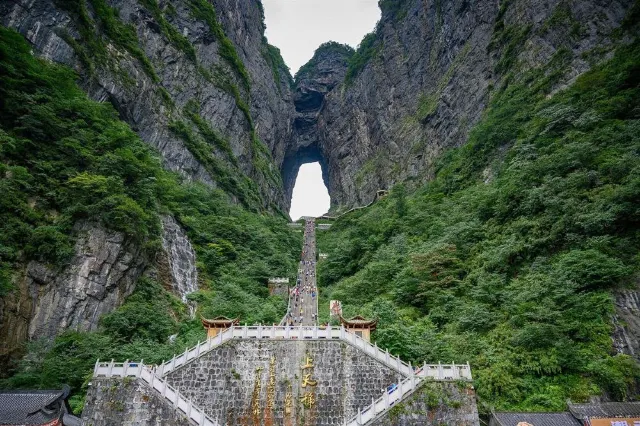
Tianmen Mountain sits beside Zhangjiajie city and is a separate park with a separate ticket. The adult ticket covers the route transport and the escalator through the mountain. Two extras appear on the day: shoe covers for the glass walkway, and the cave escalator if you skip the 999 steps. The long city cableway is being rebuilt in late 2026, so only the express route is on sale — confirm the running route when you book.
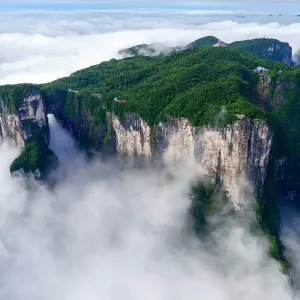

Fenghuang Ancient Town has no entry fee and no reservation to walk in; you pay only for the sights inside. The nine-sight pass lasts three days and includes the daytime Tuojiang boat; bought one by one the sights cost far less each, so the pass pays off from about the fourth stop.
Mount Heng works differently: one gate ticket valid 48 hours, plus a shuttle return and a cableway return if you do not want to walk up. Yueyang Tower and Junshan Island next to it are ticketed separately.


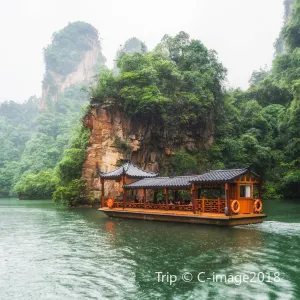
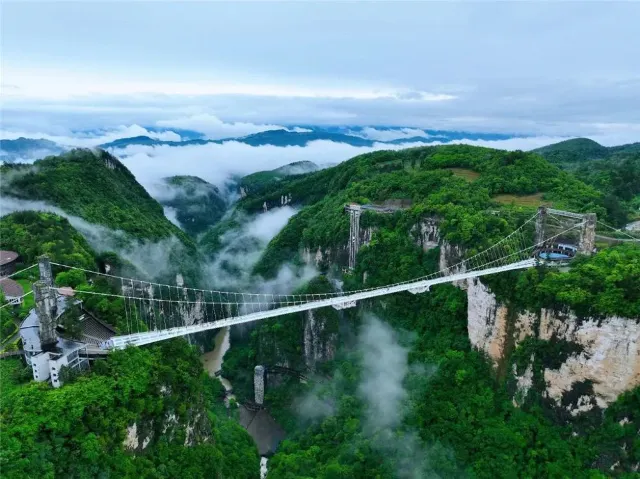
Three stops work well with children. The Zhangjiajie Grand Canyon glass bridge is the headline act and needs its own ticket and time slot. Huanglong Cave, a 7.5 km cave system with a boat section, is cool year-round and takes about two hours. Baofeng Lake is a 30-minute boat ride between cliff walls, reached by a short walk from the Wulingyuan side.


| Sight | Base town | Gate ticket (CNY) | Time to allow |
| Wulingyuan / Zhangjiajie National Forest Park | Wulingyuan | 165 gate + lifts | 2 days |
| Tianmen Mountain | Zhangjiajie city | 288 | 5–6 hours |
| Fenghuang Ancient Town | Fenghuang | Free / 128 pass | 1 night |
| Mount Heng | Nanyue, Hengyang | 110 + 78 shuttle | 1 day |
| Yueyang Tower | Yueyang | 70 | 2 hours |
| Hunan Museum | Changsha | Free, reserved | 3 hours |
Most visitors underestimate the distances inside Hunan. Zhangjiajie alone needs two full days, Fenghuang deserves a night, and Changsha works as a one-day bookend. The three plans below cover a short break, a mountain-focused trip and a full province loop.
Day one is Changsha: Yuelu Academy in the morning, Hunan Museum after lunch (book the 14:00 slot), then Pozi Street for dinner. Take an evening train to Fenghuang Ancient Town station, 2 to 3.5 hours from Changsha South, and sleep riverside. Day two starts at 06:30 on the stepping stones for the mist, then the nine-sight pass until lunch before the return train.
Base yourself in Wulingyuan, not the city. Day one: enter the forest park at opening, take the Bailong Elevator up to Yuanjiajie for the Avatar pillars, then the eco-bus to Tianzi Mountain and the cableway down. Day two: Golden Whip Stream in the morning and Yangjiajie in the afternoon. Day three: Tianmen Mountain on the way to the airport or the train station, allowing 5 to 6 hours.
This is the version that covers the whole province without rushing. Two nights in Wulingyuan, one in Fenghuang, one in Changsha, and a day at Mount Heng if you start early enough.
| Day | Morning | Afternoon | Night |
| 1 | Arrive Changsha, Yuelu Academy | Hunan Museum | Changsha, Pozi Street |
| 2 | Train to Zhangjiajie West | Wulingyuan gate, Golden Whip Stream | Wulingyuan |
| 3 | Bailong Elevator, Yuanjiajie | Tianzi Mountain, Ten-Mile Gallery | Wulingyuan |
| 4 | Tianmen Mountain | Train to Fenghuang, 51–66 minutes | Fenghuang riverside |
| 5 | Mist at the stepping stones, nine-sight pass | Train out from Fenghuang Ancient Town station | — |
If you have one more day, swap the last morning for Mount Heng: high-speed trains run from Hengyang East, and the ticket stays valid 48 hours, so a night on the mountain for sunrise is realistic.
Hunan is served by two useful airports and a dense high-speed network, and the train is almost always the better choice between the province's own cities. Driving is only worth it for the rural stretches around Fenghuang and the tea hills south of Changsha.
Changsha Huanghua International Airport (CSX) handles the bulk of international arrivals and sits 25 km east of the city, linked by metro line 6. Zhangjiajie Hehua Airport (DYG) is 5 km from the city centre and has direct flights from major Chinese hubs, which saves a long transfer if Zhangjiajie is your first stop.
On rail, Changsha South to Zhangjiajie West takes about 2.5 to 3 hours. Zhangjiajie West to Fenghuang Ancient Town station takes 51 to 66 minutes, with more than ten trains a day. Changsha South to Fenghuang runs 2 to 3.5 hours.
Fenghuang Ancient Town station is 10 km from the old town: the shuttle takes 20 minutes to the North Gate, the maglev is quicker but drops you further out, and a taxi is the simplest option with luggage. In Zhangjiajie city, buses 4, 5 and 6 reach the Tianmen cableway lower station, and the city bus to the Wulingyuan gate takes about 50 minutes.
Rental cars make sense for Fenghuang, Furong Town and the countryside, but not for the parks: private vehicles cannot enter Wulingyuan, and at Mount Heng cars stop at the visitor centre and transfer to the shuttle. Mountain roads between Zhangjiajie and Fenghuang are winding and often fogged in the morning, so plan drives for after 10:00.
| Route | Mode | Time | Fare (CNY) |
| Changsha South → Zhangjiajie West | High-speed rail | 2.5–3 h | from ~150 |
| Zhangjiajie West → Fenghuang | High-speed rail | 51–66 min | 77–93 |
| Fenghuang station → old town | Shuttle | 20 min | 7 |
| Zhangjiajie city → Wulingyuan gate | Bus | 50 min | 15 |
| City centre → Tianmen cableway | Bus 4/5/6 | 15 min | 2 |
Hunan food is sharper and drier than Sichuan cooking: fresh chilies rather than peppercorns, cured pork, smoked bacon and a lot of steam. A first-timer can cover the essentials in three meals.
The bill stays modest as long as you eat where locals eat. A home-style dinner in Changsha costs a fraction of a riverside table in Fenghuang for the same dishes, and the best bowls are the ones with plastic stools outside.
Steamed fish head with chopped chili (duojiao yutou) is the banquet dish; stir-fried pork with green chili (lajiao chaorou) is the everyday one. Changsha stinky tofu is fried black and served with chili broth, rice noodles are the standard breakfast, and spicy crayfish (kouweixia) is the summer street food. In Fenghuang, order blood duck, made with duck blood and glutinous rice cakes. In Zhangjiajie, sanxiaguo is a dry pot of pork, offal and vegetables that feeds two.
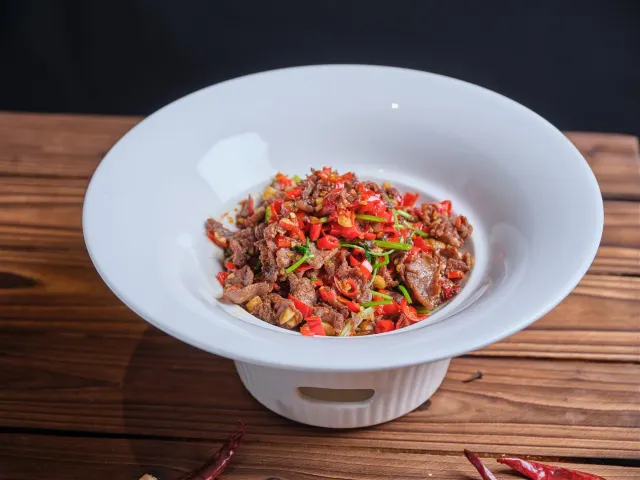
Two smaller habits are worth adopting. Breakfast in Changsha means a bowl of rice noodles with pickled beans, eaten standing at a counter before 09:00. In the mountains, a flask of hot tea beats any soft drink: the park's vending machines are sparse and the kettles at the summit restaurants charge for hot water.
In Changsha, Pozi Street and the surrounding lanes hold the old snack shops, while the Taiping Street area suits a sit-down dinner. Fire Palace on Pozi Street is the classic stop for a table of small Hunan plates.

HuoGongDian (Wu No.1)
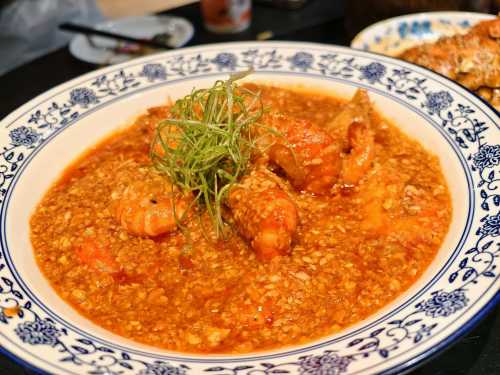
WENHEYOU CHANGSHA
In Fenghuang, walk two or three streets back from the river: the same blood duck costs roughly half what a riverside table charges. In Zhangjiajie, the streets around the Wulingyuan gate are full of sanxiaguo restaurants aimed at hikers, and the city side near the cableway station has better noodle shops.
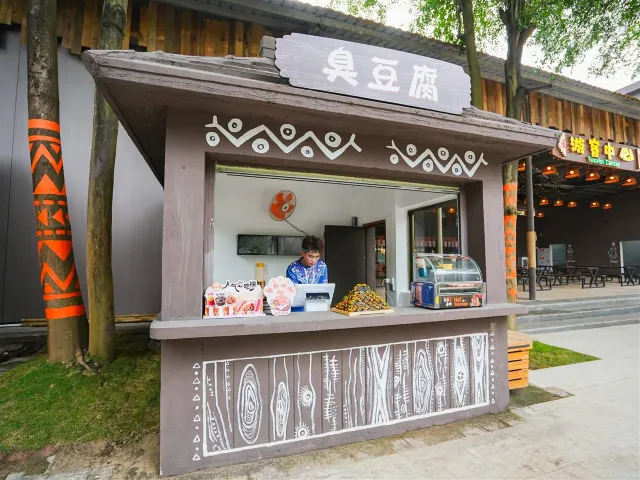
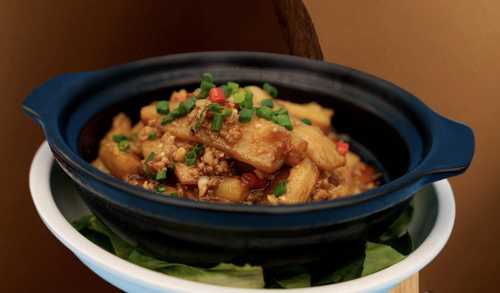
HU SHI FU SAN XIA GUO
 No. 16 of Global Traveller-Picked Restaurants in Zhangjiajie
For a proper Cantonese-style dim sum breakfast before flying out of the region, Guangzhou is three hours away by train and worth a separate morning.
Hunan's accommodation splits by purpose: Wulingyuan for the park gate, Zhangjiajie city for Tianmen Mountain and transport, Fenghuang for the river, and Changsha for museums and food. Book the gate side first in spring and autumn, because that is where the mountain mornings are won.
Two bases, two different trips: the gate side saves transfers, the city side saves the Tianmen morning. Our guide to where to stay in Zhangjiajie compares both in detail.
Staying inside Wulingyuan puts you a five-minute walk from the gate and saves an hour of transfer each morning; guesthouses cluster around the ticket office and the Xibu Street food strip. On the city side, the Guanliping area around the cableway lower station has homestays and mid-range hotels within walking distance of the Tianmen ticket hall.
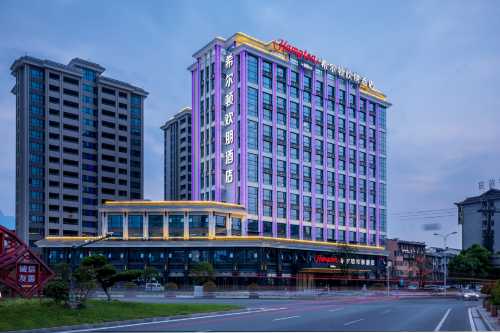
Hampton by Hilton Zhangjiajie Tianmen Mountain
No. 1 of 4-Star Select Hotels in Zhangjiajie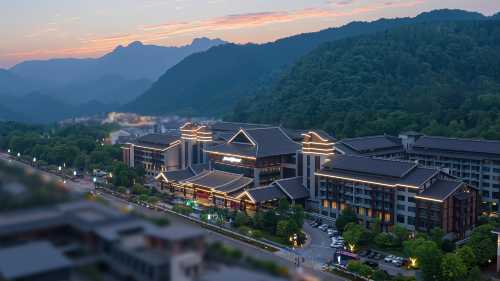
Howard Johnson Neodalle Resort Zhangjiajie
No. 3 of Scenic Hotels in Zhangjiajie
Riverside rooms come with the best night view but also bar noise until midnight; ask for the third floor or above. Rooms one or two lanes inland, around Hong Bridge and Wenxing Street, are quiet after 22:00 and are usually a five-minute walk from the water. Outside the ring road, rooms are larger and cheaper for the same standard.
Book Fenghuang for a weekday if you can. Weekend rates at the riverside jump by a third, and the quiet lanes fill with domestic tour groups after 20:00 even in low season.
Wuyi Square and the IFS tower area put you between the metro, Pozi Street and the river, which matters more than room size on a two-night stay. Juzizhou and Yuelu Mountain sides are quieter and better value, with metro line 4 linking both to the centre in about 20 minutes.
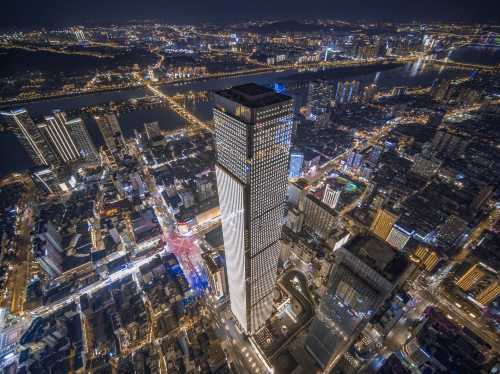
Niccolo Changsha
 No. 2 of Luxury Hotels in Changsha
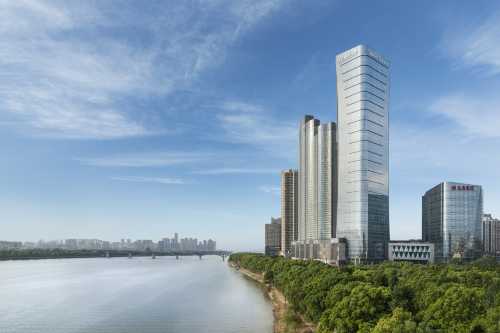
Grand Hyatt Changsha
No. 1 of Scenic Hotels in Changsha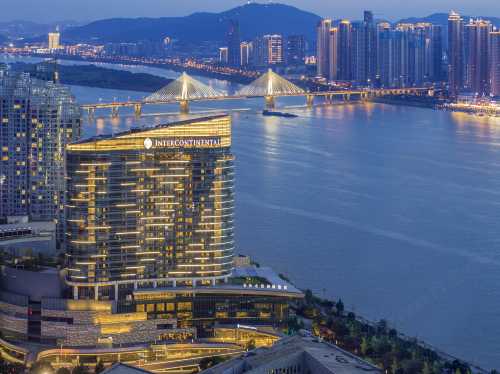
InterContinental Hotels CHANGSHA by IHG
No. 4 of Scenic Hotels in ChangshaA five-day Hunan trip, excluding international flights, costs about 2,600 to 4,200 yuan per person at mid-range level. The single biggest variable is how many lifts and cableways you take inside Zhangjiajie: a two-day park visit with the Bailong Elevator, one cableway and the mini train is the line that creeps up fastest.
| Item | Budget | Mid-range | Comfort |
| Hotels per night | 120–200 | 300–500 | 700+ |
| Food per day | 80–120 | 150–250 | 300+ |
| Park tickets (5 days) | 400 | 550 | 650 |
| Intercity trains | 250 | 300 | 400 |
| Local transport | 60 | 120 | 250 |
Ways to hold the budget down: use the free eco-buses inside Wulingyuan instead of private cars, skip the Ten-Mile Gallery train and walk the 5.6 km valley road, take the shuttle rather than the maglev into Fenghuang, and book Changsha hotels for weeknights. The one place not to economise is a timed entry slot at Tianmen Mountain: without it you simply do not get in during peak season.
Two costs surprise people. The first is luggage: mountain hotels rarely have lifts, and porters at Wulingyuan carry bags up for a fee. The second is the park's internal transport, which is cheap per ride but adds up: a family of four taking three lifts a day spends more on cableways than on the gate ticket.
If Zhangjiajie is already on your list, the surrounding articles below cover the practical detail: how the forest park's routes and lifts fit together, where to sleep on each side of the park, and how to reach the mountains from the airport and the high-speed station.
For a longer China route that continues south from Hunan into Guangxi, the Li River cruise between Guilin and Yangshuo is the natural next leg, and Guangzhou is the usual exit point for international flights.
Popular recommendations

Shanghai+Changsha guide 2026 for first timers (don't miss it): A complete guide to flights, accommodations, transportation, and 3-day, 2-night itinerary planning (updated November)
 Trip.Planner

Independent travel in Zhangjiajie+Changsha+Furong Town (2026): Zhangjiajie+Changsha+Furong Town 7-day, 6-night expert itinerary planning, covering attractions, and accommodations (updated November)
Trip.Planner
Hunan+Jiangxi 10-day, 9-night travel guide 2025: Discover top activities with an easy itinerary planner (updated August)
Trip.Planner
Latest Trip.com Promo Codes, Flight Discounts & Hotel Savings (Weekly Update)
 Trip.com Official
Popular Picks

Four Queens Hotel and Casino
4.4/5(322)
£44.00£71.00

AmericInn by Wyndham Madison West
4.6/5(45)
£72.00

Mainland China 5G eSIM | Day Pass/Total Data Package | ChatGPT Available | 24-Hour Billing | 1-365 Days | QR Code
4.6/5(77,857)
£0.07£0.14

Regal Airport Hotel
4.2/5(12,847)
£212.00
Chongwenmen Hotel(Near metro,Tian’anmen Square,Wangfujing,Forbidden city And Temple of heaven)
4.2/5(4,553)
£43.00