[Jinan Free Travel] How to enjoy a 2-day and 1-night Jinan tour, a comprehensive itinerary planning guide!

Contents
- Trip Planner
- Jinan itinerary planning overview
- Jinan Day 1
- Daming Lake Scenic Area
- Baotu Spring Scenic Area
- Thousand Buddha Mountain
- Jinan Day 2
- Lingyan Temple
- Jiurushan Art and Culture Town
Show more
[Planning a new trip but don't know where to start? Let Trip.com's AI Itinerary Assistant generate custom itineraries with one click!]
✅ Copy a travel blog link to generate the same itinerary with one click
✅ Featured popular itineraries for the most authentic experience
✅ Import your favorite destinations and automatically arrange the best itinerary
✅ Check opening hours and recommended visit durations at attractions to ensure that every stop meets your expectations
This guide carefully plans a perfect 2-day and 1-night trip to Jinan for you. Covering local attractions, authentic food and popular shopping areas, you can easily travel around Jinan and enjoy a worry-free holiday. Whether it is an in-depth exploration of history and culture or a fashionable check-in in a modern metropolis, this guide can meet your needs. Come and start your wonderful trip to Jinan!
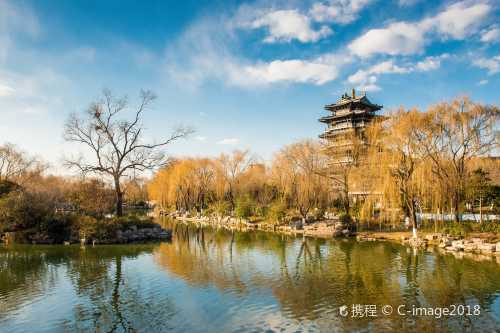

In a single day, visit Jinan's three main attractions, climb Thousand Buddha Mountain for a bird's-eye perspective, take a sail on Daming Lake to enjoy the springs, and observe the three streams of water bursting out of Baotu Spring.
Explore the thousand-year-old Buddha statue at Lingyan Temple, engage in handicrafts and music at Jiuru Mountain, and blend motion and relaxation to savor the latest rural fad.
| date | journey |
| Day 1 | Daming Lake Scenic Area -> Baotu Spring Scenic Area -> Thousand Buddha Mountain |
| Day 2 | Lingyan Temple->Jiurushan Art and Culture Town |
The Daming Lake Scenic Area is situated in the northern section of the old city and northeast of Jinan city center. It is a park that combines historic buildings, garden landscapes, and aquatic scenes. One could even argue that the park was constructed around Daming Lake, which is located directly in the middle of it. Daming Lake is a naturally occurring lake that receives its water from numerous city springs. Its origins can be traced back to the Northern Wei Dynasty. You can visit the Lao She Memorial Hall in the park while hiking there. You can also take in the lotus blossoms in the garden's pond during the summer.
Address: No. 271 Daminghu Road, Lixia District, Jinan City, Shandong Province
Opening hours: 24 hours a day, all year round
evaluate:
| Do you still remember Xia Yuhe by Daming Lake? This line keeps Daming Lake constantly popular. When I went to Daming Lake, I saw two cartoon characters, one was Qianlong and the other should be Xia Yuhe? I'm not sure about that. |
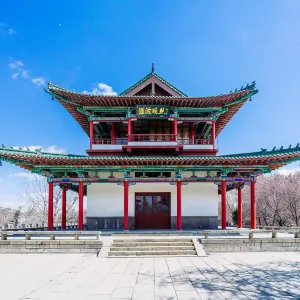
 A beautiful place to visit, lots of photos opportunities and welcoming people.
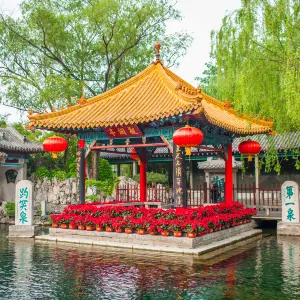
With Quancheng Square to the east, Daming Lake Scenic Area to the north, and Thousand Buddha Mountain to the south, Baotu Spring Park is situated in a thriving neighborhood in the heart of Jinan. The theme of this distinctive garden is springs. At the summit of Jinan's "Seventy-two Famous Springs" sits Baotu Spring, dubbed the "No. 1 Spring in the World" with a more than 2,000-year history. In literary works, it has also been used frequently; Lao She's "Baotu Spring" is the most notable example. Visitors gather here to witness the breathtaking spectacle of the Baotu Spring's three springs bursting.

The park's primary feature is Baotu Spring. The three streams of clean, cool spring water are separated from one another. When the water level is at its highest, it can rise several feet and gushes day and night. You can see the amazing sight of the three springs flowing out in the pool from the guardrails and massive stones that surround the spring. "The First Spring" is written on a stone tablet that is located next to the spring. Written by Wang Zhonglin of Licheng during the Tongzhi period of the Qing Dynasty, it has a dark green hue. In addition, near Baotu Spring, there are more than 30 famous springs, including Jinxian Spring, Shuyu Spring, Xibo Spring, Liuxu Spring, Huanghua Spring, Dukang Spring and Bailong Spring, which constitute the Baotu Spring Group. Since there is more rain in the area in July and August, this is a good season to visit the springs.
Visitors can get up close and personal with the park's springs in the middle of summer. Some springs are not surrounded by barriers. The spring water flows on the stone paths that are present in the pool. To enjoy the water, guests can descend into the pool. They will feel cool as they walk on the stone paths since the spring water will soak their feet. At the edge of Baotu Spring, visitors can enjoy free spring water to drink in addition to water sports. The Wangheting Tea House, located on the east side of the spring, offers visitors reasonably priced, aromatic tea made from Baotu Spring water.
The south gate of the park is another sight to behold, in addition to the springs. It is artistically and wonderfully designed. "Baotu Spring" is written in gold characters on a blue background on the gate's horizontal plaque. Known as the "first gate" of Chinese gardens, it was penned by Emperor Qianlong during the Qing Dynasty.
After years of protection, Baotu Spring's typical water level has essentially restored to normal, but it has frequently stopped spouting seasonally in recent years. Additionally, a variety of cultural events are frequently held at Baotu Spring Park. Every year, a 20-day lantern festival is celebrated in the park on the first day of the first lunar month. The Baotu Spring Water Culture Festival takes place every year in late September and lasts for roughly ten days. Tourists can enjoy a variety of folk activities, calligraphy and art exhibits, opera performances, and other park acts during that period. A chrysanthemum exhibition is held in the park from the end of October to the end of November every year. In the golden autumn season, the springs gush out together, and the chrysanthemums and spring water complement each other, which is definitely worth seeing.
Additionally, a cruise route has been introduced by the Baotu Spring Scenic Area. Visitors can take a boat from the Baotu Spring Boat Show if they're interested after touring the Baotu Spring Scenic Area. From there, they can cross the West Gate Bridge in Jinan's old city, pass the East Gate of Wulongtan Park, and enter the Wulongtan Ship Lock, Jinan's first passenger ship lock, where they can plunge more than two meters. The relief of the "Eight Scenic Spots of Jinan" is also visible from the east side of the boat. There are many aquatic plants along the shore, and the river water is clear. The cruise ship finally passed through the Yanbo Bridge and entered the Daming Lake Scenic Area.
Address: No. 1, Baotuquan South Road, Lixia District, Jinan City, Shandong Province
Business hours: Open from 07:00 to 21:00 tomorrow (admission ends at 20:00)
evaluate:
| I have been here many times. The price has been the same for all these years, which is quite reasonable. It is a scenic spot I don't want to miss every time I come to Jinan. It had just rained this time, and the air was good, which is perfect for sightseeing. The water of Baotu Spring is very clear, and the fish in the water are also very beautiful. |

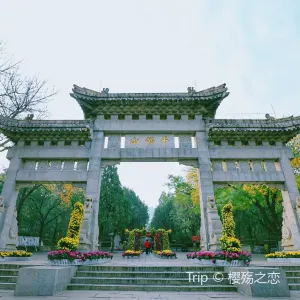
Along with Baotu Spring and Daming Lake, Thousand Buddha Mountain is one of the "Three Major Scenic Spots of Jinan" and is situated in the southern section of the city. Mount Tai has a branch called Thousand Buddha Mountain. The mountain boasts rich woods and rolling summits despite its low elevation. It is also well-known for its numerous Buddha carvings in ancient stone. Visit the Xingguo Zen Temple to worship and burn incense, or venture into the Wanfo Caves, home to around 30,000 Buddha statues, to discover the mysteries of Buddhism. Ascending to the summit of the mountain offers a sweeping perspective over Jinan city and its boundless landscape.
Address: No. 18, Jingshiyi Road, Lixia District, Jinan City, Shandong Province
Opening hours: 05:00-22:30 (ticket sales stop at 18:00)
evaluate:
| The scenery is charming. It is worthy of being a thousand-year-old temple. There are many people during the holidays, but there are many parking lots and the charges are reasonable. Climbing from the foot of the mountain to the top step by step, the scenery along the way is very historical and meaningful |
Lingyan Temple is situated in Wande Town, Changqing District, Jinan City, at the northwest base of Mount Tai. It has a rich Buddhist legacy and a roughly 1,600-year history. The Tang Dynasty saw the construction of the temple's Thousand Buddha Hall. The hall's four walls are covered in hundreds of little wooden figurines of Buddha. The temple also has a Pitchi Pagoda. It is a brick pagoda with an octagonal base that is nine stories tall and pavilion-style. A relief depicting Ashoka, the Mauryan monarch of ancient India, embracing Buddhism, is engraved on it. It is the Lingyan Temple's iconic structure.
Address: Wande Town, Changqing District, Jinan
Business hours: Open from 08:30-17:00 tomorrow
evaluate:
| The cultural heritage is profound and full of vitality and vigor. [Scenery] The trees are lush and tall. [Fun] The cultural and creative products are rich and the prices are reasonable. [Cost-effectiveness] Super high |
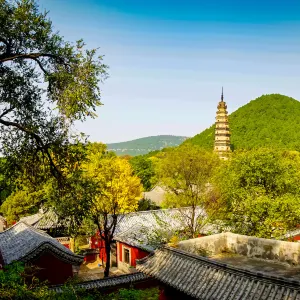
Jiuru Mountain is a hormone-filled, beautiful environment. The romantic desire of "creating romance and surprises," the lovely idea of "living life as it comes," and the extravagant fashion of "making life full of ritual sense" can all be found here, along with the charming scenery created by wooden house buildings and natural landscapes. An Immersion Romantic Life Experience Tour of Jiuru Mountain Jiuru Mountain has been adapting to the evolving requirements of young people by upholding the idea of "taking life as it comes and making life full of love traditions." Jiuru Mountain's stunning transition from sightseeing to leisure vacation has been made possible by the immersive romantic life experience tour, which was constructed in accordance with international wild luxury leisure holiday standards. In addition to visiting the park and climbing the mountains to take in the breathtaking outdoor scenery, visitors to Jiuru Mountain can also immerse themselves in the immersive romantic life experience hall. Activities include hand-grinding coffee at Grinding Time, baking at Nomanburg Niuhonghong, creating creative handcrafts at Tiemuzhen Nature Art Workshop, creating sachets at Haomeng Women's Flower Fragrance Shop, and enjoying a delicious afternoon tea at Buermuju Tree House. More than 30 immersive life experience halls are sought after by more fashionable young people because they make travel more romantic.
Buer Wooden House, Maowo Homestay, Hongyanrong Wooden Barrel Homestay, Nudist Tent Homestay, Yuemu Mountain House, Haomeng Inn, Mengzhen Shuxiang Homestay, and Nuomanbao Life Situation Hotel are only a few of the more than ten well-known homestays that Jiuru Mountain has introduced in succession since 2016. People who appreciate beauty, understand art, have taste, and enjoy life can enjoy a vacation experience in close proximity to nature and harmony between man and nature here because art, civilization, and nature are all wonderfully blended. A luxurious, personalized nature party in Jiurushan "creates romance and surprises." The upscale, private customized area of Jiuru Mountain is devoted to promoting a way of life that values nature, blends in with it, and gets back to it. It seeks to provide a memorable leisure experience and is driven by the desire for a better living. For romantics who are interested in living a high-quality life, it has created an immersive experience of the original natural terrain that is "wild" in nature and "luxurious" in quality: Stream party, swimming pool party, canyon party, forest party, starry sky party, celebrity party, motorcycle movie party, etc. Jiuru Mountain continues to produce passionate pieces with stunning natural settings. Life will be full with romantic traditions if you live each day as though it were your own! Jiuru Mountain has effectively transitioned from a tourist destination to a place to relax and take a holiday. In the spirit of romance, it's time to reinvent Jiuru Mountain and travel! A lover of romantic travel and a champion of a better life. Make an effort to be beautiful and advocate for romance. Jiuru Mountain improves life and adds romance to travel.
Address: Huluyu Village, Xiying Street, Licheng District, Jinan City
Business hours: Open from 08:00 to 17:30 tomorrow (ticket sales stop at 16:00)
evaluate:
| Haha, after visiting it, I realized that it is an art town, not a literary town. The atmosphere of Quancheng Bookstore is super great. The decoration and layout of all the shops inside are very attentive. It is a place worth exploring. |

Popular recommendations

Prince Harry Joins Ctrip Group Global Partners Conference: Advancing Sustainable Travel Together
 TripBlog
Latest Trip.com Promo Codes, Flight Discounts & Hotel Savings (Weekly Update)
 Trip.com Official
6 Things to know before Exploring the Montmorency Falls, Quebec
TripBlog
2026 Guide to Shanghai Pudong Airport: Transit Visa & PVG Airport Shuttle
TripBlog