[Leshan Independent Travel] One-Day Tour of Leshan – Must-See Attractions and Compact Travel Itinerary

Contents
- Leshan itinerary planning overview
- Baoguo Temple
- Fuhu Temple
- Golden Dome
- Wannian Temple
- Emeishan Ecological Monkey Area
Show more
You can enjoy a full day of fun in Leshan! Choose from classic travel routes that highlight must-see sights, local delicacies, and convenient transport tips—perfect for making the most of a short trip. Whether you're planning a family day out, a get-together with friends, or a weekend escape, it's the ideal way to explore the city. Start your adventure today!
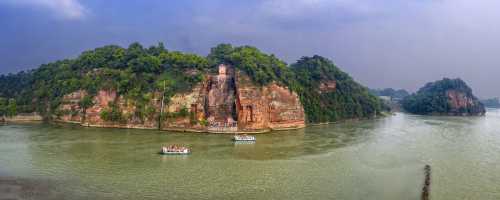

Begin your adventure with a visit to Baoguo Temple to worship Buddha, admire the Maitreya statue at Fuhu Temple, and make a pilgrimage to the golden Bodhisattva statue at Jinding—each site capturing the spiritual heart of Emei’s Buddhist culture.
Continue your journey by exploring the timeless charm of Wuliang Hall at Wannian Temple, then head to the monkey area where you can experience the thrill of nature and marvel at the harmony between wildlife and historic architecture.
| journey |
| Baoguo Temple->Fuhu Temple->Jinding->Wannian Temple->Emeishan Ecological Monkey Area |
Located near the entrance of Mount Emei, Baoguo Temple was originally built during the Wanli era of the Ming Dynasty and serves as the starting point for many visitors to the Emei Mountain Scenic Area. The temple gate bears a plaque inscribed with "Baoguo Temple" by Emperor Kangxi of the Qing Dynasty. As a central hub of Buddhist activity in the region, it houses several significant halls, including the Maitreya Hall, the Main Hall, the Seven Buddhas Hall, and the Samantabhadra Hall. Today, it also functions as the headquarters of the Emeishan Buddhist Association and frequently hosts major religious events.
Address: Mount Emei Scenic Area, Huangwan Township, Mount Emei, Leshan City, Sichuan Province
Opening hours: 07:00 to 18:00 daily
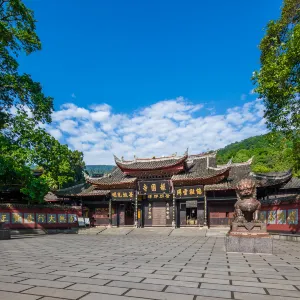
 Baoguo Temple - where it all begins and endsYou know, there's a special magic to traveling returning to where you started and realizing you're a completely different person. That Mount Emei, which seemed like a pretty picture on the first day, has now become a part of you. That your knees remember every stone, and your lungs remember every breath of air at an altitude of three thousand meters. Baoguo Temple awaited us below. And it was the perfect end point.Baoguo, also known as the "Temple of Gratitude to the Motherland," stands at the very beginning of the trail, at the foot of the mountain. On the first day, we were in such a hurry to get going that we left it for last, like a delicious dessert saved for last. And we did the right thing. The temple is about 450 years old. It was founded during the Ming Dynasty, in the 16th century, and since then it has faithfully fulfilled its purpose: meeting pilgrims, seeing them off to the top, and welcoming them back when they descend, tired and happy. Can you imagine how many stories it has witnessed? How many knees, like mine, have trembled before its gates?In the Hall of the Seven Buddhas, I encountered the purple bronze Huayan Pagoda. The same one, with 14 stories and 4,700 small Buddhas on its body. But the temple's crowning glory is, without a doubt, the bell. A huge bronze bell, weighing over 10 tons. Locals call it the "Bashu Bell King" (named after the ancient kingdom of Sichuan). Transportation: Take bus #5 in Emeishan; it goes directly to the temple. The price is only 1.5 yuan. It's almost ridiculous: 1.5 yuan for a ticket to a place that will nourish your memories for years. Buses run every 10 minutes, so you won't have to wait even during rush hour.You can, of course, take Didi—it's about 20 yuan and takes 25 minutes. But if you're not as exhausted as we were from descending the mountain, the bus is a more authentic option. You'll get locals to join you, you'll enjoy the scenery outside the window.
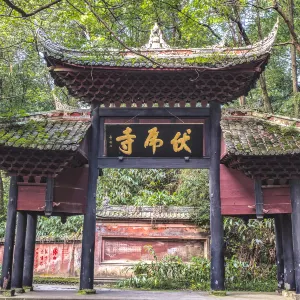
Fuhu Temple was originally constructed during the Tang Dynasty and later rebuilt in the Shaoxing period of the Southern Song Dynasty. In the Shunzhi period of the Qing Dynasty, Monk Guanzhi led his disciples in another reconstruction, naming it "Huxi Zen Forest," now commonly known as Fuhu Temple. There are two popular stories about the origin of its name: one suggests a tiger once attacked someone nearby, prompting the monks to build a "Zunsheng Pagoda" to subdue the beast and rename the temple; the other claims the temple was named after the mountain behind it, which resembles a crouching tiger.
Address: Mount Emei Scenic Area, Leshan City
Opening hours: 08:00 to 16:00 daily

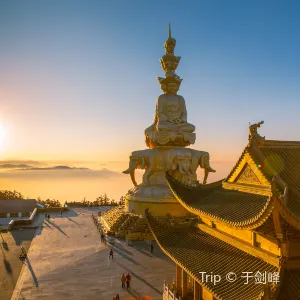
The Golden Summit marks the highest point of Mount Emei and is home to the iconic four-sided golden statue of Samantabhadra Bodhisattva, a must-see for visitors. Standing at an elevation of 3,079 meters, the summit features a towering 48-meter bronze statue of Samantabhadra, along with the Huayan Temple where visitors can offer prayers. This statue is not only the tallest golden Buddha in the world but also the first artistic interpretation of Samantabhadra with four faces and ten directions. Behind the statue lies the Huayan Temple, which houses three main halls. The third hall, known as the Samantabhadra Hall or Golden Hall—also referred to as the “Golden Summit”—is the tallest hall on Mount Emei. Its entrance displays plaques with inscriptions such as "Golden Summit," "Endless Vows," and "Majestic Huazang." Inside, visitors will find a revered bronze statue of “Samantabhadra riding an elephant.”
Address: No. 41, Mingshan South Road, Emeishan City, Leshan City
Opening hours: 06:00 to 17:00 daily

Wannian Temple sits at the base of Guanxin Ridge in Mount Emei and is one of the mountain’s eight major temples. With its origins tracing back to the Eastern Jin Dynasty, the temple boasts a rich historical legacy. Originally known as Puxian Temple, it was renamed “Shengshou Wannian Temple” during the Wanli reign of the Ming Dynasty. One of its most remarkable features is the beamless hall, a completely brick-structured building constructed by Emperor Wanli in honor of his mother’s birthday. The temple’s “Xingyuan Building” houses three sacred relics—the Buddha’s tooth, palm leaf scriptures, and the Wanli Golden Seal—making it a must-visit site for travelers.
Address: Mount Emei Scenic Area, Huangwan Township, Mount Emei, Leshan City
Opening hours: 07:00 to 18:00 daily
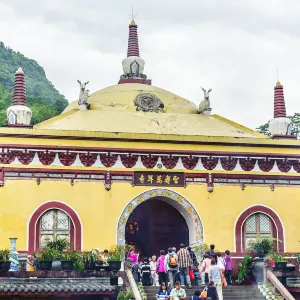

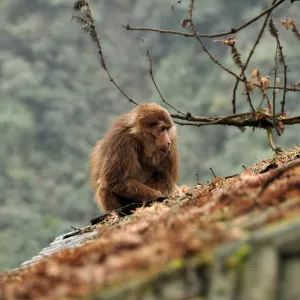
The Emeishan Ecological Monkey Area is situated near the “One Line of Sky,” between Hongchunping and Qingyin Pavilion. It is recognized as the largest natural wild monkey habitat in China. The area is equipped with plank roads, pavilions, and suspension bridges, making it easy for visitors to observe and interact with the monkeys. Tourists often enjoy feeding and playing with the monkeys, fostering a unique environment in Mount Emei where the monkeys are unafraid of people, interact peacefully, and share moments of fun. This engaging interaction has become one of the vibrant highlights of Mount Emei.
Address: Mount Emei Scenic Area, Huangwan Township, Mount Emei, Leshan City
Opening hours: Open 24 hours, year-round

Popular recommendations

7 Reasons to Put Cancun Mexico Into Your Vacation Bucket List.
 _TS***4m
Latest Trip.com Promo Codes, Flight Discounts & Hotel Savings (Weekly Update)
 Trip.com Official
6 Things to know before Exploring the Montmorency Falls, Quebec
_TS***4m
2026 Guide to Shanghai Pudong Airport: Transit Visa & PVG Airport Shuttle
_TS***4m