[Nanjing Free Travel] How to enjoy a 3-day and 2-night trip to Nanjing, a comprehensive itinerary planning guide!

Contents
- Trip Planner
- Nanjing Itinerary Planning Overview
- Nanjing Day 1
- Nanjing City Wall
- Nanjing Presidential Palace
- Confucius Temple Qinhuai Scenic Belt
- Nanjing Day 2
- Nanjing Museum
- Ming Xiaoling Mausoleum
- Sun Yat-sen Mausoleum Scenic Area
- Nanjing Day 3
- Niu Shou Mountain Cultural Tourism Area
Show more
[Planning a new trip but don't know where to start? Let Trip.com's AI Itinerary Assistant generate custom itineraries with one click!]
✅ Copy a travel blog link to generate the same itinerary with one click
✅ Featured popular itineraries for the most authentic experience
✅ Import your favorite destinations and automatically arrange the best itinerary
✅ Check opening hours and recommended visit durations at attractions to ensure that every stop meets your expectations
This guide carefully plans a perfect 3-day and 2-night trip in Nanjing for you. Covering local attractions, authentic food and popular shopping areas, you can easily travel around Nanjing and enjoy a worry-free holiday. Whether it is an in-depth exploration of history and culture or a fashionable check-in in a modern metropolis, this guide can meet your needs. Come and start your wonderful trip to Nanjing!
Walk on the Ming Dynasty bricks along the city wall, see Chinese and Western architecture in the Presidential Palace, eat duck blood vermicelli while mooring at Qinhuai overnight, and explore the stone statues along the cemetery road.
Dive into the underground palace at Niu Shou Mountain to see the Buddha's skull, take Zen movies at the Buddha's Head Palace, and enjoy the vegetarian restaurant on the mountainside and the Buddhist bell on the mountaintop. These are the most photographed secret places in Jinling.
| Date | Journey |
| Day 1 | Nanjing City Wall->Nanjing Presidential Palace->Confucius Temple Qinhuai Scenic Belt |
| Day 2 | Nanjing Museum->Ming Xiaoling Mausoleum->Sun Yat-sen Mausoleum Scenic Area |
| Day 3 | Niu Shou Mountain Cultural Tourism Area |
The Nanjing City Wall was built in the early Ming Dynasty (1366-1386). It is 10 kilometers long from north to south and 5.67 kilometers wide from east to west. What makes Nanjing City Wall different from other city walls in my country is its irregular shape. There were originally 13 city gates in Nanjing during the Ming Dynasty, but only a few remain today. Among them, the Zhonghua Gate Barbican is worth visiting.
Address: Next to the East Gate of Jiuhuashan Park, Xuanwu District, Nanjing City, Jiangsu Province
Opening hours: 08:30-17:00
evaluate:
| The Nanjing city wall is divided into the inner city and the outer city. The Ming city wall has thirteen inner sections and eighteen outer sections. Many traditional city gates have been demolished, such as Zhengyang Gate (Guanghua Gate), Tongji Gate, Shuixi Gate, Hanzhong Gate, etc. Tourists are obsessed with a few open sections of the city walls, such as Jiefangmen, Xuanwumen and Zhonghuamen. Currently, the Shence Gate (Heping Gate) and Houzai Gate are still open. The outer city ruins are even more vague. The focus is on the section from Xuanwu Gate to Jiefang Gate. Xuanwu Gate is not an existing city gate, but a new gate built on the west side of Xuanwu Lake to facilitate entry and exit when the "Southeast Asian Industrial Exposition" was held in the late Qing Dynasty. From Xuanwu Gate, you can follow the city wall to Jiefang Gate, which was a new city gate built after liberation. There is a bend in the city wall near Jiefang Gate, which is what we call "Taicheng" today. The most heartless are the willows in Taicheng City, which are still shrouded in smoke over the ten-mile embankment. The Taicheng that Wei Zhuang mentioned is the palace city in the south, which is not nearby. |
The Presidential Palace in Nanjing has a long history and a distinguished reputation. In the Qing Dynasty, it was the Jiangning Weaving Bureau and the Governor-General's Office of Jiangnan. On New Year's Day in 1912, Sun Yat-sen took office as the provisional president here. Later, Sun Yat-sen used this place as his presidential office and meeting room, and it has been the official residence of the President of the National Government ever since. The architecture is a combination of Chinese and Western styles, grand and intriguing. Take a stroll in Xuyuan to find the footprints of Sun Yat-sen and feel the changes and vicissitudes of history.
Address: No. 292, Changjiang Road, Xuanwu District, Nanjing, Jiangsu Province
Transportation: Take Metro Line 2 or 3 and get off at Daxinggong Station.
Business hours: Open from 08:30-18:00 tomorrow (ticket sales stop at 17:00; admission stops at 17:00)
evaluate:
| The Presidential Palace in Nanjing offers a fascinating glimpse into modern Chinese history. With its well-preserved buildings, lush gardens and rich exhibitions, it was once the seat of the Republic of China. History buffs will appreciate its rich political heritage, while casual visitors can enjoy the peaceful atmosphere. A must-see landmark, the bridge was and is beautiful now. Allow 2–3 hours for thorough exploration. I have a great memory. Highly recommended - a must visit. |
The Confucius Temple Qinhuai Scenic Area refers to the Qinhuai River area with the Confucius Temple as its center, including the streets and lanes on both sides of the river, residential houses, and nearby historical sites and scenic spots. The lines from Liu Yuxi's "Wuyi Lane" "The swallows that used to live in front of the Wang and Xie halls now fly to the homes of ordinary people" refer to this place. Visiting the Confucius Temple, taking a boat trip on the Qinhuai River, eating delicious food, and watching the night view are all must-do things when visiting Nanjing.
Address: No. 53 Gongyuan West Street, Qinhuai District, Nanjing
Opening hours: 24 hours a day, all year round
evaluate:
| The night view of Qinhuai River in Nanjing is quite nice, with crowds of people and the shops on the street are bustling with hawkers, but it’s a pity that there are too many people on the streets. The museum is located on both sides of the Qinhuai River. There are relatively few people here, so it's a rare opportunity to have a quiet stroll. |
Nanjing Museum is located at the southern foot of Purple Mountain and on the north side of Zhongshan Gate. It is one of the earliest museums established in China. Here you can see ancient cultural relics such as the golden brocade clothes in "Grave Robbers' Chronicles", appreciate exquisite calligraphy and painting or the temple's treasure, the Ming gilded Tibetan pagoda, or even take a walk on the streets of the Republic of China and take a journey through time.
Address: No. 321, Zhongshan East Road, Xuanwu District, Nanjing, Jiangsu Province
Business hours: Open from 09:00 to 18:00 tomorrow (no admission at 17:00)
evaluate:
| Nanjing Museum, located in Nanjing City, Jiangsu Province, is a national first-class museum. There are six major venues here: History Hall, Special Exhibition Hall, Art Hall, Intangible Cultural Heritage Hall, Republic of China Hall, and Digital Hall, each of which has its unique charm. History Museum: It is like a vivid history book, sorting out cultural relics according to the changes of dynasties. From ancient pottery to Ming and Qing porcelain, each piece is a witness to history. The museum's treasure, the "Jade Cicada Flower Vase", has an exquisite shape and exquisite carving craftsmanship. Special Exhibition Hall: There are some special exhibitions from time to time, such as "Treasures of Heaven: Warring States Period - Inlaid Gold and Silver Copper Pot", which is one of the 195 cultural relics prohibited from being exhibited abroad. There is also the "Protective Treasure: Silver-thread Jade Clothes from the Western Han Dynasty", which is a Gold-thread Jade Clothes. Art Gallery: The spiral staircase here is a great spot for taking photos. The geometric lines matched with light and shadow make any photo look like the cover of a fashion magazine. Nanjing Museum is not only a treasure house of history, but also a palace of art. |
The Ming Xiaoling Mausoleum is located in the Zhongshan Scenic Area. It is the tomb of Ming Taizu Zhu Yuanzhang and Empress Ma. The mausoleum is magnificent and represents the achievements of early Ming architecture and stone carving art. It also directly influenced the shape of the imperial tombs of the Ming and Qing dynasties.
Cemetery distribution
The overall layout of the mausoleum area is divided into two parts: one is the winding mausoleum sacred road, and the other is the main building of the mausoleum, which is the burial place of Zhu Yuanzhang. The main buildings of the Ming Xiaoling Mausoleum include the Wenwu Square Gate (i.e. the main gate), the Xian Hall, the Fangcheng, the Ming Tower, and the Baoding (i.e. Chongqiu), all of which are arranged according to the traditional central axis and surrounded by walls. The Ming Xiaoling Mausoleum's layout design of "front court and rear bedroom, front square and rear round" and its architectural forms such as square city and bright tower, treasure city and treasure roof, pioneered the construction regulations of imperial mausoleums of Ming and Qing dynasties in China, and is hailed as a milestone in the history of the development of Chinese imperial mausoleums.
Shinto
The sacred road runs from Xiamafang to the main gate of the Ming Xiaoling Mausoleum. It is 2,400 meters long, winding and deep, a change from the straight pattern of the sacred roads in traditional Chinese imperial tombs. The sacred road is divided into two sections: Stone Elephant Road and Weng Zhong Road. The stone carvings on both sides are a highlight, with 12 pairs of tall stone beasts and 2 pairs of civil officials and military generals. The stone carvings are carved from a whole piece of stone, with simple shapes, clear patterns and exquisite craftsmanship. Every autumn, the ginkgo and red maple trees here are a sight to behold, attracting a large number of tourists who love photography.
Hall of Worship
The Hall of Xian, also known as the Xiaoling Hall, was originally the place where the tablets of Zhu Yuanzhang and Empress Ma were enshrined. The original hall has been destroyed, but there are still a three-story Sumeru pedestal and six large stone steps with relief carvings of clouds, dragons, mountains and waters. Now it is the Ming Xiaoling Historical Materials Exhibition Hall.
Fangcheng
Fangcheng is a huge building in front of the top of the Xiaoling Mausoleum. The exterior is built with large stones, and the base is a Sumeru pedestal. The Ming Tower is located on top of the Fangcheng Tower. Its original large yellow-tiled roof was destroyed but was later restored. You can climb up to the Ming Tower by following the trails on both sides of Fangcheng.
Baoding
To the north of Fangcheng is Baoding, also known as Baocheng, which is about 400 meters in diameter and was the bedroom of Zhu Yuanzhang and Empress Ma. Enter from the archway in the middle of the square city. There is a round arch tunnel inside. Climb 54 steps out of the tunnel, and outside is the south wall of Baoding. On the wall, there is an inscription by later generations saying, "This mountain is the tomb of Ming Taizu". You can't go any further after here. Below the pagoda is the underground palace of Zhu Yuanzhang's tomb, which has not been excavated.
Plum Garden and Cherry Blossom Garden
Plum Blossom Mountain is located just south of the Ming Xiaoling Mausoleum and is planted with plum blossoms. There is a Plum Blossom Valley at the foot of the mountain with more than 13,000 plum trees. The Wintersweet Garden of the Ming Xiaoling Mausoleum is distributed on both sides of the central axis from Jinshui Bridge to Ming Tower, covering an area of more than 80 acres. There are more than 3,000 winter sweets planted, covering three major variety groups and more than 60 varieties. The winter sweets viewing period is from December of each year to late February of the following year.
You can also see Sun Quan’s tomb on Meihua Mountain. There is a cherry blossom garden near the Shinto Shixiang Road. Every late March and early April, there are many tourists coming here to enjoy the cherry blossoms. The Red Mansion Art Garden is a garden landscape that embodies the Red Mansion culture and rich Jiangnan style. The Zixia Lake in the north is a great place to escape the summer heat and cool down.
Address: Zhongshan Scenic Area, Dulongfu, south of Zhongshan Mountain, Xuanwu District, Nanjing City, Jiangsu Province
Transportation: Take Metro Line 2 and get off at Ming Xiaoling Muxuyuan Station.
Opening hours: 06:30-18:30
evaluate:
| There is a deer park inside. You can buy grass for 30 yuan and go in to interact with it up close to take pictures. Everyone closes their eyes and walks around. The scenic area is very large and takes at least 3-4 hours to visit. The service in the scenic area is also relatively complete. It is recommended to take a battery car, which is very convenient. |
The Sun Yat-sen Mausoleum Scenic Area includes buildings such as the Philanthropy Arch, tomb passage, mausoleum gate, stele pavilion, sacrificial hall and burial chamber. The Sun Yat-sen Mausoleum is the tomb of Sun Yat-sen. At the entrance of the mausoleum, there are two golden characters "博爱" written by Sun Yat-sen. The entire building complex is built according to the mountain terrain and arranged on a central axis from south to north. The overall pattern of the cemetery is in the shape of a "warning bell".
Address: Zhongshan Scenic Area, Shixiang Road, Xuanwu District, Nanjing
Transportation: Take Metro Line 2 and get off at Sun Yat-sen Mausoleum Xiamafang Station.
Business hours: Open from 08:00 to 17:00 tomorrow
evaluate:
| Zhongshan Scenic Area consists of three core scenic areas: Sun Yat-sen Mausoleum Scenic Area, Ming Xiaoling Mausoleum Scenic Area, and Linggu Scenic Area. The main attractions include the Ming Xiaoling Mausoleum, the Sun Yat-sen Mausoleum, the Music Stage, Plum Blossom Mountain, etc. There are more than 200 scenic spots and historical sites in the scenic area, including one world cultural heritage. |
Niu Shou Mountain is also known as Tianque Mountain because the twin peaks on the top of the mountain resemble the head and horns of a bull. Niu Shou Mountain Cultural Tourism Area has beautiful scenery and is known as "Spring Niu Shou". In ancient times, there were beautiful scenes of Jinling such as Niu Shou Yanlan and Zutang Zhenxi. There are also many historical sites left, such as Yue Fei's anti-Jin fortress and Zheng He Cultural Park.
Buddha's Peak Palace
The Buddha's Crown Palace is themed on the enshrinement of the Buddha's skull relics and is divided into two parts: the large dome and the small dome, symbolising external offerings and internal offerings. The Buddha's Crown Palace was built using the original mine pit. It has six floors underground and three floors above ground, and is very solemn and imposing. In recent years, the skull relic of Sakyamuni Buddha has been enshrined in Niu Shou Mountain for a long time. Visitors can go to the Buddha's Head Palace to pay homage to it during special Buddhist festivals. For the specific time to pay homage to the relic, please call the scenic spot for consultation.
Millennial History
Niu Shou Mountain Cultural Tourism Area is a Buddhist holy place. The Foku Temple, built by Sikong Xu Du in the second year of Tianjian in the Liang Dynasty (503 AD), was the first temple on Niu Shou Mountain. It was renamed Hongjue Temple by Li Yu, the last emperor of the Southern Tang Dynasty. Emperor Daizong of the Tang Dynasty once dreamed of a Pratyeka Buddha from Niu Shou Mountain coming to see him", so there is a Pratyeka Pagoda. In the Tang Dynasty, the Zen Master Fa Rong, who was known as the "Dharma of Dongxia", founded the Niutou Zen Sect in Niu Shou Mountain, which was called "Jiangbiao Niutou" in ancient times. The establishment of the Niutou Zen Sect played an important role in bridging the transformation of Indian Zen into Chinese Zen!
Peach Blossom Creek
Taohua Creek is located at the eastern entrance of Niu Shou Mountain, covering a total area of 14.87 hectares, or about 220 acres. 26 peach varieties suitable for growing in Nanjing have been selected. It is a new landscape created by the Niu Shou Mountain Scenic Area. A stream meanders down from Yinlong Lake, the water of the stream gurgles, and both sides are planted with peach blossoms. In spring, the flower buds gradually bloom, and the sea of flowers is intoxicating.
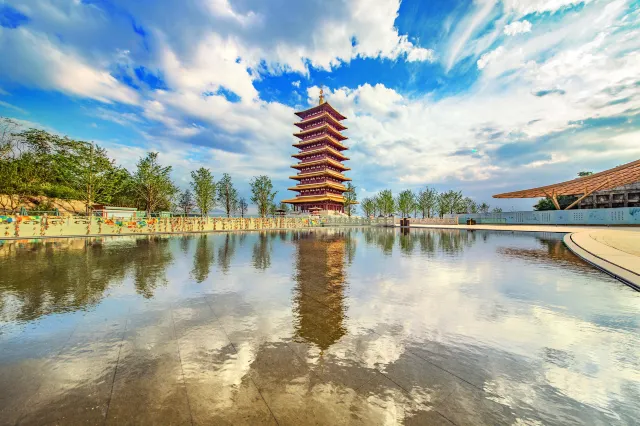
Address: No. 18 Ningdan Avenue, Jiangning District, Nanjing City, Jiangsu Province
Opening hours: 08:30-17:30 (no admission after 16:30)
evaluate:
| I went there with my family. The place is quite big and you can spend quite a long time there. It is quite shocking inside and the photos are very good. It is just a bit far away and not very convenient. There is nothing else. If you go to Nanjing, you still have to go to Niu Shou Mountain. It is worth recommending. |
Popular recommendations

The 10 Most Exciting Cities in Virginia
 TripBlog
Latest Trip.com Promo Codes, Black Friday Deals, Flight Discounts & Hotel Savings (Weekly Update)
 Trip.com Official
6 Things to know before Exploring the Montmorency Falls, Quebec
TripBlog
2025 Guide to Shanghai Pudong Airport: Transit Visa & PVG Airport Shuttle
TripBlogQ&A
What's the most popular attractions in Nanjing?
How to get to Harbin from Nanjing?
How to get to Nanjing from Suzhou?
How to get to Nanjing from Xitang?
How to get to Nanjing from Hangzhou?
How to get to Nanjing from Wuxi?
Trending Travelogues
Popular Trip Moments
Popular Attractions
Popular Ranked Lists
Popular Destinations
Recommended Attractions at Popular Destinations


About






of the year 2025



Site Operator: Trip.com Travel Singapore Pte. Ltd.