Qingcheng Mountain 2026: Tickets, Cable Car & How to Get There

Contents
- Where Is Qingcheng Mountain?
- Front Mountain or Back Mountain?
- Why Qingcheng Is a UNESCO Site
- Maps, Facilities and What to Bring
- How to Get to Qingcheng Mountain from Chengdu
- The Train from Xipu: 30 Minutes for 10 CNY
- Direct Trains from Chengdu East and Chengdu West
- From Qingchengshan Station to the Gate
- By Bus or Car
- Cable Cars, Ferry and Shuttle Inside
- Qingcheng Mountain Tickets and Prices
- Discounts and Free Entry
- How to Book as a Foreign Visitor
- Is the Dujiangyan Combo Worth It?
- Opening Hours and Best Time to Visit
- Best Season
- Best Time of Day
- Weather, Mist and Rain
- When to Avoid
- Front Mountain: Temples, Cable Car and the Classic Climb
- The Route at a Glance
- Jianfu Palace
- Yuecheng Lake and the Cable Car
- Shangqing Palace
- Laojun Pavilion
- Tianshi Cave
- The Walk Down: Chaoyang Cave and Zushi Hall
- Back Mountain: Waterfalls, Plank Roads and Fewer People
- Tai'an Ancient Town
- Wulong Valley
- Longyin Gorge Plank Road
- Baiyun Cable Car and Cuiying Lake
- How Hard Is the Back Mountain?
- One-Day Itinerary: Qingcheng Mountain and Dujiangyan
- If You Only Have Half a Day
- Doing Both Mountains?
- Where to Eat Near Qingcheng Mountain
- At the Front Gate
- Tai'an Ancient Town
- Dujiangyan Old Town
- Where to Stay Near Qingcheng Mountain
- Six Senses Qing Cheng Mountain
- Howard Johnson Conference Resort Chengdu
- Qingcheng Mountain Wuyou Yuanzi Hot Spring Hotel
- What About Staying in Chengdu?
- More Chengdu and Sichuan Guides
Show more
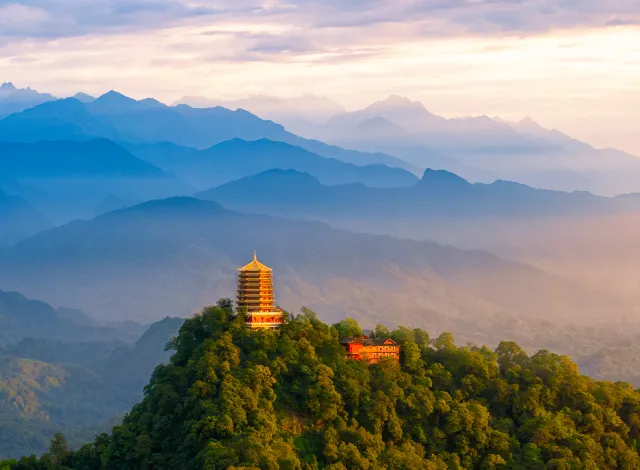
Laojun Pavilion stands at 1,260 m on the Qingcheng ridge, an hour west of Chengdu. Photo: Trip.com
Qingcheng Mountain is the green Taoist mountain an hour west of Chengdu, and the best day trip out of the city that does not involve a panda. The front mountain has the temples, the cable car and the classic climb to Laojun Pavilion. The back mountain is a 13 km loop of waterfalls, plank walks and bamboo forest where the crowds thin out. This guide covers ticket prices, opening hours, the 30-minute train from Xipu, both routes, where to eat at the gate and where to sleep if you want to start early.
Qingcheng Mountain sits in Dujiangyan City, about 68 km west of central Chengdu and 16 km southwest of Dujiangyan's old town. The name means Green City, and it fits: 36 peaks ring the massif in a wall of evergreen forest, with the summit ridge at 1,260 m. The scenic area is split into two separately ticketed mountains, the Front Mountain (Qianshan) and the Back Mountain (Houshan), with different gates, different trails and different crowds.
| Address | Qingcheng Mountain Scenic Area, Dujiangyan City, Chengdu, Sichuan |
| Distance | 68 km from central Chengdu; 16 km from Dujiangyan old town |
| Highest point | 1,260 m at Laojun Pavilion |
| Tickets | Front Mountain 80 CNY; Back Mountain 20 CNY |
| Opening hours | Front 08:30-17:30 (summer); Back 08:00-18:00 (summer) |
| Time needed | 4-5 hours front; 5-7 hours back |
| Status | UNESCO World Heritage site (2000), national 5A scenic area |
Pick the Front Mountain if this is your first visit, if you want the Taoist temples and the postcard summit, or if you are travelling with parents and children. Pick the Back Mountain if you want a hike with water, shade and quiet, and you do not mind a longer day. The two are not connected by a trail inside the park, so you cannot tick off both in one afternoon.
| Front Mountain | Back Mountain | |
| Ticket | 80 CNY (student 40) | 20 CNY (student 10) |
| What you see | Taoist temples, Yuecheng Lake, summit pavilion | Waterfalls, streams, plank roads, bamboo forest |
| Effort | Steep stairs, but a cable car skips the worst | 13 km loop with about 800 m of climbing |
| Time | 3.5-5 hours | 5-7 hours |
| Crowds | Heavy at weekends and holidays | Light except in midsummer |
| Best for | First-timers, culture, families | Hikers, photographers, hot-weather escapes |
Qingcheng is one of the four sacred Taoist mountains of China and the birthplace of the Way of the Celestial Masters, the first organised Taoist church. Zhang Daoling, its founder, is said to have preached here in 142 AD, and the mountain has been a pilgrimage site ever since. UNESCO inscribed it in 2000 together with the Dujiangyan irrigation system, which sits 16 km away and still waters the Chengdu plain after 2,000 years.
Both mountains have a staffed gate with a printed map, toilets and snack kiosks; the front mountain also has a visitor centre below Jianfu Palace. Signage is in Chinese and English on the main routes, and the ticket gates read passports if you booked online. There are no pets allowed inside, strollers are impractical above the front gate, and the last cable car up leaves well before closing, so check the board when you arrive.
Bring a light rain shell even in summer: the mountain sits in one of the wettest parts of Sichuan, cloud arrives fast, and stone steps get slippery. Wear shoes with grip, carry water, and add a thin layer for the summit, which runs several degrees cooler than Chengdu.
The intercity train is the fastest and cheapest way, and it drops you 10 minutes by shuttle bus from the front gate. Two stations matter: Xipu, on Metro Line 2 at the western edge of Chengdu, and Chengdu East, for direct services that skip the city. Both run to Qingchengshan station, which is the stop for the mountain rather than Dujiangyan town.
Trains leave Xipu roughly every 20-30 minutes from about 07:40 to 20:00, take 28-30 minutes and cost 10 CNY in second class. Buy on Trip.com or at the station with your passport; there is no seat reservation drama on a half-hour hop, and standing for one stop is normal at rush hour. Sit on the left for the last stretch if you want the first view of the ridge. This is the Chengdu to Dujiangyan intercity line, and the card below shows its timetable: choose a departure that runs through to Qingchengshan, one stop beyond Dujiangyan.

If you are staying near Chunxi Road or arrive by high-speed rail, Chengdu East runs direct services to Qingchengshan in about 56 minutes for 19-27 CNY; Chengdu West is similar. These are the same C-series trains, so the only difference is where you board. For station layouts and transfers, see our guide to Chengdu's train stations.
The station sits about 3.5 km below the front gate. A green sightseeing bus runs from the square beside the station to the ticket office in 10 minutes, costing 20 CNY one way or 35 CNY return; the half route from Hexang Villa costs 10 CNY. Taxis wait at the same square and charge 10-15 CNY for the same trip. Walking takes about 40 minutes along a road with no sidewalk, so take the bus.
Long-distance buses from Chadianzi bus station in Chengdu run to Qingchengshan in about 1.5 hours and suit travellers on a tight budget, but traffic on the expressway can double that. By car it is 60-90 minutes from central Chengdu via the Chengdu-Guanxian expressway; the main car park is a 5-10 minute walk from the shuttle bus stop, and parking fills by mid-morning on sunny weekends.
The Front Mountain cable car runs from beside Yuecheng Lake to Siwang Temple, 920 m in about six minutes, and costs 35 CNY one way or 60 CNY return. The Yuecheng Lake ferry is 5 CNY and saves a 20-minute lakeside walk. On the Back Mountain, the Jinli cable car costs 30 CNY one way, the Baiyun cable car 45 CNY one way, and the Cuiying Lake ferry 2 CNY. None of these are included in the entrance ticket.
The two mountains sell separate tickets and neither includes the cable car, ferry or shuttle. Budget 80 CNY for the front mountain plus 60 CNY for a return cable car if you want the easy climb, or 20 CNY for the back mountain plus whatever cable car sections you use.
| Ticket | Price | Notes |
| Front Mountain adult | 80 CNY | Student 40 CNY; main temples and summit |
| Back Mountain adult | 20 CNY | Student 10 CNY; separate gate at Tai'an |
| Front cable car | 35 / 60 CNY | One way / return; 920 m to Siwang Temple |
| Yuecheng Lake ferry | 5 CNY | One way; optional shortcut |
| Back: Jinli cable car | 30 CNY | One way |
| Back: Baiyun cable car | 45 CNY | One way |
| Back: Cuiying Lake ferry | 2 CNY | One way |
| Shuttle from station | 20 / 35 CNY | One way / return; 10 minutes |

 The scenery was beautiful, but the climb was truly exhausting. Although there was a cable car, there was still a long way to go before it, which was very unfriendly to people with weak legs. No wonder they started selling all kinds of trekking poles at the foot of the mountain.
Children under 1.3 m or under six enter free. Students with a valid full-time student card pay half price, as do visitors aged 60-64 on ordinary days; from 65 the ticket is free. Chinese senior citizens pay half price on statutory holidays and nothing on other days. Active-duty soldiers, disabled visitors and veterans with the relevant Chinese certificate also enter free at the service window. Bring your passport or ID: the gates check the name against the booking.
Chinese visitors reserve through the official WeChat account, which needs a Chinese ID. Foreign passports work on Trip.com, where the e-ticket is tied to your passport number and scanned at the gate, and at the staffed ticket window if you prefer paper. The front mountain caps entry at 30,000 people a day, so book ahead for weekends, the first week of October and the Lunar New Year week. Cable car tickets are sold on site and do not need a reservation.
Dujiangyan charges 80 CNY for its own ticket, and the two sights are 20 minutes apart by taxi (about 30 CNY). A combined day works if you start at Qingcheng at 08:30, finish the front mountain by 13:00 and reach Dujiangyan by 14:00, but it is a long day with two sets of stairs. If you only have one day in Chengdu, choose one: Qingcheng for the mountain, Dujiangyan for the engineering and the old town.
Hours shift with the season, and the ticket office closes 30 minutes before the gates. The front mountain opens later than the back mountain, which matters if you are catching an early train.
| Period | Front Mountain | Back Mountain |
| 1 May - 30 Sep | 08:30-17:30 (tickets to 17:00) | 08:00-18:00 |
| 1 Oct - 30 Apr | 08:30-17:00 (tickets to 16:30) | 08:00-17:30 |
| Cable car, peak | 08:00-17:30 | 08:00-17:00 |
| Cable car, winter | 09:00-17:00 | 08:30-16:30 |
April and May bring tea-green slopes, camellias and the clearest air; October and November bring colour and crisp views from Laojun Pavilion. Summer is the local answer to the heat: the mountain averages around 22 C, the forest cover is close to total, and the back mountain's streams are the reason Chengdu families come up for the weekend. Winter is quiet and cheap, with mist in the valleys and occasional snow on the summit ridge.
Be at the front gate when it opens at 08:30. The first cable car load reaches Siwang Temple before the tour groups, and the summit is often clear in the morning before cloud builds after lunch. If you are photographing, the last hour before closing gives soft light on the temple roofs and far fewer people on the stairs.
Qingcheng receives a lot of rain, mostly as short afternoon showers between June and September. Mist is part of the experience, but it can also erase the view from Laojun Pavilion, so check the mountain webcam or ask at the gate before committing to the climb. Temperatures drop about 1 C for every 150 m of ascent; a 25 C day in Chengdu can feel like 18 C on the ridge.
The first week of October, the Lunar New Year week and Qingming are the three worst windows: the front mountain hits its 30,000 cap, the cable car queue runs over an hour and the stairs become a single slow line. Weekend afternoons in summer are busy but manageable. Weekday mornings outside holidays are the quietest and the cheapest time to stay nearby.
The front mountain is a single steep ridge trail from Jianfu Palace at the bottom to Laojun Pavilion at the top, with temples stacked along the way. The full walk up takes 2-2.5 hours; with the cable car it is 45 minutes to the summit and a 90-minute walk down. Allow 4-5 hours including stops.
| Time | Stop | What happens |
| 08:30 | Front gate, Jianfu Palace | Buy or scan tickets, first temple, start of the stone stairs |
| 09:15 | Yuecheng Lake | 5 CNY ferry across, or walk the shore path |
| 09:30 | Cable car to Siwang Temple | 6-minute ride, saves the steepest 40 minutes |
| 10:00 | Shangqing Palace | Red walls, incense, the main Taoist hall |
| 10:45 | Laojun Pavilion | Summit at 1,260 m, panorama over the ridges |
| 11:30 | Walk down via Chaoyang Cave | Tianshi Cave, Zushi Hall, quieter stairs |
| 13:00 | Back at the gate | Lunch at Jianfu Palace square or the shuttle bus |
The first temple inside the gate was founded in 730 during the Tang dynasty and rebuilt in 1888 after fire. It sits in a wooded hollow below the ridge, with a hall of three Qing dynasty statues and a courtyard of old trees. Most visitors pass through in ten minutes, which is a mistake: this is the calmest temple on the mountain, and the incense smoke under the cypresses is the image most people bring home.
Twenty minutes above Jianfu Palace the trail reaches Yuecheng Lake, a small reservoir held by a dam across the stream. A ferry crosses for 5 CNY, or you can walk the shore in about 15 minutes. The cable car starts on the far side and climbs 920 m to Siwang Temple in six minutes, clearing the steepest and least interesting part of the climb. Walkers continue on stone stairs through bamboo to the same point in about 40 minutes.
Above the cable car station the path levels for a stretch before the final climb to Shangqing Palace, the mountain's principal Taoist hall. The current buildings date from the Qing dynasty, with red walls, grey tiles and a courtyard of ancient ginkgo. This is where the mountain's Taoist rituals still happen; if you hear drumming and chanting, wait at the edge of the courtyard rather than walking through the service.
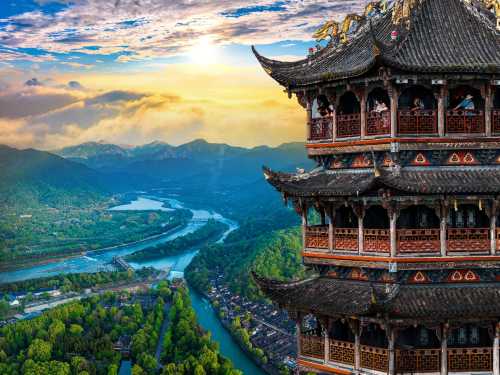
The summit pavilion stands at 1,260 m on a bare ridge with views west to the snow ridges of the Qionglai range and east over the Chengdu plain. The present tower is a modern reconstruction on the old site, but the position is the point: on a clear morning you can see layered blue ridges for 50 km. Wind at the top is strong, and the terrace is small, so keep bags in front of you and do not linger on the stairs.
On the way down, the trail passes Tianshi Cave, the grotto where Zhang Daoling is said to have preached and where the Celestial Masters school began. The temple is built into the cliff in three tiers, with a narrow stair cut through rock and a spring that pilgrims still drink from. It is the most atmospheric site on the mountain and the one place where the Taoist history feels physical rather than displayed.
The descent through Chaoyang Cave and Zushi Hall is quieter than the ascent and passes several small shrines cut into the rock. The stone steps are uneven and slick after rain, so take them slowly and let the cable car crowd go ahead. From Zushi Hall it is about 40 minutes to the gate, mostly through forest with the sound of the stream below.
The back mountain is a separate scenic area entered from Tai'an Ancient Town, 8 km beyond the front gate. The ticket is 20 CNY, the trail follows a stream for most of its 13 km, and the loop climbs about 800 m. It is the better hike and the worse history lesson: no grand temples, but waterfalls, suspended plank walks and forest that stays cool in August.
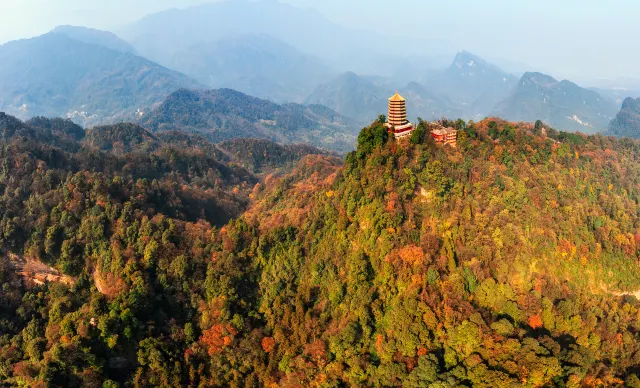
Autumn colour across the Qingcheng massif, seen from the summit ridge. Photo: Trip.com
The trailhead village is a single stone street of guesthouses, noodle shops and dried-goods stalls, with the river running through the middle. It is the place to leave a bag, eat before the climb and pick up water; prices are higher than Chengdu but not by much. Buses and taxis from Qingchengshan station reach Tai'an in about 15 minutes.
The first section climbs beside Wulong Valley, a chain of small waterfalls and green pools connected by stone steps and wooden bridges. It is the busiest part of the back mountain and the easiest to shortcut: families often walk 40 minutes up, sit by the water and come back down. Continue past the last waterfall and the crowd disappears.
Above Wulong the trail enters Longyin Gorge, where a plank walk is bolted to the cliff above the stream. The gorge is narrow, the light is green, and the sound of water fills the whole passage. It is safe in dry weather; after heavy rain the planks can be closed, so check at the gate before you commit to the loop.
The Baiyun cable car (45 CNY one way) links the upper valley to the ridge near Baiyun Temple and saves about 90 minutes of climbing. From the top station the trail descends to Cuiying Lake, where a 2 CNY ferry crosses to the path back to Tai'an. Taking the cable car up and walking down is the standard half-day version; the full loop on foot is the version that earns the views.
Expect 5-7 hours for the full loop, 13 km with about 800 m of ascent, on stone steps and plank walkways that are often wet. It is harder than the front mountain's cable-car route and easier than a full-day alpine hike. Children over eight and reasonably fit adults manage it; anyone with knee problems should take the cable car both ways and keep to the valley paths.
This is the classic Chengdu day out: the mountain in the morning, the irrigation system in the afternoon, back in the city for dinner. It works because the train, the shuttle and the two sites line up along one axis west of Chengdu.
| Time | Stop | Notes |
| 07:40 | Train from Xipu | 28-30 minutes, 10 CNY, buy with passport |
| 08:15 | Qingchengshan station | Shuttle bus 20 CNY, 10 minutes to the gate |
| 08:30 | Front gate and Jianfu Palace | Scan ticket, start the climb |
| 09:30 | Yuecheng Lake and cable car | Ferry 5 CNY, cable car 35 CNY one way |
| 10:45 | Laojun Pavilion | Summit views before the cloud builds |
| 11:30 | Descend via Tianshi Cave | Quiet stairs, temples on the way |
| 13:00 | Lunch at the gate | Noodles, tofu and cured pork |
| 14:00 | Taxi to Dujiangyan | 20 minutes, about 30 CNY |
| 14:30 | Dujiangyan irrigation system | 80 CNY, 2.5 hours for Yuzui, Feishayan and Baopingkou |
| 17:30 | Train back to Chengdu | Dujiangyan station to Xipu, about 30 minutes |
If you would rather not plan the transfers, a guided day tour covers the transport, both tickets and a guide who explains the Taoist sites and the irrigation engineering. It costs more than doing it yourself but saves the taxi negotiations and the queue at the ticket window.
Do the front mountain with the cable car: Xipu train at 08:00, gate by 08:45, cable car up, Laojun Pavilion by 10:30, walk down by 12:00, lunch, and the 13:00 train back. Skip Dujiangyan, and skip the back mountain entirely; both need a full day of their own.
The two scenic areas are 8 km apart and not linked by trail. Doing both in one day means two tickets, two climbs and a taxi between gates, and you will see neither properly. If you have two days, give the front mountain the first morning and the back mountain the second.
Food around the mountain is Sichuan farmhouse cooking, not temple cuisine: cured pork, bamboo shoots, river fish, tofu and a lot of chilli. The best concentration is at the front gate and in Tai'an Ancient Town, with Dujiangyan old town as the third option if you are combining sites.
The square below Jianfu Palace is lined with noodle shops and small restaurants serving dan dan noodles, tofu pudding, twice-cooked pork and Qingcheng cured pork with garlic shoots. Prices are tourist-area but reasonable, and service is fast because everyone is heading up or coming down. Vegetarian meals are served at the temple kitchens around Shangqing Palace, usually rice with seasonal vegetables and pickles, for a few yuan.
On the back mountain, Tai'an's guesthouses cook river fish, bamboo shoots with cured pork, wild vegetables and cold noodles, and most will feed non-guests if you ask. Eat before the climb rather than after: the kitchens wind down in late afternoon, and the last buses back to the station leave around 18:00.
If you finish at the irrigation system, the old town around Nanqiao has night-market stalls, cold noodles, hotpot and a branch of almost every Chengdu chain. It is also the easiest place to eat well after 20:00. For a proper sit-down Sichuan meal back in the city, see our guides to Chengdu's Sichuan cuisine and Chengdu hotpot.
Staying at the gate buys you the 08:30 start without a 06:00 train from Chengdu. The options run from a global luxury resort inside the forest to a hot-spring hotel beside the high-speed rail station, and all three below are within 15 minutes of the front gate.
A mountain resort from Six Senses, built into 181 acres of forest with 130 rooms and villas, a spa and a back gate that opens toward the front mountain. It is the splurge option: private courtyards, a long spa menu and a restaurant that sources from its own farm. Book well ahead for autumn weekends.
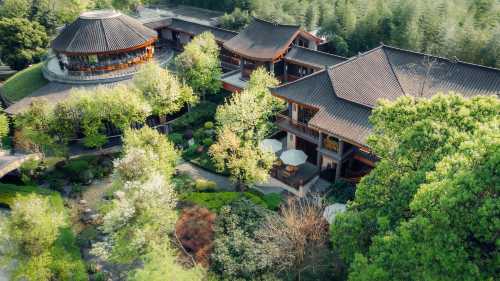
Six Senses Qing Cheng Mountain

A five-star resort next to the front mountain gate with 371 rooms, several restaurants, indoor and outdoor pools and grounds big enough to walk in. It is the practical choice for families and for anyone who wants to roll out of bed and be at the ticket office in ten minutes. Ask for a mountain-view room.
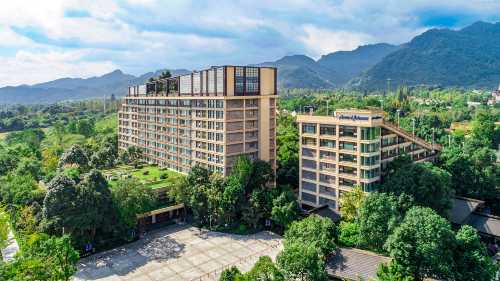
Howard Johnson Conference Resort Chengdu
 No. 5 of Hot Spring Hotels in Chengdu
Beside Qingchengshan high-speed rail station, with private hot-spring tubs and the easiest transfer of the three for train travellers. It suits travellers arriving late, hikers who want a soak after the back mountain, and anyone doing the trip without a car. Rooms are simpler than the two resorts above, and the price reflects it.
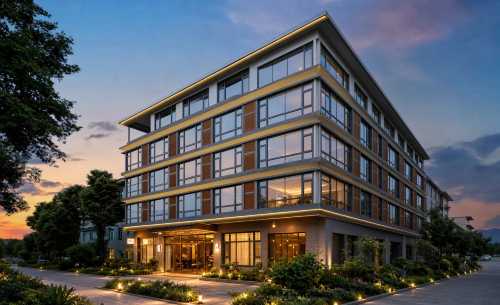
Qingcheng Mountain Wuyou Yuanzi Hot Spring Hotel (Qingcheng Mountain High speed Railway Station)
Chengdu's city centre works if you start early: a 07:40 train from Xipu puts you at the gate by 08:30, and you can be back on Chunxi Road for dinner. Stay near Metro Line 2 for the easiest connection to Xipu, and use our Chengdu airport guide if you are arriving the same morning.
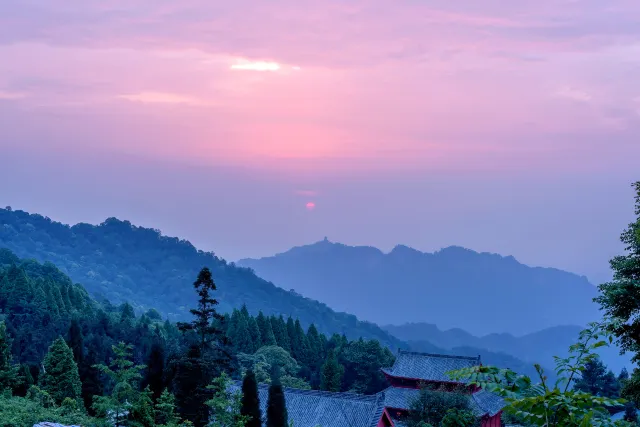
Sunrise over the Qingcheng ridges; the front gate opens at 08:30. Photo: Trip.com
Popular recommendations
Chengdu self-guided tour guide 2026: Detailed Chengdu1-day itinerary planning, with a complete guide to attractions, transportation, and accommodations (updated November)
 Trip.Planner

2026 Chengdu Travel Guide - Best Things to do in Chengdu
 Travel Tips

Latest Trip.com Promo Codes, Flight Discounts & Hotel Savings (Weekly Update)
 Trip.com Official

6 Things to know before Exploring the Montmorency Falls, Quebec
 _TS***4m