Shanghai Underground: Metro Tickets, Lines and Station Guide 2026

Contents
- Shanghai Underground at a Glance
- Shanghai Metro Map: How to Read It
- The loop line and the Huangpu River
- The best apps for the Shanghai metro map
- Shanghai Metro Lines and Key Stations
- Line 2: the line you will use most
- Lines 1 and 8: the north-south backbone
- Lines 10 and 14: old Shanghai and the river
- Line 11: Disneyland and the suburbs
- Line 17: Zhujiajiao water town
- Shanghai Metro Tickets: Types, Prices and How to Buy
- Single-journey tickets and how fares are calculated
- One-day and three-day passes: are they worth it?
- Contactless bank cards: the easiest option for visitors
- Metro QR codes: Alipay, WeChat and Metro Daduhui
- Shanghai Public Transportation Card
- How to buy a Shanghai metro ticket step by step
- How Much Does a Shanghai Metro Journey Cost?
- Shanghai Metro Stations for Top Attractions
- The Bund and Nanjing Road
- Yu Garden and the old city
- Lujiazui and the Shanghai Tower
- The French Concession, Xintiandi and Tianzifang
- Shanghai Disneyland and Zhujiajiao
- Shanghai Airport and Railway Station Transfers
- Pudong Airport (PVG) to downtown
- Hongqiao Airport (SHA) to downtown
- Pudong to Hongqiao: the Airport Link
- Shanghai Railway Station and Hongqiao Railway Station
- Using the Shanghai Underground: Step by Step
- Security checks, luggage and accessibility
- Peak hours, etiquette and safety
- Last trains and late-night options
- Money-Saving Tips for the Shanghai Metro
- More Shanghai Travel Guides
Show more
Shanghai's metro — the Shanghai Underground to anyone who has lived here a while — is the fastest, cheapest and most reliable way to move around a city of 25 million people. One network connects both airports, the high-speed railway stations, the Bund, Yu Garden, Lujiazui and Shanghai Disneyland. This guide covers what a ride costs, the ticket and pass options, how to buy and use them, how to read the metro map, and the exact station to choose for each major sight.
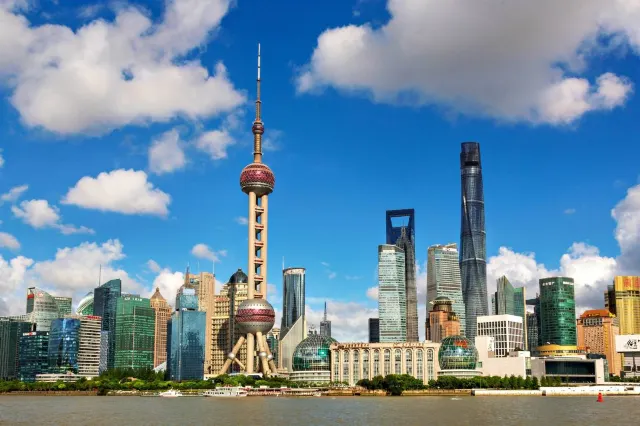
The Lujiazui skyline, two stops from the Bund on Line 2. Image: Trip.com
Shanghai runs one of the world's largest metro systems, but visitors only need a handful of its lines. The figures below are for 2026 and follow the Shanghai Metro and Shanghai municipal government's own guidance.
| Network | 2026 figure |
| Metro services | 19 (Lines 1–18 plus the Pujiang Line) |
| All rail lines | 21, including the Maglev and the Airport Link |
| Stations | 523 |
| Track length | About 906 km |
| Base fare | ¥3 for up to 6 km, then ¥1 for every 10 km |
| One-day pass | ¥18 for 24 hours |
| Three-day pass | ¥45 for 72 hours |
| First and last trains | Roughly 05:30 to 22:30–23:30; no overnight service |
| Airport Link | Pudong to Hongqiao in about 40 minutes for ¥26 |
| Payment | Single tickets, transport card, contactless bank card or QR code |
The Shanghai Metro map looks intimidating because it is dense, not because it is complicated. Lines 1, 2, 8 and 10 cut through the centre; Line 4 is a loop around it; Line 2 runs from Hongqiao in the west to Pudong Airport in the east; Line 10 threads through the old city and the French Concession; Line 11 heads south-east to Disneyland. Every line has a number, a colour and a pair of terminus names, and every sign inside a station uses the same colour code.

Shanghai Metro map. Image: Trip.com
Line 4 is the only loop, and it is useful when you want to cross the city without dragging luggage through People's Square. It meets almost every radial line, including Lines 1, 2, 3, 7, 8, 9, 10, 11, 12 and 13. To cross the Huangpu between Puxi and Pudong, the handiest lines are 2 (People's Square to Lujiazui), 4, 7, 8, 9, 10, 11, 12, 13 and 14. Line 14 is the newest east-west crossing and stops at both Yuyuan Garden and Lujiazui.
Amap (Gaode) has the most accurate live transit directions and an English interface, while Apple Maps handles metro routing reasonably well. Google Maps is unreliable in mainland China, so download an offline map before you fly. The official Metro Daduhui app shows the full network, fares and train times, and doubles as a QR ticket. Station signs, line maps and announcements are bilingual, so you can always fall back on the wall map.
Nineteen metro services cover the city, but a visitor will usually touch only six or seven of them. The table below lists every line you are likely to see, with the stations that matter most for sightseeing and transport.
| Line | Colour | Route | Best for |
| 1 | Red | Fujin Road – Xinzhuang | People's Square, Shanghai Railway Station, Xujiahui |
| 2 | Green | Panxiang Road – Pudong Airport T1&2 | Both airports, Hongqiao, Jing'an Temple, Nanjing East Road, Lujiazui |
| 3 | Yellow | Shanghai South Railway Station – North Jiangyang Road | Shanghai South station, Zhongshan Park |
| 4 | Purple | Loop via Yishan Road | Cross-town trips, Shanghai Stadium, Tibet South Road |
| 5 | Violet | Xinzhuang – Fengxian Xincheng, with a Minhang branch | Fengxian and southern Minhang |
| 6 | Magenta | Gangcheng Road – Oriental Sports Center | Pudong riverside, Oriental Sports Center |
| 7 | Orange | Meilan Lake – Huamu Road | Jing'an Temple, Shanghai Expo area, Huamu |
| 8 | Blue | Shiguang Road – Shendu Highway | People's Square, China Art Museum, Laoximen |
| 9 | Light blue | Songjiang Railway Station – Caolu | Tianzifang, Qibao, Songjiang |
| 10 | Lavender | Jilong Road – Hongqiao Railway Station or Hangzhong Road | Yuyuan Garden, Xintiandi, Nanjing East Road, Hongqiao |
| 11 | Maroon | Disney Resort – North Jiading or Huaqiao | Disneyland, Longhua Temple, Xujiahui, Jiading |
| 12 | Dark green | Jinhai Road – Qixin Road | Nanjing West Road, South Shaanxi Road, Hanzhong Road |
| 13 | Pink | Jinyun Road – Zhangjiang Road | Natural History Museum, Xintiandi, World Expo Museum |
| 14 | Olive | Fengbang – Guiqiao Road | Jing'an Temple, Yuyuan Garden, Lujiazui |
| 15 | Beige | Gucun Park – Zizhu Hi-Tech Park | Gucun Park and west Shanghai |
| 16 | Mint | Longyang Road – Dishui Lake | Wild Animal Park, Lingang and Dishui Lake |
| 17 | Muted rose | Hongqiao Railway Station – Xicen | Zhujiajiao water town |
| 18 | Gold-brown | Hangtou – Kangwen Road | Pudong south, Fudan University |
| Pujiang | Light grey | Shendu Highway – Huizhen Road | Automated line in Minhang |
Line 2 is the single most useful line for visitors. It links Hongqiao Railway Station and Hongqiao Airport T2 in the west with Jing'an Temple, People's Square, East Nanjing Road for the Bund, Lujiazui, Century Park, Longyang Road for the Maglev and Pudong Airport in the east. Watch the destination board: some trains terminate at Guanglan Road, where you change to another Line 2 train for Pudong Airport.
Line 1 runs north-south through Shanghai Railway Station, People's Square, South Shaanxi Road and Xujiahui before ending at Shanghai South Railway Station. It is the quickest way between the main railway station and the centre. Line 8 adds People's Square, Laoximen and the China Art Museum, and is handy for the old town's southern edge.
Line 10 is the sightseeing line for the old city: Yuyuan Garden, Xintiandi, South Shaanxi Road, Shanghai Library and Hongqiao Railway Station are all on it. Line 14, opened in 2021, crosses the river between Jing'an Temple, Yuyuan Garden and Lujiazui, making it a useful shortcut when Line 2 is packed.
Jing'an Temple, one of the city's most important Buddhist temples, sits directly outside the station of the same name on Lines 2, 7 and 14.

 Jing'an Temple was one of the most impressive places I visited in Shanghai. I was amazed by how the beautiful traditional temple sits right in the middle of a modern city filled with high-rise buildings. The golden roofs and detailed architecture immediately caught my attention and made the temple a great place for photos. Inside, the atmosphere was quiet and peaceful, offering a nice break from the busy streets outside. I enjoyed exploring the temple grounds, admiring the Buddhist statues, and learning more about its history. Overall, it was a memorable experience and a wonderful place to appreciate both culture and architecture in Shanghai.
Line 11 starts at Disney Resort and runs through Longhua, Xujiahui, Jiaotong University and on to North Jiading or Huaqiao. It is the direct route to Shanghai Disneyland, and the last stop is a five- to ten-minute walk from the park gates.
Line 17 leaves from Hongqiao Railway Station and runs west to Xicen, with a stop at Zhujiajiao. The station is about 15 to 20 minutes on foot from the old town's canals; local buses and taxis cover the rest of the gap if you are carrying bags.
Shanghai keeps its fares simple, but it sells them in more formats than most visitors expect. You can ride with a single ticket, a stored-value card, a contactless bank card or a QR code generated by an app. These are the 2026 options.
| Ticket | Price | Best for |
| Single journey (IC or paper QR) | From ¥3; ¥1 per 10 km after the first 6 km | One-off trips |
| One-day pass | ¥18 | Six or more rides in 24 hours |
| Three-day pass | ¥45 | 72 hours of sightseeing |
| Shanghai Public Transportation Card | ¥20 refundable deposit plus top-up | Longer stays; also buses and ferries |
| Contactless bank card | Fare only | Visa, Mastercard, Amex, JCB and UnionPay users |
| Metro QR code | Fare only | Alipay, WeChat and Metro Daduhui users |
| Maglev and Metro pass | ¥55 single or ¥85 return | Arriving at Pudong and sightseeing the same day |
| Airport Link ticket | ¥4–¥26 by distance | Hongqiao to Pudong transfers |
A ride costs ¥3 for up to 6 km, then ¥1 for every additional 10 km, calculated on the shortest route between your entry and exit stations. Buy a token from a ticket machine or a paper QR ticket from the service centre; the token is collected at the exit gate, while the paper ticket is scanned at both ends. Children under 1.3 m travel free with a paying adult. Fares are capped in practice by the network's size, so even a long cross-city trip rarely costs more than ¥10.
The ¥18 one-day pass gives unlimited metro rides for 24 hours from first entry, and the ¥45 three-day pass does the same for 72 hours. Both exclude the Maglev and the newer suburban lines, including the Airport Link. A ¥3 fare means you need about six rides to break even; a normal sightseeing day involves four to six, so the pass is more about convenience than savings unless you are hopping between districts. The three-day pass is the better deal for a short city break.
Eligible contactless UnionPay, Visa, Mastercard, American Express and JCB cards work directly at the fare gates under the Tap to Ride scheme. Make sure the card has enough credit and that small-value contactless payment without a PIN is enabled before you travel. Use a card with no foreign transaction fee and you will pay the fare with no ticket queue, no deposit and no app.
The official Metro Daduhui app generates a QR code that opens the gates, and the same service is available inside Alipay and WeChat. Alipay and WeChat can link international cards, which makes them a good backup if your bank card does not work at the gate. Metro Daduhui also offers an international-card option through its WeChat Pay channel. Set up the code before you enter the station; the gates are not the place to debug an app.
The Shanghai Public Transportation Card is a stored-value card with a ¥20 refundable deposit. It works on the metro, buses and ferries, and a virtual version can be added to a compatible phone or watch. Buy it at a station service centre, top it up at machines or convenience stores, and claim the deposit back at designated service points before you leave. It is the best choice if you are staying a week or more.
- Find your station and fare on the map or in Amap, and note the line and direction.
- Use a ticket machine, which has an English option, or go to the staffed service centre. Machines take cash; service centres accept domestic and international bank cards.
- Tap a contactless card or scan your QR code at the gate, or insert your token. Keep the token or paper ticket with you for the exit.
- Follow the coloured signs to your platform, check the terminus name on the train, and board.
- At your destination, insert the token into the exit gate or scan the paper ticket and leave through the correct exit letter.
Fares are low by international standards, and most visitor journeys sit between ¥3 and ¥7. These are typical point-to-point fares; longer suburban trips cost a little more.
| Journey | Line | Fare | Time |
| People's Square to Lujiazui | Line 2 | ¥3 | About 5 minutes |
| People's Square to Pudong Airport | Line 2 | ¥7 | 60–70 minutes |
| Hongqiao Railway Station to People's Square | Line 2 | ¥5 | About 30 minutes |
| Shanghai Railway Station to People's Square | Line 1 | ¥3 | About 6 minutes |
| Longyang Road to Pudong Airport | Maglev | ¥50 | About 8 minutes |
| Hongqiao Airport T2 to Pudong Airport | Airport Link | ¥26 | About 40 minutes |
For a normal day of sightseeing, budget ¥5–¥10 per person for metro travel. If you are covering an airport and several districts in one day, ¥10–¥15 is a safe allowance, or buy the ¥18 day pass and stop counting.
Almost every major sight is within a 5- to 15-minute walk of a station. Use this table to pick your stop before you leave the hotel.
| Attraction | Station | Lines | Notes |
| The Bund | East Nanjing Road | 2, 10 | Follow signs for the Bund; 10–15 minute walk |
| Nanjing Road pedestrian street | East Nanjing Road | 2, 10 | Direct access to the shopping street |
| Yu Garden and the old city | Yuyuan Garden | 10, 14 | Exit 1; about 5 minutes to the garden |
| People's Square and Shanghai Museum | People's Square | 1, 2, 8 | Central interchange |
| Lujiazui and Shanghai Tower | Lujiazui | 2, 14 | Exit 3 for the Oriental Pearl Tower |
| Jing'an Temple | Jing'an Temple | 2, 7, 14 | Exit 1 is closest to the temple |
| Xintiandi | Xintiandi | 10, 13 | Directly under the shopping district |
| Tianzifang | Dapuqiao | 9 | About 5 minutes on foot |
| Wukang Road and the French Concession | Jiaotong University | 10, 11 | About 10 minutes to Wukang Road |
| Shanghai Natural History Museum | Natural History Museum | 13 | Exit 1 |
| Power Station of Art | Tibet South Road | 4, 8 | About 10 minutes along the river |
| Longhua Temple | Longhua | 11, 12 | About 5 minutes on foot |
| 1933 Old Millfun | Hailun Road | 10 | About 10 minutes on foot |
| China Art Museum | China Art Museum | 8 | Exit 2 |
| Shanghai Disneyland | Disney Resort | 11 | 5–10 minutes to the park gates |
| Zhujiajiao water town | Zhujiajiao | 17 | 15–20 minutes to the old town |
| Shanghai Wild Animal Park | Wild Animal Park | 16 | Shuttle bus to the gate |
| Shanghai Science and Technology Museum | Shanghai Science and Technology Museum | 2 | Exit 1 |
East Nanjing Road station on Lines 2 and 10 is the classic approach to the Bund. Follow the signs for the Bund rather than the shopping street, and you will reach the waterfront in 10 to 15 minutes. The promenade is busiest between 18:00 and 21:00, when the Pudong skyline lights up, so arrive an hour earlier if you want space at the railing.
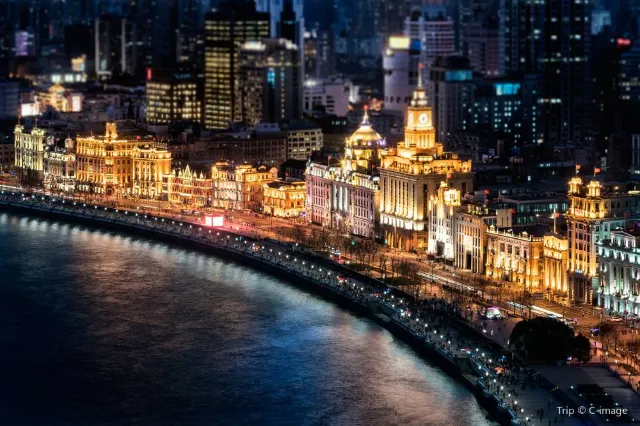
The Bund after dark. Image: Trip.com

Nanjing Road Pedestrian Street begins at the station and runs west towards People's Square. It is Shanghai's busiest shopping street, with department stores, snack shops and neon signs; walk it after dark, when the lights are on and the crowds thin after 21:00.


Yuyuan Garden station on Lines 10 and 14 puts you at the edge of the old city. Leave by Exit 1 and walk about five minutes to the garden entrance. The garden itself needs one to two hours; the surrounding bazaar and the City God Temple are free to wander and are best visited before 10:00, before the tour groups arrive.
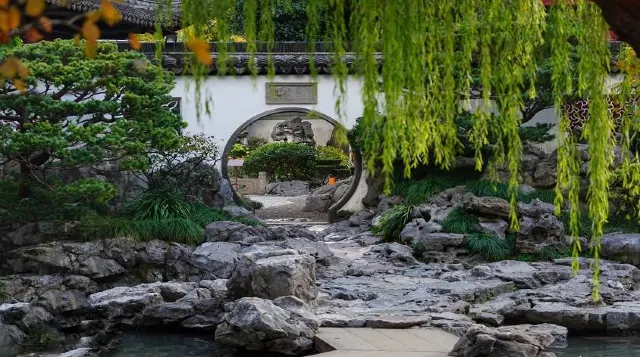
Yu Garden's rockeries and moon gates. Image: Trip.com
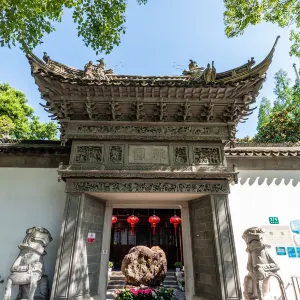

Lujiazui station on Lines 2 and 14 is the stop for the Oriental Pearl Tower, the Shanghai Tower, the World Financial Center and the elevated walkways of the financial district. Use Exit 3 for the Oriental Pearl Tower; the Shanghai Tower entrance is a five- to ten-minute walk towards Silver City Road. Sunset is the best time to go up, but book a timed ticket in advance at weekends.


The Oriental Pearl Tower, the retro-futuristic spire with two glass spheres, is a five-minute walk north along the riverfront. Its 259-metre observation deck is lower than the Shanghai Tower's, but the view back towards the Bund is the classic Shanghai postcard.


For the leafy French Concession, get off at Jiaotong University on Lines 10 and 11 and walk about ten minutes to Wukang Road and the Wukang Mansion. Xintiandi has its own station on Lines 10 and 13, while Tianzifang is five minutes from Dapuqiao on Line 9. All three are compact, so pick one area per afternoon rather than trying to cover them in a single walk.

Xintiandi is the polished, pedestrianised contrast to the old lanes: restored shikumen houses, restaurants and boutiques around a small lake. It is a good evening stop after a walk through the French Concession.

Line 11 runs directly to Disney Resort station, five to ten minutes from the park gates, and the train is decorated with Disney characters. For Zhujiajiao, take Line 17 from Hongqiao Railway Station; the station is 15 to 20 minutes on foot from the canals, or a short taxi ride. Both trips are easy day trips from the centre, but start early: Disney needs a full day and Zhujiajiao is best before the afternoon crowds.

Mickey and Minnie at Shanghai Disneyland. Image: Trip.com


Zhujiajiao is a canal town of stone bridges, Qing-dynasty houses and boat rides about an hour from Hongqiao. Go early, take a boat before the tour groups arrive, and try the local zongzi and smoked river fish.

Shanghai has two airports on opposite sides of the city and two main railway stations, all connected to the metro. The right choice depends on your luggage, your arrival time and whether you are heading downtown or to the other airport.
| From | To | Best option | Time | Fare |
| Pudong Airport | People's Square | Line 2 | 60–70 minutes | ¥7 |
| Pudong Airport | Hongqiao Airport | Airport Link | About 40 minutes | ¥26 |
| Pudong Airport | Longyang Road and downtown | Maglev plus Line 2 | 30–40 minutes | ¥50 plus ¥3–4 |
| Hongqiao Airport T2 | People's Square | Line 2 | 30–35 minutes | ¥5 |
| Shanghai Railway Station | People's Square | Line 1 | About 6 minutes | ¥3 |
Line 2 stops at Pudong Airport Terminal 1 and 2 and takes 60 to 70 minutes to People's Square for ¥7. The last train leaves the airport around 22:30, so a late landing means a taxi, a DiDi or the airport night bus, which runs from about 23:00 to 05:30. If you are connecting to Hongqiao, do not take Line 2 all the way; the Airport Link is less than half the time.
Terminal 1 is on Line 10, while Terminal 2 is on Lines 2 and 10. Hongqiao Railway Station is one stop from Terminal 2 on either line, about six or seven minutes, so a flight-to-train connection is straightforward. Allow 30 minutes for security and platform changes at the railway station, more at holiday weekends.
The Airport Link (Shiyu Airport Line) runs between Hongqiao Airport T2 and Pudong Airport T1&T2 in about 40 minutes for ¥26, with trains every 15 minutes. It is a suburban railway with its own fare system, so metro passes and the 120-minute transfer discount do not apply. It also stops at Shanghai International Resort, which makes it a useful option for Disneyland, and at Zhongchun Road for Line 9.
Shanghai Railway Station is on Lines 1, 3 and 4, two stops from People's Square on Line 1. Hongqiao Railway Station is on Lines 2, 10 and 17, next to Hongqiao Airport T2. Both stations are large, so follow the signs to the correct square and allow extra time if you are changing between metro and a high-speed train.
Once you have a ticket, the system is easy to use. The only real differences from a European or American metro are the security check at the entrance and the sheer scale of the interchanges.
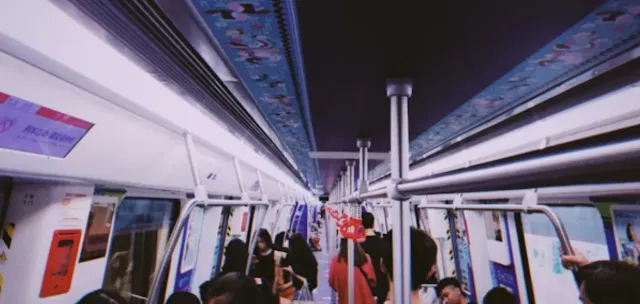
Inside a Shanghai Metro carriage. Image: Trip.com
- Enter the station and put your bags through the security scanner; keep your passport and phone in your hand.
- Find the correct line and direction on the wall map, then follow the coloured signs to the platform.
- Check the terminus name on the front of the train and on the platform screen before boarding.
- Tap, scan or insert your ticket at the gate; keep it with you until you exit.
- At an interchange, follow the signs for your next line; the walk can take five to ten minutes in the largest stations.
- At your destination, check the exit letter on the wall map before you go up, because exits can be several blocks apart.
Every station has a security check before the fare gates, and large bags go through an X-ray machine. Allow an extra five minutes at big interchanges. Lifts and escalators are common but not universal, and older stations may have long stairs; travellers with heavy luggage or wheelchairs should check the station facilities in the Metro Daduhui app. Staff at the service centre can arrange assistance if you ask.
Peak hours run from about 07:00 to 09:30 and 17:00 to 19:30 on weekdays, when Lines 1, 2, 8 and 9 become extremely crowded. Let passengers off before you board, stand on the right of the escalator, and keep your bag in front of you in crowds. The metro is generally safe, with staffed stations and security screening, but pickpocketing can happen at the busiest interchanges, so keep phones and wallets secure.
The Shanghai Metro does not run overnight. Most lines finish between 22:30 and 23:30, and the last train can leave a station earlier than the timetable suggests, so check the app for your exact station. After that, use the official taxi rank or DiDi rather than an unlicensed driver. From Pudong Airport, the night bus runs until about 05:30 and is much cheaper than a taxi.
Planning the rest of your trip? These guides cover the city beyond the ticket gates.
Popular recommendations

7 Reasons to Put Cancun Mexico Into Your Vacation Bucket List.
 _TS***4m

Latest Trip.com Promo Codes, Flight Discounts & Hotel Savings (Weekly Update)
 Trip.com Official

6 Things to know before Exploring the Montmorency Falls, Quebec
_TS***4m
2026 Guide to Shanghai Pudong Airport: Transit Visa & PVG Airport Shuttle
_TS***4m