[Taiyuan Free Travel] How to Enjoy 3 Days in Taiyuan – A Self-Guided Travel Plan!

Contents
- Trip Planner
- Taiyuan itinerary overview
- Taiyuan Day 1
- Shanxi Merchants Museum
- Shanxi Museum
- China Coal Museum
- Taiyuan Day 2
- Jinci Museum
- Taiyuan Ancient County Scenic Area
- Taiyuan Botanical Garden
- Taiyuan Day 3
- Taiyuan Northern Qi Mural Museum
- Twin Pagodas Temple
- Donghu Vinegar Garden
- Taiyuan Zoo
Show more
[Planning a new trip but don't know where to start? Let Trip.com's AI Itinerary Assistant generate custom itineraries with one click!]
✅ Copy a travel blog link to generate the same itinerary with one click
✅ Featured popular itineraries for the most authentic experience
✅ Import your favorite destinations and automatically arrange the best itinerary
✅ Check opening hours and recommended visit durations at attractions to ensure that every stop meets your expectations
This guide offers a carefully planned 3-day, 2-night itinerary for your trip to Taiyuan. From local attractions and authentic cuisine to popular shopping spots, it helps you explore the city with ease and enjoy a stress-free holiday. Whether you're interested in delving into Taiyuan’s rich history and culture or experiencing its modern, trendy side, this guide has you covered. Get ready to embark on a memorable journey to Taiyuan!
Discover the hidden history of banknotes at the Jinshang Courtyard, venture into underground mines at the Coal Museum, uncover the “three treasures” of Jinci Temple, and savor knife-cut noodles in the ancient county town—all while journeying through the thousand-year-old city of Taiyuan.
Admire the ancient artistry of Northern Qi dynasty murals, climb the Ming Dynasty towers at Shuangta Temple, breathe in the rich, tangy scent of aged vinegar in the Vinegar Garden, meet adorable tigers at the zoo, and enjoy unforgettable parent-child moments along the way
| date | journey |
| Day 1 | Shanxi Merchants Museum -> Shanxi Museum -> China Coal Museum |
| Day 2 | Jinci Museum->Taiyuan Ancient County Scenic Area->Taiyuan Botanical Garden |
| Day 3 | Taiyuan Northern Qi Mural Museum->Shuangta Temple->Donghu Vinegar Garden->Taiyuan Zoo |
Start your journey in Taiyuan by stepping into the rich history of commerce and culture at the Shanxi Merchants Museum, located on the west bank of the Fen River in Jinyuan District, just north of Xiangyun Bridge. Jointly established by the Shanxi Merchants Cultural Foundation and the Jinzhong Municipal Government, this museum is dedicated to showcasing the legacy of the legendary Shanxi merchants. It has also been recognized as one of China's Overseas Chinese International Cultural Exchange Bases.
Covering 2,400 square meters with over 1,200 square meters of exhibition space, the museum houses more than 2,000 artifacts. It explores the rise and influence of Shanxi merchants from the Ming and Qing Dynasties through to the Republic of China. The exhibition is organized into nine thematic sections: rise, operation, management, organization, trade routes, firms, families, values, and spirit. Through historical documents, photographs, cultural relics, immersive scenes, and documentaries, visitors gain a comprehensive understanding of Shanxi’s commercial past.
East Area: Features displays of daily life during the Republic of China era.
West Area: A scenic garden-style space for leisure, offering food, cultural souvenirs, and craft demonstrations.
Central Area: The “Shanxi Merchants of the World” exhibit, which delves into the core values of Shanxi merchants—honesty, innovation, unity, pragmatism, and dedication to serving the country and people.
In addition to its historical exhibits, the museum also showcases local intangible cultural heritage, including lacquerware, porcelain plate paintings, wood carvings, murals, straw paintings, enamelware, and clay inkstones—highlighting Shanxi’s deep artistic and cultural traditions.
Whether you're a history enthusiast, a student of economics, or simply a curious traveler, the Shanxi Merchants Museum offers an immersive experience into the enduring spirit and entrepreneurial legacy of Shanxi’s merchant class.
Address: No. 101, Fudong Street, Xinghualing District, Taiyuan City, Shanxi Province
Opening Hours: 09:00–18:00 (Last admission at 17:30)
The Shanxi Museum is located on Binhe West Road in Taiyuan City. Here, you can appreciate the essence of Shanxi Province’s cultural relics, such as the Houma Alliance Book from the Spring and Autumn Period, lacquer paintings on wooden boards from the Northern Wei Dynasty, and white marble coffins from the Sui Dynasty—all part of the museum’s collection.
The exhibits at the Shanxi Museum span a wide time range, from the remains of ancient humans to the history of Shanxi merchants during the Ming and Qing Dynasties. You can learn about it all here.
Address: No. 13, North Section of Binhe West Road, Wanbolin District, Taiyuan City
Business Hours: Open from 09:00 to 17:00 tomorrow (last admission at 16:00)
The China Coal Museum is located on the west bank of Fenhe Park in Taiyuan City. How is coal, which is closely connected to our daily lives, formed and extracted from the pitch-black underground? These questions are answered at the China Coal Museum.
The highlight of the museum is the "Coal Amusement Palace", an underground simulated mine that features a large number of physical prototypes and full-scale 1:1 replicas. Visitors can put on a miner’s uniform and helmet, take the elevator down, walk through lifelike underground coal mining tunnels, and experience the hardships and dangers faced by coal miners in their daily work.
Address: No. 2, Yingze West Street, Wanbolin District, Taiyuan City, Shanxi Province
Business Hours: Open from 09:00 to 17:00 tomorrow (no admission after 17:00)
The Jinci Museum is located on the bank of the Jin River at the foot of Xuanweng Mountain in Taiyuan. It is an ancestral temple of the Jin State, built to commemorate Tang Shuyu, the founding prince of the Jin State.
The "three treasures" of Jinci Temple—the Offering Hall, the Flying Bridge over the Fish Pond, and the Hall of the Holy Mother—are among its most famous features. In addition, the "three wonders" of the temple—the Zhou Cypress, the Nanlao Spring, and the painted clay sculptures—are also highlights of the site.
To the south lies the Shifang Fengsheng Zen Temple, which is said to have once been the villa of Yuchi Gong, a general of the Tang Dynasty.
Address: Jinci Park, Jinyuan District, Taiyuan City, Shanxi Province
Business Hours: Open from 08:30 to 18:00 tomorrow (ticket sales stop at 17:30; last admission at 17:30)
The ancient county town of Taiyuan is located in Jinyuan District and covers an area of about 0.8 square kilometers. The town preserves many historical architectural remains, with a well-defined cross-street layout and intact urban structure. Its design follows the ancient architectural layout of Jinyang’s “City of the Phoenix,” resembling a phoenix with its head facing north and tail pointing south.
Known as the “Phoenix City” since ancient times, it represents a continuation of the 2,500-year cultural heritage of the ancient city of Jinyang. Within the town, 79 cultural heritage buildings remain, including 49 historical structures under the protection of the Taiyuan Municipal Government. Among them, the Confucian Temple is designated as a national key cultural relic protection unit.
Address: No. 19, Fengcheng East Street, Jinyuan District, Taiyuan City, Shanxi Province
Business Hours: Open from 10:00 to 21:00 tomorrow (ticket sales stop at 20:00; last admission at 20:30)
Taiyuan Botanical Garden is located at the foot of Mount Tai in Jinyuan District, covering about 2,730 acres. It’s a large-scale ecological and educational park, selected as a national PPP demonstration project and designed by Austrian and German firms in cooperation with Chinese landscape experts.
The garden is divided into five main areas: entrance zone, plant classification area, applied botany zone, plant evolution exhibition zone, and scientific research zone. There are 25 specialized gardens and over 3,000 plant species, mainly focused on flora from the Taihang and Lüliang Mountains.
Key facilities include:
Main Entrance Complex: Inspired by traditional Shanxi courtyard style, it houses the plant science museum, insect specimen museum, lecture hall, restaurant, and viewing platform.
Tropical Rainforest Pavilion: A 5,521 m² greenhouse with tall cliffs, waterfalls, skywalks, and layered rainforest vegetation.
Desert Plant Pavilion: Displays desert species from America, Africa, and Australia, organized by region with immersive scenery.
Four Seasons Flower Pavilion: Features tropical flowers, ferns, shade plants, and carnivorous plants in a sunken layout.
Bonsai Museum: Showcases traditional Chinese bonsai and ornamental stones across two floors, with a strong local cultural theme.
Waterfront Restaurant: Overlooks the garden through floor-to-ceiling glass, using traditional wooden architecture.
Scientific Research Center: Includes labs, staff housing, and a 300-acre experimental field for plant introduction, breeding, and conservation.
The garden also includes themed exhibition areas like the orchid zone, carnivorous plant zone, and insect museum with 4,000+ specimens. It aims to integrate nature, science, culture, and tourism—while supporting Taiyuan’s ecological development and park system.
Address: Intersection of Taigu Road and Jinyang Avenue, Jinyuan District, Taiyuan
Business Hours: 09:00–19:00 (last admission at 19:00)
Located in Yingze District, the Taiyuan Northern Qi Mural Museum is built around the tomb of Xu Xianxiu and specializes in the preservation and exhibition of Northern Qi murals. The museum spans 20,000 m² and includes exhibition halls and a mural restoration research center.
It showcases murals from several Northern Qi tombs in Taiyuan, Xinzhou, and Shuozhou, known for their vivid colors and artistic detail. The exhibits explore themes like cultural exchange and ethnic integration during the Northern Dynasties. Modern technologies such as multimedia and VR bring the ancient scenes to life, and regular lectures and special exhibits deepen the learning experience.
The museum also plays a key role in mural conservation, offering insights into early Chinese art, history, and the fusion of farming and nomadic cultures.
Address: 150 meters west of the intersection of Nanshifang St. and Dongfeng Rd., Yingze District, Taiyuan
Business Hours: 09:00–17:00 (last admission at 16:30)
Shuangta Temple, located in the southern suburbs of Taiyuan City, is one of its most iconic landmarks and is also featured on the city emblem. Originally named Yongzuo Temple, it was built during the middle of the Wanli period of the Ming Dynasty (1597–1602).
Due to the presence of two tall towers, locals commonly refer to it as Shuangta Temple. These towers, made of brick and stone with intricate carvings, stand at the southernmost part of the temple. In front of the main hall, a square flower bed contains peonies planted during the Ming Dynasty. Every spring, locals flock to Shuangta Temple to enjoy the peony blossoms..
Address: At the foot of Xiangshan Mountain, south of Haozhuang Village, about four kilometers from the city center, southeast of Taiyuan City
Business hours: Open from 08:30 to 17:30 tomorrow (no admission at 17:30)
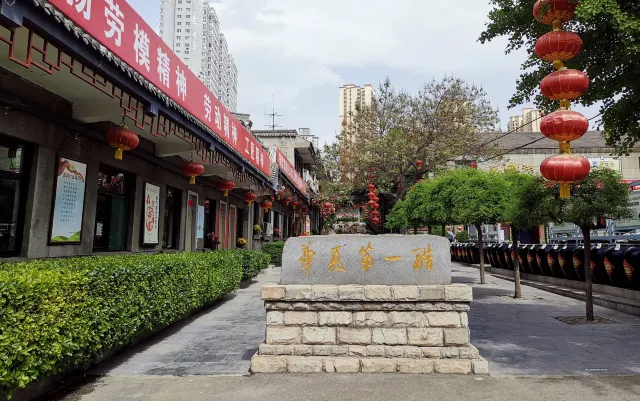
Visit the Donghu Vinegar Garden and explore the history of vinegar brewing in Shanxi.
As a national AAAA-level tourist attraction, a designated national industrial tourism demonstration site, and a provincial research and education base for primary and secondary schools, Donghu Vinegar Garden covers a total construction area of approximately 16,667 square meters.
Drawing on the deep-rooted farming culture of the Yellow River region, the garden preserves, promotes, and innovates the legacy of the Meiheju vinegar workshop—founded during the Hongwu period of the Ming Dynasty—and the traditional aged vinegar brewing techniques recognized as a national intangible cultural heritage. Through this, Donghu Vinegar Garden brings to life the ancient vinegar-making principles of steaming, aging, smoking, pouring, and inheriting craftsmanship, truly embodying the essence of traditional brewing in a modern context.
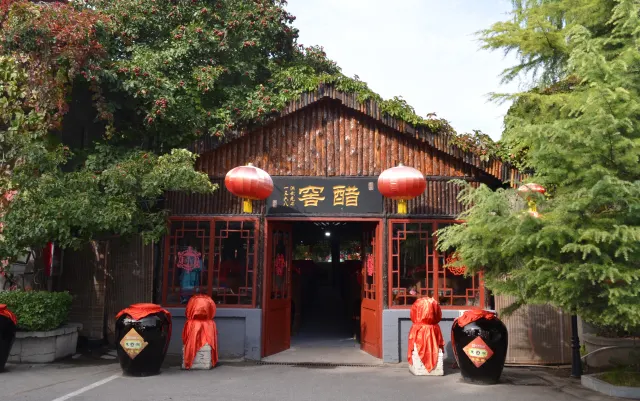
Since its opening in 2000, Donghu Vinegar Garden has launched special “intangible cultural heritage” vinegar culture study tours, introduced DIY courses on Shanxi aged vinegar, and added hands-on experiences for traditional vinegar brewing techniques. It has also developed the Old Western Vinegar Banquet as a cultural offering.
To date, the garden has welcomed over 5 million visitors from both China and abroad, with around 30,000 minors visiting annually. It has become a key part of China’s agricultural cultural industry, highlighting traditional farming and vinegar-making heritage.
The park features twelve themed exhibition halls, including the Donghu Meiheju Development History Hall, Vinegar Therapy Garden, Vinegar Museum, Vinegar Cellar, and Craft Brewing Workshop, showcasing farming tools and vinegar-making equipment from various historical periods.
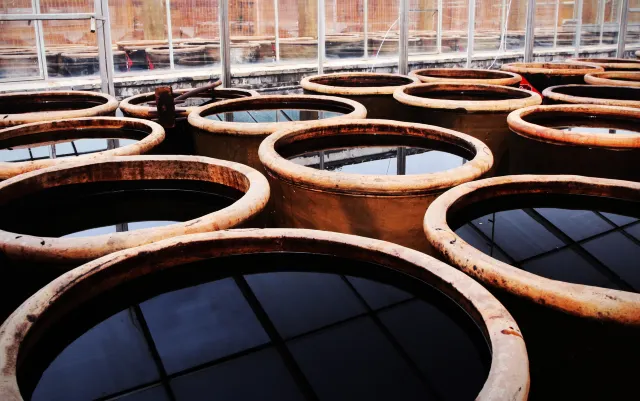
Donghu Vinegar Garden showcases the unique charm of the National Intangible Cultural Heritage – Old Vinegar Brewing Technique to both domestic and international visitors through displays of traditional and modern utensils, vinegar products, and hands-on brewing demonstrations.
It offers a “time tunnel” experience for the world to understand Shanxi’s vinegar culture, explore traditional brewing methods, and recognize the health benefits of aged Shanxi vinegar.
At the garden, visitors can immerse themselves in the rich history and culture of Shanxi vinegar, breathe in the deep aroma of Donghu Vinegar, enjoy the unique Donghu Vinegar Sauna, and taste the authentic flavor of aged vinegar—all while experiencing firsthand the craftsmanship behind this centuries-old tradition.

Visitors can also try a variety of unique vinegar-based items, including special vinegar drinks, vinegar snacks, and the Old Western Vinegar Banquet, featuring dishes like vinegar-soaked beans and vinegar dumplings—offering a more authentic taste of Shanxi aged vinegar.
Since its opening over 20 years ago, Donghu Vinegar Garden has received numerous honors, such as the Registered Certificate of Origin, the National Quality Silver Award, and inclusion in the national Intangible Cultural Heritage list. It has been praised by Europeans and Americans as “China’s Secret,” and by Japanese visitors as a “Living Fossil of Chinese Grain Vinegar Brewing” and “China’s No. 1 Vinegar.”
Today, it is a popular destination not only for vinegar culture but also for culinary tourism and floral arts.
Address: No. 26, Madaopo Street, Xinghualing District, Taiyuan City, Shanxi Province
Business Hours: Open from 08:00 to 18:00 tomorrow (ticket sales and admission end at 17:30)
Taiyuan Zoo is located in the north of Taiyuan city and is a very suitable place to bring children to visit. The zoo is full of lush trees and dotted with a large number of potted flowers. In Taiyuan Zoo, you can see precious domestic animals such as golden monkeys, Siberian tigers, red-crowned cranes, as well as precious exotic animals such as white rhinos, giraffes, baboons, and zebras. In Taiyuan Zoo, there are performances by various animals, including sea lion shows, elephant shows, and circus shows.
Address: No. 2 Dongshan Road, Xinghualing District, Taiyuan City
Business hours: 08:00-17:30 in summer, 08:00-17:00 in winter
evaluate:
Popular recommendations

Latest Trip.com Promo Codes, Black Friday Deals, Flight Discounts & Hotel Savings (Weekly Update)
 Trip.com Official
6 Things to know before Exploring the Montmorency Falls, Quebec
 TripBlog
2025 Guide to Shanghai Pudong Airport: Transit Visa & PVG Airport Shuttle
TripBlog
The World's Top-10 Best Nude Beaches
TripBlogQ&A
What's the most popular attractions in Taiyuan?
How to get to Zibo from Taiyuan?
How to get from Taiyuan Airport to Taiyuan South Railway Station?
What's the best food in Taiyuan?
Best selfie spot in Taiyuan?
What is a good souvenir from Taiyuan?
Trending Travelogues
Popular Trip Moments
Popular Attractions
Popular Ranked Lists
Popular Destinations
Recommended Attractions at Popular Destinations


About






of the year 2025



Site Operator: Trip.com Travel Singapore Pte. Ltd.