The Louvre Museum Guide: Hours, Tickets and Tips Handy Guide
Contents
- Evolution of the Louvre Museum
- How to get to the Louvre Museum
- Best time to visit Louvre Museum
- Louvre Museum Tickets
- Tips for avoiding long lines
- Entering the Louvre Museum
- What to see in the Louvre Museum?
- 1. Egyptian Antiquities
- 2. Greek and Roman Art
- 3. Near Eastern Antiquities
- 4. The Islamic Art
- 5. Paintings
- 6. Sculptures
- Other Attractions near the Louvre Museum
- i. The Seine River
- ii. Auditorium du Louvre
- iii. Arc de Triomphe du Carrousel
- iv. Jardin du Carrousel
- Where to Stay
- Shopping
Show more
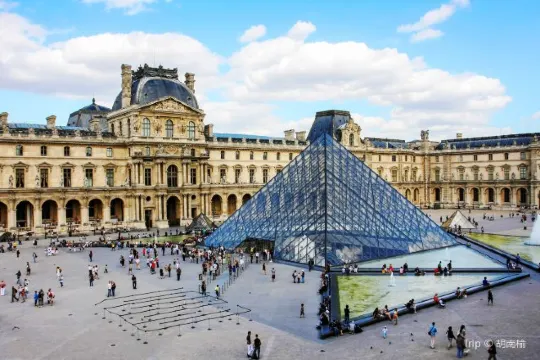
The Louvre Museum opened in the year 1793 in the Louvre Palace, Palais du Louvre in French. The Louvre is the world's largest museum with an exhibition of 537 paintings. It has over the centuries seen the inventory of the artifacts grow to 38,000 pieces. You can indulge in your classic vacation activity by paying a visit to the Louvre Museum in Paris. This building is on the banks of the Seine River. It is easily identifiable by its majestic glass pyramid in the center of the main courtyard, called cour Napoleon in French.
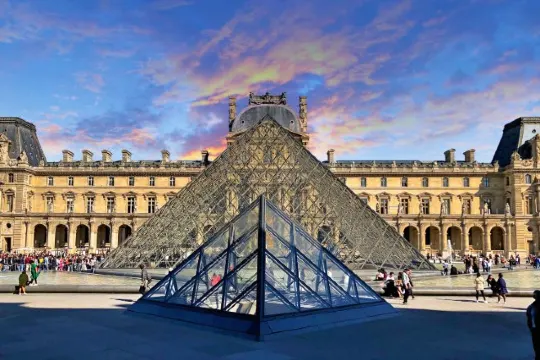
The Museum is housed in the almost 73,000 square meters building. The exhibits range from antiquities to modern artworks. One of the oldest collections, the Statue of Ain Ghazal, is believed to date back to an astonishing 9000 years. This statue was discovered in Jordon in 1985. The enormous Louvre Museum has eight curatorial departments arranged in different themes. The eight curational departments are Egyptian Antiquities, Greek and Roman Art, Near Eastern Antiquities, Islamic Art, Sculptures, Decorative Arts and Prints and Drawings.
The present Museum was originally built and used as a fortress during the earlier times to protect the city from invaders sailing along the river. You can see that the remnants of this fortress are visible in the basement even now. This fortress started in the 12th century by building walls around the city and shifting the royal palace and the treasury into it. This came to be known as the Louvre.
As Paris grew into Europe’s largest and busiest city, it expanded beyond the four walls. Gradually, the small palace was transformed into a more regal one over the centuries. After the royal residence was shifted out of Paris in the 17th century, the abandoned louver palace was converted into a museum with all artifacts being shifted to that building and then continually improved upon. Now it has carved a niche for itself as the world’s biggest and best art museum.

The museum located in the 1st arrondissement is extremely accessible, being one of the main tourist attractions in Paris. You can take lines 1 and 7 of the metro and get down at Palais Royal / Musee du Louvre and get to the glass pyramid through the underground shopping center Carrousel du Louvre.
Another option is to take the metro route 14 and get off at the Pyramides stop. You can also get there by bus with around a dozen routes, including the Paris open tour bus, stopping at Louvre Museum. Underground parking near the shopping center, with parking fees of Euro 4.4 per hour, makes the option of even taking a car attractive.
Louvre Museum Visiting Hours
You can enjoy the museum between 9:00 AM and 6:00 PM on Sunday, Monday, Thursday, and Saturday. While the museum is closed on Tuesdays, it has longer opening hours on two days, Wednesday and Friday, from 9:00 AM to 6:00 PM. It is closed on Jan 1st, May 1st, May 8th, and Dec 25th.
This museum is crowded throughout the year, but it is crammed full during the summer months. The 11:00 AM to 4:00 PM time slot is teeming with tourists. Hence, the best time of the day to visit the Louvre Museum is either in the morning or during the evening opening on Wednesday and Friday.
An entry ticket to the Louvre Museum costs Euro 15 and 17 and gives you access to all permanent and temporary exhibits throughout the day. This ticket also gives you entry to the Delacroix Museum in the 6th arrondissement.
Free entry is allowed for a large category of visitors like those under the age of 18. This has been relaxed to 25 years for the European Economic Area, EEA residents, holders of a valid Pass Education Card, people on income support and job seekers, and visitors with disabilities along with caretaker.
On Fridays, visitors of all nationalities under 26 are allowed free entry after 6:00 PM. To avail of this free entry benefit, relevant documents are required as proof. Also, visitors are allowed free entry on all Sundays from March to October and also on Jul 14th. Special care is taken of visitors who use wheelchairs. You can get wheelchairs available free of cost and direct entry facility of bypassing the long lines at the gate.
One word of advice to visitors is to be extremely cautious of pickpockets, especially during the free entry hours and days. As at time there will be additional crowds jostling to get into the Louvre Museum.
Due to a large number of visitors throughout the year, every bit of information with proper planning can be very helpful to skip-the-lines and save on time. The first suggestion is that you need to book in advance for your trip. Next, some guided tours are available to take you through the massive museum building with 38,000 exhibits. This will help you to minimize your waiting time as also guiding you through the various rooms to ensure that you get optimum time on each exhibit. At the same time ensuring that you don’t miss out on famous masterpieces.
There is another important advice to aid your skip-the-line strategy, which is buying the Paris insider pass. This pass allows you unhindered access to 60 Paris museums including this one and allows you unlimited free rides on the Paris public transport like the metro, RER, bus lines, and tramways. Besides this, the pass also allows free rides on Montmartre funicular. It carries passengers from the foot of Montmartre to its summit and comes with many other advantages. It costs between Euro 135 and Euro 245 for a two day to 6-day adult pass. The corresponding child pass costs between Euro 40 and 80. You and your family or friends can end up saving time due to skip-the-line feature but also save quite a bit of money. Moreover, this pass is valid for one year, covering any last-minute change of plans.
There are four entrances to the Louvre Museum. They are the Pyramid entrance, the Galerie du Carrousel entrance, the passage Richelieu entrance and the Porte de Lions entrance. The ticket holders are required to enter through the Passage Richelieu entrance. Those without tickets need to go the counters below the glass pyramid. Visitors with disabilities can enter either through the Pyramid or Galerie du Carrousel entrance. Porte de Lions entrance is the one for groups with a museum guide. The one having groups with their private guide can enter through the Passage Richelieu entrance.
Here we attempt to guide you on planning your visit to this mammoth Louvre Museum in the best possible way within the time available to you. The main attractions in the eight departments which would merit a visit are listed below.
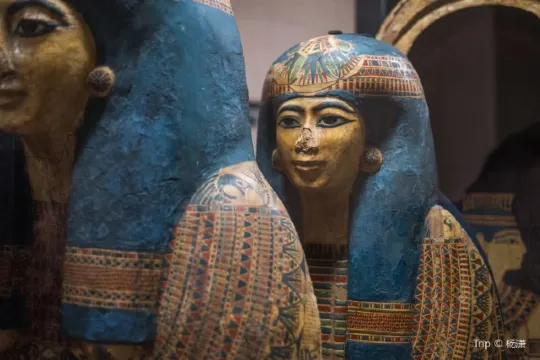
This area houses the largest such collections in the world. It ranges from sarcophagi, which are ancient coffins, sculptures. Steles which are marble slabs and statues, made from stone to bronze. Out of the eight departments, Egypt is the only country which has its own dedicated area. The huge collections start from the ancient Egyptian period.
The best attractions in this department are twenty squares. The twenty squares is a popular ancient game, Akhenaton and Nefertiti, the royal couple who was the earthly manifestation of the sun god. The Apis Bull, a lime statue of the sacred animal. Amon protecting Tutankhamen, the seven feet statue. Bastet the Cat-headed woman, an elegant bronze statue of the goddess. Apart from this, you should not miss out the huge attraction, the Sphinx, in room 1.
The collections here date back from 4 century BCE to 6th century AD and have art from Greece, Italy, and Mediterranean regions. The major attractions are Venus de Milo, the Nike of Samothrace, the triumph of Neptune and Amphitrite and Hercules resting. There are many more ancient artworks worth seeing in this section.
This holds collections from as far as Africa to the Indian Ocean and exhibits covering 9000 years of civilization. The major attractions are the Grinning Mask, the Anthropoid Sarcophagus. The Ain Ghazal Statue, which is the oldest exhibit in the museum. The Law Code of Hammurabi, which is an ancient legal document. Winged human-headed bull, depicted as guardians of palaces. The Worshipper, who is seen making an offering. Bas-Relief, which shows a king making an offering to God, and many more.
Within just 7 years of opening, this department already houses the largest Islamic collection in Europe. It has around 18,000 treasures from Europe to India spread over three floors. A few of the works that you need to see here are the Monson Lion used as a fountain sprout in Spain. Apart from many more such works, you can also look out for Mogul-era carpets from India to paintings from Iran and artworks from Egypt.
This is probably the most visited section where some of the most famous works amongst the 5,500 collections of European paintings are on display. The display includes exhibits from French, Italian, other European, British and American painters.
The most famous French paintings covering the 500 years from the 14th century include Nymph and Satire of Jupiter and Antiope, Liberty leading the people of the 1830 French uprising, The Coronation of Napolean, a 6 mt x 10 mt massive painting by Jacques-Louis David. Apart from these in levels 1 and 2, you can have a look at the beautiful paintings from the northern European artists like Bathsheba at her bath, Philosopher in Meditation, The Lacemaker, which is a self-portrait of an Artist Holding a Thistle by Albrecht Durer and many more of such classics.
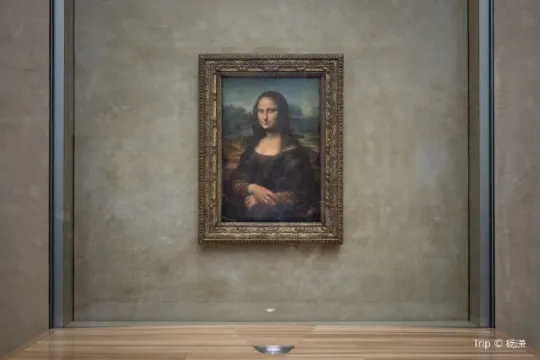
Apart from these, you also have Italian paintings belonging to the 13th to 18th century period in the salon carre and the grand Galerie. This section includes some of the most famous paintings ever produced, such as Mona Lisa by Leonardo da Vinci in room 6 of the first floor of the Denon wing. Another must-see is the huge floor to ceiling The Wedding Feast at Cana, a painting by Paolo Veronese which covers an entire wall depicting a biblical scene. You can also see Spanish Paintings of the 15th to 19th centuries in the central gallery, British and American Paintings of 18th and 19th centuries on Level 1, Denon wing.
Some of the best pieces of work on display here include the Dying Slave and the Rebellious Slave. They are the unfinished yet beautiful pieces by Michelangelo. Venus de Milo which is a beautiful 6 ft 8 in the statue of feminine beauty of Venus. The 10 feet tall Nike of Samothrace is one of the most visited sculpture here in the Louvre Museum. The sculpture of Diana of Versailles depicting the Greek goddess of hunt and many more of such masterpieces.
Of the other departments, the Decorative Arts have many classy and dazzling works of art on display. There are this glittering French crown jewels that are worth paying a visit during this tour. The prints and drawings works are rarely displayed as they are too sensitive to be exposed to air and light and are generally taken out only during temporary exhibitions.
There are several extremely attractive places of interest near the Louvre Museum within a couple of kilometers. You can visit it if you can find some time to get a feel for the culture of Paris.
Some of them are listed below for your guidance.
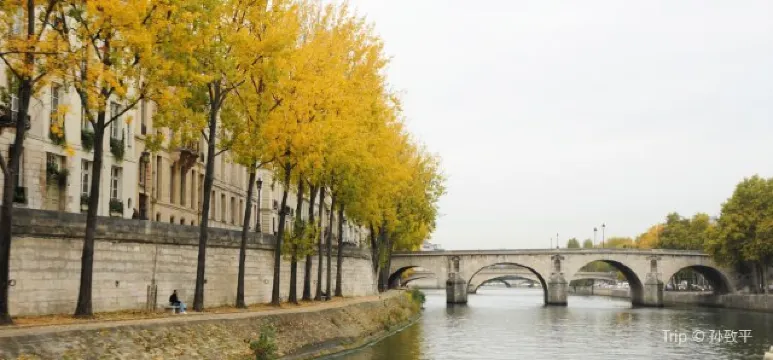
This lovely river runs through the heart of Paris, and you have a lot to do here. You can go on a hop-on and hop-off river sightseeing boat cruise which enables you to see some of the top Paris tourist destinations like Eifel Tower and other landmarks. It starts at 10:00 AM, and you can use any of the eight stops. You can also include dinner with this visit and go on a lovely 90-minute boat cruise past attractions like Notre Dame Cathedral and Eifel Tower with delicious food served in a wonderfully serene atmosphere.
This is a lovely venue for enjoying high-quality concerts and dance shows if your visit to Paris coincides with the show dates.
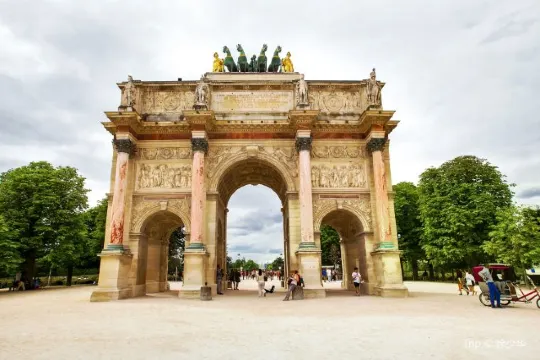
This is a lovely arch meant to commemorate the victories of Emperor Napoleon, and you can enjoy the illumination, decoration, and a great view of the whole area.
This is a small beautiful garden in which you can enjoy by walking along and spending some time with nature.
Some of the other places to visit include Place du Carrousel, Statue of Moliere, Comedie-Francaise, Palais Royal, Tuileries Garden, Place de la Concorde, and many more attractions.
There are several hotels, from budget to 1 star to 5 stars, where you can stay near and around the Louvre Museum during your visit to Paris. You can choose one best suited to your budget and requirements.
Carrousel du Louvre near the Louvre Museum is a major shopping center in this area of Paris. This is home to around 40 premium stores. The first Apple store in Paris also has many restaurants for you to have a quick bite or even feast on your favorite cuisine along with shopping.
Boulevard Saint-German is a street which you can enjoy shopping. This is a great street for fashion boutiques, home decor items, many gift shops, and even gourmet food shops.
La Maroquinerie Parisienne is a place where you can find items a bit cheaper in this area of high tourist flow. You can also visit the Monoprix store for some good bargains.
Popular recommendations

Top 19 Hippest Mid-Size US Cities
 TripBlog
Singapore Staycation: 5 Romantic Getaway for Couples in Singapore
TripBlog
Engineering Marvels in China: From the Great Wall to the World’s Fastest Train
TripBlog
Meet a Billionaire: Cities To Visit To Encounter the Ultra-Wealthy
TripBlogQ&A
What's the most popular attractions in Paris?
How to get to Venice from Paris?
How to get to Paris from Prague?
How to get to Paris from Interlaken?
What is the best season to visit Paris?
What do I need to know before visiting Paris?
Trending Travelogues
Popular Trip Moments
Popular Attractions
Popular Ranked Lists
Popular Destinations
Recommended attractions at popular destinations


About






of the year 2025



Site Operator: Trip.com Travel Singapore Pte. Ltd.