[Xi'an Free Travel] How to enjoy Xi'an for 3 days and 2 nights, a comprehensive itinerary planning guide!

Contents
- Trip Planner
- Xi'an itinerary planning overview
- Xi'an Day 1
- Shaanxi History Museum
- Xi'an City Wall
- Xi'an Bell Tower
- Xi'an Day 2
- Huaqing Palace
- Emperor Qin Shi Huang's Mausoleum Museum (Terracotta Warriors)
- Xi'an Day 3
- Big Wild Goose Pagoda
- The Tang Dynasty City That Never Sleeps
- Theme Street of The Longest Day in Chang'an
- Tang Paradise
Show more
[Planning a new trip but don't know where to start? Let Trip.com's AI Itinerary Assistant generate custom itineraries with one click!]
✅ Copy a travel blog link to generate the same itinerary with one click
✅ Featured popular itineraries for the most authentic experience
✅ Import your favorite destinations and automatically arrange the best itinerary
✅ Check opening hours and recommended visit durations at attractions to ensure that every stop meets your expectations
This guide carefully plans a perfect 3-day and 2-night trip to Xi'an for you. Covering local attractions, authentic food and popular shopping areas, you can easily travel around Xi'an and enjoy a worry-free holiday. Whether it is an in-depth exploration of history and culture or a fashionable check-in in a modern metropolis, this guide can meet your needs. Come and start your wonderful trip to Xi'an!
Wander through the murals of the Tang Tombs in Shaanxi Museum, ride a bicycle on the city wall to chase the sunset, soak in the hot springs in Huaqing Palace and listen to the secret history of Emperor Xuanzong, and see the underground army in the Terracotta Warriors.
Overlook the city of Chang'an from the Big Wild Goose Pagoda, watch live performances in the City That Never Sleeps, take photos in Hanfu at Twelve Hours, and visit the Tang-style night market in Furong Garden.
| Date | Journey |
| Day 1 | Shaanxi History Museum->Xi'an City Wall->Xi'an Bell Tower |
| Day 2 | Huaqing Palace->Qin Shi Huangdi Mausoleum Museum (Terracotta Warriors) |
| Day 3 | Big Wild Goose Pagoda->Tang Dynasty City That Never Sleeps->Twelve Hours in Chang'an Theme Street->Tang Paradise. |
Historical background:
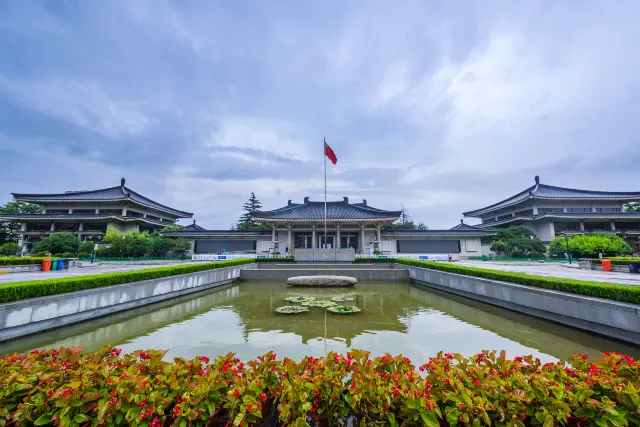
Shaanxi History Museum, located on the northwest side of the Big Wild Goose Pagoda in Xi'an, is one of Xi'an's signature attractions. The museum was planned in 1983, construction started in the summer of 1986, and it was officially opened on June 20, 1991 and named Shaanxi History Museum. In 2016, Shaanxi History Museum was selected as “China’s 20th Century Architectural Heritage” by the Chinese Society of Cultural Relics and the Chinese Society of Architects.
Museum Features:
Shaanxi History Museum is a large modern museum. Its completion marks a new milestone in the development of China's museum industry. This building is a Tang-style architectural complex with a "central hall and tall buildings on the four corners". It is well-organized with primary and secondary buildings, staggered in height, and solemn in appearance. It integrates national traditions, local characteristics and the spirit of the times.
The museum covers an area of 65,000 square meters and houses more than 380,000 cultural relics, ranging from simple stone tools used in the initial stage of ancient humans to various artifacts used in social life before 1840, with a time span of more than one million years. The cultural relics are not only numerous and diverse, but also of high quality and great value. The collections in the museum are dazzling and full of fine products. It is an art palace that showcases Shaanxi's history and culture as well as ancient Chinese civilization, and is known as the "Pearl of the Ancient Capital and Treasure House of China."
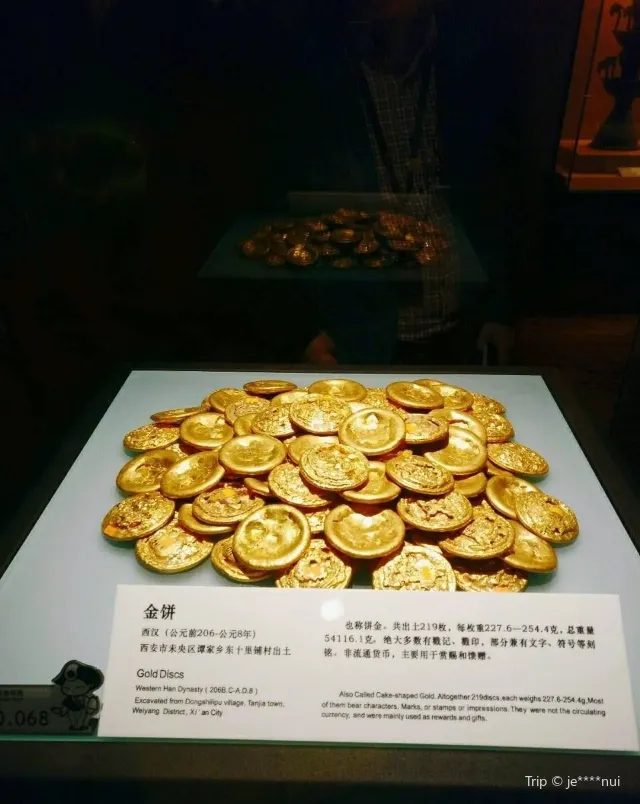
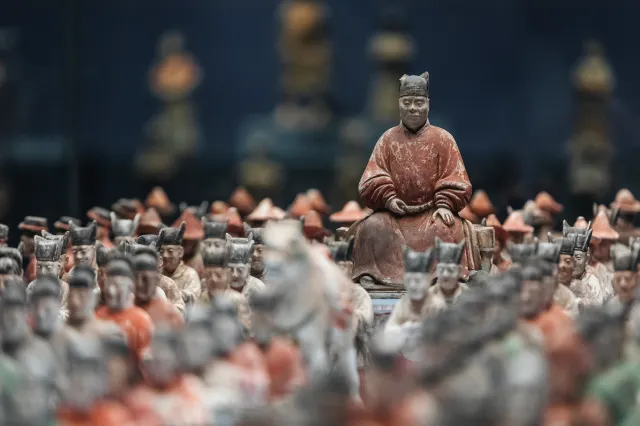
There are many treasures in the museum, including bronzes from the Shang and Zhou dynasties, pottery figurines from various dynasties, gold and silver utensils from the Han and Tang dynasties, and murals from Tang tombs. Most of them are treasures from the prosperous periods of the Han and Tang dynasties, and some of them are fine items that are prohibited from leaving the country.
Collection treasures:
There are three exhibition halls in the center of the museum. The first exhibition hall displays cultural relics from the prehistoric period of Lantian Ape Man 1.15 million years ago to the Qin Dynasty; the second exhibition hall displays cultural relics from the Han Dynasty and the Wei, Jin, Southern and Northern Dynasties; and the third exhibition hall is mainly composed of cultural relics from the prosperous Tang Dynasty. Each exhibition hall has its own treasure.
There are special exhibition halls on the east and west sides of the central hall. On the west side there is a "Special Exhibition of Tang Dynasty Treasures (Treasure House, Cultural Relics Excavated from Hejiacun)", where many fine gold and silver wares from the heyday of the Tang Dynasty have been transferred for exhibition. On the east side there is an "Exhibition of Treasures of Tang Dynasty Murals", which displays several authentic Tang Dynasty tomb murals.
The tripod
The Yu[yú] Ding is placed at the first exhibition hall at the entrance of the museum and can be said to be the treasure of the first exhibition hall. The replicas are placed here, while the originals are kept in the warehouse. Inscription on the outer wall: The inscription "All under heaven is the king's land; all within the four seas are the king's subjects" reflects the land ownership system during the Western Zhou Dynasty.
There are four lines of inscriptions with 28 characters on the inner wall of the Yi Ding. The general meaning is: In early August of a certain year, Wang Jiang took back the land originally given to Shi Lu and gave it to Yi, who then made this tripod to commemorate it.
Queen's Seal:
One of the treasures worth seeing in the second exhibition hall is this jade seal of the empress of the Han Dynasty, which is displayed separately. This jade seal is made entirely of Xinjiang Hetian mutton-fat jade and is engraved with a chihu, symbolizing royal power.
Three-color camel figurines carrying music:
This world-famous tri-color figurine of a camel carrying music is located in the third exhibition hall of the Shaanxi History Museum. Its overall appearance and color are well preserved. There were seven men sitting on the camel's back, holding different musical instruments in their hands. Among them, the figurines holding clapboards are listening attentively, as if they are intoxicated by the wonderful music. The woman in the middle is performing. The camel has its mouth wide open and is facing the sky, as if it is singing along with its owner.
Gold-inlaid animal head agate cup:
This cultural relic, which is located in the special exhibition "Tang Dynasty Relics Special Exhibition", is one of the first 64 national treasures listed by the State Administration of Cultural Heritage that are never allowed to be exhibited abroad.
There are also many other treasures such as black-glazed oil-drip bowls, green-glazed porcelain pots with handles, gilded silver bamboo-joint copper incense burners, gold bowls with mandarin duck and lotus petal patterns, etc.
Address: No. 91, Xiaozhai East Road, Yanta District, Xi'an City, Shaanxi Province
Transportation: Take Metro Line 2 or 3 and get off at Xiaozhai Station.
Business hours: Open from 08:30-19:00 tomorrow (ticket sales stop at 18:00)
evaluate:
| Shaanxi History Museum, China's first large-scale modern national museum, has 108,697 collections as of the end of 2022. Among them, there are 762 first-class cultural relics and 18 national treasures. Chang'an has been the capital of emperors since ancient times. In history, thirteen feudal dynasties, including Zhou, Qin, Han, Sui and Tang, established their capitals here. It has rich above-ground and underground cultural relics, forming Shaanxi's unique historical and cultural features. Among them, the exhibition halls of the Qin, Han and Tang dynasties have the most cultural relics, especially the pottery figurines from the Han and Tang dynasties, which are unique exhibits of the Shaanxi Museum. Unfortunately, there were too many people in the museum, and it was so crowded. This is the first time I have seen this in a museum in China. Many exhibits are too crowded to see. When I came here more than ten years ago, there were much fewer people than now. And now you can't make an appointment without making an appointment a few days in advance. I strongly suggest that they need to open a new museum. This situation affects the visit. |
The Xi'an City Wall is the iconic landscape of this ancient city. The city wall we see now was built in the early Ming Dynasty and is now more than 600 years old. It was built on the basis of the imperial city of the Tang Dynasty and includes a series of facilities such as moats and corner towers. At present, there are many gates in the Xi'an City Wall that can be used to climb the city. Tourists can choose the nearest one. Among them, the South Gate is the welcoming gate of Xi'an City and it is also the gate with the most tourists. Cycling on the ancient city wall is a great experience. Riding on the city wall and overlooking the ancient capital of 13 dynasties, you will have a feeling of traveling through time.
Address: No. 2 South Street, Beilin District, Xi'an City, Shaanxi Province
Transportation: Take Metro Line 2 and get off at Yongningmen Station.
Opening hours: 08:00-22:00 (ticket sales stop at 22:00; admission stops at 22:00)
evaluate:
| The city wall is a very nice attraction! Worth a look! It feels great to ride on it! Next time if I come here, I will continue to check in at the city wall! Experience the grandeur of the Ming City Wall! Feel the wisdom of the ancients! Will definitely check in! |
The Xi'an Bell Tower is relatively complete in China. It was first built during the reign of Zhu Yuanzhang in the Ming Dynasty and has a history of more than 600 years. As one of the landmarks of the ancient city, the Bell Tower is located in the center of Xi'an. Four streets radiate from it, namely the east, south, west and north streets, and are connected to the east, south, west and north gates of the Xi'an city wall respectively. The lower part of the bell tower is a square base, the top is covered with dark green glazed tiles, and the apex is wrapped with real gold. Under the lights at night, the entire bell tower is dazzling and breathtakingly beautiful.
Address: Opposite to Exit C of Bell Tower Station, Xi'an Metro Line 2, at the intersection of Xi'an Si Tiao Street, Xincheng District, Xi'an City, Shaanxi Province
Business hours: Open from 08:30 to 21:30 tomorrow (ticket sales stop at 21:00; admission stops at 21:30)
evaluate:
| Very nice. The viewing experience is good. The Xi'an Bell Tower is located in the center of Xi'an, at the intersection of four main streets within the Ming City Wall. It is the largest and best-preserved existing bell tower in China. |
The Huaqing Palace (Huaqing Pool•Xiaoshan) scenic area is located 30 kilometers east of Xi'an, adjacent to the Terracotta Warriors. It is famous both at home and abroad for its eternal hot spring resources and many historical events, and has become a landmark scenic spot for China's Tang Palace cultural tourism.
【Palace Scenic Spots】
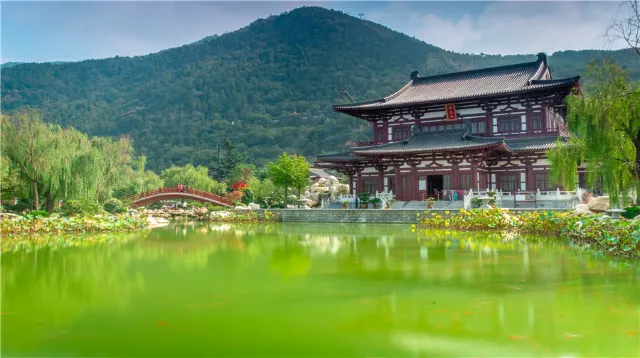
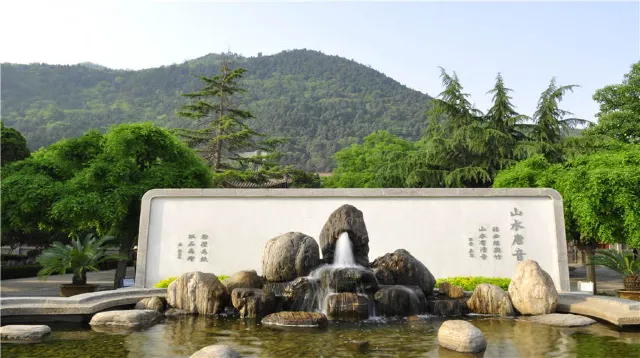
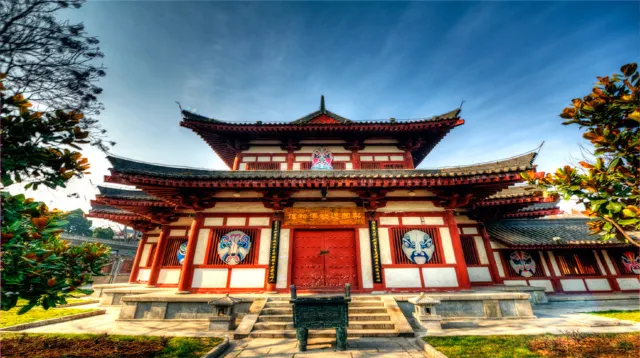
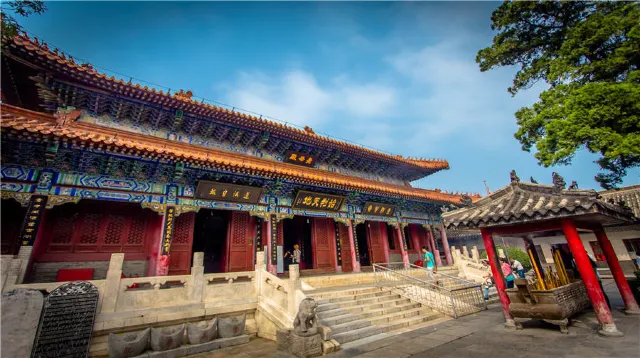
▲Huaqing Palace has a long history. Emperors of the Zhou, Qin, Han, Sui and Tang dynasties built palaces and villas here. The palace houses cultural areas such as Tang Imperial Hot Spring Ruins Museum, the site of the Xi'an Incident - Wujian Hall, Jiulong Lake and Furong Lake Scenic Area, Tang Liyuan Ruins Museum and Feishuang Hall, Wanshou Hall, Changsheng Hall, Changsheng Hall and Shengjian Hall.
▲“Ode to Hot Springs” Monument
Lishan Hot Spring is known as "the best imperial spring in the world" because it was developed and utilized early and has been favored by emperors of all dynasties. As early as 6,000 years ago during the Yangshao culture period, the ancestors of Jiangzhai began to use the Lishan hot springs. The long-standing Xiaoshan Hot Spring embodies rich cultural connotations and is an indispensable and important part of the history and culture of the Chinese nation.
The stone tablet in praise of hot springs in the scenic area is 154 cm high, 72 cm wide and 19 cm thick, with a coiled dragon head and a trapezoidal base. It was engraved by Yuan Chang, the governor of Yongzhou in the Northern Wei Dynasty. The inscription reads, "Hot springs are the natural remedy, the original medicine of heaven and earth, the pillar of support for people of all nations, and the sick guests who sleep on the lotus bed. All of them come here to visit and have their food provided for them, to heal their illnesses with the water." This stele is the earliest existing physical written material in Huaqing Palace.
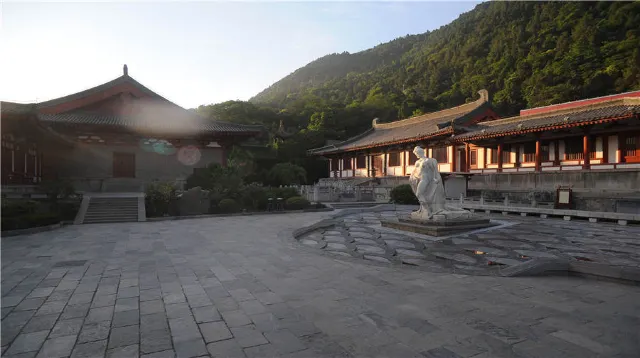
▲Tang Yutang Site Museum
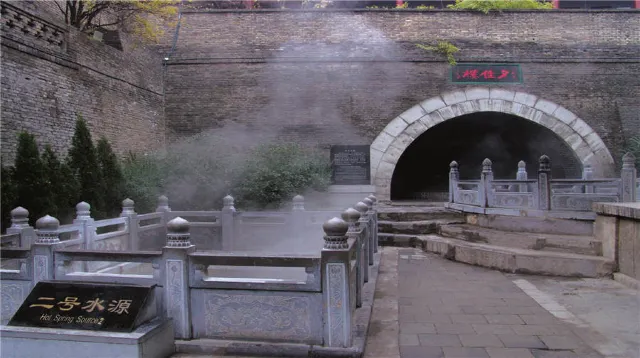
This is the location of the bathing pool where the scene of Yang Guifei taking a bath in "Song of Everlasting Sorrow" is described. After the An-Shi Rebellion, little of the original building remained. In 1982, when the Lintong County People's Government was building the "Imperial Concubine Pavilion", they accidentally discovered the ruins of a Tang Dynasty bathing pool. After excavation and sorting, it was built into the Tang Huaqing Palace Imperial Bath Site Museum. This hot spring pool is small and exquisite, with a unique design. It is 3.6 meters long from east to west and 2.9 meters wide from north to south, and its shape is approximately oval. The pool walls are made entirely of bluestone, and the upper and lower terrace structures of the hot spring pool are made up of 18 groups of rolled stones. There is a long stone in the pool which was specially used by Yang Guifei for bathing, with the word "Yang" engraved on it. There is a water inlet with a diameter of 10 cm in the middle of the pool bottom. A lotus base carved from white marble was unearthed here. The lotus on the base is connected to the shower head, and the bottom is connected to a ceramic water pipe connected to the main water source. The hot spring water sprays out from the lotus shower head through the pipe due to natural pressure. The water mist that falls down is not much different from today's shower. Immediately to the east of the Guifei Pool is the imperial bath used exclusively by Emperor Xuanzong of Tang. During the Tang Dynasty, a Nine Dragon Hall was built on the pond. Outside the hall, there were nine dragons carved from white jade, with fountains spewing from their mouths. The soup is shaped like a realistic lotus, so it is also called "lotus soup".
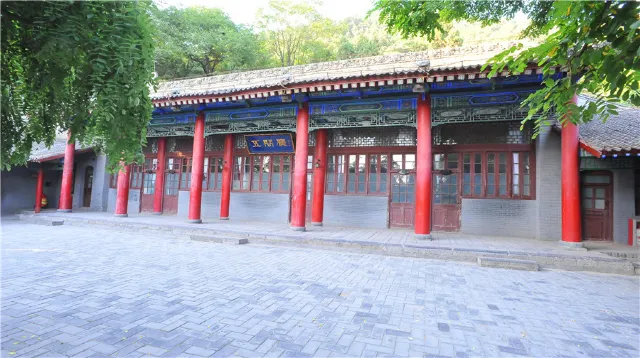
▲The site of the Xi’an Incident
The five halls of Huaqing Palace are where the Xi'an Incident took place. To this day, the glass windows and walls of the five halls still retain the bullet marks from the fierce fighting during the military rebellion. The tables, chairs, beds, sofas, tea sets, stoves, carpets, telephones, etc. used in the offices of each room have been reproduced and placed in their original appearance.
Historical Events:
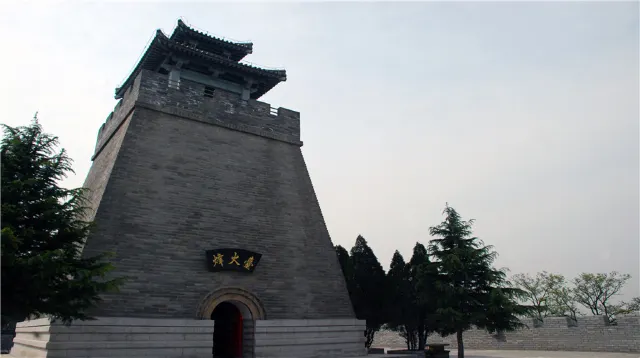
▲Playing tricks on princes with beacon fires
In 779 BC, King You of Zhou got the beautiful Bao Si, but she never smiled. To this end, King You discussed a clever plan with the treacherous minister Guo Shifu and lit the wolf smoke on the beacon tower on Mount Li. The princes of the world watched the beacon fire and hurried to lead their troops to rescue the king, but King You told the princes, "I raised the beacon fire just to make the queen smile", so Bao Si laughed. The princes from all over the country came with courage and returned with resentment. The Quanrong Kingdom saw that King You was incompetent and had lost the support of the people, so they took the opportunity to lead their troops to attack. When the enemy was at the foot of the mountain, King You of Zhou hurriedly raised the beacon fire to mobilize troops, but none of the princes came to rescue him. King You fled with Bao Si to the foot of Xiao Mountain, where they were killed by the Quanrong. It left behind historical allusions such as "a smile is worth a thousand pieces of gold", "a smile can lose the world," and "playing tricks on the princes with beacon fires".
This beacon tower is located on the first peak of Xixiuling in Mount Li at an altitude of 913.6 meters.
During the Jiayou period of the Northern Song Dynasty, the Lishan Hot Springs were painstakingly renovated by Liu Ziyong and others. They are now so beautiful that they attract tourists from all over the world to come and recite poems and write essays to express their nostalgia for the past. Among these innumerable poems and erotic lyrics, masterpieces such as "Lady of Guoguo's Night Out" and "Mount Li," written by the emerging literary giant Su Xuan during his visit to Mount Li, stand out.
The Xi'an Incident, also known as the "Double Twelve Incident". Zhang Xueliang and Yang Hucheng launched a mutiny at Huaqing Pool and detained the chairman of the then National Government Military Commission.
【Performance】
You can watch large-scale dance dramas in the scenic area:
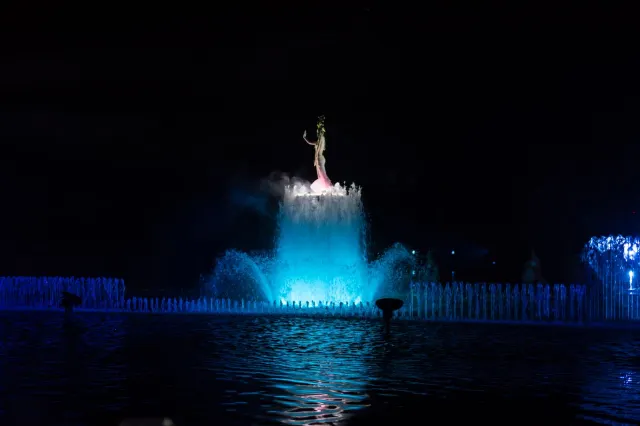
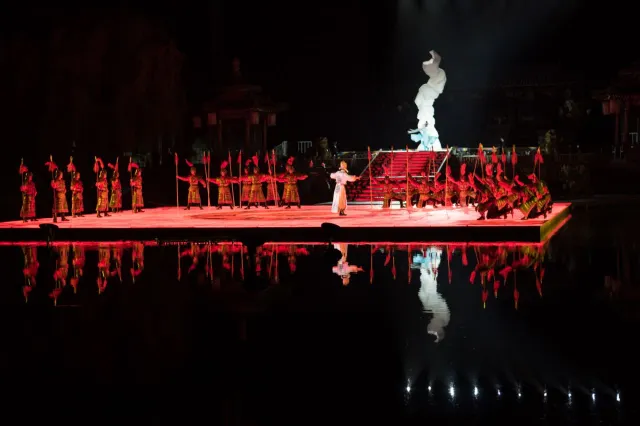
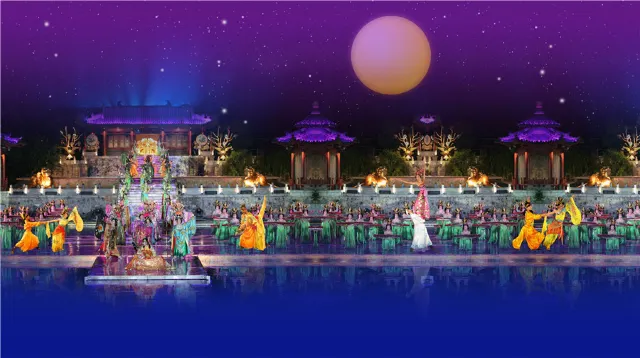
▲Performance of "Song of Everlasting Regret"; the scenic spot launched the large-scale real-life historical dance drama "Song of Everlasting Regret" in 2007, and the multimedia video drama "Mysterious Realm of Eternal Life" in 2012. Among them, "Song of Everlasting Sorrow" is only performed from April to October, and the ticket price for ordinary seats ranges from 200 to 300 yuan, depending on the region.

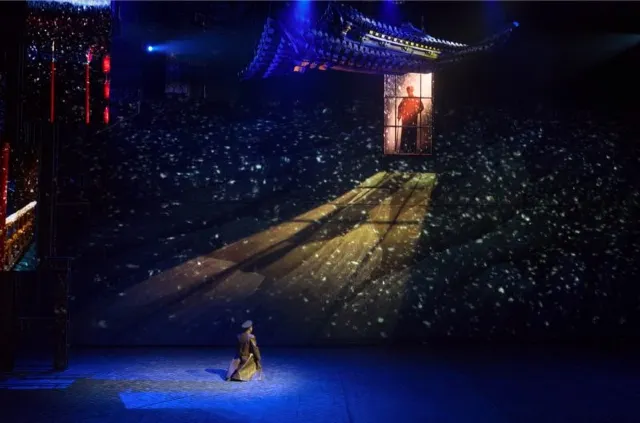
▲There is also "12.12 Xi'an Incident" adapted from historical events, which truly and vividly shows the little-known historical original appearance of the "Xi'an Incident".
Address: No. 38 Huaqing Road, Lintong District, Xi'an City, Shaanxi Province
Business hours: Open from 07:30 to 19:10 tomorrow (ticket sales stop at 18:30; admission stops at 18:40)
evaluate:
| The Terracotta Warriors are indeed spectacular, domineering, majestic and magnificent. The wisdom of the ancients is not exaggerated; it is still very powerful. Every time I go to see it, I have a different feeling. This is one of the must-see attractions for tourists to Xi'an. It is ingenious and amazing. Thumbs up 👍 |
The Qin Shihuang Terracotta Warriors and Horses Museum, also known as the Qin Terracotta Warriors and Horses, is located about 1.5 kilometers east of the Mausoleum of Qin Shihuang and is a burial pit of the Qin Shihuang Mausoleum. More than a thousand terracotta warrior figurines were unearthed here, each with a different expression and posture. Standing in front of the huge underground military formation, you will feel the extraordinary momentum of Emperor Qin Shihuang who conquered the six kingdoms and unified the world two thousand years ago. Qin Shi Huang Ying Zheng began to build his own mausoleum when he ascended the throne at the age of 13. It was a huge project that required nearly 720,000 manpower and took 38 years to build.
Address: Qinling North Road, Lintong District, Xi'an
Business hours: Open from 08:30 to 18:30 tomorrow (no admission at 17:00)
evaluate:
| Hassle-free booking service, had to visit everything in one day, just had to show my passport on arrival, you don't really save anything, but it is a time saver. Needless to say, the visit was well worth it, as was the free bus to the soldiers and cemeteries. Make sure to go up the hill from the palace, either on foot, by ride or by ropeway. |
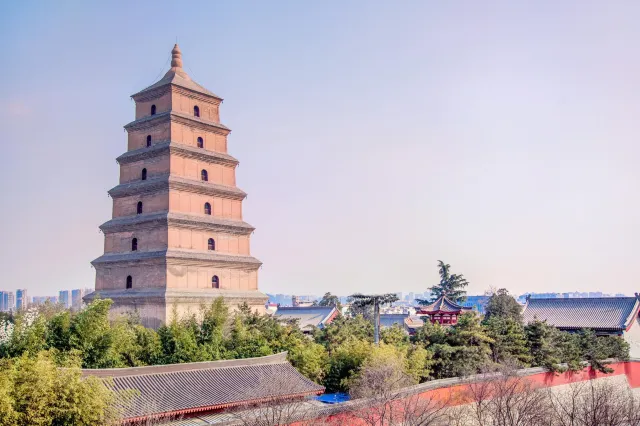
Big Wild Goose Pagoda is located in Da Ci'en Temple in the southern part of the city. Da Ci'en Temple is a magnificent royal temple in Chang'an City during the Tang Dynasty. It was built during the reign of Emperor Taizong of Tang by Crown Prince Li Zhi in memory of his mother, Empress Wende, and Master Xuanzang, who had returned from a journey to the West to seek Buddhist scriptures, served as the "first abbot". During this period, the master supervised the construction of the Big Wild Goose Pagoda.
Master Xuanzang translated Buddhist scriptures and promoted Buddhism in the Da Ci'en Temple for 11 years, and founded the "Appearance-Only School" of Buddhism, making the Da Ci'en Temple the ancestral temple of the Consciousness-Only School (also known as the "Dharma-Appearance School"). During this period, the master personally supervised the construction of the Big Wild Goose Pagoda in order to enshrine the Buddhist scriptures, statues and relics brought back from India.
Today's Da Ci'en Temple was built in the Ming Dynasty on the basis of the original temple "West Pagoda Courtyard", and most of the existing halls are buildings from the Qing Dynasty. The main buildings on the central axis of the temple are the Main Hall, the Dharma Hall, the Big Wild Goose Pagoda, and the Xuanzang Tripitaka Courtyard. Among them, the Buddha's relics enshrined in the Big Wild Goose Pagoda and the skull of Master Xuanzang enshrined in the Xuanzang Sanzang Temple are the "treasures of the temple" of the Da Ci'en Temple.
To the east of the central axis of the temple is the Pagoda Garden. Within the garden are nine stupas housing the relics of nine eminent monks of the temple since the Qing Dynasty.
There are squares on the south and north sides of Da Ci'en Temple. There are also scenic spots such as the Shaanxi Museum and Tang Paradise in the surrounding area.
Address: No. 3, Guangchang East Road, Dayanta Street, Yanta District, Xi'an City, Shaanxi Province
Business hours: Open from 08:30-18:00 tomorrow (ticket sales stop at 17:00; admission stops at 17:00)
evaluate:
| The place is huge and was crowded as I visited during the Labor Day holiday. We were not aware that the show schedule in the area had changed due to the holiday season, so we did not catch any of the night shows. I didn't go up the tower, but I heard the steps are very steep. |
The central axis landscape avenue of the Tang Dynasty City That Never Sleeps is a central sculpture landscape pedestrian street that runs approximately 1,500 meters from north to south. It is decorated with nine groups of themed sculptures, including those of prosperous emperors, historical figures, and heroic stories. They show the status of the Tang Empire in religion, literature, art, science and technology in three dimensions and demonstrate the demeanor of a great power.
The Tang Dynasty City That Never Sleeps is based on the Big Wild Goose Pagoda. It starts from Xuanzang Square in the north, ends at the Tang City Wall Ruins Park in the south, starts from Ci'en East Road in the east, and ends at Ci'en West Road in the west. It runs through three theme squares: Xuanzang Square, Zhenguan Cultural Square, and Kaiyuan Celebration Square. It has six Tang-style blocks and four major cultural buildings: Xi'an Concert Hall, Xi'an Grand Theater, Qujiang Cinema, and Shaanxi Artists Gallery. The Tang Dynasty City That Never Sleeps is brightly lit at night, and the antique buildings in the light and shadow are glittering and magnificent, as if the heyday of the Tang Dynasty is reappearing.
This place gathers the gameplay of internet celebrities, focusing on presenting colorful, dreamy and technological senses. It uses large-scale scene installations to create a fashionable and dynamic interactive experience hall, providing a recommended photo-taking place for young and trendy people. In the parent-child technology area, children's imagination and creativity are inspired through scene presentations and on-site hands-on operations. Games are combined with ability development and experience gain, making it a great place for parent-child play.
Address: No. 46, Ci'en Road, Yanta District, Xi'an City, Shaanxi Province
Opening hours: 24 hours a day, all year round
evaluate:
| The beautiful scenery of the Tang Dynasty City That Never Sleeps is truly unforgettable! When night falls, the entire scenic area seems to have traveled back to the heyday of the Tang Dynasty, with brilliant lights and dazzling brilliance. Walking on the street, the ancient buildings on both sides are illuminated by the lights and look quaint, as if every step is taking place in the vein of history. Each of those exquisite sculptures and decorations reveals a strong cultural heritage and artistic atmosphere. Especially the performances and light shows, which vividly displayed the prosperity and glory of the Tang Dynasty, making people feel as if they were in that prosperous era, feeling the unique charm and flavor. |
The Twelve Hours in Chang'an themed block is based on the Tang Dynasty market culture, with the web drama "The Twelve Hours in Chang'an" as its theme and immersive experience as its core. It uses a full Tang Dynasty packaging in the fields of architecture, soft furnishings, coins, characters, clothing, language, music, and stories. At the same time, around the deep immersive story experience, it sets up supporting catering, cultural and creative, performing arts and other business content to create an overall Tang Dynasty market culture experience that integrates full Tang Dynasty space play, Tang-style market experience, themed immersive interaction, Tang music and dance performances, cultural and social leisure, etc.
Address: F1, Mandy Plaza, No. 9, Yannan 1st Road, Yanta District, Xi'an City, Shaanxi Province
Business hours: Open from 10:00 to 21:30 tomorrow (ticket sales stop at 20:30; admission stops at 21:00)
evaluate:
| This is my fifth time here, and it is always a fun experience. The performances of the actors are professional and wonderful, the NPCs are very interesting, and the Tang Dynasty culture is very rich. In short, every time I come to Xi'an, I must go to the Twelve Hours, it's very fun! Highly recommended 👍 |
The Tang Paradise, a national 5A scenic spot, is located in Qujiang New District in the south of Xi'an, facing the Big Wild Goose Pagoda in the distance. It covers an area of 998 acres, including 300 acres of water area, 440 acres of green area, and a building area of nearly 100,000 square meters. The park's buildings were designed and planned by Mr. Zhang Jinqiu, an academician of the Chinese Academy of Engineering, and the landscape was designed by Mr. Akiyama Hiroshi, a Japanese garden master. It is a large-scale cultural theme heritage park that fully displays the style of the prosperous Tang Dynasty. Since it was officially opened to the public on April 11, 2005 (the third day of the third lunar month), it has been committed to building a high-quality, high-standard brand tourist attraction.
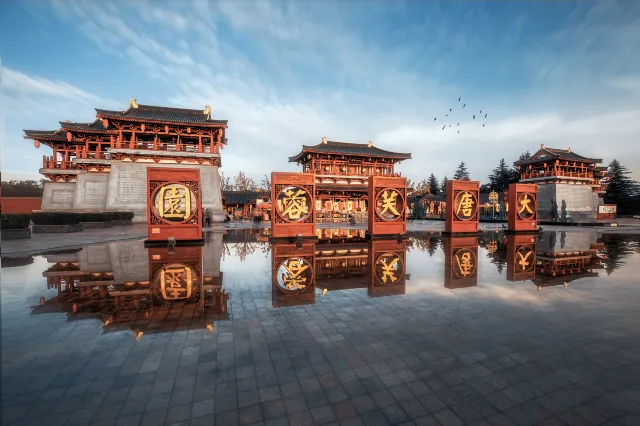
The Tang Paradise aims to build a "garden of history, spirit, nature, humanity and art". A team of experts including more than ten experts in Tang history, poetry, painting and architecture from the Chinese Society of Tang Dynasty Literature, doctoral supervisors, researchers and tourism experts were specially invited to re-explore and sort out the historical and cultural content of the Tang Paradise, and to re-plan and reposition the landscape of the entire garden. Fourteen landscape cultural areas were divided into the imperial culture area, the female culture area, the poetry culture area, the imperial examination culture area, the tea culture area, the song and dance culture area, the food culture area, the folk culture area, the diplomatic culture area, the Buddhist culture area, the Taoist culture area, the children's play area, the gate landscape culture area and the water show performance area, which fully reproduce the splendid civilization of the prosperous Tang Dynasty. There are more than 20 scenic spots in the garden, such as pavilions, towers, carved corridors and painted buildings, including Ziyun Tower, Ladies' Pavilion, Lu Yu Tea House, Apricot Garden, Caixia Corridor, Qujiang Flowing Drinks, Beauty Walk, Tang Poetry Gorge and Dogwood Terrace. They showcase the glorious spirit of the Tang Dynasty and its brilliant and incomparable culture and art. It is known as a tourist destination that "shocks the Chinese and amazes the world".
The park's theme performances include a large-scale water dance and light show "Dreaming of the Tang Dynasty", where you can take a boat trip to a dreamland; the large-scale super-dimensional situational dance drama "Dreaming of the Tang Dynasty" is magnificent and dreamy; the Tang Dynasty court music "Drum" interprets the Dongcang drum music, which is an intangible cultural heritage of mankind, as well as high-quality cultural tourism activity brands and projects such as the Spring Festival Grand Tide Fair, Shangsi Festival, and Qujiang Flower and Moon Banquet. The multiple free performances at scenic spots every day are a cordial invitation from the Tang Dynasty royal family to tourists, allowing them to experience the sacredness and grandeur of royal culture shockingly.
As a theme heritage park with excellent quality, rich personality and cultural connotation, Tang Paradise is a cultural window for Xi'an to show the ancient historical heritage of Chang'an and the prosperity of the Tang Dynasty to the world, and a cultural gateway for the world to understand China...
Address: No. 99, Furong West Road, Qujiang New District, Xi'an
Opening hours: 09:00-22:00 (ticket sales stop at 21:00)
evaluate:
| One of the must-see attractions in Xi'an. The park is very large. It is best to go there in the evening so that you can see what it looks like during the day and the night view. There are also the Tang Dynasty City That Never Sleeps and the Big Wild Goose Pagoda nearby. The transportation is also very convenient, with direct access to the subway, which is very good. |
Popular recommendations

Food Matters: Top 6 Staycations with Delectable Breakfasts
Trip.com
LEGOLAND® Malaysia Resort from 21 to 23 Sept 2018
Trip.com
A Look at the Newly-Renovated Royal Plaza on Scotts
Trip.com
Latest Trip.com Promo Codes, Black Friday Deals, Flight Discounts & Hotel Savings (Weekly Update)
 Trip.com Official
Q&A
What's the most popular attractions in Xi'an?
Things to do near Xi'an for family & child?
Any recommended attractions about nature scenery in Xi'an?
How to get to Jingyang from Xi'an?
How to get to Zhangye from Xi'an?
How to get to Dunhuang from Xi'an?
Trending Travelogues
Popular Trip Moments
Popular Attractions
Popular Ranked Lists
Popular Destinations
Recommended Attractions at Popular Destinations


About






of the year 2025



Site Operator: Trip.com Travel Singapore Pte. Ltd.