[Xuzhou Free Travel] How to enjoy Xuzhou travel for 3 days and 2 nights, a comprehensive itinerary planning guide!

Contents
- Trip Planner
- Xuzhou itinerary planning overview
- Xuzhou Day 1
- Guishan Han Tomb
- Po Lin Monastery
- Tobu Mountain
- Huilongwo Historical and Cultural District, Xuzhou
- Day 2 in Xuzhou
- Xuzhou Museum
- Yunlong Lake Tourist Area
- Xuzhou Day 3
- Xuzhou Han Culture Scenic Area
Show more
[Planning a new trip but don't know where to start? Let Trip.com's AI Itinerary Assistant generate custom itineraries with one click!]
✅ Copy a travel blog link to generate the same itinerary with one click
✅ Featured popular itineraries for the most authentic experience
✅ Import your favorite destinations and automatically arrange the best itinerary
✅ Check opening hours and recommended visit durations at attractions to ensure that every stop meets your expectations
This guide carefully plans a perfect 3-day and 2-night trip to Xuzhou for you. Covering local attractions, authentic food and popular shopping areas, you can easily travel around Xuzhou and enjoy a worry-free holiday. Whether it is an in-depth exploration of history and culture or a fashionable check-in in a modern city, this guide can meet your needs. Come and start your wonderful trip to Xuzhou!
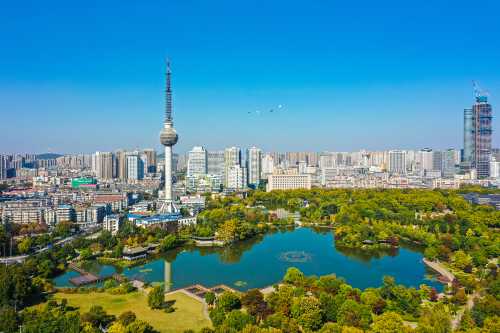

Explore the Chu and Han tombs at Guishan Han Tomb, eat vegetarian noodles at Po Lin Temple, visit the ancient houses at Hubu Mountain, check in at the red wall at Huilongwo, and travel through a thousand years in one day.
See pottery figurines and jade clothes in the museum, go boating and mountain climbing in Yunlong Lake, wear Hanfu in the Han Culture Scenic Area, and experience the panoramic view of the Han Dynasty and the lake and mountains.
| date | journey |
| Day 1 | Guishan Han Tomb->Baolin Temple->Hubu Mountain->Huilongwo Historical and Cultural District, Xuzhou City |
| Day 2 | Xuzhou Museum->Yunlong Lake Scenic Area |
| Day 3 | Xuzhou Han Culture Scenic Area |
Guishan Han Tomb is one of the main attractions of Xuzhou Guishan Scenic Area. It is the joint burial tomb of Liu Zhu, the sixth King Xiang of Chu in the Western Han Dynasty, and his wife. It consists of two artificially excavated tomb passages and fifteen burial chambers. This tomb is huge and majestic, and it is truly rare. In particular, the four major mysteries that have not yet been solved have attracted countless tourists from home and abroad to explore.
Address: No. 3 Xiangwang North Road, Gulou District, Xuzhou City
Business hours: Standard time 08:30-17:00, summer time 08:30-17:30
evaluate:
| Ctrip saves 10 yuan by booking tickets one day in advance. There are three combined tickets for Guishan Han Tomb, Dianshi Garden, and Imperial Edict Museum. The latter two seem to have been donated by private entrepreneurs based on their personal hobbies. |
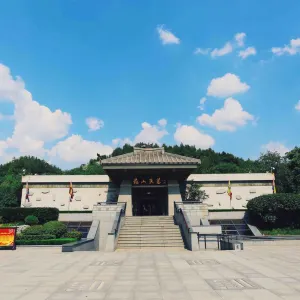
 ✨Short Version (Suitable for Review and Check-in)
Version 1 (Highly Rated on Dianping/Meituan)
The Guishan Han Tomb truly deserves its reputation as the "Oriental Pyramid"! The entire underground palace was carved directly into the mountain. The long passageways are incredibly precise; it's hard to imagine that over two thousand years ago, without modern tools, the ancients could have completed such a massive project. The tomb chambers are neatly arranged, and there's even a mysterious "King of Chu Welcoming Guests" stone wall, adding to the mystique. Walking through the dark underground stone chambers feels like stepping back into the Western Han Dynasty, truly experiencing the grandeur of the King of Chu and the extraordinary wisdom of the ancients. Definitely worth a visit when in Xuzhou!
Version 2 (Short Caption for WeChat Moments)
✅Guishan Han Tomb|Carved into a Mountain, a Millennium Underground Palace.
Carved out of the entire mountain with hammer and chisel, the passageways are intricately designed, and the tomb chambers are complete. The mysterious King of Chu Welcoming Guests—a breathtaking sight across two thousand years. When in Xuzhou, you must experience the grandeur of the Western Han Dynasty.
Today I visited the Guishan Han Tomb, which was carved out of the mountains. The long, straight, and precise passageway impressed me deeply with the superb skills and wisdom of the ancients two thousand years ago.
✨Short Version (Suitable for Review and Check-in)
Version 1 (Highly Rated on Dianping/Meituan)
The Guishan Han Tomb truly deserves its reputation as the "Oriental Pyramid"! The entire underground palace was carved directly into the mountain. The long passageways are incredibly precise; it's hard to imagine that over two thousand years ago, without modern tools, the ancients could have completed such a massive project. The tomb chambers are neatly arranged, and there's even a mysterious "King of Chu Welcoming Guests" stone wall, adding to the mystique. Walking through the dark underground stone chambers feels like stepping back into the Western Han Dynasty, truly experiencing the grandeur of the King of Chu and the extraordinary wisdom of the ancients. Definitely worth a visit when in Xuzhou!
Version 2 (Short Caption for WeChat Moments)
✅Guishan Han Tomb|Carved into a Mountain, a Millennium Underground Palace.
Carved out of the entire mountain with hammer and chisel, the passageways are intricately designed, and the tomb chambers are complete. The mysterious King of Chu Welcoming Guests—a breathtaking sight across two thousand years. When in Xuzhou, you must experience the grandeur of the Western Han Dynasty.
Today I visited the Guishan Han Tomb, which was carved out of the mountains. The long, straight, and precise passageway impressed me deeply with the superb skills and wisdom of the ancients two thousand years ago.Baolian Monastery is located on Yunlong Mountain in Xuzhou, Jiangsu Province. It is a Buddhist temple full of history and culture. The environment around the temple is quiet, suitable for tourists to relax. The architectural style is simple and ancient, and the Buddha statues and exquisite carvings enshrined in the temple attract many believers and tourists. The murals and sculptures in the Main Hall showcase the rich historical culture and are worth careful appreciation.
From the height of the temple, visitors can enjoy a panoramic view of Xuzhou city and the surrounding natural landscape. The scenery is particularly beautiful in the early morning or evening. The walking trails near the temple offer opportunities for hikers to explore.
Keeping quiet and respecting local religious customs are etiquette that tourists should pay attention to when visiting. Po Lin Monastery is not only a religious site, but also an ideal place to relax and appreciate the natural beauty. It is very suitable for family tourists and cultural lovers to experience.
Address: No. 5 Baolian Temple Road, Jinshanqiao Economic Development Zone
Business hours: Open from 07:00 to 17:00 tomorrow
evaluate:
| Xuzhou Baolian Temple is located at the foot of Pantao Mountain in Xuzhou Economic and Technological Development Zone, Jiangsu Province, covering an area of more than 1,100 acres. It was first built during the Yongchu period of Liu Song during the Southern and Northern Dynasties and the Yongxing period of the Northern Wei Dynasty. It was originally the first Indian-style temple in China. Its founder, Master Faxian, was also the first eminent monk in history to return from the journey to the West to seek Buddhist scriptures. Among the buildings, the Seven Buddha Hall is the largest main hall in China, with a construction area of 2,377 square meters; the hall contains a 37.5-meter-long and 9.5-meter-high mural of Nanhai Worshiping Guanyin, which is the largest single-body Buddhist mural in China; the Tongtian Pavilion is 59.88 meters high and is the highest Buddhist pavilion in China. It enshrines the real body of Maitreya Bodhisattva - Tianguan Maitreya; the Buddha statue is 39.88 meters high and is also the largest indoor forged bronze Buddha statue in China. |
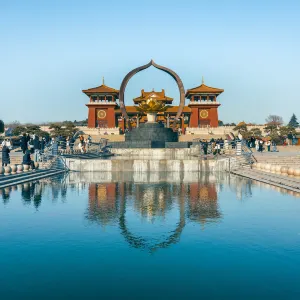

Hubu Mountain is located in the south of the ancient city of Xuzhou and is also known as Nanshan. Hubu Mountain has been famous for a long time. As far as architecture is concerned, the buildings on Hubu Mountain include Xiang Yu's Ximatai, the courtyards of officials, gentry and wealthy families, the courtyards of the urban middle class and the large courtyards of ordinary people. Among them, Li Pan's Mansion as the Number One Scholar, Cui Tao's Mansion as the Hanlin Academy, and Zhai's Courtyard are more famous and relatively well preserved. These courtyards and ancient houses record the vicissitudes of Xuzhou City for thousands of years. They are a microcosm of Xuzhou's politics, economy, and culture during the Ming, Qing and Republic of China eras. More importantly, they are the remains of the ancient city of Xuzhou.
Address: No. 2 Cuijia Lane, Pengcheng Street, Yunlong District, Xuzhou City, Jiangsu Province
Business hours: Open from 09:00 to 17:00 tomorrow (ticket sales stop at 16:30; admission stops at 16:30)
evaluate:
| Xuzhou Hubu Mountain, formerly known as Nanshan, was named after the fact that the Hubu Division Office was moved to the mountain during the Ming Dynasty. It is a typical north-south fusion of buildings. It belongs to the most core area of Qili, Pengcheng. The earliest history can be traced back to when Xiang Yu built the Ximatai here to train his troops. There was a moonlight market recently and I saw many small stalls when I first went there. |
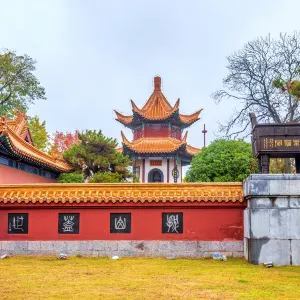

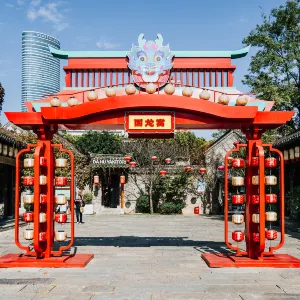
Huilongwo Historical and Cultural District in Xuzhou City is an old street with antique buildings, many snacks and a strong commercial atmosphere.
Address: No. 8 Jiefang Road, Yunlong District, Xuzhou City
Opening hours: 24 hours a day, all year round
evaluate:
| Huilongwo Historical and Cultural Block is located in the prime area south of Qingnian Road, east of Pengcheng Road, north of Jianguo Road, and west of Jiefang Road, with a total construction area of 23,000 square meters. It is surrounded by cultural relics such as the ruins of the ancient city wall of Xuzhou and Kuaizai Pavilion. The architectural style is typical of Xuzhou's traditional old residential buildings. [1] The project is a key urban construction project of Xuzhou City in 2015 and a core project in the Old Xuzhou Historical and Cultural Area. [1] Huilongwo Street District was built in the Qing Dynasty, and the oldest house is more than 200 years old. Huilongwo is located south of Qingnian Road, east of Pengcheng Road, north of Kuihe River, and west of Jiefang Road. Huilongwo is a settlement that continued from the Qing Dynasty. Surrounding it are cultural relics such as the ruins of the ancient city wall of Xuzhou and Kuaizai Pavilion. The architectural pattern is a typical Xuzhou traditional residential old building |

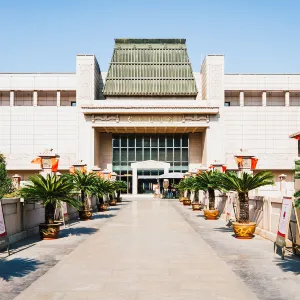
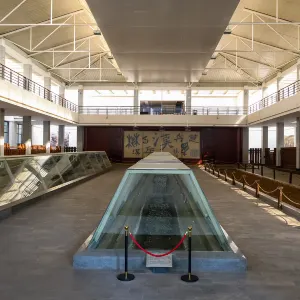
Xuzhou Museum is located at the northern foot of Yunlong Mountain. The original site was the palace of Emperor Qianlong during his southern tour in 1757. To the southwest of the museum are the remains of a Western Han Dynasty quarry, to the southeast are Qianlong's palace and stele garden, and to the north is the Tushan Han Tomb of the Eastern Han Dynasty. The museum is the core of this museum. It is said that "the culture of the Han Dynasty can be seen in Xuzhou", and the cultural relics unearthed from various Han tombs in Xuzhou are gathered in the Xuzhou Museum. The mere fact that you can see the gold-thread jade burial suit, silver-thread jade burial suit and bronze-thread jade burial suit at one time is enough to make cultural relic lovers ecstatic.
Address: No. 118, Heping Road, Yunlong District, Xuzhou City, Jiangsu Province
Business hours: Open from 09:00 to 17:00 tomorrow (admission ends at 16:00)
evaluate:
| The Xuzhou Museum is open to the public free of charge and has convenient transportation. It houses a rich collection, especially the museum's treasure, the Gold-Threaded Jade Burial Suit, which is a representative of the Han Dynasty's jade treasures. There are also many Han Dynasty jade, gold and other cultural relics. Here, visitors can gain an in-depth understanding of Xuzhou's long history and profound cultural heritage through each exhibit, as if traveling through time and space and having a conversation with ancient civilization. It is an important window for understanding Xuzhou's history and culture. |

Yunlong Lake is located in the city center. The scenic area has vast lake waves and lush mountains. It has attracted many travelers throughout the ages. Su Shi, a writer in the Northern Song Dynasty, fell in love with this lake when he was the prefect of Xuzhou. Today, the Yunlong Lake's East Lake Scenic Area focuses on water activities and sightseeing, the West Lake Scenic Area focuses on recuperation and vacation, and the Hunan Lake Scenic Area focuses on entertainment and hotels. There are also children's water parks, beach bathing areas, 10,000-person swimming pools, etc., which are suitable for the whole family to come here for a leisure vacation.
Address: Huzhong Road, Quanshan District, Xuzhou City, Jiangsu Province
Opening hours: 24 hours a day, all year round
evaluate:
| As a 5A-level scenic spot, Yunlong Lake has charming scenery with mountains and water, and beautiful views to be enjoyed in all four seasons. There are no traces of excessive artificial carving here, and the natural atmosphere is strong. Visitors can stroll along the lake, enjoy the beautiful scenery and feel the leisurely and comfortable feeling; they can also experience boat trips and other activities to add to the fun of the trip. The surrounding supporting facilities are complete, Yunlong Lake is an excellent choice whether for a leisurely walk or a vacation. |


The Xuzhou Han Culture Scenic Area is located on Ma Terracotta Road, Yunlong District, Xuzhou. It is mainly composed of two parts: the core area and the extended area. The core area consists of classic attractions related to the Han culture such as the Lion Mountain Chu King's Mausoleum, the Han Terracotta Warriors and Horses Museum, and the Underwater Terracotta Warriors and Horses Museum. The extended area includes the Han Culture Square, chess and tea garden, archaeological simulation base, grass skiing field and other entertainment and leisure projects.
Address: No. 1, Terracotta Warriors Road, Yunlong District, Xuzhou City, Jiangsu Province
Business hours: 08:30-17:00 in winter (ticket sales stop at 16:30), 08:30-17:30 in summer (ticket sales stop at 17:00)
evaluate:
| The scenic area integrates historical culture, natural scenery and tourism and leisure. There is the Han Culture Museum which displays a large number of Han Dynasty cultural relics, Han Dynasty terracotta warriors and horses of various shapes, ruins showing the iron smelting technology of the Han Dynasty, and a shooting experience area where tourists can experience the fun of ancient archery. Wandering in the scenic area, you can not only explore historical relics and feel the charm of Han culture, but also taste Xuzhou's special food and enjoy a leisurely travel time. It is an ideal place to experience Han culture. |

Popular recommendations

Prince Harry Joins Ctrip Group Global Partners Conference: Advancing Sustainable Travel Together
 TripBlog
Latest Trip.com Promo Codes, Flight Discounts & Hotel Savings (Weekly Update)
 Trip.com Official
6 Things to know before Exploring the Montmorency Falls, Quebec
TripBlog
2026 Guide to Shanghai Pudong Airport: Transit Visa & PVG Airport Shuttle
TripBlog