2026 Shouyang Travel Guide: must-see attractions, popular food, hotels, transport & travel experiences (updated in February)
Essential Travel Information for Shouyang
Shouyang Today's weather
Hazy -11-6℃
All Trip Moments about Shouyang | Travel Experiences
Xing Junqin Art Museum in Heishui Village, Shouyang, Shanxi
The Xing Junqin Art Museum is located at the foot of Luquan Mountain in Shouyang County, Jinzhong City, Shanxi Province, known as the "Hometown of Three Generations of Imperial Teachers and a Blessed Land for Chinese Health Preservation." It is adjacent to the national cultural relic protection unit Futian Temple. The museum is a comprehensive art hall integrating art exhibition, collection, research, training, and education functions. The museum was designed by Taiyuan University of Technology, constructed by Shouyang Guangda Construction Co., Ltd., and decorated by Shanxi Jingchangsheng Construction Engineering Co., Ltd. Groundbreaking took place in May 2023, and it is scheduled to open in July 2024. The total area covers more than 2,600 square meters, with an investment of approximately 20 million yuan. The museum is divided into two main areas: a multifunctional exhibition hall and an artist studio. The multifunctional exhibition hall covers 1,300 square meters of land with a building area of over 1,900 square meters; the attached artist studio covers 1,300 square meters of land with a building area of 1,889 square meters. The entire exhibition space across two floors of the museum exceeds 3,000 square meters. The museum is named after the internationally renowned oil painter Mr. Xing Junqin, who hails from Shouyang. The completion of the museum will establish it as an international art exchange base, a fieldwork creation base for artists, an art training base for students, a popular destination for tourists, and a model site for rural revitalization, thereby promoting the development of contemporary art.VictoriaMcDermott99Futian Temple in Heishui Village, Shouyang, Shanxi
Futian Temple, also known as Futian Courtyard, is located in Heishui Village, Pingtou Town, Shouyang County, Jinzhong City, Shanxi Province. It was originally built during the Tang Dynasty, destroyed by fire during the Jin Dynasty, and rebuilt in the fourth year of Zhishun in the Yuan Dynasty (1333). The temple faces south and is divided into two parts: the temple buildings and the monks' quarters, covering an area of about 1,053 square meters. There are currently 14 halls of various sizes, symmetrically arranged along the central axis, including the main hall, the passage hall, and the east and west side halls, arranged in a single courtyard layout. The central axis features the mountain gate and the main hall, with east and west wing rooms on both sides. Futian Temple is a Yuan Dynasty building with a definite construction date. The structural materials and construction techniques reflect the characteristics of Yuan Dynasty architecture. It is a well-preserved architectural masterpiece from the Yuan period with high research value. It is a nationally protected key cultural relic.VictoriaMcDermott99Luohan Temple, Duanwang Village, Shouyang, Shanxi
Luohan Temple covers an area of 1,438.7 square meters. Its founding date is unknown. The main hall and the intermediate hall are Yuan Dynasty buildings, while the mountain gate dates back to the Ming Dynasty. The temple faces south and is arranged in two courtyards along a central axis from south to north, with the mountain gate, intermediate hall, and main hall in sequence. To the east of the mountain gate is a bell tower. The first courtyard has side rooms on both the east and west sides, and the second courtyard has an east annex hall. The beams inside the intermediate and main halls are decorated with colorful paintings of objects and plants. Duanwang Village Luohan Temple is one of the better-preserved temples in Shouyang County, integrating architectural techniques from the Yuan, Ming, and Qing Dynasties. It retains craftsmanship and historical cultural information from various dynasties, serving as an example for studying the development of architectural structures. It is a key cultural relic protection unit in Shanxi Province.VictoriaMcDermott99Zong'ai Ancient Village, Shouyang, Shanxi
Zong'ai Village was established during the Han Dynasty. Since then, it has been known by five different names: Aihaozui, Malianqu, Wuhuai Tree, Shang'ai, and Zong'ai. Later, local scholars named it Zong'ai, meaning "comprehensive." During the Tai Kang period of the Western Jin Dynasty, after Shouyang County was established, Zong'ai belonged to Shouyang. In the Xiaochang period of the Northern Wei Dynasty, Shuozhou was placed under the jurisdiction of Shouyang County, and Zong'ai served as the seat of Shenwu Commandery of Shuozhou. In the 10th year of the Kaihuang era of the Sui Dynasty (590), Shouyang County was re-established, and Zong'ai was part of Shouyang. During the Ming Dynasty, under the Lijia system, Zong'ai belonged to Shouyang County. In the early Qing Dynasty, the area was under Taiping Township. Zong'ai Ancient Village is renowned for its rich Jin merchant culture and well-preserved ancient architecture. With a profound historical background, the village retains 11 ancient streets and alleys, 65 deep courtyard mansions, and historical relics such as the Five Dragons Holy Mother Temple, reflecting the merchant tradition of "suffering losses is a blessing." The architectural features are prominent, including the Wenchang Tower and Kuixing Building, which integrate brick carving, wood carving, and stone carving arts, showcasing the essence of Jin merchant culture. It is listed as part of the fourth batch of China's traditional villages.VictoriaMcDermott99Qizunzao's Hometown in Shouyang, Shanxi
Qizunzao's Hometown is located between Pingshu Village and Longmenhe Village in Shouyang County, Shanxi Province. It is a complex of ancient-style buildings, mainly adopting the courtyard layout of the Qing Dynasty, covering an area of 2,006 square meters. The complex includes typical elements such as a three-bay suspended gable gate, an eight-character screen wall, and a Jinshui Bridge. In front of the gate stands a three-section stone flagpole with doujia'er brackets, symbolizing the highest official rank. The core of the complex is the Qizunzao Memorial Hall, built in 2007. The hall displays the family's achievements in the imperial examination system, including "one family with five successful candidates and three generations with four Hanlin scholars," as well as the historical deeds of "three generations of imperial tutors" (Daoguang, Xianfeng, Tongzhi). Exhibits include academic works such as "Mashou Nongyan" and cultural relics and calligraphy. The scenic area integrates traditional architecture with modern display technology through seven functional zones, featuring scenic spots like Hanlin Avenue and Tengjiao Qifeng Tower. It is a national 3A-level scenic area.VictoriaMcDermott99Longmenhe Ancient Village, Shouyang, Shanxi
Longmenhe Village is a traditional village with a history of over 700 years. The village currently preserves ancient sites and buildings covering a total area of 70,000 square meters, including religious complexes such as Chongfu Temple, Longtian Temple, and Zhenwu Temple. It also features eight provincial-level cultural heritage units, including the Four-Story Courtyard and Longmen Ancient Pavilion. There are 59 traditional Ming and Qing dynasty residences with protective value, characterized by suspended gable roofs and brick-carved screen walls. It is recognized as a Chinese Historical and Cultural Village and is part of the fourth batch of Chinese traditional villages.VictoriaMcDermott99Wang Family Courtyard in Longmenhe Village, Shouyang, Shanxi
The Wang Family Courtyard is located right next to the right side of the fortress gate in Longmenhe Village. Because it is a compound courtyard structure, the main courtyard has multiple large gates. There is a main gate facing the village street and another main gate facing outside the village. Several courtyards are connected left or right, front or back, with each courtyard linked to the next and gates interconnected. They face different directions and each has a distinct style. It is said that this was built in the mid-Qing Dynasty by Wang Wuke, an official in charge of royal ancestral temple architecture and a native of Longmenhe Village, Shouyang. Since the courtyard owner was skilled in architecture and painting, all the houses and streets are arranged meticulously, with carefully selected materials and exquisite craftsmanship. The exterior walls of the cave dwellings inside the courtyard are elegant and simple. The main cave features a wooden structure porch combined with brick walls, where the brick walls and protruding wooden structures complement each other, achieving both visual aesthetics and practical value. Standing in front of the gate, through the screen wall opposite, the flat plains in front of the village and the Qijunzao Scenic Area across are clearly visible. Compared to the tall courtyard walls, the main gate is not overly ostentatious but very delicate, with exquisite wood carvings and fine paintings. What is even more special is that the two corners of the corridor eaves curve upward like the wings of a bird flying high in the sky. The grandeur of the courtyard can be seen from the gate and walls. It is an immovable cultural relic of Shouyang.VictoriaMcDermott99Lingjing Tower, Mengjiagou Village, Shouyang, Shanxi
Lingjing Tower is located about 100 meters east of Longquan Temple on Wufeng Mountain. It is an octagonal, thirteen-story pavilion-style brick tower, with a total height ranging from approximately 15 to 25 meters. The tower body is slender and elegant like a pen, with the diameter at the base and the top being nearly the same, earning it the description of a "masterpiece of tower construction." The tower door is shaped like a lotus throne, with brick carvings of the characters "Haitianchi" (Sea and Sky Pool) above the door. On both sides are decorations featuring a rhinoceros gazing at the moon and the Jade Rabbit with Chang'e. The tower body also embeds a stone plaque inscribed with "Lingjing Tower" by the late Ming and early Qing dynasty thinker Fu Shan. In front of the tower stands a brick archway-style gate with a plaque inscribed either "Palace Dwelling of Chang'e" or "Chang'e Dwelling Palace," reflecting a fusion of Buddhist, Taoist, Confucian, and folk cultures. The origin of Lingjing Tower is debated; some sources claim it was first built during the Ming dynasty, but the existing architectural style is closer to that of the Qing dynasty. It was rebuilt in the 23rd year of the Republic of China (1934). The tower body is constructed of blue bricks, with the foundation and base made of sandstone. The tower top features an eight-sided sloping helmet shape, with a stone-carved lotus seat. On top of the lotus petals lies a black glazed treasure vase, while the original top finial may have been a stone-carved pearl or a glazed gourd. Lingjing Tower has a hollow interior with openings on the outside. Inside, a staircase allows visitors to ascend. The tower’s core chamber is octagonal, and the stairway is a narrow, winding, wall-embedded design. Each floor of the tower alternates between real and false doors. The twelfth floor transitions into a pavilion-style structure, with a wooden imitation gate tower on the southeast side. The uniquely curved eaves create a concave visual effect on the tower body. The tower is richly decorated with brick carvings, including patterns of musical instruments, chess, calligraphy, and painting. The tower corners originally featured stone-carved Dharma wheels. Lingjing Tower is closely associated with Fu Shan, a thinker from the late Ming and early Qing dynasties. The inscription of "Lingjing Tower" and the couplets on the tower door were handwritten by him. Fu Shan once lived here in seclusion, engaging in anti-Qing activities and providing medical care to the people. The temple preserves his cursive script stone inscriptions, such as the "Wufeng Mountain Cursive Script Stele," which involves calligraphy art and innovation. The tower’s name "Lingjing" derives from "Ling," meaning towering, and "Jing," meaning clear spring, symbolizing clear and towering spring water. The tower’s shadow is said to point directly to the "Inkstone Tomb" across the river, symbolizing the flourishing of literary culture.VictoriaMcDermott99Longquan Temple in Mengjiagou, Shouyang, Shanxi
Longquan Temple faces east and covers an area of more than 2,400 square meters. The architectural complex is built along the mountain terrain, consisting of seven levels arranged vertically. It mainly follows a symmetrical layout along the central axis, which from east to west includes: the stage, the mountain gate (a first-level cave dwelling), the passage hall, the eave cave dwelling, and the Jingyue Pavilion. There are a total of 37 stone cave dwellings and 49 brick-wood structure rooms. Construction of Longquan Temple began in the Tianqi period of the Ming Dynasty and was gradually improved during the Qing Dynasty and the Republic of China, reaching its current scale. The entire complex is built in harmony with the mountain's natural form and adapted to the terrain. Fifty meters north of Longquan Temple stands the Lingjing Pagoda. It is a nationally protected key cultural relic.VictoriaMcDermott99Pu Guang Temple in Baidao Village, Shouyang, Shanxi
Pu Guang Temple's founding date is unknown. The existing main hall is a relic from the Song Dynasty, while the rest of the buildings date from the Ming and Qing Dynasties. The temple faces south and covers an area of 1,111.43 square meters. It features a single courtyard layout with only the main hall remaining on the central axis, flanked by east and west wing rooms, auxiliary halls, and side rooms. The main hall sits on a stone platform 1.3 meters high, with a width of three bays and a depth of six purlins. It has a single-eave hard mountain roof and a seven-purlin front porch structure. The beam frame consists of four purlins with four columns supporting the front and rear, with dougong brackets arranged in four layers with single downward angles. The column heads are curled, and the main entrance on the front eave of the central bay has wooden doors, while the adjacent bays have straight lattice windows. Inside the hall, the east, west, and north gable walls feature over 120 square meters of Ming Dynasty fine brush and heavy color Buddhist murals. Pu Guang Temple provides tangible evidence for the study of ancient Chinese architecture and holds significant historical, scientific, and artistic value. It is a nationally protected key cultural relic.VictoriaMcDermott99Shouyang Longqi Lake—A Serene Haven of Azure Waters Reflecting the Sky
Longqi Lake lies quietly in the valley of Shouyang Mountain, its surface as smooth as a mirror, reflecting the ever-changing clouds above. Upon first sight of the lake's shimmering blue, I was deeply moved by its clarity. Willow branches droop along the shore, and gentle breezes stir ripples across the water, resembling dragon shadows dancing beneath the surface. Encircled by distant mountains, this place feels like a natural sanctuary, untouched by the outside world. On the lakeside path, wildflowers sway in the wind, and a few white egrets skim across the water, creating a scene reminiscent of poetry. As you row to the center of the lake, the whispers of the wind and water are all that remain, while the clamor of daily life fades away completely. Longqi Lake is not just a picturesque landscape; it is a moment of tranquility, teaching us how to rediscover inner peace within the embrace of nature.栗栗子The Literary Essence: The Spiritual Homeland of Qi Junzao
Stepping into the hometown of Qi Junzao in Shouyang County feels like being surrounded by the aura of scholarly refinement. The serene courtyards with gray bricks and black tiles stand quietly, while the couplets on the door exude an elegant charm, reflecting the spirit and character of this great Confucian scholar of the Qing Dynasty. Renowned for his philosophy of governance and benefiting the people, walking through his former residence evokes a sense of his lifelong integrity and uprightness. The interplay of light and shadow through the window frames seems to still capture his figure as he wrote and debated, inspiring deep respect. Here, it is not merely a visit to the residence of a historical figure; it feels more like a dialogue with history itself. Every brick and tile in the courtyard carries the weight of time, and the letters and calligraphy in the exhibition hall reflect the scholar's noble aspirations. Strolling through the site, one is reminded that true cultivation lies not only in profound knowledge but also in a heartfelt concern for the world. Upon leaving, the lingering echoes of ancient melodies seem to resonate in the ears, leaving a lasting impression.栗栗子Lengquan Temple Travel Guide | Hidden Gem.
| Hidden Gem.✨Today, I'm going to share a great travel destination with you—Lengquan Temple👏. Attraction Introduction Lengquan Temple is located in the Xizhou Mountain Range, southwest of Shouyang County, Jinzhong City, and has a history of over 500 years. It is named after a spring on the mountain, which flows continuously due to the high altitude and cold climate of Shouyang Mountain. The main building is the Mahavira Hall, which houses many precious Buddha statues and cultural relics, such as the seated statue of Sakyamuni from the Tang Dynasty. Activities - 🌊Camping & BBQ: This is a great place for camping and BBQ. The riverside site is open and shady. You can bring your own tents, BBQ grills, and ingredients, or you can buy charcoal and other items on site. Villagers also sell fishing nets and water guns for fishing, which are very suitable for family trips. - 🎣Water Play & Fishing: The river is clear, and the shallows allow children to play in the water and catch fish and shrimp. If you're lucky, you might even catch a small crab. - 🚂Sightseeing & Train Watching: The surrounding mountain scenery is beautiful, lush and green, with terraced fields. Occasionally, a train passes by, adding a unique charm to the scenery. Transportation Lengquan Temple is not very accessible, so it is suitable for self-driving🚗. It takes about an hour and a half to get there from Taiyuan. Just navigate to Lengquan Temple, and you can park your car by the river. Fees & Precautions - 💰Fees: A small sanitation management fee is required for camping and BBQ, which is reasonable, usually about CNY 5 per person. - 🚫Precautions: Pay attention to safety during the trip, do not go to deep water; take your trash with you and protect the environment. In short, Lengquan Temple is a great place for weekend or holiday trips, where you can get away from the hustle and bustle of the city and enjoy the beauty of nature🌈.EG. Sol 30In Zhuhai, there's a little-known ancient village that's perfect for photography
Few people are aware that in Zhuhai's Doumen, there lies a secluded little village! If you enjoy strolling through old streets and alleys, experiencing the local rural culture, I recommend visiting this place. It's really great for taking photos‼️ Before coming, I saw quite a few online complaints, and after arriving, I could understand everyone's points of criticism. Mainly, some shops were not open, and the food, drinks, and entertainment options introduced in online pictures were only partially available. Overall, it's a suitable place for a family weekend getaway. 🎈Navigation: Xia Zhou Village, Zhuhai 🎫Ticket: Free 📍Address: Xia Zhou Village, Doumen, Zhuhai 🅿️Parking: Free ❗Travel tips: ❶ There are two parking spots available. You can park at the 'Doumen Impression Town Service Center' parking lot. After getting out of the car, follow the colorful road markings on the ground and walk for about 10 minutes to arrive. Along the way, you can see the scattered old houses and alleys. ❷ The other option is to park inside the village, a 5-minute walk will get you there. ❸ Food: Sweet soups, coffee shops, popular lemon tea, beef offal, fried glutinous rice chicken, roasted pigeon, clay pot rice, herbal tea houses. ❹ Free shadow puppet play is available, and the shopkeeper mentioned that during the New Year period, there will be more hands-on craft activities to experience, and the folk culture will be more intense. ❺ You can rent Hanfu costumes at the Hanfu Pavilion and take photos in the ancient alley. Wearing Hanfu here is very fitting, and it captures the ancient cultural atmosphere perfectly.MONICA TAYLOR

Popular Travel Topics in Shouyang
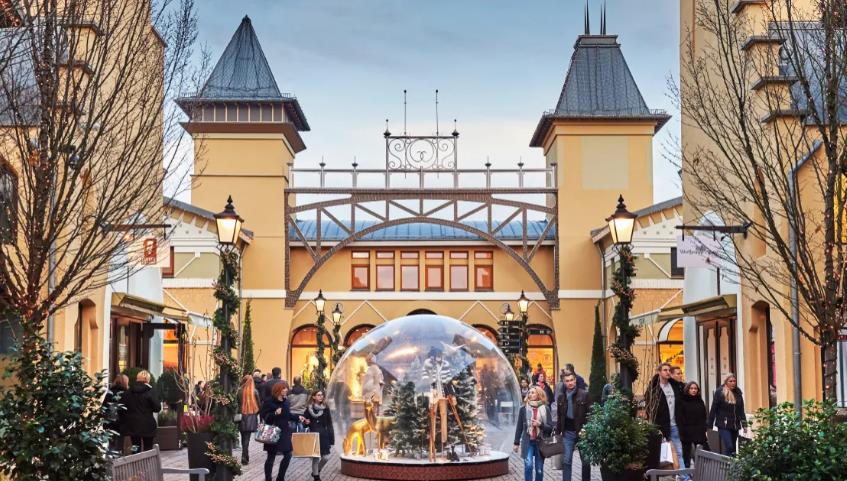
2026 Recommended Attraction in Shouyang (Updated February)
14 posts

2026 Recommended Guides in Shouyang (Updated February)
10 posts

Popular Destinations Near Shouyang

2026 Datong Travel Guide: must-see attractions, popular food, hotels, transport & travel experiences (updated in February)
2231 posts

2026 Taiyuan Travel Guide: must-see attractions, popular food, hotels, transport & travel experiences (updated in February)
1955 posts
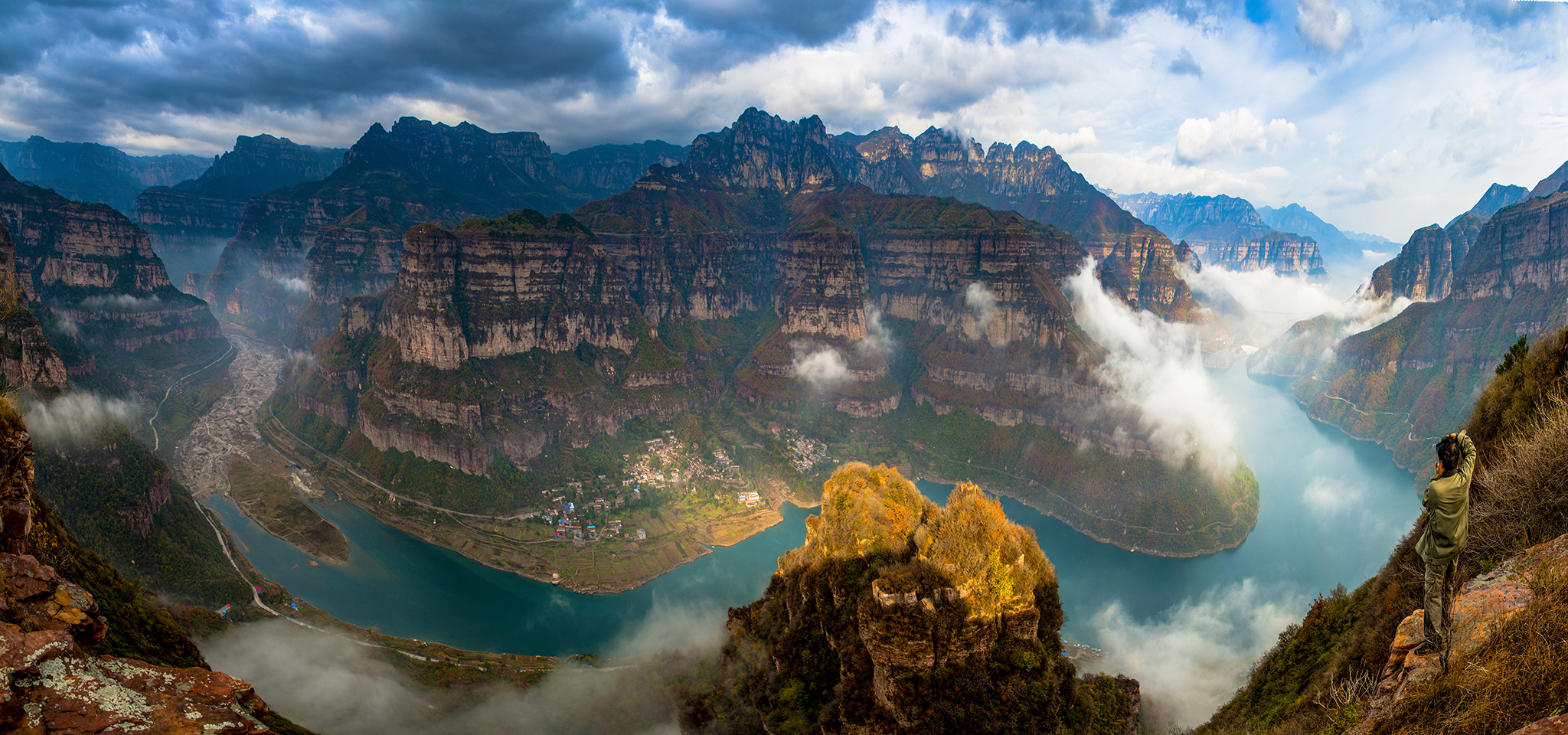
2026 Anyang Travel Guide: must-see attractions, popular food, hotels, transport & travel experiences (updated in February)
225 posts
Post
More recommendations
Popular Trip Moments
Xing Junqin Art Museum in Heishui Village, Shouyang, Shanxi | Futian Temple in Heishui Village, Shouyang, Shanxi | Luohan Temple, Duanwang Village, Shouyang, Shanxi | Zong'ai Ancient Village, Shouyang, Shanxi | Qizunzao's Hometown in Shouyang, Shanxi | Longmenhe Ancient Village, Shouyang, Shanxi | Wang Family Courtyard in Longmenhe Village, Shouyang, Shanxi | Lingjing Tower, Mengjiagou Village, Shouyang, Shanxi | Longquan Temple in Mengjiagou, Shouyang, Shanxi | Pu Guang Temple in Baidao Village, Shouyang, Shanxi | Shouyang Longqi Lake—A Serene Haven of Azure Waters Reflecting the Sky | The Literary Essence: The Spiritual Homeland of Qi Junzao | Lengquan Temple Travel Guide | Hidden Gem. | In Zhuhai, there's a little-known ancient village that's perfect for photography
Popular Destinations
Mendrisio Travel | Athens County Travel | Stonnington City Travel | Hamilton Travel | Baghdad Travel | Tucson Estates Travel | HaArava Region Travel | Isola delle Femmine Travel | Baronissi Travel | Willoughby Travel | Chioggia Travel | Pateley Bridge Travel | Toms River Travel | Khargone Travel | Delicias Travel | Kawaguchi Travel | Cartagena Travel | Millcreek Travel | Ultimo Travel | Bucaramanga Travel | Acireale Travel | Nizhny Novgorod Oblast Travel | Summerside Travel | Ruse Province Travel | Sargent's Purchase Travel | Brussels-Capital Region Travel | Mate Yehuda Travel | Carnac Travel | Lanling Travel
Recommended attractions at popular destinations
Popular Attractions in Bangkok | Popular Attractions in Manila | Popular Attractions in Tokyo | Popular Attractions in Taipei | Popular Attractions in Hong Kong | Popular Attractions in Seoul | Popular Attractions in Kuala Lumpur | Popular Attractions in Los Angeles | Popular Attractions in Shanghai | Popular Attractions in New York | Popular Attractions in Shenzhen | Popular Attractions in Osaka | Popular Attractions in Singapore | Popular Attractions in London | Popular Attractions in Guangzhou | Popular Attractions in San Francisco | Popular Attractions in Beijing | Popular Attractions in Macau | Popular Attractions in Bali | Popular Attractions in Jakarta | Popular Attractions in Paris | Popular Attractions in Ho Chi Minh City | Popular Attractions in Istanbul | Popular Attractions in Phuket | Popular Attractions in Chicago | Popular Attractions in Seattle | Popular Attractions in Toronto | Popular Attractions in Orlando | Popular Attractions in Cebu | Popular Attractions in Chiang Mai
Popular Restaurants in Shouyang
飘飘香过桥米线(博大街店) | Shouyang Chaoyang Pavilion | 圣点烘焙(博大街店) | 川娃子小吃林(府东街店) | DE XIANG JU CHUAN CHUAN XIAN SHENG | 玩味时尚休闲餐吧(博大街店) | 李记肉夹馍 | 德克士(一品餐厅) | 东北铁锅部落主题餐厅(宾阳路店) | 甜蜜梦想蛋糕店 | 重庆鸡公煲(城内店) | Jintoubanaoliuyiguo (quanguoliansuoshouyangfen) | 圣点烘焙(物流店) | 正新鸡排·炸鸡烧烤(寿阳世宇店) | 亮儿烧烤老砂锅(嘉华鑫城A区店) | 宋师傅鱿鱼烧烤 | Bashulaodazhibao Fish (shouyang) | Nongjialaobingbantangcun (shouyang) | 川友缘冒菜馆(福田路店) | 农家糊嘟王印象餐厅(东安小区店) | Chenshidaxia | 哈尔滨烧烤(寿阳店) | 五谷渔粉(福田路店) | 壹品阁私家菜 | Yuexinculiangcun | 南燕竹陈记猪头肉 | 滋鱼(寿阳店) | 大嘴巴冒菜 | 勾魂小串(博大街店) | 吉客匠心烘焙
Popular Ranked Lists
Top 50 Must-Visit Restaurants in Prague | Popular Premium Hotels in Pokolbin | Popular Premium Hotels in New Hampshire | Top 10 Best Things to Do in Chifeng | Top 50 Must-Visit Restaurants in Jingdezhen | Top 50 Must-Visit Restaurants in Yangshuo | Top 50 Must-Visit Restaurants in Lingshui | Top 50 Must-Visit Restaurants in Liuzhou | Top 20 Best Things to Do in Canton of Zurich | Popular Best Things to Do in Taoyuan | Popular Premium Hotels in Raigad | Popular Best Things to Do in Esztergom | Popular Premium Hotels Near Delaware County | Popular Premium Hotels in Ibaraki Prefecture | Popular Premium Hotels Near Midland County | Top 20 Best Things to Do in Southern Region | Top 20 Best Things to Do in Tbilisi | Top 10 Best Things to Do in Okinawa City | Popular Premium Hotels in Suffolk Park | Popular Premium Hotels in Nakhon Pathom Province | Top 50 Must-Visit Restaurants in Xichang | Popular Best Things to Do in Tongdao | Top 50 Must-Visit Restaurants in Nantong | Top 50 Must-Visit Restaurants in Changchun | Top 20 Best Things to Do in Lanzhou | Popular Premium Hotels in Tsaghkadzor | Top 50 Must-Visit Restaurants in Taiyuan | Popular Best Things to Do in Cape Otway | Top 10 Best Things to Do in Kanazawa | Top 10 Best Things to Do in Bursa Province
About
Payment methods
Our partners
Copyright © 2025 Trip.com Travel Singapore Pte. Ltd. All rights reserved
Site Operator: Trip.com Travel Singapore Pte. Ltd.
Site Operator: Trip.com Travel Singapore Pte. Ltd.