Anyuan

Things to do in Anyuan

Search attractions or local attractions & tours
Search

Explore top experiences

Top 10 attractions in Anyuan

View all Attractions
Dongshengwei

Dongshengwei

4
4.3/5
86 reviews

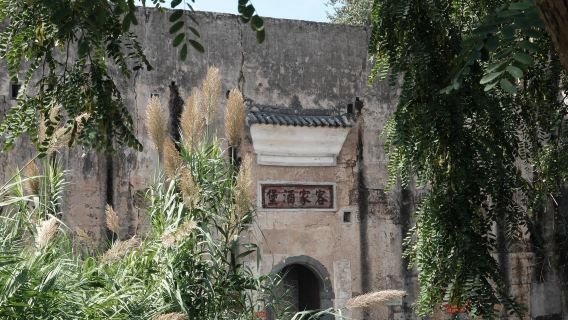
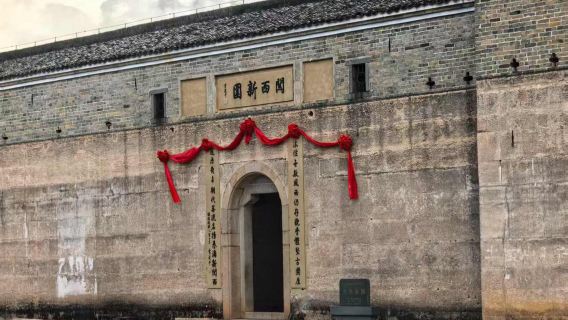
Dongshengwei is located in Laowei Village, Zhengang Township, 20 kilometers south of Anyuan County. It was built by local tycoon Chen Langting in the 22nd year of Daoguang in the Qing Dynasty (1842) and completed in the 7th year of Tongzhi (1868). Dongshengwei is a typical representative of walled houses in southern Jiangxi. Its exterior walls are made of bricks, the indoor and outdoor floors are all paved with pebbles, and the solid gun tower is unique in construction. It is the only Hakka walled house and is an indispensable and important material for studying the types of walled houses in southern Jiangxi. Dongshengwei is rectangular and faces east and west. It consists of a courtyard and a gatehouse, with a total area of ​​about 9,270 square meters. The courtyard is composed of four floors on the front, three floors on the east, south and north sides, and four corner turrets. The 7-hole gate is lined up on the front, and the middle gate is inlaid with brick carvings of "Dongshengwei" in three regular characters. The first and second floors are inlaid with stone dou windows. The outer wall is 1.3 meters thick. The "gold wrapped silver" wall method is adopted. The outer skin is built with blue bricks, and the inner skin is built with earth bricks. The top floor is built to form a passage around the whole enclosure, commonly known as "Zou Ma Lou". The outer wall of the courtyard and the turret are all built with blue bricks in a hard mountain form. There are 199 two-story earth brick buildings in the enclosure, with three halls as the central axis, forming a grand building group of "nine wells and eighteen halls". The hall is gorgeously built, with a raised beam roof frame, and the brackets, screens, and wooden windows are all finely carved with dragons and phoenixes, animals, flowers, and historical story characters. The outer gate is a brick-built, four-pillar, three-room, three-story archway-style gatehouse with the words "The Scenery Is Always New" written in regular script on the door lintel.

Anyuan · 16.3 km from downtown
Kulangsu
2026 Asia 100 - Best Things to Do

Kulangsu

8.7
4.5/5
54.6k reviews

Kulangsu is located in the southwest corner of Xiamen, Fujian Province, facing Xiamen Island across the Lujiang Strait. The island covers an area of about 1.88 km² and is a "garden on the sea, island of pianos, and exhibition of architecture from around the world" that blends nature with culture. In 2017, it was inscribed on the World Cultural Heritage List as "Kulangsu, a Historic International Settlement." The island is a bedrock island with a winding coastline and many natural harbors and reefs; its terrain is mainly hilly, with the highest peak, Sunlight Rock, at 92.7 m above sea level. It has a subtropical maritime monsoon climate, warm and humid, with spring-like weather all year round, making it suitable for visiting throughout the year. Motor vehicles are prohibited on the island, so there is no noise of traffic—only birdsong, flowers, waves, and piano music. Hundreds of historic buildings from the late 19th century to the mid-20th century still stand, spanning Gothic, Victorian, Baroque, Nanyang arcade, and traditional Minnan courtyard styles, and are acclaimed as a "World Architecture Expo" and a living specimen of a modern East Asian international community. Representative buildings include the Bagua Mansion (Organ Museum), Shuzhuang Garden, Haoyue Garden, the former site of the HSBC Mansion, Trinity Church, and the former residence of Lin Yutang. The island has a profound musical cultural heritage. Since the late Qing Dynasty, Western music was introduced through missionary schools. The density of pianos on the island has long ranked among the highest in the country, and musical masters such as Yin Chengzong and Xu Feiping were born here, earning it the reputation of "Island of Pianos" and "Island of Music." The Piano Museum houses century-old antique pianos, and the Organ Museum holds a giant pipe organ. Piano music is often heard among the streets and alleys, and the tradition of family concerts continues to this day. The core attractions on the island each have their own distinctive features. Sunlight Rock is the highest point on the island; from the summit, visitors can enjoy a 360° panoramic view of the entire island, Xiamen main island, and the Taiwan Strait, and there is a saying that "you haven't truly visited Xiamen until you've climbed Sunlight Rock." Shuzhuang Garden was the private residence of the wealthy Taiwanese merchant Lin Erjia, designed to "hide the sea within the garden and embrace the mountains as scenery," blending Jiangnan garden aesthetics with mountain and sea views; the garden's Piano Museum houses nearly a hundred antique pianos. Haoyue Garden features a 15.7 m tall granite statue of Zheng Chenggong facing the sea, built to commemorate the national hero who recovered Taiwan. Bagua Tower is a landmark building on the island, blending Chinese and Western architectural aesthetics, and houses hundreds of antique organs. Yuyuan Garden, Gulang Stone, Yanwei Mountain Ecological Park, and other cultural and natural attractions are scattered across the island, linking together a century of charm and the poetry of mountains and sea. Tour tips Island access: You need to take a ferry from the ferry terminal on Xiamen Island to get there. There is no general admission ticket; core attractions require separate tickets or a combo ticket. Mode of travel: Walking tours across the island; paid sightseeing electric carts are available; motor vehicles are prohibited. Recommended season: suitable all year round; spring and fall (April-May, October-November) offer comfortable weather and blooming bougainvillea, making the scenery especially beautiful.

China · Xiamen
Xiamen Botanical Garden
No. 2 of Family-friendly Attractions in Fujian

Xiamen Botanical Garden

8.4
4.6/5
19.2k reviews

Xiamen Botanical Garden is located in Wanshi Mountain and built around the Wanshi Rock Reservoir (now Wanshi Lake). The lake and mountain scenery within the garden complement the lush vegetation, forming the famous Xiamen attraction "Wanshi Hancui." The botanical garden features multiple specialized exhibition areas organized by plant category, among which the rainforest world and the succulent plant area are particularly outstanding. The rainforest world, while preserving the original natural vegetation, has introduced a large number of tropical rainforest plants, displaying rainforest characteristics such as strangler figs, cauliflory, and buttress roots. In addition, a misting system fills the forest with water vapor, making visitors feel as if they are walking through a fairyland. The succulent plant area includes three indoor exhibition halls—the cactus exhibition hall, the succulent plant exhibition hall, and the forest-dwelling succulent plant exhibition hall—as well as an outdoor exhibition area simulating a desert environment. It has collected thousands of succulent species, and its variety of cacti ranks among the top of similar domestic exhibition halls, with the tall Wulun columns and golden barrel cactus clusters being quite spectacular. The gymnosperm area gathers rare tree species such as golden larch, cedar, Norfolk Island pine, and the so-called living fossils metasequoia and ginkgo. In addition to the botanical scenery, the garden is also dotted with numerous cultural relics. "Taiping Stone Laugh," naturally formed by four huge boulders into the shape of an "open-mouthed laugh," is one of the twenty famous attractions of Xiamen; the walls of the Changxiao Cave on the hill behind Tianjie Temple are inscribed with poems by Ming dynasty generals who campaigned against Japanese pirates, and the site is a municipal-level cultural relic protection unit; historical remains such as Wanshi Lian Temple, the New Stele Forest, and the ancient Qiaoxi Bridge each have their own charm. Not far from the main entrance at the West Gate is the Norfolk Island pine lawn, from which visitors can conveniently reach the major scenic areas.

China · Xiamen
Zhonggu Cableway
No. 5 of Best Things to Do in Fujian

Zhonggu Cableway

8.1
4.6/5
8.1k reviews

The Zhonggu Cableway is an elevated sightseeing cable car spanning the Wanshi mountains in Xiamen. Its lower station is located near the west gate of Xiamen botanical garden and the Zhonggu Mountain tunnel entrance. The route passes the botanical garden, Huxi Rock, and Hongshan area, extending all the way to the Wulao Peak behind Nanputuo temple, covering over 1,000 m in total. The cable car features semi-open two-person gondolas without window panes, offering unobstructed views where mountain breezes brush past your face. Once seated, you'll be suspended above layers of greenery and city rooftops. The round-trip itinerary takes approx. 40 mins. Upon reaching the terminal station, the train returns along the same route without requiring transfers. From this elevated vantage point, you can take in Xiamen's mountains, sea, and cityscape all at once: below lies the lush forest and rugged rocks of the botanical garden, while a turn of the head reveals the temple eaves of Nanputuo temple. In the distance, Gulangyu island, the twin towers, and the open sea unfold in sequence—on clear days, you can even spot the islands toward Kinmen. Along the way, the train passes original wartime tunnels and wind-eroded boulders, adding a touch of historical ambiance to this aerial journey. For a more enjoyable experience, you may choose the departure time slot around sunset when the sea and city skyline under the evening glow make for particularly stunning photos. This time slot is often in high demand. The cable car baskets are open on all sides, so travelers who are sensitive to wind should pick a clear and less windy day. The cable car may suspend operations in case of strong winds, thunderstorms, or other adverse weather conditions. It is advisable to check the day's situation before departure.

China · Xiamen
Gaoyiling Tourist Area
No. 16 of Best Things to Do in Hunan and Hubei

Gaoyiling Tourist Area

8
4.5/5
5.3k reviews

Gaoyiling Tourist Area is a natural attraction centered on Danxia landforms. Unlike many Danxia views that feature only mountains without water, this area's red cliffs and crimson rock faces are dotted with emerald pools, and the lake at the foot of the hills is as clear as jade. Viewed from above, dark green pools encircle the crimson ridges, often vividly likened to a "heavenly lake" embracing an "octopus," with the contrast between red and green creating a highly distinctive scene. The attraction's trail runs along the mountain ridge, with the core highlights concentrated at several spots: Dragon's Back Ridge, Monitor Lizard Lake, and the cliffside plank walkway. Dragon's Back Ridge is a narrow ridge at the top of the mountain, with sheer cliffs on both sides; walking along it offers a panoramic view of the Danxia landscape, and it is also a popular photo spot. Monitor Lizard Lake takes its name from a Danxia rock formation in the lake that resembles a monitor lizard lying in wait; during the dry season the rock's full outline is revealed, vivid and lifelike. The cliffside plank walkway is built against the cliff face, with a deep canyon below, leading to a sliver of sky — stone walls press in on both sides, and at the narrowest point only two people can squeeze through sideways. The Hundred-Step Sky Ladder is a steep flight of stone steps, and after reaching the top the view opens up wide. The tour route follows the ridge trail as its main line, with little shade along the way and strong sun exposure. Danxia elements such as mountains, waters, springs, caves, villages, cliffs, and flatlands are all present here; among them, "flatland" is the local term for flat areas atop Danxia peaks, and the Meili Flat area is planted with bamboo groves, serving as a rest stop along the hike.

China · Chenzhou
Jiangxi WuGong Mountain Scenic Area
No. 6 of Family-friendly Attractions in Jiangxi

Jiangxi WuGong Mountain Scenic Area

7.9
4.7/5
92 reviews

Jiangxi Wugong Mountain is located in the west of Jiangxi, spanning the three cities of Pingxiang, Yichun, and Ji'an. It has scenic spots such as Pingxiang Wugong Mountain, Yichun Mingyue Mountain, Anfu Wugong Mountain, and Anfu Yangshimu. It is a large-scale mountain type integrating human landscape and natural landscape. Scenic spot; Jiangxi Wugong Mountain-Pingxiang Wugong Mountain Scenic Spot is located in the southeast of Pingxiang City, belonging to the northern section of the Luoxiao Mountains on the border between Hunan and Jiangxi. It is a large-scale mountain-type scenic spot with the most abundant tourism resources in western Jiangxi Province. In history, it was once known as the three famous mountains in the south of the Yangtze River together with Lushan Mountain and Hengshan Mountain, and it is known as "the first martial arts in Hengshou and Luwei". Baihe Peak (Golden Summit), the main peak of Wugong Mountain, is 1918.3 meters above sea level. Jiangxi Wugong Mountain-Yichun Mingyue Mountain Scenic Spot is located 15 kilometers southwest of the central city of Yichun, with a total area of 389 square kilometers. Mingyue Mountain has four major resources of "mountain, spring, Zen, and agriculture". It is a scenic spot featuring "sightseeing, leisure and vacation, health care and religious tourism" as a whole. Jiangxi Wugong Mountain-Anfu Wugong Mountain is located in Taishan Township, Anfu County, Jiangxi Province. The depth of the scenic spot is about 150 kilometers. It is the highest mountain in Jiangxi. In history, Wugong Mountain was once known as the three famous mountains in the south of the Yangtze River together with Hengshan Mountain and Lushan Mountain, and was named "the first of Hengshan and Luwei in martial arts". Wugong Mountain is a scenic spot integrating human landscape and natural landscape. It is a mountain under development among the famous mountains in the south of the Yangtze River. , and natural landscape and intact original ecological environment, with charm. Jiangxi Wugong Mountain-Anfu Yangshimu Scenic Area is located in the northwest of Wugong Mountain in Anfu County, Jiangxi Province, a scenic spot, a national natural heritage site, a national forest park, and a national geological park. The scenic spot is dominated by granite peak forest landforms, which are majestic and majestic in various poses and with different expressions.

China · Luxi
Pingxiang Wugong Mountain Scenic Area
No. 3 of Fall Viewing Attractions in Jiangxi

Pingxiang Wugong Mountain Scenic Area

7.9
4.6/5
12.2k reviews

Wugong Mountain is located inLuoxiao MountainsNorthern section, main peakWhite crane peak(Golden Summit) The altitude is approx. 1,900 m. As the mountain range spans two cities, Wugong Mountain is divided into the Pingxiang and Anfu attractions, each with its own characteristics. Pingxiang Wugong Mountain Scenic Area is known for its classic alpine meadows, and travelers who come to Wugong Mountain for hiking and sightseeing usually choose Pingxiang. The attraction includesYangshi Peak, Golden Summit, Fayunjie attraction, and Jiulong Mountain. Among these, Golden Summit has well-developed trails and cable cars for ascending and descending the mountain, making it the most developed tourist route in Wugong Mountain. Reaching the golden summit, watching the sunrise and sunset, and admiring the sea of clouds and starry sky are the three major experiences here, and many hiking and photography enthusiasts choose to team up for a trekYangshi Peak- Fayunjie attraction - Golden Summit - Jiulong (three days) is considered one of the more challenging hiking routes in East China. Ordinary travelers typically combine walking with cable cars to explore Golden Summit in one or two days, enjoying the sunrise and sea of clouds, which is much more relaxed. The trail at Golden Summit roughly forms a "P" shape. To the right of the entrance are two-level cable cars leading to the mountain top, while the left side includes attractions such as the Diaoma Zhuang in Jiangxi Wugong Mountain National Scenic Area,Hero slopeThe hiking trails of the attraction. The "three major experiences" itinerary is as follows: start at noon on the same day, hike up from the right side with the assistance of a cableway, stay overnight at the golden summit, watch the sunrise and sea of clouds early the next morning, then continue counterclockwise to return via the left hiking trail. On the way from the entrance to the lower cableway station, you'll pass Shigu temple and Wugong Mountain Cultural Park in Pingxiang Wugong Mountain National Scenic Area, where you can spend half an hour for a brief visit. Sitting on the cable car, you'll see steep peaks and cliffs with pristine secondary forests above, and lush bamboo groves and terraced fields below, offering delightful views. If hiking up, you'll encounter scenic spots like Jinxin bridge, Jinxin waterfall, and Muzi rock along the way. Both options have their merits. If you don't want to miss either, you can choose to hike this section when descending the next day. After getting off the cable car, you'll enterValley of good fortuneIn this area, you will feel the air becoming fresh. The Zijigong Temple next to the cable car station is also called "Zhong'an," where the Prince of Wugong Mountain is enshrined. After visiting Ziji palace, it's time to ascend to the summit. You can take the left path to Diaoma Zhuang in Jiangxi Wugong Mountain National Scenic Area, the middle path to Echo Valley in Pingxiang Wugong Mountain National Scenic Area, or the right path toValley of good fortune, the Diaoma stake route follows the stream upwards, passes the Diaoma stake plank walkway, and climbsHero slope, until reaching the alpine meadow at the summit. The trail is quite steep, winding along sheer cliffs and ancient forests, requiring significant physical exertion. Echo Valley in Pingxiang Wugong Mountain National Scenic Area is an old official path, featuring attractions like the echo wall and Leida Gorge.Valley of good fortuneThis is a mountain path specially built for travelers in recent years. It takes approx. 1.5 hrs to walk from here to the Golden Summit. For those who prefer not to walk, there is an additional cable car ride available, making it very user-friendly. The suspension bridge direction is usually chosen, starting fromValley of good fortuneUp, down to Diaoma Zhuang in Jiangxi Wugong Mountain National Scenic Area. Walking onValley of good fortuneThe trail boasts a thriving ecosystem, with rock formations like the Lucky Star Rock resembling a deity of fortune and the Wishing Stone shaped like a heart.Talent platformThe Inquiry Platform in Pingxiang Wugong Mountain National Scenic Area offers a panoramic view of the kilometer-long suspended wooden plank trail behind it, making it an ideal spot for photography. However, due to the steep terrain and limited space, visitors should exercise caution when crowded. At the end of Fuxing Valley trail lies the kilometer-long wooden plank path, where you can take a breather after the climb while walking on the flat planks. This section also serves as a scenic corridor, showcasing not only the undulating mountain ranges but also unique Wugong Mountain flora like Jiangxi azaleas and pleiones, with distant views of forest terraces. The suspension bridge and glass viewing platform along the way can be thrilling; those with acrophobia can take the regular trail beside the suspension bridge. Upon reaching the lower station of the secondary cableway, take the cable car up and walk a short distance to witness Wugong Mountain's distinctive alpine meadow view and the thousand-year-old altar. On the way from the secondary cableway upper station to the alpine meadow, there are several remarkable rock views worth seeing, such as the "Wugong divine fist" resembling a clenched fist and the majestic and profound "Wugongshan god"Etc., follow the trail through the meadow, where scattered ancient altars serve as a link between humans and the heavens, dating back approx. 1700 years, and are a signature view of Mount Wugong. Continue forward past Baihe Temple, where you'll find a row of small houses for stay and meals. Further ahead at Guanyin Dang is a camping site suitable for pitching tents. This is also the camping ground for the Wugong Mountain tent festival held every September, where the colorful tents on the meadow create a spectacular sight. Stay overnight in the mountains, and early the next morning when the red sun rises from the horizon, the mountain gradually turns crimson, creating a vast and open feeling. After sunrise, you can witness the spectacular sea of clouds. Especially in fall, with reeds blooming across the mountains and golden meadows shining brilliantly under the sunlight. After watching the sunrise, pass by Double Breasts Peak, take photos at Jiangxi Wugong Mountain National Scenic Area—Diaoma Stake, and explore Fayunjie attraction withHero slopechoose the latter at the fork in the road and walk pastHero slopeAfter climbing hundreds of steep stone steps, you'll return to the easier cobblestone path. Walk past the Diaoma Zhuang boardwalk, continue forward for about 1 km, and you'll reach the Ziji Palace Cableway Station. From here, take the downhill ride back to the main gate. Exiting the gate and turning right leads to water features like the Seven Immortals Pool and Red Rock Valley Waterfall. If time permits, you could allocate half a day to explore these sights as well.

China · Luxi

Experiences you can't miss in Anyuan

Anyuan Today's weatherClear 6-16℃
Anyuan weather for the next 2 days11/11: 8-20℃, 11/12: 13-23℃

Free things to do in Anyuan

What travelers say about Anyuan

user-avatar
小瓜子October 8, 2026
5.0
I initially thought this scenic area would be rather ordinary, but it exceeded my expectations. It's a well-managed area. Although it was misty on the mountain, the climate was very comfortable, with occasional light drizzle. I brought a raincoat, which was both rainproof and windproof, keeping me warm. Along the way, there were cute little murals that attracted the children to walk and breathe in the fresh air of nature. The cable car even had small fans, and the glass bridge had national flags flying.

Sanbai Mountain Scenic Area

user-avatar
幸福每一天~October 24, 2026
5.0
Checking in at the Sanbaishan Hot Spring Resort, the overall experience exceeded expectations! The park has a beautiful environment, and the mountain forest is a very comfortable oxygen bar. There are many herbal hot spring pools, the water is mild and clean, and the water temperature is just right, suitable for both adults and children. The service from 6250 was warm and attentive, highly recommended.

Dongjiangyuan Sanbaishan Hot Spring Tourism Resort

user-avatar
E21***24August 10, 2025
5.0
It is said to be the largest square walled house in China. When we went there, there were almost no tourists. We hired a guide to explain the site. The price was a bit high at 100 yuan, but the service was good. The overall feeling was spectacular, and the outdoor scenic area was well designed and the scenery was beautiful.

Dongshengwei

user-avatar
M10***33November 8, 2026
5.0
Gulangyu Island truly is a garden by the sea, with lush greenery and excellent air quality, well worth taking your time to explore and appreciate. Be sure to climb to the top of Sunlight Rock; from there, you can enjoy panoramic views of the entire island. Highly recommended.

Kulangsu

user-avatar
M2v***xwNovember 7, 2026
5.0
If you're looking for a place to unwind, relax, take the kids, or bring friends and family, this is the perfect spot. I'd love to bring my family here next time. It's best to enter from the West Gate and exit from the South Gate, where you can enjoy the view of the mountain and sea escalator, see Kinmen, and overlook half of Xiamen. It's a wonderful experience.

Xiamen Botanical Garden

user-avatar
成都希拉里November 8, 2026
4.0
It's alright; you can see the Petronas Twin Towers and the sea, but only for a short distance. Most of the view is the same as usual. If you like cable cars and prefer a longer ride, you can take one; the queue time is manageable.

Zhonggu Cableway

user-avatar
M49***82November 3, 2026
5.0
The scenery is beautiful, featuring Danxia landforms rarely seen in northern China. However, it gets extremely sunny at midday, so it's best to avoid visiting around noon. Going earlier, before noon, will allow you to see most of the sights. Alternatively, go after 2 PM, as there's less shade in the area.

Gaoyiling Tourist Area

user-avatar
夜空星城July 6, 2026
5.0
The experience of visiting Wugong Mountain was quite good. The hiking route was of moderate difficulty and not strenuous. The view from the summit was expansive, overlooking vast meadows. The breeze was pleasant and refreshing. There were also ample supply points along the way, so I didn't need to bring too much with me. It was a very relaxing trip.

Jiangxi WuGong Mountain Scenic Area

user-avatar
斧头帮帮主至尊宝November 8, 2026
5.0
This famous Taoist mountain is also a place where many adventurers test and hone their skills! A large number of mountaineering enthusiasts choose to hike the entire route. Buses are available from Pingxiang Station and Pingxiang High-Speed ​​Railway Station to the transfer point at the foot of the mountain, making it convenient and inexpensive. The mountain boasts alpine meadows, and the summit features numerous Taoist temples and ancient altars, unlike any other famous mountain.

Pingxiang Wugong Mountain Scenic Area

Trip Moments in Anyuan
Popular cities near Anyuan

Frequently asked questions

How can I contact Trip.com customer support?

Get help anytime, anywhere within 30 secondsContact customer support

Change and cancellation policies vary by attractions and tours. Please check the product details page for more information.

Ticket prices may vary between weekdays and weekends, as well as during peak and off-peak seasons. When booking with Trip.com, you can also use Trip Coins to get extra savings. For more tips on booking discounted tickets, please visit Trip.com for the latest information.