
Shiquan

Things to do in Shiquan

Search attractions or local attractions & tours
Search

Explore top experiences

Top 10 attractions in Shiquan
View all Attractions
Wudang Mountains
No. 5 of Best Things to Do in Hubei

Wudang Mountains

8.1
4.6/5
15.5k reviews

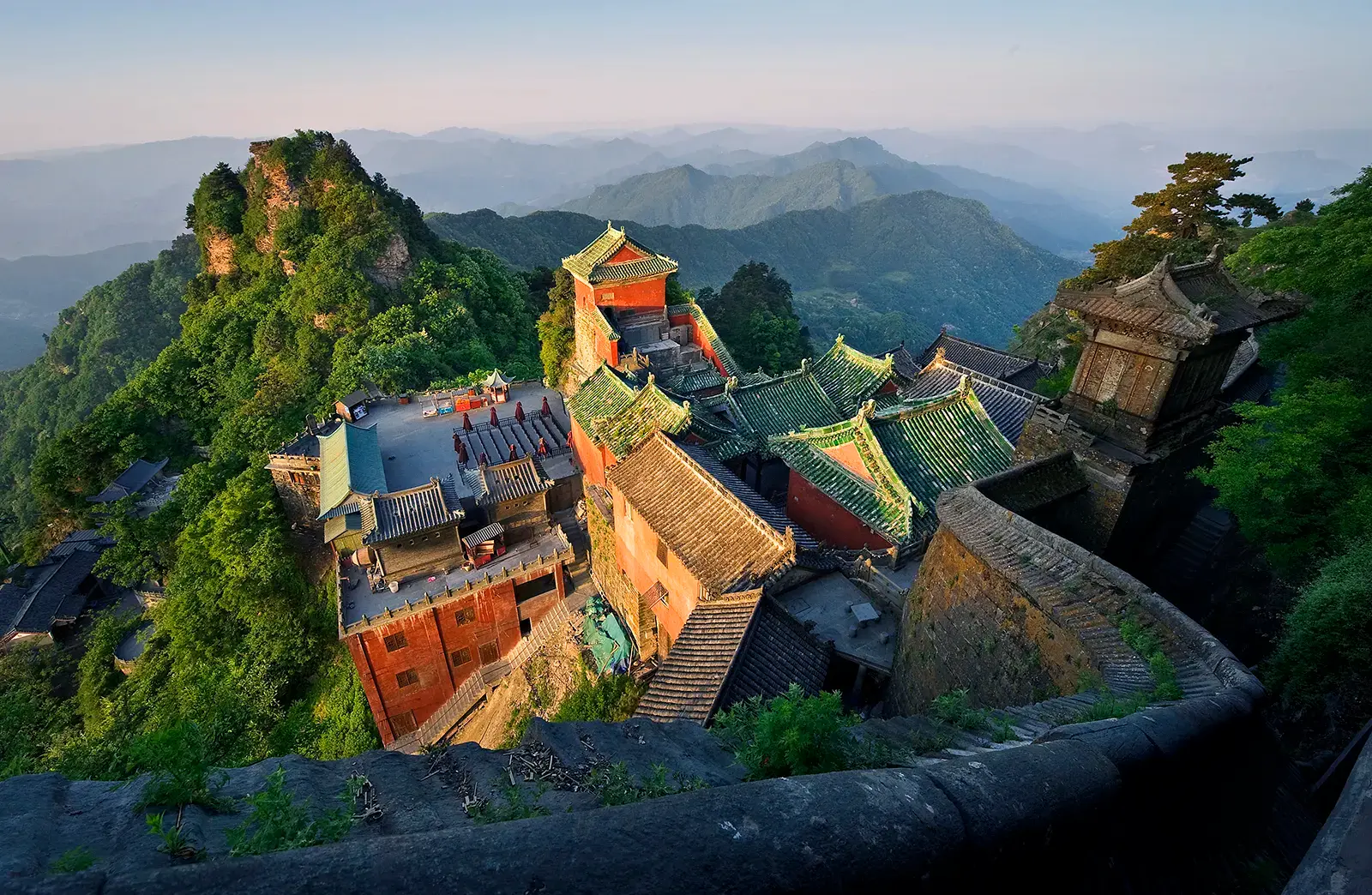
The Wudang Mountains are located in Shiyan, northwestern Hubei province. Its main peak, Tianzhu Peak, stands at an elevation of over 1,600 m. Legend has it that Emperor Zhenwu cultivated and ascended to immortality here, while Taoist Zhang Sanfeng further synthesized the essence of martial arts during the late Yuan and early Ming dynasties, making this the birthplace of Wudang martial arts. During the Yongle era of the Ming dynasty, the imperial court launched the monumental project of "constructing the Forbidden City in the north and building the Wudang Mountains in the south." The mountain temples were built according to royal standards, with their layout unfolding layer by layer following the mythological narrative of Zhenwu's spiritual cultivation. The palaces blend harmoniously with the peaks, cliffs, and streams, creating an ethereal and mystical atmosphere befitting a sacred mountain. The attractions unfold along the mountain terrain from the base to the summit, connecting key areas like Taizi Slope, Zixiao Palace, Nanyan Palace, and Taihe Palace. At Taizi Slope, the undulating Nine-bend Yellow River Wall follows the mountain contours, while Wuyun Tower's "one pillar supporting twelve beams" remains an architectural marvel. Zixiao Palace, a well-preserved imperial Taoist temple, features the stately Zixiao Hall with its double-eaved, nine-ridged roof. Nanyan Palace clings dramatically to a cliff face, offering vertiginous views of the valley below. Ascending the stone-paved ancient path to Tianzhu Peak's summit reveals the gilded bronze Golden Hall—the architectural masterpiece of the entire complex. As the birthplace of Wudang martial arts, this place attracts enthusiasts from home and abroad who come to seek masters and practice martial arts. The Taizi Slope on the mountain and the Xuantian Yuxu Palace at the foot serve as daily training grounds for practitioners. If you happen to encounter Taoist priests or students demonstrating Wudang boxing techniques, take a moment to quietly observe and appreciate the centuries-old martial arts heritage. A two-day visit is recommended: On the first day, enter from the mountain gate to visit Taizi slope and Zixiao palace, then stay overnight near Wuyaling. On the second morning, first visit Nanyan palace, then ascend to the golden summit before hiking down or taking the cableway at Qiongtai. After exiting the mountain gate, you may also visit Xuantian Yuxu palace. The attraction's shuttle buses connect all major core attractions, allowing flexible combinations of hiking and riding. Most dining and lodging options are concentrated around Nanyan, convenient for rest during the climb. From late October to November each year, when the forests are ablaze with color and red leaves cover the mountains, it's the perfect time to enjoy the fall scenery in the mountains.

China · Danjiangkou
Tang Paradise
2026 Asia 100 - Night Attractions

Tang Paradise

8
4.4/5
27.4k reviews

Tang Paradise, a national 5A attraction, is located in Qujiang New District in the south of Xi'an City, not far away from the Big Wild Goose Pagoda. It covers an area of ​​998 acres, including 300 acres of water area, 440 acres of green space, and a construction area of ​​nearly 100,000 square meters. The overall planning and architectural design of the park's architecture is by Mr. Zhang Jinqiu, an academician of the Chinese Academy of Engineering, and the garden landscape design is by Mr. Hiroshi Akiyama, a Japanese garden master. It is a large-scale cultural theme heritage park that comprehensively displays the style of the prosperous Tang Dynasty. Since its official opening to the outside world on April 11, 2005 (the third day of the third lunar month), it has been committed to creating high-quality, high-standard brand tourist attractions. Tang Paradise aims to build "a garden of history, a garden of spirit, a garden of nature, a garden of humanity, and a garden of art". It specially invited more than ten Tang historians, Tang poems, Tang paintings, etc. from the China Tang Dynasty Literature Society. An expert group composed of Tang construction experts, doctoral supervisors, researchers and tourism experts re-excavated and sorted out the historical and cultural content of Tang Paradise, re-planned and positioned the entire garden landscape, and divided into fourteen ares including the imperial cultural area, female Cultural area, poetry culture area, imperial examination culture area, tea culture area, song and dance culture area, food culture area, folk culture area, diplomatic culture area, Buddhist culture area, Taoism culture area, children's play area, gate landscape culture area and water show performance area, fully reproduce the splendid civilization of the Tang Dynasty. There are more than 20 scenic spots such as Ziyun Tower, Ladies Pavilion, Lu Yu Tea House, Apricot Garden, Caixia Corridor, Qujiang Drinking, Beauty Walk, Tang Poetry Gorge, Dogwood Terrace, etc. It displays the Tang Dynasty's dazzling spiritual outlook and splendid and unparalleled culture and art. It is known as a tourist attraction that “shocks the Chinese people and amazes the world”. The theme performance of the attraction is the large-scale water dance light and shadow show "Chasing Dreams of the Tang Dynasty", and you can take a boat trip to the dreamy holy land; the large-scale super-dimensional situation dance drama "Dreams of the Tang Dynasty" is majestic and dreamlike; the palace Yan music of the Tang Dynasty "Drums" performs Dongcang drum music, an intangible cultural heritage of mankind, as well as high-quality cultural tourism activities such as the New Year Festival, Shangsi Festival, and Qujiang Flower Moon Banquet. Brands and projects. The multiple Complimentary attractions and exciting performances every day are a warm invitation from the Tang Dynasty royal family to tourists, allowing them to experience the sacred and grandeur of royal culture in a shocking way. As a theme heritage park with excellent quality, full of personality and rich cultural connotation, Tang Paradise is a cultural window for Xi'an to show the world the ancient historical heritage of Chang'an and the prosperous Tang Dynasty, and a cultural gateway to attract the world to understand China...

China · Xi'an
Big Wild Goose Pagoda
No. 2 of Global Traveller-Picked Attractions in Xi'an

Big Wild Goose Pagoda

8
4.7/5
11.3k reviews

The Big Wild Goose Pagoda is located in the Da Ci'en Temple in the southern part of the city. The Da Ci'en Temple was a magnificent royal temple in Chang'an during the Tang Dynasty. It was built during the reign of Emperor Taizong of the Tang Dynasty by Crown Prince Li Zhi in memory of his mother, Empress Wende, and was first abboted by Master Xuanzang, who had returned from his journey to the West to seek Buddhist scriptures. During this period, the master supervised the construction of the Dayan Pagoda. Master Xuanzang translated Buddhist scriptures and promoted Buddhism in Da Ci'en Temple for 11 years, and founded the "Appearance-Only School" of Buddhism, making Da Ci'en Temple the ancestral temple of the Appearance-Only School (also known as the "Faxiang School"). During this period, the master personally supervised the construction of the Dayan Pagoda to enshrine the scriptures, statues and relics brought back from India. The current Da Ci'en Temple was built in the Ming Dynasty on the basis of the original temple "West Pagoda Courtyard", and most of the existing halls are buildings from the Qing Dynasty. The main buildings on the central axis of the temple are the Great Hall, the Dharma Hall, the Dayan Pagoda, and the Xuanzang Tripitaka Courtyard. Among them, the Buddha's relics enshrined in the Big Wild Goose Pagoda and the parietal bones of Master Xuanzang are respectively enshrined in the Xuanzang Tripitaka Courtyard, which are the "treasures of the temple" of Da Ci'en Temple. To the east of the central axis of the temple is the Pagoda Garden. Within the garden are nine stupas housing the relics of nine eminent monks of the temple since the Qing Dynasty. There are squares to the south and north of Da Ci'en Temple. There are also Shaanxi History Museum and Tang Paradise Souvenir .

China · Xi'an
White Emperor City Qutang Gorge Scenic Spot
No. 5 of Fall Viewing Attractions in Chongqing

White Emperor City Qutang Gorge Scenic Spot

7.8
4.6/5
4.1k reviews

White Emperor City Qutang Gorge Scenic Spot is located by the river in Fengjie County, Chongqing, at the western entrance of the Yangtze River's Three Gorges. It consists of two parts: White Emperor City and Qutang Gorge. A historic island city surrounded by water meets a majestic and precipitous gorge gateway, where natural landscapes, Three Kingdoms relics, and millennia of poetry converge. When cruising through the Three Gorges, the gorge's panoramic scroll often begins unfolding here. White Emperor City, originally named White Emperor City Qutang Gorge Scenic Spot, was built by Gongsun Shu in the late Western Han Dynasty as a fortified city, where he proclaimed himself the "White Emperor," a name that has endured to this day. During the Three Kingdoms period, Liu Bei retreated here after his failed eastern campaign and entrusted his son to Zhuge Liang on his deathbed. The colorful sculptures in the Entrusting the Orphan Hall at the White Emperor Temple recreate this historical episode. Interestingly, while the temple's name remains unchanged, it now enshrines Liu Bei and Zhuge Liang, who were honored during the Ming Dynasty. The Mingliang Hall, Wuhou Shrine, and Star-Gazing Pavilion are built along the mountainside, while the eastern and western stele forests display inscriptions from various dynasties, worth a slow-paced appreciation. The site is also renowned as the "City of Poetry": Li Bai, pardoned and returning east, penned the timeless line "Leaving at dawn the White Emperor crowned with cloud"; Du Fu, residing in Kuizhou for nearly two years, left behind over 400 poems; and Liu Yuxi composed "Bamboo Branch Songs" while serving as the governor of Kuizhou. After the Three Gorges Reservoir was filled, the rising river level turned White Emperor Mountain into an isolated island in the high gorge's flat lake, accessible only via a long covered bridge. The Qutang Gorge stretches approx. 8 km in total. Though not the longest among the Three Gorges, it is renowned for its majestic and precipitous scenery. The gorge entrance, called Kuimen or Qutang Pass, features the sheer cliffs of Chijia Mountain and Baiyan Mountain standing opposite each other, abruptly narrowing the river. Here, the Yangtze forces its way through the pass, which has served as the vital waterway to and from Sichuan since ancient times. It also appears on the back of the fifth series CNY 10 banknote. While sailing through the gorge, visitors can spot the hanging coffins at Wind Box Gorge high on the cliffs, the orderly arranged Meng Liang's Ladder holes on Baiyan Mountain's precipice, and numerous cliff inscriptions. When visiting, consider first walking across the covered bridge to the island to explore the Tuogu Hall, stele forest, and Star Observation Pavilion, then head to the Kuimen viewing platform behind Baidi Temple—directly facing Kuimen, it offers the same perspective as depicted on the back of the CNY 10 banknote. Matching a bill with the actual view for photos has become a classic activity. To truly experience the canyon's narrowness and the river's rush, take a boat through Qutang Gorge—looking back at the cliffs from the water is far more awe-inspiring than viewing from the shore.

China · Fengjie County
Xi'an Beilin Museum
No. 5 of Family-friendly Attractions in Shaanxi

Xi'an Beilin Museum

7.8
4.7/5
11k reviews

The Xi'an Beilin Museum is located near Wenchang Gate, consisting of sections such as the stele forest and stone carving art. The stele forest, composed of steles and epitaphs from various dynasties, is the highlight of the museum, including steles by famous calligraphers like Yan Zhenqing, Liu Gongquan, and Huaisu, as well as the "Stone Classics of Filial Pietyand the Kaicheng Stone Classics, two stone tablets from the Tang dynasty. The collection contains numerous exquisite stone inscriptions In the Xi'an Beilin Museum, you can appreciate steles and epitaphs from various dynasties, with a collection spanning over 2000 years. Among the treasures are: Yan Zhenqing's "Yan Qinli stele", "Yan family temple stele" and others are standard "Yan style"; Liu Gongquan's "Mysterious Pagoda Stele of Master Dada" is a typical representative work of "Liu style"; the "Stele inscription of the preface to the sacred teachings of the Tang Dynasty's Tripitaka"; the renowned cursive script master Huaisu's "Thousand-character classic" exhibits unrestrained brushwork. The Classic of Filial Piety on Stone Tablet and the Kaicheng Stone Classics are very popular Besides the stone carvings by calligraphy masters, the two most popular stone tablets among travelers are the Classic of Filial Piety on Stone Tablet and the Kaicheng Stone Classics. The Classic of Filial Piety on Stone Tablet is a Confucian classic. Its inscriptions were written by two emperors in four scripts: Emperor Xuanzong of Tang (Li Longji) wrote the main text in clerical script and added small annotations in regular script, later adding marginal notes in running script after the tablet was carved. The tablet's heading was written in seal script by Emperor Suzong of Tang (Li Heng). The Kaicheng Stone Classics were carved in the second year of the Kaicheng era (837 AD) during Emperor Wenzong of Tang's reign, comprising twelve classical texts including the Book of Songs, Book of Documents, Book of Rites, Book of Changes, and Spring and Autumn Annals. You can purchase rubbing copies When browsing in the Xi'an Beilin Museum, you can also admire exquisite stone carvings such as the tomb gate with four divine creatures, the six steeds of Zhao Mausoleum from the Tang Dynasty, the meeting of Confucius and Laozi, and the azure dragon and vermilion bird in the "Stone carving art gallery". After the visit, you can purchase "rubbings" made from the original steles.

China · Xi'an

Experiences you can't miss in Shiquan

Shiquan Today's weatherLight rain 6-10℃
Shiquan weather for the next 2 days11/17: 3-11℃, 11/18: 1-13℃

Free things to do in Shiquan

What travelers say about Shiquan

user-avatar
M27***26November 14, 2026
4.0
It's great, living up to its reputation. It's an old object with a history, worth taking a closer look at. The first part of the mountain path (Qingshen Path) isn't too steep, and you can finish it by walking and stopping. Finally, I climbed to the top of the Golden Summit in one go and finally fulfilled my long-cherished wish.

Wudang Mountains

user-avatar
hys600November 14, 2026
5.0
Excellent value for money! The quality is very good for this price, definitely worth buying again!

Tang Paradise

user-avatar
逃之杳杳November 13, 2026
5.0
For the average tourist, it's worth going; it's a pretty good experience. However, I'm a frequent Via Ferrata rider, and I found the experience just average. It's only suitable for beginners. Nevertheless, considering Li Bai's poem "The Road to Shu is Hard" ("Monkeys and apes worry about climbing"), it's still quite meaningful.

Jianmen Pass
user-avatar
球场上的3号November 15, 2026
5.0
It's definitely one of Xi'an's iconic attractions. Climbing up offers a panoramic view of the Tang Dynasty Never Sleeping City, and there are tons of snacks to enjoy around! I've been there three times already; it's absolutely worth a visit!

Big Wild Goose Pagoda

user-avatar
omikNovember 15, 2026
5.0
It's worth a visit. It's entirely indoors, so it's not cold and you don't need to dress too warmly. Once inside, pay attention to the indoor floor plan and event schedule on the mini-program. This will help you quickly find the right time and place for the corresponding program.

The Longest Day in Chang'an Theme Block
user-avatar
广州微微一笑November 15, 2026
5.0
For a self-guided tour of Baidi City, purchase tickets online and take a Didi ride to the park in Fengjie. Walk across the covered bridge and explore the park, making sure to plan your time wisely. First, take a ferry to the other side to see the Qutang Gorge, the monkeys, and the hanging coffins. After that, take the ferry back to the other side to see the Baidi Temple. Exit the park via the same route.

White Emperor City Qutang Gorge Scenic Spot
user-avatar
Qiao TuoNovember 15, 2026
5.0
Professor Yang Dongchen's explanations were very well-structured, starting with the basic information about the inscriptions, then discussing their calligraphic value, and finally extending to the historical figures and cultural background behind them. His interpretations of inscriptions such as the *Stone Classic of Filial Piety*, the *Duobao Pagoda Stele*, and the *Xuanmi Pagoda Stele* were particularly detailed, demonstrating a solid foundation of professional knowledge. Highly recommended.

Xi'an Beilin Museum

user-avatar
M34***95February 13, 2025
3.0
The ticket price is high, the tourism form is single, it is more suitable for free opening

Xi’an City Wall and Beilin Museum Historical and Cultural Scenic Area

Trip Moments in Shiquan

Popular cities near Shiquan

Frequently asked questions

How can I contact Trip.com customer support?

Get help anytime, anywhere within 30 secondsContact customer support

Change and cancellation policies vary by attractions and tours. Please check the product details page for more information.

Ticket prices may vary between weekdays and weekends, as well as during peak and off-peak seasons. When booking with Trip.com, you can also use Trip Coins to get extra savings. For more tips on booking discounted tickets, please visit Trip.com for the latest information.