Dorbod Banner

Things to do in Dorbod Banner

Search attractions or local attractions & tours
Search

Explore top experiences

Top 10 attractions in Dorbod Banner

View all Attractions
Shanhua Temple
Selected for Best Things to Do in Shanxi

Shanhua Temple

7.5
4.8/5
2.4k reviews

Shanhua Temple, commonly known as the "southern temple," is located in the southern corner of the ancient city of Datong. The temple was first built during the Kaiyuan era of the Tang Dynasty and was initially named Kaiyuan Temple. It was renamed Dapu'en Temple during the Later Jin Dynasty but was destroyed in the war at the end of the Liao Dynasty. It was rebuilt on the original site during the Jin Dynasty and was officially named Shanhua Temple in the Ming Dynasty, a name that has been used ever since. The temple's mountain gate, Three Saints Hall, Mahavira Hall, and Puxian Pavilion are all original structures from the Liao and Jin periods, making it one of the relatively well-preserved temple architectural complexes from that era in China. The halls are gradually elevated along the central axis from south to north, with the layout of the Tang Dynasty temple still faintly discernible. Unlike most temples, the mountain gate here combines with the heavenly king hall into one structure: the five-bay Jin dynasty gate houses Ming dynasty statues of the four heavenly kings, immediately visible upon entry with imposing majesty. The central three saints hall, also a Jin dynasty construction, features strikingly large and ornate bracket sets under its eaves that project in layers resembling blooming flowers—a distinctive hallmark of this hall. It enshrines the original Jin dynasty "Flower Adornment three saints": Vairocana Buddha at the center flanked by Manjusri and Samantabhadra bodhisattvas, their forms full and expressions serene. The main hall of the great hero on the northern high platform is the temple's principal hall, built during the Liao Dynasty and renovated in the Jin Dynasty. The altar enshrines the five wisdom buddhas arranged from east to west: Aksobhya in the east, Ratnasambhava in the south, Vairocana at the center, Amitabha in the west, and Amoghasiddhi in the north—all surviving Liao sculptures with Jin-era repainting. Twenty-four deva polychrome sculptures stand on brick platforms along the eastern and western walls, twelve on each side, representing masterpieces of Jin Dynasty sculpture. Some appear armored and weapon-wielding with fierce expressions, while others wear official robes with flowing sashes. Among them, the benevolent and graceful Sridevi particularly captivates viewers. The hall's western and southern walls preserve Buddhist narrative murals painted during the Kangxi era of the Qing Dynasty. Before entering the temple, consider viewing the glazed five-dragon wall in front of the mountain gate. This Ming dynasty Wanli-era relic was originally the screen wall of Xingguo Temple in the southern city, relocated here in the 1980s. Five coiling dragons surge amid turbulent clouds and waves on the wall, with the central "main dragon" holding a fire pearl and facing directly forward toward the ancient temple's gate. During your visit, pay special attention to the hall of three saints' diagonal arches and the Liao- and Jin-dynasty polychrome sculptures in the main hall. The dim lighting in these ancient halls invites slower observation of the statues' expressions and drapery details, allowing deeper appreciation of these Liao-Jin treasures.

China · Datong
Huitengxile Grassland
No. 2 of Night Attractions in Inner Mongolia

Huitengxile Grassland

7
4.3/5
490 reviews

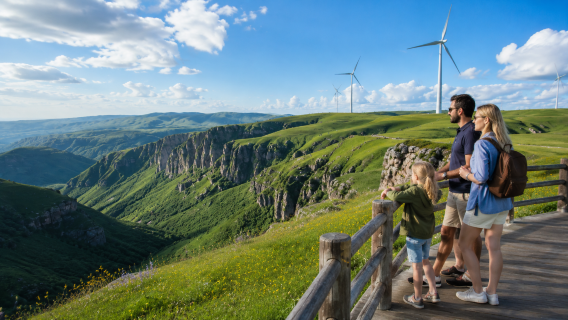
Huitengxile, meaning "cold plateau" in Mongolian. The grassland is located inYinshanNorthern foothills. The grassland is dotted with 99 natural lakes, earning it the nickname "Ninety-nine springs." It combines the vast, majestic style of pastoral grasslands with the bright, delicate hues of southern Chinese water towns. Huitengxile Grassland has cold winters and cool summers, making it a renowned summer retreat since ancient times. The tourist season here runs from May to September, when the land is carpeted with flowers, and it is one of the few highland wetlands in the country. Locals believe the lakes on the grassland mostly formed from underground springs, hence they often refer to lakes as springs. This area was a prehistoric volcanic belt, where eruptions created countless "volcanic craters." Over the years, these craters became overgrown with wild grass and filled with rainwater, forming circular lakes. Legend has it that Genghis Khan, the proud son of heaven, once reined his horse at the "Ninety-nine Springs," admiring the scenic beauty. However, as the springs fell short of a hundred, he reluctantly departed, and thus the Yuan Empire never established its capital here. Legend has it that these 99 lakes never diminish or dry up during droughts,Tianlao LakeThe water neither rises nor overflows, calm as a mirror. The Ninety-nine Springs nourish and moisten like a mother's milk.HuiThe vibrant life of Tengeri. With its green mountains and clear waters, the attraction is divided into two main areas, Shencong Valley and Huanghua Beach, featuring 15 breathtaking views. Here, you can ride horses and camels, practice archery and shooting, watch Mongolian wrestling performances, climb the aobao mountain, visit local herders' homes, taste ethnic dairy products and milk tea, enjoy hand-grabbed mutton, and drink kumis... Through these diverse activities, you can fully experience the rugged and natural Mongolian customs.

Qahar Right Middle Banner · 87 km from Dorbod Banner
Dai Wang Fu·Daming Baixi Garden
No. 5 of Family-friendly Attractions in Shanxi

Dai Wang Fu·Daming Baixi Garden

7.2
4.5/5
2.9k reviews

Dai Wang Fu·Daming Baixi Garden is located in the northeast corner of the ancient city of Datong. It was the mansion built after Zhu Gui, the 13th son of Emperor Taizu of Ming Zhu Yuanzhang, was granted the title of Dai Wang and stationed in Datong. Due to its design imitating the imperial palace in Nanjing and its grand layout, it has long been known as the "Little Forbidden City in the northern frontier." The mansion was first constructed in the 25th year of the Hongwu era (1392) on the former site of the Imperial Academy of the Western Capital during the Liao and Jin dynasties. Its central axis runs from south to north, featuring Yu Gate, Duanli Gate, Chengyun Gate, Chengyun Hall, Chongxin Gate, Cunxin Hall, Changchun Palace, and Guangzhi Gate. Following the principle of "ancestral temple to the left and altar to the right" as in the capital, it had a front court for governance and rear quarters for residence, with temples to the east and altars to the west. Over ten generations of Dai Wang lived and governed here. At the end of the Ming dynasty, the mansion was destroyed by war, leaving only the Nine-Dragon Screen wall in front of the mansion standing to this day. The current complex of halls and palaces seen today is a contemporary reconstruction on the original site, restoring the layout and grandeur of this frontier mansion. By day, this is an open "garden of a hundred shows": small theater performances cycle through various courtyards, with ming dynasty-costumed characters like imperial guards and palace maids patrolling and interacting with travelers. Folk arts like shadow puppetry, puppetry, ancient magic tricks, acrobatics, and nuo dances take turns on stage. The indoor performance "Carrying the mandate of heaven" uses gauze screen projections and laser dome effects to create an immersive space of flowing light and shadow. At night, a different scene emerges: the walking live-action show "Datong under heaven" guides audiences through palace halls and corridors, recreating the ming dynasty frontier town's events and the grand spectacle of nations paying tribute. A thousand-lantern festival illuminates the mansion's nightscape, with intangible cultural heritage fire skills like iron-flower forging and fire pots, plus the mansion's flame show, bringing the atmosphere to its climax. When touring, you might as well save the highlight for the night, carefully observing the architecture and encountering scattered performances between courtyards during the day, then immersing yourself in the storyline after dark. The illuminated halls and corridors are particularly photogenic. The original nine-dragon screen wall in front of the mansion still stands nearby and can be visited along the way.

China · Datong

Experiences you can't miss in Dorbod Banner

Featured Outdoor & sports in Dorbod Banner

View all Outdoor & sports
Mini Group (2–8 Guests) Optional | Hohhot Xilamuren Grassland all-inclusive day trip | Multiple tour options with guaranteed departures
󱌍
From€21.63
Departure from Hohhot: Wulanhada Volcano Geological Park and Huitengxile Grassland
󱌍
5.0/5
· 1 review
Duration: 14 hrs
English
Free cancellation
Instant confirmation
From€139.01
Departure from Hohhot: Red Stone Cliff
󱌍
Duration: 12 hrs
English
Free cancellation
Instant confirmation
From€61.79
Departure from Hohhot: Red Stone Cliff and Huitengxile Grassland
󱌍
Duration: 14 hrs
English
Free cancellation
Instant confirmation
From€139.01
Departure from Hohhot: Huitengxile Grassland
󱌍
Duration: 8 hrs
English
Free cancellation
Instant confirmation
From€123.57
Dorbod Banner Today's weatherClear -7-6℃
Dorbod Banner weather for the next 2 days11/10: -5-12℃, 11/11: -6-14℃

Free things to do in Dorbod Banner

What travelers say about Dorbod Banner

user-avatar
酥油旺旺July 4, 2025
5.0
草原的天空永远都是那么美,从宝石蓝到浅绿,变化莫测,每一色都蕴含独特韵味,令人心旷神怡。辽阔无垠的草原连上天际,偶尔传来一两声狗吠,风懒懒地拂过草浪,无声却动人心弦。

Xilamuren Grasslands

user-avatar
Anonymous userOctober 21, 2026
5.0
Shanhua Temple, located in the ancient city of Datong, Shanxi Province, is commonly known as the South Temple. It was among the first batch of national protected sites. Originally built during the Kaiyuan era of the Tang Dynasty, it was destroyed by fire and rebuilt by Master Yuanman during the Jin Dynasty. It was named Shanhua Temple during the Zhengtong era of the Ming Dynasty. It retains four original Liao and Jin Dynasty buildings: the Liao Dynasty Mahavira Hall (with the Jin Dynasty Twenty-Four Deities painted sculptures inside, which are masterpieces of Liao and Jin sculpture, especially the auspicious goddess), the Jin Dynasty Heavenly King Hall (the largest Jin Dynasty hip-roofed mountain gate in China), the Three Saints Hall (famous for its magnificent sloping arches and Jin Dynasty vermilion tablet), and the Puxian Pavilion. The whole temple faces south and has a complete layout. It is the best-preserved Liao and Jin Dynasty temple complex in China and was highly praised by Liang Sicheng. There are also remnants of the Ming Dynasty Five Dragon Wall in front of the temple.

Shanhua Temple

user-avatar
HuijunC.November 5, 2026
5.0
Hengshan is big and the view isis magnificent, visited in late October, it’s cold and the hiking is actually not difficult as expected. And there are many temples and spots that you can visit throughout the hike. I took the cable car up and the bus down.

Heng Shan Mountain

user-avatar
_We***09September 1, 2025
5.0
On August 31st, I took advantage of the weekend for a two-day, one-night special forces tour of Hohhot. It happened to rain, so I'm especially grateful to the two train drivers who drove my son and me to the door to prevent us from getting soaked. Two weeks in advance was perfect. It's a bit chilly in the mornings and evenings now, so you can rent an electric scooter and combine the train ride with walking.

Chilechuan Grassland

user-avatar
Anonymous userOctober 28, 2026
5.0
This ancient temple, dating back to the Ming Dynasty, boasts exquisite architectural details, including glazed tile walls and imperial steles. With few tourists and a tranquil atmosphere, spinning the prayer wheels brings a sense of peace. It's definitely worth a visit when in Hohhot.

Xilitu Zhao Temple

user-avatar
202***02October 13, 2026
5.0
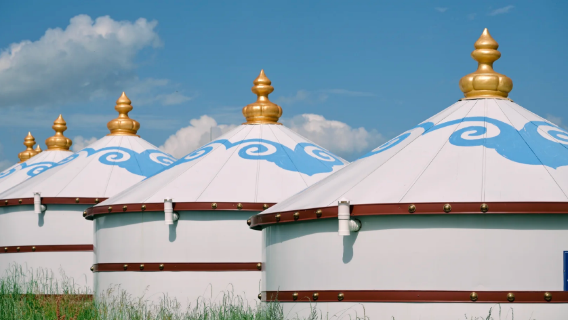
In mid-October, the Huitengxile Grassland was ablaze with yellow grass, the wind was strong, and tourists were few, lending the landscape a sense of vastness and tranquility. We chartered a car to enter the grassland, our first stop being the Niubaba Scenic Area. Without the hustle and bustle of peak season, the grassland revealed its true nature. Driving along the Windmill Avenue, huge white windmills lined the road, turning slowly in the wind, creating a picturesque scene against the golden grassland. The white yurts stood out against the backdrop of the grassland; the nearby lake was serene, with withered grass swaying on the banks, adding a unique autumnal charm. Along the way, we also saw vast golden pine forests, sunlight filtering through the branches and casting dappled shadows; herds of cattle and sheep grazed peacefully. Though the wind was strong, it couldn't dispel the vastness and serenity. Late autumn in Huitengxile, while lacking the lush green of summer, offered a truly pure grassland experience with its golden hues, open spaces, and free-flowing winds.

Huitengxile Grassland

user-avatar
tmbawNovember 1, 2026
5.0
The evening performance was fantastic, especially the final iron-flower display, which brought the atmosphere to a fever pitch. The building's architecture follows a courtyard-style layout, with seven courtyards in total. The temperature in Datong is pleasant in the evening, and there were far fewer people than during peak tourist season, making for a great viewing experience. Highly recommended.

Dai Wang Fu·Daming Baixi Garden

user-avatar
竹影07November 5, 2026
5.0
Exquisite craftsmanship and unparalleled beauty make it worth visiting again and again. Looking up inside the main hall, you can see nine caisson ceilings connected to form an "eight gates and nine stars" celestial palace, all joined together by mortise and tenon joints without a single iron nail. The most breathtaking is the central octagonal caisson ceiling, with gilded dragons coiling around it, surrounded by miniature pavilions, brackets, and railings.

Jingtu Temple

Trip Moments in Dorbod Banner

Popular cities near Dorbod Banner

Frequently asked questions

Get help anytime, anywhere within 30 secondsContact customer support

Change and cancellation policies vary by attractions and tours. Please check the product details page for more information.

Ticket prices may vary between weekdays and weekends, as well as during peak and off-peak seasons. When booking with Trip.com, you can also use Trip Coins to get extra savings. For more tips on booking discounted tickets, please visit Trip.com for the latest information.