
Things to do in Jingyuan
Explore top experiences
Top 10 attractions in Jingyuan


Liupan Mountain National Forest Park
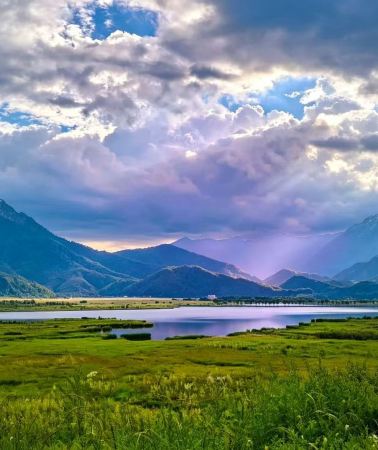
Liupanshan National Forest Park is located in Jingheyuan Town in Jingyuan County, Guyuan City. The main attractions in the park include Xiaonanchuan, Liangdian Gorge and Erlong River. Entering through the main gate, Liangdian Gorge is to the north, while Erlong River is to the south and Xiaonanchuan lies between them. There is also an ecological museum and botanical garden. Liangdian Gorge stretches several kilometers long and has a clear stream at the very bottom. Climbing to the main peak, Mingang Mountain, hikers are treated to a sight of an seemingly infinite sea of clouds.Jingyuan · 17.6 km from downtown

Kongtong Mountain
Kongtong Mountain has a long history and rich cultural connotations. It is the holy place where the ancestor of humanities, Xuanyuan Huangdi, climbed the mountain and asked questions. According to legend, Emperor Xuanyuan visited the western frontier after his achievements and personally visited Kongtong Mountain to ask Guangchengzi, who lived in seclusion in Kongtong Mountain, for advice on how to govern the country and maintain health. Kongtong became famous forever. Kongtong is the cradle of religion where the three religions unite and respect and prosper together. According to Taoist classics, the predecessor of Laozi, the founder of Taoism, was Guangchengzi who practiced in Kongtong, and Guangchengzi was the teacher of the Yellow Emperor. Therefore, Kongtong Mountain is known as "the first Taoist mountain in the world." In addition, Buddhism and Confucianism have made great progress in Kongtong Mountain. Kongtong Mountain is the birthplace of the Kongtong School, the five major martial arts schools in China. Kongtong martial arts is one of the five major martial arts schools along with Shaolin, Wudang, Emei and Kunlun. Kongtong martial arts is closely connected with Taoist culture. It is mysterious and strange, with unique characteristics. It is a wonder of Chinese martial arts. Kongtong Mountain belongs to the Danxia landform in high-altitude areas, which has extremely high scientific research value and extremely beautiful natural scenery. The ancients commented that "Kongtong's mountains and rivers are the best in Guansai", and another commented that "it has the majesty of the mountains in the north and the beauty of the mountains in the south." Kongtong Mountain is one of the country's first batch of 5A-level tourist attractions, a national geological park, one of the "50 Places Worth Visiting for Foreigners in China", and one of the first batch of "Chinese Tourism Culture Demonstration Sites". It is a natural kingdom of animals and plants, with various species of animals and plants. There are more than 1,300 species, and the forest coverage rate reaches more than 90%.Pingliang · 18.8 km from Jingyuan

Wild Lotus Valley
Yehe Valley is located 5 km northwest of Jingyuan County. It is another source of the Jing River. The gorge is 15 km long and is also called Xiangshui Gorge. Because the gorge is full of "Dahuang Ligusticum chuanxiong" (the shape of its leaves is similar to lotus leaves, so people call it wild lotus), it is also called Lotus Garden.Jingyuan · 7.5 km from downtown

Laolongtan
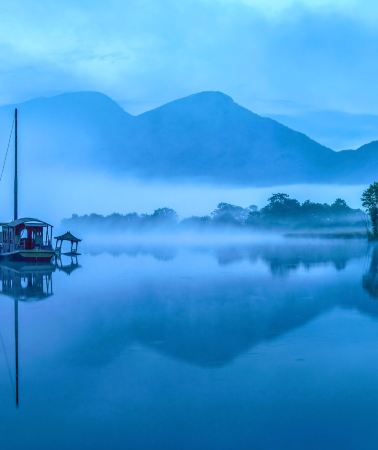
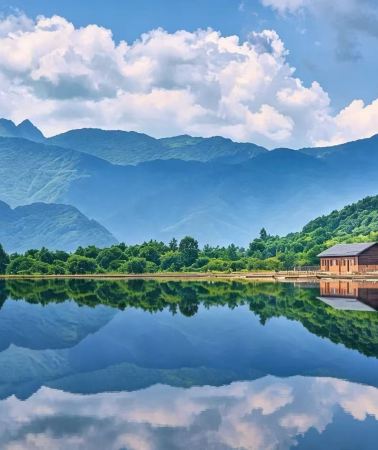
Laolongtan consists of four pools. The first and second pools are located downstream of the reservoir dam. They are deep pools with dangerous cliffs and rapids, which are mysterious and unpredictable. The three pools are now submerged by the reservoir, which stores more than 400,000 cubic meters of water. The water in the pool is surprisingly calm. The sun shines on the deep water surface, and a thin mist floats on the surface of the pool, just like a precious mirror, magnificent and charming, and is known as "high clouds and flat lakes". The four pools upstream of the reservoir are the gateway to Longtan, and the deep valley and dangerous cliffs hold the flying pool. The water is clear and winding like a swimming dragon. The mountains and rivers are interdependent, and the peaks are reflected. The scenery is picturesque and quite spectacular.Jingyuan · 12.6 km from downtown

Emperor Qinshihuang's Mausoleum Site Museum
Emperor Qinshihuang's Mausoleum Site Museum, also known as the Terracotta Army, is located about 1.5 kilometers east of the Mausoleum of the First Qin Emperor and forms part of the extensive necropolis. There were more than a thousand terracotta soldiers unearthed here, each with a different facial expression. Standing before the massive underground army, you will feel the extraordinary might of the Qin Emperor that enabled him to unify six warring states two thousand years ago. The Qin Emperor Ying Zheng began building the mausoleum for himself at the age of 13. Nearly 720000 men and 38 years were required to complete this vast project.China · Xi'an

Xiaonanchuan
Jingyuan · 15.1 km from downtown

Yanzhi Gorge
Yanzhi Gorge is located on the east side of Yangcao Village, Huanghua Township, 8 kilometers northeast of Jingyuan County. It is adjacent to Kongtong Mountain in the east, Liupan Mountain in the west, and Laolongtan in the south. The canyon is 45 kilometers long and formed 800 million years ago. of the Ordovician. The name "Rouge" evolved from the ethnic minority "Yanzhi" and "Yanzhi" tribes that thrived here in the Spring and Autumn Period. A long time ago, Rouge Gorge and the surrounding area, with lush vegetation and dazzling crimson everywhere, was not only a good place for people to farm, but also a resort for collecting rouge, so the mountain was named Rouge Mountain. The ethnic minorities living here wear rouge clothes, use rouge powder, and eat rouge flowers. They are inseparable from rouge flowers and plants. They are called "Yanzhi" and "Yanshi" by other surrounding ethnic groups. "Yan" means "Yan" in ancient Chinese. The meaning of "red" agrees with the modern "rouge". Rouge Gorge not only has a poetic name, but also has a rich cultural heritage. Rouge Gorge is dangerous in the east and strange in the west, embroidered in the south and the north. Under the miraculous sculptures of natural art masters, strange peaks and rocks have risen. With a wonderful posture and lifelike appearance, the rock peaks of Yanzhi Gorge are characterized by strange rocks, cliffs and cliffs, and the overall structure is characterized by "secret, mysterious, strange and dangerous".Jingyuan · 10.1 km from downtown

Xi'an City Wall
Xi'an City Wall is a landmark of this ancient city. The city walls that we see now were built in the early years of the Ming dynasty and they are now more than 600 years old. The walls were built on the foundations of the imperial city of the Tang Dynasty and they are formed together with a series of defensive installments such as moats and turrets. At present, Xi'an City Wall can be accessed by many city gates. Visitors can choose the nearest one to them. The South Gate is the visitor entrance of Xi'an City and is also the city gate with more tourists. Cycling on the ancient walls is a good experience. Riding on the wall overlooking the ancient capital of the thirteenth dynasty, you will have a feeling of travelling through time.China · Xi'an

Laoxiangzi Sceneic Area
The Liupanrenjia Hongya Folk Culture Village in Longde County, Ningxia is located in Hongya Village, Chengguan Town, Longde County. There is a 200-meter-long old alley in the village, covering an area of 10,000 square meters. There are 10 farmhouse courtyards, old theaters, old mills, old wells and other ancient rural buildings.Longde · 20.9 km from Jingyuan

Huaqing Palace
Huaqing Palace attraction is located 30 km east of Xi'an, adjacent to the Terracotta Warriors. Renowned for its timeless hot spring resources and numerous historical events, it has become an iconic cultural tourism attraction of Tang Dynasty palaces in China. Palace scenic spots Huaqing Palace boasts a long history, serving as an imperial retreat for emperors from the Zhou, Qin, Han, Sui, and Tang dynasties. The palace features cultural zones like the Tang Imperial Hot Spring Relics Museum, the Xi'an Incident site—Five-Room Hall, Nine Dragon Lake and Lotus Lake scenic areas, and the Tang Pear Garden Museum. Notable architectural complexes include Feishuang Hall, Wanshou Hall, Changsheng Hall, Huanyuan Garden, and Yuwang Hall. The stele of "hot spring ode" Mount Li hot springs, developed early and favored by emperors throughout history, enjoy the reputation of being "the imperial hot springs under heaven." As far back as the Yangshao culture period 6,000 years ago, the ancient Jiangzhai people began utilizing these springs. With their profound cultural heritage spanning millennia, Mount Li hot springs represent an indispensable part of Chinese historical culture. The stele of hot spring ode in the attraction stands 154 cm tall, 72 cm wide, and 19 cm thick, featuring a coiled dragon design and a trapezoidal base. Engraved by Yuan Chang, the governor of Yongzhou during the Northern Wei Dynasty, the inscription reads, "The hot spring is nature's prescription and the primordial healer of the universe. People from all nations and those suffering from ailments come with provisions to seek relief in its waters." This stele is the earliest surviving written artifact at Huaqing Palace. Tang Imperial Hot Spring Relics Museum This is the site of the bathing pool described in the "Song of Everlasting Sorrow" where Yang Guifei emerged from her bath. After the An Lushan Rebellion, little remained of the original structure. In 1982, while constructing the "Guifei Pavilion," the Lintong County Government accidentally discovered the ruins of a Tang Dynasty bathing pool. After excavation and restoration, the Huaqing Palace imperial hot spring ruins museum was established. This small yet exquisitely designed pool measures 3.6 meters east-west and 2.9 meters north-south, with an oval-like shape. The pool walls are entirely built with bluestone slabs, featuring a two-tiered terrace structure composed of 18 arched stone sections. Inside the pool lies a dedicated bathing stone for Yang Guifei, engraved with the character "Yang." At the center of the pool bottom is a 10 cm diameter water inlet. A white marble lotus pedestal was unearthed here, connecting to both a showerhead above and ceramic water pipes below that linked to the main water source. Due to natural pressure, hot spring water would spray outward through the lotus showerhead, creating a mist effect remarkably similar to modern showers. Adjacent to the Guifei Pool to the east lies Emperor Xuanzong's exclusive imperial hot spring. During the Tang Dynasty, the Nine Dragon Hall stood above this pool, featuring nine white jade-carved dragons spouting water outside. This pool's surface resembles a realistic lotus shape, hence its alternate name "Lotus Pool." Xi'an incident site The five-room hall at the Xi'an incident site in Huaqing Palace is where the Xi'an incident took place. To this day, the glass windows and walls of the five-room hall still bear bullet marks from the fierce battle during the military remonstrance. The desks, chairs, beds, sofas, tea sets, stoves, carpets, telephones, and other office items in each room are replicated and arranged according to their original appearance. Historical events: Beacon fire to deceive the feudal lords In 779 BC, King You of Zhou obtained the beautiful Bao Si, yet she never smiled. To solve this, the king conspired with the treacherous minister Guo Shifu and lit the beacon fires at the Huaqing Palace attraction. The feudal lords across the land saw the signals.Beacon fireHe quickly led his troops to rescue the king, but King You told the feudal lords, "I lit the beacon fires just to make my queen laugh," upon which Bao Si burst into laughter. The feudal lords arrived valiantly but left resentfully. Seeing King You's incompetence and the people's discontent, the Quanrong tribe seized the opportunity to launch an attack. As the enemy troops approached the mountain, King You urgently raised the beacon fires.Beacon fireHe mobilized troops, but none of the feudal lords came to his rescue. King You fled with Bao Si toMount LiHe was later killed by the Quanrong tribe, leaving behind historical anecdotes such as "a smile worth a thousand gold," "losing the kingdom for a smile," and "playing with beacon fires to deceive the feudal lords." And this beacon tower at Huaqing Palace attraction towers at an altitude of 913.6 m.Mount LiThe beacon tower at Huaqing Palace attraction on the first peak of Xixiu Ridge. Su Dongpo composing poetry at Mount Li During the Jiayou era of the Northern Song Dynasty, the Lishan hot springs, meticulously restored by Liu Ziyong and others, became breathtakingly beautiful, attracting crowds of visitors who composed poems and essays to express their nostalgia. Among the countless poetic works, the emerging literary giant Su Shi stood out with his masterpieces like "Lady of Guo's night outing" and "Lishan" during his visit to the hot springs. Xi'an incident The Xi'an incident, also known as the "double-twelfth incident". Zhang Xueliang and Yang Hucheng launched a mutiny at Huaqing Palace, detaining the then chairman of the Military Commission of the National Government. Performance items You can watch a large-scale dance drama at the attraction. ▲ The Song of Everlasting Sorrow is China's first large-scale live historical dance drama created by Shaanxi Tourism Group. Based on Bai Juyi's timeless poem of the same name, it fully utilizes the attraction's resources and employs high-tech stage lighting to combine historical storytelling with live performances, recreating the love story of Emperor Li Longji and Yang Guifei at Huaqing Palace over 1,300 years ago. ▲There is also the historical adaptation "12-12 Xi'an Incident," which vividly and authentically recreates the lesser-known details of the "Xi'an Incident."China · Xi'an
Free things to do in Jingyuan

Liupan Mountain Red Army Long March Tourist Area
Longde · 22.5 km from Jingyuan
Shaanxi History Museum
China · Xi'an
Liupanshan Red Army Memorial of Long March Ticketing Office
Longde · 22 km from Jingyuan
Grand Tang Mall
China · Xi'an
Xi'an Museum
China · Xi'anImmediate access, Book now for today, Cancel anytime
Yejia Village
Jingyuan · 11.9 km from downtown
Kongtong Ancient Town
Pingliang · 23.2 km from Jingyuan
Gansu Provincial Museum
China · Lanzhou
Shaanxi Archaeology Museum
China · Xi'an
Xi'an Muslim Quarter
China · Xi'an
More ways to travel from Jingyuan
Group Tours in Jingyuan
View More Group Tours in Jingyuan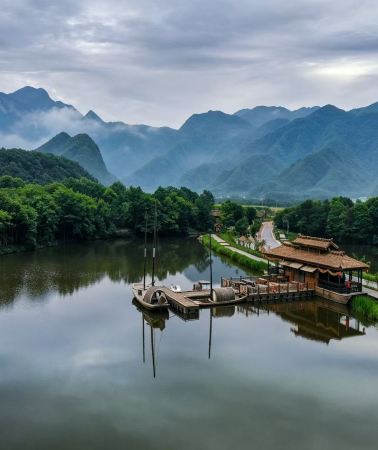



What travelers say about Jingyuan

Anonymous userSeptember 29, 2026
4.0
A great place for hiking, with tons of negative ions! Currently, three areas are open to the public, with Xiaonanchuan as the core attraction. The botanical garden is still under construction and not recommended for now. Liangdianxia is Genghis Khan's summer retreat and doesn't require a long visit.
PS: A thorough visit to Xiaonanchuan takes about an hour. It's recommended to enter by water. After reaching the end of the path, climb a short flight of stairs and then hike a little further. You can take a shuttle bus back to the bus stop (ticket price is 10 yuan). The walk down to the bus stop without the shuttle bus is 3km. It's best to visit in the morning.
Liupan Mountain National Forest Park

智慧树52October 18, 2026
5.0
Mount Kongtong is very large and well worth visiting. The attractions are quite close together, and the hiking experience is just right. We reached a scenic spot as soon as we got a little tired, and both the natural scenery and cultural landscapes were worthwhile. The central platform is a fairly large square with shops and performances, and the scenery is quite nice. The elderly people were drinking tea and resting there while we continued climbing.
Kongtong Mountain

135***16October 4, 2026
5.0
The canyon where the Lotus Garden Scenic Area is located is also known as "Fragrant Water Canyon," "Wild Lotus Valley," or "Lotus Garden." Located west of Jingyuan County, the canyon is lush with vegetation, including pines, cypresses, red willows, and birches. The wild lotus, botanically known as *Ligustrum lucidum*, is commonly called wild lotus because its leaves resemble lotus leaves.
The abundant wild lotus and flowing streams surrounding Fragrant Water Mountain give it a majestic and beautiful appearance. The grassy gully, about 4 kilometers long, is expansive and spectacular, with lush wild lotus growth and towering, opposing peaks.
Wild Lotus Valley

M42***81September 14, 2020
5.0
I went there during the May Day holiday. The scenery was nice, with green mountains and clear water. It was a good place to escape the summer heat. The Vienna 3 Hotel where I stayed at night was also very good. The room was very clean and the service was very good. It is in the new district, next to Guyuan No. 1 Middle School. It is worth recommending!
Laolongtan
M18***52October 18, 2026
5.0
Five-star review! A huge thank you to our guide, Mr. Ren, for his excellent explanation. His professional expertise was solid, and his presentation was clear and organized. From the historical background of the Qin Dynasty and the excavation and restoration process of the Terracotta Army, to the hairstyles and armor of the terracotta warriors, the unique details of each individual face, and the exquisite craftsmanship of the bronze chariots, he narrated everything in a captivating way. The terracotta warriors, which had stood silently, seemed to come alive with stories, allowing us to truly feel the grandeur of the Qin Empire.
The guide was patient and attentive throughout the tour, planning the route and answering all the children's questions, providing a lot of historical information that was easy for children to understand.
Emperor Qinshihuang's Mausoleum Site Museum

非你不渴June 27, 2021
5.0
Xiaonanchuan is the place with the most waterfalls in Liupanshan National Forest Park. It is so clear and undulating that it is called Little Jiuzhaigou. There is also a saying that if you don't visit Xiaonanchuan, you have wasted your trip to Liupanshan.
Xiaonanchuan

薇风怡人August 8, 2023
4.0
Although it was cloudy, I still felt that the canyon scenery was beautiful, and the picturesque scenery was completely different from Liupanshan Forest Park. The scenic area is generally very pristine, with very few artificial constructions, so the road is not very easy to walk on. The road on the cliff is very narrow, only one person wide. It is not recommended for people with acrophobia, the elderly and children to go there, as it is not convenient to take care of them. However, for young people who have a spirit of challenge and love nature, it feels like hiking in the wild, which is a good experience.
Yanzhi Gorge

厦门戴尔October 18, 2026
5.0
Xi'an City Wall, as the best-preserved ancient city wall in China, truly lives up to its reputation! Climbing the wall from the main gate—the South Gate (Yongning Gate)—offers a panoramic view of the entire city wall. Looking north, you can see the Bell Tower; to the south, the Big Wild Goose Pagoda; and the east and west walls stretch straight out. Whether strolling along it or cycling around, it's a must-see in Xi'an. It would be even better if more rest areas were added along the way, such as cafes and comfortable chairs.
Xi'an City Wall

M77***85August 14, 2026
3.0
The area has a rich historical atmosphere, but the food court inside is truly indescribable! The restaurant selling "jiaotuan" (a type of porridge) in the picture had terrible service; they were slow to take orders and couldn't remember what to order. I was cut in line twice, and both times I told the staff, but they ignored me. Hopefully, the scenic area can improve its management.
Laoxiangzi Sceneic Area

Natalia Valenzuela ubinaOctober 15, 2026
5.0
I’m really happy I visited this place! I thought I would find some gardens and a few temples, but instead, I discovered an entire mountain with a cable car and everything.I started walking around without really knowing where to go, but the area is full of maps, so it’s easy enough not to get lost.I had no idea Chiang Kai-shek’s temporary office was located here. It was truly interesting to visit!Afterwards, I wandered along the streams and lakes, surrounded by nature and temples, until I came across the cable car. I decided to take it only on the way up.From there, I continued hiking to Beacon Hill. There are quite a lot of steps, but the views make it absolutely worth it.After that, I walked all the way back down the mountain. I discovered so much more than I had expected! I even bought some souvenirs and grabbed some KFC along the way.If you’re planning to hike up to Beacon Hill without taking the cable car, be prepared for a very long walk!
Huaqing Palace


