Mianchi

Things to do in Mianchi

Search attractions or local attractions & tours
Search

Explore top experiences

Top 10 attractions in Mianchi

View all Attractions
Yangshao Village National Archaeological Site Park

Yangshao Village National Archaeological Site Park

2.5
4.5/5
58 reviews

The Yangshao Cultural Site is located in Yangshao Village, 9 kilometers north of Mianchi County. It is one of the most famous cultural sites in the Neolithic Age in my country. The Yangshao Culture was named after it was discovered in Yangshao Village, Mianchi, Henan. Yangshao culture is also called painted pottery culture, most of which are crude pottery. This is regarded as a representative name of the same system culture. The site is located on a gently sloping platform in the south of Yangshao Village. It is surrounded by Shaoshan Mountain in the north and surrounded by water on the east, west and south sides. It is more than 900 meters long from northeast to southwest, and more than 300 meters wide from northwest to southeast. The stacking stock is 2-4 meters. In 1951, the Institute of Archaeology of the Chinese Academy of Sciences conducted a small-scale excavation of the site . The Yangshao Cultural Site has undergone three planned excavations in the seventy years since its discovery. The main artifacts unearthed are stone tools, bone tools, pottery and mussel tools. The stone tools used for farming include tools such as axes, shovels, chisels, and adzes; those used for hunting include stone arrowheads, projectiles, and stone cakes; At that time, people's living utensils were all made of pottery, and the unearthed objects included tripods, pots, bowls, basins, bowls, cups, urns, jars, etc. Particularly striking are the exquisite decorative patterns on the pottery, which are decorated with wide band patterns, net patterns, petal patterns, fish patterns, string patterns and geometric patterns.

Mianchi · 5.1 km from downtown
Pingyao Ancient City
2026 Asia 100 - Night Attractions

Pingyao Ancient City

8.4
4.6/5
27.3k reviews

Pingyao Ancient City is one of the best-preserved ancient cities in China and, along with Lijiang Ancient City, is one of the two ancient cities in China to have successfully been designated as a World Cultural Heritage site in its entirety. Pingyao was once the financial center of China during the late Qing dynasty. Walking into this once-prosperous ancient city, you can feel the atmosphere of Shanxi merchant culture everywhere. The streets, shops, and residences within the ancient city still maintain their traditional layout and appearance. The overall street pattern is in the shape of the Chinese character 'tu', consisting of four main streets, eight small streets, and seventy-two lanes. The ancient city has six city gates in total, and the areas around the south gate and west gate are where visitors are concentrated. When touring, you usually enter the city through the lower west gate and walk along West Street to Rishengchang Exchange Shop, where you can learn about the development history of ancient banking and experience the legend of Shanxi merchants conducting business across the world. South Street, which runs north-south through the city, is the central axis of the ancient city. During the Ming and Qing dynasties, South Street gathered more than half of the country's financial institutions and was known as the "Wall Street of China" at the time. Today this street is called the Ming and Qing Ancient Street, and most of the ancient city's attractions are concentrated here. Centered on the landmark Market Tower, attractions such as Xietongqing Exchange Shop, Weitaihou Exchange Shop Museum, and the Chinese Escort Agency Museum are distributed around it, and a large number of shop buildings from the Ming and Qing periods are preserved along the street. At the Pingyao County Government Office in the south of the ancient city, you can see a large number of ancient documents and instruments of torture, and there is a daily performance of the county magistrate holding court; the City God Temple and the Confucian Temple in the east of the city have grand and refined architecture. The ancient city wall is very well preserved, and climbing the wall offers a panoramic view of the ancient city. The gate tower of Yingxun Gate at the south gate is especially exquisite, and watching the sunset from the city wall in the evening is a magnificent sight. In addition to the ancient city itself, the Zhenguo Temple and Shuanglin Temple outside the city are also part of the World Cultural Heritage. The Ten Thousand Buddha Hall of Zhenguo Temple is entirely made of wood, assembled with mortise and tenon joints without a single nail; Shuanglin Temple preserves painted sculptures from the Yuan to Ming dynasties, which are exquisite in form and renowned as a "treasure house of Eastern painted sculpture art."

China · Pingyao County
China National Flower Garden
2026 Global 50 - Spring Outings

China National Flower Garden

7.6
4.6/5
8.1k reviews

Situated on the ruins of the Sui and Tang dynasty Luoyang City and bordered by the Luo River to the south, the China National Flower Garden is a specialized ornamental garden themed around peony culture. The park is divided into multiple scenic areas from west to east and cultivates over a thousand peony varieties spanning nine major color series, making it one of the larger peony-viewing gardens in Luoyang. During the spring peony bloom, early-, mid-, and late-blooming varieties of each color series follow one another in succession, allowing for an extended viewing period. A century-old peony known as the "Flower Goddess" is a particular highlight — a tall specimen with multiple main branches spreading upward and outward from the base in a radial pattern, forming an impressive canopy that bursts into a spectacular mass of blooms at peak season. The garden also houses the Luoyang Inscriptions and Stone Carvings Museum, which displays inscribed bricks, tiles, and rubbing reproductions of steles from the Han, Wei, and Jin dynasties and other periods, offering a place to learn about ancient calligraphic art after enjoying the flowers. The park spans a considerable distance from east to west; the riverside viewing area along the Luo River embankment features a scenic corridor where strolling visitors can take in both the sea of flowers and the river scenery at once. It is recommended to set aside ample time for a visit.

Luoyang · 64.9 km from Mianchi
The Luoyang Museum of Ancient Tombs
No. 18 of Best Things to Do in Henan

The Luoyang Museum of Ancient Tombs

7.3
4.7/5
1.2k reviews

The Luoyang Museum of Ancient Tombs is the first museum of ancient tombs in the world. The museum is divided into three major exhibition areas: the tomb area of successive dynasties, the imperial tombs of the Northern Wei dynasty, and the Henan mural gallery. It houses dozens of tomb chambers from various periods of ancient China, all simulated and restored based on their original sites, and displayed in the underground exhibition area according to tomb structure. Visitors can closely observe and understand the internal environment of ancient tombs from multiple perspectives, including tomb chamber architecture, unearthed artifacts, tomb murals, brick carving art, and cultural relics. Burial areas of successive dynasties The burial areas of successive dynasties are located in the eastern part of the museum, divided into above-ground and underground sections, and are a highly distinctive part of the museum that attracts many visitors. The above-ground structure is a group of Han-style buildings, housing exhibition rooms such as the "typical tomb models of the Xia, Shang, and Zhou dynasties" and the "sculpture group of the Han dynasty imperial funeral procession." The underground section features the relocated and restored 25 representative tombs from the Luoyang area, dating from the Western Han dynasty to the Song and Jin periods, with a total of several hundred artifacts on display, as well as a large quantity of murals. The various restored tombs (chambers) in the underground section were all relocated as a whole. The bricks and stones in the tombs were numbered on site by archaeologists before being dismantled, and then reassembled here one by one in their original form. Each tomb chamber is not far from the others, connected by passageways. You can walk through the passages, passing before the tomb chambers of different eras. These chambers, in all their varied forms and distinct architectural styles, reflect one aspect of ancient Chinese architectural art. The tomb chamber also displays replicas of many unearthed artifacts, such as pottery figurines and household vessels from the Northern Wei dynasty, and Tang dynasty sancai ceramics. The tomb chamber also contains epitaphs from the Western Jin, Northern Wei, Tang, and Song dynasties, as well as a rich variety of murals, such as the demon-beating scene, the woman opening the door, and the ascension to immortality, which can be regarded as treasures of ancient painting art. Imperial tombs of the Northern Wei dynasty Located in the western part of The Luoyang Museum of Ancient Tombs. This exhibition area is centered on the "Luoyang Museum of Ancient Tombs - Jingling" of Emperor Xuanwu of Northern Wei, Emperor Shizong, and consists of the relocated and restored tombs of Yuan Xing, Prince Wenxian of Qinghe, and Yuan Cha, Prince of Jiangyang. The burial mound of Luoyang Museum of Ancient Tombs - Jingling is circular, with a rammed earth mound over 20 m high. Visitors can walk down along the passage all the way to the center of the tomb chamber, where a coffin is placed, and there is nothing inside the coffin. The ceiling of Yuan Yi's tomb chamber is painted with an astronomical chart, which contains more than 300 stars. This chart is about 400 years earlier than the "Dunhuang Star Chart" and is precious physical material for the study of ancient Chinese astronomy. Mural gallery The Henan Mural Museum displays authentic tomb murals from multiple dynasties, including the Western Han, Eastern Han, Wei and Jin, Tang and Song, and Jin and Yuan. These murals feature clear images and a wide range of subjects, covering astronomy, geography, human affairs, and deities. The owners of the mural tombs range from emperors, concubines, and high-ranking officials to local minor officials and ordinary commoners.

Luoyang · 59.8 km from Mianchi
Hukou Waterfall tourist area of the Yellow River
No. 8 of Best Things to Do in Shaanxi

Hukou Waterfall tourist area of the Yellow River

8.3
4.6/5
18.2k reviews

The Hukou Waterfall tourist area of the Yellow River is located on the riverbed of the Yellow River in the Qin-Jin Grand Canyon, where the provinces of Shanxi and Shaanxi face each other across the river. The main stream of the Yellow River, originally hundreds of m wide, suddenly narrows to dozens of m and plunges into a deep trough with a drop of 20–30 m, resembling water being poured from a giant pot—hence the name "Hukou" (Pot Mouth). Due to the large amount of sediment carried by the river, the waterfall presents a rare golden-yellow view: the turbid waves roar down with a sound like distant thunder rolling through the valley, while the rising mist lingers before the cliff, earning the nickname "smoke rising from the water." On sunny days, sunlight casts a rainbow over the waterfall, known as "a rainbow playing in the water." The mist may drench visitors even without wind or rain, creating the wonder called "rainfall under a clear sky." Hukou waterfall is regarded as the symbol of the "soul of the Yellow River" and the spirit of the Chinese nation. In 1938, when poet Guang Weiran crossed the Yellow River, he witnessed the roaring waves of Hukou and the boatmen's chants, which inspired him to create the now-legendary Yellow River Cantata. Liang Heng's essay of the same name was selected for middle school Chinese textbooks, and the back of the fourth series CNY 50 banknote also features this scene. Many first learned about it through textbooks and currency before visiting in person. In the past, cargo ships had to leave the water and bypass the waterfall here, leaving behind the maritime memory of "sailing on dry land." The scenery here varies with the seasons: In early spring, the upstream ice melts and the water level rises sharply, coinciding with the blooming of mountain peach blossoms on both banks, known as the "March peach blossom flood." In midsummer, the rainy season brings abundant water, with muddy waves towering into the sky. After fall begins, the rainy season subsides, and the water becomes high and steady. As the fall breeze sweeps by, rainbows often appear, earning the name "Hukou autumn breeze." In deep winter, layers of ice form along the banks, and overflow freezes into inverted ice peaks, glistening under the sunlight, creating the spectacular "upside-down ice peaks." The viewing platform on the Shaanxi side stretches along the cliff top on the western bank, offering a commanding view of the "thousand-mile Yellow River funneled into one pot" and the ten-mile-long Dragon Trough below the waterfall. During high-water seasons, the mist is heavy, and clothes get soaked quickly, so remember to protect your camera and phone; the boardwalk is slippery, so watch your step while walking and taking photos.

China · Yichuan
Little Western Paradise
No. 8 of Best Things to Do in Shanxi

Little Western Paradise

8.2
4.8/5
7.1k reviews

Little Western Paradise is perched atop Phoenix Mountain in Xi County, Linfen, Shanxi Province. This Buddhist temple, originally named the Thousand Buddha Nunnery, was established during the Chongzhen era of the Ming Dynasty. It earned its initial name from the thousand Buddha statues enshrined in its Main Hall of the Great Hero. Later, it was renamed due to the inscription "Entering the Western Paradise" above its gate and to distinguish it from another ancient temple, "Great Western Paradise," located south of the city. Surrounded by mountains on three sides and facing a river in front, the temple is compact yet ingeniously laid out across its upper and lower courtyards. Ascending the stone steps and passing through the secluded "Heavenly Grotto" corridor evokes a sense of gradually entering a Buddhist paradise. The upper courtyard centers around the Main Hall of the Great Hero, flanked by the Manjusri Hall and Samantabhadra Hall. The Main Hall is the temple's crowning jewel: within its modest 100-square-meter space, nearly 2,000 suspended sculptures adorn niches, gables, beams, and rafters, transforming the hall into a museum of suspended sculpture art. Five interconnected niches dominate the rear wall, housing the Medicine Buddha, Amitabha, Sakyamuni, Vairocana, and Maitreya seated on lotus thrones, with ten principal disciples standing beside them. The southern wall depicts Buddhist narratives featuring the Four Sages and Four Heavenly Kings, while the northern wall portrays the 33 celestial palaces of Mount Sumeru. Flying apsaras, divine birds, and musician bodhisattvas dance among clouds on the beams, their gilded polychrome surfaces retaining vibrant hues after centuries. This rare collection of late Ming to early Qing suspended sculptures has gained wider recognition since the temple became a filming location for the popular game Black Myth: Wukong, attracting many travelers for dedicated visits. The lower courtyard also rewards exploration: the Immeasurable Hall faces east, where dozens of bronze Buddha statues interplay with wooden celestial palaces in what was once the monks' meditation hall. Opposite stands the Skanda Hall, housing a single nanmu-carved statue of Skanda. The temple also preserves thousands of volumes from the Yongle Northern Canon, a Ming imperial gift. Visitors are advised to spend extra time in the Main Hall—dim lighting requires slow, upward gazes to appreciate the intricate details of the high-placed sculptures. After exploring both courtyards, one can ascend Solitary Paulownia Peak via the "Seemingly No Path" route behind Skanda Hall, where the Cloud-Touching Pavilion offers panoramic views of the rural landscape below.

China · Xi County
Xi'an Bell Tower
2026 Global 100 - Night Attractions

Xi'an Bell Tower

8.2
4.5/5
25.4k reviews

Xi'an Bell Tower is one of the larger and well-preservedBell tower, originally built in 1384, during the Hongwu reign of the Ming Dynasty,Bell towerLocated in the heart of Xi'an, it is one of the landmarks of the ancient city, radiating east, south, west, and north streets from its center, connecting to the east, south, west, and north gates of the Xi'an city wall respectively. The Xi'an Bell Tower was originally located on Guangji Street in the west. As the city center shifted eastward, it was relocated toDrum towerEast side, today's location. The Xi'an Bell Tower features a typical Ming Dynasty architectural style, with a square brick-and-stone base at the bottom and a triple-eaved pyramidal roof structure at the top, covered with dark green glazed tiles. The gilded pinnacle at the roof's apex is particularly striking under sunlight. Each side of the base has a central arched doorway approx. 6 m high, which were interconnected and once served as passageways for the intersection of four major streets—east, south, west, and north—allowing pedestrian and vehicular traffic. These doorways are now sealed, with a traffic roundabout built around them and an underground pedestrian passage. The entrance to the Xi'an Bell Tower is located within this underground passage, accessible via a spiral staircase. Inside the tower, there is a replica of the "Jingyun Bell," whose original was cast in the second year of Emperor Ruizong's Jingyun era (711 AD) during the Tang Dynasty and is now housed in the Xi'an Beilin Museum. Standing on the Xi'an Bell Tower, you can see the four main streets extending east, south, west, and north from the Xi'an Bell Tower. Around the Xi'an Bell Tower, there are bustling commercial areas and not far awayDrum towerTravelers can also enjoy wonderful historical performances when visiting the Xi'an Bell Tower.

China · Xi'an
Museums in Xi'an
No. 1 of Activities in Shaanxi

Museums in Xi'an

8.2

Xi'an Museum Tour explores imperial, archaeological, and artistic key museums with immersive activities, revealing the ancient capital's history across thirteen dynasties. Imperial Mausoleum Site Museums:Unearth the secrets of the Terracotta Army. At this UNESCO-listed site, witness the “Eighth Wonder of the World”—a stunning display ideal for history enthusiasts and families to explore the legacy of the Qin Dynasty. Archaeological Science & Art Museums:Get hands-on with the science of excavation. Here, visitors engage with restored artifacts, tech-assisted archaeology, and exhibits on cultural progress—highlighting the blend of science and art behind uncovering the past. Stele Calligraphy Art Museums:Dialogue with stone-carved classics. Home to steles, epitaphs, and calligraphic masterpieces, this museum offers a journey through the evolution of script, Confucian texts, and the legacy of Central Plains civilization. Prehistoric Sites & City History Museums:Trace the roots of ancient Chang'an. The Banpo Museum showcases a 6,000-year-old matriarchal village, while Xi'an Museum combines the Xiaoyan Pagoda landscape with artifacts from Zhou to Tang dynasties, illustrating the city's birth and growth. Museum Combo Tour: A curated combination of museum visits that weaves together iconic collections to form a holistic understanding of Chang'an from multiple perspectives, offering profound insights into the cultural legacy of this ancient capital of thirteen dynasties.

China · Xi'an

Experiences you can't miss in Mianchi

Featured Culture & history in Mianchi

View all Culture & history
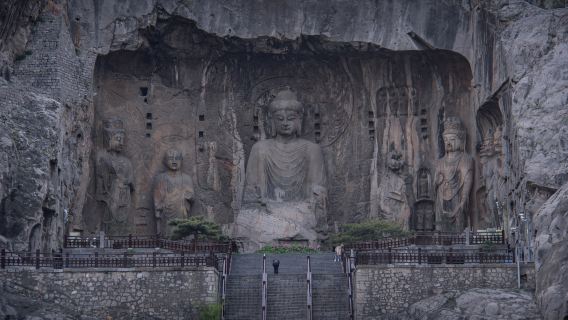
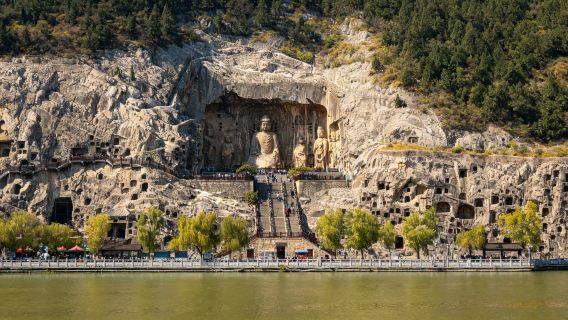
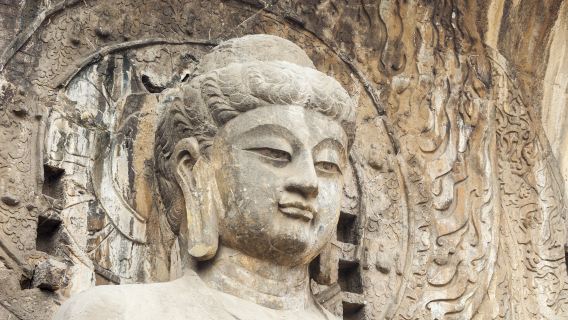
[8/15-person group · Door-to-door pickup · No sales pitches] Longmen Grottoes + White Horse Temple + Han-Wei Museum
󱌍
4.9/5
· 339 reviews· 2.4k booked
Duration: 9.1 hrs
English
Free cancellation
Instant confirmation
97.3% of travelers recommend
From€147.85
1-Day Tour: Longmen Grottoes, Shaolin Temple & Songyang Academy from Luoyang
Trip.Select
󱌍
4.8/5
· 13 reviews· 65 booked
Duration: 6.6 hrs
English
Free cancellation
From€126.52
[2-8-person high-end luxury small group] Longmen Grottoes • White Horse Temple • Han-Wei Museum
󱌍
4.9/5
· 217 reviews· 1.5k booked
Duration: 8.6 hrs
English
Free cancellation
Instant confirmation
100 consecutive positive reviews
From€147.85
[Hotel Pick-up & Drop-off] Private One-Day Tour: Longmen Grottoes & Erlitou Site Museum|Attraction Reservation Support
󱌍
From€59.36
1 Day Private Tour to Luoyang Longmen Grottoes,White Horse Temple and Luoyang Old City
󱌍
From€101.53
Luoyang White Horse Temple + TRACING LUOSHEN FU Day Tour [Luoyang Dahehui Attraction]
󱌍
From€100.29
4-Hour Private Exploration of Luoyang Longmen Grottoes with Expert Guide
󱌍
5.0/5
· 1 review
Duration: 3.3 hrs
English
Free cancellation
Book now for tomorrow
From€131.52

Featured Food & drink in Mianchi

View all Food & drink
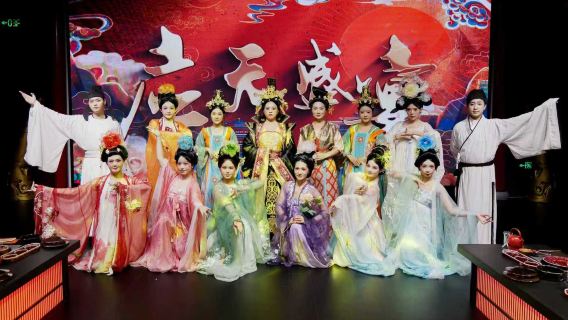
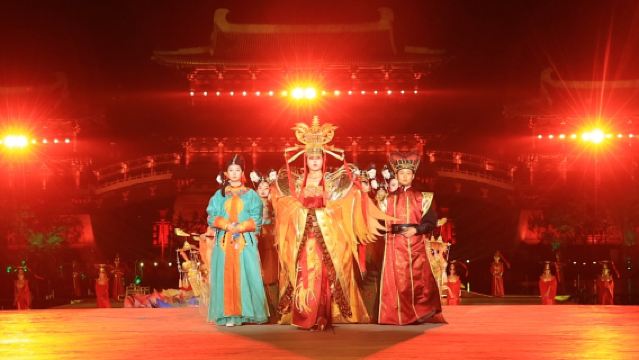
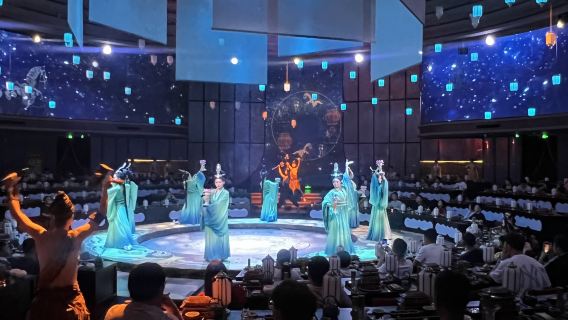
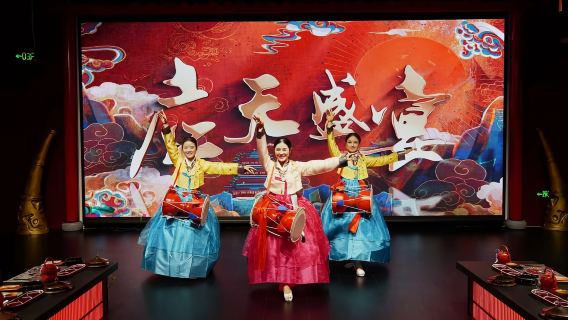
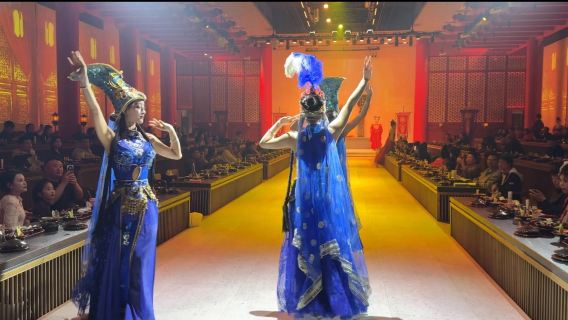
Luoyang Tang dynasty palace feast - enjoy 12 exquisite dishes while watching a performance - Yingtian grand banquet
󱌍
4.8/5
· 4 reviews· 28 booked
Duration: 2 hrs
English
Free cancellation
Instant confirmation
Book now for today
From€25.55
Luoyang Wu Huang Feast: Immerse in the Splendor of the Wuzhou Era
󱌍
Duration: 1.5 hrs
English
Free cancellation
Instant confirmation
Book now for tomorrow
From€51.37
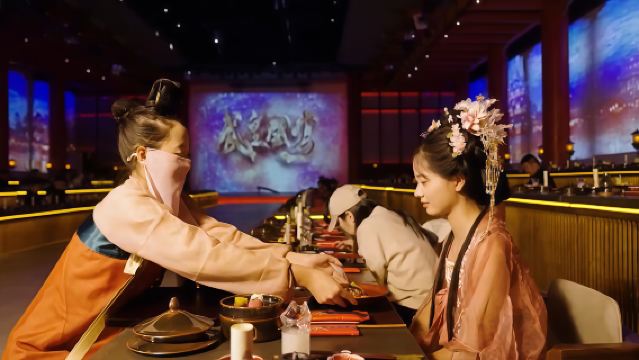
Luoyang Yanle | Ancient Costume Makeover, 360° Holographic Show & Heluo Royal Banquet
󱌍
Duration: 1.6 hrs
English
Free cancellation
Instant confirmation
Book now for tomorrow
From€21.48
Luoyang grand harmony • Yingtian feast (immersive experience of an emperor + palace delicacies)
󱌍
From€30.99
Banquet Under Heaven · Banquet Music (Luoyang · Palace banquet | Immersive dining show of the divine capital of Wu Zhou)
󱌍
5.0/5
· 5 reviews· 22 booked
Duration: 1.8 hrs
English
Free cancellation
Book now for tomorrow
From€16.04
Mianchi Today's weatherFoggy 7-17℃
Mianchi weather for the next 2 days11/15: 6-10℃, 11/16: 5-8℃

Free things to do in Mianchi

What travelers say about Mianchi

user-avatar
M18***01November 22, 2024
5.0
The Yangshao National Archaeological Site Park is constantly being improved. The park covers a large area and combines archaeological excavation sites and landscape design to create a relatively new landscape garden. You can consider spending an hour here to take a look and feel it after visiting the museum.

Yangshao Village National Archaeological Site Park

user-avatar
小宝1979November 9, 2026
5.0
Pingyao Ancient City is truly worth the trip! As the best-preserved ancient county town from the Ming and Qing dynasties, walking on the city walls and overlooking the panoramic view, one is overwhelmed by the weight of history. The underground vaults of Rishengchang Exchange House and Xietongqing Exchange House are eye-opening, allowing one to deeply appreciate the wisdom of Shanxi merchants in "connecting the world through finance." The courtroom performance at the county government office is very interesting and highly interactive. Although commercialization is inevitable, the core cultural charm remains rich. The atmosphere is even better when the lights come on at night, and the local delicacies, such as Pingyao beef and bowl-shaped rice cakes, are also very authentic. It is well worth spending two days slowly exploring and savoring this "living ancient city."

Pingyao Ancient City

user-avatar
139***18November 7, 2026
5.0
The electric shuttle buses in the scenic area are quite convenient. Everyone says peonies are the most beautiful flowers in the country, and after seeing them, I truly understand why. Unfortunately, my schedule was limited, so I had a slight regret about not being able to visit. I recommend going during the peak viewing season.

China National Flower Garden

user-avatar
Anonymous userOctober 30, 2026
5.0
Quite an interesting and special museum to visit. I have learned lot of “knowledge” related to the ancient tombs during the 2 hours tour with the guide.

The Luoyang Museum of Ancient Tombs

user-avatar
_We***86November 14, 2026
5.0
The parking lot is quite a distance from the actual attractions; it's too far if you don't take a car. However, the Yellow River is still breathtaking and definitely worth visiting, even though the water is truly yellow.

Hukou Waterfall tourist area of the Yellow River

user-avatar
Grant PigeonNovember 9, 2026
5.0
This park needs to be part of your itinerary when you plan a visit to luoyang as it gives you a good understanding of how the old city was constructed and gives you a feeling that you are back in ancient China..the show they perform here is a good way to round off the evening as I would highly recommend adding this to your itennary.o would suggest to at least give 4 hours if you are planning to attend the show as the park is wast

Sui and Tang Luoyang City National Heritage Park

user-avatar
Anonymous userNovember 7, 2026
5.0
Although the suspended sculptures at Xiaoxitian are only works from the late Ming and early Qing dynasties, they are still breathtaking when you visit in person. I entered the hall in the morning and saw the sunlight shining on the sculptures, making the trip worthwhile. I recommend visiting when there are fewer people and more sunshine, so you can take your time to appreciate them. The experience is definitely different from that during peak season.

Little Western Paradise

user-avatar
童哥哥23November 13, 2026
5.0
The Xi'an Bell Tower is absolutely worth a visit, a five-star rating is a must! 🌟 🏯 Rich in History: Built in 1384 (the 17th year of the Hongwu reign of the Ming Dynasty), it is the largest and best-preserved bell tower in China, with over 600 years of history. Its triple-tiered, four-sided pyramidal roof, covered with dark green glazed tiles and gilded with real gold, showcases the magnificent style of Ming Dynasty architecture. 📍 Excellent Location: Located in the heart of Xi'an, at the intersection of four main streets, it is the landmark core of the ancient city. From the tower, you can enjoy panoramic views of all four main streets, offering an unobstructed view of the ancient city's layout! 🌃 Breathtaking Night View: As night falls, the entire bell tower is illuminated, resplendent in gold, reflecting the bustling city lights. Every snapshot is a masterpiece; it's truly the pinnacle of Xi'an's nighttime scenery! 📸 Perfect for taking photos: During the day, climb the tower to admire the details of the ancient architecture; in the evening, watch the sunset cast golden light on the glazed tiles; and at night, enjoy the light show—each time of day offers a different kind of beauty. Nearby are the Drum Tower and the Muslim Quarter, so after visiting the Bell Tower, you can easily sample all of Xi'an's delicious cuisine! A visit to the Bell Tower is a must when in Xi'an; experience the unique charm of this ancient capital. Highly recommended! 👍

Xi'an Bell Tower

user-avatar
M76***62October 2, 2026
5.0
The site preserves revolutionary culture and is worth a visit.

Shaoshan Mountain

Trip Moments in Mianchi

Popular cities near Mianchi

Frequently asked questions

You can give Luoyang Palace Banquet • A Feast Through the Centuries [Yingtianmen Branch] (Immersive Imperial Feast + Audiovisual Extravaganza + Ancient-style Music and Dance) and Luoyang Tang dynasty palace feast - enjoy 12 exquisite dishes while watching a performance - Yingtian grand banquet a try. Before you go, please check their opening hours and menus online. Reservations are recommended, especially during peak hours.

Get help anytime, anywhere within 30 secondsContact customer support

Change and cancellation policies vary by attractions and tours. Please check the product details page for more information.

Ticket prices may vary between weekdays and weekends, as well as during peak and off-peak seasons. When booking with Trip.com, you can also use Trip Coins to get extra savings. For more tips on booking discounted tickets, please visit Trip.com for the latest information.