
Things to do in Ningshan
Explore top experiences
Top 10 attractions in Ningshan

Qinling Canyon Drift
Qinling Canyon Rafting is also called Guanghuojie Rafting by the locals. It is 6 kilometers long, with a large drop of 150 meters, 19 bends, and 10 rapids and dangerous shoals. It is known as the real "No. 1 Rafting in the Mountains". 5 or 6 people can take a rubber boat to enjoy the scenery of Qinling Canyon in excitement; couples can also take a rubber boat to join hands in the future and integrate into the landscape painting; they can also go on an adventure self-driving rafting. Haogou is lush and green, with beautiful mountains and clear waters. Self-driving rafting boats fly down the river with a drop of 220 meters, sometimes passing through forests and bridges, sometimes breaking through shoals and crossing streams, and experience the pleasure of fighting in the stormy waves. There are green mountains and clear waters and pleasant scenery here. There are rafting, rock climbing, archery, water roller, water zorbing, water expansion, bonfire, performances and other activities. It is a place for young people to hunt for curiosity and adventure, a place for the elderly to refresh themselves, a place for women and children to play in the water, a romantic valley for couples, and a place for urban white-collar workers to relax, entertain and vacation.Ningshan · 61.5 km from downtown

Guigu Ridge Scenic Area
Guigu Ridge National Forest Park is situated in Shiquan County, Ankang City. It is a famous Taoist mountain in Shanxi. The park is also called Mount Yunwu (Cloud and Mist), and consists of three scenic regions: Guigu Ridge, Longdonggou, and Daxigou. The main peak is in contrast with five mountains, and the scene is colloquially known as "deity on five dragons". The mountain peaks overlap one another, and there are lots of vegetation and water in the valleys. The area is surrounded by cloud and mist throughout the year. It is a well-preserved ancient forest, and is a great place for traveling and vacation.Shiquan · 12.6 km from Ningshan


Emperor Qinshihuang's Mausoleum Site Museum
Emperor Qinshihuang's Mausoleum Site Museum, also known as the Terracotta Army, is located about 1.5 kilometers east of the Mausoleum of the First Qin Emperor and forms part of the extensive necropolis. There were more than a thousand terracotta soldiers unearthed here, each with a different facial expression. Standing before the massive underground army, you will feel the extraordinary might of the Qin Emperor that enabled him to unify six warring states two thousand years ago. The Qin Emperor Ying Zheng began building the mausoleum for himself at the age of 13. Nearly 720000 men and 38 years were required to complete this vast project.China · Xi'an

Xi'an City Wall
Xi'an City Wall is a landmark of this ancient city. The city walls that we see now were built in the early years of the Ming dynasty and they are now more than 600 years old. The walls were built on the foundations of the imperial city of the Tang Dynasty and they are formed together with a series of defensive installments such as moats and turrets. At present, Xi'an City Wall can be accessed by many city gates. Visitors can choose the nearest one to them. The South Gate is the visitor entrance of Xi'an City and is also the city gate with more tourists. Cycling on the ancient walls is a good experience. Riding on the wall overlooking the ancient capital of the thirteenth dynasty, you will have a feeling of travelling through time.China · Xi'an

Huaqing Palace
Huaqing Palace attraction is located 30 km east of Xi'an, adjacent to the Terracotta Warriors. Renowned for its timeless hot spring resources and numerous historical events, it has become an iconic cultural tourism attraction of Tang Dynasty palaces in China. Palace scenic spots Huaqing Palace boasts a long history, serving as an imperial retreat for emperors from the Zhou, Qin, Han, Sui, and Tang dynasties. The palace features cultural zones like the Tang Imperial Hot Spring Relics Museum, the Xi'an Incident site—Five-Room Hall, Nine Dragon Lake and Lotus Lake scenic areas, and the Tang Pear Garden Museum. Notable architectural complexes include Feishuang Hall, Wanshou Hall, Changsheng Hall, Huanyuan Garden, and Yuwang Hall. The stele of "hot spring ode" Mount Li hot springs, developed early and favored by emperors throughout history, enjoy the reputation of being "the imperial hot springs under heaven." As far back as the Yangshao culture period 6,000 years ago, the ancient Jiangzhai people began utilizing these springs. With their profound cultural heritage spanning millennia, Mount Li hot springs represent an indispensable part of Chinese historical culture. The stele of hot spring ode in the attraction stands 154 cm tall, 72 cm wide, and 19 cm thick, featuring a coiled dragon design and a trapezoidal base. Engraved by Yuan Chang, the governor of Yongzhou during the Northern Wei Dynasty, the inscription reads, "The hot spring is nature's prescription and the primordial healer of the universe. People from all nations and those suffering from ailments come with provisions to seek relief in its waters." This stele is the earliest surviving written artifact at Huaqing Palace. Tang Imperial Hot Spring Relics Museum This is the site of the bathing pool described in the "Song of Everlasting Sorrow" where Yang Guifei emerged from her bath. After the An Lushan Rebellion, little remained of the original structure. In 1982, while constructing the "Guifei Pavilion," the Lintong County Government accidentally discovered the ruins of a Tang Dynasty bathing pool. After excavation and restoration, the Huaqing Palace imperial hot spring ruins museum was established. This small yet exquisitely designed pool measures 3.6 meters east-west and 2.9 meters north-south, with an oval-like shape. The pool walls are entirely built with bluestone slabs, featuring a two-tiered terrace structure composed of 18 arched stone sections. Inside the pool lies a dedicated bathing stone for Yang Guifei, engraved with the character "Yang." At the center of the pool bottom is a 10 cm diameter water inlet. A white marble lotus pedestal was unearthed here, connecting to both a showerhead above and ceramic water pipes below that linked to the main water source. Due to natural pressure, hot spring water would spray outward through the lotus showerhead, creating a mist effect remarkably similar to modern showers. Adjacent to the Guifei Pool to the east lies Emperor Xuanzong's exclusive imperial hot spring. During the Tang Dynasty, the Nine Dragon Hall stood above this pool, featuring nine white jade-carved dragons spouting water outside. This pool's surface resembles a realistic lotus shape, hence its alternate name "Lotus Pool." Xi'an incident site The five-room hall at the Xi'an incident site in Huaqing Palace is where the Xi'an incident took place. To this day, the glass windows and walls of the five-room hall still bear bullet marks from the fierce battle during the military remonstrance. The desks, chairs, beds, sofas, tea sets, stoves, carpets, telephones, and other office items in each room are replicated and arranged according to their original appearance. Historical events: Beacon fire to deceive the feudal lords In 779 BC, King You of Zhou obtained the beautiful Bao Si, yet she never smiled. To solve this, the king conspired with the treacherous minister Guo Shifu and lit the beacon fires at the Huaqing Palace attraction. The feudal lords across the land saw the signals.Beacon fireHe quickly led his troops to rescue the king, but King You told the feudal lords, "I lit the beacon fires just to make my queen laugh," upon which Bao Si burst into laughter. The feudal lords arrived valiantly but left resentfully. Seeing King You's incompetence and the people's discontent, the Quanrong tribe seized the opportunity to launch an attack. As the enemy troops approached the mountain, King You urgently raised the beacon fires.Beacon fireHe mobilized troops, but none of the feudal lords came to his rescue. King You fled with Bao Si toMount LiHe was later killed by the Quanrong tribe, leaving behind historical anecdotes such as "a smile worth a thousand gold," "losing the kingdom for a smile," and "playing with beacon fires to deceive the feudal lords." And this beacon tower at Huaqing Palace attraction towers at an altitude of 913.6 m.Mount LiThe beacon tower at Huaqing Palace attraction on the first peak of Xixiu Ridge. Su Dongpo composing poetry at Mount Li During the Jiayou era of the Northern Song Dynasty, the Lishan hot springs, meticulously restored by Liu Ziyong and others, became breathtakingly beautiful, attracting crowds of visitors who composed poems and essays to express their nostalgia. Among the countless poetic works, the emerging literary giant Su Shi stood out with his masterpieces like "Lady of Guo's night outing" and "Lishan" during his visit to the hot springs. Xi'an incident The Xi'an incident, also known as the "double-twelfth incident". Zhang Xueliang and Yang Hucheng launched a mutiny at Huaqing Palace, detaining the then chairman of the Military Commission of the National Government. Performance items You can watch a large-scale dance drama at the attraction. ▲ The Song of Everlasting Sorrow is China's first large-scale live historical dance drama created by Shaanxi Tourism Group. Based on Bai Juyi's timeless poem of the same name, it fully utilizes the attraction's resources and employs high-tech stage lighting to combine historical storytelling with live performances, recreating the love story of Emperor Li Longji and Yang Guifei at Huaqing Palace over 1,300 years ago. ▲There is also the historical adaptation "12-12 Xi'an Incident," which vividly and authentically recreates the lesser-known details of the "Xi'an Incident."China · Xi'an

Canglong Gorge Scenic Area
Canglong Gorge Stream Tracing Adventure, Canglong Gorge, winding streams are blue, secluded and narrow, ancient trees are towering, vines are hanging, mountain flowers are gorgeous, hundreds of birds are singing, strange cliffs and rocks are in various shapes, and deep pools and streams are clear and transparent. It is a collection of natural beauty such as strange peaks, strange rocks, waterfalls, pools and streams, ancient vines, and green bamboos, which has a high value of viewing ancient and hunting adventures. People who visit here can not only enjoy the natural scenery of the canyon, breathe the fresh air of negative oxygen ions, but also engage in rock climbing and adventure sports. It is unique and fun, and is an ideal resort for aerobic activities in the suburbs of modern urbanites. Canglong Gorge, winding streams are blue, secluded and narrow, ancient trees are towering, vines are hanging, mountain flowers are gorgeous, hundreds of birds are singing, strange cliffs and rocks are in various shapes, and deep pools and streams are clear and transparent. It is a collection of natural beauty such as strange peaks, strange rocks, waterfalls, pools and streams, withered vines, and green bamboos, which has a high value of viewing ancient and hunting adventures.Ningshan · 12.2 km from downtown

Mount Hua
Mount Hua, formerly known as "Xiyue", is one of the five famous mountains in China. It is located in Huayin City, Shaanxi Province. Huashan is also known as "Taihuashan". It is the birthplace of Chinese civilization. The "Hua" in "Zhonghua" and "Huaxia" comes from Huashan. The words "strange and dangerous" are the essence of Huashan's scenery. "Since ancient times, there has been only one road to Huashan" describes the steepness of Huashan. The Attraction has many thrilling attractions such as Changkong Plank Road, Kitesurfing, Qianchi Chuang, Baichi Gorge, Laojun Ligou, etc., which are carved out on the steep cliffs. Those who visit them in person will be amazed. Huashan Attraction covers a vast area, including the Main Peak Attraction, Xiyue Temple Attraction, Xianyu Attraction, etc. The Main Peak Attraction is the core Attraction of Huashan, including "Huashan One Road" and the five main peaks in the southeast, northwest, and center. Huashan in most people's minds refers to the Main Peak Attraction. Five main peaks The East Peak is about 2,100 meters above sea level and is named for its location in the east. There is a platform on the top of the peak, which is high and dangerous with a wide view. It is a good place to watch the sunrise. It is called Chaoyang Terrace, and the East Peak is also called Chaoyang Peak. The East Peak consists of four peaks, one main peak and three s-ervant peaks. The peak where Chaoyang Terrace is located is higher, the Yunv Peak is in the west, the Shilou Peak is in the east, and the Botai is in the south. There are more than dozens of landscapes on the East Peak. There is a natural stone pattern on the cliff on the side of the East Shilou Peak, which looks like a giant palm print. This is the Huayue Immortal Palm, which is listed as the first of the eight scenic spots in Guanzhong. The story of the giant spirit opening the mountain and guiding the river originated from this. The West Peak is about 2,000 meters above sea level. Because there is a huge rock on the top of the peak that looks like a lotus petal, ancient literati often called it Lotus Peak or Hibiscus Peak. Xu Xiake wrote in his "Diary of Traveling to Mount Taihua": "There is a rock rising on the peak, and there are stone pieces covering it, like a lotus flower." This stone must be referring to it. There are many landscapes on the West Peak, including Cuiyun Palace, Lotus Cave, Giant Spirit Foot, Axe-Split Stone, Sheshen Cliff, etc., and there are many beautiful myths and legends. Among them, the well-known story of Chenxiang splitting the mountain to save his mother is circulated here. The South Peak is over 2,100 meters above sea level and is the highest peak of Huashan. The ancients called it the "Head of Huashan". On one side of the South Peak is a thousand-foot cliff, standing straight like a knife, and below is a deep ravine, which is separated from Sangong Mountain and Sanfeng Mountain. The South Peak consists of one peak and two peaks. The east side is called Songhui Peak, and the west side is Luoyan Peak. The origin of the name of Luoyan Peak is said to be because the migrating wild geese often land here to rest. The North Peak is about 1,600 meters above sea level, with cliffs on all sides, covered with clouds above and connected to the earth veins below. It stands tall and unique, and is also called Yuntai Peak because it looks like a cloud platform. Li Bai of the Tang Dynasty wrote in his poem "A Song of the Cloud Platform of Mount Xiyue to Complimentary Danqiuzi": "Three peaks stand as if about to collapse, and the green cliffs and red valleys are high. The golden essence of the White Emperor mobilizes his vitality, and the stones become lotus flowers and the clouds become platforms." The famous story of "Taking Huashan by Strategy" took place here. There are many landscapes on the mountain, including the Zhenwu Hall, Jiaogong Stone Chamber, Changchun Stone Chamber, and the place where Laojun hung the plow. The Middle Peak is the only way to the other four peaks. It is located in the middle of the East, West and South Peaks. The forests on the peak are lush and green, and the environment is quiet. There is a Taoist temple named Yunu Temple on the top of the peak. It is said that it was the place where Qin Mu Gong's daughter Nong Yu cultivated herself in the Spring and Autumn Period, so it is also called Yunu Peak. Main landscape: There are more than 210 famous Attraction in Huashan. From ancient times to the present, countless literati and poets have left various classic poems here. Skywalk The Changkong Plank Road is located on the east side of the Huashan South Peak. It was built by the master of the Huashan School, Taoist He Zhizhen of the Yuan Dynasty, who wanted to get away from the world and practice Taoism. He built it by inlaying stone piles on the cliffs and paving wooden boards. At the end of the plank road, you can see the "Hezu Cave" where Master He practiced self-cultivation. The road builders chiseled stone holes on the cliffs, wedged stone piles into the holes, and laid wooden boards about 40 cm wide between the stone piles. Visitors must stick to the cliff wall, pull the iron chain with their hands, step on the wooden boards, and move forward slowly sideways. Xiyue Temple Xiyue Temple, also known as Huayue Temple, is a temple where emperors of all dynasties worshipped and offered sacrifices to Shaohao, the Great Emperor of Xiyue. It was first built during the Yuanguang period of Emperor Wu of the Han Dynasty (134-129 BC) at the entrance of Huangshengu (now Huangfuyu) at the foot of Huashan Mountain. It was moved to its current location during the reign of Emperor Huan of the Eastern Han Dynasty (147-167 AD) and renamed today. It was rebuilt many times during the Tang, Song, Ming and Qing dynasties. Canglong Ridge The steps on Canglong Ridge are only 2 feet wide, with deep ravines on both sides, as steep as a knife. The height difference between the ridge and the top is about 500 meters, and the slope is more than 45 degrees. Looking at the green pines and white clouds in the distance and hearing the sound of the wind is dizzying. Jinsuoguan Jinsuoguan is one of the five passes of Huashan Mountain. It is built on a stone archway at the entrance of the three peaks. It is the throat of the Wuyun Peak to the four peaks of East, West, South and Center. There is no way to pass after the pass, so it is also called Tongtianmen. Taoists believe that Huashan is the fairyland of gods. Only after passing Tongtianmen can you enter the fairyland. Therefore, there is a folk song that "after passing Jinsuoguan, there is another world". There has been only one road to Mount Huashan since ancient times "There has been only one road to Mount Hua since ancient times" refers to the "Huashan Valley" hiking trail, which includes various scenic spots along the Huashan hiking trail since ancient times. When connected together, it is what is commonly referred to as "There has been only one road to Mount Hua since ancient times." How to visit Huashan has two mountain gates (entrances): East Gate and West Gate (also known as Huashan Gate). Take the cable car up the mountain and go to the East Gate; if you climb the mountain on foot, enter from the West Gate. Huashan currently has two cable cars, the East and West Lines, which reach the North Peak and the West Peak respectively (please plan the climbing route in advance before purchasing the ticket and purchase the corresponding ticket type, and you cannot change it midway.). Route 1: Hiking route There has been only one road on Mount Huashan since ancient times. It is an ancient mountaineering road with a total length of 12.5 kilometers and 9,567 steps. It takes about 4 hours to hike from Yuquanyuan, through Wuli Pass, Shaluoping (night climbing), Qianchi Chuang, Baichi Gorge, etc. to the North Peak, and then start the tour from the North Peak. Route 2: "Up West and Down West", a mountaineering route suitable for the Seniors and tourists with children This route goes up the West Peak Cableway of Mount Huashan and down the West Peak Cableway, that is, going up from the west and down from the west. The whole route takes a relatively short time, about 4 hours, and is also more energy-saving, making it more friendly to the Seniors and tourists with children. Route 3: "Up West and Down North", a one-day mountaineering route chosen by 80% of tourists This route goes up by cable car from the West Peak of Mount Huashan and down by cable car from the North Peak, that is, going up from the west and down from the north. The entire route is a classic one-day tour route, which takes about 6 hours. You can visit all the attractions without backtracking. Most tourists choose this route because this road almost goes straight down, which is easier and faster than the uphill road. Route 4: "North up and north down", a time-saving, economical and panoramic mountaineering route This route goes up by cable car at the North Peak of Huashan and down by cable car at the North Peak, that is, going up from the north and down from the north. The whole route is a relatively low-cost cable car mountaineering route. If your sightseeing time is limited, you can choose this route and visit the North Peak, which has the Memorial Pavilion, Ear-Crushing Cliff, Canglong Ridge, Huashan Sword Contest Monument, panoramic Huashan and other attractions.China · Huayin

Grand Tang Mall
Grand Tang Mall is a large-scale Tang-style architectural pedestrian street in Xi'an's Qujiang New District, built around the Giant Wild Goose Pagoda. It stretches from the Xuanzang Square at the foot of the pagoda in the north to the Tang City Wall Ruins Park in the south, connected by a approx. 1500 m central axis view boulevard running north-south. The boulevard itself resembles an open-air sculpture gallery, featuring themed sculptures arranged sequentially from north to south: Buddhist culture of the Tang Dynasty, Tang heroes, the Zhenguan era governance, Empress Wu's procession, and the Kaiyuan heyday. Statues of eminent monks like Xuanzang and Jianzhen stand at the front, followed by Tang luminaries such as Li Bai, Wu Daozi, Sun Simiao, and Lu Yu in the middle section, with ceremonial processions of Emperor Taizong, Empress Wu Zetian, and Emperor Xuanzong concluding the display. Walking through this boulevard is akin to reading a three-dimensional history of the Tang Dynasty. The block connects three themed squares from north to south—Xuanzang square, Zhenguan square and Kaiyuan square—with Tang-style pavilions lining both sides. Among them are four cultural venues: Xi'an concert hall, Shaanxi grand theater, Xi'an art museum and Qujiang cinema. Enjoying concerts, visiting exhibitions and shopping for photos can all be arranged along the same route. By day, admire the architecture and sculptures, but the real highlight of this street comes after nightfall—when the lights come on, the Tang-style pavilions glow with radiant colors, and the entire street seems to recreate the splendor of the Tang Dynasty. The area features year-round immersive street performances: a "Tumbler Girl" in Tang attire leans in to hold hands with travelers as she spins; Fang Xuanling and Du Ruhui from the "Secret Box of the Tang Dynasty" appear, posing riddles and bantering, with clever answers from selected travelers drawing cheers from the crowd; Hu Xuan dances and Tang-era music performances compete in a colorful parade; and actors dressed as the "Poet Immortal" may challenge you to a verse duel at any moment—strolling around, you might stumble upon a performance. This place gathers trending attractions, highlighting dazzling colors, fantasy, and a tech vibe. Through large-scale installations, it creates a stylish and dynamic interactive experience center, offering a sought-after photo spot for trendy young crowds. In the family-friendly tech zone, scene-based displays and hands-on actions spark children's imagination and creativity, combining play with skill development and experiential gains—making it an ideal destination for family-friendly fun.China · Xi'an

Xi'an Museum
Xi'an Museum is a modern comprehensive museum built upon the cultural relic protection site—the ruins of the Tang Dynasty Jianfu Temple and its iconic structure, the Small Wild Goose Pagoda. It integrates cultural relic collection and protection, academic research, exhibition and display, social education, and garden leisure. Its core area is the location of the original Tang Dynasty royal temple, Jianfu Temple, while the precious and striking historical relic existing within the temple—the Small Wild Goose Pagoda—has become the museum's unique landmark and soul. Therefore, the Jianfu Temple ruins and the Small Wild Goose Pagoda are not only the foundation and core carrier for the establishment of Xi'an Museum, but also important outdoor historical exhibition areas and focal points for visitors. The main building of the museum is located on the north side of the ancient temple ruins. The three elements (ancient temple ruins, ancient pagoda, and modern museum building) are organically integrated, jointly forming a unique cultural space that combines "museum, pagoda, temple, and garden," vividly showcasing the historical context of Xi'an from ancient times to the present. Xi'an Museum officially opened to the public on May 18, 2007. Its establishment aims to comprehensively showcase the glorious history and splendid culture of Xi'an (ancient Chang'an) as the capital of thirteen dynasties, filling the gap of a comprehensive museum of Xi'an's urban history. Collection highlights: The museum houses over 100,000 precious cultural relics from various historical periods of Xi'an. The collection spans from prehistoric times to the Ming and Qing dynasties, with particular emphasis on artifacts from the prosperous dynasties of Zhou, Qin, Han, and Tang, including bronze ware, jade articles, gold and silverware, ceramics, murals, stone steles, epitaphs, and Buddhist statues, systematically reflecting the political, economic, cultural, social life, and foreign exchanges of the ancient capital Chang'an. Main exhibition: The permanent exhibition "Ancient capital Xi'an" takes the urban development history of Xi'an as the main thread, showcasing the evolution and achievements of Xi'an as a capital (Zhou Fenghao, Qin Xianyang, Han Chang'an, Sui-Tang Chang'an) and a prefectural city (Song, Yuan, Ming, and Qing dynasties) through a large number of precious cultural relics, models, charts, and multimedia means. Unique environment: The museum's greatest feature lies in its surroundings. Travelers can not only visit modern exhibition halls but also stroll through the expansive heritage park encompassing the Small Wild Goose Pagoda, the ancient architectural complex of Jianfu Temple (including structures like the Ming dynasty bell tower housing a Jin dynasty ancient bell), an ancient stone sculpture art exhibition area, and garden views—experiencing the charm of the millennia-old capital at its historical site. The view of "morning bells at the Wild Goose Pagoda" is particularly renowned. Functional positioning: The museum is not only an important center for cultural relic collection, research, and display, but also an urban cultural park where citizens can relax, entertain, and immerse themselves in history and culture, undertaking significant social education and cultural exchange functions.China · Xi'an

Xi'an Bell Tower
Xi'an Bell Tower is one of the larger and well-preservedBell tower, originally built in 1384, during the Hongwu reign of the Ming Dynasty,Bell towerLocated in the heart of Xi'an, it is one of the landmarks of the ancient city, radiating east, south, west, and north streets from its center, connecting to the east, south, west, and north gates of the Xi'an city wall respectively. The Xi'an Bell Tower was originally located on Guangji Street in the west. As the city center shifted eastward, it was relocated toDrum towerEast side, today's location. The Xi'an Bell Tower features a typical Ming Dynasty architectural style, with a square brick-and-stone base at the bottom and a triple-eaved pyramidal roof structure at the top, covered with dark green glazed tiles. The gilded pinnacle at the roof's apex is particularly striking under sunlight. Each side of the base has a central arched doorway approx. 6 m high, which were interconnected and once served as passageways for the intersection of four major streets—east, south, west, and north—allowing pedestrian and vehicular traffic. These doorways are now sealed, with a traffic roundabout built around them and an underground pedestrian passage. The entrance to the Xi'an Bell Tower is located within this underground passage, accessible via a spiral staircase. Inside the tower, there is a replica of the "Jingyun Bell," whose original was cast in the second year of Emperor Ruizong's Jingyun era (711 AD) during the Tang Dynasty and is now housed in the Xi'an Beilin Museum. Standing on the Xi'an Bell Tower, you can see the four main streets extending east, south, west, and north from the Xi'an Bell Tower. Around the Xi'an Bell Tower, there are bustling commercial areas and not far awayDrum towerTravelers can also enjoy wonderful historical performances when visiting the Xi'an Bell Tower.China · Xi'an
Experiences you can't miss in Ningshan
Featured Cultural experiences in Ningshan
View all Cultural experiences
From€151.54
10% off
Limited-time sale
From€136.11€151.24
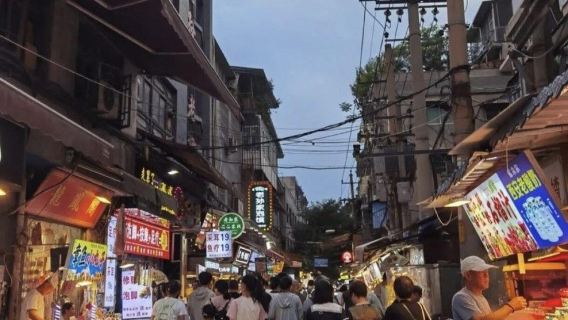
![Qinling four treasures science museum + city wall + Xi'an Muslim Quarter [premium small join-in tour 1-day tour·includes English guide]](https://ak-d.tripcdn.com/images/0350t12000tvfi30197BB_C_568_320.jpg?_fr=wc)
5.0/5
· 1 reviewFree cancellation
Instant confirmation
From€79.86
10% off
Limited-time sale
From€163.33€181.48
From€133.09
Featured Outdoor experiences in Ningshan
View all Outdoor experiences
Free cancellation
Instant confirmation
Save €0.37
From€35.93€36.3
Free cancellation
Instant confirmation
Save €0.4
Limited-time sale
From€38.62€39.02
![[Private Car Tour] Nanwutai Mountain and Zhongnan Mountain Nature and Culture Tour | Pick-up and drop-off within the Third Ring Road](https://ak-d.tripcdn.com/images/0354212000s2rdrui3EFC_C_568_320.png?_fr=wc)
Free cancellation
Book now for tomorrow
From€26.36
![Paragliding experience at Tianziyu in Chang'an, Xi'an [professional instructor + complimentary insurance]](https://ak-d.tripcdn.com/images/0356m12000iye576n6E0F_C_568_320.jpg?_fr=wc)
From€103.81

Free cancellation
Instant confirmation
Save €0.47
From€45.97€46.44
Free cancellation
Instant confirmation
Save €0.48
From€47.01€47.49
![Xi'an Departure Private Day Tour to Tai Ping National Forest Park [Multiple Vehicle Options Available!]](https://ak-d.tripcdn.com/images/0353z12000soov8g2AA70_C_568_320.png?_fr=wc)
Free cancellation
Instant confirmation
Book now for tomorrow
Save €1.11
From€109.80€110.91
Free cancellation
Instant confirmation
Save €0.26
From€25.62€25.88
Free things to do in Ningshan
Qinling Canyon Drift
Ningshan · 61.5 km from downtownGuigu Ridge Scenic Area
Shiquan · 12.6 km from NingshanEmperor Qinshihuang's Mausoleum Site Museum
China · Xi'anImmediate access, Book now for today, Cancel anytimeXi'an City Wall
China · Xi'anImmediate access, Book now for today, Cancel anytimeHuaqing Palace
China · Xi'anImmediate access, Book now for todayCanglong Gorge Scenic Area
Ningshan · 12.2 km from downtownMount Hua
China · HuayinImmediate access, Book now for today, Cancel anytimeGrand Tang Mall
China · Xi'anXi'an Museum
China · Xi'anImmediate access, Book now for today, Cancel anytimeXi'an Bell Tower
China · Xi'anImmediate access, Book now for today, Cancel anytime
What travelers say about Ningshan

M22***92January 7, 2026
5.0
Six-star review! I'm giving it an extra star so you won't get too cocky. If you're still hesitating, grab it now! Highly recommended, it's really great, and the price is excellent. I'll definitely buy from this store again. In short: Satisfied! Satisfied! Satisfied!
Qinling Canyon Drift

小云儿001May 4, 2020
4.0
Guiguling Mountain is nice, with green trees and shade inside. When you climb to a high place, the cool wind blows on your body, bringing you a touch of coolness. There are many steps in front of the Santian Gate, which is a challenge to physical fitness. The hardware facilities in the scenic area are somewhat lacking, the signs are not very clear, and there are few service staff. I look forward to strengthening them later!
Guigu Ridge Scenic Area

M2c***pnOctober 17, 2026
5.0
Today, we were guided by Director Wang! He made this crowded Terracotta Warriors tour much more interesting! Throughout the trip, Director Wang provided meticulous explanations and took care of everyone! He explained the key points thoroughly! He was conscientious and responsible! Thumbs up 👍!
Emperor Qinshihuang's Mausoleum Site Museum

_TI***dcOctober 17, 2026
5.0
It was a pleasant experience. We arrived at around 7 and spent 1-2 hours walking around. Views are mesmerizing and it's fun looking down on busy streets at night.
Xi'an City Wall

Natalia Valenzuela ubinaOctober 15, 2026
5.0
I’m really happy I visited this place! I thought I would find some gardens and a few temples, but instead, I discovered an entire mountain with a cable car and everything.I started walking around without really knowing where to go, but the area is full of maps, so it’s easy enough not to get lost.I had no idea Chiang Kai-shek’s temporary office was located here. It was truly interesting to visit!Afterwards, I wandered along the streams and lakes, surrounded by nature and temples, until I came across the cable car. I decided to take it only on the way up.From there, I continued hiking to Beacon Hill. There are quite a lot of steps, but the views make it absolutely worth it.After that, I walked all the way back down the mountain. I discovered so much more than I had expected! I even bought some souvenirs and grabbed some KFC along the way.If you’re planning to hike up to Beacon Hill without taking the cable car, be prepared for a very long walk!
Huaqing Palace

Anonymous userAugust 3, 2025
4.0
The scenic area is quite nice and unique. It's a niche area focused on moss and natural landscapes, but the scenery is stunning, with green hills and clear waters. The area winds along a mountain stream, with a gentle slope. There are many platform rest areas along the way, and plenty of places to go down to the stream for water play, making it very suitable for the elderly and children. It's a great place to take the family to cool off in the scorching summer heat!
Canglong Gorge Scenic Area

suyuOctober 17, 2026
5.0
Mount Hua is renowned as "the most precipitous mountain under heaven," offering thrilling adventures like the Plank Road in the Sky and the Hawk's Turn, while the cable car soars through the clouds for breathtaking views. Each of its five peaks possesses its own unique character, and the sunrises and seas of clouds are magnificent. It also boasts a rich Taoist culture. With well-developed facilities and standardized management, it's a must-visit destination for adventurous travelers.
Mount Hua

呦未来可期October 15, 2026
5.0
Take a stroll through the Tang Dynasty Never-Sleeping City on a pleasant autumn evening. The evening breeze is cool, the lights are dazzling, and the atmosphere of the Tang Dynasty is palpable. Street performances are everywhere, and tourists come and go, creating a lively scene. No need to plan a route; just wander around and explore as you please. Immersed in this world of lights, feeling the warmth of everyday life and ancient charm, this is what small satisfactions in ordinary days are all about. Chang'an's autumn nights are as bright as ever.
Grand Tang Mall

E34***97October 17, 2026
5.0
The Xi'an Museum at the Small Wild Goose Pagoda was less crowded than the Shaanxi History Museum, but its collection was also very rich. The guide, Xiao Li, explained everything in great detail; although it's repetitive work every day, she didn't do it half-heartedly. 👍
Xi'an Museum

闲庭漫步30October 12, 2026
5.0
The clock tower is located in the heart of the old town, at a crossroads, and can only be accessed via an underpass. Free baggage check-in is available at the entrance, which is quite convenient. Climbing the clock tower offers panoramic views of the old town, providing a pleasant visual experience.
Xi'an Bell Tower


