Xichuan

Things to do in Xichuan

Search attractions or local attractions & tours
Search

Explore top experiences

Top 10 attractions in Xichuan

View all Attractions
Danjiang Scenic Area

Danjiang Scenic Area

3.6
4.6/5
29 reviews

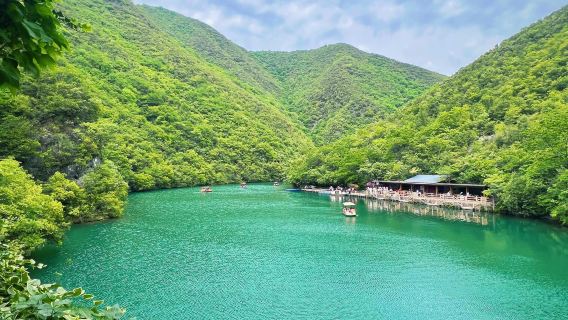
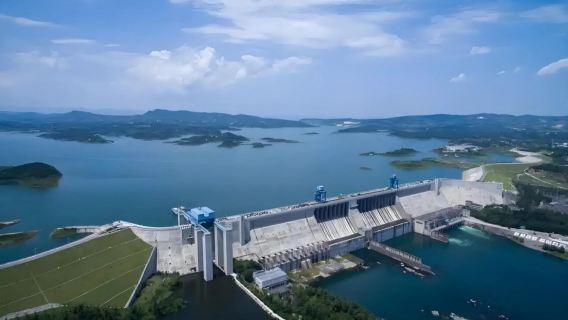
Danjiangkou Reservoir was built in 1958. Its key project was built at the confluence of the Danjiang River and the Hanjiang River, intercepting the two major water systems of Danjiang River and Hanshui River. The reservoir area covers more than 800 square kilometers and stores 17.4 billion cubic meters of water. It is currently the largest reservoir in Asia. The reservoir area is full of rippling green waves, towering mountains, and the lake and mountains are integrated. The natural scenery is beautiful and charming. The narrowest part of the reservoir area is only more than 100 meters. The peaks on both sides are interlaced, the cliffs are steep, and the scenery on both sides is breathtaking and spectacular. You can take a passenger ship to see the scenery on both sides. The Yunling Gorge, Taibai Gorge and Yankou Gorge formed in this area are called the "Little Three Gorges of Danjiang". The Little Three Gorges extend for more than 30 miles, with mountains and rivers, dangerous mountains and clear waters. It is an ideal place for tourists to appreciate the beautiful scenery of mountains and rivers. In the past, the lake of Xiao Sanxia gradually widened, with the widest part of the lake reaching more than 20 kilometers. It was called the "Little Pacific Ocean" by people, and it was very attractive to tourists. Especially tourists from the mainland always felt like they were in the ocean. The head of the world-renowned South-to-North Water Diversion Project's middle route is located along the Danjiang River.

Xichuan · 47.1 km from downtown
Xixia Dinosaur Relics Park
No. 2 of Family-friendly Attractions in Nanyang

Xixia Dinosaur Relics Park

5.2
4.4/5
1.1k reviews

Xixia Dinosaur Relics Park, located in Danshui Town, Xixia County, Nanyang City, is an important attraction in Funiu Mountain National Geopark. The Xixia Dinosaur Site belongs to the Cretaceous rift basin deposits. More than 1,000 dinosaur egg fossils have been exposed in the upper layers, and there are at least 16 egg-laying layers in the lower layers. Among them, the Xixia giant elongated egg and the Gobi prismatic egg are rare in the world and are the symbols of Xixia egg fossils. A large number of dinosaur egg fossils have been unearthed in Xixia, which are diverse, widely distributed and well-preserved. They are known as the ninth wonder of the world after the Terracotta Warriors and Horses of Qin Shihuang's Mausoleum. The Xixia Dinosaur Relics Park is mainly composed of four parts: the Geological Science Plaza, the Dinosaur Egg Fossil Museum, the Dinosaur Egg Site and the Simulated Dinosaur Park. Geological Science Plaza: It is conceived with the time coordinate axis of the development of life on earth as its theme. From north to south, it is divided into four parts: Archaean Era, Archaic Era, Phanerozoic Era and Modern Era. The Phanerozoic Era is divided into Paleozoic Era, Mesozoic Era and Three regions of the Cenozoic Era. When tourists come to the modern part of the area, they can see the theme monument of the geopark erected here, and the ground is also paved with dinosaur bone fossil reliefs, etc., which are based on the Triassic period when dinosaurs began to appear, the prosperous Jurassic period, and the Cretaceous period when they became extinct. The boundary forms a square atmosphere with great archaeological significance. In the Dinosaur Egg Fossil Museum, a group of egg fossils from the Xixia Basin is displayed. The giant elongated eggs are currently the only type unique in the world, and they are also rare treasures bestowed by nature to mankind. The Gobi prismatic egg found in the upper part of the Gaogou Formation is the third place in the world where such egg fossils have been found. In the scenic area, tourists can also visit the dinosaur egg site. The types of dinosaur eggs found here include: garden-shaped eggs, Sanli Temple tree-shaped eggs, elongated eggs, Xixia giant elongated eggs, Gobi prismatic eggs and branch eggs. . The simulated dinosaur park in the scenic area is a favorite place for children. A large outdoor area has been opened up to display the "brothers and sisters" of the dinosaur family. Every simulated dinosaur is lifelike and vivid. These dinosaurs are very representative species of the dinosaur family. You can also watch 4D movies and experience the scene of a volcanic eruption in the scenic area. These two projects require additional charges. Sometimes there are many tourists and you need to wait in line for some time.

Xixia · 21 km from Xichuan
Emperor Qinshihuang's Mausoleum Site Museum
2026 Global 100 - Best Things to Do

Emperor Qinshihuang's Mausoleum Site Museum

10
4.7/5
150.7k reviews

Emperor Qinshihuang's Mausoleum Site Museum is a large site museum built on the site of the Terracotta Army pits, which are located approx. 1.5 km east of the mound of Emperor Qinshihuang's Mausoleum. In March 1974, farmers from Xiyang Village accidentally unearthed fragments of terracotta figures while digging a well, and archaeological exploration confirmed Pit 1; in 1976, Pits 2 and 3 were successively discovered to the north of Pit 1. This army, which had slumbered for over 2,000 years, was thus brought back to light, and the discovery of the Terracotta Army has been hailed as "one of the great discoveries in the history of 20th-century archaeology." Pit 1 is the main military formation among the three pits, stretching over 200 m from east to west, with an estimated 6,000 pottery figurines and horses buried inside. Standing at the edge and looking down, armored warrior figurines, war chariots, and pottery horses are arrayed eastward in battle formation. A closer look at each figure reveals different facial shapes, hairstyles, beards, and even hand gestures. The figurines were originally painted all over, but most of the paint has peeled off and discolored due to fire and long burial. Pit 2 is L-shaped, with crossbowmen, cavalry, and charioteers arranged in a mixed formation; the vividly expressive kneeling archer was unearthed here. Pit 3 is small in scale, and scholars believe the ceremonial guard figurines and war chariots unearthed there indicate it served as the command center—known in ancient times as a "military tent"—directing the formations in Pits 1 and 2. The bronze swords, pi halberds, spears, crossbow triggers, and large quantities of arrowheads unearthed from the pits—many still sharp after more than 2,000 years—demonstrate the sophistication of Qin dynasty metallurgy. The Emperor Qinshihuang's Mausoleum Site Museum and the Qin Shi Huang Mausoleum at the foot of Mount Li were originally one integrated whole. After Qin Shi Huang ascended the throne at the age of 13, he began constructing the mausoleum, conscripting hundreds of thousands of laborers over a period spanning more than 30 years; the terracotta army, which replaced human sacrifice with figurines, served as the underground guard for this imperial mausoleum. To avoid the crowds during your visit, you might want to see Pit 3 and Pit 2 first, and then take your time to experience the awe-inspiring scene of Pit 1 last. After viewing the terracotta pits, you can also take the attraction's shuttle bus to Lishan Garden, where Emperor Qinshihuang's mausoleum is located; the Acrobats Pit, the Civil Officials Pit, and the Bronze Chariots and Horses Museum are all within the garden. The two painted bronze chariots and horses, cast at half the scale of real chariots, are exquisitely crafted with brilliantly gleaming gold and silver fittings, and are well worth a special trip to see.

China · Xi'an
Zuochangu

Zuochangu

2.9
3.5/5
43 reviews

The Zen Valley is a rare and exquisite canyon Attraction, which can be called "the first water rust stone group in the Central Plains" and is known as the "Pearl of Danjiang" and "Fairyland Spirit Valley". The profound Buddhist cultural heritage and the favorable geographical conditions of the water source of the middle route of the South-to-North Water Diversion Project have made the Zen Valley the focus of world attention and the shining pearl of the Danjiang Scenic Area. The Zen Valley integrates waterfalls, strange stones, deep pools, springs, steep cliffs and secluded caves, and integrates Buddhist culture, historical culture, ancient village culture and landscape Attraction views to form a complete landscape system. In the Zen Valley, the Buddha Light Waterfall and the Lotus Waterfall are cascading; the Thousand Buddha Cliff and the Face-to-Wall Cliff are steep and powerful; the Pure Heart Pond and the Bottomless Pond are quiet and peaceful; the Julong Lake and the Red Fruit Bay are intoxicating. The various water rust stones here have different shapes and the largest water rust stone group in the Central Plains. There are the Longwang Spring, a spring promoted by Xu Xiake, a geographer in the Ming Dynasty, and Tongtian Cave, which was sealed by Emperor Xuanzong of the Tang Dynasty. There is also the unique Buddha Light Waterfall and rainbow wonder in the province. In the midwinter, the ice hanging, white snow and red fire fruit complement each other, which is very spectacular. There is also the wonder of "clouds and mists" in Longwang Spring. The scenery is picturesque and pleasant in all seasons, which makes people dazzled and reluctant to leave.

Xichuan · 38.3 km from downtown
Shaanxi History Museum
2026 Asia 100 - Family-friendly Attractions

Shaanxi History Museum

9.5
4.8/5
35.3k reviews

Shaanxi History Museum is a large modern museum built after China's reform and opening up and officially opened in 1991. The building was designed by architect Zhang Jinqiu and adopts a Tang-style architectural layout of "central hall and four corner towers," with a symmetrical central axis and a clear hierarchy of primary and secondary structures; in 2016 it was included in the first batch of the "Chinese Architectural Heritage of the 20th Century" list. Shaanxi was once the political center of dynasties such as the Zhou, Qin, Han, and Tang, and the museum's collection spans a million years of history, covering categories such as Shang and Zhou bronzes, pottery figurines of successive dynasties, Han and Tang gold and silver wares, and Tang tomb murals, with a total of over one million items. The permanent exhibition "Ancient Civilization of Shaanxi" follows a chronological main line and presents the historical process from prehistoric Lantian Man to the eve of the Opium War across three galleries, with the Zhou, Qin, Han, and Tang periods as the focus. The east and west sides of the central hall each host a thematic exhibition: on the west side, "Treasures of the Great Tang: Hejiacun Hoard Unearthed Artifacts Exhibition" concentrates on fine gold and silver wares of the High Tang, while on the east side, the "Tang Dynasty Mural Treasures Gallery" displays authentic murals removed from Tang tombs, with subjects covering figures, architecture, ceremonial guards, and more, making it a uniquely distinctive category of the museum's collection. Among the many artifacts in the museum, several are particularly notable. The agate cup with gold-inlaid beast head, from the Hejiacun hoard, is carved from a single piece of banded agate into the form of a curved-horn beast head, resembling Central Asian rhyton cups, and is one of the first batch of cultural relics prohibited from being exhibited abroad. The tri-color glazed camel carrying musicians figurine vividly recreates the lively scene of musicians playing and singers performing on a camel's back, with bright glaze colors and figures with distinct expressions. The Empress's Seal is made of Western Han Hetian mutton-fat jade and carved with a chi-tiger knob, and is the only known actual jade seal of a Han dynasty empress discovered to date. In addition, the gilt silver flask with a dancing horse holding a cup design, the celadon ewer with an overhead handle and bottom-filling design, and the black-glazed oil-spot bowl each have their own distinctive features. The gold and silver wares unearthed from the Hejiacun hoard are concentrated in the thematic gallery and are a highlight of any visit; visitors are advised to allow time to examine them closely.

China · Xi'an
Laojun Mountain Scenic Spot
No. 1 of Fall Viewing Attractions in Henan

Laojun Mountain Scenic Spot

8.6
4.7/5
16.6k reviews

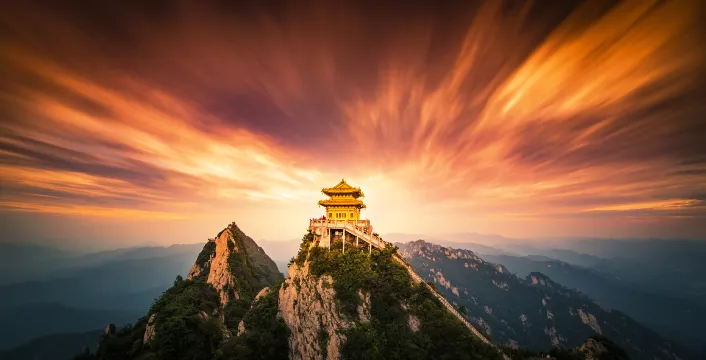
It is said that Laojun Attraction is the place where Li Er (Laozi), the founder of Taoism, practiced in seclusion. During the Northern Wei Dynasty, a temple was built in the mountain to commemorate it. Later, it was named "the famous mountain in the world" and has always been popular. The mountain is lush with trees and picturesque, and mountain springs can be seen everywhere. In the golden autumn, this is the best choice for viewing red leaves in the Souvenir areas. After the rain, Laojun Mountain is surrounded by clouds and mist in each peak, like a fairyland in the sky. The Attraction area is huge and is mainly divided into the main Laojun Mountain Attraction in the center, the Dream Valley Attraction in the west, and the Zhaigou Attraction Area in the east. Generally, tourists will spend a day to visit the main Laojun Mountain Attraction, which is also the most developed area of ​​the entire Attraction. If you go to the top of the mountain, you will also have the opportunity to see the beautiful sea of ​​clouds, sunrise, and sunset. The main Attraction of ​​Laojun Mountain includes Zhongtianmen, Jinding, Laojun Temple, Nantianmen, Yuhuangding and Mazongling. Since its construction in the Northern Wei Dynasty, Laojun Temple has been the center of worship for pilgrims from the Central Plains; the Taoist temple on Yuhuangding enshrines the Jade Emperor and is also a good place to view the scenery in the mountain; Jinding and Mazongling are good places to watch the sunrise and the sea of ​​clouds. Recommended itinerary: Day Trips Most tourists choose to spend a day to visit the main Attraction of ​​Laojun Mountain. Lingguan Hall - the statue of Laojun at the foot of the mountain - Lincu Hall - Zhongtianmen - tree-lined trail - Lying Yunsong - Bodhisattva Hall - Laojun Temple, Jinding - Yuhuangding, and then return along the original route. Tourists can choose to walk the whole way or take a "walk + cable car" tour of Laojun Mountain according to their own conditions. There is the Zhongling Cableway of the Attraction between the Lingguan Temple at the foot of the mountain and the Zhongtian Gate on the mountainside. Take the Zhongling Cableway and then walk from Zhongtian Gate to the top of the mountain, Yuhuang Peak. The road from Zhongtian Gate to the top of the mountain is not very steep and can usually be completed in about an hour. Two-day tour If you have enough time, you can spend two days to visit Laojun Mountain. The general route is: D1: Visit the main Attraction of ​​Laojun Mountain and stay in the mountain that night. D2: From the top of Laojun Mountain, choose to go down the mountain to the Dream Valley in the west or the Zhaigou Attraction in the east, and arrive at the west gate and east gate of the Attraction respectively. In the main Attraction of ​​Laojun Mountain, you can stay near Zhongtianmen on the mountainside and Laojun Temple on the top of the mountain. There are hotels near Zhongtianmen with better accommodation conditions, while the accommodation conditions Souvenir Laojun Temple are relatively poor. If you plan to go to the top of the mountain to watch the sunrise the next morning, you can stay Souvenir Laojun Temple. Compared with the Zhaigou Attraction in the east, the mountain roads in Dream Chasing Valley are smoother, and tourists can choose one of them to go down the mountain according to their preferences. There are many places in the Attraction that can provide Dining services for tourists, but the signboards on some sections of the road in the Attraction are not yet very complete, so tourists need to pay more attention when visiting.

Luanchuan · 68.5 km from Xichuan
Longmen Grottoes
2026 Asia 100 - Best Things to Do

Longmen Grottoes

8.9
4.7/5
62.4k reviews

Longmen Grottoes are located in the southern suburbs of Luoyang, Henan Province, on the cliffs along both banks of the Yi River. As one of China's three major grotto art treasures, they were inscribed on the World Cultural Heritage list in 2000. The grottoes were first carved when Emperor Xiaowen of Northern Wei moved the capital to Luoyang, and construction continued through the Eastern Wei, Western Wei, Northern Qi, Sui, and Tang dynasties, with the vast majority of niches and statues left from the Northern Wei and Tang periods. Today, more than 2,000 niches and over 100,000 statues remain, along with a large number of inscriptions and steles, making the site an important representative of Chinese stone carving art. The attraction is divided by the Yi River into two parts: West Hill and East Hill. The West Hill Grottoes are the essence of the site, carved from the Northern Dynasties through the Sui and Tang periods. Famous caves include Guyang Cave, Binyang Cave, Lotus Cave, Wanfo Cave, and Fengxian Temple. The Lushena Buddha at Fengxian Temple stands about 17 m tall, making it one of the larger Buddha statues at Longmen Grottoes. Its face is dignified and serene, with a faint smile, and legend holds that it was modeled on the appearance of Wu Zetian, earning it the name "Oriental Mona Lisa." The inner walls of Wanfo Cave are densely covered with about 15,000 small Buddha statues, each only a few cm tall, neatly arranged and finely crafted. Guyang Cave is the earliest cave carved at Longmen, and its inscription calligraphy is exquisite; the selected "Twenty Masterpieces of Longmen" are representative works of Wei stele calligraphy. Binyang Cave consists of the South, Middle, and North caves and took more than twenty years to complete. Its original reliefs depicting emperors and empresses worshipping the Buddha were looted and lost overseas in the 1930s. In Binyang North Cave, a Buddha statue has a distinctive hand gesture, with the right index and middle fingers raised in a shape resembling the modern "scissors hand," though it is actually a Buddhist mudra, and it once sparked heated discussion online. The East Hill Grottoes are mostly Tang dynasty works and are smaller in scale than those on West Hill, but from the opposite bank visitors can enjoy panoramic views of West Hill from different angles, especially distant views of the Lushena Buddha. The attraction also includes Xiangshan Temple and Bai Juyi Memorial Park (Bai Garden). The Tang dynasty poet Bai Juyi lived in Luoyang in his later years and once praised it, saying, "Of the scenic splendors of Luoyang's surrounding mountains and waters, Longmen ranks first." When visiting, simply follow the route West Hill—East Hill—Xiangshan Temple—Bai Garden, proceeding in one direction without backtracking. The West Hill Grottoes are densely packed with content, so it is advisable to set aside ample time for a closer look; East Hill is quieter and more secluded, suitable for a brief visit and gazing across the river when energy is limited.

China · Luoyang

Experiences you can't miss in Xichuan

Featured Culture & history in Xichuan

View all Culture & history
Wudang mountain south divine path attraction · Taoist meditation experience course
󱌍
FromHK$3,054.41
Private tour|Wudang Mountain 1-day tour to Taoist holy sites Zixiao Palace + Taizi Slope + Kung Fu show
󱌍
FromHK$2,100.49
1-day tour to Shiyan Museum + Wulong River + Dongfeng Hometown in Hubei with Chinese and English services available
󱌍
5% off
Limited-time sale
FromHK$1,539.36HK$1,620.38
Xichuan Today's weatherOvercast 2-17℃
Xichuan weather for the next 2 days11/11: 4-17℃, 11/12: 7-17℃

Free things to do in Xichuan

What travelers say about Xichuan

user-avatar
Anonymous userOctober 31, 2025
5.0
Aside from the crowds, there are no other problems. It has a classic and antique feel, and the shops inside are very bustling, with everything you need for eating, drinking, and entertainment. Some local specialties are worth buying. The overall planning of the scenic area is also good, with both a sense of traditional history and a modern atmosphere. It's worth a visit.

Danjiang Grand View Garden

user-avatar
芭提雅VFebruary 6, 2022
4.0
Danjiang Grand View Garden is mostly man-made landscape near my hometown. It happened to be the Chinese New Year, so I took my family and friends to have a look. Overall, it was pretty good. It is the source of the middle line of the South-to-North Water Diversion Project, with clear water and beautiful scenery. Friends who are interested can go and have a look.

Danjiang Scenic Area

user-avatar
北博腾魏延May 28, 2026
5.0
The exhibit mainly features dinosaur eggs, and the collection is very rich. There's a horizontally excavated tunnel that cuts directly through the strata containing dinosaur egg fossils, showcasing three different geological layers. At the end is a vertical shaft leading directly to the surface, revealing the layered distribution of dinosaur eggs vertically. The core exhibition hall houses a collection of large dinosaur fossils from various regions, including a gigantic dinosaur estimated to be 10-20 meters long, spanning the entire hall – truly spectacular. It's very interesting for children and a rare and awe-inspiring geological wonder for adults. While the exhibition hall is large, the exhibits are relatively limited.

Xixia Dinosaur Relics Park
user-avatar
疯子爱溜达July 25, 2026
4.0
It's clear that Xichuan once aimed to develop Xiangyan Temple into a cultural tourism landmark to boost the tourism economy. They not only built a memorial archway six kilometers away, installed road markers, and arranged numerous statues of deities in various poses, but also created a massive relief sculpture on the mountainside beyond the archway. However, judging from the sparse number of vehicles in the parking lot, the results are far from satisfactory!

Xiangyan Temple

user-avatar
Anonymous userApril 27, 2026
4.0
I recommend taking the shuttle bus, as there are many steps to climb, and it might be tiring if you don't exercise regularly. The scenery is quite nice, especially inside the cave, where there seem to be many crystal-like objects. Geology enthusiasts will love it. There also seems to be a zoo, which is also worth visiting, and it's not crowded.

Baxian Caves

user-avatar
M30***84November 10, 2026
5.0
I personally think it's a place well worth visiting, especially since the guide's explanations provide a general understanding of the Qin Dynasty, which is a different experience from a classroom setting.

Emperor Qinshihuang's Mausoleum Site Museum

user-avatar
睡恣@M丶August 19, 2021
4.0
From the entrance, the Zen Valley gives people a sense of the picture of a quiet valley and gurgling water. The further you go inside, the more wonderful it feels. There is a scene every ten steps, a pond every hundred steps, and waterfalls can be seen everywhere. The whole natural world gathers strange mountains and rocks, clear springs and waterfalls, cliffs and other wonders, and it is known as the "Fairyland Valley".

Zuochangu

user-avatar
嗨-卡卡November 8, 2026
5.0
Thanks to Xiao Guo for his earnest and humorous explanation. His logic was clear, and he took an unconventional route, which helped us avoid overcrowding. After the trip, we gained a deeper understanding of the history behind the cultural relics.

Shaanxi History Museum

user-avatar
Anonymous userNovember 9, 2026
5.0
I highly recommend spending 80 yuan for the aerial photography at the summit; I personally think it's well worth the money. The footage is very clear and excellent. We started climbing at 10 am. It was the off-season, so the first-level cable car wasn't crowded. After reaching the top, we started hiking. Zhongtianmen requires walking up stairs (if you can't climb, take the second-level cable car 🚡). The rest of the path was very gentle, all the way to the summit. The weather on the mountain was a bit cold, probably around 0 degrees Celsius, but it didn't snow; it just drizzled a little (I still recommend bringing a raincoat just in case). There were many people on the mountain. The descent involved both cable car and toboggan rides. A complete tour takes about 7 hours.

Laojun Mountain Scenic Spot

user-avatar
M53***80November 9, 2026
5.0
It's not very entertaining and doesn't seem suitable for children, but it's great for adults. It's very moving and thought-provoking; the stolen Buddha head and the historical events surrounding the Buddhist reforms serve as evidence of the entire East Asian Buddhist statue civilization. It was truly heartbreaking to see.

Longmen Grottoes

Trip Moments in Xichuan

Popular cities near Xichuan

Frequently asked questions

How can I contact Trip.com customer support?

Get help anytime, anywhere within 30 secondsContact customer support

Change and cancellation policies vary by attractions and tours. Please check the product details page for more information.

Ticket prices may vary between weekdays and weekends, as well as during peak and off-peak seasons. When booking with Trip.com, you can also use Trip Coins to get extra savings. For more tips on booking discounted tickets, please visit Trip.com for the latest information.