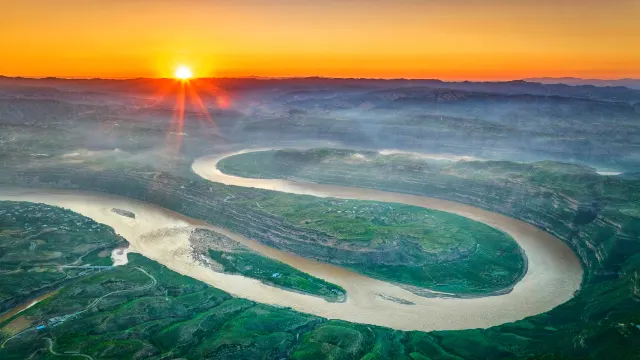
Yanchuan

Things to do in Yanchuan

Search attractions or local attractions & tours
Search

Explore top experiences

Top 10 attractions in Yanchuan

View all Attractions
Emperor Qinshihuang's Mausoleum Site Museum
2026 Global 100 - Best Things to Do

Emperor Qinshihuang's Mausoleum Site Museum

10
4.7/5
150.3k reviews

Emperor Qinshihuang's Mausoleum Site Museum is a large site museum built on the site of the Terracotta Army pits, which are located approx. 1.5 km east of the mound of Emperor Qinshihuang's Mausoleum. In March 1974, farmers from Xiyang Village accidentally unearthed fragments of terracotta figures while digging a well, and archaeological exploration confirmed Pit 1; in 1976, Pits 2 and 3 were successively discovered to the north of Pit 1. This army, which had slumbered for over 2,000 years, was thus brought back to light, and the discovery of the Terracotta Army has been hailed as "one of the great discoveries in the history of 20th-century archaeology." Pit 1 is the main military formation among the three pits, stretching over 200 m from east to west, with an estimated 6,000 pottery figurines and horses buried inside. Standing at the edge and looking down, armored warrior figurines, war chariots, and pottery horses are arrayed eastward in battle formation. A closer look at each figure reveals different facial shapes, hairstyles, beards, and even hand gestures. The figurines were originally painted all over, but most of the paint has peeled off and discolored due to fire and long burial. Pit 2 is L-shaped, with crossbowmen, cavalry, and charioteers arranged in a mixed formation; the vividly expressive kneeling archer was unearthed here. Pit 3 is small in scale, and scholars believe the ceremonial guard figurines and war chariots unearthed there indicate it served as the command center—known in ancient times as a "military tent"—directing the formations in Pits 1 and 2. The bronze swords, pi halberds, spears, crossbow triggers, and large quantities of arrowheads unearthed from the pits—many still sharp after more than 2,000 years—demonstrate the sophistication of Qin dynasty metallurgy. The Emperor Qinshihuang's Mausoleum Site Museum and the Qin Shi Huang Mausoleum at the foot of Mount Li were originally one integrated whole. After Qin Shi Huang ascended the throne at the age of 13, he began constructing the mausoleum, conscripting hundreds of thousands of laborers over a period spanning more than 30 years; the terracotta army, which replaced human sacrifice with figurines, served as the underground guard for this imperial mausoleum. To avoid the crowds during your visit, you might want to see Pit 3 and Pit 2 first, and then take your time to experience the awe-inspiring scene of Pit 1 last. After viewing the terracotta pits, you can also take the attraction's shuttle bus to Lishan Garden, where Emperor Qinshihuang's mausoleum is located; the Acrobats Pit, the Civil Officials Pit, and the Bronze Chariots and Horses Museum are all within the garden. The two painted bronze chariots and horses, cast at half the scale of real chariots, are exquisitely crafted with brilliantly gleaming gold and silver fittings, and are well worth a special trip to see.

China · Xi'an
Little Western Paradise
No. 8 of Best Things to Do in Shanxi

Little Western Paradise

8.2
4.8/5
7k reviews

Little Western Paradise is perched atop Phoenix Mountain in Xi County, Linfen, Shanxi Province. This Buddhist temple, originally named the Thousand Buddha Nunnery, was established during the Chongzhen era of the Ming Dynasty. It earned its initial name from the thousand Buddha statues enshrined in its Main Hall of the Great Hero. Later, it was renamed due to the inscription "Entering the Western Paradise" above its gate and to distinguish it from another ancient temple, "Great Western Paradise," located south of the city. Surrounded by mountains on three sides and facing a river in front, the temple is compact yet ingeniously laid out across its upper and lower courtyards. Ascending the stone steps and passing through the secluded "Heavenly Grotto" corridor evokes a sense of gradually entering a Buddhist paradise. The upper courtyard centers around the Main Hall of the Great Hero, flanked by the Manjusri Hall and Samantabhadra Hall. The Main Hall is the temple's crowning jewel: within its modest 100-square-meter space, nearly 2,000 suspended sculptures adorn niches, gables, beams, and rafters, transforming the hall into a museum of suspended sculpture art. Five interconnected niches dominate the rear wall, housing the Medicine Buddha, Amitabha, Sakyamuni, Vairocana, and Maitreya seated on lotus thrones, with ten principal disciples standing beside them. The southern wall depicts Buddhist narratives featuring the Four Sages and Four Heavenly Kings, while the northern wall portrays the 33 celestial palaces of Mount Sumeru. Flying apsaras, divine birds, and musician bodhisattvas dance among clouds on the beams, their gilded polychrome surfaces retaining vibrant hues after centuries. This rare collection of late Ming to early Qing suspended sculptures has gained wider recognition since the temple became a filming location for the popular game Black Myth: Wukong, attracting many travelers for dedicated visits. The lower courtyard also rewards exploration: the Immeasurable Hall faces east, where dozens of bronze Buddha statues interplay with wooden celestial palaces in what was once the monks' meditation hall. Opposite stands the Skanda Hall, housing a single nanmu-carved statue of Skanda. The temple also preserves thousands of volumes from the Yongle Northern Canon, a Ming imperial gift. Visitors are advised to spend extra time in the Main Hall—dim lighting requires slow, upward gazes to appreciate the intricate details of the high-placed sculptures. After exploring both courtyards, one can ascend Solitary Paulownia Peak via the "Seemingly No Path" route behind Skanda Hall, where the Cloud-Touching Pavilion offers panoramic views of the rural landscape below.

Xi County · 68.7 km from Yanchuan
The Hukou Waterfall Scenic Area
No. 4 of Best Things to Do in Shanxi

The Hukou Waterfall Scenic Area

8.5
4.7/5
22.7k reviews

The Hukou Waterfall Scenic Area is located in the Jin-Shaan Grand Canyon in the middle reaches of the Yellow River and is the Shanxi-side section for viewing Hukou Waterfall. As the Yellow River rushes here, its surface suddenly narrows from several hundred meters wide to just a few dozen meters. The water, laden with silt, churns and pours down like water being poured into a giant kettle, which is how the name "Hukou" (Kettle Mouth) came to be. This is a rare yellow waterfall on the Yellow River, with muddy waves surging skyward and a roar like thunder, displaying magnificent momentum. The attraction is located on the east side of the waterfall, where the bank is relatively low, allowing visitors to look up and take in the full panorama of the Yellow River plunging downward. Below the waterfall, mist rises and fills the air, appearing like smoke or clouds from afar and creating the wondrous sight known as "smoke rising from the water"; on clear days, sunlight refracts through the mist to form a rainbow arching across the river, called "rainbow reaching the heavens." Within the attraction, Dragon Cave is a natural stone cave; following the stone steps down leads to a viewing platform close to the waterfall, where you can look up as the river pours down from above—an ideal spot to feel the force of the waterfall up close. Downstream from the waterfall, the Ten-Mile Dragon Trough is a deep channel formed by the river's long-term erosion of the riverbed; in the dry season, the trough floor is wide and flat, and ancients once used this terrain to haul boats along the bank, leaving behind the unique scene known as "sailing on dry land." Further downstream is Mengmen Mountain, where two huge rocks in the river split the Yellow River in two before the streams merge again; carved on the rock face are the four characters "Wo Zhen Kuang Liu" (Resting Here, Quelling the Raging Flow). The view of Hukou Waterfall is distinctive in each of the four seasons. Every year between April and May, peach blossoms bloom and the ice melts, coinciding with the "March peach blossom flood," when the abundant water volume makes the waterfall particularly spectacular. From September to November, the air is crisp in fall, and rainbows often appear in the mist, a phenomenon known as the "Hukou fall wind." Water volume is greater in spring and fall, and the sound of the water striking the rocks is like thunder, making these the best periods to admire the waterfall. The image of Hukou Waterfall once appeared on the CNY 50 banknote of the fourth series of the renminbi, making it a widely recognized classic symbol of Yellow River culture.

Ji County · 85.7 km from Yanchuan
Yanchuan Today's weatherFoggy 2-17℃
Yanchuan weather for the next 2 days11/7: 0-10℃, 11/8: -7-8℃

Free things to do in Yanchuan

What travelers say about Yanchuan

user-avatar
M29***12August 7, 2026
4.0
Located in Qiankunwan Town, Yanchuan County, Yan'an City, with a core area of ​​27.4 square kilometers, it is the core area of ​​the Yellow River Meander National Geopark and has been rated as a national 5A-level tourist attraction.

Yanchuan Yellow river Qiankun Bay Scenic Area

user-avatar
pobirenFebruary 21, 2025
5.0
The scenic spot is very good and worth a visit. I will come again next time.

Liangjiahe Scenic Area

user-avatar
流星穗血January 14, 2023
5.0
The big bend in Qingshui Bay is very beautiful. The small hills shaped by the Yellow River are like a big straw hat covering the Yellow River. The big straw hat is lined with green trees, which effectively prevents landslides and soil erosion. Qingshui Bay and Qiankun Bay look very similar at first glance, especially when you first see them, there is not much difference, except that there is no small island next to this big bend. Outside Qingshui Bay is the Yellow River, and inside is the inland river. One is turbid and the other is clear, one is yellow and the other is green, and they are clearly separated. I wonder if Qingshui Bay got its name from this?

Qingshui Bay Scenic Area

user-avatar
liyuzeng60September 6, 2023
4.0
This national geological park is located in Yonghe County, Shanxi Province. It is a relic that records the evolution of the Yellow River for hundreds of thousands of years from the Mesozoic and Cenozoic eras. The area has excellent viewing profiles and is of great conservation value.

Yellow River Shequ National Geopark

user-avatar
M38***10August 7, 2024
1.0
This is the security guard of the scenic spot. Please avoid playing with your phone during work hours.

Liangjiahe Educated Youth Site

user-avatar
Anonymous userNovember 5, 2026
5.0
What a majestic place. I am in awe and amaze by the whole set up here

Emperor Qinshihuang's Mausoleum Site Museum

user-avatar
D78***88August 9, 2021
4.0
The navigation was correct. We came from the Zichang County National Highway, and the road conditions were good. The scenic area is free, but you need to buy a 20-yuan round-trip electric car. There are many cars, so you don't have to wait. Two people can walk. After getting off the car, walk along the road and go in to visit the village history museum and the No. 1, 2, and 3 old houses. After finishing, go back to the place where you got off and take a car back to the tourist center. The scenic area is not big, and 1 hour is enough.

Liangjiahe Village

user-avatar
M60***16November 5, 2026
5.0
📍Xiaoxitian, Xixian County: A Glimpse into a Lifetime! The pinnacle of Chinese maximalist aesthetics. Before Xiaoxitian, there were no walls covered in suspended sculptures; after Xiaoxitian, there are no walls covered in suspended sculptures! Stunning, a masterpiece of suspended sculpture!!! Highlights in a single sentence: The pinnacle of Ming Dynasty suspended sculptures, a famous filming location for "Black Myth: Wukong," hailed as the "swan song of suspended sculpture," and a museum of Chinese suspended sculpture art!

Little Western Paradise

user-avatar
蓬松彤宝儿November 6, 2026
4.0
I traveled a long way just to see Hukou Waterfall! It evokes Li Bai's famous lines: "Have you not seen the Yellow River's waters come from the sky, rushing to the sea never to return?" Besides the entrance ticket, you also need to purchase a separate ticket for the scenic area's shuttle bus. If you want to get closer and see the more spectacular views, you have to pay an additional 20 yuan to go to the Dragon Cave. Overall, the scenic area is definitely worth visiting; it's magnificent and beautiful! But I really don't understand this multi-ticket system. A higher one-time fee would be more acceptable.

The Hukou Waterfall Scenic Area

Trip Moments in Yanchuan

Popular cities near Yanchuan

Frequently asked questions

How can I contact Trip.com customer support?

Get help anytime, anywhere within 30 secondsContact customer support

Change and cancellation policies vary by attractions and tours. Please check the product details page for more information.

Ticket prices may vary between weekdays and weekends, as well as during peak and off-peak seasons. When booking with Trip.com, you can also use Trip Coins to get extra savings. For more tips on booking discounted tickets, please visit Trip.com for the latest information.