Zaoyang

Things to do in Zaoyang

Search attractions or local attractions & tours
Search

Explore top experiences

Top 10 attractions in Zaoyang

View all Attractions
Baishui Temple

Baishui Temple

3.7
4.2/5
103 reviews

Baishui Temple is located on the Lion Mountain, 20 kilometers south of Zaoyang City. Baizhu Village at the foot of the mountain is the hometown of Liu Xiu, the Emperor Guangwu of the Eastern Han Dynasty. Baishui Temple was formerly known as Shanlin Temple and has a history of more than 2,000 years. After Liu Xiu became emperor, he built the "Four Relatives Temple" here and returned to his hometown five times to worship his ancestors. Baishui Temple stands majestically on the top of the mountain, solemn and simple. Outside the temple, there are picturesque pines and cypresses on both sides of the road. Below the mountain, there is a white water like a belt, with bright waves reflecting the sky. The temple originally enshrined a statue of Liu Xiu, so it is also called Liu Xiu Temple. During the Xuande period of the Ming Dynasty, the abbot Zhenlong converted the main hall into a place for worshipping Buddha, and used the west side hall to worship Emperor Guangwu, forming a unique layout of sharing the same worship between people and Buddha, which has continued to this day. The temple now has the Main Hall, the Goddess Hall, the Weapon Hall, the Liu Xiu Hall, the Millennium Qinglong Well, the Qinglong Pavilion, the Millennium Coptis Tree and other landscapes. There are two couplets on the pillars in front of the hall. There are also stone carvings of "Baishui Chongguang" and dozens of paintings and calligraphy by modern people in the temple. It has been praised by ancient and modern literati as "the remains of Baishui Longfei, and Zihui Mountain protects the real wall."

Zaoyang · 17.3 km from downtown
Longmen Grottoes
2026 Asia 100 - Best Things to Do

Longmen Grottoes

8.9
4.7/5
62.5k reviews

Longmen Grottoes are located in the southern suburbs of Luoyang, Henan Province, on the cliffs along both banks of the Yi River. As one of China's three major grotto art treasures, they were inscribed on the World Cultural Heritage list in 2000. The grottoes were first carved when Emperor Xiaowen of Northern Wei moved the capital to Luoyang, and construction continued through the Eastern Wei, Western Wei, Northern Qi, Sui, and Tang dynasties, with the vast majority of niches and statues left from the Northern Wei and Tang periods. Today, more than 2,000 niches and over 100,000 statues remain, along with a large number of inscriptions and steles, making the site an important representative of Chinese stone carving art. The attraction is divided by the Yi River into two parts: West Hill and East Hill. The West Hill Grottoes are the essence of the site, carved from the Northern Dynasties through the Sui and Tang periods. Famous caves include Guyang Cave, Binyang Cave, Lotus Cave, Wanfo Cave, and Fengxian Temple. The Lushena Buddha at Fengxian Temple stands about 17 m tall, making it one of the larger Buddha statues at Longmen Grottoes. Its face is dignified and serene, with a faint smile, and legend holds that it was modeled on the appearance of Wu Zetian, earning it the name "Oriental Mona Lisa." The inner walls of Wanfo Cave are densely covered with about 15,000 small Buddha statues, each only a few cm tall, neatly arranged and finely crafted. Guyang Cave is the earliest cave carved at Longmen, and its inscription calligraphy is exquisite; the selected "Twenty Masterpieces of Longmen" are representative works of Wei stele calligraphy. Binyang Cave consists of the South, Middle, and North caves and took more than twenty years to complete. Its original reliefs depicting emperors and empresses worshipping the Buddha were looted and lost overseas in the 1930s. In Binyang North Cave, a Buddha statue has a distinctive hand gesture, with the right index and middle fingers raised in a shape resembling the modern "scissors hand," though it is actually a Buddhist mudra, and it once sparked heated discussion online. The East Hill Grottoes are mostly Tang dynasty works and are smaller in scale than those on West Hill, but from the opposite bank visitors can enjoy panoramic views of West Hill from different angles, especially distant views of the Lushena Buddha. The attraction also includes Xiangshan Temple and Bai Juyi Memorial Park (Bai Garden). The Tang dynasty poet Bai Juyi lived in Luoyang in his later years and once praised it, saying, "Of the scenic splendors of Luoyang's surrounding mountains and waters, Longmen ranks first." When visiting, simply follow the route West Hill—East Hill—Xiangshan Temple—Bai Garden, proceeding in one direction without backtracking. The West Hill Grottoes are densely packed with content, so it is advisable to set aside ample time for a closer look; East Hill is quieter and more secluded, suitable for a brief visit and gazing across the river when energy is limited.

China · Luoyang
The Three Gorges Dam Tourism Area
No. 1 of Best Things to Do in Hubei

The Three Gorges Dam Tourism Area

8.9
4.7/5
9k reviews

The Three Gorges Dam Tourism Area is located in the Xiling Gorge section of the Yangtze River in Yichang, Hubei. It is a scenic attraction built around the Three Gorges hydro project, covering over ten square kilometers. Currently, it offers travelers three viewing spots: Tanzi Ridge, the 185 viewing platform, and the river closure memorial park. The dam crest itself is not open to travelers, so visits primarily revolve around these three attractions. Tanzi Ridge is the highest accessible point in the dam area, named for its jar-shaped summit viewing platform resembling an overturned jar. It also served as the survey site for the dam's initial location selection. From the ridge top, visitors can overlook the Three Gorges Project in its entirety—the dam, power station, and twin five-level ship locks are all visible. The five lock chambers cascade down the mountainside, earning the nickname "Fourth Gorge of the Yangtze." The park displays engineering artifacts like ancient riverbed stones, river closure rocks, and foundation stones from the dam site, complemented by model exhibits that help visitors intuitively understand the origins and development of this mega-project. The 185 observation platform is located on the left bank of the dam. It gets its name from sharing the same elevation of 185 m as the dam crest. Standing on the platform feels like being atop the dam: on one side, the dam and vertical ship lift are within close reach, offering a chance to witness ships "riding the elevator" over the dam; on the other side lies the vast, tranquil reservoir upstream. The stark contrast between the stillness above and the dynamism below the dam is striking. The closure memorial park is situated on the right bank downstream of the dam, preserving artifacts like tetrahedral closure stones and large loading machinery used during the construction. It's an ideal spot to view the dam's full frontal grandeur. During flood seasons when the dam releases water, torrents rush out from the deep outlets, creating towering mist and thunderous echoes that reverberate through the valley—a truly awe-inspiring spectacle. The three attractions are far apart, and the scenic area provides shuttle buses for transportation. It is recommended to reserve half a day to visit them in order.

China · Yichang
Laojun Mountain Scenic Spot
No. 1 of Fall Viewing Attractions in Henan

Laojun Mountain Scenic Spot

8.6
4.7/5
16.7k reviews

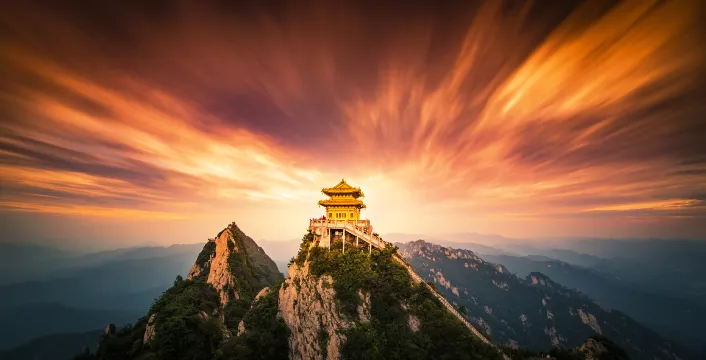
It is said that Laojun Attraction is the place where Li Er (Laozi), the founder of Taoism, practiced in seclusion. During the Northern Wei Dynasty, a temple was built in the mountain to commemorate it. Later, it was named "the famous mountain in the world" and has always been popular. The mountain is lush with trees and picturesque, and mountain springs can be seen everywhere. In the golden autumn, this is the best choice for viewing red leaves in the Souvenir areas. After the rain, Laojun Mountain is surrounded by clouds and mist in each peak, like a fairyland in the sky. The Attraction area is huge and is mainly divided into the main Laojun Mountain Attraction in the center, the Dream Valley Attraction in the west, and the Zhaigou Attraction Area in the east. Generally, tourists will spend a day to visit the main Laojun Mountain Attraction, which is also the most developed area of ​​the entire Attraction. If you go to the top of the mountain, you will also have the opportunity to see the beautiful sea of ​​clouds, sunrise, and sunset. The main Attraction of ​​Laojun Mountain includes Zhongtianmen, Jinding, Laojun Temple, Nantianmen, Yuhuangding and Mazongling. Since its construction in the Northern Wei Dynasty, Laojun Temple has been the center of worship for pilgrims from the Central Plains; the Taoist temple on Yuhuangding enshrines the Jade Emperor and is also a good place to view the scenery in the mountain; Jinding and Mazongling are good places to watch the sunrise and the sea of ​​clouds. Recommended itinerary: Day Trips Most tourists choose to spend a day to visit the main Attraction of ​​Laojun Mountain. Lingguan Hall - the statue of Laojun at the foot of the mountain - Lincu Hall - Zhongtianmen - tree-lined trail - Lying Yunsong - Bodhisattva Hall - Laojun Temple, Jinding - Yuhuangding, and then return along the original route. Tourists can choose to walk the whole way or take a "walk + cable car" tour of Laojun Mountain according to their own conditions. There is the Zhongling Cableway of the Attraction between the Lingguan Temple at the foot of the mountain and the Zhongtian Gate on the mountainside. Take the Zhongling Cableway and then walk from Zhongtian Gate to the top of the mountain, Yuhuang Peak. The road from Zhongtian Gate to the top of the mountain is not very steep and can usually be completed in about an hour. Two-day tour If you have enough time, you can spend two days to visit Laojun Mountain. The general route is: D1: Visit the main Attraction of ​​Laojun Mountain and stay in the mountain that night. D2: From the top of Laojun Mountain, choose to go down the mountain to the Dream Valley in the west or the Zhaigou Attraction in the east, and arrive at the west gate and east gate of the Attraction respectively. In the main Attraction of ​​Laojun Mountain, you can stay near Zhongtianmen on the mountainside and Laojun Temple on the top of the mountain. There are hotels near Zhongtianmen with better accommodation conditions, while the accommodation conditions Souvenir Laojun Temple are relatively poor. If you plan to go to the top of the mountain to watch the sunrise the next morning, you can stay Souvenir Laojun Temple. Compared with the Zhaigou Attraction in the east, the mountain roads in Dream Chasing Valley are smoother, and tourists can choose one of them to go down the mountain according to their preferences. There are many places in the Attraction that can provide Dining services for tourists, but the signboards on some sections of the road in the Attraction are not yet very complete, so tourists need to pay more attention when visiting.

China · Luanchuan
Hubei Provincial Museum
2026 Asia 100 - Family-friendly Attractions

Hubei Provincial Museum

8.5
4.9/5
7.9k reviews

The Hubei Provincial Museum has ten treasures of the museum, including those unearthed from "Tomb of Marquis Yi of Zeng" the Hubei Provincial Museum's Zenghouyi chime bells; the Yue Wang Goujian sword, a masterpiece of the cold weapon era; the fossilized skull of the Yunxian Man dating back 1 million years; and a treasure of Yuan blue-and-white porcelain: the plum vase with the Four Loves design. The museum's regular exhibitions also feature distinctive characteristics of ancient Chu culture and ancient Yangtze River civilization. The Hubei Provincial Museum consists of the comprehensive exhibition hall,Chu culture hall,Chime bell hallIt is composed of multiple pseudo-classical buildings, and the layout reflects the high-platform architectural layout format of ancient Chu architecture, namely "one terrace, one hall" and "multiple terraces forming a group." Unearthed in 1978 at "Tomb of Marquis Yi of Zeng" in the Hubei Provincial Museum - the Zenghouyi chime bells have a wide range and their excavation rewrote the history of world music; the sword of Goujian, King of Yue, a masterpiece of the cold weapon era, is still incomparably sharp to this day, and displayed beside it is the "spear of Fuchai, King of Wu"; the geological age of the Yunxian human skull fossil is approx. 1 million years ago, earlier than the Peking Man skull fossil; the Yuan blue-and-white plum vase with four loves design is an extremely rare masterpiece among Yuan dynasty blue-and-white porcelain. Hubei is located in the middle reaches of the Yangtze River and belonged to the territory of the Chu state during the Spring and Autumn and Warring States periods. The permanent exhibitions at the Hubei Provincial Museum showcase ancient civilizations of southern China that differ from the Yellow River civilization of the north. The museum's current permanent exhibitions include "Yunxian Man: Prehistoric Humans in the Middle Reaches of the Yangtze River," "Qujialing: Prehistoric Culture in the Middle Reaches of the Yangtze River," and "Panlongcheng: Bronze Civilization in the Middle Reaches of the Yangtze River." In addition to viewing cultural relics at the Hubei Provincial Museum, you can also enjoy chime bell performances. In the museum's performance hall, chime bell performances are held from Tuesday to Sunday, and it is closed on Mondays.

China · Wuhan
Qingchuan Pavilion
No. 4 of Best Things to Do in Hubei

Qingchuan Pavilion

8.4
4.7/5
7.7k reviews

Qingchuan Pavilion stands on Yugong Rock at the eastern foot of Tortoise Hill in Hanyang, facing the Han River to the north and the Yangtze River to the east, gazing across the river at Yellow Crane Tower in Wuchang on the opposite bank. The pavilion's name is taken from the line "the clear river reflects the trees of Hanyang" by the Tang dynasty poet Cui Hao, and it was initiated for construction by Fan Zhizhen, the Ming dynasty prefect of Hanyang. First built during the Jiajing era of the Ming dynasty, it has a history of more than four hundred years. Throughout history, Qingchuan Pavilion was destroyed and rebuilt as many as six or seven times, the last destruction caused by a windstorm; the existing structure was rebuilt in the 1980s following the style of the Guangxu era of the Qing dynasty. Long known as one of the "finest sights of the Three Chu regions" and a "grand vista through the ages," Qingchuan Pavilion echoes Yellow Crane Tower across the river and stands out distinctly along the banks of the Yangtze. The attraction is composed of three main structures—Qingchuan Pavilion, Yuji Xinggong (Yu and Ji Ancestral Hall), and Tiemen Pass—along with auxiliary structures such as the ancient archway, Chubo Pavilion, Chaozong Pavilion, Yu Stele Pavilion, Jingchu Heroic Spirit Stele, and the poetry stele corridor, forming a complex of ancient and pseudo-classical buildings standing by the river. Among them, Yuji Xinggong was first built during the Shaoxing era of the Southern Song dynasty under the original name Yu Wang Temple; during the Tianqi era of the Ming dynasty, it was renamed "Yuji Xinggong" after its worship was changed to Houji and other former sages, and it has been an important site in Wuhan for successive generations to pay homage to Yu the Great. Tiemen Pass was first built during the Three Kingdoms period and has been a strategic location contested by military strategists since ancient times; it was restored in the 1990s. Ascending Qingchuan Pavilion offers a panoramic view of the expansive river scenery where the Yangtze River and the Han River converge. Inside the pavilion, permanent exhibitions such as "Traces of Yu Across the Nine Provinces" and "Historical Paintings of Qingchuan" present Yu the Great culture and the historical heritage of Qingchuan Pavilion from multiple perspectives, ranging from water-control culture to poetry and couplets. The attraction nestles between the hills and the river, with pavilions and terraces scattered in graceful arrangement. The poetry stele corridor preserves inscribed stones bearing verses by literati and poets of successive dynasties, and strolling through it allows visitors to feel the rich historical and cultural atmosphere.

China · Wuhan
Tangzishan Sceneic Area

Tangzishan Sceneic Area

2.5
2.0/5
15 reviews

Tangzi Mountain Scenic Area is located 22 kilometers north of Zaoyang City and 5 kilometers north of Taiping Town, covering an area of ​​4 square kilometers. There is Tangzi Pavilion on Tangzi Mountain, and on the top of the mountain there are Patriarch Hall, Shenggong Shengmu Hall, Wuliang Hall, Lingguan Hall, Qianluan Hall, Niangniang Hall on the mountainside, and the legendary Liu Xiu Jujiangtai and Dividingjin Pavilion. There are natural attractions such as Lying Niu Stone, Shengyin Spring, Xianren Pool, and Yirendao in the mountains. Tangzi and Ziyu Mountains rise from the flat ground, with the foot of the mountains adjacent and the peaks standing tall. When you climb to the top of the mountain, you can see far away and wave your hand to see them, echoing each other from afar, which is refreshing. Tangzi Mountain is not only well-known in several provinces in the Central Plains, but also enjoys a high reputation at home and abroad. Every year on the 15th day of the first lunar month, the Lantern Festival and the 7th day of the third lunar month, the mountain is crowded with people and it is very lively. History: The old county records quoted: "Tangzi Mountain is 60 miles north of the county. It rises from the flat ground and has a magnificent view. It is the gateway to the county." According to the Nanyang Prefecture Records in Henan Province, "Tangzi Mountain is also known as Tangcheng Mountain", which is where Gao Feng lived in seclusion. It is recorded that in the Western Zhou Dynasty, a man named Tang was granted the title of Viscount and was granted the title of Tang State in the area of ​​present-day Xiangyang and Nanyang. Therefore, this mountain was named "Tangzi Mountain". Legend: It is said that the Tangzi and Ziyu Mountains were built when Erlang Shen carried mountains to chase the sun. When he reached the 48-li wide Hongsha River, he was terrified and his carrying pole broke. The two mountains were built here. The carrying pole fell between the two mountains and formed a natural stone bridge, which is called the carrying pole bridge. It still exists today. Another legend says: During the Spring and Autumn Period, this place belonged to the Tang State. A queen was buried next to the lotus weir after her death. Later, it slowly grew into a mountain. The queen in ancient times was also called "Zitong". Later, people called this mountain "Tangzi Mountain". The queen's personal maid was called Ziyu, who was buried with the queen, so it was called "Ziyu Mountain".

Zaoyang · 22.8 km from downtown

Experiences you can't miss in Zaoyang

Zaoyang Today's weatherLight rain 10-14℃
Zaoyang weather for the next 2 days11/17: 8-11℃, 11/18: 1-12℃

Free things to do in Zaoyang

What travelers say about Zaoyang

user-avatar
M43***36April 14, 2023
4.0
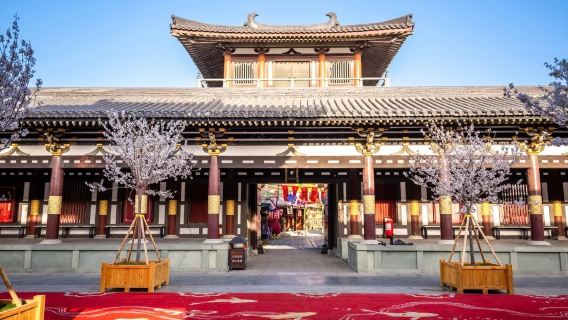
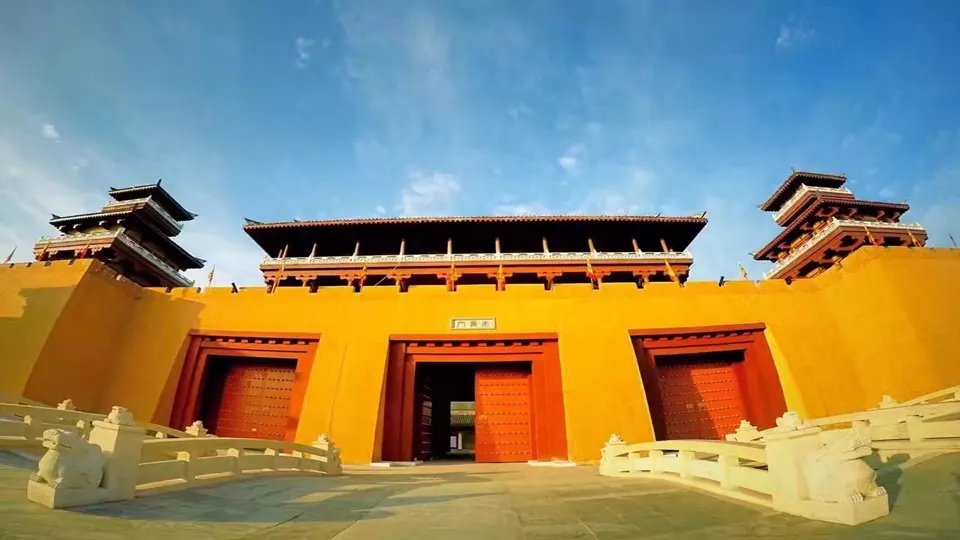
You can experience the Han Dynasty architecture in person. The price of the scenic spot commodities has not increased. It is close to the people. The whole city has only one attraction. It is not like a large historical city. There are also programs. It is not bad.

China Han City

user-avatar
Anonymous userApril 2, 2025
4.0
Liu Xiu's ancestral temple is also very interesting. It is also very interesting to visit Emperor Guangwu's ancestral temple when the Eastern Han Dynasty was founded 2000 years ago. The courtyard is large, and it is not very convenient for people with inconvenient legs and feet. There is also a Sakyamuni in the temple, which is a temple for both humans and gods.

Baishui Temple

user-avatar
M34***86November 15, 2026
5.0
The Longmen Grottoes are truly worth a visit. Walking slowly along the Yi River, rows of Buddha statues of varying sizes are carved into the mountainside, standing silently on the cliffs. The mottled stone carvings, weathered by a thousand years of wind and rain, bear the marks of time within their lines. Standing before the Buddha statues, gazing at their solemn and ancient forms, one is filled with awe, deeply feeling the weight of history and the exquisite carving skills of the ancients.

Longmen Grottoes

user-avatar
D17***33November 9, 2026
5.0
Booking tickets in advance was indeed convenient. There was no need to queue on-site; I could simply scan the code to board the scenic area bus and transfer to a sightseeing bus, saving a lot of time and allowing me to appreciate the magnificence of the Three Gorges Dam!

The Three Gorges Dam Tourism Area

user-avatar
M50***46November 15, 2026
5.0
Climbing the Yellow Crane Tower, one contemplates the past while gazing at the Yangtze River. The poem moves from ancient legends to the present river scene, and finally to homesickness, creating a vast and boundless atmosphere. Written with natural grandeur, it truly deserves to be called a timeless masterpiece.

Yellow Crane Tower

user-avatar
Anonymous userNovember 14, 2026
5.0
Thank you to our tour guide, Mr. Chen, for your thoughtful arrangements! The itinerary at Laojun Mountain was just the right pace, the explanations were down-to-earth, and he taught us a lot of interesting facts. He took good care of us throughout the trip, and we had a very safe and enjoyable time.

Laojun Mountain Scenic Spot

user-avatar
Anonymous userOctober 26, 2026
4.0
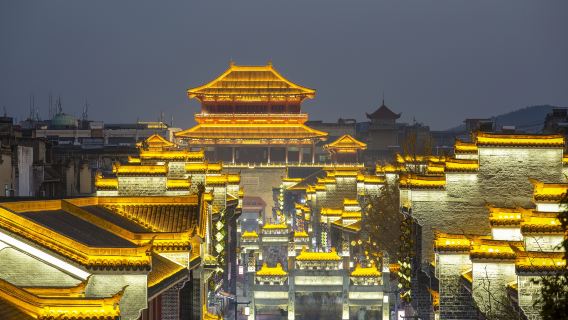
The ancient city is vast and full of historical atmosphere. It's a pity I didn't go at night and missed the night view. The East Market and West Market were very interesting, with various performances!

City of Tang Dynasty

user-avatar
大土豆一颗October 4, 2026
5.0
The exhibited artifacts were quite good; I've also been to joint exhibitions organized by museums like the Hunan Provincial Museum. The Kremlin artifacts here are well-prepared and thoughtfully designed. However, the souvenir and merchandise section was rather boring. I was thinking of buying a pendant or something, but that saved me some money.

Hubei Provincial Museum

user-avatar
131***62November 10, 2026
5.0
The trees of Hanyang stand clearly in the clear sky, and the fragrant grasses grow lush on Parrot Island. When you come to Wuhan, you must visit Qingchuan Pavilion. There aren't many people at night, and there are NPCs to guide you throughout the visit, providing explanations, interactive activities, and even silver notes that can be exchanged for nice little gifts.

Qingchuan Pavilion

user-avatar
山鹰-秃鹫September 27, 2021
1.0
It was built in 1992 and the scenery is as good as the legend. There is nothing to see anymore.

Tangzishan Sceneic Area

Trip Moments in Zaoyang

Popular cities near Zaoyang

Frequently asked questions

How can I contact Trip.com customer support?

Get help anytime, anywhere within 30 secondsContact customer support

Change and cancellation policies vary by attractions and tours. Please check the product details page for more information.

Ticket prices may vary between weekdays and weekends, as well as during peak and off-peak seasons. When booking with Trip.com, you can also use Trip Coins to get extra savings. For more tips on booking discounted tickets, please visit Trip.com for the latest information.