





 4.7/5
4.7/5 Jedsica
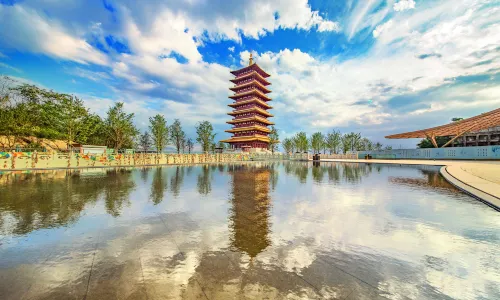
Pretty well organized, and we're only a group of foreigners there, but the staff are still attentive and trying to communicate. Worth visiting if you plan to go to Nanjing and can spend 2-3 hours there.
 4.7/5
4.7/5 浪淘沙carol
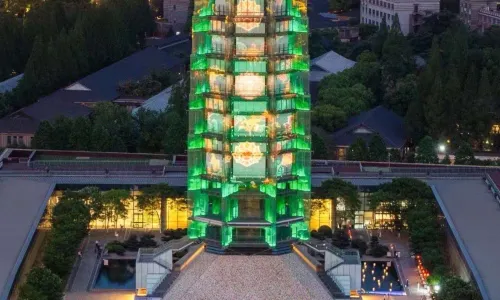
Presenting historical themes in a novel way makes it easily accessible to audiences of different backgrounds. The sound, lighting, and audiovisual effects are very modern and magnificent; from afternoon to evening, it's beautiful and provides a great experience.
 4.7/5
4.7/5 Anonymous user
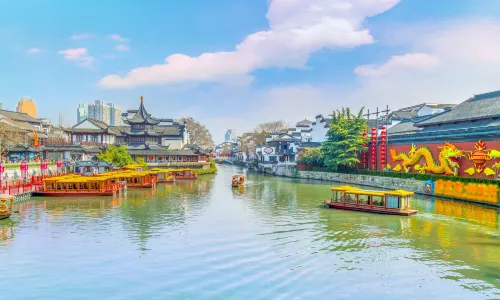
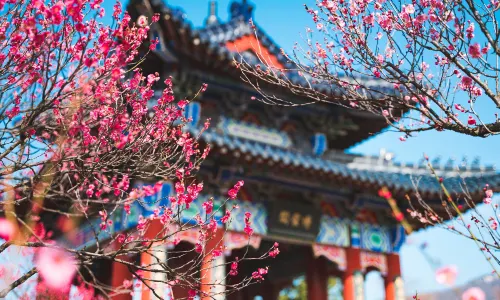
Nanjing Confucius Temple is located on Gongyuan Street on the north bank of the Qinhuai River in Qinhuai District, Nanjing, Jiangsu Province, China, west of Jiangnan Gongyuan. It is located in the core area of the Nanjing Confucius Temple-Qinhuai River Scenic Belt. It is also known as Nanjing Confucius Temple, Nanjing Confucian Temple, and Wenxuanwang Temple. It is a place dedicated to Confucius and is China's first national highest institution of learning, one of China's four major Confucian temples, a hub of ancient Chinese culture, and a gathering place for the history and culture of Jinling. It was not only the cultural and educational center of Nanjing during the Ming and Qing dynasties, but also the most prestigious cultural and educational architectural complex in the southeastern provinces.
 4.6/5Anonymous user
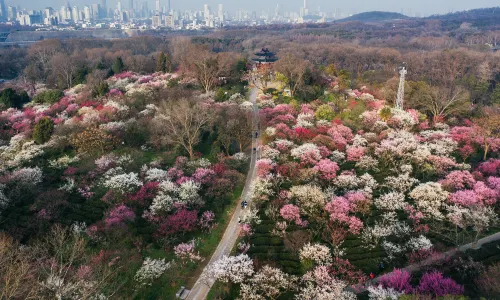
The bald cypress trees at Gate 3 are beautiful, and the scenery is breathtaking. The stone statue path feels like stepping into a history textbook. The scenic area is the mausoleum of Zhu Yuanzhang, the founding emperor of the Ming Dynasty. The area is very large, so plan your route according to your physical condition and proceed with caution.
 4.6/5
4.6/5 苏苏的旅途
苏苏的旅途Zhongshan Scenic Area combines nature and culture. The Ming Xiaoling Mausoleum is solemn and ancient, with lifelike stone statues standing silently along the Sacred Way; the Sun Yat-sen Mausoleum is magnificent, and climbing to the top offers panoramic views of Nanjing. The Wutong Avenue stretches with lush greenery, and Linggu Temple is serene and tranquil. The misty rain of the Six Dynasties and the turbulent history of the Republic of China intertwine here, making it a must-visit scenic and cultural landscape in Nanjing.
 4.7/5Anonymous user
This is absolutely the best choice, no doubt about it! 👍 Extremely, extremely ...
 4.7/5
4.7/5 霍尔顿考尔菲德
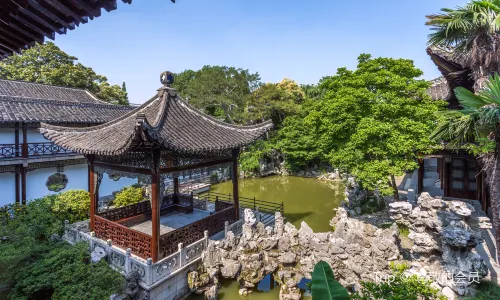
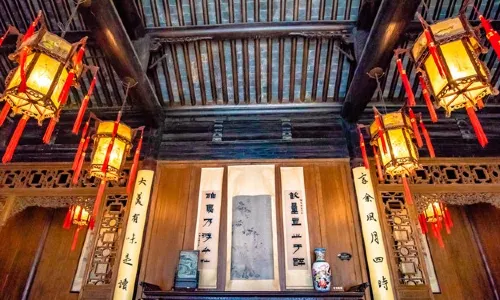
A highly recommended attraction, it offers a unique blend of classical Chinese gardens and Western decor. While strolling along the 1.5km covered walkway, visitors can also learn about the history of the He clan. This educational and entertaining three-dimensional garden is truly excellent.
 4.7/5
4.7/5 峰一样的好男子
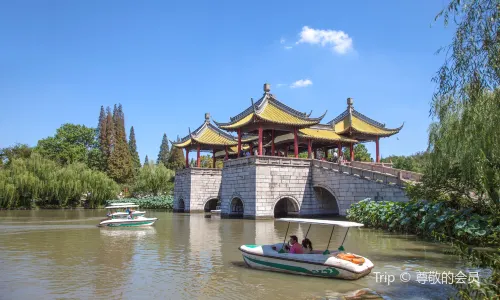
Here are some descriptions of Slender West Lake: Poetic Scenery Willows and painted bridges, winding waterways and covered corridors—if Jiangnan is a poem left behind by heaven, then Yangzhou's Slender West Lake is the most exquisite stroke on that poem. The 4.3-kilometer waterway, like a flowing ribbon, connects twenty-four scenic spots, each step echoing the rhymes of Tang and Song poetry. The Five Pavilion Bridge presents a temporal fold; the five pavilions, supported by lotus flowers, resemble Beijing's Beihai Park when viewed from the north, and the Jiangnan water towns when viewed from the south. This bridge, a fusion of northern and southern architectural styles, was praised by Mao Yisheng as "China's most beautiful bridge." The White Pagoda in the clear clouds—legend has it that the White Pagoda was formed overnight by piled salt. Its design resembles a scripture cylinder; when the wind blows, 108 copper bells softly chant the Heart Sutra, the chanting resonating with the blue waves. Historical and Cultural Description Slender West Lake is not only a landscape painting, but also an epic tale inscribed with the stories of Emperor Yang of Sui's canal construction, salt merchants' garden building, and the emperor's southern tours. Since the Sui and Tang dynasties, this place has been a favorite haunt of literati and scholars. During the Qing dynasty, due to the six southern tours of Emperors Kangxi and Qianlong, salt merchants competed to build gardens, creating a magnificent scene of "flowers and willows lining both banks, pavilions and terraces stretching all the way to the mountains." From Li Bai's "fireworks in March" to Jiang Kui's "ripples on the water, the cold moon silent," generations of literati have infused the Slender West Lake with their souls through poetry, making it a "walking embodiment of Tang and Song poetry." Four Seasons Features The Slender West Lake is a natural theater that never closes, where different aesthetic scripts unfold with the changing seasons. In spring, cherry blossoms fall like rain, forming a rainbow bridge; pink snow drifts down the cherry blossom avenue, overlapping with the crimson railings of the rainbow bridge. In summer, the lotus breeze carries the fragrance of Guangling San, and thousands of acres of lotus ponds sway gently, while painted boats illuminated by palace lanterns shine at night. In autumn, ginkgo leaves gild the pavilions; the thousand-year-old ginkgo trees in front of the scenic waterside pavilions scatter gold leaf, reflecting the yellow glazed tiles of the Five Pavilion Bridge. In winter, snow falls, creating the most poetic scene of Jiangnan; snow-covered white pagodas resemble jade palaces.
 4.7/5
4.7/5 可可兔纸
可可兔纸Although it was a bit late, I didn't see much of the intricacies of the gardens. I think we should have hired a guide. However, the design of these gardens is indeed ingenious. They must be very beautiful in late autumn and early spring.
 4.8/5
4.8/5 我有📷⌨️你有啥
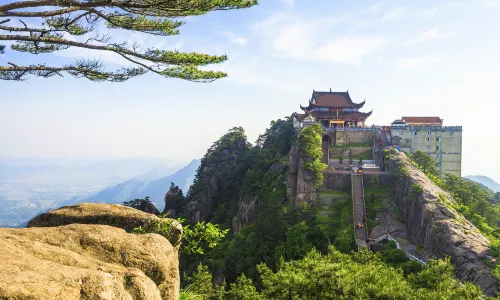
The Jiuhua Mountain Scenic Area has been improving its services year by year. It's getting better and better. As a Buddhist, and considering it's a sacred site for Ksitigarbha Bodhisattva, I still recommend visiting to pay homage if you can afford it. There are free shuttle buses from the high-speed rail station. Then, go to the visitor center to transfer to the scenic area bus. It costs 50 yuan round trip. Honestly, this is quite good. The entire scenic area has a rather strong commercial atmosphere, but it's acceptable.

