





 4.4/5
4.4/5 如梦令走天下
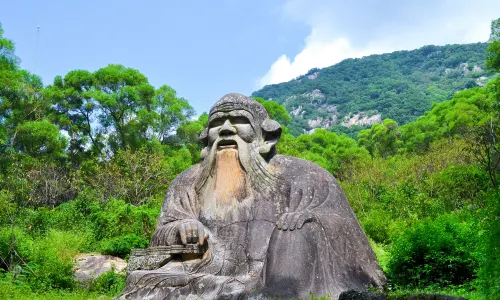
Qingyuan Mountain Scenic Area is well worth a visit; it's Quanzhou's only 5A-level scenic area. Qingyuan Mountain is primarily a famous Taoist mountain. Records of Taoist practice date back to the Qin Dynasty. Currently, there are 9 stone sculptures in 7 sites dating from the Tang to Qing Dynasties, including Taoist and Buddhist statues, and over 600 cliff carvings. The Laozi Rock Sculpture, in particular, is the oldest and largest existing Taoist stone sculpture of Laozi in China, a typical representative of Qingyuan Mountain's diverse culture, and is hailed as "Laozi, the First Under Heaven." I didn't know, but when I saw it, I was amazed. This Laozi statue in Qingyuan Mountain Scenic Area is so adorable. Located on the central axis of the ancient city of Quanzhou, it is a national key cultural relic protection unit. The entire statue is carved from a single piece of natural granite, standing 5.63 meters high, 8.01 meters wide, and 6.85 meters thick, with a floor area of 55 square meters. The statue, facing south, vividly and realistically recreates Lao Tzu's natural tranquility, serene detachment, otherworldly air, and open-minded yet approachable demeanor, devoid of any dignified or awe-inspiring mystique, appearing instead endearing and friendly. I chose to hike up the mountain and take a car down. Qingyuan Mountain isn't particularly high compared to the mountains in Sichuan, which often reach 3,000-4,000 meters, with an elevation of only 498 meters. However, it's quite steep, making the climb rather tiring. I carried my backpack, taking photos of the scenery as I climbed, stopping frequently, and it took me two and a half hours to reach the highest point of Qingyuan Mountain—Nantai Rock. Located on the right peak of Qingyuan Mountain, Nantai Rock is the highest point in the scenic area offering a panoramic view of Quanzhou City. Another noteworthy feature of the Qingyuan Mountain Scenic Area is the famous stupa containing the relics of Master Hongyi. The stupa containing the relics of Master Hongyi is located in the middle section of Qingyuan Mountain. Built in 1952, it is a hexagonal stone stupa with a square body and a pointed roof. The entire stone pagoda consists of a single stone chamber and a stupa containing relics. In the center of the inner wall is a diabase carving of a portrait of Master Hongyi, a portrait of his mentor drawn by the famous cartoonist Feng Zikai in the style of "Tears in Ink." To the east of the pagoda is a large stone inscribed with the master's last calligraphy, "A mixture of sorrow and joy," while to the west is a stele bearing the biography of Master Hongyi, along with a statue of him. He is the author of the well-known song "Farewell." Master Hongyi advocated the patriotic principle of "reciting Buddha's name while remembering to save the country," and he propagated Buddhism in southern Fujian for 14 years, exerting a profound influence. Outside the long pavilion, along the ancient road, fragrant grasses stretch to the horizon…
 5.0/5
5.0/5 M81***17
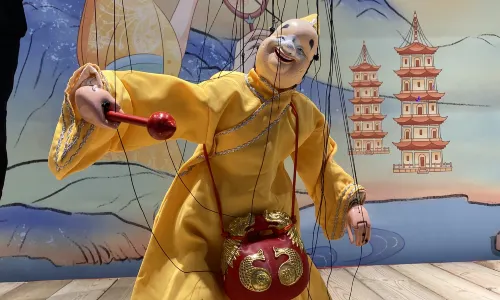
A fantastic puppet show! The variety of performances was impressive, the puppets displayed in the cabinets were incredibly lifelike, and the puppeteers' performances were superb. With the addition of dialect voiceovers and Mandarin subtitles, it was definitely worth seeing!
 4.4/5
4.4/5 Anonymous user
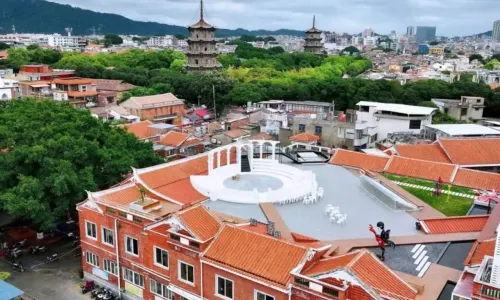
A great place for families, with three shows. The puppeteers performed with great care, and the children were engrossed. At the end, the puppeteers gave a teaching session, and the audience could try to control the puppets. The rooftop view at night is beautiful, and you can check it out.
 4.5/5
4.5/5 奔三爷的一休
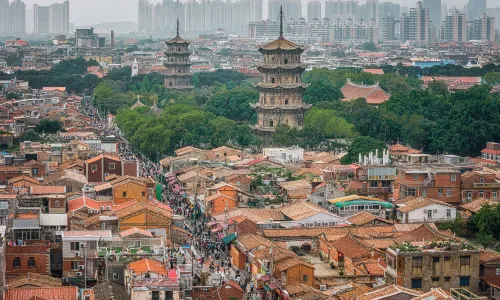
It has a large flow of people, a rich history, and cultural heritage, and offers a variety of famous Fujian snacks, such as four-fruit soup, noodle soup, etc. The traditional hairpin flower makes people today seem to have returned to the past, without knowing what day it is.
 4.7/5
4.7/5 小米饭南瓜粥
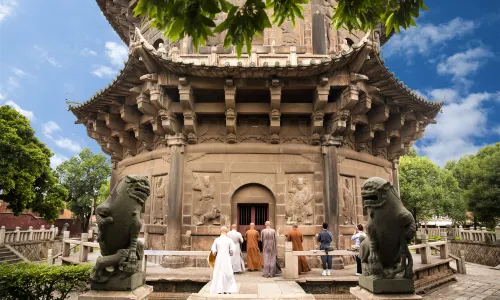
The most cost-effective and fun free attraction, with a volunteer guide from a local retired teacher, made me like Quanzhou even more. Quanzhou Kaiyuan Temple Twin Pagodas (the following content was generated by Xiaoyi): - East Pagoda (Zhenguo Pagoda) - Initial Construction: During the Xiantong era of the Tang Dynasty (860-874 AD), it was originally a five-story wooden pagoda. - Reconstruction: After several periods of prosperity and decline, it was damaged and rebuilt as a brick pagoda. - Completion: In the second year of the Jiaxi era of the Southern Song Dynasty (1238 AD), it was rebuilt as a stone pagoda. After twelve years of construction, it was officially completed in the tenth year of the Chunyou era (1250 AD). - West Pagoda (Renshou Pagoda) - Initial Construction: Built in the second year of the Zhenming era of the Later Liang Dynasty (916 AD), it was originally a seven-story wooden pagoda named "Wuliangshou Pagoda". - Reconstruction: Destroyed twice by fire, once in 1155 (the 25th year of the Shaoxing reign of the Southern Song Dynasty) and again during the Chunxi reign (1174-1189 AD). It was later rebuilt as a brick pagoda. - Completion: Rebuilt as a stone pagoda in 1228 (the first year of the Shaoding reign of the Southern Song Dynasty), and completed in 1237 (the first year of the Jiaxi reign), approximately thirteen years earlier than the completion of the East Pagoda. Although the East and West Pagodas of Kaiyuan Temple were initially built in the Tang and Five Dynasties periods, the main structure of the stone pagodas we see today was completed during the Southern Song Dynasty.
 4.7/5
4.7/5 Emily小乖
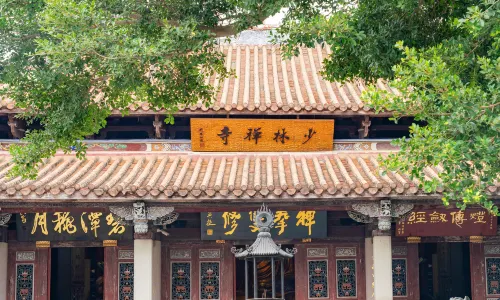
Fantastic performance! The kids were adorable! The performance was fantastic! The iron head kick was amazing! Even the foreigners were stunned! At 50 yuan per person, it's very affordable! Definitely worth going!
 4.8/5
4.8/5 _TI***2d
Loved it. Lots to do, you could spend all day there. Also make sure you hire a buggy. This place is huge.
 4.6/5
4.6/5 LukeChen1116
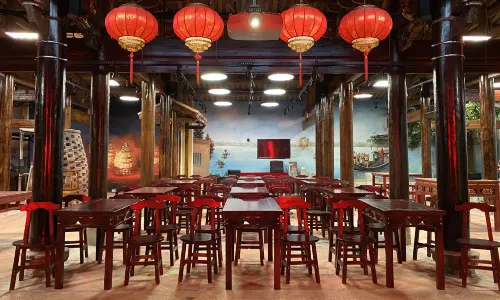
Wudian Market is full of ancient houses and buildings. It's not crowded, and there are many shops. The location is quite reasonable. I was surprised to see a lot of surprises, especially the Starbucks in Liu Qing's house, which is very stylish and has a very comfortable patio.
 4.9/5Anonymous user
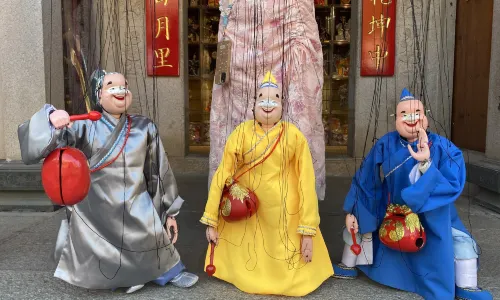
Attracted by its rich history and culture, I specifically chose this 4A scenic spot to enjoy a one-stop service for intangible cultural heritage. I explored the culture, history, and architecture, watched a puppet show, and experienced Quanzhou hairpin making in an afternoon. It was fantastic!
 4.7/5
4.7/5 真诚7577
Jimei School Village, founded by Mr. Tan Kah Kee, comprises several schools including Jimei University and Jimei Middle School. Its unique architectural style blends traditional Minnan (Southern Fujian) traditions with Southeast Asian influences, earning it the nickname "Pearl of the Sea Garden." At night, Jimei School Village is brilliantly lit, with the night view around the Dragon Boat Pool being particularly enchanting. Strolling along the tree-lined paths of the campus, one can immerse oneself in its rich cultural atmosphere. For dinner, we recommend Jimei Dashe Satay Noodles near Jimei School Village. The satay broth is rich and flavorful, and the toppings are plentiful; it's a very popular local eatery.

