





 4.2/5
4.2/5 一杯苦咖啡912
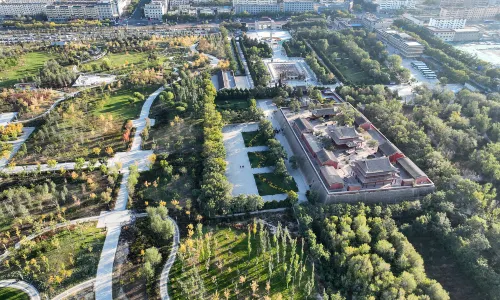
Friends who like history are worth recommending. The hometown of the famous bronze galloping horse. The specific owner of the Han tomb is only known to be a general named Zhang. The treasures of the bronze galloping horse can be seen at the Gansu Museum.
 4.2/5
4.2/5 M29***51
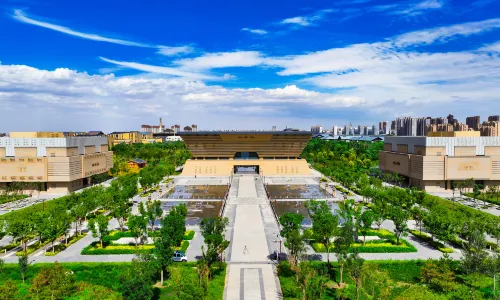
Located in Wuwei City, Gansu Province, Hexi Metropolis is a large-scale cultural and tourism complex integrating history and culture, natural scenery, and leisure and entertainment. Formerly known as Liangzhou, Wuwei was a key city on the ancient Silk Road. Historically, it served as the political, economic, and cultural center of the Hexi region, witnessing the succession and prosperity of multiple dynasties. Construction of the Hexi Metropolis scenic area began in October 2018 and took over four years. Built on the site of the Leitai Han Tomb, a former national 4A scenic spot where the "Horse Stepping on Flying Swallow" statue was unearthed, the project was built with a total investment of 5.803 billion yuan. Overall Layout: The overall layout of the scenic area can be summarized as "12333N," specifically one core area, two supporting facilities, three major venues, three major nodes, three themed blocks, and a series of distinctive highlights. Integrating heritage preservation, tourism, cultural exhibitions, leisure and entertainment, and supporting public service facilities, the Hexi Metropolis scenic area is the largest cultural and tourism complex in the province, jointly developed by the Provincial Public Transportation Group and the Wuwei Municipal Government. It is of great significance for fully tapping Wuwei's historical and cultural resources, building Wuwei into the "Chinese Tourism Iconic Capital", creating a new Silk Road city landmark, promoting the development of the province's cultural and tourism industry, and promoting the construction of the Silk Road Economic Belt.
 4.8/5M29***51
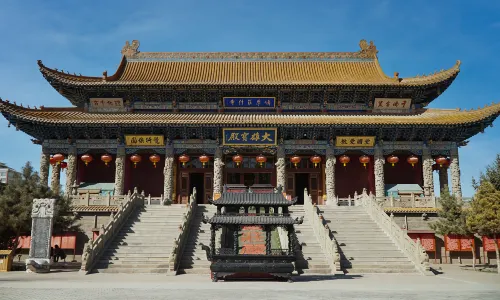
Located in Wuwei City, Gansu Province, the Kumarajiva Temple holds significant historical, cultural, and religious significance. Witnessing the spread of Buddhism: The temple was built by Lü Guang of the Later Liang Dynasty to house Kumarajiva. It was the place where Kumarajiva first entered the inland region to preach and teach. It bears witness to the spread of Buddhism from the Western Regions to the Central Plains and is a valuable relic for the study of both Han Buddhism and Western Buddhism. Reflecting the rise and fall of dynasties: Since its founding in the Later Liang Dynasty, it has undergone expansion and renovations during the Tang, Ming, and Qing dynasties. Its rise and fall are closely linked to the historical changes in the Liangzhou region, making it a valuable resource for studying the political, economic, and cultural development of the ancient region. Cultural Value A fusion of diverse cultures: As the place where Kumarajiva resided and translated Buddhist scriptures, the Luoshi Temple Pagoda, housing his tongue relic, stands majestically within the temple. The temple's architectural style blends characteristics of Han Buddhism and Western Buddhism, embodying the exchange and integration of diverse cultures. Religious Research Value: The temple boasts a meticulously planned architecture, with key buildings including the Main Hall, the Great Sutra Hall, the Guanyin Hall, the Meditation Hall, the Guest Hall, the Buddha Chanting Hall, the Kumarajiva Library, the Prajnaparamita Lecture Hall, and monks' quarters. As the largest Buddhist center in Northwest China, it holds significant value for the study of Buddhist temple architecture and religious practices. In summary, the Kumarajiva Temple is not only a historic Buddhist temple but also a vivid embodiment of the diverse and integrated nature of Chinese culture. Its value transcends time and space, and remains of profound inspiration and educational significance to people today.
 4.5/5
4.5/5 xblc
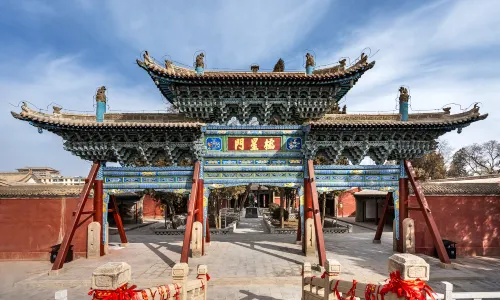
xblcThe Wuwei Confucian Temple was first built in the Ming Dynasty, nearly 600 years ago. It is the largest Confucian temple in Northwest China, hailed as the "Crown of Confucian Temples in Longyou," and one of the three major Confucian temples in the country. It consists of three parts: the Confucian Temple itself, the Wenchang Palace, and the Confucian Academy. Only the ruins of the Confucian Academy remain today. Most notably, it features forty-four plaques, masterpieces by calligraphers from the Qing Dynasty to the Republic of China period.
 4.5/5
4.5/5 Phoebegu
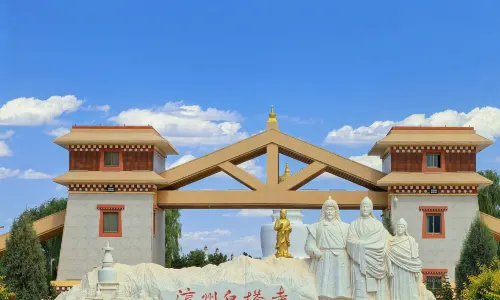
The White Pagoda Temple's historical significance outweighs its tourist value. For a history enthusiast, this is a must-see, as it bears witness to Tibet's annexation to China and provides the best evidence that Tibet has been part of China since ancient times. The temple is quiet, and you can circumambulate the pagoda. The museum is also worth a visit.
 4.5/5
4.5/5 瀚2021
瀚2021街の喧騒から離れたバダンジリン砂漠の奥地に深く入り込むと、起伏のある砂丘だけが残っていると想像してください。風はここで唯一の常連客で、砂面をそっとなでて、細かい線を残して、まるで地球のささやきのようにささやく音を出します。夜になると、星空が巨大なカーテンのように飾られ、この静かな土地を覆い、呼吸の音がはっきりと聞こえ、孤立した静けさを感じることができます。この純粋な静けさは、悩みを捨て、考えを沈殿させ、心の奥底にある自己と対話させます。色の幻想が織り交ぜられています。バダンジリン砂漠は決して単調な金色ではありません。早朝、最初の太陽が砂丘に降り注ぐと、はっきりとした線と強い層感のある金色の光が差し込みます。太陽が昇るにつれて、砂丘の色は次第にまばゆい金色に変わります。さらに驚くべきことに、砂漠に点在する湖は、宝石のようにカラフルな色をしています。青い空と白い雲を映す澄んだ緑色の湖もあれば、ミネラルの含有量が異なるため、夢のようなピンク、エメラルド、さらには青色の湖もあります。この色の幻想が織り交ぜられ、まるでシュールな世界にいるかのように息をのむような絵を構成しています。地球の脈拍のリズム:バダンジリン砂漠を歩くと、地球の最も原始的なリズムを感じます。そびえ立つ砂丘は、風の軌跡と時間の経過を記録し、固い波のようなものです。それらの粘り強いラクダ草は、乾燥した環境で粘り強く成長し、生命の粘り強さを示しています。砂丘の頂上に登ると、見渡すと、果てしない砂の海が空に伸びているようで、自然の広大さとそれ自身の小ささを感じます。この強い対比は、あなたがあなたの人生を大切にし、自然を畏敬することを可能にします。独特の地理的魅力:バダンジリン砂漠がこのように独特なのは、その高い複合型砂丘と多くの淡水湖が共存する奇妙な景観にある。科学者たちは今もこれらの湖がどのように乾燥した砂漠の中で形成されたかを研究しています。ピルトゥ峰は世界最高の砂丘の一つとして、さらに無数の探検者を引きつけました。この独特な地理的魅力は、バダンジリン砂漠を多くの砂漠の中で際立たせています。まとめ: バダン ジリン砂漠は単なる観光地ではなく、心に触れ、思考を誘発する土地です。究極の静けさ、華やかな色、原始的な迫力で、訪問者は地球の脈拍を感じることができます。ここでは、ペースを落とし、心を沈殿させ、自然を再認識し、人生を感じることができます。あなたが本当の心の旅を切望しているならば、バダンジリン砂漠はあなたの忘れられない選択になるでしょう。
 4.3/5
4.3/5 118***49
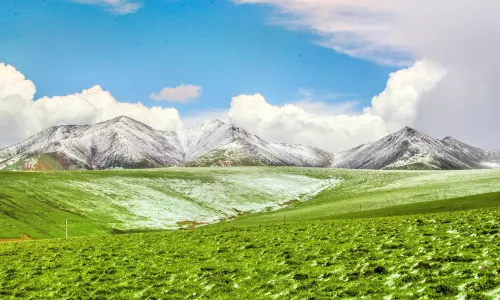
It is known as the first snow peak in life, because it is the closest snow peak to the city more than 5 kilometers. Traffic is a big advantage. From Xining, it is very convenient to take the Zhangwen Expressway or the 227 provincial road. The good thing is that the attractions are free and only need a shuttle bus for 25 yuan. The fly in the ointment is that there is only a small amount of snow at the end of the arrival, which is a little disappointing. I heard that if you want to climb the snowy mountain, you must issue a specific inspection report and a professional mountaineering certificate.
 4.6/5
4.6/5 chendi1973
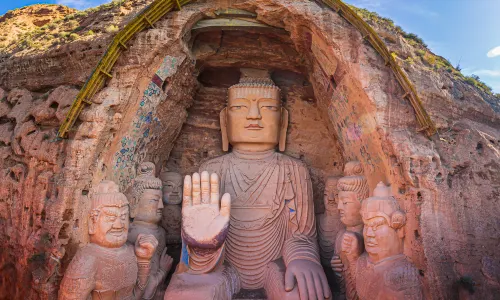
If you are on your way, you can come here. It is a bit tiring to come here specially. The road to the scenic area is under construction. If the car has a low chassis, it is easy to bump into it. You need to drive or charter a car. The bus is not convenient. The ticket price is 30. The scenery of the reservoir is good. The mountains and water meet. There is only one grotto, which is also newly renovated at the back.
 4.4/5
4.4/5 山水如画卷
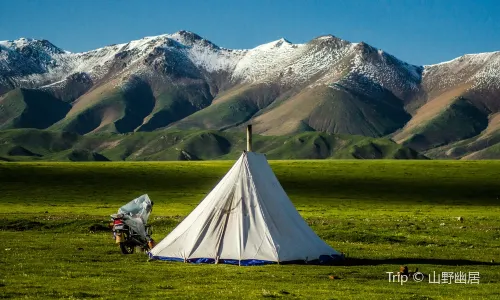
山水如画卷First, be cheerful and enjoy the beauty of nature wherever you go. At over 3,000 meters above sea level, enjoying a meal of beef and mutton stewed with Qilian Huanggu tea, followed by a glass of local barley wine, is the perfect experience. A must-do for family and friends.
 4.6/5
4.6/5 来和我一起旅行
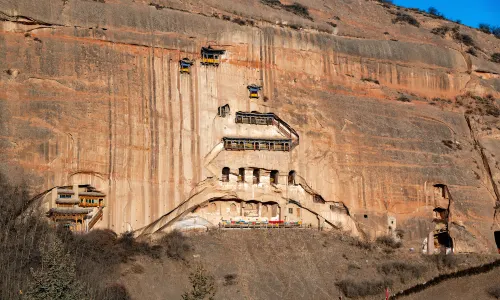
A trip to Zhangye isn't just about seeing the colorful Danxia, but also about visiting Mati Temple, with its history, scenery, and unique grottoes. We visited on the afternoon of the first day of National Day holiday. We only had to queue for 20 minutes at the base of the Thirty-three Days Grottoes; there were no lines elsewhere. We visited the Thousand Buddha Caves on our way back. The Medicine Master Hall is the most challenging part of the climb, with a straight up and down section requiring only hands and feet to navigate through small holes carved into the cave walls. The round trip took three hours and was quite tiring. Don't plan your trip on the same day as Pingshan Lake.

