





 4.7/5
4.7/5 Anonymous user
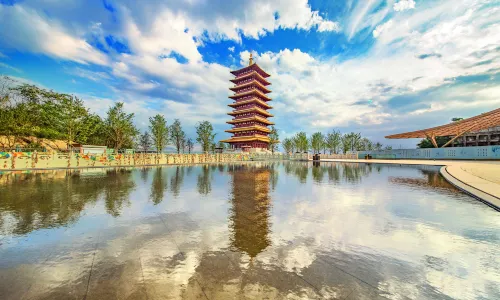
Niushou Mountain is a large scenic area with magnificent architectural designs, especially the Buddha Palace. Its unique shape and exquisite interior details are breathtaking. Whether it's the reflection in the pool or the arched corridors of the Buddha Palace, every shot is a masterpiece, making it well worth a visit!
 4.7/5
4.7/5 M50***70
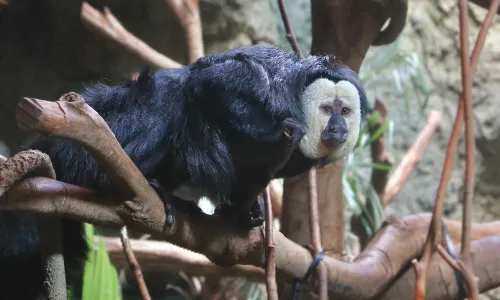
Hongshan Zoo: A Healing Journey to Reconcile with Nature In this fast-paced urban life, Hongshan Zoo is like a carefully nurtured oasis, providing a rare haven for weary souls. It's more than just a simple visit; it's a profound dialogue about life, respect, and coexistence, inspiring a deeper reverence and love for nature. Upon entering the park, one is immediately struck by its "human-centered, animal-first" design philosophy. Unlike the fenced layout of traditional zoos, Hongshan Zoo cleverly utilizes the terrain to create a near-natural habitat for the animals. Whether it's the giant pandas leisurely basking in the depths of a dense bamboo forest or the African lions running freely in a simulated grassland environment, every detail reveals a deep concern for animal welfare. This "immersive" viewing experience makes one feel as if they are in a vivid nature documentary, experiencing the most primal charm of life. Particularly noteworthy is Hongshan Zoo's efforts in animal conservation and education. The park features multiple science education exhibition areas, conveying rich ecological knowledge to visitors through illustrated panels, interactive installations, and regular animal behavior explanations. Children can not only observe various rare animals up close but also learn the importance of protecting biodiversity, planting seeds of love for nature in their hearts from a young age. Furthermore, Hongshan Zoo's innovative practices in animal welfare are truly admirable. From providing a wide variety of enrichment toys to implementing scientific feeding and management programs, every detail reflects meticulous consideration of the animals' psychological and physiological needs. Seeing animals that were injured or rescued in the wild regain their health and vitality here evokes a warm feeling, a sense of awe at the tenacity and miracle of life. Of course, the beauty of Hongshan Zoo lies not only in its animals but also in its beautiful natural scenery and humanized service facilities. Strolling along tree-lined paths, breathing in the fresh air, and listening to the distant birdsong provides an unprecedented sense of relaxation. The well-equipped rest areas, clean restrooms, and thoughtful guided tours make the entire visit more comfortable and convenient. What's most moving is that Hongshan Zoo is more than just a place to exhibit animals; it's a platform advocating for harmonious coexistence between humans and nature. Through its actions, it tells us that every life deserves respect, and every piece of nature deserves to be cherished. Here, we not only witness the cuteness and wisdom of animals, but also humanity's responsibility and commitment to nature. In short, Hongshan Zoo is a spiritual cleansing, a healing journey of reconciliation with nature. It allows us to find a moment of tranquility in our busy lives and gives us a deeper understanding and love for the world. If you're also looking for a place where your mind can relax and your horizons can broaden, then Hongshan Zoo is undoubtedly your best choice.
 4.6/5
4.6/5 苏苏的旅途
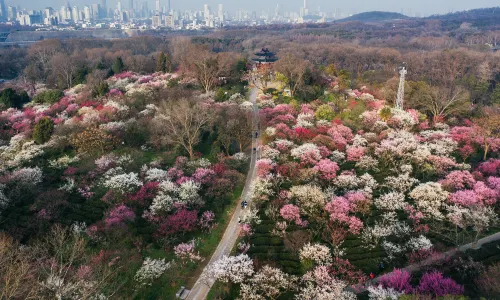
苏苏的旅途Zhongshan Scenic Area combines nature and culture. The Ming Xiaoling Mausoleum is solemn and ancient, with lifelike stone statues standing silently along the Sacred Way; the Sun Yat-sen Mausoleum is magnificent, and climbing to the top offers panoramic views of Nanjing. The Wutong Avenue stretches with lush greenery, and Linggu Temple is serene and tranquil. The misty rain of the Six Dynasties and the turbulent history of the Republic of China intertwine here, making it a must-visit scenic and cultural landscape in Nanjing.
 44.7/5
 APPLECici
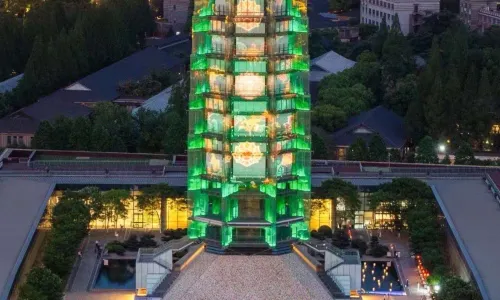
Teacher Zhang Jun, our guide at the Great Bao'en Temple, patiently and meticulously sent us the meeting point and route in advance. The tour consisted of three sessions, but due to the extensive content, it went on for an extra half hour. He didn't even have time for a sip of tea! From the art of the Jetavana sculptures to the history of the Great Bao'en Temple Pagoda, to the excavation of the Buddha's skull relic and the historical and artistic value of the artifacts, he eloquently explained everything, captivating us and leaving us wanting more. This trip to the Great Bao'en Temple was just a beginner's guide; we'll definitely meet again!
 54.7/5Anonymous user
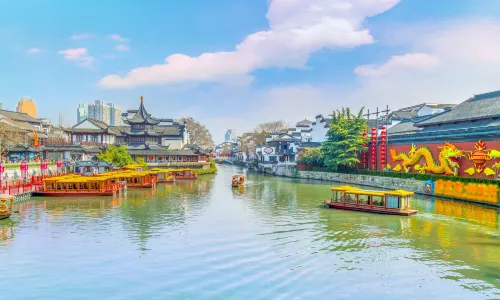
Nanjing Confucius Temple is located on Gongyuan Street on the north bank of the Qinhuai River in Qinhuai District, Nanjing, Jiangsu Province, China, west of Jiangnan Gongyuan. It is located in the core area of the Nanjing Confucius Temple-Qinhuai River Scenic Belt. It is also known as Nanjing Confucius Temple, Nanjing Confucian Temple, and Wenxuanwang Temple. It is a place dedicated to Confucius and is China's first national highest institution of learning, one of China's four major Confucian temples, a hub of ancient Chinese culture, and a gathering place for the history and culture of Jinling. It was not only the cultural and educational center of Nanjing during the Ming and Qing dynasties, but also the most prestigious cultural and educational architectural complex in the southeastern provinces.
 64.6/5
 yxj003
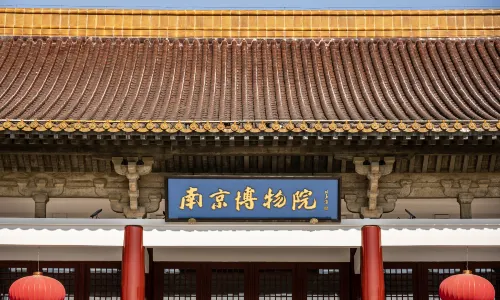
The Nanjing Museum effectively functions as the Jiangsu Provincial Museum. It is one of the earliest museums established in China, comprising a history hall, an art hall, a special exhibition hall, a digital hall, a Republican era hall, and an intangible cultural heritage hall. Admission is free and by reservation only; audio guides are available for a fee. The exhibition showcasing the Republican era is quite unique and unlike any other provincial museum I've seen.
 74.7/5
 踏浪寻景人
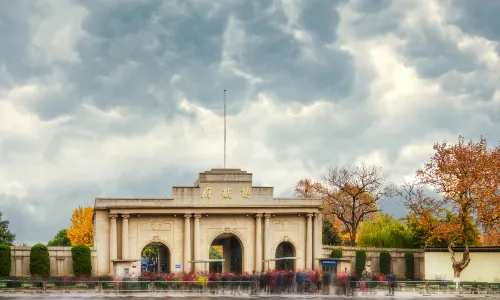
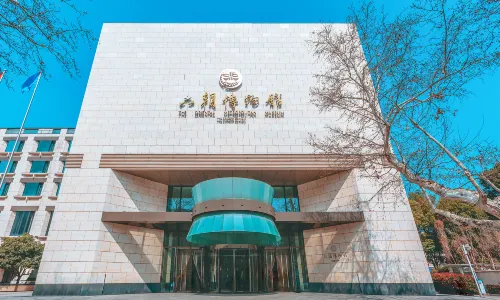
踏浪寻景人Highlights 1. Rich History: The Museum of Modern Chinese History is a key site witnessing the fall of the Qing Dynasty and the rise of the Republic of China. Its architecture blends Chinese and Western styles, featuring opulent designs from the Taiping Heavenly Kingdom and office buildings from the Republic of China era. 2. Three Zones: The central area recreates historical scenes along the central axis; the western area features a cluster of Republican-era buildings; and the eastern area combines gardens with exhibition halls, suitable for segmented, in-depth visits. 3. Nearby Attractions: Within walking distance of the 1912 Street (Republic of China atmosphere, food and shopping), Nanjing Library, and easily accessible. [Helpful Tips] 1. Tickets: Online discounted tickets start from approximately 37 RMB (20 RMB for students/seniors), 40 RMB on-site; annual passes will be discontinued after December 31, 2025, so advance ticket purchase is recommended. 2. Best Time to Visit: Spring and autumn are best, avoiding the October Golden Week (sold out easily). Arrive before 9:00 AM to avoid peak crowds. 3. Transportation: 5-minute walk from "Daxinggong Station" or "Presidential Palace Station" on Metro Line 2; Bus routes 29/55/9 to Daxinggong Station. 4. Food: Must-try dishes in the 1912 Street area include salted duck, duck blood soup with vermicelli, and xiaolongbao (soup dumplings); also recommended are Lugang Town and Wu Laotai Wonton. 5. Note: Free for active duty/retired military personnel, disabled persons, and minors; guided tours are charged by area (NT$80 for the central axis, NT$100 for the entire route).
 84.6/5
 可爱的猫ovou
This museum was truly a hidden gem, discovered by chance. While its collection may not be as extensive as the Nanjing Museum's, its exhibition layout and lighting are absolutely stunning! Plus, it was less crowded and quiet, making for a wonderful visitor experience! It's incredibly photogenic, and I'll definitely bring my kids back.
 94.3/5
 M63***86
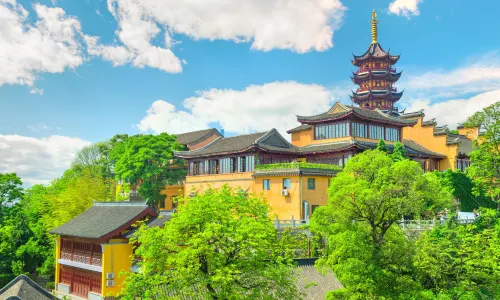
Jiming Temple, located on the eastern slope of Jilong Mountain in Xuanwu District, Nanjing, is also known as Ancient Jiming Temple. Founded in the Western Jin Dynasty, it is one of the oldest Buddhist temples in Nanjing, historically renowned as the "First Temple of the Southern Dynasties" and the foremost of the "Four Hundred and Eighty Temples of the Southern Dynasties," serving as a Buddhist center in China during that period. While the existing historical sites are few, the newly constructed buildings are quite impressive, with a harmonious and well-arranged layout and exquisitely carved Buddha statues. Although the existing historical sites are few, the newly constructed buildings are quite impressive, with a harmonious and well-arranged layout and exquisitely carved Buddha statues.
 104.7/5Anonymous user
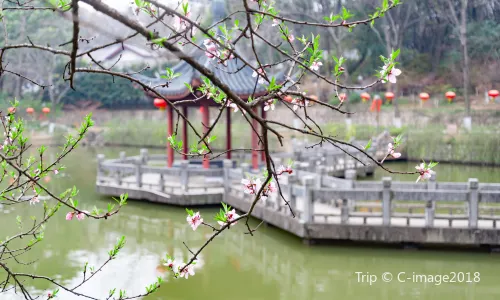
An autumn trip to Qixia is a great choice, especially from early to mid-December when the mountains are ablaze with red leaves – stunning views everywhere! However, it can be very crowded. I also suggest including this attraction in the Nanjing Tourism Annual Pass; that would be even better.
 Niushou Mountain New Year's Eve Celebration: A 2,026-Drone Show to Welcome the New Year and Pray for Blessings | Dec 31, 2025-Jan 1, 2026
 Featured in 2026 China 100 - Best Things to Do
