Popular Best Things to Do Near Xinji [2026]

Longxing Temple





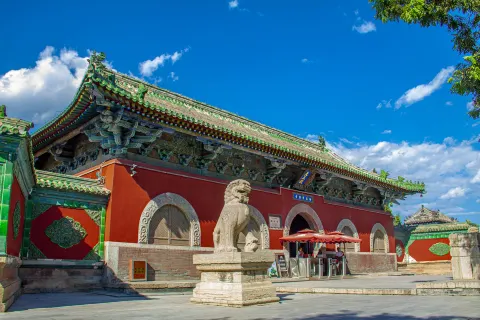
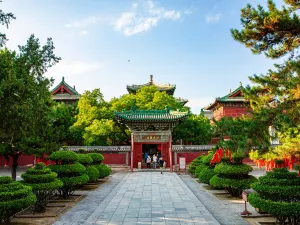
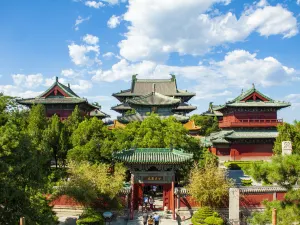
Before visiting Longxing Temple, I really didn't expect it to be so wonderful. I originally just wanted to see the Guanyin statue, which was praised by Mr. Lu Xun as the "Oriental Goddess of Beauty." However, I was surprised to find that many of the murals inside the temple were also exceptionally beautiful. We even caught a live interactive performance of the Goddess of Beauty, which was truly beautiful, combining cultural and historical significance. One of the main halls was still under renovation, and I'd love to go back once it's finished. It's also worth mentioning that there's a teahouse in the temple with fragrant tea and delicious coffee. Sitting down, chatting with the owner, and enjoying the temple scenery was a unique and enjoyable experience.
📍Zhengding·Longxing Temple|The Story of "Green Plum by the Inkstone" Happened Right Here I've been to Beijing countless times, but never thought to visit Zhengding, 270 kilometers away. My first trip to Shijiazhuang revealed this ancient city to be a veritable treasure trove of ancient Chinese architecture. I recently finished watching the AI short drama "Green Plum by the Inkstone," which tells the story of a museum girl who, after touching the "Draft of a Eulogy for My Nephew," travels back to the Tang Dynasty and falls in love with Yan Zhenqing's nephew, Yan Jiming. The young man in the drama, who could grind ink, ride horses, and whose eyes shone with laughter, ultimately died in the An Lushan Rebellion. The "Draft of a Eulogy for My Nephew" describes the "Battle of Changshan," and Changshan is Zhengding. Yan Gaoqing died defending the city, Yan Jiming was beheaded, and over thirty members of the Yan family were killed. The Zhengding Museum says this is "the spiritual high ground of Yan Gaoqing's unyielding defense and heroic sacrifice." The drama tells the story; the temple provides the physical evidence. Longxing Temple, originally named "Longxing Temple" during the Tang Dynasty, houses the Longzang Temple Stele, hailed as the "First Stele of the Sui Dynasty," a direct source of Tang Dynasty regular script calligraphy, even influencing figures like Chu Suiliang. Outside the temple stands the Wind-Moving Stele, erected by imperial decree in the second year of the Yongtai era of the Tang Dynasty; its characters are vigorous and powerful, still admired by calligraphers throughout history. In his essay "Green Plum by the Inkstone," Yan Jiming wrote, "Then come to the history books and find me." Now I want to say that, having come to Zhengding, I have truly found him amidst the steles and flying eaves. Mr. Liang Sicheng visited Zhengding three times, writing in his "A Brief Survey of Ancient Architecture in Zhengding" that he was "truly filled with admiration and reverence," calling Longxing Temple "the foremost famous temple outside Beijing." He was immediately awestruck upon seeing the Mani Hall, stating that this cruciform layout, "aside from the corner towers of the Forbidden City in Beijing, I've only ever seen in Song Dynasty paintings," praising it as "magnificent and overlapping, a masterpiece of art, and truly unique in Chinese architecture." In the Revolving Sutra Repository, he discovered the highest-level "eight-puzuo" dougong bracket system from the *Yingzao Fashi* (Building Standards)—encountering the pinnacle of Song Dynasty architecture in a small pavilion—a discovery that thrilled him immensely. He looked at the Reclining Guanyin and said, "Do you think the Reclining Guanyin is the same as others? She is so full of human warmth." Of the "Six Best Things" of Longxing Temple, half were "certified" by Mr. Liang Sicheng: 1️⃣ Mani Hall—the only existing Northern Song Dynasty cross-shaped hall in China, which Liang Sicheng called "the epitome of art." 2️⃣ Reclining Guanyin—called "the goddess of beauty in the East" by Lu Xun, with a relaxed and serene expression. 3️⃣ Revolving Sutra Repository—a Northern Song Dynasty wooden sutra cabinet, 7 meters in diameter, an ancient "high-tech" feat. 4️⃣ Longzang Temple Stele—the first Sui Dynasty stele and the source of Tang Dynasty calligraphy. 5️⃣ Thousand-Handed and Thousand-Eyed Guanyin—21.3 meters tall, cast in the Northern Song Dynasty, looking up straight at the crown of the head. 6️⃣ Bronze Vairocana Buddha—made by Emperor Wanli of the Ming Dynasty, with 1072 small Buddhas layered upon each other. Zhengding, this city, is so understated that it's heartbreaking. I've been to Beijing so many times, but I never thought to take a detour to see this place. This trip made me realize what it means to be blind to what's right under your nose. Highly recommended for friends who love ancient architecture and history.


Rong Mansion Scenic Spot
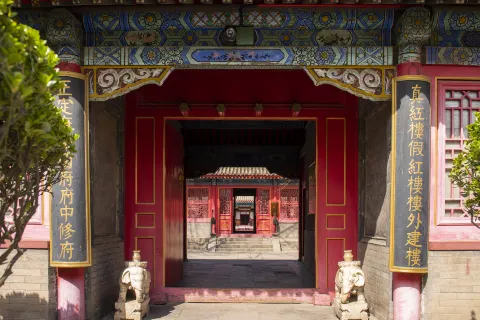
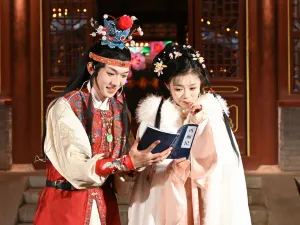
As a filming location for the 1987 TV series "Dream of the Red Chamber," the Rongguo Mansion is truly beautiful at night. The entire performance lasts about an hour, featuring an immersive, moving performance that is far from a boring show! Numerous interactive games, a "flying flower" game, and fun ancient-style challenges kept children actively engaged throughout, having a blast and even winning small mooncakes; elders familiar with the plot of "Dream of the Red Chamber" watched with great enjoyment!
A pretty good attraction. The show starts at 6:10 PM and runs on a loop. We were all exhausted and not planning to go anymore, but we were drawn in and ended up spending over an hour there. The night view is beautiful, and the main scenes are faithfully recreated from the TV series, which brought back memories. The performance is highly engaging, especially for the kids, who even learned a lot about the classic novel. Definitely worth a visit.

Hebei Museum


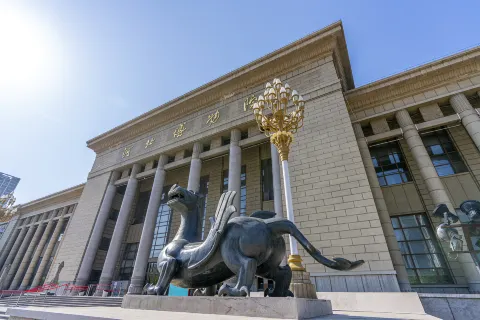
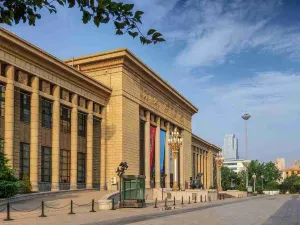
There were many exhibits, and it was very crowded during the National Day holiday. The signage in the exhibition hall was a bit unclear, and I wandered around quite a bit. Perhaps it was because of the time constraints; it's better suited for a leisurely visit. The area in front of the Changxin Palace Lanterns and its neighboring booths was packed with people!
The Hebei Provincial Museum consists of two buildings (South and North sections), each three stories high, with a pool and landscaping in the courtyard. Advance reservations for entry time slots are required. You can buy pigeon feed to feed the pigeons in the plaza at the entrance. There are restaurants and souvenir shops on the basement level. I entered at 10:30 AM and didn't leave until 4:30 PM, and there were still some artifacts not to be missed. Separate brochures are available for the main exhibition halls; you can pick them up at the front desk.
No.
4
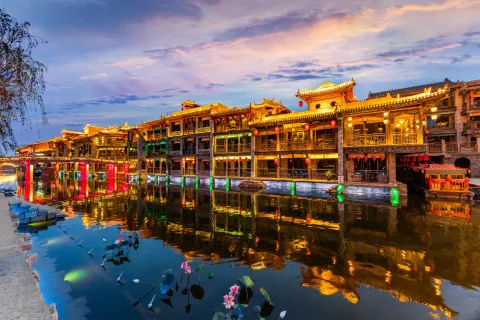
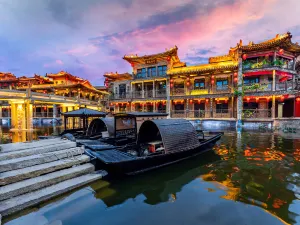
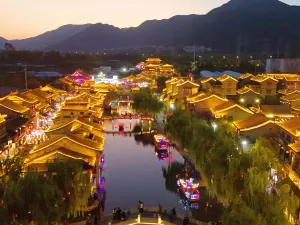
Longquan Ancient Town · Drama Illusion City

Longquan Ancient Town is one of the most interesting ancient towns I've ever visited. Its charm rivals that of Wansui Mountain Martial Arts City in Hebei. However, the only downside is the sheer number of people. Definitely avoid visiting during holidays. It's not fun at all; the overwhelming crowds halve the enjoyment. Even the NPCs (players) are exhausted. But visiting during the off-season will definitely be much more enjoyable. Watch the classic shows and sample some local snacks. It will make your trip to Shijiazhuang even more magical.
The two main performances, with Su Dongpo keeping everyone busy, were totally worth the ticket price. These large performances are both an hour long, and the performers put a lot of effort into them. The children thoroughly enjoyed them. If possible, we'd buy an annual pass to come back again.
No.
5


Guangfu Ancient City

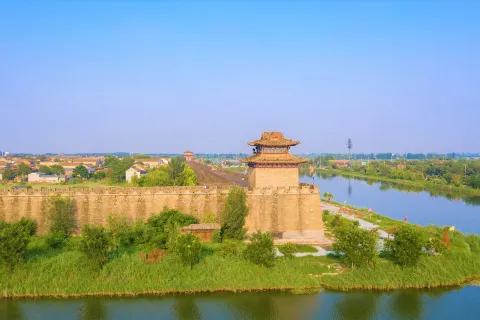
The hometown of Tai Chi has well-preserved ancient city walls and many performance programs, but it is still quite commercialized. During the National Day holiday, there are a lot of tourists, especially at night, which causes serious traffic jams.
The ancient town retains its original appearance, offering a quiet and less crowded experience on weekdays. Most bicycles on the city walls are four-seater, with no single-seater bikes or commercial establishments. Residents live within the ancient town. The former residence of Wu Zongshi and the Guangfu Shuya (Guangfu government office) are worth visiting.
No.
6


Wu Tai Shan



It was excellent and breathtaking, especially Daxiantong Temple and Guanghua Temple, which were the most beautiful among the representative temples. It's said there are over 120 temples in the area; two days wasn't enough, so we could only visit some of the famous ones. Thankfully, we climbed 1080 steps to reach the top of Dailuo Peak, making the trip quite fulfilling.
When visiting Wutai Mountain, the Wuye Temple is a must-see. The temple is solemn and filled with the smoke of incense, attracting many people who come specifically to make wishes and pray for blessings. It's recommended to arrive early to avoid the crowds and allow for a more relaxed prayer experience. After your pilgrimage, if you don't want to rush around, you can stay at Huijin Homestay. The homestay is conveniently located, making it easy to get to the Wuye Temple. The rooms are clean and quiet, perfect for pilgrims to rest and recuperate. A great choice for accommodation when visiting Wutai Mountain.
No.
7
Beijing Wildlife Park

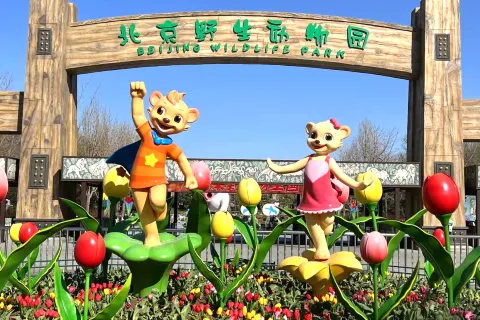
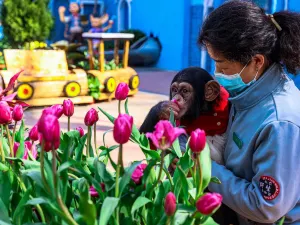
It was fun, but too expensive. A trip to Kitano for a family of three is almost the same as a trip to Disneyland. We didn't even buy Express Pass tickets, just rented a car and fed a bear. We also got caught in a downpour; even with an umbrella in the car, we were half-soaked!
Try to avoid holidays, there are just too many people, the queues in the predator section were almost unbearable 😂 Overall it's still pretty good, great for accompanying the elderly and children!
No.
8
Wahuang Palace


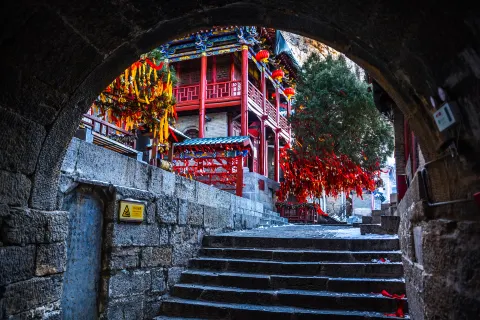
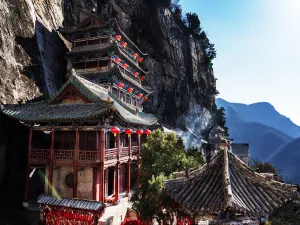
The ticket booth lady was incredibly responsible: she explained the transportation options up and down the mountain in detail and genuinely suggested we decide whether to take the cable car down after we got up (the extra fare was the same as the round-trip fare). Taking my parents, both over 70, up the mountain was painless, haha! I recommend taking the sightseeing bus and cable car up and then walking down. The walk from the cable car station to Wa Huang Pavilion is a gentle descent (including a long flight of stairs!). You can take beautiful photos of the cliffside at Wa Huang Pavilion during the cable car ride; the walk from the cable car station to Wa Huang Pavilion takes about 30 to 40 minutes (depending on your pace) and offers a panoramic view of the valley. The autumn foliage is currently turning red and yellow.
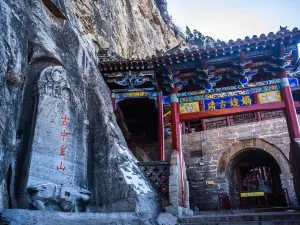
Wa Huang Palace is definitely worth a visit! The living temple on the cliff is breathtaking and magnificent, the Northern Qi cliff carvings are rich in history, the scenic area has complete facilities, parking is convenient for those who drive, and you can enjoy both hiking and ancient architecture at the same time. It's a must-visit in Handan!
No.
9

Yesanpo


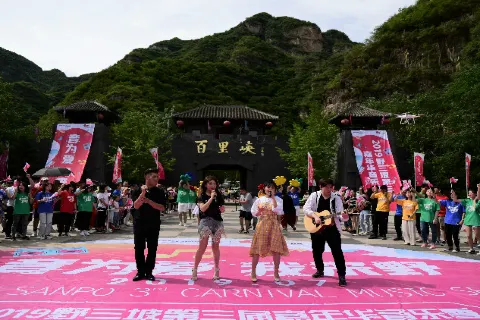
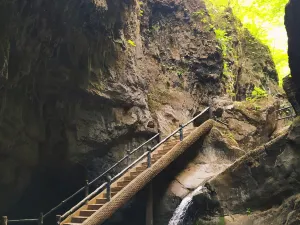
It's absolutely gorgeous inside! The scenery is stunning. The two of us walked around for four or five hours, and it was still very beautiful. The scenery inside is beautiful, but the temperature is quite low, so you'll need to bring extra clothes and some food. You'll need to drink water for four or five hours; you can't bring two bottles! The only downside is that it's not very cost-effective. Buying an adult ticket for 100 yuan is a bit expensive. If it were 70 or 80 yuan, I think it would be much more worthwhile. You can choose the 100 yuan option; it's definitely worth it.
My first visit to Yeshanpo Bailixia Scenic Area was quite an experience. The entire scenic area boasts beautiful canyon scenery. You need to take a cable car to get from one canyon to another, but the cable car ride is very short and quite steep, so the experience was just so-so.
No.
10


Baotu Spring

A nighttime visit to Baotu Spring is a meeting of lights and clear spring water. As night falls, the bustling crowds of the daytime recede from the First Spring Under Heaven, and the three streams of water surge ceaselessly under the reflection of light, the pool shimmering with a soft, ethereal blue light. At this time, ancient pavilions, corridors, and rocks appear and disappear in the night, the lights falling on the blue waves, their reflections shimmering, and a gentle breeze carries the sound of the springs. The gardens are imbued with the elegance of Song Dynasty poetry, the interplay of mountains, water, and lights telling the ancient charm of Jinan, the "City of Springs," and immersing visitors in the unique nighttime beauty of Jinan.
The night tour was absolutely beautiful and well worth going. Don't bother going during the day. It would be great if the ticket price were a bit cheaper so more people could enjoy the night view; 100 yuan per person is indeed a bit expensive.