





 4.1/5
4.1/5 M25***20
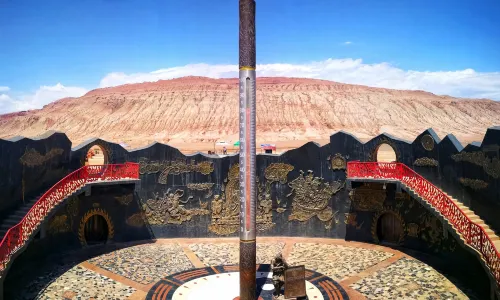
Finally, we arrived at the legendary Flaming Mountain. Once inside, it looked exactly the same as it did from the outside. It was incredibly hot! But there were plenty of statues and landmarks to take photos with, and the staff were very helpful. It was a delight! Don't forget to try the baked eggs.
 4.1/5
4.1/5 红枫2018
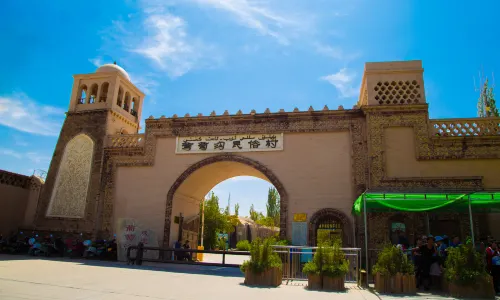
Turpan's Grape Valley truly lives up to its reputation; it's definitely worth a visit! Upon entering Grape Valley, you're immediately enveloped in a refreshing coolness, a stark contrast to the scorching heat of the Flaming Mountains outside—a veritable haven of tranquility in this "land of fire." Everywhere you look, there are layers upon layers of grapevines, like stepping into a green fairytale. The vines are laden with clusters of tempting grapes, including hundreds of varieties such as seedless white, mare's milk, and red grapes, each one intoxicatingly sweet. The seedless white grapes, in particular, are crystal clear, crisp, sweet, and incredibly high in sugar. Here, you can also deeply experience the rich Uyghur culture. The hospitable Uyghur people will invite you to sit under the grapevines, taste freshly picked grapes, and enjoy their captivating song and dance performances. The performers, dressed in vibrant traditional costumes, twirl and leap, showcasing the charm of the Western Regions. The scenic area boasts comprehensive facilities, making it a complete complex integrating dining, accommodation, sightseeing, vacationing, and shopping. And with free admission now, it offers exceptional value. Whether you're coming to taste delicious grapes or experience unique ethnic culture, Grape Valley won't disappoint. I'll definitely come back again next time!
 4.6/5
4.6/5 乐观小妮子
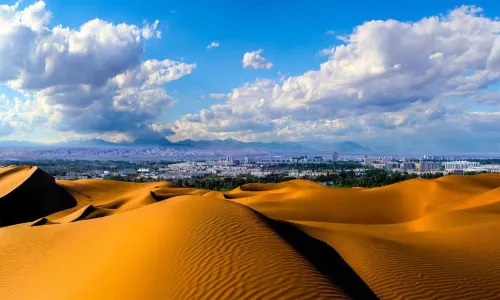
乐观小妮子The Millennial Wonder of "Green Never Retreats, Sand Never Advances" Who says deserts can only be barren? The Kumtag Desert has been adjacent to Shanshan City in Xinjiang for millennia, forming "the world's only desert connected to a city"🌆! The sand dunes here have graceful lines like a maiden's spine, shimmering with golden ripples under the sunlight—every snapshot is a masterpiece📸! Legend has it that it's a remnant of the Flaming Mountains, passed by the Tang Monk and his disciples, carrying the legendary color of the Silk Road~🗺️ 🌅 Sunset: The Desert's Golden Hour After 6 PM, the desert begins its "cooling performance"! We recommend climbing to the top of a dune to watch the sunset paint the sand sea into a gradient of orange and red🎨. Light and shadow dance on the sand ridges, the shadows growing longer and longer, leaving only the sound of the wind and your heartbeat in the world—remember to wear a red or white dress! When the wind lifts your clothes, you'll be snapping photos non-stop! (Friendly reminder: Sunset time is approximately 9:30 PM in summer and 6:50 PM in winter. Please check in advance! ⏰) 🚙 Sandboarding Experience: Desert Roller Coaster + Soul Massage A must-do! The off-road sandboarding experience is incredibly thrilling! The driver takes you on a 60-degree descent into the sand dunes, the feeling of weightlessness is comparable to a roller coaster 🎢, and the billowing sand spray looks like a golden waterfall! You can also try sandboarding, sliding down a hundred-meter sand slope – pure fun!
 44.2/5
 M23***52
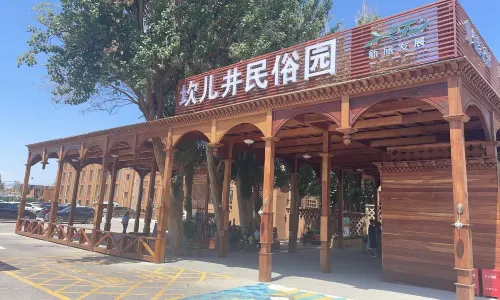
This scenic area is a bit small, and I finished it in less than an hour, but it was quite interesting to see the various structures of the Karez. Parking is very convenient, with a large parking lot at the entrance. It is also located in Turpan City, making it easy to drive.
 54.6/5
 火 火
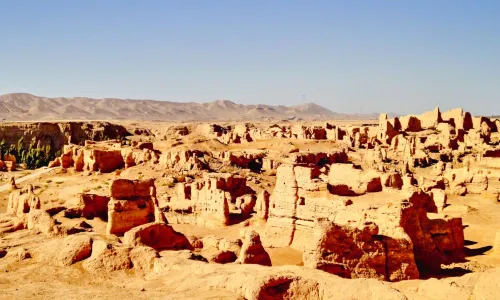
火 火The Jiaohe Ancient City Scenic Area is the world's largest, oldest, and best-preserved site of a "mud city." Named a National Key Cultural Relics Protection Unit in 1961, it is known as the "Pompeii of the East" and a key Silk Road city. It was the site of the earliest Tang Dynasty Anxi Protectorate. Located in Yarzigou (Yar Township), approximately 6 km west of Turpan City in Xinjiang, it is built on a 30-meter-high willow-shaped island terrace. Its ancient name, "Jiaohe," stems from the way the river flows around the city. The former Cheshi State established its capital here in the 2nd century BC. It reached its peak from the Northern and Southern Dynasties to the Tang Dynasty, serving as a political, military, and cultural center in the Western Regions. However, due to the infighting of Mongol nobles in the second half of the 13th century, the city was completely abandoned in 1383, leaving it in ruins. Site Features: No city walls: The cliffs surrounding the terrace serve as a natural defense. Raw earth construction: Houses, streets, government offices, and temples were all built from the loess excavated from the site, standing for thousands of years. Clearance: A 350-meter-long central avenue divides the city into east and west sections. The northern end houses the temple area, the southern area houses residences and workshops, and the eastern side houses military camps, storage trenches, and a parade ground, providing clear functional divisions. Main Highlights: South Gate Entrance: The only remaining main access point. Central avenue and flanking high walls: The site's most impressive "central axis." Big Buddha Temple, Northwest Buddhist Temple, and Northeast Buddhist Temple: Remains of clay Buddha statues, pagoda columns, and wing room remains can be seen. Pagoda Forest: A cluster of 101 stupas housing the remains of Buddhist monks. Government Area: A square, underground courtyard with a skylight, presumably the headquarters of the Tang Dynasty's Anxi Protectorate. Workshops, residential buildings, and an ancient well: Insights into the daily lives of the ancient Cheshi people. Opening Hours: 9:30 AM - 7:30 PM. Admission: 70 RMB.
 64.3/5
 M34***05
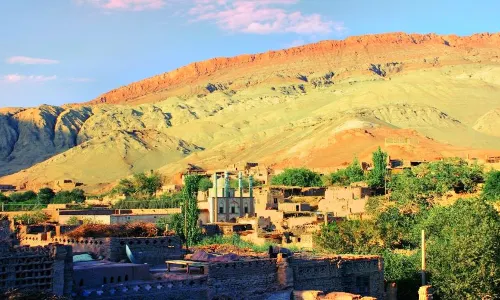
The architectural style is indeed the same as the one on the way there. The main reason for buying a ticket to go in is to take pictures of the mosque-themed building. You can also go up to the roof. Otherwise, it's pretty much the same. The panoramic view seems to be accessible by car from the opposite mountain.
 74.4/5
 qdu***08
This scenic spot combines science and fun. It's not large, but the scenery is beautiful, especially the section from the museum down to the culvert. The whole area is full of exotic atmosphere. The grape corridor is full of various grapes, and the water at the outlet is icy cold, perfect for summer heat relief.
 84.4/5
 Anonymous user
The Kanerjing source in Jiaoheyi is super interesting! You can see the source of the ancient underground water conservancy project with your own eyes. It's like an adventure to drill a tunnel. It's so cool in the summer that you don't want to come out! There are also post station ruins and grape trellises in the scenic area. It's just right to play for 1 hour. It's niche but worth checking in!
 94.2/5M23***52
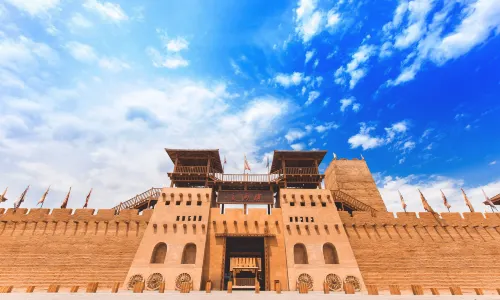
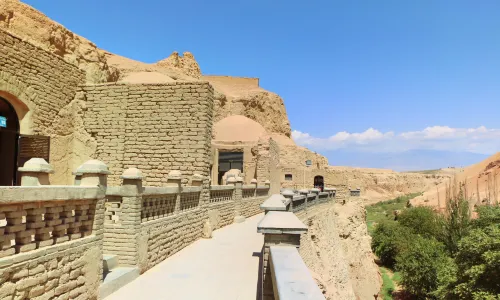
This attraction is small but has great historical value. Many murals have been cut and stolen by foreigners, and some have been vandalized by local people. It is heartbreaking for the cultural relics. If you like history, you can come and take a look. It only takes half an hour to complete the tour.
 Flaming Mountains' Millennial Wonder: A Real-Life "Ice and Fire" Experience with Snow Cover

 No. 1 of Family-friendly Attractions in Turpan