Dawu

Things to do in Dawu

Search attractions or local attractions & tours
Search

Explore top experiences

Top 10 attractions in Dawu

View all Attractions
Hubei Provincial Museum
2026 Asia 100 - Family-friendly Attractions

Hubei Provincial Museum

8.5
4.9/5
7.9k reviews

The Hubei Provincial Museum has ten treasures of the museum, including those unearthed from "Tomb of Marquis Yi of Zeng" the Hubei Provincial Museum's Zenghouyi chime bells; the Yue Wang Goujian sword, a masterpiece of the cold weapon era; the fossilized skull of the Yunxian Man dating back 1 million years; and a treasure of Yuan blue-and-white porcelain: the plum vase with the Four Loves design. The museum's regular exhibitions also feature distinctive characteristics of ancient Chu culture and ancient Yangtze River civilization. The Hubei Provincial Museum consists of the comprehensive exhibition hall,Chu culture hall,Chime bell hallIt is composed of multiple pseudo-classical buildings, and the layout reflects the high-platform architectural layout format of ancient Chu architecture, namely "one terrace, one hall" and "multiple terraces forming a group." Unearthed in 1978 at "Tomb of Marquis Yi of Zeng" in the Hubei Provincial Museum - the Zenghouyi chime bells have a wide range and their excavation rewrote the history of world music; the sword of Goujian, King of Yue, a masterpiece of the cold weapon era, is still incomparably sharp to this day, and displayed beside it is the "spear of Fuchai, King of Wu"; the geological age of the Yunxian human skull fossil is approx. 1 million years ago, earlier than the Peking Man skull fossil; the Yuan blue-and-white plum vase with four loves design is an extremely rare masterpiece among Yuan dynasty blue-and-white porcelain. Hubei is located in the middle reaches of the Yangtze River and belonged to the territory of the Chu state during the Spring and Autumn and Warring States periods. The permanent exhibitions at the Hubei Provincial Museum showcase ancient civilizations of southern China that differ from the Yellow River civilization of the north. The museum's current permanent exhibitions include "Yunxian Man: Prehistoric Humans in the Middle Reaches of the Yangtze River," "Qujialing: Prehistoric Culture in the Middle Reaches of the Yangtze River," and "Panlongcheng: Bronze Civilization in the Middle Reaches of the Yangtze River." In addition to viewing cultural relics at the Hubei Provincial Museum, you can also enjoy chime bell performances. In the museum's performance hall, chime bell performances are held from Tuesday to Sunday, and it is closed on Mondays.

China · Wuhan
Qingchuan Pavilion
No. 4 of Best Things to Do in Hubei

Qingchuan Pavilion

8.4
4.7/5
7.7k reviews

Qingchuan Pavilion stands on Yugong Rock at the eastern foot of Tortoise Hill in Hanyang, facing the Han River to the north and the Yangtze River to the east, gazing across the river at Yellow Crane Tower in Wuchang on the opposite bank. The pavilion's name is taken from the line "the clear river reflects the trees of Hanyang" by the Tang dynasty poet Cui Hao, and it was initiated for construction by Fan Zhizhen, the Ming dynasty prefect of Hanyang. First built during the Jiajing era of the Ming dynasty, it has a history of more than four hundred years. Throughout history, Qingchuan Pavilion was destroyed and rebuilt as many as six or seven times, the last destruction caused by a windstorm; the existing structure was rebuilt in the 1980s following the style of the Guangxu era of the Qing dynasty. Long known as one of the "finest sights of the Three Chu regions" and a "grand vista through the ages," Qingchuan Pavilion echoes Yellow Crane Tower across the river and stands out distinctly along the banks of the Yangtze. The attraction is composed of three main structures—Qingchuan Pavilion, Yuji Xinggong (Yu and Ji Ancestral Hall), and Tiemen Pass—along with auxiliary structures such as the ancient archway, Chubo Pavilion, Chaozong Pavilion, Yu Stele Pavilion, Jingchu Heroic Spirit Stele, and the poetry stele corridor, forming a complex of ancient and pseudo-classical buildings standing by the river. Among them, Yuji Xinggong was first built during the Shaoxing era of the Southern Song dynasty under the original name Yu Wang Temple; during the Tianqi era of the Ming dynasty, it was renamed "Yuji Xinggong" after its worship was changed to Houji and other former sages, and it has been an important site in Wuhan for successive generations to pay homage to Yu the Great. Tiemen Pass was first built during the Three Kingdoms period and has been a strategic location contested by military strategists since ancient times; it was restored in the 1990s. Ascending Qingchuan Pavilion offers a panoramic view of the expansive river scenery where the Yangtze River and the Han River converge. Inside the pavilion, permanent exhibitions such as "Traces of Yu Across the Nine Provinces" and "Historical Paintings of Qingchuan" present Yu the Great culture and the historical heritage of Qingchuan Pavilion from multiple perspectives, ranging from water-control culture to poetry and couplets. The attraction nestles between the hills and the river, with pavilions and terraces scattered in graceful arrangement. The poetry stele corridor preserves inscribed stones bearing verses by literati and poets of successive dynasties, and strolling through it allows visitors to feel the rich historical and cultural atmosphere.

China · Wuhan
Yue Yang Tower
No. 1 of Family-friendly Attractions in Hunan

Yue Yang Tower

8.1
4.6/5
11.5k reviews

"Be the first to worry about the world's worries and the last to enjoy its pleasures"—this line from Fan Zhongyan's Northern Song dynasty essay "Yueyang Tower chronicle" made Yue Yang Tower by Dongting Lake a household name. The main tower, Yueyang Tower, is said to have evolved from a naval review tower built by Lu Su of Eastern Wu during the Three Kingdoms period. Alongside Yellow Crane Tower in Hubei and Tengwang Pavilion in Jiangxi, it is hailed as one of the three great towers of southern China. Poets like Li Bai, Du Fu, Meng Haoran, and Bai Juyi once climbed it to compose verses. From the top floor, leaning on the railings, you can take in the vast expanse of Dongting Lake stretching hundreds of miles, with Junshan Island visible across the waters—where timeless verses and the lake's beauty converge in this moment. The tower itself is an architectural treasure: its three-story, triple-eave structure is built entirely of wood with mortise-and-tenon joints—no iron nails used—and four golden nanmu pillars run straight from the ground to the rooftop. The helmet-shaped roof, called "helmet crown," is supported by layered ruyi bracket sets, a rare design among surviving ancient towers in China. Inside, carved Qing-dynasty panels of "Yueyang Tower chronicle" are preserved—pause to admire them when ascending. The small attractions within the attraction each have their own highlights: near the gate, the "Five-dynasty towers" use bronze miniature models to recreate Yueyang Tower's different architectural styles from the Tang, Song, Yuan, Ming, and Qing dynasties, showcasing a millennium of changes at a glance. On the lakeshore in front of the main tower, ancient iron artifacts resembling shackles and weighing several tons are displayed—their casting era and purpose remain debated, forming a long-standing historical mystery. Additionally, there are the Shuanggong Shrine commemorating Fan Zhongyan and Teng Zijing, the stele corridor engraved with poems about the tower from various dynasties, and the Xiaoqiao Tomb—said to belong to the wife of Three Kingdoms general Zhou Yu—waiting to be explored. If you wish to extend your itinerary, you may also take a boat tour of Dongting Lake and visit Junshan Island on the opposite shore. The nearby Bianhe Street, a cobblestone-paved antique-style street, is lined with local snack stalls and souvenir shops, making it convenient to explore along with the nearby Baling Square.

China · Yueyang
Sanhe Ancient Town
No. 4 of Night Attractions in Anhui

Sanhe Ancient Town

7.8
4.7/5
4.4k reviews

Sanhe Ancient Town is situated at the southern tip of Feixi County in Hefei, where the Fengle River, Hangbu River, and Xiaonan River converge. The town derives its name from these three waterways, with the name "Sanhe" appearing as early as the Ming Dynasty and officially becoming Sanhe Town during the Qing Dynasty. In 1858, Taiping Rebellion generals Chen Yucheng and Li Xiucheng achieved a decisive victory over the Xiang Army here, historically known as the "Great Victory of Sanhe." The triumphal arch at the town entrance, Yingwang Mansion, and ancient city walls still bear witness to this turbulent period. The old bluestone-paved streets stretch along the river, lined with contiguous Huizhou-style residences featuring gray brick walls and soaring horse-head gables, blending water-town alleys with Huizhou-style markets seamlessly. Most tours begin at Sanxian Bridge in the town center. To its northwest stands the seven-story Guocui Tower, offering panoramic views of the town and displaying Huizhou artifacts like sedan chairs, inscribed tablets, carved beds, and stone carvings. Nearby, the Dafu Mansion (Sanhe Folk Museum) recreates an official residence's hall with exquisite wood carvings, including an oversized abacus over one meter long. Northeast of the bridge, Xiangu Tower is a Huizhou-style temple funded by merchants including the owner of the time-honored pastry shop "Zhonghexiang." Heading north along the east bank of Xiaonan River leads to ancient West Street, paved with bluestones and once bustling with shops—Liutongxinglongzhuang still maintains its original commercial layout. South along the west bank brings you to Quezhu Covered Bridge, named after Sanhe's ancient moniker "Quezhu," featuring a two-tiered eaves corridor with "beauty's seat" railings perfect for resting and enjoying the waterfront. The southern area around Old South Street and Wannian Street clusters notable former residences, including those of physicist Chen-Ning Yang, general Sun Liren, and Helu. During the Anti-Japanese War, young Chen-Ning Yang sheltered here with his family. Nearby, the famous "One-Person Alley" narrows to barely accommodate a single visitor, making it a popular photo spot. Further south stand Wannian Temple, Chenghuang Temple, and the historic Wannian Stage—Sanhe being the birthplace of Lu Opera, whose authentic melodies often grace the stage during festivals. Local snacks concentrate near Sanxian Bridge: freshly fried Sanhe rice dumplings with crispy shells, shrimp paste, crispy duck, and various river delicacies represent regional cuisine, while tea-flavored dried tofu makes for perfect street-side nibbling. Rice wine and feather fans serve as portable souvenirs. In 2026, Sanhe became a key filming location for CCTV's Spring Festival Gala Hefei segment, with its night scenes of a thousand fish lanterns captivating nationwide audiences.

China · Feixi

More things to do

Private Tours in Dawu

View More Private Tours in Dawu

Dawu Today's weatherCloudy 4-16℃
Dawu weather for the next 2 days11/11: 6-16℃, 11/12: 10-17℃

Free things to do in Dawu

What travelers say about Dawu

user-avatar
M53***48October 4, 2026
4.0
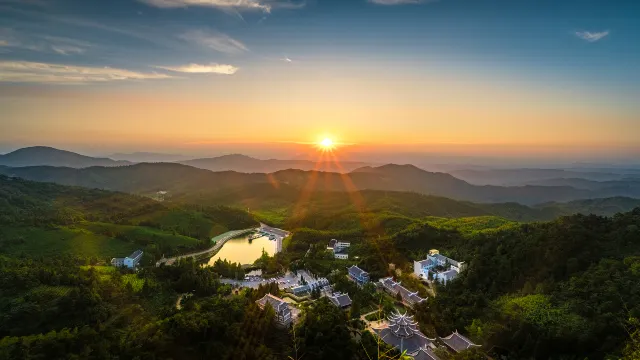
Unfortunately, we encountered heavy fog during our ascent, resulting in very poor visibility. Even the iconic Baoxiao Peak was obscured, significantly diminishing the natural beauty. The Republican-era villa complex is the main attraction, but overall development has been mediocre, with few highlights and unremarkable features. Hiking the mountain trails is physically demanding, and the various points of interest are scattered, with a lack of guided tours. The dining options are average, and the overall experience is highly dependent on the weather. A sunny day might allow you to experience the charm of one of the four major summer resorts, but a foggy day offers only a mediocre experience, suitable only for a leisurely stroll; expectations shouldn't be too high.

Kikungshan Scenic Area

user-avatar
黑色闪电July 26, 2022
5.0
The scenery is pretty good. The highlights are the zoo and the glass plank road. There are all kinds of tigers, lions, bears, and even white tigers. The meat fed to the children is very popular. The scenery on the plank road is very beautiful.

Shibatan Scenic Area in Dawu County
user-avatar
孙*国November 8, 2026
4.0
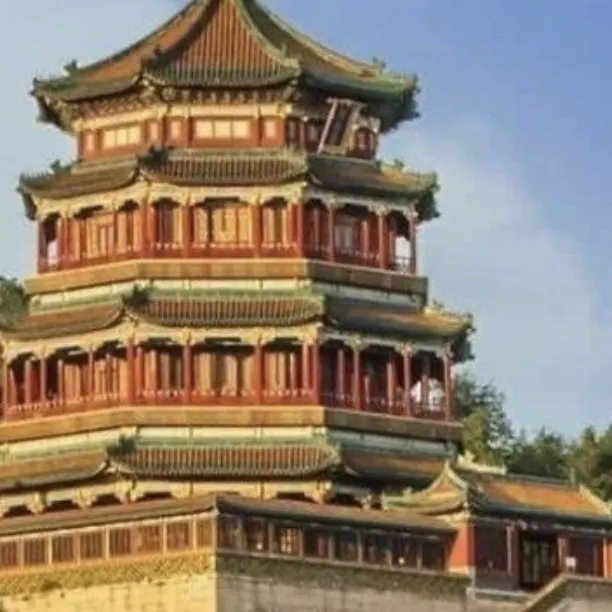
One of the three famous towers south of the Yangtze River, this Wuhan landmark truly lives up to its name. The tower is magnificent and imposing; from its summit, one can enjoy panoramic views of the Yangtze River Bridge and the three towns of Wuhan. The park is rich in inscriptions and murals, imbued with the poetic beauty of Cui Hao's poems. By day, it exudes ancient charm; by night, it is dazzling with lights. The park's pathways are gentle, and the amenities are thoughtful. A must-see when visiting Wuhan, it's an unforgettable experience.

Yellow Crane Tower

user-avatar
sky_rainyNovember 9, 2026
5.0
I took my parents and pet to Lushan Mountain for three days. Every day was a different view. We saw the ever-changing fog, which was really magical. One second you could see the lake through the fog, and the wind would blow it away instantly. On the third day, it was really foggy with visibility of only ten meters 😂. I didn't dare to drive faster, even though the scenery was really unique. Parking, accommodation, and dining on the mountain were all very convenient, and there was also a direct shuttle bus to the scenic area, which made things even easier. I look forward to going back again.

Lushan National Park

user-avatar
大土豆一颗October 4, 2026
5.0
The exhibited artifacts were quite good; I've also been to joint exhibitions organized by museums like the Hunan Provincial Museum. The Kremlin artifacts here are well-prepared and thoughtfully designed. However, the souvenir and merchandise section was rather boring. I was thinking of buying a pendant or something, but that saved me some money.

Hubei Provincial Museum

user-avatar
沅大王September 30, 2026
5.0
The scenic area is filled with the fragrance of osmanthus blossoms. From the top, you can enjoy panoramic views of the Yangtze River Bridge and the Yellow Crane Tower. At the very top, watching the ships on the Yangtze and the cars and trains on the bridge, with the breeze blowing, is very pleasant, and it's not too crowded. The scenic area isn't large; a leisurely hour is about right to appreciate the scenery. Qingchuan Pavilion and Guishan Scenic Area are directly connected by the Iron Gate Pass, which leads to the West Gate of Guishan. Climbing the mountain and enjoying the breeze and osmanthus fragrance is a wonderful experience.

Qingchuan Pavilion
user-avatar
锵锵三人行May 16, 2026
4.0
Personally, I think this little forest park is even more impressive under the spotlight of Jigong Mountain! The walk down the bald cypress forest is a fantastic experience! The small lakes, campsites, waterwheels, etc., are quite amazing! It's perfect for a leisurely hike, where you can sit down for a coffee and some snacks—of course, it's a matter of personal preference! A worthwhile, less-traveled attraction…no need for further explanation, just look at the pictures!

Purdom Forest Park
user-avatar
还不曾去过倒悬山!November 14, 2024
4.0
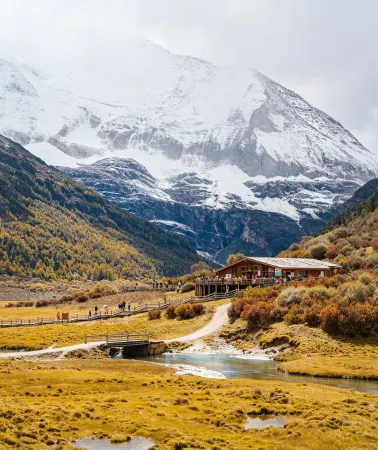
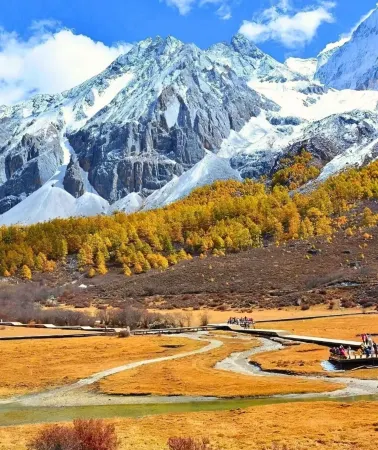
Dawu is known as the "hometown of Chinese tallow trees". In addition to Chinese tallow trees, there are maple trees, ginkgo trees, oak trees, white sandalwood trees, mountain reeds, etc., all of which are extremely beautiful. Each red leaf is like a business card of autumn, spreading with the wind, and yearning for the countryside and the distant place.

Beishan Red Leaf Viewing Platform

user-avatar
巴士通November 7, 2026
5.0
It was a wonderful experience. Ever since I read Fan Zhongyan's "Yueyang Tower Inscription," I've longed to visit this sacred place. Now that my dream has come true, standing atop the tower and gazing at Dongting Lake, I truly understand the spiritual essence of "Yueyang Tower Inscription" and the poet's profound understanding.

Yue Yang Tower

user-avatar
爱旅行的溪姐October 7, 2026
5.0
Sanhe Ancient Town is a free ancient town near Hefei that's well worth visiting. With its charming canals, ancient streets, and alleys, it exudes a captivating atmosphere. You can stroll along the cobblestone paths, visit historical residences, and sample local delicacies such as rice dumplings, rice wine, and dried tea. It's not overly commercialized, making for a relaxed and enjoyable experience. Overall, it offers great value for money and is perfect for a short trip to experience the charm of a Jianghuai water town.

Sanhe Ancient Town

Trip Moments in Dawu

Popular cities near Dawu

Frequently asked questions

How can I contact Trip.com customer support?

Get help anytime, anywhere within 30 secondsContact customer support

Change and cancellation policies vary by attractions and tours. Please check the product details page for more information.

Ticket prices may vary between weekdays and weekends, as well as during peak and off-peak seasons. When booking with Trip.com, you can also use Trip Coins to get extra savings. For more tips on booking discounted tickets, please visit Trip.com for the latest information.