Hubei

Things to do in Hubei

Search attractions or local attractions & tours
Search

Explore top experiences

Top 10 attractions in Hubei

View all Attractions
The Three Gorges Dam Tourism Area
No. 1 of Best Things to Do in Hubei

The Three Gorges Dam Tourism Area

8.9
4.7/5
9k reviews

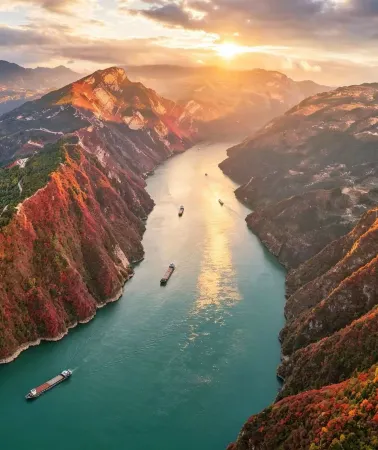
The Three Gorges Dam Tourism Area is located in the Xiling Gorge section of the Yangtze River in Yichang, Hubei. It is a scenic attraction built around the Three Gorges hydro project, covering over ten square kilometers. Currently, it offers travelers three viewing spots: Tanzi Ridge, the 185 viewing platform, and the river closure memorial park. The dam crest itself is not open to travelers, so visits primarily revolve around these three attractions. Tanzi Ridge is the highest accessible point in the dam area, named for its jar-shaped summit viewing platform resembling an overturned jar. It also served as the survey site for the dam's initial location selection. From the ridge top, visitors can overlook the Three Gorges Project in its entirety—the dam, power station, and twin five-level ship locks are all visible. The five lock chambers cascade down the mountainside, earning the nickname "Fourth Gorge of the Yangtze." The park displays engineering artifacts like ancient riverbed stones, river closure rocks, and foundation stones from the dam site, complemented by model exhibits that help visitors intuitively understand the origins and development of this mega-project. The 185 observation platform is located on the left bank of the dam. It gets its name from sharing the same elevation of 185 m as the dam crest. Standing on the platform feels like being atop the dam: on one side, the dam and vertical ship lift are within close reach, offering a chance to witness ships "riding the elevator" over the dam; on the other side lies the vast, tranquil reservoir upstream. The stark contrast between the stillness above and the dynamism below the dam is striking. The closure memorial park is situated on the right bank downstream of the dam, preserving artifacts like tetrahedral closure stones and large loading machinery used during the construction. It's an ideal spot to view the dam's full frontal grandeur. During flood seasons when the dam releases water, torrents rush out from the deep outlets, creating towering mist and thunderous echoes that reverberate through the valley—a truly awe-inspiring spectacle. The three attractions are far apart, and the scenic area provides shuttle buses for transportation. It is recommended to reserve half a day to visit them in order.

China · Yichang
Hubei Provincial Museum
2026 Asia 100 - Family-friendly Attractions

Hubei Provincial Museum

8.5
4.9/5
7.9k reviews

The Hubei Provincial Museum has ten treasures of the museum, including those unearthed from "Tomb of Marquis Yi of Zeng" the Hubei Provincial Museum's Zenghouyi chime bells; the Yue Wang Goujian sword, a masterpiece of the cold weapon era; the fossilized skull of the Yunxian Man dating back 1 million years; and a treasure of Yuan blue-and-white porcelain: the plum vase with the Four Loves design. The museum's regular exhibitions also feature distinctive characteristics of ancient Chu culture and ancient Yangtze River civilization. The Hubei Provincial Museum consists of the comprehensive exhibition hall,Chu culture hall,Chime bell hallIt is composed of multiple pseudo-classical buildings, and the layout reflects the high-platform architectural layout format of ancient Chu architecture, namely "one terrace, one hall" and "multiple terraces forming a group." Unearthed in 1978 at "Tomb of Marquis Yi of Zeng" in the Hubei Provincial Museum - the Zenghouyi chime bells have a wide range and their excavation rewrote the history of world music; the sword of Goujian, King of Yue, a masterpiece of the cold weapon era, is still incomparably sharp to this day, and displayed beside it is the "spear of Fuchai, King of Wu"; the geological age of the Yunxian human skull fossil is approx. 1 million years ago, earlier than the Peking Man skull fossil; the Yuan blue-and-white plum vase with four loves design is an extremely rare masterpiece among Yuan dynasty blue-and-white porcelain. Hubei is located in the middle reaches of the Yangtze River and belonged to the territory of the Chu state during the Spring and Autumn and Warring States periods. The permanent exhibitions at the Hubei Provincial Museum showcase ancient civilizations of southern China that differ from the Yellow River civilization of the north. The museum's current permanent exhibitions include "Yunxian Man: Prehistoric Humans in the Middle Reaches of the Yangtze River," "Qujialing: Prehistoric Culture in the Middle Reaches of the Yangtze River," and "Panlongcheng: Bronze Civilization in the Middle Reaches of the Yangtze River." In addition to viewing cultural relics at the Hubei Provincial Museum, you can also enjoy chime bell performances. In the museum's performance hall, chime bell performances are held from Tuesday to Sunday, and it is closed on Mondays.

China · Wuhan
Qingchuan Pavilion
No. 4 of Best Things to Do in Hubei

Qingchuan Pavilion

8.4
4.7/5
7.7k reviews

Qingchuan Pavilion stands on Yugong Rock at the eastern foot of Tortoise Hill in Hanyang, facing the Han River to the north and the Yangtze River to the east, gazing across the river at Yellow Crane Tower in Wuchang on the opposite bank. The pavilion's name is taken from the line "the clear river reflects the trees of Hanyang" by the Tang dynasty poet Cui Hao, and it was initiated for construction by Fan Zhizhen, the Ming dynasty prefect of Hanyang. First built during the Jiajing era of the Ming dynasty, it has a history of more than four hundred years. Throughout history, Qingchuan Pavilion was destroyed and rebuilt as many as six or seven times, the last destruction caused by a windstorm; the existing structure was rebuilt in the 1980s following the style of the Guangxu era of the Qing dynasty. Long known as one of the "finest sights of the Three Chu regions" and a "grand vista through the ages," Qingchuan Pavilion echoes Yellow Crane Tower across the river and stands out distinctly along the banks of the Yangtze. The attraction is composed of three main structures—Qingchuan Pavilion, Yuji Xinggong (Yu and Ji Ancestral Hall), and Tiemen Pass—along with auxiliary structures such as the ancient archway, Chubo Pavilion, Chaozong Pavilion, Yu Stele Pavilion, Jingchu Heroic Spirit Stele, and the poetry stele corridor, forming a complex of ancient and pseudo-classical buildings standing by the river. Among them, Yuji Xinggong was first built during the Shaoxing era of the Southern Song dynasty under the original name Yu Wang Temple; during the Tianqi era of the Ming dynasty, it was renamed "Yuji Xinggong" after its worship was changed to Houji and other former sages, and it has been an important site in Wuhan for successive generations to pay homage to Yu the Great. Tiemen Pass was first built during the Three Kingdoms period and has been a strategic location contested by military strategists since ancient times; it was restored in the 1990s. Ascending Qingchuan Pavilion offers a panoramic view of the expansive river scenery where the Yangtze River and the Han River converge. Inside the pavilion, permanent exhibitions such as "Traces of Yu Across the Nine Provinces" and "Historical Paintings of Qingchuan" present Yu the Great culture and the historical heritage of Qingchuan Pavilion from multiple perspectives, ranging from water-control culture to poetry and couplets. The attraction nestles between the hills and the river, with pavilions and terraces scattered in graceful arrangement. The poetry stele corridor preserves inscribed stones bearing verses by literati and poets of successive dynasties, and strolling through it allows visitors to feel the rich historical and cultural atmosphere.

China · Wuhan
Wudang Mountains
No. 5 of Best Things to Do in Hubei

Wudang Mountains

8.1
4.6/5
15.4k reviews

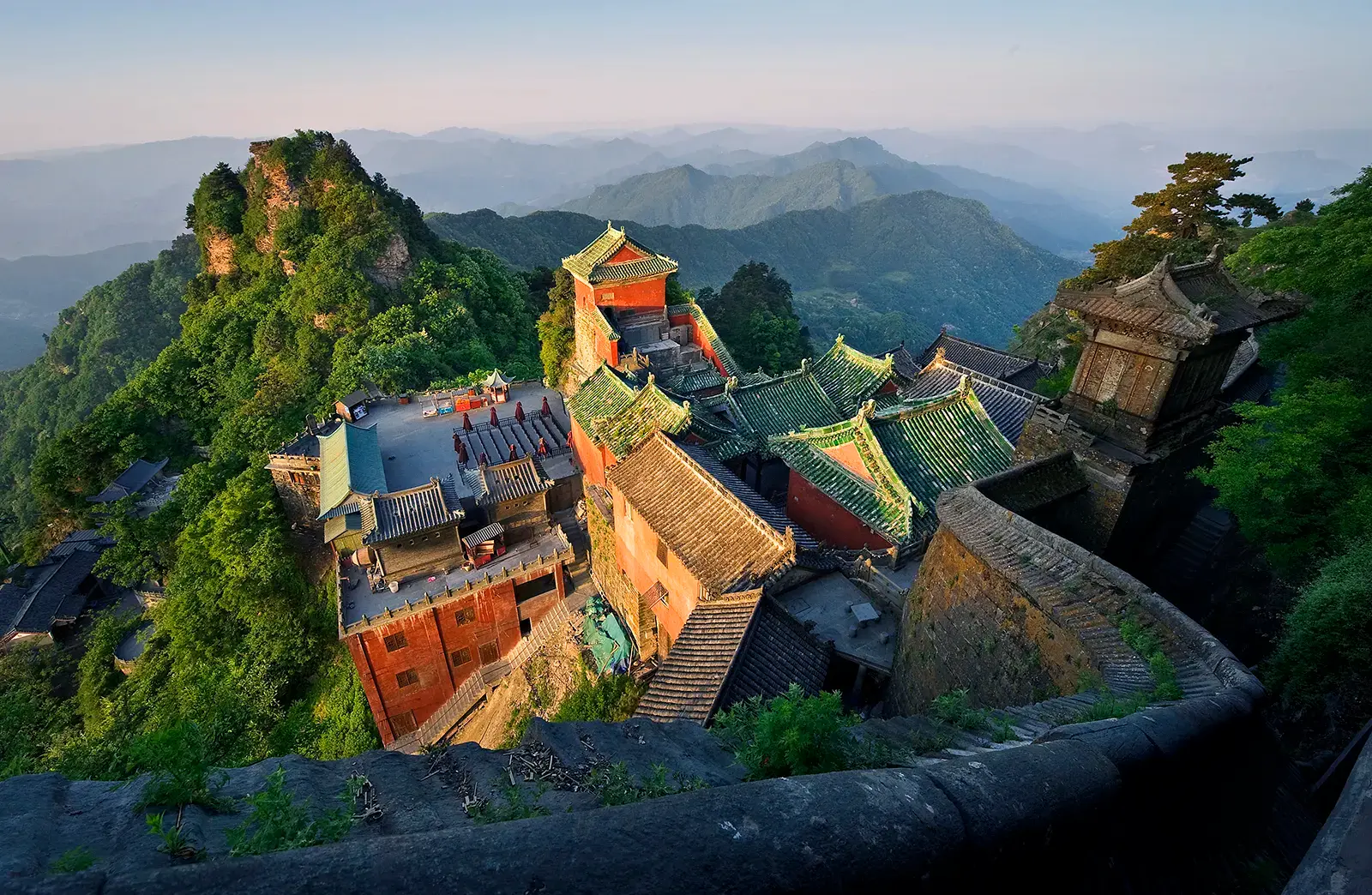
The Wudang Mountains are located in Shiyan, northwestern Hubei province. Its main peak, Tianzhu Peak, stands at an elevation of over 1,600 m. Legend has it that Emperor Zhenwu cultivated and ascended to immortality here, while Taoist Zhang Sanfeng further synthesized the essence of martial arts during the late Yuan and early Ming dynasties, making this the birthplace of Wudang martial arts. During the Yongle era of the Ming dynasty, the imperial court launched the monumental project of "constructing the Forbidden City in the north and building the Wudang Mountains in the south." The mountain temples were built according to royal standards, with their layout unfolding layer by layer following the mythological narrative of Zhenwu's spiritual cultivation. The palaces blend harmoniously with the peaks, cliffs, and streams, creating an ethereal and mystical atmosphere befitting a sacred mountain. The attractions unfold along the mountain terrain from the base to the summit, connecting key areas like Taizi Slope, Zixiao Palace, Nanyan Palace, and Taihe Palace. At Taizi Slope, the undulating Nine-bend Yellow River Wall follows the mountain contours, while Wuyun Tower's "one pillar supporting twelve beams" remains an architectural marvel. Zixiao Palace, a well-preserved imperial Taoist temple, features the stately Zixiao Hall with its double-eaved, nine-ridged roof. Nanyan Palace clings dramatically to a cliff face, offering vertiginous views of the valley below. Ascending the stone-paved ancient path to Tianzhu Peak's summit reveals the gilded bronze Golden Hall—the architectural masterpiece of the entire complex. As the birthplace of Wudang martial arts, this place attracts enthusiasts from home and abroad who come to seek masters and practice martial arts. The Taizi Slope on the mountain and the Xuantian Yuxu Palace at the foot serve as daily training grounds for practitioners. If you happen to encounter Taoist priests or students demonstrating Wudang boxing techniques, take a moment to quietly observe and appreciate the centuries-old martial arts heritage. A two-day visit is recommended: On the first day, enter from the mountain gate to visit Taizi slope and Zixiao palace, then stay overnight near Wuyaling. On the second morning, first visit Nanyan palace, then ascend to the golden summit before hiking down or taking the cableway at Qiongtai. After exiting the mountain gate, you may also visit Xuantian Yuxu palace. The attraction's shuttle buses connect all major core attractions, allowing flexible combinations of hiking and riding. Most dining and lodging options are concentrated around Nanyan, convenient for rest during the climb. From late October to November each year, when the forests are ablaze with color and red leaves cover the mountains, it's the perfect time to enjoy the fall scenery in the mountains.

China · Danjiangkou
Enshi Grand Canyon
No. 13 of Best Things to Do in Hunan and Hubei

Enshi Grand Canyon

8
4.4/5
14.6k reviews

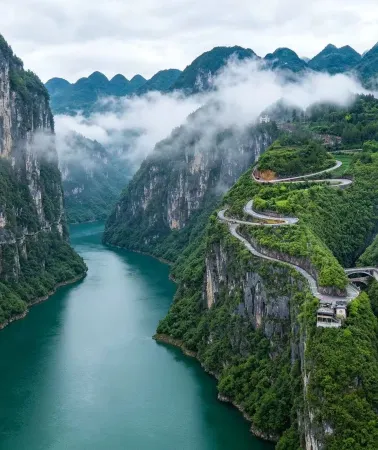
Enshi Grand Canyon National 5A Scenic Area and National Geopark is a world-renowned "natural museum" of composite karst landforms with "ground fissures, cenotes and rock pillars" coexisting at the same time. Its ecological environment is unique, and its natural scenery is primitive and simple, with a gallery of ten thousand meters of cliffs, a thousand-foot waterfall, hundreds of unique peaks, and ten miles of deep ravines. Yunlong Ground Fissure is called "the beautiful scar of the earth"; "One Incense Stick" was rated as one of the 40 famous scenic spots in China by foreign media. Yunlong ground seam Yunlong Ground Fissure Scenic Area covers an area of ​​11.3 square kilometers and has an altitude of 600-800 meters. The main landforms in the scenic area include ground fissures, waterfalls, deep pools, karst caves, underground rivers, pictographic stones, and geological profiles. Yunlong Ground Fissure is zigzag-shaped in plane, extending nearly north-south, with a total length of 3.6 kilometers, an average depth of 75 meters, and an average width of 15 meters. The river valley is deep and the bank is steep. It is known as the "ten-mile and hundred-foot cliff". It is the main sightseeing area of ​​Yunlong Ground Fissure Scenic Area. The two walls of Yunlong Ground Fissure are steep and nearly parallel, and the width is basically the same from top to bottom. The cross section is "U"-shaped, which is extremely rare and unique. A stick of incense Karst stone pillars. A stick of incense is a landmark of the Enshi Grand Canyon and a very rare landscape among similar karst landforms. A stick of incense is 150 meters high, with a diameter of 6 meters at the bottom and a minimum diameter of only 4 meters. Its rock type is Triassic limestone. Because the strata here are horizontal, and the rock has a high compressive strength (800 kg/cm3), and there is no tilt or slip, it cannot be moved by the wind or knocked down by the rain. It has stood proudly among the peaks for tens of millions of years, guarding this mysterious land, which is rare. Cliff plank road The Cliff Plank Road, also known as Buyuntian Plank Road and Cliff Corridor, was built in August 2006 and took 1 year and 8 months to complete. The plank road is located on the mountainside of the vertical cliff on the east side of the mountain, with an altitude of about 1,700 meters, a total length of 488 meters, a height difference of 300 meters, and 118 stone steps. It is integrated with the mountain cliffs. Because the plank road is built on the cliff, some people call it the Cliff Corridor, or the "Cliff Plank Road". The project is a combination of the manufacturing technology of the ancient Bashu plank road with modern reinforced concrete building materials and advanced construction technology. It is scientific, safe, and magnificent. Welcome Song The Welcoming Pine, which is estimated to be nearly a thousand years old, grows proudly on the cliff, as if opening its arms to welcome tourists from all over the world.

China · Enshi City
Shennongjia Tourism Area
No. 1 of Fall Viewing Attractions in Hubei

Shennongjia Tourism Area

7.6
4.6/5
5.3k reviews

The ancient and magical Shennongjia Tourism Area is said to be named after Yandi Shennongshi, the ancestor of the Chinese nation, who built scaffolds here to gather herbs, tasted hundreds of plants, and saved people from diseases. Shennongjia Tourism Area stands majestically at the eastern end of the Qinba Mountains, jointly guarding with the Wuling Mountains at close rangeYangtze River Three Gorges, it is a geological history book recording Earth's geological events and environmental changes, a climate yardstick integrating subtropical to cold-temperate zones, the watershed between the Yangtze River and the Han River, and the birthplace of Chinese agricultural civilization. It boasts a well-preserved northern subtropical forest ecosystem and rich biodiversity at mid-latitudes of the Northern Hemisphere, and features the diverse geological, geomorphological, meteorological, and hydrological views of the Shennongjia dome, known as the "Roof of Central China." It is home to world-fascinating natural mysteries such as the "wild man" and albino animals. It is a member of the UNESCO "Man and the Biosphere Reserve Network," a national park, a global geopark, a world natural heritage site, a national 5A-level tourist attraction, a nature reserve, a national forest park, a national geopark, and a national wetland park. Together with the Bermuda Triangle, the Egyptian Pyramids, the Sahara Desert, and Mount Everest, it showcases the magnificence and mystery along the 31°N latitude belt. Shennongjia Tourism Area holds the highest realm of the "Roof of Central China," presenting its unique and intact forest ecology, vertically distributed three-dimensional climate, rich and rare animal and plant species, profound and enduring Shennong culture, simple and sincere folk customs, and unfathomable natural mysteries across the Shennongding Tourism Area, Guanmenshan Attraction, andDajiuhu,Among the seven major attractions—Tianyan, Shennong Altar, Tiansheng Bridge, and Gallery Valley—are showcased to the world, becoming an earthly paradise for sightseeing, scientific research, health and leisure, vacation and wellness, ancestor worship, and outdoor experiences. In Shennongjia Tourism Area, only by stepping into it can you touch the primitive, listen to the silence, and perceive the mystery.

China · Shennongjia
Tribe of the Three Gorges
No. 2 of Family-friendly Attractions in Hubei

Tribe of the Three Gorges

7.6
4.5/5
11.5k reviews

Tribe of the Three Gorges is located on both banks of Dengying Gorge in the Xiling Gorge section of the Yangtze River, between the Three Gorges Dam and Gezhouba Dam. It consists of areas such as mountain dwellings, water dwellings, and riverside dwellings, presenting a concentrated display of the original ecological charm of the gorge. The visit combines boat tours and walking, and the ferry crossing the Yangtze River itself is part of the experience. The highlights of the mountain village are concentrated on the slope overlooking the river: the wooden stilt houses, built along the mountain terrain, are lower in the front and higher in the back with winding corridors, and the rooms inside restore the living scenes of the ancient inhabitants of the Gorge. In the Bawang Village and Bawang Palace, built to imitate ancient Ba people's mountain strongholds, visitors can watch folk songs and dances, listen to Tujia girls singing antiphonal songs, taste a bowl of bowl-smashing wine, and experience the ancient and mysterious Ba-Chu culture. Continuing up the mountain road, one can also see the towering "Stone Token" and the "Shadow-play Stone" standing on the cliff top. The outlines of these peculiar rocks resemble the Tang Monk and his disciples; when illuminated by the setting sun, they look like figures on a shadow-play screen, making them popular photo spots. You can hike up the mountain or take the cable car. The waterborne dwellings stand at the river bend where Longjin Stream meets the Yangtze, with ancient sailing boats braving the wind and fishermen casting nets, recreating the generations-old river life of fishing families who made boats their homes. Here, one can also hear the powerful and resonant boatmen's work songs. Longjin Stream, where the riverside dwellings are located, boasts emerald-green waters and serene beauty, earning it the nickname "Little Jiuzhai of Hubei." Local girls wash clothes on riverside rocks while singing folk songs, and black-canopied boats gently sway on the stream. The lively Tujia wedding customs performance before the stilt houses features amusing elements like bride snatching, wedding laments, and tossing the embroidered ball, often inviting travelers to play the groom's role. The scene of trackers pulling boats along the stream further unfolds, making the journey feel like stepping into a living scroll of river valley folk culture.

China · Yichang

Traveler favorites curated for you

Experiences you can't miss in Hubei

Featured Culture & history in Hubei

View all Culture & history
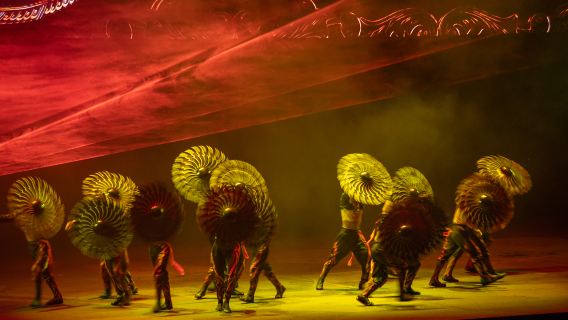
The Han Show in Wuhan (the "red lantern" by East Lake + immersive feast on land, water and air)
󱌍
4.9/5
· 7 reviews· 197 booked
Duration: 1.5 hrs
English
Free cancellation
Instant confirmation
FromCAD 39.99
The Han Show Theater in Wuhan (the "red lantern" by East Lake + immersive feast on land, water and air)
󱌍
5.0/5
· 2 reviews· 45 booked
Duration: 1.6 hrs
English
Free cancellation
Instant confirmation
FromCAD 39.99
A 2-hour guided walk of Hubei Provincial Museum by  English-speaking guide group tour
󱌍
5.0/5
· 1 review
Duration: 2 hrs
English
Free cancellation
FromCAD 78.84
Wuhan Gray Museum (A Journey to Release Emotions, Heal the Soul, and Reconcile with Oneself)
󱌍
FromCAD 8.45

Featured Food & drink in Hubei

View all Food & drink
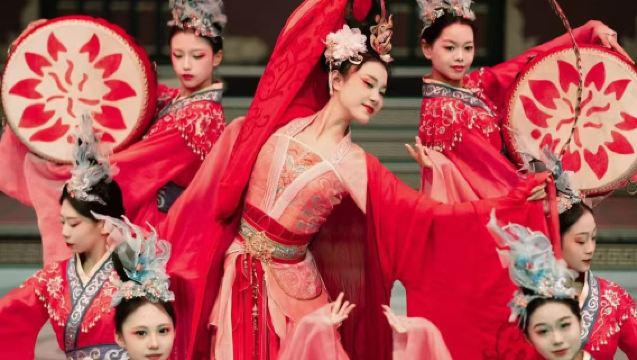
Wuhan, Hubei - "Chu-Han Royal Banquet" Immersive Royal Feast [Royal Cuisine + Court Music and Dance, a Dual Feast for Taste and Sight]
󱌍
4.4/5
· 19 reviews· 477 booked
Duration: 90 mins
English
Free cancellation
Book now for today
146 travelers saved
FromCAD 56.71

Featured Outdoor & sports in Hubei

View all Outdoor & sports
Enshi Jigongling Ferrata climbing experience (cloud walking + cliff viewing + professional guidance)
󱌍
FromCAD 10.58
Enshi Qingjiang Via Ferrata (Soaring Above the Qing River + Panoramic Views + Professional Guide Instruction)
󱌍
Duration: 2 hrs
English
Free cancellation
Instant confirmation
Book now for tomorrow
FromCAD 37.67
Tenglong Cave 1-day tour [pure fun - city transfer - includes mandatory scenic shuttle]
󱌍
Duration: 5.5 hrs
English
Free cancellation
Instant confirmation
FromCAD 187.89

More things to do

Hubei cruises

View all cruises

Private Tours in Hubei

View More Private Tours in Hubei
Group Tours in Hubei

View More Group Tours in Hubei
Free things to do in Hubei

What travelers say about Hubei

user-avatar
M61***98November 4, 2026
5.0
The excellent tour guide team, the professional Mr. Xiao, and his engaging and infectious eloquence in introducing the Ba culture throughout the trip, coupled with his responsible attitude, made for a joyful and picturesque day for all the tourists. Moreover, there were absolutely no forced purchases – it was truly worthwhile. And today's sunny weather was a truly uplifting day.

The Three Gorges Dam Tourism Area

user-avatar
M72***99November 6, 2026
5.0
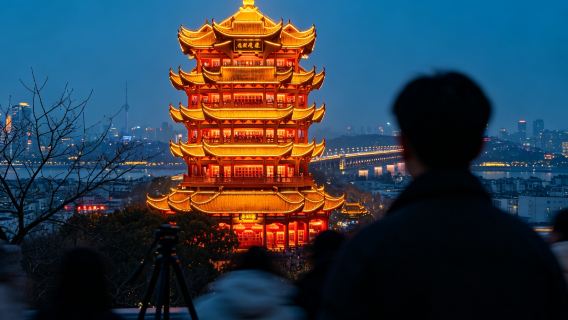
My hometown's Yellow Crane Tower is known as the "Number One Tower Under Heaven." Its majestic eaves and rich cultural heritage offer panoramic views of the Yangtze River and the three towns of Wuhan. No matter how many times I've visited, each visit evokes a different feeling; it is truly a symbol of Wuhan.

Yellow Crane Tower

user-avatar
大土豆一颗October 4, 2026
5.0
The exhibited artifacts were quite good; I've also been to joint exhibitions organized by museums like the Hunan Provincial Museum. The Kremlin artifacts here are well-prepared and thoughtfully designed. However, the souvenir and merchandise section was rather boring. I was thinking of buying a pendant or something, but that saved me some money.

Hubei Provincial Museum

user-avatar
沅大王September 30, 2026
5.0
The scenic area is filled with the fragrance of osmanthus blossoms. From the top, you can enjoy panoramic views of the Yangtze River Bridge and the Yellow Crane Tower. At the very top, watching the ships on the Yangtze and the cars and trains on the bridge, with the breeze blowing, is very pleasant, and it's not too crowded. The scenic area isn't large; a leisurely hour is about right to appreciate the scenery. Qingchuan Pavilion and Guishan Scenic Area are directly connected by the Iron Gate Pass, which leads to the West Gate of Guishan. Climbing the mountain and enjoying the breeze and osmanthus fragrance is a wonderful experience.

Qingchuan Pavilion

user-avatar
爱家小胡November 4, 2026
5.0
Wudang Mountain is a place of great beauty. The 80-kilometer winding mountain road from the visitor center to the scenic area is served by shuttle buses – a service that deserves praise, as the drivers are highly skilled. This Taoist holy site boasts a rich cultural heritage and is well worth a visit.

Wudang Mountains

user-avatar
Anonymous userOctober 30, 2026
5.0
Enshi has been experiencing light rain every day recently, and fog is highly likely on the mountains. While walking along the cliffside plank road, everything was shrouded in mist, making it impossible to see anything. Fortunately, the fog cleared when we reached "One Incense Stick," and we could see. This scenic area requires a bit of luck. The entire hike takes about 5 hours (from parking lot to parking lot). The most physically demanding section is from the beginning to the "One Line Sky," while the later sections are less strenuous. I think the Earth Fissure is more unique than Qixingzhai. Enshi Grand Canyon is a karst landscape, and Qixingzhai's appearance is more like a peak forest, lacking a distinctive feature. However, the Earth Fissure is very special: the collapse of the underground cave ceiling formed the Yunlong River Fissure, and the continuous erosion and dissolution of the cliff face by flowing water has created stone curtains, which is quite interesting. The scenic area is over 1000 meters above sea level and has many maple trees. With the recent light rain and large temperature differences between day and night, the maple leaves have turned red, which is also a sight to behold.

Enshi Grand Canyon

user-avatar
YARA JKOctober 24, 2026
5.0
I recently joined this wonderful Three Gorges one-day cruise tour in Yichang together with my friends. The whole tour cost only 250 yuan per person, and a nice lunch was included in the package, which is really good value.We sailed through the beautiful Xiling Gorge and got to see the world-famous Three Gorges Dam. The river and mountain views along the way were breathtaking. Our tour guide was very friendly and patient. The guide showed us all the sights and explained lots of useful information about the dam and the gorge. All of us were satisfied and enjoyed the trip a lot. The schedule was well planned, and the boat ride was comfortable. I highly recommend this cruise tour if you come to Yichang!

Two Dams and One Gorge

user-avatar
M60***78November 6, 2026
5.0
We took our family to Shennongjia in August, and the combined ticket for the six scenic areas was a great deal! Shennongding offers stunning views of high-altitude forests and unique stone formations; Dajiuhu's expansive meadows and lake views are incredibly relaxing; Guanmenshan's various exhibition halls provide a strong educational experience; Tianshengqiao allows for a refreshing stroll along the stream; Shennongtan showcases its cultural history and features ancient trees; and the Tianyan Rainbow Bridge is truly breathtaking. The mountains are much cooler than the city, the scenic area has well-maintained boardwalks, and the scenery is absolutely gorgeous. Our family had a fantastic time, and I highly recommend it!

Shennongjia Tourism Area

user-avatar
205***66October 8, 2026
5.0
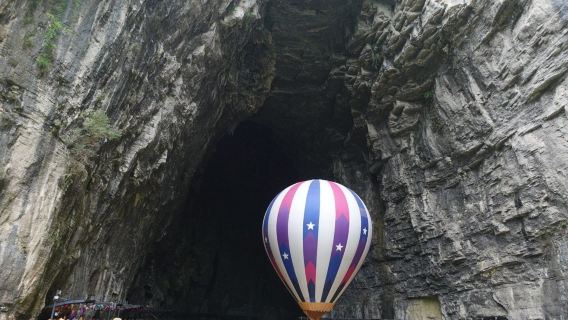
Compared to Enshi Grand Canyon, I highly recommend Pingshan Canyon. Don't choose the so-called "lazy person's route" with boats in and out; you still walk quite a bit, and you repeat the same route both ways, going up and down a long stretch of steps inside the cave and missing a lot of scenery! Just take the regular route; even as a lazy person, I thought it was fine. The cliffside views are absolutely stunning!

Hefeng Pingshan Tourist Area

user-avatar
WYQ6270November 2, 2026
5.0
The Three Gorges Family Village is nestled amidst the serene mountains and waters of the Yangtze River's Three Gorges. Bluestone slabs wind around the stilted houses along the water, fishing boats glide slowly across the clear blue river, and fishermen's chants drift away on the river breeze. The ancient village retains the traditions of the ancient Ba-Chu region, with lively wedding performances and vibrant hand-waving dances, brimming with the rustic charm of the mountains. Leave behind the hustle and bustle of the city, stroll along the riverbank, feeling the moist breeze, and steal a moment of relaxation and tranquility amidst the embrace of mountains and water.

Tribe of the Three Gorges

Trip Moments in Hubei

Hubei travel guides

Frequently asked questions

You can give Wuhan, Hubei - "Chu-Han Royal Banquet" Immersive Royal Feast [Royal Cuisine + Court Music and Dance, a Dual Feast for Taste and Sight] and Wuhan Zhiyin Hall · Three kingdoms floral banquet (Banquet through three kingdoms + Chu heritage on the table + ancient music and dance) a try. Before you go, please check their opening hours and menus online. Reservations are recommended, especially during peak hours.

Get help anytime, anywhere within 30 secondsContact customer support

Change and cancellation policies vary by attractions and tours. Please check the product details page for more information.

Ticket prices may vary between weekdays and weekends, as well as during peak and off-peak seasons. When booking with Trip.com, you can also use Trip Coins to get extra savings. For more tips on booking discounted tickets, please visit Trip.com for the latest information.