
Top picks for Ronda Day tours
Discover 173 Day tours in Ronda on Trip.com, updated February 17, 2026, with experiences lasting from 1 to 12 hours. Find the perfect adventure for your day!
From SAR 53.54 per person, with an average total of SAR 483.80. Choose the option that suits your plan.
With 5.74k verified reviews, Day tours Ronda boast an average rating of 4.7.
This week's most popular Day tours: "New Orleans City Tour: French Quarter, Garden District & Cemetery", with 2.196k reviews and a 4.7 rating.
Now on Trip.com: "[1-Day Ronda Group Tour] Seville - Ronda - White Village of Setenil (Optional Guide)", a 10-hour adventure in Ronda!
The next available day tour departs on February 18, 2026. Book now to secure your spot!
Ronda Day tours usually take about 10 hours — perfect for a relaxed, immersive experience!
100% of Ronda Day tours now offer English-speaking guides
February is the perfect time to visit Ronda! Choose from Day tours available day tours, including seasonal favorites like New Orleans City Tour: French Quarter, Garden District & Cemetery.
Your trip, worry-free! All day tours are run by licensed suppliers with verified reviews, and many include free cancellation before departure.
173 results for Ronda Day tours
![[1-Day Ronda Group Tour] Seville - Ronda - White Village of Setenil (Optional Guide)](https://ak-d.tripcdn.com/images//0585k12000o83xag8A021_C_568_320.jpg?_fr=wc) Duration: 10.2 hrsEnglishFromSAR 179.75
Duration: 10.2 hrsEnglishFromSAR 179.75 Duration: 7 hrsEnglish4.0/5Good· 1 reviewFromSAR 366.90
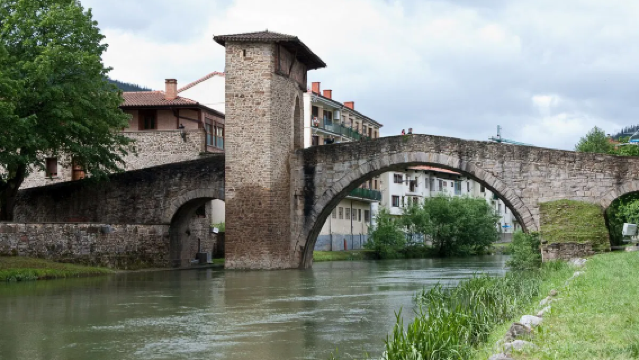 FromSAR 3,041.00
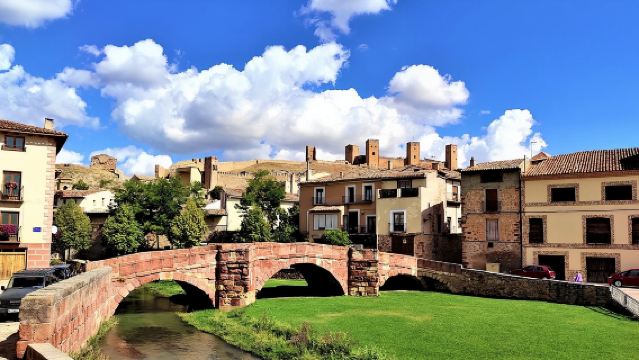 FromSAR 3,041.00
 FromSAR 243.79
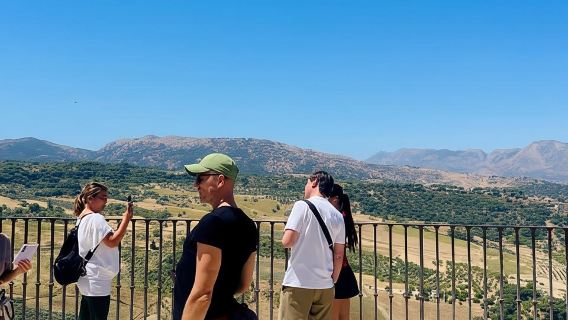 5% offLimited-time saleFromSAR 324.30SAR 341.37
 FromSAR 138.77
 Duration: 3.5 hrsEnglish4.8/5Very good· 5 reviews5% offLimited-time saleFromSAR 464.19SAR 488.63
 Duration: 7 hrsEnglish4.4/5Good· 113 reviews· 24 bookedFromSAR 356.30
 Duration: 7.7 hrsEnglish4.9/5Excellent· 87 reviews· 506 bookedFromSAR 298.67
 Duration: 1 hrEnglish4.9/5Excellent· 24 reviews5% offLimited-time saleFromSAR 53.54SAR 56.36
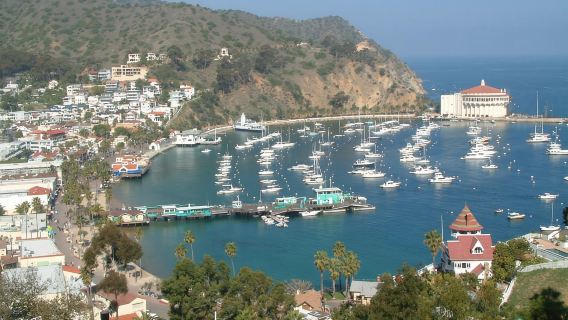 5% offLimited-time saleFromSAR 160.67SAR 169.13
 Duration: 3 hrsEnglish4.7/5Very good· 470 reviews· 41 bookedFromSAR 187.53
 FromSAR 2,552.27
![1-day tour to Ronda, Spain [Game of Thrones filming location + Romantic cliffside solitary city + City of Elopement]](https://ak-d.tripcdn.com/images/0351d12000lbfuvgl4599_C_568_320.jpg?_fr=wc) Duration: 9.8 hrsEnglish5.0/5Excellent· 2 reviewsFromSAR 356.00
Duration: 9.8 hrsEnglish5.0/5Excellent· 2 reviewsFromSAR 356.00 Duration: 9–10 hrsEnglish4.8/5Very good· 414 reviewsFromSAR 345.05
 Duration: 1–2 hrsEnglish5.0/5Excellent· 79 reviews5% offLimited-time saleFromSAR 389.20SAR 409.69
 Duration: 10 hrsEnglish4.8/5Very good· 11 reviews5% offLimited-time saleFromSAR 275.54SAR 290.05
 Duration: 3 hrsEnglish4.7/5Very good· 2.2k reviewsFromSAR 150.02
 FromSAR 344.87
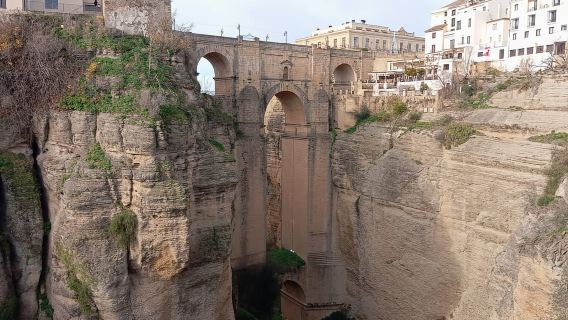 Duration: 6.2 hrsEnglish4.8/5Great· 4 reviews· 63 bookedFromSAR 209.01
 5% offLimited-time saleFromSAR 103.68SAR 109.14
 5% offLimited-time saleFromSAR 90.20SAR 94.95
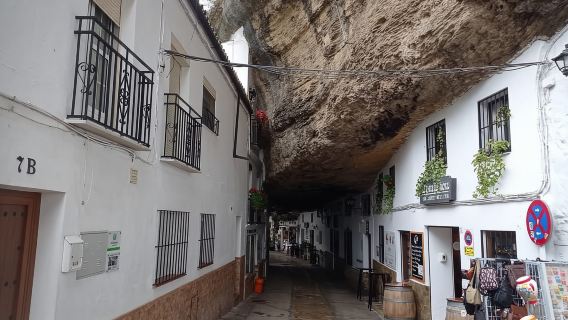 Duration: 6.1 hrsEnglish5.0/5Excellent· 3 reviewsFromSAR 232.89
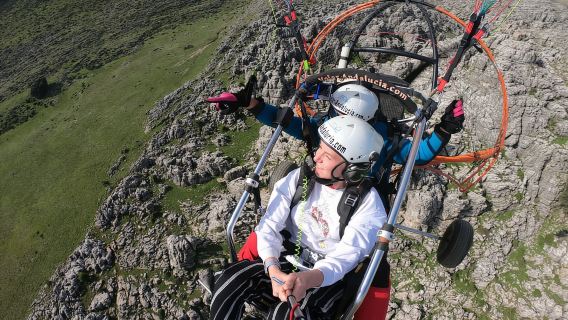 5% offLimited-time saleFromSAR 414.71SAR 436.54
 5% offLimited-time saleFromSAR 149.30SAR 157.16
 Duration: 9–12 hrsEnglish4.8/5Great· 328 reviews5% offLimited-time saleFromSAR 123.17SAR 129.66
 Duration: 10 hrsEnglish4.4/5Good· 74 reviews5% offLimited-time saleFromSAR 132.71SAR 139.7
 5% offLimited-time saleFromSAR 261.26SAR 275.02
 Duration: 9 hrsEnglish4.6/5Excellent· 230 reviews5% offLimited-time saleFromSAR 228.09SAR 240.1
 5% offLimited-time saleFromSAR 398.12SAR 419.08





Explore top experiences
See what other travelers love, based on ratings and bookings
Frequently asked questions about Ronda Day tours
How many Day tours are available in Ronda on Trip.com?
What are the best Day tours in Ronda?
What are the top-rated Day tours in Ronda?
What are the recommended itineraries in Ronda?
How can I contact Trip.com customer support?
Can I change or cancel my booking?
How can I get discounted prices?
Reviews/Trip Moments
Trip.com Picks
Popular Products
Trending Searches
More Popular Destinations




About






of the year 2025



Site Operator: Trip.com Travel Singapore Pte. Ltd.