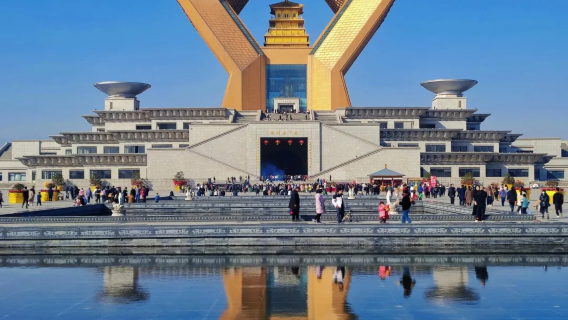
Qianyang

Things to do in Qianyang

Search attractions or local attractions & tours
Search

Explore top experiences

Top 10 attractions in Qianyang

View all Attractions
Xi'an Beilin Museum
No. 5 of Family-friendly Attractions in Shaanxi

Xi'an Beilin Museum

7.8
4.7/5
11k reviews

The Xi'an Beilin Museum is located near Wenchang Gate, consisting of sections such as the stele forest and stone carving art. The stele forest, composed of steles and epitaphs from various dynasties, is the highlight of the museum, including steles by famous calligraphers like Yan Zhenqing, Liu Gongquan, and Huaisu, as well as the "Stone Classics of Filial Pietyand the Kaicheng Stone Classics, two stone tablets from the Tang dynasty. The collection contains numerous exquisite stone inscriptions In the Xi'an Beilin Museum, you can appreciate steles and epitaphs from various dynasties, with a collection spanning over 2000 years. Among the treasures are: Yan Zhenqing's "Yan Qinli stele", "Yan family temple stele" and others are standard "Yan style"; Liu Gongquan's "Mysterious Pagoda Stele of Master Dada" is a typical representative work of "Liu style"; the "Stele inscription of the preface to the sacred teachings of the Tang Dynasty's Tripitaka"; the renowned cursive script master Huaisu's "Thousand-character classic" exhibits unrestrained brushwork. The Classic of Filial Piety on Stone Tablet and the Kaicheng Stone Classics are very popular Besides the stone carvings by calligraphy masters, the two most popular stone tablets among travelers are the Classic of Filial Piety on Stone Tablet and the Kaicheng Stone Classics. The Classic of Filial Piety on Stone Tablet is a Confucian classic. Its inscriptions were written by two emperors in four scripts: Emperor Xuanzong of Tang (Li Longji) wrote the main text in clerical script and added small annotations in regular script, later adding marginal notes in running script after the tablet was carved. The tablet's heading was written in seal script by Emperor Suzong of Tang (Li Heng). The Kaicheng Stone Classics were carved in the second year of the Kaicheng era (837 AD) during Emperor Wenzong of Tang's reign, comprising twelve classical texts including the Book of Songs, Book of Documents, Book of Rites, Book of Changes, and Spring and Autumn Annals. You can purchase rubbing copies When browsing in the Xi'an Beilin Museum, you can also admire exquisite stone carvings such as the tomb gate with four divine creatures, the six steeds of Zhao Mausoleum from the Tang Dynasty, the meeting of Confucius and Laozi, and the azure dragon and vermilion bird in the "Stone carving art gallery". After the visit, you can purchase "rubbings" made from the original steles.

China · Xi'an
Daming Palace National Heritage Park
No. 8 of Family-friendly Attractions in Shaanxi

Daming Palace National Heritage Park

7.6
4.1/5
9.9k reviews

The Daming Palace, the grand imperial court of the Tang Empire, served as the political center and national symbol of the dynasty. As one of the "Three Great Palaces" (Daming Palace, Taiji Palace, and Xingqing Palace) in Chang'an, it was the largest and known as the "Eastern Palace." From Emperor Gaozong's reign onward, 17 Tang emperors conducted state affairs here for over 240 years. This magnificent architectural complex stood as one of the world's most expansive palace compounds during its time. The lines from poet Wang Wei's "Morning Court at Daming Palace in Response to Jia Sheren" – "The nine heavens' gates swing open to reveal the palace; envoys from myriad nations bow before the imperial crown" – epitomize the grandeur of Tang Dynasty's golden age, showcasing the empire's majestic authority and the solemn magnificence of imperial ceremonies. The Daming Palace was first built in the 8th year of Emperor Taizong's Zhenguan era (634 AD), covering an area of approx. 3.2 km². The entire palace complex can be divided into two main sections: the outer court for official assemblies and the inner court for residence and entertainment. The outer court centers around the Hanyuan Hall (outer court), Xuanzheng Hall (middle court), and Zichen Hall (inner court), while the inner court features the Taiye Pool along with over 30 auxiliary halls, pavilions, and observatories. The term "Daming" first appeared in the "Daming" chapter of "The Book of Songs: Greater Odes." According to the "Mao Commentary," it signifies: "King Wen possessed brilliant virtue, so Heaven again commanded King Wu. As King Wen and King Wu succeeded one another, their brilliant virtue daily grew more vast, hence the name Daming." Like the name Weiyang Palace, which also originates from "The Book of Songs," Daming Palace served as a self-motivating symbol inspired by the diligent governance and wisdom of the Zhou kings. The origin of Daming Palace is also associated with a fascinating legend. During its initial construction, an ancient bronze mirror was unearthed at the site. The renowned statesman Wei Zheng recognized it as the "Qin Mirror," a national treasure once used by Emperor Qin Shi Huang to eliminate political dissidents. Legend claims this mirror could reveal a person's internal organs with astonishing clarity. More significantly, it could distinguish loyal ministers from treacherous ones and predict the rise and fall of dynasties. After Daming Palace's completion, the Qin Mirror was hung in the imperial court to ward off evil spirits, giving rise to the idiom "a bright mirror hung high" (symbolizing impartial justice). With this treasure safeguarding the palace, the atmosphere became one of supreme integrity and enlightenment—hence the name "Daming Palace" (Great Illumination Palace). On March 4, 1961, Daming Palace was designated by the State Council of the People's Republic of China as one of the first batch of National Key Cultural Relics Protection Units. In 2010, Xi'an established Daming Palace National Heritage Park on the original site. On June 22, 2014, the Daming Palace ruins were successfully inscribed on the UNESCO World Heritage List as part of the "Silk Roads: the Routes Network of Chang'an-Tianshan Corridor." On October 18, 2021, the Daming Palace ruins were selected among the "Top 100 Archaeological Discoveries of the Century." The Daming Palace of the Tang Dynasty was a magnificent architectural complex in Chang'an city. The park is built on the ruins of Daming Palace, where visitors can see foundation remains of palaces like Hanyuan Hall and admire the restored miniature model of Daming Palace. The attraction has a south gate and an east gate, with the south gate serving as the main entrance where the visitor center is located. Visitors are recommended to enter through the south gate. The heritage park consists of both free and paid sections, with the paid area covering the core attractions including the Danfeng Gate Ruins Museum at Daming Palace National Heritage Park, Hanyuan Hall Ruins, Xuanzheng Hall, Zichen Hall Ruins, and the Daming Palace Ruins Museum. The Daming Palace National Heritage Park - Danfeng Gate served as the main southern entrance to the Daming Palace, facing the 176m-wide Danfeng Gate Avenue. North of the Danfeng Gate lies the central north-south axis of the palace complex, featuring structures like the Hanyuan Hall, Xuanzheng Hall, Zichen Hall, Penglai Hall, Hanliang Hall, and Xuanwu Hall. Most other palace buildings were arranged along this central axis. According to Yonglu historical records, the Daming Palace's architectural layout progressed from Danfeng Gate to Hanyuan Hall and then to Zichen Hall further north - all three major structures were built atop hills. The front court area occupied the highest point of Longshou Mountain, with the terrain dropping sharply by several meters beyond this section toward the northern slopes. The Hanyuan Hall, Xuanzheng Hall, and Zichen Hall were the three main halls of Daming Palace, with Hanyuan Hall serving as the principal throne hall. Flanking the Xuanzheng Hall were two key government offices - the Secretariat and Chancellery - along with the Hongwen Academy and Hongshi Archives. Parallel to the central axis, two longitudinal streets ran east and west, created by aligned gateways piercing through three transverse palace walls. The northern side of Longshou Hill served as the rear court, featuring low-lying terrain where water from the Longshou Village canal was diverted to form a lake—Taiye Pool. The emperor's sleeping quarters and auxiliary halls were mostly concentrated on the elevated grounds of Longshou Hill southeast of Taiye Pool, while the areas for handling state affairs and hosting banquets with officials were situated on the high ground southwest of the pool. The expansive, flat northern shore of Taiye Pool accommodated recreational facilities and auxiliary views, such as the Shicui Hall, Horse Racing Tower, and Cockfighting Platform. The Linde Hall, built approx. during the Linde era of Emperor Gaozong of Tang, stood on the elevated land west of Taiye Pool in northern Daming Palace. As previously mentioned, there were also over 30 other detached halls, pavilions, and viewing platforms in the vicinity. At the attraction, visitors can view the foundation ruins of major halls and the palace outlines recreated with light steel structures on these ruins. Inside the Daming Palace National Heritage Museum, you'll see artifacts unearthed from the site, including royal utensils and vessels. In the northeast corner of the museum, there's a 1:15 scale miniature model of Daming Palace where you can "walk" along its streets and immerse yourself in the grandeur of Tang Dynasty's imperial palace. Inside the Danfeng Gate Museum at Daming Palace National Heritage Park near the south gate, the ruins of the gate tower from the original Danfeng Gate of Daming Palace National Heritage Park are preserved. This site represents one of the largest documented city gates in Chinese history.

China · Xi'an
Xi'an Drum Tower
No. 17 of Best Things to Do in Shaanxi

Xi'an Drum Tower

7.5
4.6/5
9.9k reviews

The Xi'an Drum Tower faces the bell tower and is one of the iconic buildings of the ancient city. The drum tower was first built in the 13th year of the Hongwu reign of the Ming Dynasty (1380). Climbing the drum tower, you can see a large drum 1.8 m high and 24 red drums engraved with the 24 solar terms, which are very impressive. The drum tower also exhibits furniture, porcelain, and calligraphy and paintings by Qi Baishi from the Ming and Qing dynasties. Xi'an Drum Tower is one of the largest drum towers in China. Its base is a tall rectangular platform with north-south passageways that are 6 m in both height and width. The tower on the platform has two stories, upper and lower, with a roof covered in green glazed tiles. On the south side of Xi'an Drum Tower, there is a plaque inscribed with "Land of culture and military prowess," which, together with the plaque at Shanhaiguan, is hailed as "China's two great plaques." Unfortunately, it was destroyed during turbulent times, and what we see now is a replica. When visiting Xi'an Drum Tower, you can also enjoy the ancient-inspired "morning bell and evening drum" performance. Between the drum tower and the bell tower lies the bell and drum tower square, adorned with green grass and red flowers, featuring a uniquely designed musical fountain. The night view here is beautiful, perfect for photography. Behind the drum tower is the Muslim Quarter, home to numerous delicious foods.

China · Xi'an
Guanque Tower
No. 3 of Family-friendly Attractions in Shanxi

Guanque Tower

7.5
4.5/5
5.1k reviews

A national AAAA-level tourist attraction and one of the top ten attractions in Shanxi Province, Guanque Tower is located on the eastern bank of the Yellow River west of Puzhou Ancient City in Yongji, Shanxi. Alongside the Yellow Crane Tower in Wuhan, Hubei; Yueyang Tower in Yueyang, Hunan; and Tengwang Pavilion in Nanchang, Jiangxi, it is renowned as one of China's four great historical and cultural towers. Originally built during the Northern Zhou Dynasty (557–571 AD) by military commander Yuwen Hu as a defensive watchtower, the tower earned its name from the storks that frequently perched on its structure. The Tang Dynasty poet Wang Zhihuan's celebrated poem "On the Stork Tower" ("The sun along the mountain bows; The Yellow River seawards flows. You will enjoy a grander sight; If you climb to a greater height.") has become an enduring masterpiece, widely known both domestically and internationally. After standing for over 700 years through the Tang and Song dynasties, the tower was destroyed during warfare in the early Yuan Dynasty (1222 AD). The reconstructed Guanque Tower follows Tang-style architecture, featuring four eaves externally with three visible tiers, while internally comprising six floors. With a total height of 73.9m, it epitomizes the grandeur of the Tang era. Ascending Guanque Tower not only offers breathtaking panoramic views but also immerses visitors in the brilliance of China's 5,000-year civilization.

China · Yongji

Experiences you can't miss in Qianyang

Featured Culture & history in Qianyang

View all Culture & history
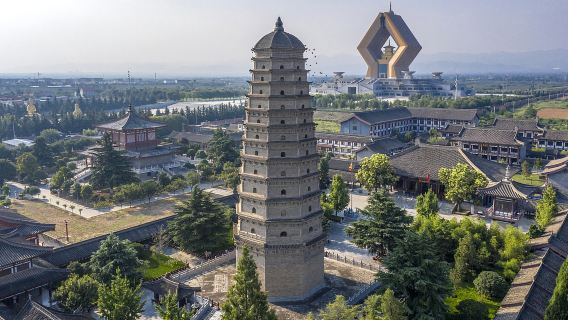
[Optional 8-person premium small group tour] Famen Temple + Qianling Mausoleum 1-day tour | admission ticket + round-trip transportation + wireless headset
󱌍
4.9/5
· 409 reviews· 432 booked
Duration: 10.8 hrs
English
Free cancellation
Instant confirmation
99.3% of travelers recommend
From$310.02
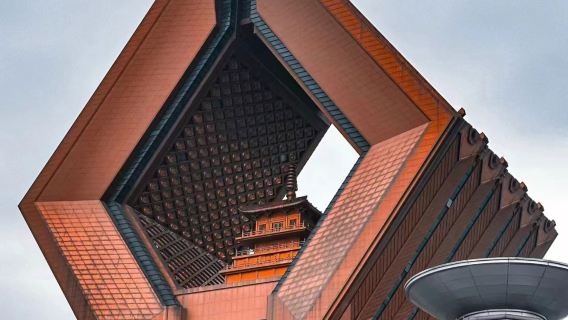
Xi'an Famen Temple + Qianling Mausoleum + Maoling Mausoleum One-Day Tour (Including Entrance Fees) - Family Group Tour
󱌍
4.9/5
· 20 reviews· 63 booked
Duration: 12 hrs
English
Instant confirmation
Book now for tomorrow
79 travelers saved
5% off
Limited-time sale
From$192.49$202.63
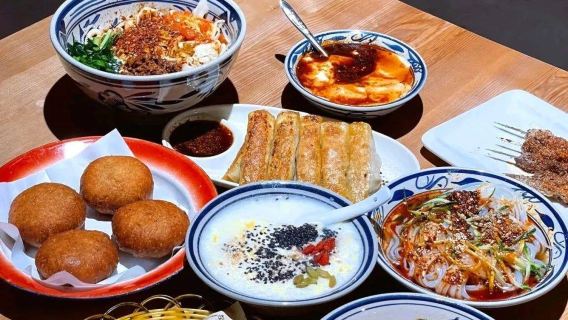
Famous Shaanxi Yuanjia Village+Qianling Mausoleum-Day Tour from Xi'an
󱌍
5.0/5
· 1 review
Duration: 5 hrs
English
Free cancellation
Instant confirmation
From$131.11
One-day private chartered car tour to Qianling Mausoleum and Binzhou Giant Buddha Temple from Xi'an | Preferred for group tours
󱌍
From$191.47
Xian Qianling Mausoleum and Hanyangling Museum Private History Day Tour
󱌍
Duration: 7.5 hrs
English
Free cancellation
Instant confirmation
Book now for tomorrow
From$68.28
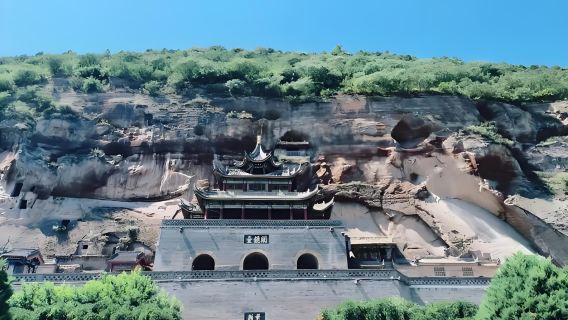
One-day private guided tour to Binzhou Giant Buddha Temple Grottoes and Qianling Mausoleum in Shaanxi [Admire the first wonder of Guanzhong]
󱌍
From$98.25
Xian Qianling Mausoleum & Famen Temple Private Day Tour: Meet the Only Empress Wuzetian
󱌍
Duration: 7.5 hrs
English
Free cancellation
Instant confirmation
Book now for tomorrow
From$90.08
Qianyang Today's weatherClear -4-14℃
Qianyang weather for the next 2 days11/21: -4-10℃, 11/22: -3-10℃

Free things to do in Qianyang

What travelers say about Qianyang

user-avatar
ETohNovember 19, 2026
5.0
Interesting museum… I now know what a stele is and its significance in Chinese history. There were some really old exhibits (>1,000 years) and it was well laid out. A must visit for lovers of Chinese history

Xi'an Beilin Museum

user-avatar
带着木星去旅行August 3, 2025
3.0
挺大一个坑,非考古爱好者不建议去

Duke of Qin No. 1 Tomb

user-avatar
博😘😘肖January 3, 2026
5.0
✨As a must-visit landmark for all descendants of Yan and Huang, the Yan Emperor Mausoleum in Baoji holds the secrets of Chinese civilization from 5,000 years ago! This article provides a local favorite for ancestral worship and pilgrimage. The Yan Emperor Mausoleum, the "Source of Chinese Civilization," boasts three themed areas: the imposing Shennong Gate in the front area, the soothing morning bells and evening drums in the sacrificial area, and the solemn pine and cypress trees in the tomb area, like a timeless barrier. Walking along the axis of Yangshi-Yandi Merit Wall-Ancestor Archway, every step feels like stepping into ancient mythology. Every year on the seventh day of the seventh lunar month, the grand public memorial ceremony brings together compatriots from home and abroad to the Shenlong Temple by the Jiulong Spring. The scene of tens of thousands of people beating drums and ringing bells is truly awe-inspiring (the ceremony will be held as scheduled in 2025 ✅). Just between you and me, the Incense Burning Platform ruins on the west side of the scenic area are the ancient site where the Yellow Emperor worshipped the Yan Emperor—99% of tourists miss it! Changyang Mountain, where the Yan Emperor Mausoleum is located, is the birthplace of the Yan Emperor, as certified by the Yellow Emperor's local chronicles! Legend has it that he was buried here after mistakenly consuming the poisonous herb "heartbreak grass," and the ancient cypress trees in front of his tomb still hold stories of tribal totems.

Yan Emperor Mausoleum

user-avatar
Anonymous userAugust 24, 2026
5.0
If you're going as a family, I recommend buying the cable car tickets. After taking the cable car, it's quite a walk to the top, though the scenery is nice. Bring plenty of water and some snacks; there are a few small food stalls at the top, but the food is just average. The magic carpet ride is worth trying; it's less strenuous going up. I don't recommend the downhill slide, as it's quite short. When I went, the staff were very rude if I didn't ride it. I hope the scenic area will improve its training and management in this area.

Jiulongshan Holiday Resort

user-avatar
ChrisNovember 16, 2026
4.0
⭐⭐⭐⭐ **A worthwhile visit to explore Xi'an's history**Daming Palace is a fascinating historical site and a great place to learn more about the grandeur of the Tang Dynasty. The grounds are spacious, with beautiful scenery, impressive ruins and plenty of opportunities for photography. Walking around the palace complex gives you a sense of how magnificent the imperial palace must have been during its glory days.However, the site is quite large, so be prepared for a fair amount of walking. Some areas are mainly ruins, and visitors who are not particularly interested in history may find certain parts less engaging. It would also be helpful to have more detailed explanations and interactive displays throughout the attraction.Overall, I enjoyed the visit and would recommend it to anyone interested in Chinese history and culture. A worthwhile attraction in Xi'an, although there is still room for improvement in the visitor experience.

Daming Palace National Heritage Park

user-avatar
Anonymous userNovember 9, 2026
4.0
Famen Temple is definitely worth a visit. I was amazed by the creative designs and exquisite craftsmanship of our ancestors. It's worth appreciating carefully. Each piece of art carries a profound sense of history and story.

Famen Cultural Scenic Spot

user-avatar
M56***22November 19, 2026
5.0
Visiting Du Fu Thatched Cottage in Chengdu and staying at this hotel was perfect! The facilities were very well maintained, and the room was spotless and odor-free. The staff were helpful, attentive, and friendly, and the tofu pudding at breakfast was soft, tender, and delicious. The location is fantastic, just a few minutes' walk from Du Fu Thatched Cottage, making sightseeing and getting around convenient and offering great value for money!

Xi'an Drum Tower

user-avatar
月万November 14, 2026
4.0
A day trip to Yongji, visiting Pujiu Temple and Stork Tower, is a poetic and culturally rich journey along the Yellow River, perfect for families with seniors and children! Start by visiting Pujiu Temple, the original setting of the classic Chinese novel *The Romance of the Western Chamber*. Ancient courtyards with red walls are nestled on the plateau, with pear blossoms in the deep courtyard and the west wing corresponding to scenes from the book. Telling children the story of Zhang Sheng, Yingying, and Hongniang is a lively and engaging experience. The most amazing feature is Yingying Tower, one of the four great echoing structures; tapping the stone produces an echo like the croaking of frogs, a fascinating sight for children. The temple grounds are gently sloping, allowing for a tranquil and elegant atmosphere. Afterwards, head to Stork Tower, the actual location of the poem by Wang Zhihuan from textbooks. An elevator takes you directly to the top floor, making it easy for seniors to climb. Standing atop the tower, gazing at the winding Yellow River, you truly understand the meaning of "The sun sets beyond the mountains, the Yellow River flows into the sea; to see a thousand miles further, climb one more story," bringing the ancient poem from the textbook to life. The exhibition hall inside the building depicts historical scenes from Hedong, and a leisurely stroll through it is quite rewarding. The two attractions are not far apart, a combined ticket is cost-effective, and the facilities are well-developed. One side tells the romantic legend of the West Chamber, while the other presents the timeless masterpiece of the Yellow River. One is gentle, the other grand; both offer stories and landscapes, making it an educational and entertaining experience, well worth bringing children to experience Hedong culture.

Guanque Tower

user-avatar
M27***t3October 6, 2026
5.0
Teacher Tangtang's teaching is really excellent! 🤩🤩 I learned a lot from her throughout the course. She reminded me of my high school Chinese teacher, someone incredibly knowledgeable! ✌︎' ֊'🥳🥳🥳 In short, I really enjoyed it! 🥰🥰🥰

Shaanxi Archaeology Museum

Popular cities near Qianyang

Frequently asked questions

How can I contact Trip.com customer support?

Get help anytime, anywhere within 30 secondsContact customer support

Change and cancellation policies vary by attractions and tours. Please check the product details page for more information.

Ticket prices may vary between weekdays and weekends, as well as during peak and off-peak seasons. When booking with Trip.com, you can also use Trip Coins to get extra savings. For more tips on booking discounted tickets, please visit Trip.com for the latest information.