
Things to do in Qiqihar
Explore top experiences
Top 10 attractions in Qiqihar


Qiqihar Today's weatherClear -11--4℃
Qiqihar weather for the next 2 days11/22: -10--1℃, 11/23: -15--3℃
Free things to do in Qiqihar


What travelers say about Qiqihar

无所不能的梁大爷May 4, 2026
5.0
Experience the overwhelming industrial history, the starting point of China's heavy industry.
China First Heavy Industries Factory Front Park

我不是李亚鹏October 6, 2020
5.0
Yuting Park is located in Nehe Town, Nehe City, Heilongjiang Province, covering an area of 45.5 hectares, of which 43 hectares are green land and water surface.
The park was built in 1915 and was named after a grass pavilion for sheltering from the rain. Later, the park was renovated and expanded on a large scale several times.
The convention is now a national 2A-level tourist attraction and a national urban wetland park.
Yuting Park

郭润龙浪迹天涯August 8, 2024
5.0
20240709 AM:
1. Jiangqiao Anti-Japanese War Memorial Park is located in the Jiangqiao Anti-Japanese War Memorial Hall area of the 4A scenic spot. Jiangqiao Anti-Japanese War Memorial Hall is a red relic in Jiangqiao County, Qiqihar City. It is the place where China fired the first shot of armed resistance against Japan in modern times. In the 20th year of the Republic of China (1931), Ma Zhanshan, the acting chairman of Heilongjiang Province and an anti-Japanese hero, led his troops to fight fiercely with the Japanese army on the Nenjiang Bridge here, kicking off the Heilongjiang Campaign. Later, he was outnumbered and forced to retreat. The scenic area is divided into three parts: the memorial hall, the anti-Japanese war memorial site, and the head of the Nenjiang Canal. It is a good place for red education, humanities learning, viewing photography, camping team building, and parent-child entertainment.
①Address: Jiang'an Community, Jiangqiao Mongolian Town, Tailai County, Qiqihar City, Heilongjiang Province
②Transportation: No public transportation, easy to park by car
③Peak season: Autumn, you can see rice field paintings
④Duration: 4 hours
⑤Ticket price: Free
2. The Anti-Japanese War Memorial Park is located 1.3 kilometers north of the Memorial Hall. It is an open-air square near the Jiangqiao Anti-Japanese War battlefield site. It was built in 2014 and covers an area of 14,200 square meters. This area has:
① Theme sculpture area: a 108-meter-long corridor, which introduces the progress of the 14-year Anti-Japanese War in the form of reliefs, a total of 18 pieces, including the rectangular opening relief "Eternal Commemoration" (portraits of 7 important generals in this battle, from left to right, Wu Songlin, Han Jialin, Fan Chonggu, Ma Zhanshan, Xie Ke, Deng Wen, Li Haiqing), "Return My Rivers and Mountains" Monument (handwritten by Ma Zhanshan in 1941), the ending relief (no name and introduction, the pattern is the Great Wall in the pine forest), and the middle 15 square reliefs, each of which represents a year (from 1931 to 1945, the victory of the Anti-Japanese War), and the back has the major events of the year, so the sculpture area can be regarded as a chronicle of the Anti-Japanese War
② Retired weapons exhibition: There is a 1280 boat (a retired frigate stationed here in 2021. This 62-1 model frigate was commissioned in 1995 and participated in maritime patrols many times , drills, and was awarded the third-class collective merit. It was retired in 2018. Also transferred to Qiqihar for exhibition were the Type 037 anti-submarine boat 742, which is currently open to tourists at the 4A scenic spot Mingyue Island, and visitors can visit the boat), the Type 63 armored transport vehicle (developed and produced by China North Industries Group in 1958, discontinued in 1990, 5.48 meters long and weighing 12.6 tons, which participated in the Vietnam War, the Sino-Vietnamese self-defense counterattack, the Iran-Iraq War, and the Gulf War. ), J-6 (developed by Shenfei in 1958, mass-produced 2 years later, discontinued in 1983, retired in 2010, a total of 5,205 aircraft were produced, 14.64 meters long and 5.45 tons in weight, with outstanding military exploits during service, and shot down more than 20 American fighter planes at the cost of zero damage), etc. In addition, there are many cannons, armored vehicles and other equipment without introduction signs
③ "Jiangqiao Anti-Japanese War Memorial" monument: erected by the Heilongjiang Provincial Government on the bank of the Nenjiang River in 2010. Therefore, the Mongolian people account for about 30% of the town, and the local grassland style is strong. Horses can be seen grazing on the riverside at any time, and sometimes even the grazing owner cannot be found
④ Nenjiang Wooden Bridge Site: A horizontal steel bridge component. The main body of the Nenjiang Wooden Bridge when the Jiangqiao Anti-Japanese War broke out in 1931 was made of steel, and it was called Harge Bridge at that time.
Jiangqiao Anti-Japanese War Memorial Hall

爱玩的小可爱zyNovember 26, 2025
5.0
Wangjiang Tower is right next to the main gate of Longsha Park, facing the beautiful lake. There are many parks nearby, providing many good places for residents to relax, dance, and exercise.
Wangjiang Pavilion

九月池July 5, 2020
5.0
A more meaningful square, built on August 15, 2005 to commemorate the 60th anniversary of the victory of the Chinese People's War of Resistance Against Japanese Aggression and the World Anti-Fascist War. It is of great historical significance. At night, there are more people playing, some are roller skating, some are flying kites, some are riding bicycles, and some are hiking. After the epidemic, adults and children go outdoors for exercise and strolling, which is great!
Heping Square


山在穷游May 26, 2020
5.0
Ang'angxi may be very unfamiliar to many people, and it is also very unfamiliar to me. The reason why I chose to come back here is that its name is really interesting.
But when I came here, I was attracted by this small town in the north. Except that the road in front of the train station is not very wide, there are many rooms left by the Russians. If you ask the locals, some locals say that these are all things left by the old Russians.
But it is these ruins that show its historical value in silence, which is very worthy of people who like it to come and appreciate.
Ang'angxi Site

ChenhutamuAugust 18, 2021
5.0
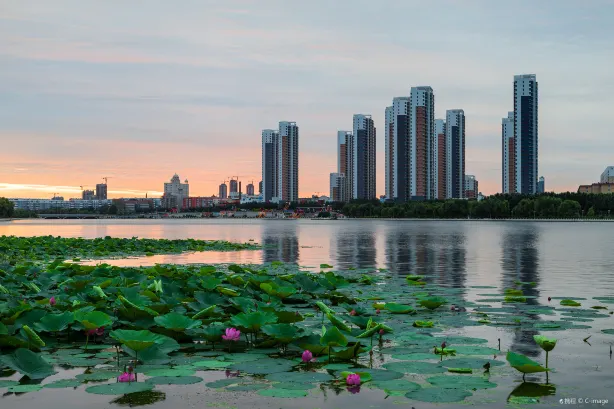
Labor Lake is located in the center of Qiqihar. It is a beautiful lake in the city. There are leisure trails on both sides of the lake. In the evening, many citizens walk on the trails. The buildings on both sides are lit up, and the reflections in the water are particularly beautiful.
Laodong Lake

M44***61October 24, 2025
5.0
An unexpected surprise during the trip. The factory tour far exceeded expectations, with a sense of technology and knowledge coexisting. It is a great place to bring children to experience the hardcore texture of modern industry.
Feihe Qiqihar Intelligent Industrial Park
Trip Moments in Qiqihar


Popular cities near Qiqihar


Frequently asked questions
How can I contact Trip.com customer support?
Get help anytime, anywhere within 30 secondsContact customer support
Can I change or cancel my booking?
Change and cancellation policies vary by attractions and tours. Please check the product details page for more information.
How can I get discounted prices?
Ticket prices may vary between weekdays and weekends, as well as during peak and off-peak seasons. When booking with Trip.com, you can also use Trip Coins to get extra savings. For more tips on booking discounted tickets, please visit Trip.com for the latest information.