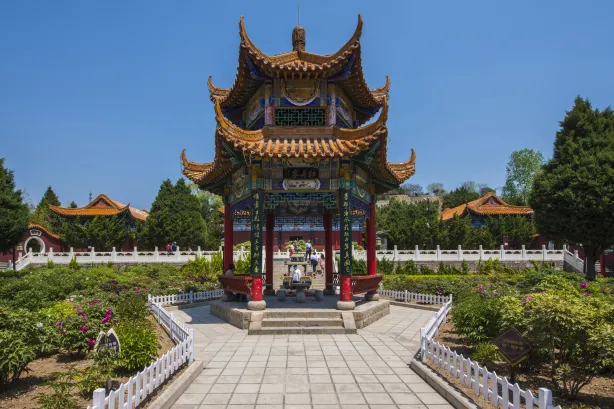
Gu County

Things to do in Gu County

Search attractions or local attractions & tours
Search

Explore top experiences

Top 10 attractions in Gu County

View all Attractions
Guangsheng Temple
No. 3 of Best Things to Do in Linfen

Guangsheng Temple

7.4
4.7/5
2.4k reviews

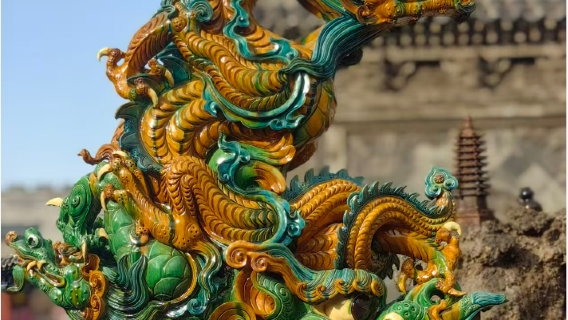
Guangsheng Temple is located at the southern foot of Huo Mountain in Hongtong County, Linfen, Shanxi. It is said to have been initially built during the Eastern Han Dynasty and renamed to its current name in the Tang Dynasty. Despite being repeatedly destroyed by wars, fires, and earthquakes over the centuries, the surviving halls are primarily structures from the Yuan and Ming Dynasties. The attraction consists of the upper temple on the mountain peak, the lower temple at the foot of the mountain, and the Water God Temple, forming a high-low connection that creates a natural upward visiting route. The Feihong Pagoda in the upper temple is the visual center of the entire complex. This octagonal thirteen-story brick pagoda, standing over forty meters tall, is adorned with glazed tiles in yellow, green, blue, white, and other colors from the second floor upwards. Figures of Buddhas, bodhisattvas, celestial beings, coiled dragons, and lion-like beasts protrude from the brick surfaces layer by layer. When sunlight hits it on clear days, the entire structure refracts rainbow-like brilliance, which is said to be the origin of its name "Feihong" (Flying Rainbow). The 1986 TV adaptation of *Journey to the West* filmed the episode where Tang Monk sweeps the pagoda to uncover an injustice here. In the 1930s, Liang Sicheng and Lin Huiyin also highly praised the quality and craftsmanship of the pagoda's glazed decorations during their survey. Behind the pagoda, a row of dark red sutra cabinets still stands in the Amitabha Hall, where the Buddhist canon "Zhaocheng Golden Tripitaka" was once stored. This engraved Tripitaka from the Jin Dynasty lay forgotten for centuries until its rediscovery in 1933. During the Anti-Japanese War, to prevent it from falling into Japanese hands, local soldiers and civilians risked their lives to transport it overnight. Now housed in the National Library of China, it is regarded as one of the library's most treasured collections. The sutra cabinets remain in the hall, and this legendary tale is worth pausing to hear. The Water God Temple at the foot of the mountain, the Mingying Wang Hall, is adjacent to the Huo Spring outlet. Its walls are adorned with over ten Yuan Dynasty murals centered around themes of praying for rain, rainfall, and giving thanks to deities. These murals depict water god worship and urban life rather than the typical Buddhist or Taoist subjects found in ordinary temples. The eastern section of the southern wall features "The grand performance troupe Zhongduxiu performing here," showcasing over ten actors and musicians representing various role types (sheng, dan, jing, mo, chou) on the same stage. This is a precious image for studying Yuan Dynasty zaju performances and, along with "The ball-hitting game," has been included in history textbooks. The adjacent Great Buddha Hall of the Lower Temple is a Yuan Dynasty wooden structure. Its original large-scale murals were stripped and sold overseas in the late 1920s, with the famous "Illustration of the Bhaisajyaguru Sutra" now housed at the Metropolitan Museum of Art in New York. To appreciate Yuan Dynasty murals, focus your attention on the Water God Temple. A bottom-up route is recommended: first visit the water god temple and lower monastery, then ascend via stone steps or the mountain road to see the Feihong pagoda at the summit. The glazed colors appear especially vibrant on sunny days, making it easier to capture great photos.

Hongtong · 10.7 km from Gu County
Hongtong Dahuaishu Ancestor Memorial Garden
No. 9 of Family-friendly Attractions in Shanxi

Hongtong Dahuaishu Ancestor Memorial Garden

6.8
4.6/5
4.2k reviews

Hongtong Dahuaishu Ancestor Memorial Garden is a national AAAAA-level tourist Attraction and a key cultural relic protection unit in Shanxi Province. The Attraction is located in Hongtong County, Shanxi Province, 2 kilometers away from Hongtong Railway Station, 3 kilometers away from Dayun Expressway Intersection, 8 kilometers away from Daxi High-speed Railway, and 22 kilometers away from Linfen Airport. The transportation is extremely convenient. The Attraction consists of four major theme sections: "Immigration Historic Site Area", "Ancestor Worship Activity Area", "Folk Customs Tour Area" and "Fenhe Ecological Area", with a total of more than 60 scenic and cultural attractions. It is the only folk worship holy place in the country with the themes of "seeking roots" and "worshiping ancestors". In recent years, Hongtong Dahuaishu Root-seeking and Ancestor-worshiping Park has achieved brilliant results with the joint efforts of all employees. It has been awarded "National Civilized Unit", "National Youth Civilized Unit", "National Primary and Secondary School Students' Research and Practice Education Base", "High-level Service Industry Standardization Demonstration Project", "China Overseas Chinese International Cultural Exchange Base", "China Couplet Cultural Garden", "National Model Workers' Home", "National Factory Affairs Open Democratic Management Demonstration Unit", "Second Shanxi Quality Award Nomination Award", "Shanxi May 1st Labor Award", "Shanxi Top Ten Quality Tourist Attraction", "Shanxi National Traditional Festival Protection Demonstration Site", "Shanxi Civilized Scenic Attraction", "Shanxi Civilized Tourism Advanced Unit", "Shanxi Cultural Industry Advanced Unit", "Shanxi Cultural System Reform Advanced Unit" and more than 100 other major brand honors. Its unique "Dahuaishu Ancestor Worship Custom" has been listed as the second batch of "Intangible Cultural Heritage". On the morning of October 29, 2018, the Ministry of Culture and Tourism held a plaque awarding ceremony for new 5A-level tourist Attraction, and Hongtong Dahuaishu Root-seeking and Ancestor-worshiping Park was officially promoted to a national 5A-level tourist Attraction. Nowadays, it has gradually formed a comprehensive tourism service area with Attraction, folk hotels and travel agencies as the main business sectors, tourism cultural and creative product development and cultural media development as the flanks, integrating food, accommodation, transportation, travel, shopping and entertainment.

Hongtong · 22 km from Gu County
Longmen Grottoes
2027 Asia 100 - Best Things to Do

Longmen Grottoes

9
4.7/5
62.6k reviews

Longmen Grottoes are located in the southern suburbs of Luoyang, Henan Province, on the cliffs along both banks of the Yi River. As one of China's three major grotto art treasures, they were inscribed on the World Cultural Heritage list in 2000. The grottoes were first carved when Emperor Xiaowen of Northern Wei moved the capital to Luoyang, and construction continued through the Eastern Wei, Western Wei, Northern Qi, Sui, and Tang dynasties, with the vast majority of niches and statues left from the Northern Wei and Tang periods. Today, more than 2,000 niches and over 100,000 statues remain, along with a large number of inscriptions and steles, making the site an important representative of Chinese stone carving art. The attraction is divided by the Yi River into two parts: West Hill and East Hill. The West Hill Grottoes are the essence of the site, carved from the Northern Dynasties through the Sui and Tang periods. Famous caves include Guyang Cave, Binyang Cave, Lotus Cave, Wanfo Cave, and Fengxian Temple. The Lushena Buddha at Fengxian Temple stands about 17 m tall, making it one of the larger Buddha statues at Longmen Grottoes. Its face is dignified and serene, with a faint smile, and legend holds that it was modeled on the appearance of Wu Zetian, earning it the name "Oriental Mona Lisa." The inner walls of Wanfo Cave are densely covered with about 15,000 small Buddha statues, each only a few cm tall, neatly arranged and finely crafted. Guyang Cave is the earliest cave carved at Longmen, and its inscription calligraphy is exquisite; the selected "Twenty Masterpieces of Longmen" are representative works of Wei stele calligraphy. Binyang Cave consists of the South, Middle, and North caves and took more than twenty years to complete. Its original reliefs depicting emperors and empresses worshipping the Buddha were looted and lost overseas in the 1930s. In Binyang North Cave, a Buddha statue has a distinctive hand gesture, with the right index and middle fingers raised in a shape resembling the modern "scissors hand," though it is actually a Buddhist mudra, and it once sparked heated discussion online. The East Hill Grottoes are mostly Tang dynasty works and are smaller in scale than those on West Hill, but from the opposite bank visitors can enjoy panoramic views of West Hill from different angles, especially distant views of the Lushena Buddha. The attraction also includes Xiangshan Temple and Bai Juyi Memorial Park (Bai Garden). The Tang dynasty poet Bai Juyi lived in Luoyang in his later years and once praised it, saying, "Of the scenic splendors of Luoyang's surrounding mountains and waters, Longmen ranks first." When visiting, simply follow the route West Hill—East Hill—Xiangshan Temple—Bai Garden, proceeding in one direction without backtracking. The West Hill Grottoes are densely packed with content, so it is advisable to set aside ample time for a closer look; East Hill is quieter and more secluded, suitable for a brief visit and gazing across the river when energy is limited.

China · Luoyang
Millennium City Park
2027 Asia 100 - Best Things to Do

Millennium City Park

8.8
4.6/5
29.3k reviews

Millennium City Park is located by the shores of Longting Lake in Kaifeng. It is a large-scale historical and cultural theme park of the Song Dynasty, recreated one-to-one based on the famous painting Along the River During the Qingming Festival by Song Dynasty painter Zhang Zeduan. The park is divided into two sections by the Shuangting Bridge: the South Garden recreates the bustling street life of the Bianjing city, with taverns, eateries, teahouses, and pharmacies lined up along the streets; the North Garden is an imperial garden, with waterside halls, the Sifang Courtyard, and other palace buildings standing by the lake. Performers and street vendors in the park mostly wear Song Dynasty costumes, with ancient music lingering and bells and drums sounding, so that after a few steps visitors can easily fall under the illusion of "stepping into a painting in one morning, dreaming back a thousand years in one day." Architecture is the intuitive and tangible highlight here: the Rainbow Bridge spanning the Bian River is a replica of the famous bridge in the painting, shaped like a long rainbow, and standing on the bridge watching the grain boats pass by feels much like being inside the painting; the Fuyun Pavilion towers above all the other pavilions in the garden, with its tiered red towers and golden tiles on all four eaves, inviting one to climb from afar; the Shangshan Gate is rebuilt after the Northern Song dynasty Dongjing city gate, tall and majestic with brilliant painted decorations, making it the most imposing gate tower in the garden; and the Shuixin Xie, Shuangting Bridge, Jiulong Bridge, and other pavilions and waterside structures are scattered among the blue waves. The main attraction of the day is the immersive performances staged throughout the park: "Bao Zheng Inspects the Bian River Grain Transport" unfolds on the water on both sides of the Rainbow Bridge; "Squire Wang Seeks a Son-in-Law" features a decorated tower erected in front of Squire Wang's house where a silk ball is tossed to choose a groom; "Yue Fei Challenges Prince Xiao Liang" raises dust on the Song dynasty parade ground as horses gallop; and folk performances such as cockfighting, stilt walking, and pan drumming are interspersed throughout. To step into the action yourself, head to the Four Directions Courtyard to don traditional costumes and enter the examination cells for a hands-on Song dynasty imperial exam experience; families with children can enjoy carousel rides, roller coasters, and other amusement facilities wrapped in Song dynasty storytelling at the Song Dynasty·Royal Pleasure Ground; and in the entertainment quarters, face-changing, qigong fire-breathing, ancient magic, and other Song dynasty variety acts take turns on stage, with intangible cultural heritage feats ready to break out at any moment right beside you. After nightfall, the park takes on a different face: red lanterns light up one after another, the market streets are brightly illuminated, and it feels like a completely different park from the daytime. The large-scale water-based live performance "The Great Song Dynasty's Eastern Capital: A Dream of Splendor" is staged on the surface of Jinglong Lake. The entire show is woven together from eight classic Song ci poems and the painting Along the River During the Qingming Festival, drawing the audience back to the Northern Song dynasty's Eastern Capital a thousand years ago. The performance runs about 70 minutes, and many visitors deliberately plan their itinerary to stay until the evening to catch this show. Dining in the park is also convenient: the snack street at Dongjing Food Court brings together Kaifeng snacks such as fried liangfen, tongzi chicken, and almond tea, perfect for eating while strolling; if you want to sit down for a proper meal, you can visit the reconstructed Sun Yang Zheng Dian in the park, which was originally one of the seventy-two official restaurants of Bianjing in the Northern Song Dynasty, where you can taste traditional Henan dishes such as soup dumplings and carp with baked noodles.

China · Kaifeng
Jinci Temple Museum
No. 1 of Family-friendly Attractions in Shanxi

Jinci Temple Museum

8.8
4.8/5
21.1k reviews

Jinci Temple Museum is located at the foot of Xuanweng Mountain by the banks of the Jin River. It is an ancestral temple built to commemorate Tang Shuyu, the founding feudal lord of the State of Jin, and is also one of the earlier surviving royal sacrificial gardens in China. There is a saying that "you have not truly visited Taiyuan until you have visited Jinci." The ancient buildings in the museum are arranged in sequence along the central axis, among which the Xian Hall, the Flying Bridge over the Fish Pond, and the Hall of the Holy Mother are known as the "three treasures," while the Zhou Cypress, the Never-Aging Spring, and the Song dynasty attendant statues are known as the "three wonders"—these are the core highlights of any visit. The "Three Treasures" are located on the central axis and can be visited together. Xian Hall is the place where sacrificial offerings are placed. The hall is surrounded by railings instead of walls, making it well-ventilated and bright, and its beam structure is simple and lightweight. The Flying Bridge Across Fish Pond is on the west side of Xian Hall. It is a cross-shaped ancient bridge built over a square pond, resembling a modern overpass in form, and this type of bridge structure is extremely rare among surviving ancient buildings. The west end of the bridge connects to Shengmu Hall, the oldest surviving building in the museum. Wooden carved dragons coil around the porch columns in front of the hall, making them relatively early surviving examples of wooden coiled dragons. The hall interior was built using the reduced-column method, creating a rather spacious interior. It houses dozens of Song Dynasty colored sculptures, with the main statue of Shengmu seated in the shrine and the remaining attendants arranged on both sides with varied expressions. One attendant statue is half joyful and half sorrowful, vividly lifelike and moving. With Shengmu Hall as the center, you can also seek out the "Three Wonders." The Zhou Cypress is located on the north side of Shengmu Hall. It is said to have been planted in the Western Zhou Dynasty, and its trunk leans south like a reclining dragon, full of ancient majesty. The Never-Aging Spring is located on the south side of Shengmu Hall and is the main source of the Jin River. The museum also houses the Stele of the Inscription and Preface to Jinci, composed and handwritten by Emperor Taizong of Tang, Li Shimin, whose running-script calligraphy is vigorous and forceful. In the southern part is the Shifang Fengsheng Zen Temple, said to have originally been the villa of the Tang Dynasty general Yuchi Gong. In the Futu Courtyard, the Sarira ShengSheng Pagoda can be climbed for a distant view. The Jinci temple fair has been passed down to the present day and has been included in the national-level intangible cultural heritage list. The Water Mirror Stage, an ancient theater stage in the museum, is an important venue for activities during the temple fair.

China · Taiyuan

Experiences you can't miss in Gu County

Gu County Today's weatherClear -4-11℃
Gu County weather for the next 2 days11/23: -9-11℃, 11/24: -7-9℃

Free things to do in Gu County

What travelers say about Gu County

user-avatar
行走毛毛November 9, 2026
4.0
One ancient building you absolutely must visit when you come to Linfen is Guangsheng Temple. It's truly stunning. From the pagoda to the murals and clay sculptures, it represents the pinnacle of ancient architecture in Linfen.

Guangsheng Temple

user-avatar
M37***45October 4, 2026
4.0
The Flying Rainbow Pagoda of Guangshang Temple was originally built in the Eastern Han Dynasty, but was later damaged by an earthquake and was not rebuilt until the Ming Dynasty. The entire 13-story pagoda is covered with colorful glazed tiles, and the carvings on it are incredibly lifelike. Each floor has its own unique meaning, and each design is exceptionally exquisite; it can only be described as absolutely magnificent.

Guangsheng Temple - Feihong Pagoda

user-avatar
M39***05November 22, 2026
5.0
I visited the Big Locust Tree again to host friends, and experienced firsthand its rich ancestral culture, surname culture, and immigrant culture. It requires careful appreciation and slow contemplation. A rushed, superficial visit of one or two hours is insufficient to truly understand it. I recommend allocating more time to fully experience and learn about the Big Locust Tree.

Hongtong Dahuaishu Ancestor Memorial Garden
user-avatar
yccuiMay 12, 2025
5.0
Who says Chinese colored glaze is not good? When I came to Guangsheng Temple, I was really shocked by this colored glaze pagoda. When the sun shines, even the colored glaze on the eaves shines with colorful light. Combined with the Monkey King statue at the door, it is really beautiful and full of artistic conception.

Guangsheng Temple - Feihong Pagoda

user-avatar
88topOctober 11, 2020
5.0
The Water Temple is located in Guangsheng Temple, Hongdong County, Shanxi Province. It is a customary sacrificial temple for worshiping the God of Huoquan. It includes buildings such as Shanmen (stage of the Yuan Dynasty), Yimen, and the Hall of King Mingying. There are nearly 200 square meters of murals from the Yuan Dynasty on the four walls of the Mingying Palace of the Water Temple. The dramatic mural on the east side of the south wall is especially famous in the world and is hailed as the third most unique cultural relic of Guangsheng Temple. It is currently the only large-scale Yuan Dynasty drama mural preserved in China. In 1998, this painting was included in the "Chinese History" textbook along with the ancient wall picture of playing ball.

Shuishen Temple

user-avatar
崔小跳August 20, 2025
5.0
A well-preserved Ming Dynasty prison that showcases the Ming Dynasty's criminal justice system. There's also an exhibition hall dedicated to the Su San story. It's small, but rich in content. It's recommended to hire a guide to better understand history and culture.

Susan Prison

user-avatar
M22***37May 4, 2021
5.0
Interesting and fun, overall great, cost-effective, good scenery,

Zhangjia Grand Courtyard

user-avatar
kissytaoNovember 20, 2026
5.0
We drove to the Northeast Gate Service Center of Longmen Grottoes, and then took a sightseeing bus into the scenic area. The scenery was beautiful. We learned about the history of Longmen Grottoes with the guide. Although it was quite crowded during the autumn break, it was still a worthwhile trip.

Longmen Grottoes

user-avatar
M11***79November 19, 2026
5.0
Stepping into Qingming Riverside Landscape Garden at dawn, you're greeted by picturesque scenes of small bridges, flowing water, ancient boats, tourists, and bustling shops—a veritable recreation of the grandeur of the Northern Song Dynasty. The live-action performance "Yue Fei Spears Little Liang Wang" is breathtaking, with galloping warhorses and swift, powerful moves that will leave you breathless with excitement!

Millennium City Park
user-avatar
饼语November 20, 2026
5.0
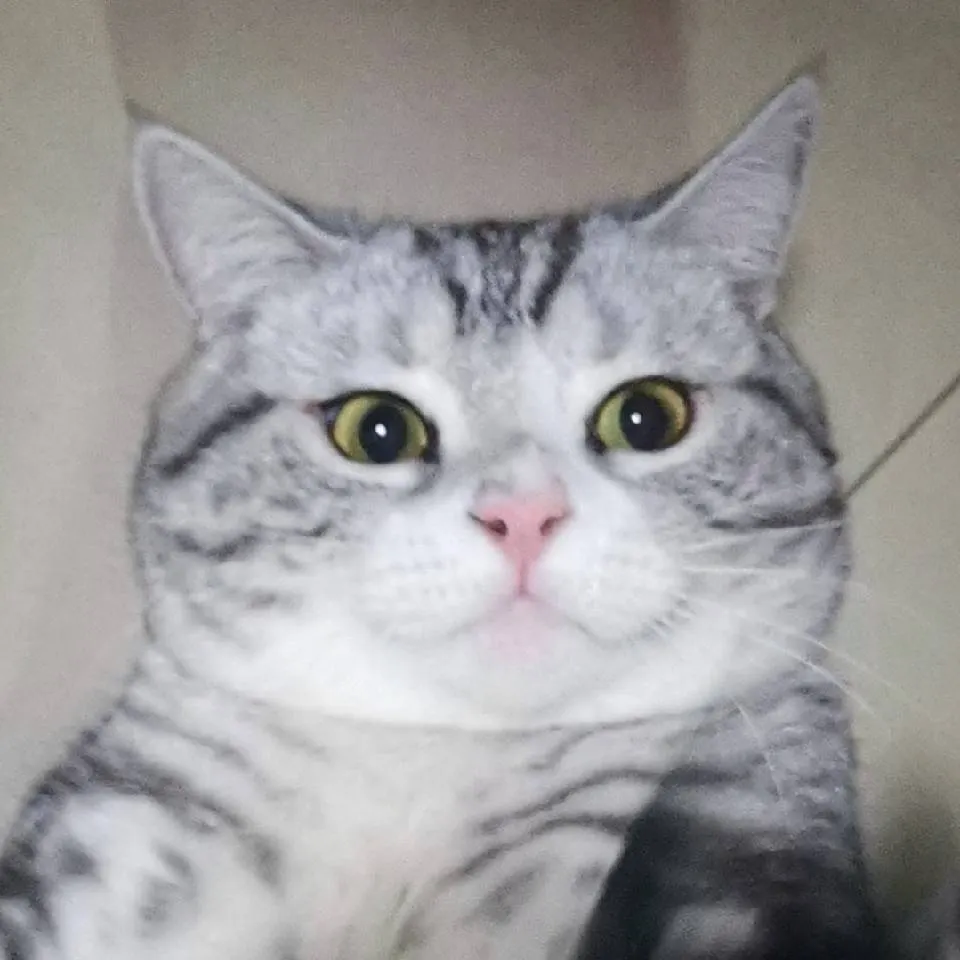
The building has a long history and is very well-built. The staff and cleaning staff are very welcoming. There are many cats inside, which is a great feature. They help control the rats and maintain the ancient buildings. The staff are very kind.

Jinci Temple Museum

Trip Moments in Gu County

Popular cities near Gu County

Frequently asked questions

How can I contact Trip.com customer support?

Get help anytime, anywhere within 30 secondsContact customer support

Change and cancellation policies vary by attractions and tours. Please check the product details page for more information.

Ticket prices may vary between weekdays and weekends, as well as during peak and off-peak seasons. When booking with Trip.com, you can also use Trip Coins to get extra savings. For more tips on booking discounted tickets, please visit Trip.com for the latest information.