Lin County

Things to do in Lin County

Search attractions or local attractions & tours
Search

Explore top experiences

Top 10 attractions in Lin County

View all Attractions
Qikou National Scenic Area
No. 14 of Night Attractions in Shanxi

Qikou National Scenic Area

5.4
4.4/5
25 reviews
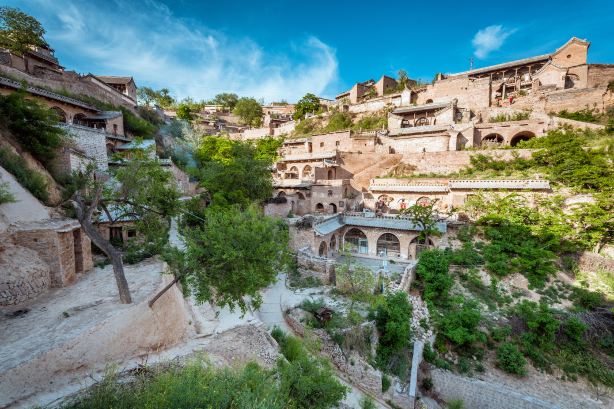
Qikou National Scenic Area gets its name from Datong Qi. "Qi" refers to dangerous shoals of sand and stone in shallow water. As the Yellow River flows through here, the river channel narrows, making it difficult for boats and rafts to pass, forcing them to dock, unload cargo, and switch to land transport. With its water-land transfer wharf, Qikou rose to prominence during the Qianlong reign of the Qing dynasty and became a major commercial hub in the north for the next two hundred years. Qikou Ancient Town is the main part of the scenic area. The five-li long street runs along the mountain and river, and the stone-paved street surface, along with Ming and Qing dynasty commercial establishments and old shops, preserves the traditional streetscape. Heilong Temple is built against Wohu Mountain. From there, you can overlook the Yellow River, the mouth of the Qiushui River, and the full view of the ancient town. The temple's opera stage also has a unique acoustic effect. Xiwan Village preserves extensive Ming and Qing dynasty residential courtyards, while Lijiashan Village is characterized by cave dwellings built into the mountainside in stacked tiers. Traditional dwellings are also preserved in the Zhaizishan area. Along the Yellow River canyon, you can also admire natural water-eroded reliefs. The views of rock walls formed by the long-term action of river water, wind, and rain stretch out, showcasing the unique natural landscape of the Yellow River canyon.Lin County · 31.1 km from downtown
Jinci Temple Museum
2026 Asia 100 - Family-friendly Attractions

Jinci Temple Museum

8.7
4.8/5
20.9k reviews
Jinci Temple Museum is located at the foot of Xuanweng Mountain by the banks of the Jin River. It is an ancestral temple built to commemorate Tang Shuyu, the founding feudal lord of the State of Jin, and is also one of the earlier surviving royal sacrificial gardens in China. There is a saying that "you have not truly visited Taiyuan until you have visited Jinci." The ancient buildings in the museum are arranged in sequence along the central axis, among which the Xian Hall, the Flying Bridge over the Fish Pond, and the Hall of the Holy Mother are known as the "three treasures," while the Zhou Cypress, the Never-Aging Spring, and the Song dynasty attendant statues are known as the "three wonders"—these are the core highlights of any visit. The "Three Treasures" are located on the central axis and can be visited together. Xian Hall is the place where sacrificial offerings are placed. The hall is surrounded by railings instead of walls, making it well-ventilated and bright, and its beam structure is simple and lightweight. The Flying Bridge Across Fish Pond is on the west side of Xian Hall. It is a cross-shaped ancient bridge built over a square pond, resembling a modern overpass in form, and this type of bridge structure is extremely rare among surviving ancient buildings. The west end of the bridge connects to Shengmu Hall, the oldest surviving building in the museum. Wooden carved dragons coil around the porch columns in front of the hall, making them relatively early surviving examples of wooden coiled dragons. The hall interior was built using the reduced-column method, creating a rather spacious interior. It houses dozens of Song Dynasty colored sculptures, with the main statue of Shengmu seated in the shrine and the remaining attendants arranged on both sides with varied expressions. One attendant statue is half joyful and half sorrowful, vividly lifelike and moving. With Shengmu Hall as the center, you can also seek out the "Three Wonders." The Zhou Cypress is located on the north side of Shengmu Hall. It is said to have been planted in the Western Zhou Dynasty, and its trunk leans south like a reclining dragon, full of ancient majesty. The Never-Aging Spring is located on the south side of Shengmu Hall and is the main source of the Jin River. The museum also houses the Stele of the Inscription and Preface to Jinci, composed and handwritten by Emperor Taizong of Tang, Li Shimin, whose running-script calligraphy is vigorous and forceful. In the southern part is the Shifang Fengsheng Zen Temple, said to have originally been the villa of the Tang Dynasty general Yuchi Gong. In the Futu Courtyard, the Sarira ShengSheng Pagoda can be climbed for a distant view. The Jinci temple fair has been passed down to the present day and has been included in the national-level intangible cultural heritage list. The Water Mirror Stage, an ancient theater stage in the museum, is an important venue for activities during the temple fair.China · Taiyuan
Yingxian Wooden Pagoda
No. 3 of Best Things to Do in Shanxi

Yingxian Wooden Pagoda

8.6
4.8/5
25.6k reviews
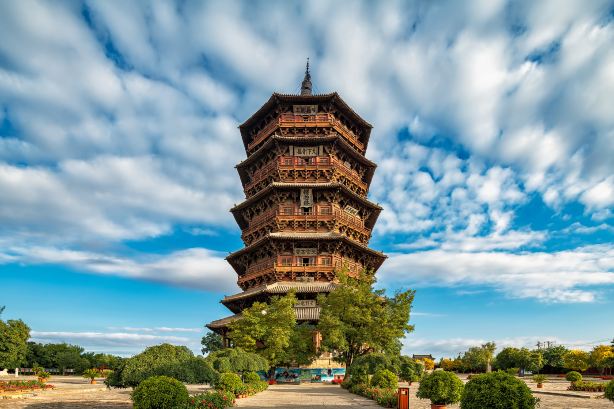
Yingxian Wooden Pagoda is centered on the Sakyamuni Pagoda of Fogong Temple. This pure wooden pavilion-style pagoda was first built in the second year of Qingning of the Liao Dynasty (1056) and later expanded and completed during the Mingchang period of the Jin Dynasty. It is the oldest surviving wooden pagoda in China. The pagoda has five visible stories, with concealed stories inserted between them, making nine stories in total, and stands about 67 m tall. Apart from the stone platform base on the first story, the main body of the pagoda is built entirely of wood, connected using traditional mortise-and-tenon craftsmanship, and the whole pagoda uses more than 50 types of bracket sets, demonstrating exquisite structural design. For more than nine hundred years, the pagoda has withstood many major earthquakes and modern artillery bombardment and still stands today. Due to the need for cultural relic protection, visitors may only visit the first floor inside the pagoda. There is a door on each of the north and south sides of the first floor. In the center of the inner chamber is a seated statue of Shakyamuni about 10 m tall, with a dignified face and a solemn expression. Looking up, you can see the exquisite coffered ceiling at the top. On the walls of the inner chamber are painted six Buddha images of Tathagata, and on the walls on both sides of the doorway are painted Liao Dynasty-style murals featuring Vajra, disciples, and offering figures, with bright colors and lifelike figures. Multiple plaques from various dynasties hang under the eaves of each story of the wooden pagoda, two of which were written by Ming emperors and are particularly striking. Under the south eaves of the fifth story hangs the plaque "Supreme Divine Craftsmanship," written by Zhu Di, Emperor Chengzu of Ming, when he climbed the pagoda during a northern military campaign in the Yongle era; under the south eaves of the fourth story hangs the plaque "Wonder of the World," written by Zhu Houzhao, Emperor Wuzong of Ming, when he ascended the pagoda to feast and reward his ministers after the Yingzhou victory in the Zhengde era. These plaques are not only calligraphic treasures but also record the intersection of the wooden pagoda with historical figures, together with the architecture itself forming a distinctive cultural view of the attraction.China · Ying County
The Hukou Waterfall Scenic Area
No. 4 of Best Things to Do in Shanxi

The Hukou Waterfall Scenic Area

8.5
4.7/5
22.7k reviews
The Hukou Waterfall Scenic Area is located in the Jin-Shaan Grand Canyon in the middle reaches of the Yellow River and is the Shanxi-side section for viewing Hukou Waterfall. As the Yellow River rushes here, its surface suddenly narrows from several hundred meters wide to just a few dozen meters. The water, laden with silt, churns and pours down like water being poured into a giant kettle, which is how the name "Hukou" (Kettle Mouth) came to be. This is a rare yellow waterfall on the Yellow River, with muddy waves surging skyward and a roar like thunder, displaying magnificent momentum. The attraction is located on the east side of the waterfall, where the bank is relatively low, allowing visitors to look up and take in the full panorama of the Yellow River plunging downward. Below the waterfall, mist rises and fills the air, appearing like smoke or clouds from afar and creating the wondrous sight known as "smoke rising from the water"; on clear days, sunlight refracts through the mist to form a rainbow arching across the river, called "rainbow reaching the heavens." Within the attraction, Dragon Cave is a natural stone cave; following the stone steps down leads to a viewing platform close to the waterfall, where you can look up as the river pours down from above—an ideal spot to feel the force of the waterfall up close. Downstream from the waterfall, the Ten-Mile Dragon Trough is a deep channel formed by the river's long-term erosion of the riverbed; in the dry season, the trough floor is wide and flat, and ancients once used this terrain to haul boats along the bank, leaving behind the unique scene known as "sailing on dry land." Further downstream is Mengmen Mountain, where two huge rocks in the river split the Yellow River in two before the streams merge again; carved on the rock face are the four characters "Wo Zhen Kuang Liu" (Resting Here, Quelling the Raging Flow). The view of Hukou Waterfall is distinctive in each of the four seasons. Every year between April and May, peach blossoms bloom and the ice melts, coinciding with the "March peach blossom flood," when the abundant water volume makes the waterfall particularly spectacular. From September to November, the air is crisp in fall, and rainbows often appear in the mist, a phenomenon known as the "Hukou fall wind." Water volume is greater in spring and fall, and the sound of the water striking the rocks is like thunder, making these the best periods to admire the waterfall. The image of Hukou Waterfall once appeared on the CNY 50 banknote of the fourth series of the renminbi, making it a widely recognized classic symbol of Yellow River culture.China · Ji County
Lin County Today's weatherClear 0-16℃
Lin County weather for the next 2 days11/5: 0-13℃, 11/6: 1-14℃

Free things to do in Lin County

What travelers say about Lin County

user-avatar
320***35August 31, 2026
5.0
Definitely worth seeing! With over thirty actors, every movement and every line was incredibly professional and dedicated – not at all perfunctory! A fantastic live performance! The stage is movable, and the scenery and stage design were meticulously crafted! Thumbs up! 👍 Everything was very well-conceived, and the content was incredibly rich! I learned so much more about the history of Qikou!

Qikou Ancient Town

user-avatar
滇国剑客October 1, 2021
5.0
Qikou is a place with early human activities. People here have created a long history and excellent culture. Therefore, Qikou Scenic Area occupies an important place in the hearts of tourists.

Qikou National Scenic Area

user-avatar
骑着蜗牛赶绿灯July 27, 2026
5.0
This is a unique ancient village in Shanxi, featuring loess cave dwellings. With its distinctive topography, expansive views, and pristine, untouched commercial environment, it's free to visit, offering exceptional value. Quiet and less crowded, it boasts stunning photo opportunities and a relaxed pace suitable for all ages. A visit of 1.5-2 hours is recommended, making it a must-see hidden gem on the Lüliang self-driving loop.

Lijiashan Village

user-avatar
petitedragonApril 13, 2026
5.0
Xiwang Village is located on the banks of the Qiushui River. The village is nestled against the mountains and faces the water, with seven stone-paved streets (two horizontal and five vertical) connecting the courtyards, forming a castle-like, enclosed village with layered, interconnected courtyards and households. For ¥2 per person, we visited one of the families. The elderly lady was very hospitable, giving a detailed introduction to her ancestral home. The stone carvings on the roof beams were exquisite, and she even offered to take photos for us.

Xiwan Village

user-avatar
西溪老翁April 9, 2021
5.0
The Yellow River Gallery, also known as the Yellow River Hundred Miles Water Erosion Relief, is located in the Qikou section of the Yellow River Grand Canyon in Shanxi and Shaanxi. It is a precious natural heritage. It was formed in the Triassic period. It is a natural cliff relief formed by the combination of groundwater dissolution and river erosion on the thick sandstone of the Triassic system. The Yellow River Gallery has a strong sense of art, like calligraphy, architecture, people, or birds and animals. Different people may see different artistic conceptions from different angles. It makes people marvel at the uncanny craftsmanship of nature.

Yellow River Art Gallery

user-avatar
Annie长翅膀的喵July 5, 2026
5.0
The Black Dragon Temple, perched majestically on the mountainside of Wohu Mountain, is a landmark ancient temple in Qikou Ancient Town. Originally built in the Ming Dynasty, it has been renovated and remains standing to this day. The temple is built against the mountain, its stone foundations imposing, its halls arranged in a harmonious and orderly fashion, and its glazed tile roofs exuding ancient charm. The plaque above the mountain gate is vigorous and simple, and the stage cleverly incorporates acoustic design, allowing the sound of opera performances to travel across the Yellow River to the other side—a truly ingenious architectural feature. This place was once a place of prayer for blessings for merchants and boatmen on the Yellow River, embodying their hopes for peace and prosperity. Climbing to the top of the temple and gazing into the distance, one can see the Yellow River surging mightily, the ancient town's houses standing in neat rows, and the mountains, water, and ancient buildings reflecting each other, showcasing the magnificent and timeless charm of this ancient Yellow River town.

Black Dragon Temple

user-avatar
Anonymous userNovember 3, 2026
5.0
Jinci Temple boasts a rich cultural heritage, truly a gem of Shanxi culture. The ancient cypress trees stand strong and vigorous, the Nanlao Spring flows gently, the Song Dynasty painted sculptures of maidens in the Holy Mother Hall are lifelike, and the Fish Pond Flying Bridge is exquisitely unique. Ancient architecture and gardens blend seamlessly, creating a tranquil environment. A guided tour is highly recommended to allow for a leisurely exploration and immersion in history. A must-see in Taiyuan, five-star recommendation!

Jinci Temple Museum

user-avatar
Ethan 777November 3, 2026
5.0
The scenic area isn't large; the main attraction is the tower. The building itself is magnificent, and after learning some background information, it feels even more like a miracle. However, the excessive number of signs around the perimeter significantly detracts from the overall aesthetic appeal.

Yingxian Wooden Pagoda

user-avatar
M55***00October 30, 2026
5.0
The two routes now connect via the Yellow River Bridge. There's a transportation station in Shanxi after crossing the bridge; it's not far. I recommend bringing a raincoat, as you can see it from both sides. Although the core area is small, I still highly recommend it.

The Hukou Waterfall Scenic Area

Trip Moments in Lin County

Popular cities near Lin County

Frequently asked questions

How can I contact Trip.com customer support?

Get help anytime, anywhere within 30 secondsContact customer support

Change and cancellation policies vary by attractions and tours. Please check the product details page for more information.

Ticket prices may vary between weekdays and weekends, as well as during peak and off-peak seasons. When booking with Trip.com, you can also use Trip Coins to get extra savings. For more tips on booking discounted tickets, please visit Trip.com for the latest information.