
Things to do in Luxor
Explore top experiences
Top 10 attractions in Luxor


Valley of the Kings
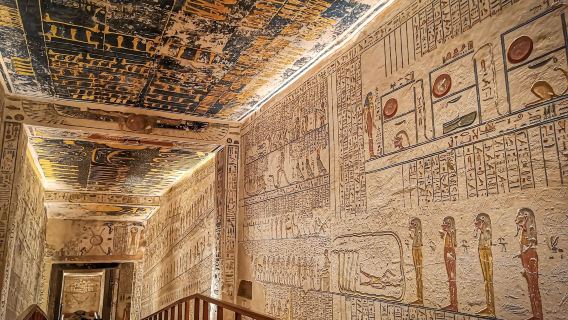
The Valley of the Kings is located on the west bank of the Nile in Luxor, Egypt, serving as the royal burial site during the New Kingdom period of ancient Egypt. Over nearly five centuries from the 18th to the 20th dynasties, pharaohs and nobles carved their tombs into the cliffs. Today, more than 60 tombs have been discovered, numbered with "KV" prefixes. The royal tombs are mainly clustered in the eastern valley, while the western valley is more secluded. The tomb murals are the true highlight here: the corridors, walls, and ceilings of the burial chambers are adorned with scenes from religious texts like the Book of the Dead and the Book of the Netherworld, with pigments retaining their vivid colors after over 3,000 years. The tomb of Tutankhamun gained fame in 1922 when archaeologist Howard Carter discovered a wealth of burial treasures here. The pharaoh's mummy remains in a climate-controlled glass display within the tomb, while most treasures are exhibited in Cairo's museums. The tomb of Ramses III is grand in scale with well-preserved paintings, while Ramses VI's tomb features a ceiling painted with the sky goddess Nut spanning the entire chamber. The painted corridor in Seti I's tomb is exceptionally exquisite. Travel tips: There is almost no shade in the valley, and it gets extremely hot in the afternoon, so visiting in the morning is more comfortable. Small electric shuttles operate between the entrance and the tomb area, saving energy. Tomb entrances are often inconspicuous openings along the cliffs—slow down to observe hieroglyphs and depictions of gods in the murals for richer details. Energetic travelers can also hike the ridge trail for a panoramic view of the valley. The natural pyramid-shaped peak of Al-Qurn above is one reason the ancient Egyptians considered this valley sacred.Qesm Al Wahat Al Khargah · 7 km from Luxor
Luxor Temple
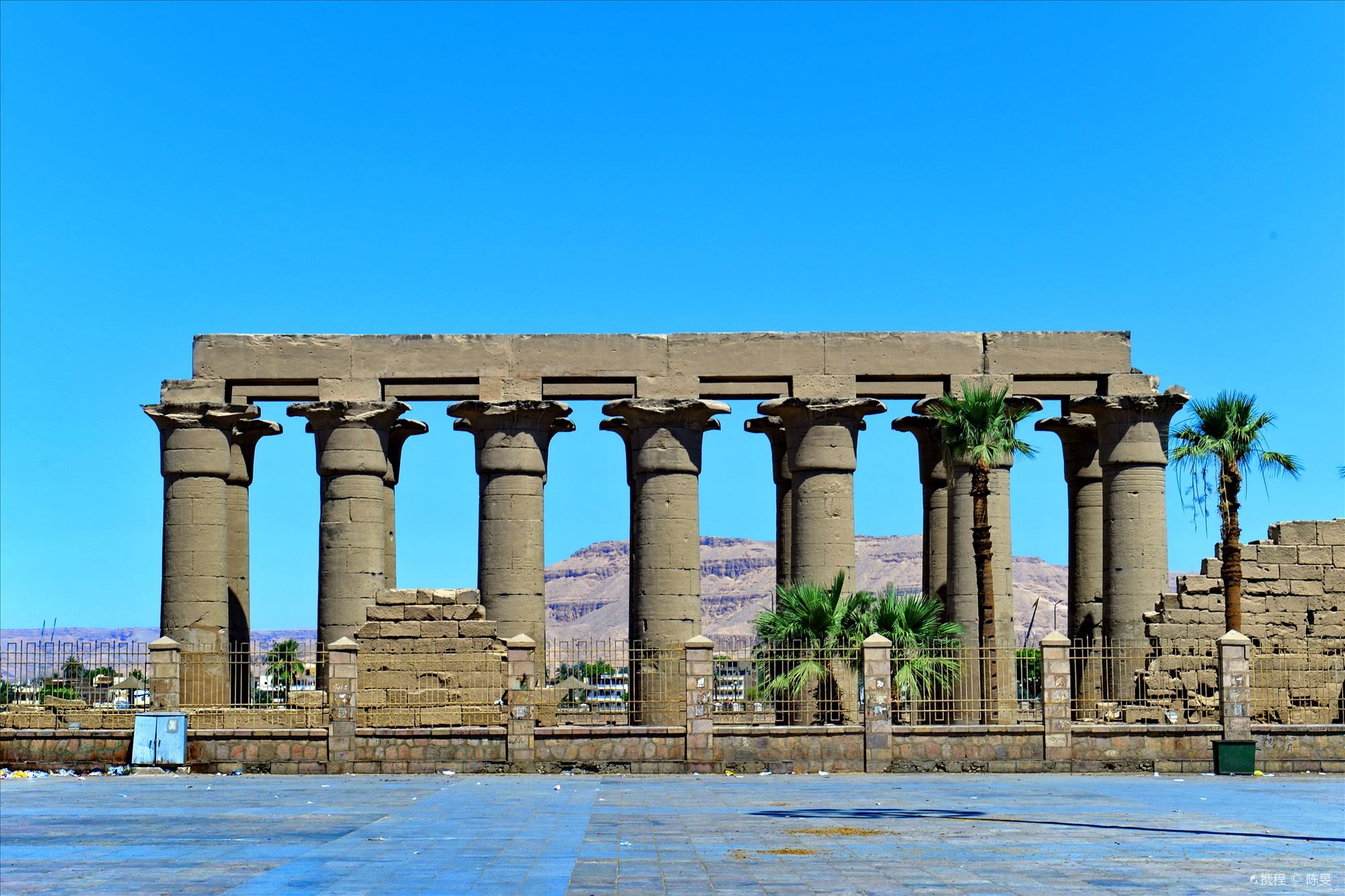
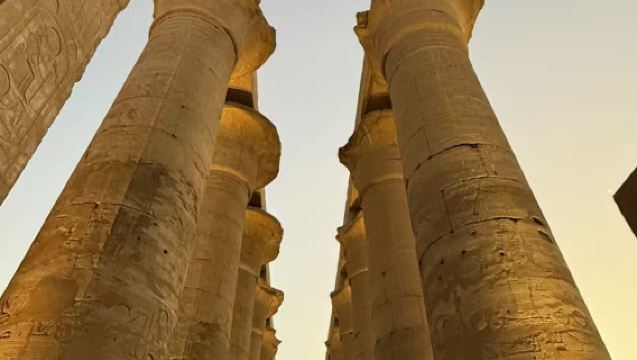
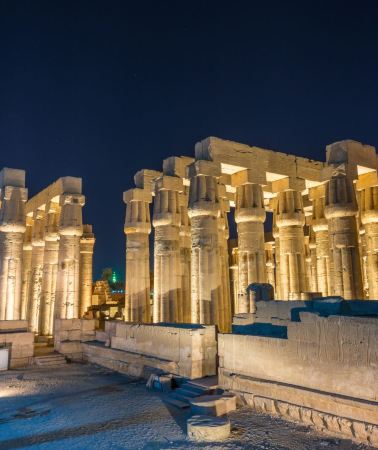
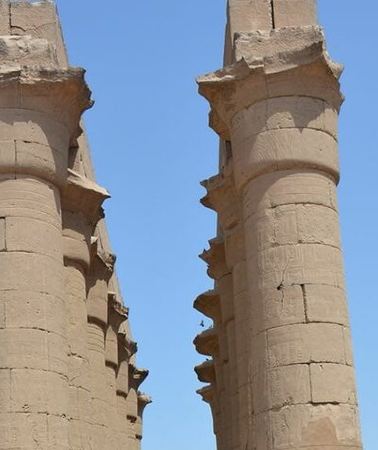
Luxor Temple is located on the east bank of the Nile in the city of Luxor, forming a north-south counterpart to Karnak Temple. It was a worship site built during the New Kingdom period of ancient Egypt for the "Theban Triad"—Amun, Mut, and Khonsu. In ancient Egyptian, it was called the "Southern Sanctuary" and is often referred to as the "Southern Harem of Amun." The main structure of the temple was constructed by Pharaoh Amenhotep III of the 18th Dynasty, while the pylon, forecourt, colossi, and obelisks at the entrance were added by Ramses II. Later pharaohs like Tutankhamun continued to add reliefs, and during the time of Alexander the Great, the rear sanctuary was rebuilt. A single temple thus layers over a thousand years of construction history. At the entrance still stands a granite obelisk of Ramses II, while its paired counterpart crossed the ocean as early as the 19th century and now stands in Paris's Place de la Concorde. The seated statue of the pharaoh in front of the pylon, the grand colonnade, and the sun court of Amenhotep III unfold layer by layer. The reliefs on the colonnade walls vividly depict the procession of the Opet Festival—during the Nile flood season in ancient Egypt, the statue of Amun was ceremoniously transported from Karnak Temple to here. The avenue of sphinxes in front of the temple gate was precisely the sacred path for this ritual. After years of archaeological restoration, this nearly three km-long avenue has been reconnected, and today, visitors can walk the round-trip route between this temple and Karnak Temple. In one corner of the temple stands a still-functioning mosque built atop the ancient pillars, sharing the same courtyard with the pharaonic-era pylon. When illuminated at night, the pillars, colossi, and minaret form a highly recognizable nightscape in Luxor.Luxor · 1.4 km from downtown

Karnak
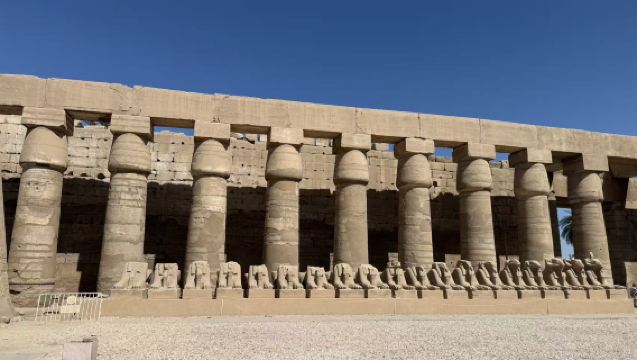
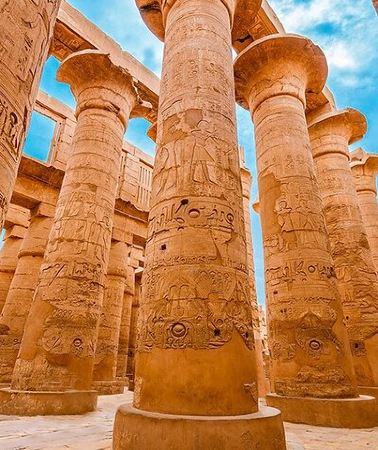
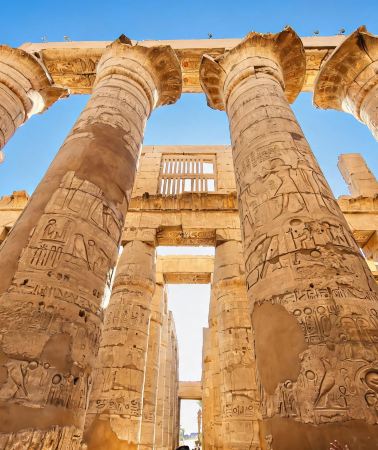
Karnak is located on the east bank of the Nile River, 700 km south of Cairo. It is a massive temple complex from ancient Egypt and one of Thebes' oldest temples. Construction began around 2000 BC with over 50 pharaohs contributing to its development. The temple remained active until the 3rd century BC.In the history of human civilizationThe long-constructed temple is finally completed. The temple is divided into three sections by brick walls, with the central and largest section being the best preserved. This part is dedicated to the sun god Amon. The left section is dedicated to the god Montu, while the other section is dedicated to Mut, Amon's wife who takes the form of a vulture, though this area remains unexcavated. Additionally, the complex contains dozens of smaller temples of various styles. Along the sacred path leading to the temple's pylon stand two rows of sphinx statues with ram heads. Historically, this ram-headed sphinx-lined path is said to have stretched for 3 kilometers, connecting toLuxor TempleThroughout the temple, you can see many murals, statues, and columns that have been painstakingly restored by reattaching fragmented relics with clay and stone. This is because the temple's construction began over 4,000 years ago and was completed more than 2,000 years ago. Due to both human and natural damage, the temple was once in complete ruins. It took countless years of effort by archaeologists to restore and present the temple as it stands today.Luxor · 3.9 km from downtown

Colossi of Memnon
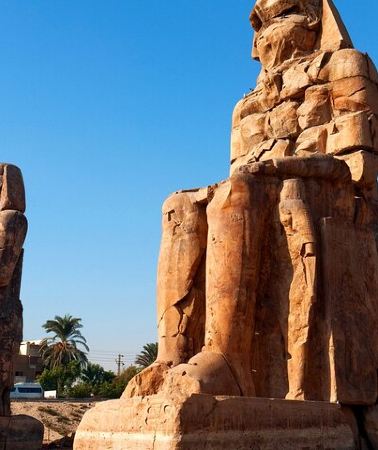
Colossi of Memnon are two massive quartzite statues standing on the plain on the west bank of the Nile. They were commissioned by Pharaoh Amenhotep III of the Eighteenth Dynasty during the New Kingdom period and originally served as the entrance guardians for the first pylon of his mortuary temple. Including their bases, the two statues are approx. 18m tall, stand approx. 15m apart, and face east toward the Nile. Smaller figures of Queen Tiye and the pharaoh's mother, Mutemwiya, are carved on the thrones beside the statues' legs. The sides of the bases feature reliefs of the Nile god Hapi, who holds lotus and papyrus plants to symbolize the unification of Upper and Lower Egypt. Both statues are heavily weathered, making their faces and upper bodies difficult to identify. The southern statue is carved from a single block of quartzite. The northern statue was severely damaged in an earthquake in 27 BC and was later repaired by the Romans using sandstone; its upper section is built from five layers of stone, which makes it look noticeably different from the southern statue. After the northern statue was damaged, a phenomenon occurred where the colossus would emit a sound resembling string music or whistling at dawn. Ancient Greek and Roman tourists flocked to listen and carved inscriptions on the base. Many of these inscriptions mentioned the Greek mythological hero Memnon, which is how the colossi got their name. Roman Emperor Septimius Severus later repaired the upper part of the statue, and the sound ceased to occur after that. Today, visitors can still see those Greek and Latin inscriptions from the Roman era on the base and experience the traces left by travelers from two thousand years ago.Al Bairat · 4.7 km from Luxor

Ancient Thebes with its Necropolis
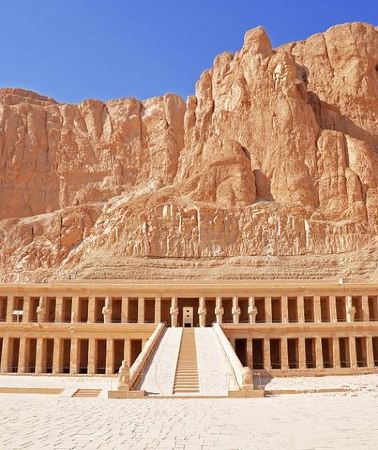
Ancient Thebes with its Necropolis was the capital of ancient Egypt during the Middle and New Kingdoms, spanning the east and west banks of the Nile. The east bank features two religious complexes,Karnak and Luxor Temple, while the west bank is home to pharaonic tomb areas such as the Valley of the Kings and Valley of the Queens, as well as several mortuary temples, together forming a vast complex of ancient ruins. Karnak, located on the east bank of the Nile, is the core complex of the site. The Great Hypostyle Hall features densely packed giant stone columns covered in reliefs and hieroglyphic inscriptions. The temple also preserves towering obelisks and a sacred lake. An avenue lined with ram-headed sphinxes once connected it toLuxor Templein the south. On the west bank, the Valley of the Kings is hidden within barren hills and canyons, where pharaohs of the New Kingdom carved their tombs into the mountains, with walls adorned in vibrant religious murals and depictions of the afterlife. TheMortuary Temple of Hatshepsutwas built against the cliffs of Deir el-Bahari, with three terraced levels rising in succession, blending into the steep rock face behind it and presenting a rare terraced layout in ancient Egyptian architecture. When visiting, you can arrange your itinerary by the east and west banks separately; the east bank is primarily for temple complexes, while the west bank focuses on tombs and mortuary temples.Al Bairat · 4.9 km from Luxor

Mortuary Temple of Hatshepsut
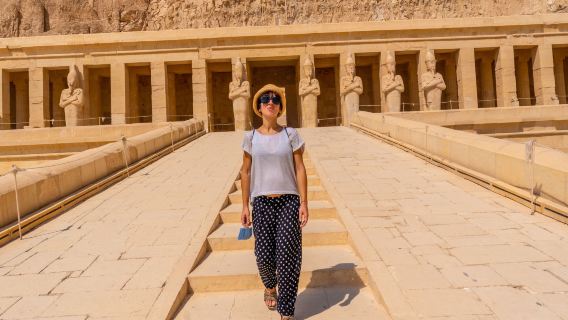
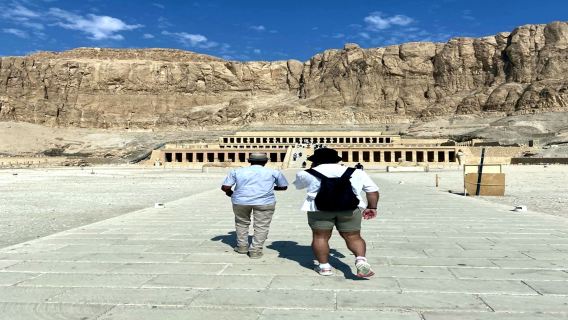
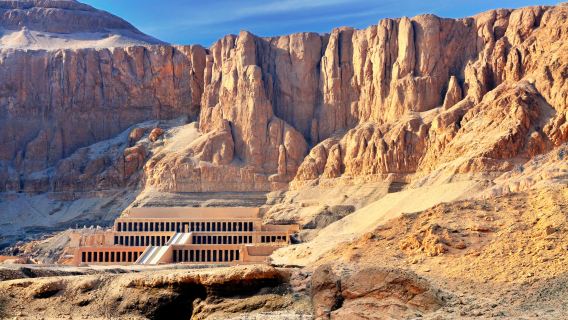
The Mortuary Temple of Hatshepsut is a quintessential royal tomb temple on the west bank of Luxor, Egypt, commissioned by the legendary female pharaoh Hatshepsut. Nestled in the Deir el-Bahari valley surrounded by steep cliffs, the temple was built to follow the natural contours of the rock face. Two broad, elongated ramp corridors connect three spacious and orderly colonnaded terraces in a tiered layout. The entire structure eschews excessive ornamentation, featuring clean lines and distinct levels that blend seamlessly with the rugged cliffs behind it. Exuding both solemn antiquity and the grandeur of royal architecture, it stands as a masterpiece of ancient Egyptian architectural aesthetics.Qesm Al Wahat Al Khargah · 6.6 km from Luxor

Medinet Habu
The Temple of Habu City on the West Bank is second only to the Temple of Amon in area. It is a large-scale construction project during the reign of the pharaohs and a monument to a prosperous period in Egypt. It used to be a very large city, and now only the temple of Ramses III remains. Ramses III was not obscured by the light of Ramses II, and the temple he built was one of the representative buildings in the New Kingdom period. Ramses III not only liked to fight, but also liked to build large-scale construction. Here he built many shrines and altars to worship the three Egyptian gods. Ramses III reigned for 31 years, at the age of 65, the tomb was built in the Valley of the Kings. However, all the artifacts unearthed from the Temple of Ramses III are now housed in the Cairo Museum.Al Bairat · 5.3 km from Luxor

Sindbad Hot Air Balloons
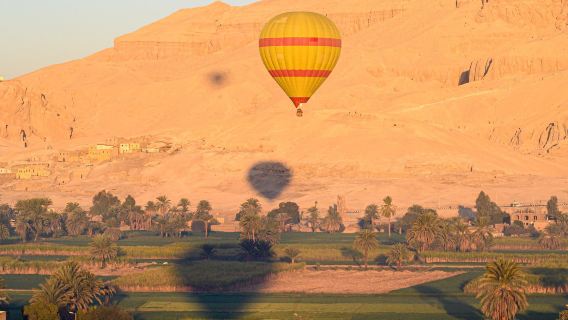
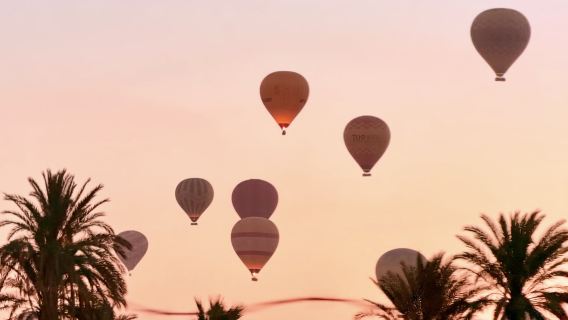
Sindbad Hot Air Balloonsis a long-established hot air balloon operator in Luxor, Egypt, founded in 2005. It organizes sunrise flights year-round and is one of the first operators in the area to obtain flight certification. The balloons take off from the West Bank of the Nile, rising slowly on the steady air currents around sunrise. Passengers in the basket can overlook the oasis farmland on both banks, golden sand dunes, and the scattered ancient Egyptian ruins. West Bank sites like the Valley of the Kings and the Mortuary Temple of Hatshepsut are visible from the high-altitude perspective, and on clear days, you can even see the area around Karnak on the East Bank. The entire flight is scheduled for the early morning, when the rising sun paints the Nile and the desert in golden red, making it the golden hour for photography. Different flight packages vary in flight duration and basket capacity. The flight time is generally between half an hour and one hour. After landing, you will usually receive a flight certificate as a souvenir. Before the trip, transportation is typically provided for the round-trip transfer between your hotel and the launch site. Please notethat hot air balloon flights are highly dependent on weather conditions. Flights may be canceled temporarily if wind speeds exceed safety limits, so it is advisable to allow for flexibility when planning your itinerary. The skies are clearer and air currents are more stable from October to April of the following year, which usually provides a better experience.Luxor · 364m from downtown

Banana Island Sara
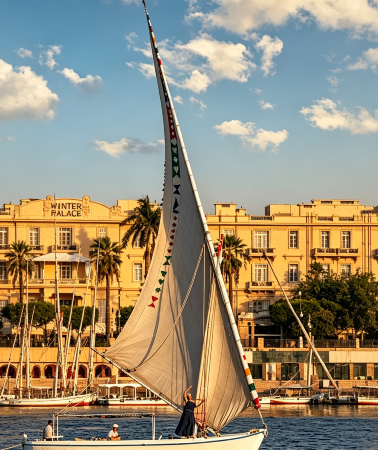
Banana Island Sara is a small island on the Nile, right next to downtown Luxor. Its Arabic name literally translates to Banana Island. The island is covered in lush banana groves, interspersed with mango, guava, and date palm trees, all nourished by the fertile silt of the Nile. The island retains a strong Egyptian rural atmosphere: farmers work in the fields, donkeys carry goods along dirt paths, and water buffalo graze leisurely along the banks. It is less of an attraction and more like an open-door farmhouse orchard, forming a rare contrast to the temples and tombs of Luxor. The journey itself is an experience: departing from the pier on the side of the Luxor Corniche, you can take a traditional felucca sailboat or choose a faster motorboat. If you have time, the sailboat is quieter and more atmospheric, especially at sunset when the river surface shimmers with golden light. After landing, you can take a 20-minute walk along the shaded dirt paths through the banana groves and listen to the boatman or guide explain the ins and outs of planting and harvesting bananas. You can also sit at a picnic table overlooking the Nile, enjoy a bowl of small bananas freshly picked from the trees—they may be small, but they are noticeably sweeter than those shipped to supermarkets—and pair them with a cup of mint tea or freshly squeezed sugarcane juice.Al Aqaletah · 1.9 km from Luxor

KV62 - Tomb of Tutankhamun
KV62 - Tomb of Tutankhamun is located in the Valley of the Kings on the West Bank of Luxor and is a stop that almost every visitor to the Valley of the Kings would not want to miss. In November 1922, British archaeologist Howard Carter opened the tomb door that had been sealed for over 3,000 years. More than 5,000 burial artifacts were preserved almost intact, making this young pharaoh, who ascended the throne at age 9 and died prematurely at 18 or 19, world-famous. The entrance to this tomb was later buried by debris from the construction of a royal tomb above it, which, ironically, allowed it to escape large-scale looting in later generations, making it one of the few royal tombs in the Valley of the Kings that was not completely ransacked. Unlike the gold-filled pharaonic tombs one might imagine, this tomb covers an area of only about 100 square meters. Today, the antechamber and treasury have long been cleared, and treasures such as the golden mask and golden throne are housed in the Grand Egyptian Museum in Giza. What remains on-site is the quartzite sarcophagus in the center of the burial chamber, as well as the mummy of Tutankhamun, which rests quietly in a climate-controlled display case.Qesm Al Wahat Al Khargah · 7 km from Luxor
Experiences you can't miss in Luxor
Featured Cultural experiences in Luxor
View all Cultural experiences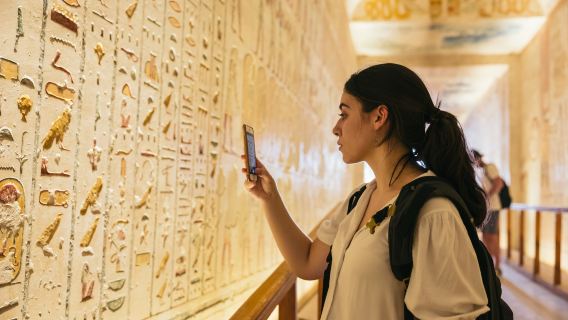
5.0/5
· 1 reviewFree cancellation
Instant confirmation
Book now for tomorrow
From€17.93
From€663.32
Free cancellation
Instant confirmation
From€164.45
3.7/5
· 3 reviews· 28 bookedFree cancellation
Book now for tomorrow
From€637.43
Free cancellation
Instant confirmation
From€314.45
Free cancellation
Book now for tomorrow
20% off
Limited-time sale
From€5.19€6.49
Free cancellation
Instant confirmation
From€157.78
Featured Day tours in Luxor
View all Day tours
65 booked
Free cancellation
59 travelers saved
From€25.30
From€124.50
![Luxor round-trip: [Luxor Temple + Valley of the Kings + Karnak Temple] 8-hour private charter](https://ak-d.tripcdn.com/images/0352812000s4xzztzDF14_C_568_320.jpg?_fr=wc)
From€175.51
From€33.34

Free things to do in Luxor
Colossi of Memnon
Al Bairat · 4.7 km from Luxor
KV11 - Tomb of Rameses III
Qesm Al Wahat Al Khargah · 7 km from Luxor
Avenue of the Rams
Luxor · 3.9 km from downtown
Abu Haggag Mosque
Luxor · 1.4 km from downtown
Nubian Village Aswan
Egypt · Aswan
Eastern Desert
Egypt · Hurghada
Giftun Islands
Egypt · Hurghada
El Gouna
Egypt · El Gouna
Elephantine
Egypt · Aswan
Aswan Old Souks
Egypt · Aswan
More ways to travel from Luxor
Private Tours in Luxor
View More Private Tours in Luxor



Group Tours in Luxor
View More Group Tours in Luxor

What travelers say about Luxor

GullyAugust 9, 2023
5.0
Valley of the Kings is a must see in Egypt. The burial place of a ton of historical figures including King Tut. Give yourself plenty of time when going though because it takes a long time to see everything.
Valley of the Kings

Sadman AayanSeptember 23, 2025
5.0
Luxor Temple 🏛️ – The Living Legacy of Ancient Thebes is a mesmerizing testament to Egypt’s rich history. ✨ Located in the heart of Luxor, this temple was a center of religious and political life for millennia. Its grand pylons, towering statues, and intricately carved walls tell stories of pharaohs, gods, and ancient ceremonies. 🌞 Visiting at sunrise or sunset enhances the magic, as the temple glows in golden light. 🌟 Walking through its majestic halls, you can feel the spirit of Thebes come alive. Luxor Temple is not just a site—it’s an unforgettable journey into the grandeur of ancient Egypt. 🏺
Luxor Temple

朱朱HelloSeptember 24, 2026
5.0
Karnak Temple, located on the east bank of the Solo River in Luxor, Egypt, is the world's largest ancient temple complex, dedicated to the sun god Amun-Ra. The most spectacular part is the Great Hypostyle Hall, with its 134 massive sandstone columns. Standing beneath them is a truly awe-inspiring experience, as if stepping back in time. To explore, simply follow the central axis. Inside, there's also the Scarab Stele; it's said that turning it seven times clockwise brings good luck. The Hatshepsut Obelisk is the tallest surviving obelisk in Egypt. The Avenue of the Rams leads directly to Luxor Temple. Karnak Temple is undoubtedly one of the must-see attractions for any traveler to Egypt.
Karnak

fooler0809October 20, 2020
4.0
There are several statues of kings, all sitting, with their bodies made of huge stones. Their faces are broken and even a little sunken, which makes them look a bit funny. They are quietly placed on the lawn and are free to visit.
Colossi of Memnon

还不曾去过倒悬山!October 5, 2020
4.0
The epitaphs on the tombstones of the ancient tombs here generally have a sentence, which translates into Chinese as "The cattle, sheep and crops that the Pharaoh entrusted us to manage are all growing well, and we have not deducted the slightest bit from the tributes we paid to the Pharaoh." Historians believe that it is this description of "there is no silver here" that reflects the Pharaoh's lack of control over the local area at that time.
Ancient Thebes with its Necropolis

寂寞的西瓜February 14, 2020
4.0
The Temple of Queen Hatshepsut, also translated as the Temple of Hatshepsut, yes, it is the famous Queen Hatshepsut❗️
This place is very close to the Valley of the Kings, and it only takes a few minutes by car. The Queen's Temple, built on the Thebes Mountains, has a completely different temperament from the Valley of the Kings: it is almost the simplest architectural line, but it is invincible and majestic.
It's a pity that due to political, religious and other reasons, the entire ground part of the first floor of the temple was rebuilt later. Although the buildings and reliefs above the second floor have been basically preserved, they are still damaged to varying degrees.
It is also another ancient temple about love, but this time the protagonist is no longer the pharaoh and his wife, but the female pharaoh and her childhood sweetheart designer lover♥️
Mortuary Temple of Hatshepsut

D了个YMarch 5, 2026
5.0
It's often said that you haven't truly been to Egypt if you haven't been to Luxor; similarly, you haven't truly been to Luxor if you haven't visited the Temple of Habu.
Medinet Habu was an important temple complex located on the southern tip of the western bank of the Thebes during the late New Kingdom period of ancient Egypt. Its main structure was the mortuary temple of Pharaoh Ramses III of the Twentieth Dynasty, representing the last major construction project of his reign. It is relatively well-preserved, with intact statues and exquisite murals.
During the Coptic era, this complex developed into a sizable city, serving as the religious and economic center of Thebes for a long time. The buildings incorporated temples, palaces, and other functions. The exterior reliefs depict scenes of Ramses III's campaigns. The city was later destroyed by a plague in the 9th century.
Medinet Habu


juki235February 5, 2020
5.0
The Tomb of Pharaoh Tutankhamun is the most important pharaoh's tomb in Luke. Many precious cultural relics and the mummy of Pharaoh Tutankhamun have been unearthed here. Moreover, the interior decoration of Suzuki is magnificent. Although it has been more than 4,000 years, the murals are still very bright, allowing people to learn a lot of precious Egyptian history. It is one of the most important tombs in the entire ancient emperors, so don't miss it.
KV62 - Tomb of Tutankhamun


