
Things to do in Lvliang
Explore top experiences
Top 10 attractions in Lvliang


Qikou Ancient Town
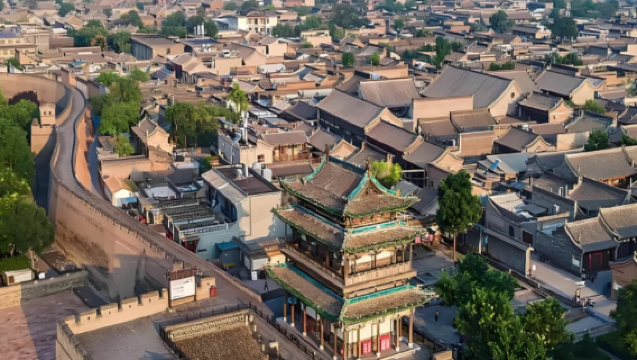
Qikou Ancient Town, located 50 kilometers south of Linxian County, Shanxi Province, is a famous historical and cultural town in China. Xiwan Village in the town is a famous historical and cultural village in China. Moraine (sound qi) mouth is located in the middle of the Shanxi-Shaanxi Gorge of the Yellow River, 48 kilometers south of the county seat, and adjacent to the ancient town of Mengmen in the south. The Yellow River comes from the north, the Qiushui River comes from the east, the Crouching Tiger Mountain is across the north of the town, the Black Dragon Temple stands on the east of the river, the mountains are surrounded by the water, the yin and yang meet, the momentum of the mountains, and the majesty of the river, condensed into "The Yellow River roars with tigers, The magnificent picture of Longyin Moraine Mouth.Lin County · 38.5 km from downtown

North Wudang Mountain
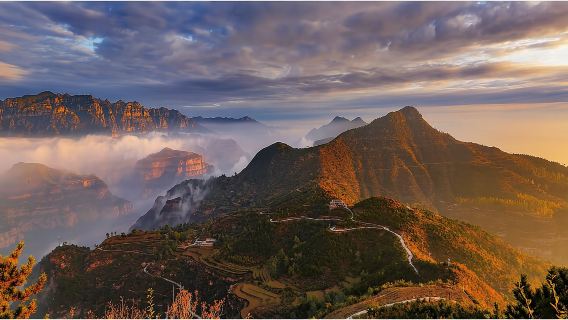
North Wudang Mountain, known as Longwang Mountain in ancient times, is a Taoist holy place in my country. North Wudang Mountain has both the hero of Mount Tai, the wonder of Mount Huang, the danger of Mount Hua, the beauty of Emei and the serenity of Mount Qingcheng. The main peak is almost surrounded by cliffs, and there is only one artificial ladder to climb. The ladder has more than 1,450 steps. There are railings and iron cables in the steep places. Tourists can hear the melodious "stone sound" every step of the way. There are many strange rocks in the mountains, ten thousand catties of "tortoise stones" stand steeply on the edge of the cliff, and when pushed hard or blown by the wind, it will crumble, making people tremble, so it is also called wind-moving stone, which is one of the rare landscapes in our country. Many experts believe that the "tortoise and snake stone" on the North Wudang Mountain should be regarded as a first-class treasure among the natural zodiac stones of nearly a thousand famous mountains in my country. It is not easy to climb North Wudang Mountain, but it is even more difficult to go down North Wudang Mountain. Some tourists sighed that Huashan Mountain and Taishan Mountain could not be difficult for him. He should not be planted here. There are more than ten Taoists in the North Wudang Mountain Taoist Temple, and there are clay sculptures and murals in the temple. , stone tablets and other cultural relics, with precious historical research value. There is a Zhenwu Temple on the top of the peak. According to the ancient stele, it was founded in the Tang Dynasty and rebuilt in the Ming season. From the first to the third day of the third month of the lunar calendar, it is the period of the ancient temple fair.Fangshan · 16.1 km from downtown

Qikou National Scenic Area
Qikou National Scenic Area gets its name from Datong Qi. "Qi" refers to dangerous shoals of sand and stone in shallow water. As the Yellow River flows through here, the river channel narrows, making it difficult for boats and rafts to pass, forcing them to dock, unload cargo, and switch to land transport. With its water-land transfer wharf, Qikou rose to prominence during the Qianlong reign of the Qing dynasty and became a major commercial hub in the north for the next two hundred years. Qikou Ancient Town is the main part of the scenic area. The five-li long street runs along the mountain and river, and the stone-paved street surface, along with Ming and Qing dynasty commercial establishments and old shops, preserves the traditional streetscape. Heilong Temple is built against Wohu Mountain. From there, you can overlook the Yellow River, the mouth of the Qiushui River, and the full view of the ancient town. The temple's opera stage also has a unique acoustic effect. Xiwan Village preserves extensive Ming and Qing dynasty residential courtyards, while Lijiashan Village is characterized by cave dwellings built into the mountainside in stacked tiers. Traditional dwellings are also preserved in the Zhaizishan area. Along the Yellow River canyon, you can also admire natural water-eroded reliefs. The views of rock walls formed by the long-term action of river water, wind, and rain stretch out, showcasing the unique natural landscape of the Yellow River canyon.Lin County · 31.1 km from downtown

Lijiashan Village
Lijiashan Village is an ancient cave-dwelling village hidden in a loess mountain hollow south of Qikou Ancient Town, surrounded by mountains on three sides and near the Yellow River and the Qiushui River. During the Ming and Qing dynasties, Qikou developed into a commercial port thanks to Yellow River water transport, and merchants surnamed Li who did business there settled their families in this hollow, gradually forming a clan village. The painter Wu Guanzhong visited the village twice for inspiration and listed it as one of the three great discoveries of his life. The village spreads out in layers along the mountain terrain, with Ming and Qing dynasty cave-dwelling courtyards stacked from the foot of the mountain to the ridge along the steep slope, forming a multi-dimensional village with staggered layers. The upper courtyards often sit on the roofs of the lower cave dwellings, and stone paths connect the homes. Walking through them, you can see the layout where the cave dwellings are intertwined with the mountain. Courtyards of wealthy families from that era are still preserved on the east and west slopes, with exquisite details such as brick carvings, stone carvings, and upturned eaves. Some of the cave dwellings in the village are still inhabited today, where traditional dwellings and daily life are intertwined.Lin County · 40.5 km from downtown

Taifu Temple
Located in Luliang City, Shanxi Province, China, Taifu Temple is a Taoist building with a long history, attracting many tourists and believers to visit. The architectural style inside the temple is simple and elegant, showing the traditional Taoist culture and architectural art. Visitors can enjoy exquisite carvings and paintings here, and these works of art reflect the rich religious connotations and historical background. Taifu Temple is not only a religious place, but also a place for people to feel tranquility and nature. The surrounding environment is quiet and suitable for tourists to stroll and meditate. There are also some areas for tourists to rest in the temple, providing a good place to relax. For tourists interested in Taoist culture, this is an ideal place to understand and experience Taoist rituals and traditions. With its unique cultural atmosphere and historical value, Taifu Temple provides tourists with a rich visiting experience and is an important window to understand the religious culture of the Luliang area.Fenyang · 16.4 km from downtown

Xinghua Village
Xinghua Village began brewing wine in the Northern Wei Dynasty, with a history of more than 1,500 years. In ancient times, there were records of "the whole village is red with smoke from ten miles of smoke" and "village wine and village flowers are both secluded". Xinghua Village has a Fenjiu Museum, which houses more than 3,000 paintings and calligraphy works by celebrities from all walks of life at home and abroad. In ancient times, there were records of the beautiful scenery of "the ten-mile smoke-filled village is all red" and "village wine and village flowers are both secluded". Du Mu, a famous poet in the late Tang Dynasty who served as the governor of Chizhou, visited Chizhou Xinghua Village in spring and wrote the popular "Qingming". Due to the artistic charm of the poem, the "Xinghua Village Chronicle", which was written for just one village, was included in the "Sikuquanshu", one of the largest ancient Chinese documents. There is an ancient well in Xinghua Village, commonly known as the God Well. There is a pavilion on the ancient well, named Shenming Pavilion. According to the ancient inscriptions, the well water "tastes like sweet wine, sweet and refreshing", and the water used to make wine is fragrant and is the source of Fenjiu and Zhuyeqing wine. Xinghua Village began to make wine in the Northern Wei Dynasty, with a history of more than 1,500 years. Literati and scholars of all dynasties wrote poems and engraved steles to praise the fine wine. The legendary "Zuixianju" hotel is a popular place for people. It is said that the old Taoist immortal, dressed in rags, drank three times without paying a penny, and then he skillfully exhaled fragrance, turning clear water into wine, and turning the ancient well into a god well.Fenyang · 14.8 km from downtown

First Bay of the Yellow River
The scenic spot is located in Xinguan Town, Shilou County, Luliang, and the best viewing spot is Majiapan. The Yellow River is in the Shanxi-Shaanxi canyon section. The overall flow direction is from north to south. From 6 kilometers south of the Xinguan Yellow River Bridge, it suddenly turns eastward and turns into a very strange big bay. If you look down from a high place, the bend is narrow in the west and wide in the east, with a rounded tail, like a gourd shape, and the two sides are basically symmetrical. The total distance of water flow from the entrance to the exit is 8000 meters. The inland of the bend is narrower at the entrance and exit, only 700 meters, the width is 1700 meters, and the vertical distance between the height and the water surface is 196 meters. Standing by the Ma's house to watch, it is far narrow and near wide, far low and near high, the water flow is like a circle, the mountain is like a steamed bun, and the jujube forest on the mountain is densely covered with yellow and green. The curved water surface is wide and the water flow is stable. The narrow part of the water surface is 170 meters and the wide part is 430 meters.Shilou · 33.7 km from downtown

Pangquangou Canyon Rafting
Pangquangou Canyon Rafting is located in Shizhuang Village, Pangquangou Town, Jiaocheng County, Shanxi Province. It was built by Jiaocheng County Jinyu Ecological Tourism Development Co., Ltd. at an investment of 80 million yuan. The rafting area is adjacent to the S320 Provincial Road of Shanxi Province, and the upper and lower docks are connected smoothly. The area is only 120 kilometers away from Taiyuan, the capital of Shanxi Province, and the Souvenir cities of Luliang, Xinzhou, Jinzhong, Jiexiu, etc. are all within 200 kilometers. The peripheral transportation G307 National Highway is connected to Qingyin Expressway, Taijia Expressway, and Dayun Expressway, with a superior location and convenient transportation. At the same time, Pangquangou Canyon Rafting is adjacent to the protected area - Pangquangou National Nature Reserve, which is rich in species and plants and animals. It is the habitat of the protected animal Brown Eared Pheasant and a well-preserved green treasure house on the vast Loess Plateau. There are towering mountains and lush forests on both sides of the river; on both sides of the river, there are green grass and red willows. The river is sometimes wide and sometimes narrow, and the water flow is sometimes fast and sometimes slow. There are rapids and dangerous shoals as well as slow-flowing lakes along the way, making it a high-quality rafting site in North China. In the early stage of planning and development, after a tourism planning expert inspection team inspected it, they gave it great affirmation on the spot, and the title of "North China's No. 1 Rafting" is well deserved. Pangquangou Canyon Rafting is divided into the upper dock service area and the lower dock service area, which are 8 kilometers apart, with a rafting length of 10 kilometers and a vertical drop of 130 meters. Both the upper and lower dock service areas are equipped with large parking lots, consulting service centers, ticket centers, Dining centers, shopping centers, Changing room, star-rated toilets and other service facilities. Pangquangou is a new highlight of tourism in Shanxi Province, providing a good choice for the wiring of Souvenir scenic spots in Shanxi Province, allowing tourists to truly experience "the benevolent enjoy the mountains, the wise enjoy the water".Jiaocheng · 55.4 km from downtown

Sanhuang Temple
The Three Emperors Temple in Xiaoyi City, also known as the Shengzu Temple, is located in Jiajiazhuang Village in the west of Xiaoyi City. On June 10, 2004, the Shanxi Provincial People's Government announced that it was a provincial cultural relic protection unit. The founding date of the temple is unknown. It existed in the Yuan Dynasty. It was expanded and renovated to varying degrees during the reigns of Emperor Qianlong, Emperor Daoguang and the Republic of China. The existing Three Emperors Hall still retains the original structure of the Yuan Dynasty, and the rest were rebuilt in the Qing Dynasty. The existing buildings include the Temple of the Three Emperors, the Ear Hall, the Theatre of Gods and the Side Gate. The east side of the Side Gate has a Voucher archway (mountain gate) to enter the temple. The rest of the buildings have collapsed and are no longer in existence. In 2005, the Municipal Cultural Relics Bureau and the Shanxi Ancient Architecture Protection Institute, based on the idea of complete protection and overall maintenance, adopted some modern materials for repair and reinforcement and anti-corrosion and solidification treatment when necessary, and carried out protective restoration of the Temple of the Three Emperors, while ensuring the "original form, raw materials, original craftsmanship and original methods".Xiaoyi · 2.6 km from downtown

Hexagrams Mountain
Guashan, located 3 kilometers north of Jiaocheng County, is named after its shape that is very similar to the Eight Diagrams. It has beautiful natural scenery and a thousand-year-old temple, making it a well-known local attraction. It was famous as early as the Tang Dynasty for its hexagram-like shape, ancient cypresses, towering temples and Huayan Daochang. The Song Dynasty calligrapher and painter Mi Fu ranked it among the three mountains and five peaks, praising it as the "first mountain". Tianning Temple in the mountain was founded in the first year of the Zhenguan reign of the Tang Dynasty (627). Most of the buildings in the temple that tourists see today were built in the Ming and Qing dynasties. In the front yard of Tianning Temple is the Thousand Buddha Pavilion, which was first built in the Song Dynasty and rebuilt in the Qing Dynasty. The temple also preserves iron bells, iron tablets, and stone tablets from the Ming Dynasty, as well as tablets inscribed with the reconstruction of Tianning Temple in the Tang, Song, Yuan, Ming, and Qing dynasties. During the Ming and Qing dynasties, Guashan Mountain added attractions such as the Holy Mother Temple, Guashan Academy, and Zhugong Temple.Jiaocheng · 2.8 km from downtown
Experiences you can't miss in Lvliang
Featured Cultural experiences in Lvliang
View all Cultural experiences![[Pingyao, Shanxi] Guided Tours and Translation Services in Chinese/English/French/Russian/Korean/German and Other Languages|Business/Exhibition Translation • City Walk • Attraction Tours • In-Park Commentary](https://ak-d.tripcdn.com/images/0354612000r4doognE81E_C_568_320.png?_fr=wc)
![[Yuncheng, Shanxi] Guides/Translators/Local Companions for City Walks, Sightseeing, Exhibition Translation, Hiking, and Travel Escorts in Chinese/English/French/Russian and Other Languages](https://ak-d.tripcdn.com/images//0583q12000o3apkv3E7F1_C_568_320.jpg?_fr=wc)


From$257.77

Free cancellation
Instant confirmation
Book now for tomorrow
From$16.42
Free things to do in Lvliang
Qikou Ancient Town
Lin County · 38.5 km from downtownNorth Wudang Mountain
Fangshan · 16.1 km from downtownQikou National Scenic Area
Lin County · 31.1 km from downtownLijiashan Village
Lin County · 40.5 km from downtownTaifu Temple
Fenyang · 16.4 km from downtownXinghua Village
Fenyang · 14.8 km from downtownFirst Bay of the Yellow River
Shilou · 33.7 km from downtownPangquangou Canyon Rafting
Jiaocheng · 55.4 km from downtownSanhuang Temple
Xiaoyi · 2.6 km from downtownHexagrams Mountain
Jiaocheng · 2.8 km from downtownImmediate access, Book now for today, Cancel anytime
What travelers say about Lvliang

320***35August 31, 2026
5.0
Definitely worth seeing! With over thirty actors, every movement and every line was incredibly professional and dedicated – not at all perfunctory! A fantastic live performance! The stage is movable, and the scenery and stage design were meticulously crafted! Thumbs up! 👍 Everything was very well-conceived, and the content was incredibly rich! I learned so much more about the history of Qikou!
Qikou Ancient Town

M25***42December 11, 2025
4.0
Climbing to a high vantage point offers panoramic views, and hiking is a delightful experience. It's good for your health and brings immense joy. The only regret is that on the way down, we passed by the former residence of Yu Chenglong in Fangshan County, only to realize it was near Beiwudang Mountain…
North Wudang Mountain

滇国剑客October 1, 2021
5.0
Qikou is a place with early human activities. People here have created a long history and excellent culture. Therefore, Qikou Scenic Area occupies an important place in the hearts of tourists.
Qikou National Scenic Area

骑着蜗牛赶绿灯July 27, 2026
5.0
This is a unique ancient village in Shanxi, featuring loess cave dwellings. With its distinctive topography, expansive views, and pristine, untouched commercial environment, it's free to visit, offering exceptional value. Quiet and less crowded, it boasts stunning photo opportunities and a relaxed pace suitable for all ages. A visit of 1.5-2 hours is recommended, making it a must-see hidden gem on the Lüliang self-driving loop.
Lijiashan Village

E15***36April 7, 2024
5.0
A cultural relic protection unit of considerable weight, the colored sculptures are very exquisite, the expressions of the characters are vivid, especially the eyes are vivid. The original 28 star-shaped colored sculptures of the Ming Dynasty in the temple have now been put into the Shanxi Museum, which seems to be in the Tumu Huazhang Exhibition Hall on the top floor (may be slightly wrong). Don't miss it when you go to the Shanxi Museum. The little eyes, the big double eyelids, and the whispering expressions are beyond words. Taifu Temple is currently free, but you must check the opening hours in the second picture. The uncle will come to open the door on time with the key. The early bird does not necessarily catch the worm.
Taifu Temple

迎园小区November 7, 2024
5.0
The winemaking history here is very long. It is a high-quality wine-producing area. You can feel the wine culture here.
Xinghua Village

亮点liangpointJune 28, 2022
5.0
The surging Yellow River rushes from north to south in the Shanxi-Shaanxi Grand Canyon, and 6 kilometers south of the Xinguan Yellow River Bridge, it draws the most beautiful and charming figure at Shilou Bay.
This is the river bay with the largest space in the entire Yellow River flow, and it is the "No. 1 Yellow River Bay in the World" in terms of volume.
This
First Bay of the Yellow River

_We***89June 18, 2022
5.0
Beautiful scenery, high play experience, thrilling
Pangquangou Canyon Rafting

Anonymous userMay 23, 2026
5.0
What makes it special is that it's rare to find a temple that worships all three emperors together. The stage inside has a glass panel, hence its name, the "Glass Stage." However, the ticket price is quite expensive, making it not very cost-effective.
Sanhuang Temple

Sanjin620801December 18, 2022
5.0
Guashan is located at the eastern foot of Jiaocheng Mountain in Luliang, Shanxi Province, 3 kilometers north of Jiaocheng County. Guashan is named after the surrounding peaks that resemble a hexagram. The pine and cypress trees on the mountain are in various shapes and are evergreen all year round. There are many mysterious folk legends. It is regarded as a natural Taoist temple by Taoists and has a profound cultural heritage. There are scenic spots such as Tianning Temple, Cast Iron Stele, Pilu Pavilion, and Tang Huai Mountain, which were founded in the first year of Zhenguan in the Tang Dynasty (627). It is a tourist attraction in Shanxi that integrates natural scenery and ancient temples. Mi Fu, a calligrapher and painter in the Song Dynasty, ranked it among the three mountains and five peaks and praised it as the "first mountain".
Hexagrams Mountain


