Qishan

Things to do in Qishan

Search attractions or local attractions & tours
Search

Explore top experiences

Top 10 attractions in Qishan

View all Attractions
Water City: Three Kingdoms Town

Water City: Three Kingdoms Town

3.5
2.8/5
10 reviews

Shuicheng Three Kingdoms Town is a national AAAA-level Attraction. The area where the Attraction is located is the remains of the ancient battlefield where Zhuge Liang and Sima Yi confronted each other along the banks of the Wei River in 234 AD (234 AD). Zhuge Liang later passed away in Wuzhangyuan. The mottled war relics on this land have disappeared with the passage of time, but the stories here have never stopped. Those bravery, determination and wisdom have become a kind of culture here, and the origins have been passed down. Today, we recall history and inherit culture. Shuicheng Three Kingdoms Town combines domestic and foreign scientific and technological means to reproduce the historical features of the year and create a western tourist and cultural resort! The Water City Three Kingdoms Town Attraction relies on the authentic historical culture of the Three Kingdoms, embraces the unique charm of the Weihe Wetland, and integrates the classic historical allusions of the Three Kingdoms. With a new perspective and a combination of reality and fiction, it creates a comprehensive Three Kingdoms cultural experience site with the Three Kingdoms cultural experience as the core, deeply integrating performances, food, entertainment, leisure, and vacation. The Water City Three Kingdoms Town is committed to integrating regional historical culture and fusing modern fashion elements. It will fully and vividly display the "long-standing local cultural stories" through the functional combination of Dreaming of the Three Kingdoms, Stories of the Three Kingdoms, and Customs of the Three Kingdoms. Adhering to the southern design concept of "the city is built in the water, and people travel on the water", the Attraction will be built into a characteristic ancient town surrounded by water systems, ancient buildings and pleasant scenery, thus forming a Three Kingdoms cultural experience site with a clear theme, rich business types, and the integration of architectural landscapes and cultural arts. Visitors can "travel through time" and feel the different folk customs of the north and south during the Three Kingdoms period.

Qishan · 15.6 km from downtown
Emperor Qinshihuang's Mausoleum Site Museum
2026 Global 100 - Best Things to Do

Emperor Qinshihuang's Mausoleum Site Museum

10
4.7/5
150.4k reviews

Emperor Qinshihuang's Mausoleum Site Museum is a large site museum built on the site of the Terracotta Army pits, which are located approx. 1.5 km east of the mound of Emperor Qinshihuang's Mausoleum. In March 1974, farmers from Xiyang Village accidentally unearthed fragments of terracotta figures while digging a well, and archaeological exploration confirmed Pit 1; in 1976, Pits 2 and 3 were successively discovered to the north of Pit 1. This army, which had slumbered for over 2,000 years, was thus brought back to light, and the discovery of the Terracotta Army has been hailed as "one of the great discoveries in the history of 20th-century archaeology." Pit 1 is the main military formation among the three pits, stretching over 200 m from east to west, with an estimated 6,000 pottery figurines and horses buried inside. Standing at the edge and looking down, armored warrior figurines, war chariots, and pottery horses are arrayed eastward in battle formation. A closer look at each figure reveals different facial shapes, hairstyles, beards, and even hand gestures. The figurines were originally painted all over, but most of the paint has peeled off and discolored due to fire and long burial. Pit 2 is L-shaped, with crossbowmen, cavalry, and charioteers arranged in a mixed formation; the vividly expressive kneeling archer was unearthed here. Pit 3 is small in scale, and scholars believe the ceremonial guard figurines and war chariots unearthed there indicate it served as the command center—known in ancient times as a "military tent"—directing the formations in Pits 1 and 2. The bronze swords, pi halberds, spears, crossbow triggers, and large quantities of arrowheads unearthed from the pits—many still sharp after more than 2,000 years—demonstrate the sophistication of Qin dynasty metallurgy. The Emperor Qinshihuang's Mausoleum Site Museum and the Qin Shi Huang Mausoleum at the foot of Mount Li were originally one integrated whole. After Qin Shi Huang ascended the throne at the age of 13, he began constructing the mausoleum, conscripting hundreds of thousands of laborers over a period spanning more than 30 years; the terracotta army, which replaced human sacrifice with figurines, served as the underground guard for this imperial mausoleum. To avoid the crowds during your visit, you might want to see Pit 3 and Pit 2 first, and then take your time to experience the awe-inspiring scene of Pit 1 last. After viewing the terracotta pits, you can also take the attraction's shuttle bus to Lishan Garden, where Emperor Qinshihuang's mausoleum is located; the Acrobats Pit, the Civil Officials Pit, and the Bronze Chariots and Horses Museum are all within the garden. The two painted bronze chariots and horses, cast at half the scale of real chariots, are exquisitely crafted with brilliantly gleaming gold and silver fittings, and are well worth a special trip to see.

China · Xi'an
Shaanxi History Museum
2026 Asia 100 - Family-friendly Attractions

Shaanxi History Museum

9.5
4.8/5
35.3k reviews

Shaanxi History Museum is a large modern museum built after China's reform and opening up and officially opened in 1991. The building was designed by architect Zhang Jinqiu and adopts a Tang-style architectural layout of "central hall and four corner towers," with a symmetrical central axis and a clear hierarchy of primary and secondary structures; in 2016 it was included in the first batch of the "Chinese Architectural Heritage of the 20th Century" list. Shaanxi was once the political center of dynasties such as the Zhou, Qin, Han, and Tang, and the museum's collection spans a million years of history, covering categories such as Shang and Zhou bronzes, pottery figurines of successive dynasties, Han and Tang gold and silver wares, and Tang tomb murals, with a total of over one million items. The permanent exhibition "Ancient Civilization of Shaanxi" follows a chronological main line and presents the historical process from prehistoric Lantian Man to the eve of the Opium War across three galleries, with the Zhou, Qin, Han, and Tang periods as the focus. The east and west sides of the central hall each host a thematic exhibition: on the west side, "Treasures of the Great Tang: Hejiacun Hoard Unearthed Artifacts Exhibition" concentrates on fine gold and silver wares of the High Tang, while on the east side, the "Tang Dynasty Mural Treasures Gallery" displays authentic murals removed from Tang tombs, with subjects covering figures, architecture, ceremonial guards, and more, making it a uniquely distinctive category of the museum's collection. Among the many artifacts in the museum, several are particularly notable. The agate cup with gold-inlaid beast head, from the Hejiacun hoard, is carved from a single piece of banded agate into the form of a curved-horn beast head, resembling Central Asian rhyton cups, and is one of the first batch of cultural relics prohibited from being exhibited abroad. The tri-color glazed camel carrying musicians figurine vividly recreates the lively scene of musicians playing and singers performing on a camel's back, with bright glaze colors and figures with distinct expressions. The Empress's Seal is made of Western Han Hetian mutton-fat jade and carved with a chi-tiger knob, and is the only known actual jade seal of a Han dynasty empress discovered to date. In addition, the gilt silver flask with a dancing horse holding a cup design, the celadon ewer with an overhead handle and bottom-filling design, and the black-glazed oil-spot bowl each have their own distinctive features. The gold and silver wares unearthed from the Hejiacun hoard are concentrated in the thematic gallery and are a highlight of any visit; visitors are advised to allow time to examine them closely.

China · Xi'an
Famen Temple Museum

Famen Temple Museum

4.7
4.2/5
35 reviews

Famensi MuseumLocated in Famen Town, Fufeng County, Baoji City, Shaanxi Province, China, this specialized museum focuses on the collection, preservation, research, and exhibition of cultural relics unearthed from the underground palace. Core Features: 1. Underground Palace Treasures: The museum showcases over 1,000 precious artifacts from the 1987 archaeological discovery of the Tang Dynasty underground palace at Famen Temple, including Buddhist finger relics, gold and silverware, glassware, silk textiles, and porcelain. Among these, 121 items are classified as Grade One National Cultural Relics. Signature exhibits:Gilded silver statue of a Bodhisattva,Octagonal Precious Casket,Mystic celadon,Tang Dynasty silkand other artifacts, showcasing the grand royal Buddhist relic offerings and exquisite craftsmanship of the Tang Dynasty. 2. Buddhist culture: Famen Temple is revered as a Buddhist sacred site for enshrining the finger bone relic of Sakyamuni Buddha. The museum systematically presents the culture of Buddhist relics, Buddhist art from the Tang Dynasty, and religious exchanges along the Silk Road through artifacts, illustrations, and multimedia displays. The permanent exhibition "Treasures from the Famen Temple Underground Palace" is divided into thematic sections including "Recreating the Underground Palace," "Relic Worship," and "Artifacts of the Tang Dynasty." 3. Architecture and layout: The museum is connected to the Famen Temple attraction, blending Tang Dynasty architectural style with modern design. Its main exhibition hall resembles clasped hands, symbolizing reverence for Buddhist teachings. The museum features cultural relic exhibition halls, academic lecture halls, and creative cultural zones, surrounded by cultural plazas and the Buddha's Light Avenue scenic view.

Fufeng County · 25.9 km from Qishan

Experiences you can't miss in Qishan

Featured Culture & history in Qishan

View all Culture & history
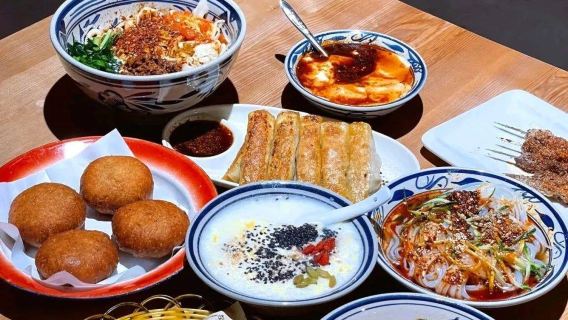
Famous Shaanxi Yuanjia Village+Qianling Mausoleum-Day Tour from Xi'an
󱌍
5.0/5
· 1 review
Duration: 5 hrs
English
Free cancellation
Instant confirmation
From$131.04
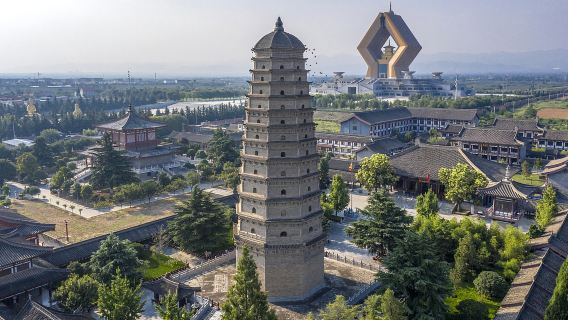
[Optional 8-person premium small group tour] Famen Temple + Qianling Mausoleum 1-day tour | admission ticket + round-trip transportation + wireless headset
󱌍
4.9/5
· 408 reviews· 426 booked
Duration: 10.8 hrs
English
Free cancellation
Instant confirmation
99.3% of travelers recommend
From$309.84
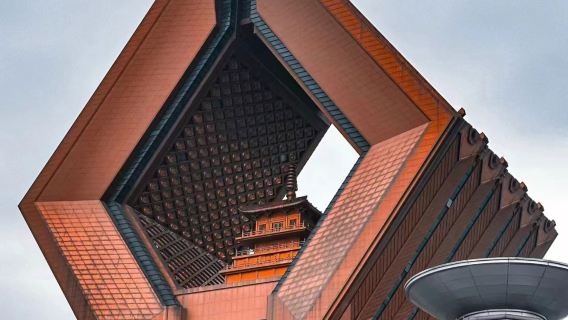
Xi'an Famen Temple + Qianling Mausoleum + Maoling Mausoleum One-Day Tour (Including Entrance Fees) - Family Group Tour
󱌍
4.9/5
· 20 reviews· 67 booked
Duration: 12 hrs
English
Instant confirmation
Book now for tomorrow
81 travelers saved
5% off
Limited-time sale
From$192.38$202.51
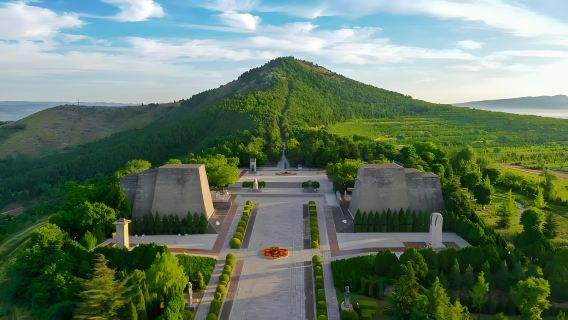
One-day private chartered car tour to Qianling Mausoleum and Binzhou Giant Buddha Temple from Xi'an | Preferred for group tours
󱌍
From$191.35
Xian Qianling Mausoleum and Hanyangling Museum Private History Day Tour
󱌍
Duration: 7.5 hrs
English
Free cancellation
Instant confirmation
Book now for tomorrow
From$68.24

Qinling four treasures science museum + city wall + Xi'an Muslim Quarter [premium small join-in tour 1-day tour·includes English guide]
󱌍
From$89.86
Qishan Today's weatherOvercast -1-14℃
Qishan weather for the next 2 days11/9: -4-11℃, 11/10: 0-13℃

Free things to do in Qishan

What travelers say about Qishan

user-avatar
Anonymous userApril 6, 2026
5.0
Wuzhangyuan in Qishan was the final resting place of Zhuge Liang's life. In the autumn of 234 AD, Zhuge Liang, the Prime Minister of Shu Han, led his army on a northern expedition, stationing his troops here to confront Sima Yi across the Wei River. Ultimately, he "died before achieving his goal," forever freezing the last moments of his life on this loess plateau. The Zhuge Liang Temple at Wuzhangyuan was first built in the Yuan Dynasty, and most of the existing buildings are from the Qing Dynasty. Its most unique layout is that the entire structure faces north, backed by the majestic Qinling Mountains and facing the surging Wei River, symbolizing Zhuge Liang's unfulfilled ambition to "pacify the Central Plains."

Wuzhangyuan Zhuge Liang Temple

user-avatar
打锅十八牛February 16, 2025
5.0
China Zhouyuan Scenic Area is really a historical and cultural destination worth visiting! The scenic area perfectly integrates Zhou Dynasty civilization with modern tourism. The Bronze Museum, Zhouyi Square and other attractions are designed with great ingenuity, and the immersive performances make people feel like traveling through thousands of years. The Xuanyuan Hall is magnificent, the Bagua maze is interesting, and the sightseeing cable car can overlook the panoramic view. The staff is considerate and the scenic area is clean and tidy, which is both informative and entertaining. Whether it is parent-child study or cultural experience, this place can meet the needs and is highly recommended to friends who like history!

China · Zhouyuan

user-avatar
_We***57August 7, 2026
4.0
A must-see for history and culture enthusiasts, this building dates back to the Tang Dynasty and is predominantly composed of Ming and Qing Dynasty structures. Located on the fiefdom of the Duke of Zhou, it boasts a rich cultural heritage. However, the architecture itself is not particularly stunning, and those uninterested in the cultural aspects may find it less appealing.

Zhou Gong Temple

user-avatar
云中法师November 4, 2026
5.0
Famen Temple is a national treasure. The Famen Underground Palace, guarded for a thousand years, still shines with Buddhist light. The power of faith endures through the ages. The Ming Dynasty people had already discovered the underground palace, but they quietly protected it, allowing the relics to continue to be passed down for centuries, until finally the Buddha's relics saw the light of day again. With Doubao (a local deity), there's no need for a guide. The park is intentionally large; if you're in a hurry, take the sightseeing bus; if you have time, explore on foot. While Famen Temple itself was built later, the pagoda and underground palace are millennia-old relics, and the many rare treasures unearthed there are well worth seeing.

Famen Cultural Scenic Spot

user-avatar
清风若溪April 30, 2020
4.0
Shuicheng Three Kingdoms Town is a charming town built based on the real Three Kingdoms history and culture. It is located in the eastern section of Caijiapo Chuangye Road, Qishan County, Baoji City, Shaanxi Province, and is adjacent to the "Waterside" Weihe Wetland Park. The scenic spot integrates classic historical stories of the Three Kingdoms, leisure and entertainment, snacks and food, cultural performances, etc., allowing tourists to deeply experience the Three Kingdoms culture while tasting local food.

Water City: Three Kingdoms Town

user-avatar
无为的无心草November 3, 2025
5.0
Wuzhangyuan in Baoji is a place with a profound historical background. Below is a detailed introduction to its history: Pre-Qin Period Human activity existed in the area of ​​Wuzhangyuan during the Pre-Qin period. The Qishan area was the birthplace of Zhou culture, where the Zhou people developed agriculture, established cities, and created a brilliant Bronze Age culture and ritual and music civilization. The numerous pre-Qin sites and artifacts remaining around Wuzhangyuan bear witness to the prosperity of this period. Three Kingdoms Period This was the most glorious and famous period in Wuzhangyuan's history, closely linked to the last Northern Expedition of Zhuge Liang, the Prime Minister of Shu Han. ● Background: In the twelfth year of Jianxing (234 AD), Zhuge Liang launched his sixth Northern Expedition against Cao Wei in an effort to restore the Han Dynasty. This time, he led a large army from Hanzhong, taking the Xiegu Valley, crossing the Qinling Mountains, and stationing himself at Wuzhangyuan. This location was chosen because of its strategic importance; it offered the option to attack Cao Wei's Guanzhong region or defend the natural barrier of the Qinling Mountains. ● The Standoff: Cao Wei dispatched Sima Yi with a large army to resist. Sima Yi, well aware of Zhuge Liang's military prowess and the difficulties faced by the Shu army in transporting supplies from afar, adopted a strategy of holding firm and refusing to engage, resulting in a standoff with the Shu army at Wuzhangyuan for over a hundred days. During this time, Zhuge Liang repeatedly challenged Sima Yi, even sending women's clothing to provoke him into battle, but Sima Yi remained unmoved. ● Zhuge Liang's Death: Long-term fatigue and anxiety caused Zhuge Liang's health to deteriorate, ultimately leading to his death from overwork in his military camp at Wuzhangyuan at the age of 54. Zhuge Liang's death had a significant impact on the Shu Han regime, and the Northern Expeditions were subsequently halted. Posterity ● The Rise of Memorial Buildings: To commemorate Zhuge Liang, later generations built numerous memorial buildings on Wuzhangyuan. The Wuzhangyuan Zhuge Liang Temple was first built in the early Yuan Dynasty and underwent several renovations during the Ming and Qing Dynasties. The temple, facing north, stands majestically on the plateau. Its architectural layout is rigorous, with numerous steles and plaques adorning the entrance, all crafted by renowned artists throughout history, possessing high artistic value. ● Cultural Heritage: Wuzhangyuan has also become an important site for people to commemorate Zhuge Liang and experience the culture of the Three Kingdoms period. Literati and scholars throughout history have flocked to Wuzhangyuan, leaving behind many poems and essays to remember Zhuge Liang, such as Wen Tingyun's "Passing Through Wuzhangyuan" and Su Shi's "On Zhuge Liang." These literary works have enriched the cultural connotation of Wuzhangyuan, making it one of the important symbols of the Three Kingdoms culture. ● Continued Military Value: Due to its unique geographical location and strategic terrain, Wuzhangyuan also held certain military significance in later generations. In some historical periods, it remained a hotly contested area.

Wuzhangyuan Scenic Area

user-avatar
Justin & AnnaNovember 7, 2026
5.0
We had a great time here. Our guide, Zhang, has been coming here for over 20 years and so he knows the place inside and out (including things like which bathrooms are the VIP ones lol). I highly recommend booking him as he speaks several languages and even helped us get tickets for another show.

Emperor Qinshihuang's Mausoleum Site Museum

user-avatar
晗晗守护神November 7, 2026
5.0
As the saying goes, a trip to Shaanxi is 30% sightseeing and 70% explanation. A good guide can make visiting a museum with a rich history less tiring and less aimless. Guide Xiao Liu is such a friendly and professional person. He explained everything in detail and took care of the children's feelings. We benefited a lot. Shaanxi History Museum truly deserves to be a place that gathers the treasures of Chinese culture!

Shaanxi History Museum

user-avatar
M22***51October 28, 2026
5.0
The Baoji Bronze Museum is a treasure trove of Chinese bronzes and a shining symbol of Baoji. I am very grateful for the teacher's wonderful explanation, which allowed me to open the door to history thousands of years ago through these precious national treasures. Seeing these magnificent artifacts fills me with pride as a Chinese person!

Baoji Bronze Ware Museum
user-avatar
中西南北东November 20, 2025
4.0
Famen Temple Museum, a national first-class museum, is located in the Famen Temple Cultural Park, 10 kilometers north of Fufeng County, Baoji City, Shaanxi Province. It is 110 kilometers east of Xi'an and 90 kilometers west of Baoji City, covering an area of ​​48,779 square meters, with a building area of ​​13,768 square meters and an exhibition area of ​​4,000 square meters. It is a social science-oriented religious site museum. Completed in 1987, the museum's collection originates from artifacts unearthed from the underground palace of Famen Temple. The collection includes gold and silver artifacts, glassware, and porcelain. As of the end of 2019, the museum held 9,439 pieces/sets of artifacts, including 225 pieces/sets of precious cultural relics. Unfortunately, the Buddha's finger relic is not on display here; the reason will not be discussed here.

Famen Temple Museum

Trip Moments in Qishan

Popular cities near Qishan

Frequently asked questions

How can I contact Trip.com customer support?

Get help anytime, anywhere within 30 secondsContact customer support

Change and cancellation policies vary by attractions and tours. Please check the product details page for more information.

Ticket prices may vary between weekdays and weekends, as well as during peak and off-peak seasons. When booking with Trip.com, you can also use Trip Coins to get extra savings. For more tips on booking discounted tickets, please visit Trip.com for the latest information.