Things to do in Wanrong
Explore top experiences
Top 10 attractions in Wanrong


Li Family Courtyard
Li Family Courtyard in Yuncheng is the private residence of Li Ziyong, a wealthy merchant in southwest of Shanxi, and it was built in the late Qing Dynasty and early period of the Warlord Era. Li Family Courtyard is a typical building reflecting the style of residential houses in the southern Shanxi province. The whole building is arranged around a quadrangle courtyard and also boasts Hui style architecture. It combines the features of two major architectural forms in south and north of China, and in terms of the art of decoration, the national culture infiltrates every corner of the building.Wanrong · 17.3 km from downtown
Wanrong Feiyun Tower Scenic Area
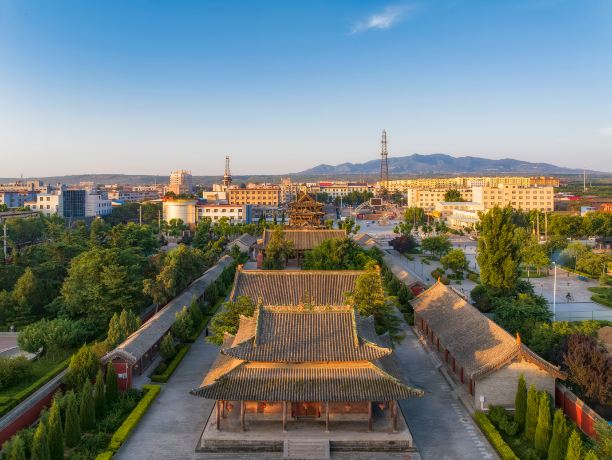
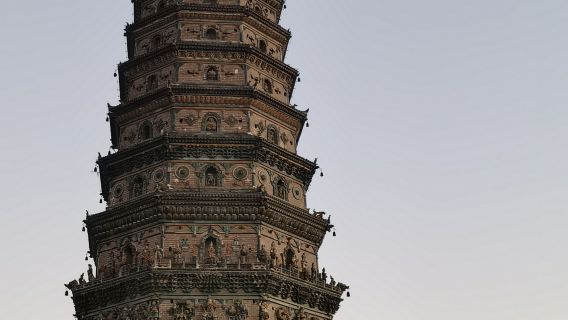
Wanrong Dongyue Temple is a national key cultural relic protection unit. It is a temple dedicated to Huang Feihu, the emperor of Dongyue. It was built in the early Tang Dynasty and has been repaired in all dynasties. The main building in the temple, the Feiyun Tower, is made of pure wood, with a light structure, overlapping bucket arches, entwined cloud belts, flying in the sky, and ingenious craftsmanship. Together with the Yingxian Wooden Tower, it is known as the South Tower and the North Tower. It is a rare flower in the field of Chinese architecture. , has a very high research and appreciation value.Wanrong · 308m from downtown

Houtu Temple
Houtu temple, the ancestral shrine of China, is located by the Yellow River in Miaoqian village, Ronghe town, Wanrong county. With profound cultural heritage, it serves as a global worship center for Chinese descendants and one of the cradles of Chinese civilization. Houtu temple is located east of the Emei ridge and west of the Fenhuang bank, stretching 240 m from north to south and 105 m from east to west, covering an area of 25,268 square meters. The temple complex includes the mountain gate, a tripartite stage, the east and west five-tiger halls, the offering hall, the incense pavilion, the main hall, the autumn wind tower, and the song zhenzong stele corridor. Historical records mention the "sovereign heaven and houtu." From emperor xuanyuan huangdi's "sweeping the ground to build an altar for worshipping houtu" to emperor song zhenzong, eight emperors conducted 24 sacrificial ceremonies here. Emperor han wudi visited hedong eight times, offering sacrifices here seven times and leaving behind the timeless masterpiece "Ode to the autumn wind." The autumn wind tower derives its name from housing emperor han wudi's "Ode to the autumn wind stele," with the existing structure dating back to the ming dynasty. Houtu temple is the largest of its kind in China. In recent years, people from all walks of life across the country (including compatriots from Hong Kong, Macao and Taiwan) and overseas Chinese have been coming in an endless stream to seek their roots and worship Houtu. Especially on the birthday of Houtu holy mother (the 18th day of the third lunar month) and during the temple fair on the 5th day of the tenth lunar month, devout pilgrims, merchants and visitors gather in large numbers, creating a bustling atmosphere.Wanrong · 33.1 km from downtown

Wanrong Jiwang Temple
Wanrong · 6.5 km from downtown

Qiufeng Tower
Qiufeng Tower is located in Wanrong County, Yuncheng City, Shanxi Province, China. It is named after the "Autumn Wind Ode" written by Emperor Wu of the Han Dynasty, Liu Che, when he offered sacrifices to Hou Tu here. It is an ancient building with profound historical and cultural heritage. Built in the Ming Dynasty, Qiufeng Tower attracts many tourists and history lovers with its unique architectural style and long history. This pavilion is located in the heart of Wanrong County and has become one of the local landmarks due to its towering structure and exquisite carvings. The architectural style of Qiufeng Tower incorporates traditional elements from the Ming and Qing Dynasties. The wooden structure is exquisite and the eaves are flying, showing the unique charm of ancient architecture. Qiufeng Tower is not only a treasure of architectural art, but also an important place for cultural activities. Historically, this place was a gathering place for literati and poets, who recited poems and exchanged ideas here. Today, Qiufeng Tower is still a center of cultural exchange, regularly hosting calligraphy exhibitions, traditional concerts and other cultural activities, attracting many cultural lovers to visit.Wanrong · 33 km from downtown
Macun Brick Carving Tombs
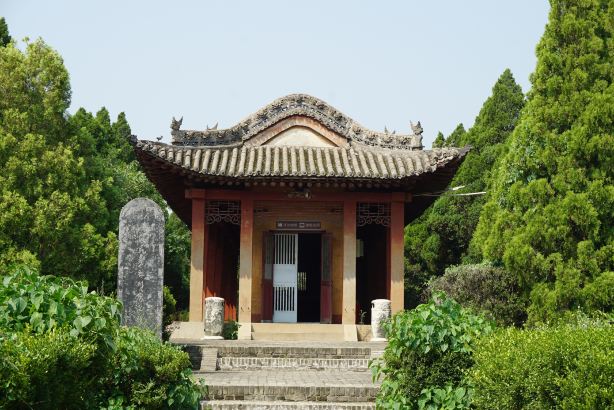
Macun Brick Carving Tombs are located in the western part of Macun Village, 4 km west of the county seat of Jishan County, Shanxi Province. The tomb complex dates back to the Song and Jin dynasties (960–1234 AD). Macun Brick Carving Tombs cover a total area of approx. 16,000 square meters. Macun Brick Carving Tombs use brick carvings to depict the layout of the tomb owners' residences during their lifetimes, typically featuring a siheyuan (courtyard) structure with a front hall, a back hall, and side rooms. They recreate the architectural style of that time, providing detailed physical evidence for the study of architectural history during the Song and Jin dynasties. The brick carvings of opera and dance unearthed at the site recreate the structure of theaters and the stage forms of theatrical performances of that time, and are among the most important physical materials for the history of theater discovered to date. At the same time, the three-dimensional sculptures of the Twenty-four Filial Exemplars discovered at the site are vivid in shape and graceful in posture, and are also precious works of art. The brick carvings of the Macun Brick Carving Tombs are exquisite and rich, and are of great value for the study of architecture, theater, social customs, ethics, and religious beliefs during the Song and Jin dynasties.Jishan · 20.7 km from Wanrong

Beixin Sheli Pagoda in Wanrong, Shanxi
The Beixin Relic Pagoda in Wanrong, Shanxi, was originally a subsidiary building of the Chongsheng Chan Temple, built in the 16th year of the Hongwu reign of the Ming Dynasty (1383). The temple has been destroyed, leaving only the pagoda. The pagoda is a three-story, bell-shaped brick structure, commonly known as a Lama pagoda, with a height of 21m. It has a square plan with a side length of 7.8m. The first and second stories are square, and the third story is a circular bell-shaped structure. The spire's rings have been destroyed. It has been designated as a fourth-batch Major Historical and Cultural Site Protected at the Provincial Level.Wanrong · 27.8 km from downtown

Emperor Qinshihuang's Mausoleum Site Museum
Emperor Qinshihuang's Mausoleum Site Museum, also known as the Terracotta Army, is located about 1.5 kilometers east of the Mausoleum of the First Qin Emperor and forms part of the extensive necropolis. There were more than a thousand terracotta soldiers unearthed here, each with a different facial expression. Standing before the massive underground army, you will feel the extraordinary might of the Qin Emperor that enabled him to unify six warring states two thousand years ago. The Qin Emperor Ying Zheng began building the mausoleum for himself at the age of 13. Nearly 720000 men and 38 years were required to complete this vast project.China · Xi'an

Qinglong Temple
Qinglong Temple is located in the west of Jishan County. It was built in the second year of Longshuo in the Tang Dynasty (662 AD). It is surrounded by mountains and rivers and has beautiful scenery.Jishan · 20.9 km from Wanrong

Jishan Jiwang Temple
Jishan Jiwang Temple is located in Jishan County, Yuncheng City. It was originally situated on Jiwang Mountain south of the county seat and is said to be the place where Houji taught the people how to farm. The main buildings include the Offering Hall and the Main Hall, with the Bell Tower and Drum Tower standing on either side. Jishan Jiwang Temple is renowned for its wood and stone carving art, with the decorative art on the pillars and balustrades being particularly exquisite.Jishan · 24.3 km from Wanrong
Experiences you can't miss in Wanrong
Featured Cultural experiences in Wanrong
View all Cultural experiences
Free cancellation
Book now for tomorrow
From$33.73
Free cancellation
Book now for tomorrow
From$33.73
5% off
Limited-time sale
From$196.41$206.75

5% off
Limited-time sale
From$196.41$206.75
Featured Outdoor experiences in Wanrong
View all Outdoor experiences
From$62.86

5.0/5
· 3 reviews· 80 bookedFree cancellation
Instant confirmation
Book now for tomorrow
From$43.17
5.0/5
· 4 reviews· 25 bookedFree cancellation
Instant confirmation
Book now for tomorrow
From$47.67
5.0/5
· 2 reviewsFree cancellation
Instant confirmation
From$122.64
5.0/5
· 1 reviewFree cancellation
Book now for tomorrow
5% off
Limited-time sale
From$304.20$320.22
5.0/5
· 2 reviewsFree cancellation
Instant confirmation
Book now for tomorrow
9% off
Limited-time sale
From$80.68$89.64
Free cancellation
Instant confirmation
From$144.78
Free cancellation
Instant confirmation
Book now for tomorrow
From$51.10
Free things to do in Wanrong


What travelers say about Wanrong

呼莲October 4, 2026
5.0
This place is definitely worth visiting. The character, kindness, generosity, and love of Shanxi merchants can be fully experienced here.
I am deeply amazed by the harmonious blend of artistry and practicality in Chinese architecture; it fills me with immense pride.
Li Family Courtyard

西北禾木October 6, 2026
4.0
Wanrong Feiyun Tower, hailed as the No. 1 wooden tower in China, is a pinnacle of ancient Chinese wooden architecture. The entire tower is constructed entirely of wood, without a single iron nail, relying solely on mortise and tenon joints for connection – a testament to its ingenious design. While appearing to have three stories, it actually contains five, with four colossal pillars extending from the ground floor to the roof, supported by 32 auxiliary pillars forming a stable framework. Beneath the eaves are 345 sets of uniquely shaped brackets, layered like clusters of clouds, both sharing the load and possessing aesthetic appeal. Thirty-two upturned eaves gracefully extend into the air, their chimes ringing in the wind. Standing below and looking up, the orderly arrangement of the wooden components, standing firm through centuries of wind and rain, fully demonstrates the superb construction skills of ancient craftsmen, making it a must-see wooden architectural marvel in Shanxi.
Wanrong Feiyun Tower Scenic Area

Anonymous userJune 16, 2026
5.0
Stepping into the Houtu Temple in Jiexiu, the entire Taoist temple complex is a treasure trove of glazed tile roofs, shimmering with iridescent light. The interconnected courtyards are ingeniously laid out, featuring a unique three-section ancient stage and the majestic Sanqing Tower, exuding ancient charm. The Houtu Hall is solemn and dignified, with delicate and vivid brick and tile carvings. Strolling through the courtyards, the craftsmanship of the Ming and Qing dynasty artisans is truly admirable. Every brick and tile embodies the belief in the Earth Mother and the aesthetics of ancient Jinzhong architecture; a quiet contemplation leaves one deeply moved.
Houtu Temple

把剑长歌September 7, 2026
5.0
The temple is dedicated to Houji, the god who taught people agriculture. The main hall has a hip roof, with dougong brackets and a hall-style beam frame. Because it does not have a continuous beam, the locals call it the "Beamless Hall." In 2011, when the School of Archaeology and Museology of Peking University surveyed the main hall, they found traces of ink writing "Tiansheng First Year" (1023) on the outer surface of the beam in the lower part of the front eaves. Based on the structure, they determined that it was a building from the Northern Song Dynasty. A stone tablet on the east wall records that in the eighth year of Zhiyuan (1271) of the Yuan Dynasty, the Jiwang Temple "built a dance hall." In front of the hall is an iron bell from the fourth year of Xuanhe (1122) of the Northern Song Dynasty, which was originally from the Puzhao Temple in the area.
Wanrong Jiwang Temple

山在穷游November 26, 2024
5.0
When talking about Qiufeng Tower, everyone must think of Emperor Wu of Han. At that time, Qiufeng Tower left us not only the story of Emperor Wu of Han, but also many well-known stories in Chinese history. Therefore, when you come to Yuncheng, you must visit Qiufeng Tower in Houtu Temple Scenic Area. Although it can't be compared with Feiyun Tower, it is also a beautiful building.
Qiufeng Tower

行走毛毛March 6, 2025
5.0
If you have been to the brick and wood carvings of Macun in Jishan, you will have a deeper understanding of the stone carving art of the underground ancient tombs. It embodies very sophisticated techniques and provides great help for our study of Chinese opera.
Macun Brick Carving Tombs

M37***45September 5, 2026
4.0
The Beixin Relic Pagoda, a Buddhist pagoda from the Ming Dynasty, was built in the 16th year of the Hongwu reign (1383), and has a history of over 640 years. It is a national key cultural relics protection unit (eighth batch).
This pagoda is a combination of a Lamaist stupa and a Vajrasana throne, slender and elegant.
Beixin Sheli Pagoda in Wanrong, Shanxi

断弈寒October 26, 2026
5.0
There were quite a few people when we went; the tour guide said it was considered relatively few, as it was truly packed during the National Day holiday. The Terracotta Army formation was awe-inspiring, and the craftsmen's dedication was truly admirable. The bronze chariots and horses were especially breathtaking and definitely worth seeing.
Emperor Qinshihuang's Mausoleum Site Museum

老虎abcApril 12, 2024
1.0
Qinglong Temple has been closed for maintenance since March 30, 2024.
Qinglong Temple

殷都老虎February 7, 2026
3.0
Jishan Jiwang Temple (National Cultural Relic)
Located in Jishan County, Yuncheng City, Shanxi Province, it was first built in the Yuan Dynasty and rebuilt in 1843 (the 23rd year of the Daoguang Emperor's reign in the Qing Dynasty). Jiwang refers to Houji, whose original name was Ji Qi. He was the ancestor of the Zhou tribe and the founder of Chinese agricultural civilization, revered as the god of agriculture and grain. The term "Sheji" (社稷) originates from him, referring to the god of grain; "She" (社) refers to the god of earth.
The Offering Hall, Main Hall, and Jiangyuan Hall feature wood carvings and stone engravings.
The Offering Hall has a gable roof with glazed tiles. The lintel of the front eaves is decorated with reliefs depicting ancient agricultural activities such as plowing, sowing, harvesting, and threshing.
The Main Hall has a double-eaved hip roof with 20 stone-carved pillars, including two in the central bay with reliefs of coiled dragons. The stone balustrade of the corridor is composed of 52 stone slabs depicting flowers, exquisitely carved.
The pillars and beams of the front and rear of the Jiwang Hall are carved with various scenes of agricultural activities, and a large stone carving is embedded in the inner side of the east and west walls of the hall.
Travel Guide
Transportation: High-speed rail from Houma West Station to Jishan Railway Station, or by bus, and then a taxi for the last three kilometers (no public transportation within the county).
Ticket Price: 20 yuan (Free for those over 60 years old and veterans with preferential treatment cards, no ticket exchange required).
Duration: 20 minutes.
Accommodation and Dining: Convenient.
Nearby Attractions: Longxing Temple, Jishan Jiwang Temple, Fusheng Temple, Chishen Temple, Guan Gong's Hometown, Guangrenwang Temple, Wanrong Dongyue Temple-Feiyun Tower.
Jishan Jiwang Temple


