Wuxue

Things to do in Wuxue

Search attractions or local attractions & tours
Search

Explore top experiences

Top 10 attractions in Wuxue

View all Attractions
Dahuaxiyou Tourist Resort

Dahuaxiyou Tourist Resort

3.3
5.0/5
1 reviews

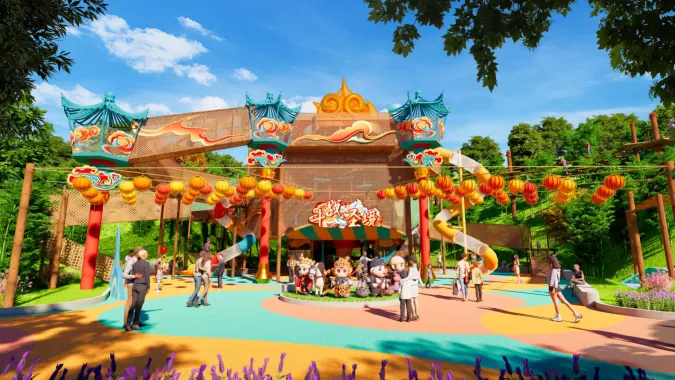
The Hubei Dahuaxiyou Tourist Resort project is located at the foot of Kuang Mountain in Wuxue City, renowned as the "background setting for the creation of Journey to the West," within the picturesque Luhe Village of Yuchuan Town. The resort is an immersive Journey to the West-themed tourist destination, crafted with "Journey to the West culture as its soul, family-friendly entertainment as its focus, unique experiences as its thread, and leisure vacations as its wings." Guided by cultural tourism, the resort establishes a dual-sector development framework driven by "family-friendly entertainment" and "wellness vacations." Come to fairy tale journey and explore with African flamingos, red pandas, zebras, giraffes, capybaras and a series of unique animals! Tianpeng island amusement park: Tianpeng island blends mythology and non-powered fun, with family-friendly challenges along the lakeside mountain trail, offering wild adventures inspired by journey to the west. Turtle beach: Old turtle non-powered amusement park, gold rush swing landmark, family-friendly quicksand treasure hunt, water play and goose feeding wellness. Battle sanctum: Sun Wukong's national trend adventure tower, four-story climbing and sliding net challenge, courageously surpassing limits. Three-star cave: integrating myth and science, transforming journey to the west elements into experiments, exercising observation, logic and collaboration, and enhancing core competencies. Little saint joyland: A blend of classic amusement and natural culture, bringing joy to all ages. Happy spider cave: spider cave theme children's play area, AR painting and dress-up, trampoline slide maze. Camellia hill: Kuangshan native camellias, where every step reveals a new view of red and white blooms in emerald valleys, ultimately leading to a pure land. Moon Palace: The Moon Palace follows the legend of Chang'e, featuring Tang-style architecture by the water, a serene retreat for tranquility.

Wuxue · 33.2 km from downtown
From AU$22.55
Mount Huangshan Scenic Area
2027 Global 50 - Fall Viewing Attractions

Mount Huangshan Scenic Area

9.1
4.8/5
74.1k reviews

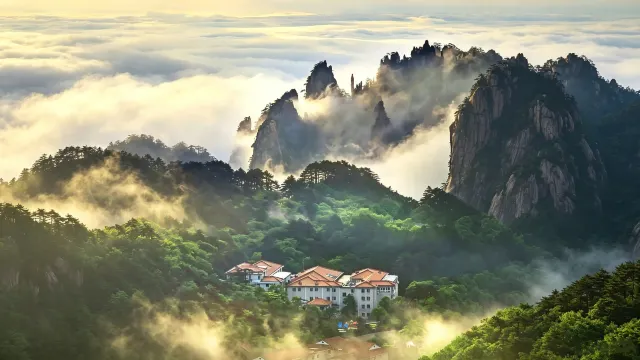
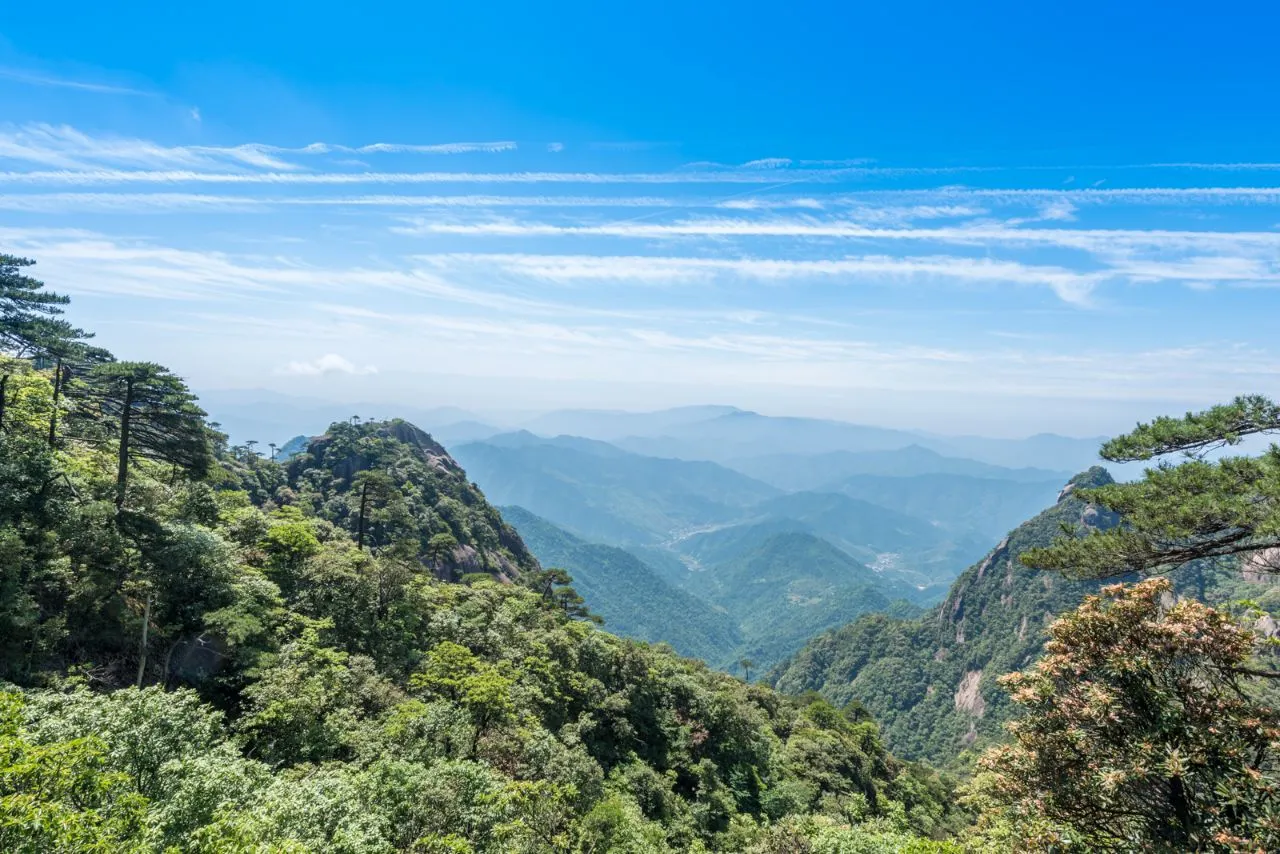
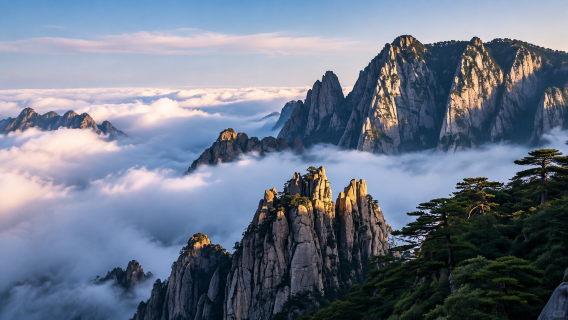
Mount Huangshan Scenic Area is located in Tangkou Town, Huangshan District, Huangshan City. Since ancient times, Mount Huangshan has been one of China's most renowned mountains. Its peculiar pines, strange rocks, sea of clouds, and hot springs are known as the "Four Wonders" of Mount Huangshan. In addition to these, rime, snowscapes, and sunrises are also views that visitors will not miss. There is an ancient saying: "Having visited the Five Great Mountains, one need not look at any other mountains; having visited Mount Huangshan, one need not look at the Five Great Mountains." The attraction is divided into the south gate, west gate, and north gate. The vast majority of visitors enter and exit through the south gate, which has two entrances and exits—front mountain and back mountain—both close to Tangkou Town at the foot of the mountain. The town has also become a transfer hub for visiting Huangshan, and many visitors arrive here in advance to stay overnight. From Tangkou Town to the attraction entrance, you need to take the Huangshan New National Line shuttle bus, which stops at the front mountain gate (Ciguang Pavilion), the back mountain gate (Yungu Temple), and the Huangshan-Hot Spring attraction. Visiting the attraction mainly involves two routes up the mountain, the front mountain and the back mountain, both leading to one of the main peaks, Bright Summit. On the other side of Bright Summit, there is also a loop route — the West Sea Grand Canyon. Front mountain The front mountain refers to the hiking route starting from Ciguang Pavilion to Yuping Tower at the summit (accessible directly by the Yuping Cable Car), as well as the Mount Huangshan Scenic Area - Lotus Peak and Tiandu Peak areas at the summit. The scenery of the front mountain is grand and majestic, making it very suitable for enjoying panoramic views from the cable car. Both the highest peak, Mount Huangshan Scenic Area - Lotus Peak, and the other main peak, Tiandu Peak, are located here (the two peaks open alternately). There are also classic attractions such as the Guest-Greeting Pine, Jiulong Peak - Carp Back, Hundred-Step Ladder, One-Line Sky, and Tianhai. Back mountain The back mountain refers to the hiking route from Yungu Temple to Bai'e Ridge (accessible directly by the Mount Huangshan Yungu Cableway), as well as the mountaintop areas behind Bai'e Ridge such as Shixin Peak, Mount Huangshan Scenic Area - Shizi Peak, and West Sea Grand Canyon - Paiyun Pavilion. The scenery of the back mountain consists mostly of exquisite mountain views, suitable for enjoying on foot along the way. Flying Stone and Monkey Watching the Sea are both located here. West sea grand canyon West sea grand canyon officially opened in 2000. The canyon is deep and the scenery is very magnificent, and it is known as the true gathering place of Huangshan's essential scenery. West sea grand canyon can be entered from West Sea Grand Canyon - Paiyun Pavilion in the summit area of the back mountain, and after looping around inside the canyon, you return to the main peak area of Tianhai. It takes about 2 hours to walk down from West Sea Grand Canyon - Paiyun Pavilion to the bottom of the canyon, and then you can take a cable car to Tianhai. Route recommendations The standard way to visit Huangshan is a two-day tour, with routes divided into ascending via the front mountain and descending via the back mountain (front mountain - West Sea Grand Canyon - back mountain) or ascending via the back mountain and descending via the front mountain (back mountain - West Sea Grand Canyon - front mountain). Ascending via the front mountain and descending via the back mountain is suitable for taking the cable car up and walking down, which is both relaxing and allows you to enjoy the exquisite scenery of the latter half. However, since the essential route of the West Sea Grand Canyon runs from West Sea Grand Canyon - Paiyun Pavilion to Tianhai, you will have to backtrack along a section of the trail. It is possible to visit Huangshan in just one day, but the itinerary will be tight. It is recommended to ascend via the rear mountain and descend via the front mountain, taking the cable car both ways, and to either skip climbing the main peaks of the front mountain (Mount Huangshan Scenic Area - Lotus Peak / Tiandu Peak) or skip the West Sea Grand Canyon. Stay selection There are several accommodation options at the summit, mainly concentrated in areas such as Guangming Peak Tianhai, West Sea Grand Canyon-Paiyun Pavilion, Bai'e Ridge, and North Sea. Guangming Peak Tianhai is a great spot for watching the sunrise, and it is also suitable for storing luggage while exploring the West Sea Grand Canyon. Bai'e Ridge is the upper station of the Huangshan Yungu Cableway on the rear mountain; if you typically enter the attraction from the rear mountain in the afternoon, staying here is quite convenient.

China · Huangshan City
From AU$34.16
Wangxian Valley
2027 Global 100 - Night Attractions

Wangxian Valley

9
4.5/5
27k reviews

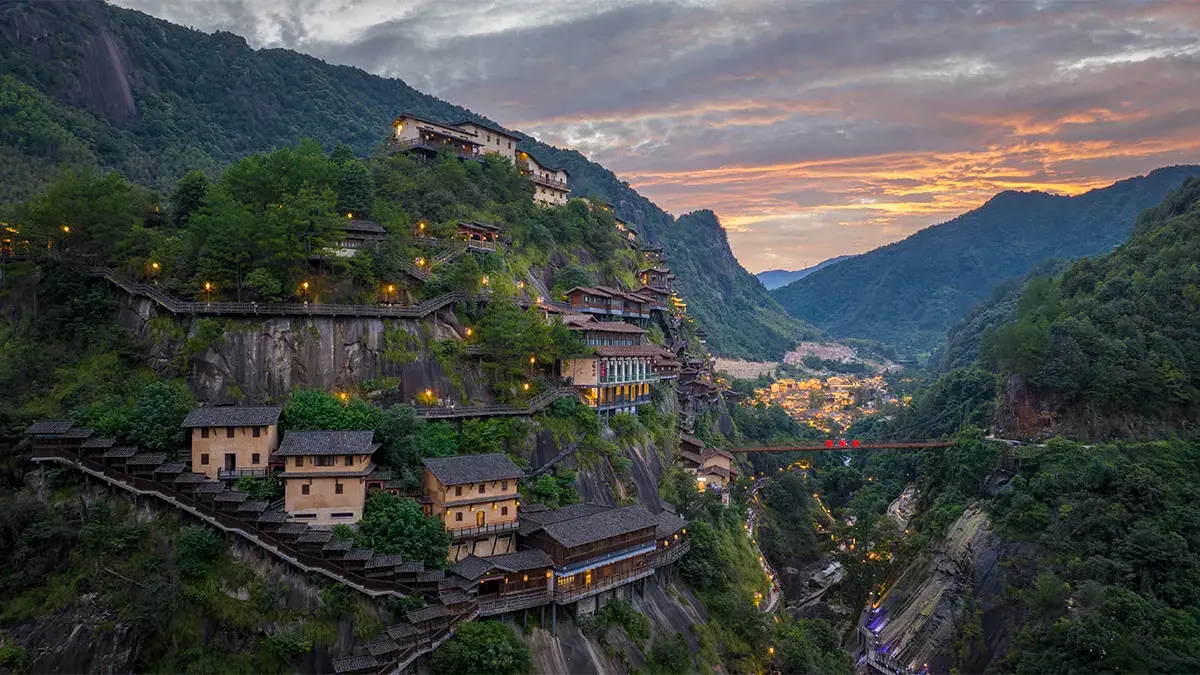
Wangxian Valley is located at the northern foot of Lingshan Mountain, hidden among mountain streams and gorges. It was formerly an abandoned granite quarry and, after years of ecological restoration, has been built into the valley town it is today. The attraction is structured around the Jiuniu Stream Gorge, where streams flow through the valley and waterfalls cascade in layers; the Sandie Waterfall and Sankou Pot are among its most recognizable natural views. In summer, visitors can also experience gorge rafting that winds through the ancient town. The cliffside building complex on Baihe Cliff is the attraction's signature view. On the nearly 100-meter-high cliff face, cantilevered guest rooms, plank walkways, and viewing platforms climb upward in a zigzag pattern, looking up from the valley floor like pavilions in the sky. After nightfall, the cliff lights come on one after another, and the entire valley resembles a painted scroll of lights; standing on Lanyue Bridge and gazing at the full panorama of Baihe Cliff is a classic photo spot here. The Yanpu Old Street in the valley restores the appearance of traditional dwellings in northeastern Jiangxi, with rammed earth walls, bluestone slab paths, and horse-head walls interwoven throughout. Workshop Street is lined with traditional handicraft workshops for brown sugar, brewing, papermaking, cloth dyeing, and more, where you can watch ancient production methods on site; Mingchan Alley gathers intangible cultural heritage crafts such as bamboo weaving and woodwork. Bawei Street offers a dazzling array of Jiangxi-style snacks such as dengzhan guo and taro dumplings. When visiting, it is recommended to enter the attraction in the afternoon so that you can clearly see the gorge landforms in daylight without missing the spectacular lighting after nightfall. The entire route requires walking and climbing stairs, so comfortable, slip-resistant shoes are advisable.

China · Shangrao
From AU$31.88
Wuyuan Huangling Scenic Area
2027 Global 50 - Spring Outings

Wuyuan Huangling Scenic Area

9
4.6/5
24.5k reviews

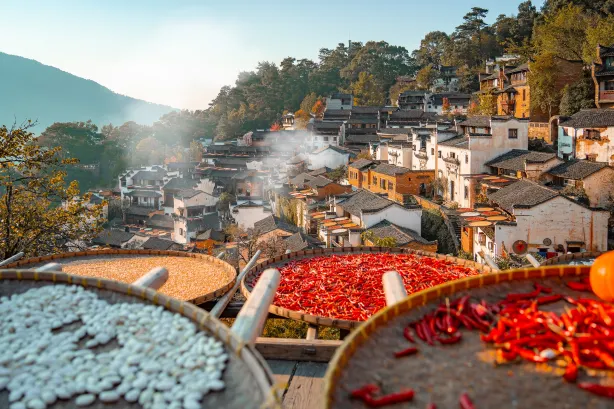
Wuyuan Huangling Scenic Area sits among the Shi'er Mountains of Wuyuan, with the ancient village of Huangling at its core—a Huizhou ancient village nearly six hundred years old. The village is built along steep mountain slopes, where "there is no flat ground three chi wide"; residences are arranged in a fan-shaped, terraced layout around the water outlet, with white walls and dark tiles layered one upon another on the cliffside, earning it the name "Tiyun Renjia" (Households in the Terraced Clouds). Surrounded by ancient trees and terraced fields, it is itself a three-dimensional painting of a mountain village. Huangling is the birthplace of the "shaiqiu" (autumn sun-drying) culture. Constrained by the terrain, villagers have since ancient times set up drying racks on rooftops to dry crops; every fall, red chili peppers, yellow chrysanthemums, pumpkins, and more fill the rooftop drying trays, with colors shifting as the seasons change. In spring, rapeseed flowers bloom in layers across ten thousand mu of terraced fields, dotted with pink peach blossoms and snow-white pear blossoms; the lower-elevation first-phase flower sea and the higher-elevation second-phase Gaoling flower sea bloom in succession, with the flowering period lasting into April. Riding the cable car up the mountain, visitors can overlook the entire golden flower field, and the view is especially open when passing the Leixin Bridge glass walkway, with layered terraced fields and distant mountains below. Tianjie in the village is the main sightseeing axis paved with bluestone slabs, linking classic Huizhou-style ancient buildings; shops line the street with workshops behind storefronts, and along the way visitors can taste authentic Wuyuan snacks such as steamed cakes, Qingming guo, and huizhi guo, and also take part in making folk snacks and handicrafts. Visiting in fall, besides the spectacular shaiqiu scene, the village's red maples are also a highlight, with maple forests fully tinted and echoing the harvest colors drying on the rooftops. Throughout the year, Huangling has something to offer in every season, and its core charm always lies in the unique Huizhou everyday vitality of this mountain village.

China · Wuyuan
From AU$33.02
Tengwang Pavilion Tourist Area
No. 2 of Night Attractions in Jiangxi

Tengwang Pavilion Tourist Area

8.7
4.5/5
30.3k reviews

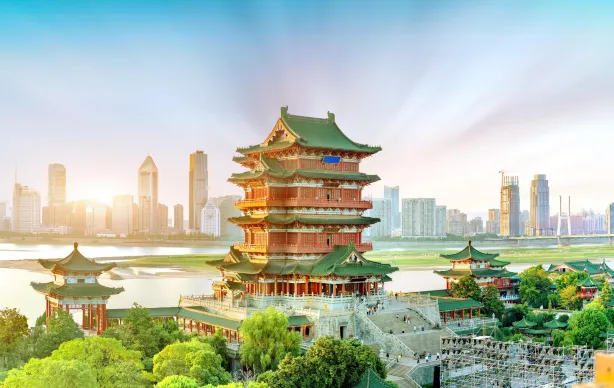
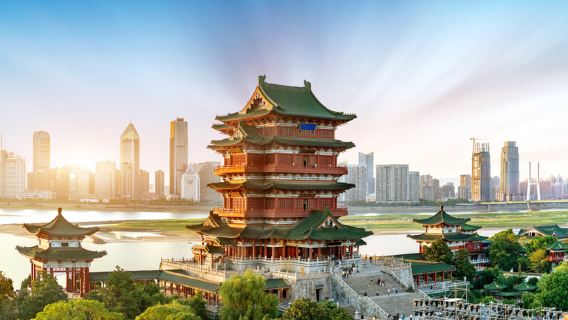
Tengwang Pavilion Tourist Area is located on the east bank of the Gan River in Nanchang, with the riverside Tengwang Pavilion as its centerpiece. Originally built in the fourth year of the Yonghui era of the Tang Dynasty by Li Yuanying, Prince of Teng and son of Emperor Gaozu of Tang, it gained eternal fame through Wang Bo's "Preface to Tengwang Pavilion." Alongside the Yellow Crane Tower and Yueyang Tower, it is hailed as one of the "Three Great Towers of Jiangnan." Historically destroyed and rebuilt nearly thirty times, the current structure is a Song-style replica completed in 1989, designed based on Liang Sicheng's reconstruction sketches. With its green tiles and layered eaves, it remains a landmark of Nanchang to this day. The main pavilion follows a "three visible, seven concealed" layout: appearing as a three-story structure with encircling corridors from the outside, while actually containing seven interior floors—nine levels including the two-tiered base symbolizing ancient city walls. Turquoise-roofed galleries extend north and south from the base's flanks, connecting at their ends to auxiliary pavilions named "River-taming" and "Greenery-embracing," forming a mountain-shaped silhouette with the main tower. Below, an artificial lake and the nine-bend wind-and-rain bridge add classical garden charm to the majestic architecture. Each floor of the pavilion offers something remarkable. The white marble relief "A timely wind delivers Tengwang Pavilion" in the first-floor preface hall depicts the legend of Wang Bo riding the wind to compose his famous preface. The second-floor mezzanine features the long scroll painting "Gallery of eminent figures," gathering Jiangxi's historical luminaries like Tao Yuanming, Ouyang Xiu, Wang Anshi, and Tang Xianzu in one artwork. The third-floor mural "Linchuan dream" recreates Tang Xianzu's staging of "The peony pavilion" here. The fourth-floor "Land of wonders" painting compresses Jiangxi's iconic landscapes—Mount Lu, Sanqing Mountain, Dragon-Tiger Mountain, and Poyang Lake—into a single masterpiece. The fifth floor is the highlight for panoramic views: its central hall displays a bronze tablet inscribed with Su Dongpo's calligraphic version of "Preface to Tengwang Pavilion," while the east hall exhibits a scale model of the pavilion. Strolling the veranda offers sweeping views of the Gan River and modern skyline across the water. The top floor bears the plaque "Ninth heaven," with its west hall housing an antique-style theater flanked by replica ancient instruments like chime bells and stone chimes. Above, spiral-arranged bracket sets adorn the caisson ceiling, and between the double eaves hangs Su Dongpo's gilded "Tengwang Pavilion" plaque. After descending from the main pavilion, take time to explore the garden area: the square in front of the pavilion, the grand Song-style archway, the antique street lined with calligraphy and antique shops, and the small Suzhou-style garden Fuchang Garden with its lake reflections and bridge views—perfect for slowing your pace. To experience the poetic scene of "a solitary wild duck flying with the sunset glow, while the autumn water blends with the vast sky," an evening ascent to the pavilion is ideal. The fifth-floor corridor offers an expansive view, making it a prime spot to admire the sunset over the Gan River.

China · Nanchang
Save AU$0.02From AU$11.37
Hongcun Village
No. 1 of Night Attractions in Anhui

Hongcun Village

8.6
4.5/5
50.5k reviews

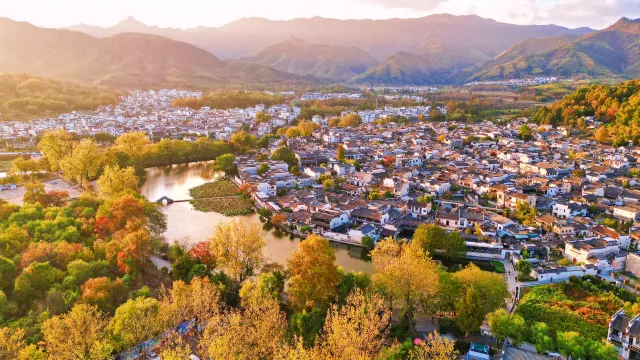
Hongcun Village is a classic Huizhou-style ancient village, renowned as a "village in a Chinese painting." A visit here offers two unmissable experiences: first, the water landscapes shaped by its irrigation system, with Nanhu Lake and Yuezhao Pond as the crown jewels; second, the exquisite "three carvings" of Huizhou architecture—brick, stone, and wood carvings—intricate enough to rival paper-cut art. Here, cultural heritage and natural beauty blend seamlessly into a harmonious whole. The ancient village was first built during the Shaoxing era of the Southern Song dynasty and gradually developed from the Yongle era of the Ming dynasty into a unique "ox-shaped village" layout. The two ancient trees at the village entrance form the "ox horns," the densely packed Ming and Qing Huizhou-style buildings in the village form the "ox body," the four bridges over the stream west of the village form the "ox feet," Yuezhao Pond is the "ox stomach," Nanhu Lake is the "ox belly," and the water channels flowing past every household are the "ox intestines." Sightseeing can begin at Nanhu Lake in the south of the village. Nanhu Lake is a bow-shaped artificial lake dug during the Wanli era of the Ming dynasty, with a broad expanse of water; the Huabridge crossing the lake is where Li Mubai led his horse in the film Crouching Tiger, Hidden Dragon. On the north bank of the lake, Nanhu Academy was formed by merging six original private schools by the lakeside, and its layout is exceptionally spacious. Heading north along the lake's north bank, visitors can also stop by ancient residences such as Jingde Hall and Wang Daxie's Former Residence (Zhenqi Hall). Continuing north leads to Yuezhao Pond at the village center, a half-moon-shaped pond dug during the Yongle era of the Ming dynasty, surrounded by Huizhou-style buildings reflected in its waters—one of the best spots for photography in the ancient village. However, visitors crowd around Yuezhao Pond year-round, so patience is needed to capture an empty shot. At the center of Yuezhao Pond's north bank stands Lexu Hall, also known as the Wang Clan Ancestral Hall, a surviving Ming dynasty building in the village with a simpler style than Qing dynasty architecture. On the western end of Yuezhao Pond's north side is Jingxiu Hall, built during the Qing dynasty. Further north, visitors can tour Chengzhi Hall, the residence of late Qing salt merchant Wang Dinggui. The residence is fully equipped with a study, kitchen, stable, bodyguard room, and servants' quarters, and even includes a "Paishan Pavilion" for playing mahjong; the house has its own pond and well, so water is available without leaving the premises. The exquisite Huizhou three carvings are worth examining closely—some wood carvings are even coated with gold powder, lavish and magnificent. Other ancient buildings in the village worth seeing include Deyi Hall, Shuren Hall, and Taoyuan Residence.

China · Yi County
From AU$11.85

Experiences you can't miss in Wuxue

Wuxue Today's weatherFoggy 7-19℃
Wuxue weather for the next 2 days11/27: 6-20℃, 11/28: 5-19℃

Free things to do in Wuxue

What travelers say about Wuxue

user-avatar
jyayoiNovember 24, 2026
5.0
By the end of November, all the yellow leaves had fallen, leaving only a few red maple leaves. It was much colder than down the mountain; a down jacket was necessary. The sightseeing bus was very convenient. The 7-day validity was excellent.

Lushan National Park

user-avatar
怀塔基明克让September 24, 2024
3.0
Not a good experience

Hubei Tongtianhe Scenic Area

user-avatar
SolKuczNovember 25, 2026
5.0
Tremendous experience. Amazing mountain. If you are a hiker don't miss it.

Mount Huangshan Scenic Area

user-avatar
180***02November 25, 2026
4.0
It's definitely worth a visit. The construction is quite novel; building houses on a cliff face is impressive. It's more beautiful at night than during the day. I don't recommend it for people with poor physical fitness, young children (under 8-10 years old), or the elderly (in poor health) as it's quite challenging to climb. Climbing the entire scenic area takes over 4 hours, and even longer if you take it slow. It really tests your stamina. (Original photos, no editing (phone camera quality is a bit poor))

Wangxian Valley

user-avatar
Anonymous userNovember 25, 2026
5.0
Overall, it offers good value for money, making it a top choice if location is a priority. It's close to Shenyang Station and the subway, making commuting convenient. The room layout is simple and practical, with separate wet and dry areas, and the cleanliness is quite good; the linens had no odor. The front desk is efficient and straightforward, making it suitable for business travelers and those who don't have overly fancy accommodation requirements.

Wuyuan Huangling Scenic Area
user-avatar
VilAnda PNovember 24, 2026
4.0
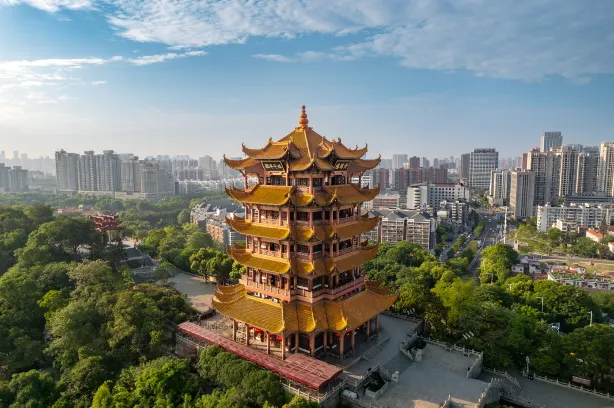
Had a great experience visiting the Yellow Crane Tower! Definitely buy your tickets in advance—it makes entry completely hassle-free, especially on weekends. It does get very crowded, so expect lots of people, but the views and the landmark itself are well worth it.

Yellow Crane Tower

user-avatar
Anonymous userNovember 21, 2026
5.0
Climbing the pavilion at night, the lighting effects were absolutely stunning! I climbed all the way to the top floor and explored each level, experiencing firsthand the feeling of the ancients gazing into the distance – it was wonderful. The only downside was that the top floor was covered by curtains; it mainly sold cultural and creative products, with no artifacts on display, so it wouldn't open unless you went in. The fourth and fifth floors were much better arranged; I hope they can be improved.

Tengwang Pavilion Tourist Area

user-avatar
咖啡豆成精November 25, 2026
5.0
The cable car ride was definitely worth it; the scenery from it was also very nice. The hike up from Waishuangxi was a bit tiring, so we turned back at the First Line of Sky. My calves were sore for three days afterwards, haha.

Sanqingshan Mount Scenic Area

user-avatar
M17***22November 24, 2026
5.0
I bought a combined ticket for Hongcun and Xidi, and it was definitely worth the trip. These ancient villages have a vibrant atmosphere and distinct styles. They're rich in history and stories, and a stroll through them is very relaxing. Each of the two ancient villages has its own unique charm, and it's truly remarkable that they've been preserved.

Hongcun Village

Trip Moments in Wuxue

Popular cities near Wuxue

Frequently asked questions

How can I contact Trip.com customer support?

Get help anytime, anywhere within 30 secondsContact customer support

Change and cancellation policies vary by attractions and tours. Please check the product details page for more information.

Ticket prices may vary between weekdays and weekends, as well as during peak and off-peak seasons. When booking with Trip.com, you can also use Trip Coins to get extra savings. For more tips on booking discounted tickets, please visit Trip.com for the latest information.