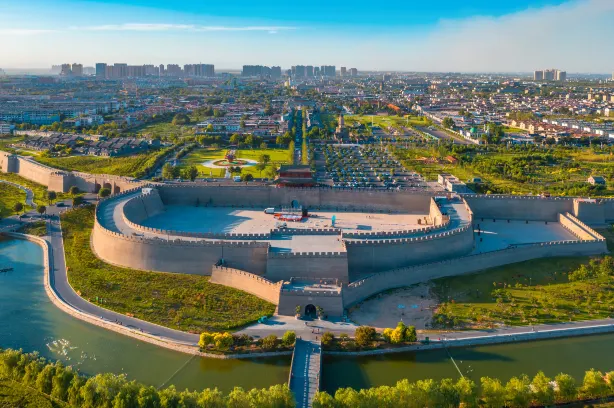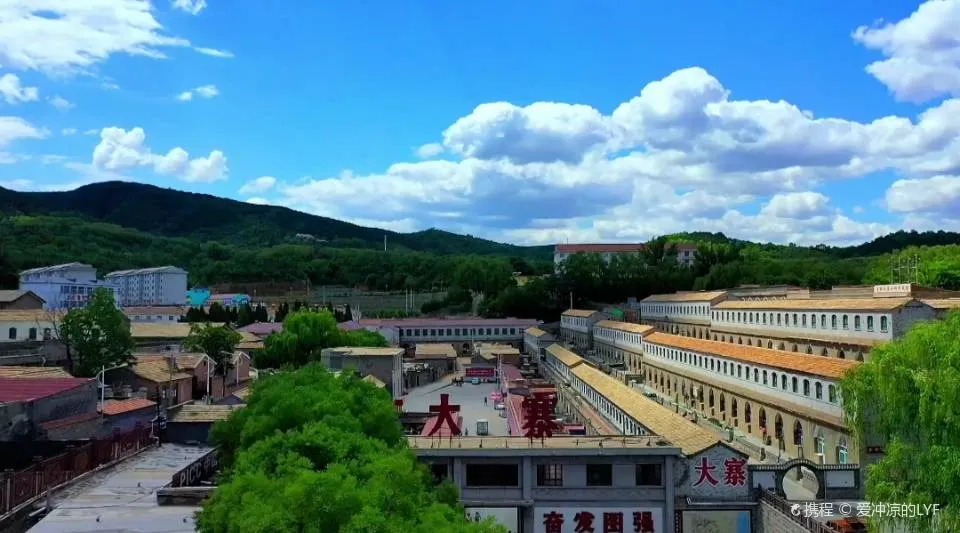
Xiyang

Things to do in Xiyang

Search attractions or local attractions & tours
Search

Explore top experiences

Top 10 attractions in Xiyang

View all Attractions
Mao Family Mansion

Mao Family Mansion

2.8

Mao Family Courtyard is located in Xinangou Village, 12 miles west of Xiyang County, Jinzhong City, Shanxi Province. It was built during the Jiaqing period of the Qing Dynasty and has a history of more than 200 years. The whole building faces east and sits west, with its back to the mountain and its face to the water. The whole building complex consists of one street, two alleys, two halls, six large courtyards, and fifteen interconnected small courtyards. There are more than 120 houses and more than 20 cave dwellings. The two halls are Jiude Hall and Sanyi Hall. Jiude Hall is divided into two large courtyards, located on the left and right sides of Jufu Lane. Sanyitang is also divided into two large courtyards, located on the left and right sides of Yingxian Lane. There are two other groups of houses independent of the two halls, which are used for martial arts performances. The six groups of courtyards are each integrated, forming a separate closed circle, and can be connected to each other by opening the side doors. The courtyards still retain some underground secret passages. There is a secret passage entrance on the back wall of the west kiln of each courtyard, which is connected to the main secret passage. The entire secret passage is crisscrossed and connected to each courtyard. The secret passage is a self-defense system. In case of danger, people can hide quickly or escape to the main road directly outside the village.

Xiyang · 6.2 km from downtown
Jinci Temple Museum
No. 1 of Family-friendly Attractions in Shanxi

Jinci Temple Museum

8.7
4.8/5
21.1k reviews

Jinci Temple Museum is located at the foot of Xuanweng Mountain by the banks of the Jin River. It is an ancestral temple built to commemorate Tang Shuyu, the founding feudal lord of the State of Jin, and is also one of the earlier surviving royal sacrificial gardens in China. There is a saying that "you have not truly visited Taiyuan until you have visited Jinci." The ancient buildings in the museum are arranged in sequence along the central axis, among which the Xian Hall, the Flying Bridge over the Fish Pond, and the Hall of the Holy Mother are known as the "three treasures," while the Zhou Cypress, the Never-Aging Spring, and the Song dynasty attendant statues are known as the "three wonders"—these are the core highlights of any visit. The "Three Treasures" are located on the central axis and can be visited together. Xian Hall is the place where sacrificial offerings are placed. The hall is surrounded by railings instead of walls, making it well-ventilated and bright, and its beam structure is simple and lightweight. The Flying Bridge Across Fish Pond is on the west side of Xian Hall. It is a cross-shaped ancient bridge built over a square pond, resembling a modern overpass in form, and this type of bridge structure is extremely rare among surviving ancient buildings. The west end of the bridge connects to Shengmu Hall, the oldest surviving building in the museum. Wooden carved dragons coil around the porch columns in front of the hall, making them relatively early surviving examples of wooden coiled dragons. The hall interior was built using the reduced-column method, creating a rather spacious interior. It houses dozens of Song Dynasty colored sculptures, with the main statue of Shengmu seated in the shrine and the remaining attendants arranged on both sides with varied expressions. One attendant statue is half joyful and half sorrowful, vividly lifelike and moving. With Shengmu Hall as the center, you can also seek out the "Three Wonders." The Zhou Cypress is located on the north side of Shengmu Hall. It is said to have been planted in the Western Zhou Dynasty, and its trunk leans south like a reclining dragon, full of ancient majesty. The Never-Aging Spring is located on the south side of Shengmu Hall and is the main source of the Jin River. The museum also houses the Stele of the Inscription and Preface to Jinci, composed and handwritten by Emperor Taizong of Tang, Li Shimin, whose running-script calligraphy is vigorous and forceful. In the southern part is the Shifang Fengsheng Zen Temple, said to have originally been the villa of the Tang Dynasty general Yuchi Gong. In the Futu Courtyard, the Sarira ShengSheng Pagoda can be climbed for a distant view. The Jinci temple fair has been passed down to the present day and has been included in the national-level intangible cultural heritage list. The Water Mirror Stage, an ancient theater stage in the museum, is an important venue for activities during the temple fair.

China · Taiyuan
Yingxian Wooden Pagoda
No. 3 of Best Things to Do in Shanxi

Yingxian Wooden Pagoda

8.6
4.8/5
25.9k reviews

Yingxian Wooden Pagoda is centered on the Sakyamuni Pagoda of Fogong Temple. This pure wooden pavilion-style pagoda was first built in the second year of Qingning of the Liao Dynasty (1056) and later expanded and completed during the Mingchang period of the Jin Dynasty. It is the oldest surviving wooden pagoda in China. The pagoda has five visible stories, with concealed stories inserted between them, making nine stories in total, and stands about 67 m tall. Apart from the stone platform base on the first story, the main body of the pagoda is built entirely of wood, connected using traditional mortise-and-tenon craftsmanship, and the whole pagoda uses more than 50 types of bracket sets, demonstrating exquisite structural design. For more than nine hundred years, the pagoda has withstood many major earthquakes and modern artillery bombardment and still stands today. Due to the need for cultural relic protection, visitors may only visit the first floor inside the pagoda. There is a door on each of the north and south sides of the first floor. In the center of the inner chamber is a seated statue of Shakyamuni about 10 m tall, with a dignified face and a solemn expression. Looking up, you can see the exquisite coffered ceiling at the top. On the walls of the inner chamber are painted six Buddha images of Tathagata, and on the walls on both sides of the doorway are painted Liao Dynasty-style murals featuring Vajra, disciples, and offering figures, with bright colors and lifelike figures. Multiple plaques from various dynasties hang under the eaves of each story of the wooden pagoda, two of which were written by Ming emperors and are particularly striking. Under the south eaves of the fifth story hangs the plaque "Supreme Divine Craftsmanship," written by Zhu Di, Emperor Chengzu of Ming, when he climbed the pagoda during a northern military campaign in the Yongle era; under the south eaves of the fourth story hangs the plaque "Wonder of the World," written by Zhu Houzhao, Emperor Wuzong of Ming, when he ascended the pagoda to feast and reward his ministers after the Yingzhou victory in the Zhengde era. These plaques are not only calligraphic treasures but also record the intersection of the wooden pagoda with historical figures, together with the architecture itself forming a distinctive cultural view of the attraction.

China · Ying County
Pingyao Ancient City
2027 Asia 100 - Night Attractions

Pingyao Ancient City

8.4
4.6/5
27.4k reviews

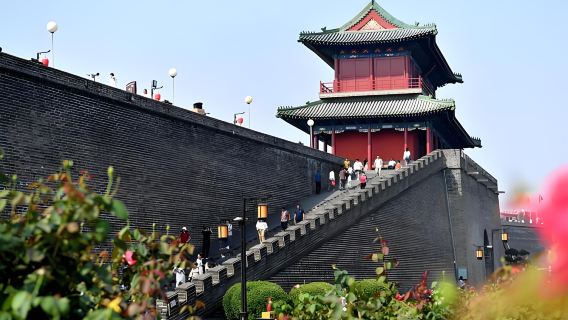
Pingyao Ancient City is one of the best-preserved ancient cities in China and, along with Lijiang Ancient City, is one of the two ancient cities in China to have successfully been designated as a World Cultural Heritage site in its entirety. Pingyao was once the financial center of China during the late Qing dynasty. Walking into this once-prosperous ancient city, you can feel the atmosphere of Shanxi merchant culture everywhere. The streets, shops, and residences within the ancient city still maintain their traditional layout and appearance. The overall street pattern is in the shape of the Chinese character 'tu', consisting of four main streets, eight small streets, and seventy-two lanes. The ancient city has six city gates in total, and the areas around the south gate and west gate are where visitors are concentrated. When touring, you usually enter the city through the lower west gate and walk along West Street to Rishengchang Exchange Shop, where you can learn about the development history of ancient banking and experience the legend of Shanxi merchants conducting business across the world. South Street, which runs north-south through the city, is the central axis of the ancient city. During the Ming and Qing dynasties, South Street gathered more than half of the country's financial institutions and was known as the "Wall Street of China" at the time. Today this street is called the Ming and Qing Ancient Street, and most of the ancient city's attractions are concentrated here. Centered on the landmark Market Tower, attractions such as Xietongqing Exchange Shop, Weitaihou Exchange Shop Museum, and the Chinese Escort Agency Museum are distributed around it, and a large number of shop buildings from the Ming and Qing periods are preserved along the street. At the Pingyao County Government Office in the south of the ancient city, you can see a large number of ancient documents and instruments of torture, and there is a daily performance of the county magistrate holding court; the City God Temple and the Confucian Temple in the east of the city have grand and refined architecture. The ancient city wall is very well preserved, and climbing the wall offers a panoramic view of the ancient city. The gate tower of Yingxun Gate at the south gate is especially exquisite, and watching the sunset from the city wall in the evening is a magnificent sight. In addition to the ancient city itself, the Zhenguo Temple and Shuanglin Temple outside the city are also part of the World Cultural Heritage. The Ten Thousand Buddha Hall of Zhenguo Temple is entirely made of wood, assembled with mortise and tenon joints without a single nail; Shuanglin Temple preserves painted sculptures from the Yuan to Ming dynasties, which are exquisite in form and renowned as a "treasure house of Eastern painted sculpture art."

China · Pingyao County

Experiences you can't miss in Xiyang

Featured Culture & history in Xiyang

View all Culture & history
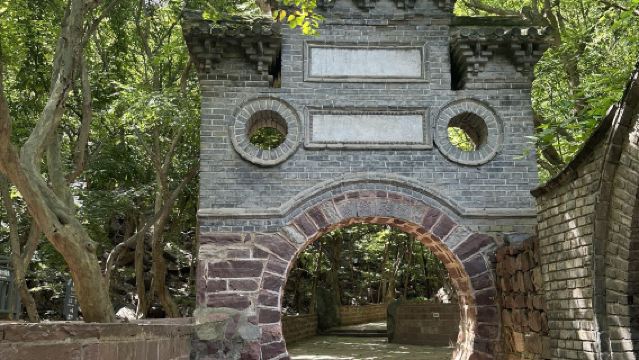
[Premium private tour] Shijiazhuang day trip to Zhengding Ancient City + Zhaozhou Bridge + Berlin Zen Temple
󱌍
FromPHP 7,428.64
Xiyang Today's weatherClear -5-4℃
Xiyang weather for the next 2 days11/20: -8-8℃, 11/21: -7-7℃

Free things to do in Xiyang

What travelers say about Xiyang

user-avatar
力学胡同March 20, 2025
5.0
Industry learns from Daqing, agriculture learns from Dazhai, what a kind slogan! The natural conditions in Dazhai were very bad back then, but even in the most difficult period, the hardworking and brave people of Dazhai, led by Chen Yonggui, transformed nature through self-reliance, not only did they not need state aid, but they also handed over a lot of commercial grain to the state. In the end, Dazhai got rid of poverty and became rich, creating a miracle of transforming nature in human history! If all the old, young, remote and poor areas in China can popularize Dazhai County, they can get rid of poverty and become rich by their own strength without state aid. Therefore, the spirit of Dazhai will never be outdated. The slogan of learning from Daqing in industry and learning from Dazhai in agriculture should be mentioned again. At the same time, it is strongly recommended that Dazhai apply for World Heritage!!!

Dazhai Scenic Area

user-avatar
M29***9pAugust 11, 2025
5.0
太行红岩映云海,烩菜香里醉山河,心被自然温柔填满,归途仍念峭壁风。挂壁公路的震撼、山涧清泉的清甜、农家炕头的暖意,都成了行囊里最珍贵的风景记忆。

Taihang Mountains

user-avatar
_We***31May 13, 2016
5.0
It's worth a visit. If you have the chance, you should definitely come and visit.

Shima Temple

user-avatar
M62***38January 27, 2026
5.0
Great, it has a great feel to it, I recommend it to all those born in the 80s and 90s!

HongQi YiTiao Jie

user-avatar
_TI***2nNovember 18, 2026
5.0
The price was reasonable and the place was really worth visiting!

Yungang Grottoes
user-avatar
verazheNovember 13, 2026
5.0
Entering early in the morning, there weren't many people, and the front row of the Holy Mother Hall offered a clear view. We caught the last of the ginkgo leaves in bloom, and the lighting was perfect for taking photos. Jinci Temple is highly recommended.

Jinci Temple Museum

user-avatar
洋泾浜小宝November 17, 2026
5.0
No matter how many times I've seen it on TV or in picture books, seeing it in person is still breathtaking. The weight of history truly shines here. I've heard they're still discussing whether to dismantle it for major repairs; I'm afraid one day it will be gone forever. There was a short queue on the first floor; it was quite crowded.

Yingxian Wooden Pagoda
user-avatar
ada.tungNovember 19, 2026
5.0
We visited other cities during this trip but Pingyao was definitely my favorite. The ambience and scenery were magic, much more relaxed than bigger cities. We made a good choice by staying two nights, the hotel was gorgeous and affordable. We also tried Shanxi specialties and we really loved them, I.e. the knife cut noodles and OMG the vinegar 🤤

Pingyao Ancient City

Trip Moments in Xiyang

Popular cities near Xiyang

Frequently asked questions

How can I contact Trip.com customer support?

Get help anytime, anywhere within 30 secondsContact customer support

Change and cancellation policies vary by attractions and tours. Please check the product details page for more information.

Ticket prices may vary between weekdays and weekends, as well as during peak and off-peak seasons. When booking with Trip.com, you can also use Trip Coins to get extra savings. For more tips on booking discounted tickets, please visit Trip.com for the latest information.