Things to do in Yongji
Explore top experiences
Top 10 attractions in Yongji


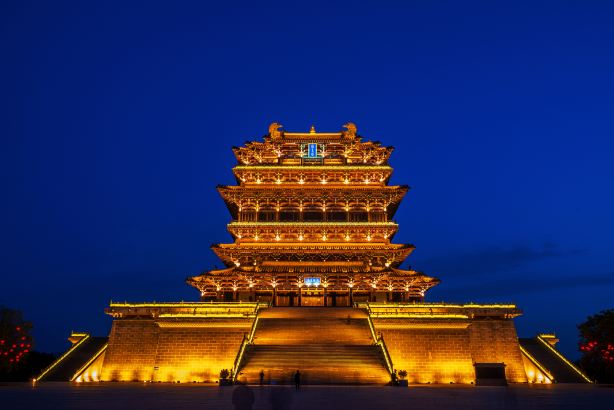
Guanque Tower
A national AAAA-level tourist attraction and one of the top ten attractions in Shanxi Province, Guanque Tower is located on the eastern bank of the Yellow River west of Puzhou Ancient City in Yongji, Shanxi. Alongside the Yellow Crane Tower in Wuhan, Hubei; Yueyang Tower in Yueyang, Hunan; and Tengwang Pavilion in Nanchang, Jiangxi, it is renowned as one of China's four great historical and cultural towers. Originally built during the Northern Zhou Dynasty (557–571 AD) by military commander Yuwen Hu as a defensive watchtower, the tower earned its name from the storks that frequently perched on its structure. The Tang Dynasty poet Wang Zhihuan's celebrated poem "On the Stork Tower" ("The sun along the mountain bows; The Yellow River seawards flows. You will enjoy a grander sight; If you climb to a greater height.") has become an enduring masterpiece, widely known both domestically and internationally. After standing for over 700 years through the Tang and Song dynasties, the tower was destroyed during warfare in the early Yuan Dynasty (1222 AD). The reconstructed Guanque Tower follows Tang-style architecture, featuring four eaves externally with three visible tiers, while internally comprising six floors. With a total height of 73.9m, it epitomizes the grandeur of the Tang era. Ascending Guanque Tower not only offers breathtaking panoramic views but also immerses visitors in the brilliance of China's 5,000-year civilization.Yongji · 16.5 km from downtown

Pujiu Temple·Romance of the Western Chamber
Pujiu Temple, located 12 km southwest of Yongji City in Shanxi Province on the Emei Plateau, was built during the Northern and Southern Dynasties and is a thousand-year-old ancient temple. It is a national AAAA-level tourist attraction, one of Shanxi's "Top Ten" tourist attractions, and one of the Eight Scenic Spots of Hedong. The temple gained fame worldwide thanks to the Yuan Dynasty playwright Wang Shifu's "The Romance of the Western Chamber." The story of Zhang Sheng and Yingying breaking free from feudal constraints, with the matchmaker Hongniang facilitating their love under the moonlight through letters, has become a timeless tale. For centuries, Pujiu Temple has been regarded as a sacred destination for couples seeking love, drawing visitors from far and wide. The annual Qixi Festival's Love Culture Celebration further elevates the eternal theme of love with its enchanting beauty. The temple was born from the drama, and the drama gave the temple its fame. The stupa within the temple was thus beautifully named the "Yingying Pagoda," and its remarkable frog-croaking echo effect is celebrated as one of China's four great echo architectures. Due to its unique acoustic structure, Yingying Pagoda is ranked alongside Italy's Leaning Tower of Pisa and France's Eiffel Tower as one of the "Six Wonder Pagodas of the World," truly a marvel of architectural acoustics. "While temples worldwide shun romance, only Pujiu Temple in Shanxi embraces love." May Pujiu Temple bless all lovers to unite in marriage!Yongji · 10.7 km from downtown

Wulao Peak
Wulao Peak in Yongji, Yuncheng, is known as "DonghuashanThe title "Taoist paradise under heaven" was bestowed upon it. Since the Tang and Song dynasties, the flourishing of religion further enriched the Taoist culture of Wulao Peak, with numerous temples and monasteries dotting the mountain, where incense smoke perpetually rises. In the 19th year of the Wanli era (1591) of the Ming Dynasty, Emperor Shenzong, drawn by its fame, visited to pay homage and participate in the mountain temple fair from the first to the fifteenth day of the seventh lunar month. Wulao Peak is also known as the "52nd blessed land of Taoism" and is celebrated as a renowned Taoist cultural mountain in northern China. Today, Wulao Peak attracts travelers more for its stunning natural scenery and pristine, fresh air, making it an ideal destination for mountain hiking and outdoor activities. Wulao Peak is mainly composed of five peaks: Yuzhu Peak, Taiyi Peak, Qipan Peak, Dongjinping Peak, and Xijinping Peak. From a distance, they resemble five elderly figures standing majestically, hence the name Wulao Peak. The mountain is lush with vegetation, featuring steep cliffs, peculiar rocks, and numerous streams and waterfalls, making it a natural oxygen bar and an excellent destination for hiking and fitness. After entering the attraction gate, visitors need to take a sightseeing bus (ticket: CNY 30 per person, round-trip) to reach the hiking starting point. Then, they can follow the stone steps to explore the attraction, enjoying picturesque scenery along the way, though some sections have poor road conditions. When visiting Wulao Peak, visitors can also choose to take the round-trip cable car (including round-trip transportation) for CNY 100 up the mountain, which saves time and energy.Yongji · 14 km from downtown

Bull Demon King's Free Valley
The Shentan Canyon is a large rift formed by the movement of the earth's crust during the Cambrian period 570 million years ago. It was originally known as the Water Valley and has thousands of years of history. It is located on the northern slope of Zhongtiao Mountain, in the southeast of Shanxi Province's Yongji City. Its area includes the entire Shuiyukou Village and the deep mountains, canyons and forests behind the village. Strange rock formations, waterfalls, unique geological features, streams, forests and natural folk villages constitute the unique attraction of the scenic Shentan Canyon.Yongji · 5.3 km from downtown

Pujindu Site
Pujindu Site is located outside the west gate of the 蒲州故城遗址, 18 km west of the urban area of Yongji, Shanxi Province, on the east bank of the Yellow River. It is adjacent to Pujiu Temple·Romance of the Western Chamber, the setting of the story "Romance of the West Chamber," to the east, and faces Guanque Tower, the first of the four famous towers in China, to the west, situated on a golden tourist route. Pujindu Site was discovered in 1989, when iron oxen and other relics were unearthed. In 1991, a joint archaeological excavation team conducted a comprehensive and scientific cleaning and excavation of the site, fully unearthing 4 iron oxen, 4 iron figures, 2 iron mountains, 4 iron mooring pillars, and a set of 7-star iron pillars, all cast in the 12th year of the Kaiyuan era of the Tang Dynasty (724), as well as over 70 meters of Ming Dynasty stone embankment and a commemorative stele from the 16th year of the Zhengde era of the Ming Dynasty (1521).Yongji · 14.5 km from downtown

Yongle Palace
Yongle Palace, also known as Dachunyang Longevity Palace, was built in the Yuan Dynasty. Construction of such a magnificent palace complex with Taoist characteristics took over a century. Yongle Palace displays the typical architectural style of the Yuan Dynasty. Thick brackets intersect with each other layer by layer without much carved decoration. The architecture is spare and bright compared with the building style in the Ming and Qing Dynasties. The halls are arranged on the south-north axis. Of note, there are elaborate wall paintings on the Yongle Palace. There are many and of high artistic value, true rarities.Ruicheng · 27.7 km from Yongji
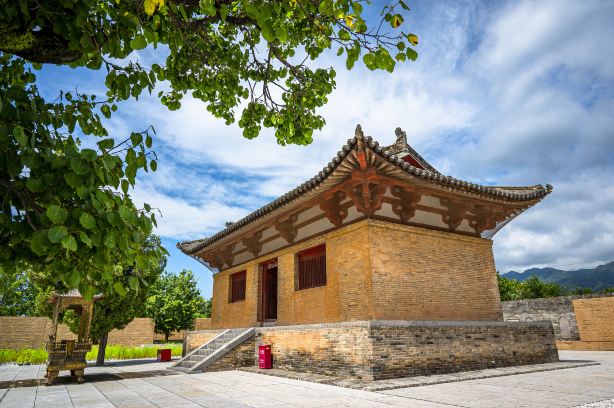
Temple of Prince Guangren
The Temple of Prince Guangren is a courtyard-style temple building located in Ruicheng County, Yuncheng City, Shanxi Province. Originally built during the Taihe era of the Tang Dynasty, this historic site serves as both a provincial and national key cultural relic protection unit. As an attraction combining religious faith, architectural artistry, and cultural experiences, the Temple of Prince Guangren draws numerous history enthusiasts and visitors who come to admire its architecture and offer prayers. Temple of Prince Guangren and the Yuan Dynasty Taoist temple about 1 li to the southeastYongle PalaceFacing each other from afar, atYongle PalaceNot far to the northwest, there isLongquan VillageIn the past, a spring called Longquan gushed from the high ground north of the village, irrigating fertile farmland, so the villagers built upon it.LongwangmiaoSacrificial rituals. The temple enshrines the Five Dragon Kings of the Five Directions. Legend says Nuwa appointed five dragons, with the Azure Dragon as their leader to govern all dragons, bestowing upon him the title Prince Guangren - hence the name Temple of Prince Guangren. The Temple of Prince Guangren faces south and covers an area of 4,560 square meters. It consists of a main hall, an opera stage, and side rooms, featuring simple construction with an elegant, rustic charm. The opera stage has three bays in width and three purlins in depth, with unadorned bracket sets on the column-top lintels. The central bracket set features a dragon head emerging from the large bracket mouth, while elephant trunks extend from both sides. The two end bays display dragon heads emerging from their bracket mouths. The main hall is the only surviving Tang Dynasty wooden structure in the Hedong region. Among the four remaining Tang Dynasty wooden buildings in China, the main hall of the Temple of Prince Guangren is one. The temple's Tang Dynasty stele holds significant reference value for studying ancient water conservancy projects that benefited the people, as well as the temple's construction period. Visitors can explore the main hall, side rooms, and courtyard at the Temple of Prince Guangren, admiring the exquisite wooden architecture and stone inscriptions. They'll learn about the legendary stories of Prince Guangren and local history while experiencing the solemnity and sacredness of this traditional temple.Ruicheng · 26.7 km from Yongji

Yuncheng Yingying Pagoda
Yongji · 10.7 km from downtown

Mount Hua
Mount Hua, formerly known as "Xiyue", is one of the five famous mountains in China. It is located in Huayin City, Shaanxi Province. Huashan is also known as "Taihuashan". It is the birthplace of Chinese civilization. The "Hua" in "Zhonghua" and "Huaxia" comes from Huashan. The words "strange and dangerous" are the essence of Huashan's scenery. "Since ancient times, there has been only one road to Huashan" describes the steepness of Huashan. The Attraction has many thrilling attractions such as Changkong Plank Road, Kitesurfing, Qianchi Chuang, Baichi Gorge, Laojun Ligou, etc., which are carved out on the steep cliffs. Those who visit them in person will be amazed. Huashan Attraction covers a vast area, including the Main Peak Attraction, Xiyue Temple Attraction, Xianyu Attraction, etc. The Main Peak Attraction is the core Attraction of Huashan, including "Huashan One Road" and the five main peaks in the southeast, northwest, and center. Huashan in most people's minds refers to the Main Peak Attraction. Five main peaks The East Peak is about 2,100 meters above sea level and is named for its location in the east. There is a platform on the top of the peak, which is high and dangerous with a wide view. It is a good place to watch the sunrise. It is called Chaoyang Terrace, and the East Peak is also called Chaoyang Peak. The East Peak consists of four peaks, one main peak and three s-ervant peaks. The peak where Chaoyang Terrace is located is higher, the Yunv Peak is in the west, the Shilou Peak is in the east, and the Botai is in the south. There are more than dozens of landscapes on the East Peak. There is a natural stone pattern on the cliff on the side of the East Shilou Peak, which looks like a giant palm print. This is the Huayue Immortal Palm, which is listed as the first of the eight scenic spots in Guanzhong. The story of the giant spirit opening the mountain and guiding the river originated from this. The West Peak is about 2,000 meters above sea level. Because there is a huge rock on the top of the peak that looks like a lotus petal, ancient literati often called it Lotus Peak or Hibiscus Peak. Xu Xiake wrote in his "Diary of Traveling to Mount Taihua": "There is a rock rising on the peak, and there are stone pieces covering it, like a lotus flower." This stone must be referring to it. There are many landscapes on the West Peak, including Cuiyun Palace, Lotus Cave, Giant Spirit Foot, Axe-Split Stone, Sheshen Cliff, etc., and there are many beautiful myths and legends. Among them, the well-known story of Chenxiang splitting the mountain to save his mother is circulated here. The South Peak is over 2,100 meters above sea level and is the highest peak of Huashan. The ancients called it the "Head of Huashan". On one side of the South Peak is a thousand-foot cliff, standing straight like a knife, and below is a deep ravine, which is separated from Sangong Mountain and Sanfeng Mountain. The South Peak consists of one peak and two peaks. The east side is called Songhui Peak, and the west side is Luoyan Peak. The origin of the name of Luoyan Peak is said to be because the migrating wild geese often land here to rest. The North Peak is about 1,600 meters above sea level, with cliffs on all sides, covered with clouds above and connected to the earth veins below. It stands tall and unique, and is also called Yuntai Peak because it looks like a cloud platform. Li Bai of the Tang Dynasty wrote in his poem "A Song of the Cloud Platform of Mount Xiyue to Complimentary Danqiuzi": "Three peaks stand as if about to collapse, and the green cliffs and red valleys are high. The golden essence of the White Emperor mobilizes his vitality, and the stones become lotus flowers and the clouds become platforms." The famous story of "Taking Huashan by Strategy" took place here. There are many landscapes on the mountain, including the Zhenwu Hall, Jiaogong Stone Chamber, Changchun Stone Chamber, and the place where Laojun hung the plow. The Middle Peak is the only way to the other four peaks. It is located in the middle of the East, West and South Peaks. The forests on the peak are lush and green, and the environment is quiet. There is a Taoist temple named Yunu Temple on the top of the peak. It is said that it was the place where Qin Mu Gong's daughter Nong Yu cultivated herself in the Spring and Autumn Period, so it is also called Yunu Peak. Main landscape: There are more than 210 famous Attraction in Huashan. From ancient times to the present, countless literati and poets have left various classic poems here. Skywalk The Changkong Plank Road is located on the east side of the Huashan South Peak. It was built by the master of the Huashan School, Taoist He Zhizhen of the Yuan Dynasty, who wanted to get away from the world and practice Taoism. He built it by inlaying stone piles on the cliffs and paving wooden boards. At the end of the plank road, you can see the "Hezu Cave" where Master He practiced self-cultivation. The road builders chiseled stone holes on the cliffs, wedged stone piles into the holes, and laid wooden boards about 40 cm wide between the stone piles. Visitors must stick to the cliff wall, pull the iron chain with their hands, step on the wooden boards, and move forward slowly sideways. Xiyue Temple Xiyue Temple, also known as Huayue Temple, is a temple where emperors of all dynasties worshipped and offered sacrifices to Shaohao, the Great Emperor of Xiyue. It was first built during the Yuanguang period of Emperor Wu of the Han Dynasty (134-129 BC) at the entrance of Huangshengu (now Huangfuyu) at the foot of Huashan Mountain. It was moved to its current location during the reign of Emperor Huan of the Eastern Han Dynasty (147-167 AD) and renamed today. It was rebuilt many times during the Tang, Song, Ming and Qing dynasties. Canglong Ridge The steps on Canglong Ridge are only 2 feet wide, with deep ravines on both sides, as steep as a knife. The height difference between the ridge and the top is about 500 meters, and the slope is more than 45 degrees. Looking at the green pines and white clouds in the distance and hearing the sound of the wind is dizzying. Jinsuoguan Jinsuoguan is one of the five passes of Huashan Mountain. It is built on a stone archway at the entrance of the three peaks. It is the throat of the Wuyun Peak to the four peaks of East, West, South and Center. There is no way to pass after the pass, so it is also called Tongtianmen. Taoists believe that Huashan is the fairyland of gods. Only after passing Tongtianmen can you enter the fairyland. Therefore, there is a folk song that "after passing Jinsuoguan, there is another world". There has been only one road to Mount Huashan since ancient times "There has been only one road to Mount Hua since ancient times" refers to the "Huashan Valley" hiking trail, which includes various scenic spots along the Huashan hiking trail since ancient times. When connected together, it is what is commonly referred to as "There has been only one road to Mount Hua since ancient times." How to visit Huashan has two mountain gates (entrances): East Gate and West Gate (also known as Huashan Gate). Take the cable car up the mountain and go to the East Gate; if you climb the mountain on foot, enter from the West Gate. Huashan currently has two cable cars, the East and West Lines, which reach the North Peak and the West Peak respectively (please plan the climbing route in advance before purchasing the ticket and purchase the corresponding ticket type, and you cannot change it midway.). Route 1: Hiking route There has been only one road on Mount Huashan since ancient times. It is an ancient mountaineering road with a total length of 12.5 kilometers and 9,567 steps. It takes about 4 hours to hike from Yuquanyuan, through Wuli Pass, Shaluoping (night climbing), Qianchi Chuang, Baichi Gorge, etc. to the North Peak, and then start the tour from the North Peak. Route 2: "Up West and Down West", a mountaineering route suitable for the Seniors and tourists with children This route goes up the West Peak Cableway of Mount Huashan and down the West Peak Cableway, that is, going up from the west and down from the west. The whole route takes a relatively short time, about 4 hours, and is also more energy-saving, making it more friendly to the Seniors and tourists with children. Route 3: "Up West and Down North", a one-day mountaineering route chosen by 80% of tourists This route goes up by cable car from the West Peak of Mount Huashan and down by cable car from the North Peak, that is, going up from the west and down from the north. The entire route is a classic one-day tour route, which takes about 6 hours. You can visit all the attractions without backtracking. Most tourists choose this route because this road almost goes straight down, which is easier and faster than the uphill road. Route 4: "North up and north down", a time-saving, economical and panoramic mountaineering route This route goes up by cable car at the North Peak of Huashan and down by cable car at the North Peak, that is, going up from the north and down from the north. The whole route is a relatively low-cost cable car mountaineering route. If your sightseeing time is limited, you can choose this route and visit the North Peak, which has the Memorial Pavilion, Ear-Crushing Cliff, Canglong Ridge, Huashan Sword Contest Monument, panoramic Huashan and other attractions.Huayin · 54.3 km from Yongji

Wangu Temple
Located 25 miles southwest of Yongji City, Zhongtiao Mountain, corresponding to the world-famous Yingying Pagoda of Universal Salvation Temple, is one of the famous temples in Puzhou. Founded in the Northern Wei Dynasty, during the Ming Hongwu period, Shifo Temple, Zhuxi Temple, and Dumen Temple in Shendi Village, Pinglu County were merged into Wangu Temple, and it was called "the first Zen forest in Zhongtiao". Legend: Wangu Temple is the crystallization of the art of master and apprentice, and the Yingying Pagoda of Pujiu Temple opposite it is the work of the master, so they are also called sister towers.Yongji · 9.2 km from downtown
Experiences you can't miss in Yongji
Featured Cultural experiences in Yongji
View all Cultural experiences
5% off
Limited-time sale
FromMYR 799.38MYR 841.46
5% off
Limited-time sale
FromMYR 799.38MYR 841.46
Free cancellation
Book now for tomorrow
FromMYR 137.27
Free cancellation
Book now for tomorrow
FromMYR 137.27

5.0/5
· 5 reviewsFree cancellation
Instant confirmation
Book now for tomorrow
FromMYR 243.42
Featured Outdoor experiences in Yongji
View all Outdoor experiences
4.8/5
· 131 reviews· 438 bookedFree cancellation
Instant confirmation
Book now for tomorrow
96.2% of travelers recommend
FromMYR 347.13

4.8/5
· 36 reviews· 261 bookedFree cancellation
Instant confirmation
Book now for tomorrow
97.2% of travelers recommend
FromMYR 347.13
4.4/5
· 5 reviews· 76 bookedFree cancellation
Instant confirmation
Book now for tomorrow
FromMYR 367.42

4.2/5
· 20 reviews· 129 bookedFree cancellation
Instant confirmation
Book now for tomorrow
5% off
Limited-time sale
FromMYR 395.15MYR 415.95

4.3/5
· 32 reviews· 285 bookedInstant confirmation
Book now for tomorrow
75 travelers saved
5% off
Limited-time sale
FromMYR 434.67MYR 457.55

5.0/5
· 4 reviews· 55 bookedFree cancellation
Instant confirmation
FromMYR 836.06

4.7/5
· 10 reviewsFree cancellation
Instant confirmation
Book now for tomorrow
FromMYR 234.32

Free things to do in Yongji
Guanque Tower
Yongji · 16.5 km from downtownPujiu Temple·Romance of the Western Chamber
Yongji · 10.7 km from downtownWulao Peak
Yongji · 14 km from downtownBull Demon King's Free Valley
Yongji · 5.3 km from downtownPujindu Site
Yongji · 14.5 km from downtownYongle Palace
Ruicheng · 27.7 km from YongjiImmediate access, Book now for today, Cancel anytimeTemple of Prince Guangren
Ruicheng · 26.7 km from YongjiYuncheng Yingying Pagoda
Yongji · 10.7 km from downtownMount Hua
Huayin · 54.3 km from YongjiImmediate access, Book now for today, Cancel anytimeWangu Temple
Yongji · 9.2 km from downtown
What travelers say about Yongji

M52***90October 11, 2026
5.0
I hadn't originally planned to visit the Stork Tower, as it's a reconstruction completed in 2002. However, I came across a travelogue about climbing it, and perhaps the focus for modern people isn't so much on whether it's an ancient building, but rather on Wang Zhihuan's famous line, "To see a thousand miles further, climb one more story." When you reach the top and gaze into the distance—the Yellow River, the Zhongtiao Mountains, the blue sky and white clouds overhead, the wind blowing from Fengling Ferry—don't we feel the same sentiment as Wang Zhihuan back then?
Sometimes, even a simple visit can lead to unexpected experiences. The scenic area has set up signature boards for each province, autonomous region, municipality, and region. Surprisingly, this tourist experience made the friendship between Qin and Jin (Shaanxi and Shaanxi) more tangible. The board for Shaanxi Province has already been replaced twice, as it's become too densely packed with signatures from friends from neighboring Shaanxi. The scenic area simply put up a sign at the very front of the signature corridor that reads "Qin People Gather!" It looks like it'll be full soon too.
Guanque Tower

Anonymous userOctober 7, 2026
5.0
The scenic area isn't large; it takes a little over an hour to tour the whole thing. Many parts of the area are thoughtfully designed, and the paintings and text on the walls are quite interesting. Although there were many people during the National Day holiday, it didn't feel crowded.
Pujiu Temple·Romance of the Western Chamber

行走毛毛October 6, 2026
4.0
The transition between seasons, especially between summer and autumn, is a particularly good time to climb Wulaofeng. Firstly, it's not too hot, and secondly, the scenery changes distinctly with the seasons. Therefore, it's considered a relatively less-visited mountain near Yuncheng.
Wulao Peak

yaoqiang329March 28, 2026
4.0
Online ticket booking was convenient, but the entrance check was strict, requiring facial recognition. I went straight into the Grand Canyon. The waterfall was huge and beautiful, but the mountain steps were a bit steep and some parts were dangerous. The Crescent Lake at the top resembled an emerald, and the scenery was stunning, with goldfish too. Why was the mountaintop slide closed? I had to turn back the way I came.
Bull Demon King's Free Valley

火 火April 12, 2025
5.0
蒲津渡遗址位于山西省运城市永济市蒲州镇西厢村西,是一处具有丰富历史遗存的重要遗址,也是我国首次发掘的大型渡口遗址。蒲津渡是黄河中游古代三大渡口之一,连接河东与关中的重要通道。据《春秋左传》记载,公元前541年,秦公子咸在此建造浮桥,开蒲津渡建桥之先河。此后,秦昭襄王、汉高祖、汉武帝、隋文帝等均在此建造过浮桥。唐开元十二年(公元724年),唐玄宗命兵部尚书张说主持改建蒲津桥,使用铁牛和铁链加固桥梁,使其更加稳固。此次改建耗铁约1100吨,占当时全国铁年产总量的4/5。金元之际,浮桥毁于战火,仅剩铁牛。明代曾多次利用铁牛重建浮桥,直至清代因黄河改道,蒲津渡逐渐废弃。1989年,蒲津渡遗址出土了唐开元铁牛四尊、铁人四尊、铁山两座、铁柱四个、七星铁柱一组及明代护岸石堤等。铁牛造型精美,重约55吨至75吨不等,分南北两组,呈八字形排列。蒲津渡遗址的考古发现对研究唐代政治、经济、军事、文化以及桥梁史、冶炼铸造工艺、黄河变迁等具有极其重要的价值。1999年至2005年,国家文物局批准并实施了蒲津渡遗址保护工程,将出土文物原位抬高12.2米,避免黄河洪水侵蚀。蒲津渡遗址现已建成遗址公园,包括景区入口区、渡口遗址区、仿唐浮桥区、文物展览区等。游客可以在此欣赏到唐代铁牛、铁人等文物,了解古代黄河渡口的历史风貌。蒲津渡遗址不仅是古代劳动人民智慧的结晶,也是研究中国古代桥梁工程、冶炼技术及黄河变迁的重要实物资料。
Pujindu Site

青衫磊落踏歌行October 18, 2026
5.0
Yongle Palace was built to commemorate Lü Dongbin. The entire building is grand in scale. In the 1960s, it was moved here to make way for the construction of the Sanmenxia Reservoir. As a result, the original site was not flooded, so the combined ticket also includes a visit to the original site. The most famous is the Yuan Dynasty mural "Chaoyuan Tu" in the Wuji Hall.
Yongle Palace

M37***45October 5, 2026
4.0
The Guangrenwang Temple in Ruicheng, Yuncheng, is one of the few remaining Tang Dynasty wooden structures in China and a fifth batch of National Key Cultural Relics Protection Units. The ancient temple sits atop a loess plateau, devoid of elaborate decorations; its simple yet robust brackets and walls perfectly embody the rustic and majestic spirit of Tang Dynasty architecture.
Having withstood a thousand years of wind and rain, the temple retains the original Tang Dynasty structural features in its eaves and beams. This ancient building, far removed from the hustle and bustle of the countryside, stands quietly on the plateau, a must-see for anyone exploring early wooden architecture.
A few words to say...
Temple of Prince Guangren

好好生活日日向前December 8, 2020
4.0
The Yingying Tower in Yuncheng is located in Xixiang Village, Puzhou Town, Yongji, Shanxi Province. It is a conical brick tower with a simple and elegant shape. It was originally named the Relic Tower. Because the story of Zhang Sheng and Cui Yingying in the West Chamber took place under the tower, it was renamed the "Yingying Tower". It is one of the "Four Echo Buildings" in ancient my country. If you stand in different positions and hit two stones against each other, you can hear a loud echo of quack, quack, like the croaking of frogs.
Yuncheng Yingying Pagoda

suyuOctober 17, 2026
5.0
Mount Hua is renowned as "the most precipitous mountain under heaven," offering thrilling adventures like the Plank Road in the Sky and the Hawk's Turn, while the cable car soars through the clouds for breathtaking views. Each of its five peaks possesses its own unique character, and the sunrises and seas of clouds are magnificent. It also boasts a rich Taoist culture. With well-developed facilities and standardized management, it's a must-visit destination for adventurous travelers.
Mount Hua

精光葫芦娃July 4, 2020
5.0
Wangu Temple is located at the foot of Zhongtiao Mountain, southwest of Yongji, Shanxi. It was first built in the third year of Zhengguang in the Northern Wei Dynasty. It was originally named "Youzai Temple". It was burned down in wars and rebuilt in the Sui Dynasty and renamed Wangu Temple, which means "ten thousand years of solidity". It was called "the first Zen temple in Zhongtiao" at that time.
Wangu Temple


